
All Content

Teaching Spelling and Vocabulary
Reasons Why Teaching Spelling and Vocabulary Is Important
Words are living, powerful, and important. Learning to use them correctly honors that gravity.
A word reflects the essence of a thing. Understanding the vocabulary we use is vital to comprehending and communicating.
General Advice and Teaching Tips
Studies have shown the importance of learning vocabulary words in context. Giving a list of words and definitions and focusing on memorization is the least effective manner of learning new vocabulary. Consider the following tips to teach vocab more effectively:
Have students write individual sentences for each vocabulary word (sentences must show the definition of the word in context)
Have students make synonym lists for each of the words.
Illustrate words instead of copying definitions. Students could make flashcards with a picture on one side and the word on the other.
Have students report whenever they hear a vocabulary word being used outside of the classroom environment, such as at church, on the radio, or in adult conversations. The student needs to explain the context/conversation in which the word was used. This could be paired with some sort of prize or motivational system.
Ensure that students are interacting with spelling words in a variety of ways, not simply writing out the list each day. Provide a combination of written and oral activities to help them practice.
Most times, by high school, formal spelling programs have stopped. Instead, students could keep a spelling notebook or stack of notecards on which they keep track of their own misspelled words throughout their daily schoolwork.
Recommended Resources
Spelling practice games:
Games for practicing vocabulary words: Teaching Vocabulary in High School - The Dock for Learning
A review of a spelling curriculum: Words Their Way - The Dock for Learning
Giving students strategies to expand their vocabularies independently: Giving Our Students Strategies to Expand their Vocabulary - The Dock for Learning
Sources
Improving Word Usage by Jonas Sauder Improving Word Usage (Jonas Sauder) - The Dock for Learning
Increasing the Vocabulary of our Scholars by Kendra Martin Increasing the Vocabulary of Our Scholars - The Dock for Learning
Teaching Vocabulary in High School by Karen Birt Teaching Vocabulary in High School - The Dock for Learning
Does Spelling Count? By Karen Birt Does Spelling Count? - The Dock for Learning
Photo by Tima Miroshnichenko

Teaching Writing
Reasons Why Teaching Writing Is Important
Writing is a powerful way to record and share God’s goodness, truth, and beauty. Writing gives students skills to articulate their faith in powerful ways.
God values the written word and the telling of stories—this is shown all throughout Scripture.
Writing helps students understand truth. When they can explain something through writing, they will truly understand it. Whether it’s a deep theological concept or a retelling of something learned in history class, the act of writing forces students to develop a deeper understanding of a topic.
Our world is broken, and it desperately needs skilled writers to speak into the brokenness with a message of hope. In order for this to happen, we need to build writing skills in our students to enable them to share life and light through their words.
An age of technology and AI threatens originality, creativity, and imagination. Creative writing classes give students opportunities to exercise their imaginations at school.
General Advice and Teaching Tips
Emphasize flow over perfection when students are writing rough drafts. The goal of a first draft is output, and stopping to fix grammar or spelling works against that goal. If students are unsure of how to spell words, emphasize that phonetic spelling is perfectly acceptable.
Consider that intense editing of grammar and spelling should not be the norm. There are already entire class periods every day dedicated to those skills. In writing class, students should be allowed to focus on the skill of writing. Require students to read back over what they’ve written to make sure it says what they wanted it to say and catch the obvious errors. However, they should not need to feel the need to edit and rewrite most pieces, especially not at the expense of creative writing experiences.
Suggestions for helping struggling writers:
Fold a paper in halves or thirds—this can eliminate the overwhelming feeling of a big blank page.
Guide your students in brainstorming activities before they write. This means they don’t need to complete the demanding tasks of idea generation and writing simultaneously.
Showing students an example of the type of writing you’d like them to produce can provide a model for the less creative.
Play instrumental music while students are writing. Studies have shown that for many people, background music is effective in focusing their creative energy.
Ask students questions about what they are writing to help them better visualize what they are trying to describe. Some students may benefit from drawing a picture first, then describing what they have drawn.
Read this article for more suggestions and more details about the above suggestions: Do the Write Thing, Part 4: Engaging with Reluctant Writers - The Dock for Learning
Make writing time a priority. When writing is ordinary and routine, students learn to anticipate the class and mentally prepare themselves for it.
Remember that writing is personal. Each person has their own style and unique ability. Encourage the best in each student but allow them their own expression.
Don’t overgrade writing assignments. Focus your feedback with a mixture of encouragement (noting places that are written well) and suggestions for improvement (“try this . . .”) Be sure to give feedback on the actual writing, not just mechanics like grammar and spelling.
When grading is necessary, a rubric is an invaluable tool for assessing writing assignments which are, by nature, subjective. For guidance in creating and using rubrics, check out these resources:
Recommended Resources: Lower grades
Advice on how to structure a writing class: Do the Write Thing, Part 3: How to Structure a Writing Lesson - The Dock for Learning
Writing prompts, activities, and assignment ideas:
Examples of brainstorming activities and revision guides:
Integrating writing into all subjects:
Journaling:
A writing curriculum review: A Review for Creative Writing Curriculum - The Dock for Learning
Recommended Resources: Upper grades
Advice on teaching how to write poetry: Don't Make These Ten Mistakes in Your Poetry - The Dock for Learning
A guide for writing biography: Writing Biography - The Dock for Learning
Personal engagement with writing process: Who Are You-As a Writer? - The Dock for Learning
Writing assignments as a response to literature: Developing Writing Assignments Based on Reading - The Dock for Learning
Integrating writing into all subjects:
Sources
Why Teach Writing by Andrew Yoder Why Teach Writing? - The Dock for Learning
Building Writing Skills by James Martin Building Writing Skills - The Dock for Learning
Creative Writing by Ed Bontrager Creative Writing - The Dock for Learning
Do the Write Thing Part 1: Why Writing Matters by Meghan Brubaker Do the Write Thing, Part I: Why Writing Matters - The Dock for Learning
Creating Enthusiasm for Writing by Carolyn Martin Creating Enthusiasm for Writing - The Dock for Learning
Image by congerdesign from Pixabay

Teaching English and Grammar
Reasons Why Teaching English and Grammar Is Important
Language is powerful—it can be both a tool and a weapon. It is important that we use tools proficiently and use weapons responsibly.
Using correct grammar improves both verbal and written communication, which are essential life skills and kingdom-building assets. Some examples of these life skills include the following:
Proficient Bible reading
Ability to communicate in relationships
Church-building (clear, effective communication with fellow members)
Outreach (such as ESL teaching abroad)
Committee work (ability to write clear minutes or reports)
Various studies show that understanding grammar boosts a student’s reading comprehension.
Understanding the grammar of one’s native language is essential in learning a second or third language. Studying English thoroughly gives a huge gift to students with a future in mission work and Bible translation.
General Advice and Teaching Tips
If your students are struggling to enjoy grammar class, examine whether you are modeling enthusiasm for the subject. A teacher who shows passion and energy for the subject at hand makes that enthusiasm infectious (even if you are struggling to always feel it).
Think of teaching English like a jigsaw puzzle, where various topics you teach are different pieces of the puzzle. As students get older, they acquire more pieces of the puzzle and need help to fit those pieces together. When students receive a “new piece,” they need to be shown how it fits into the big picture, or the piece is likely to get lost.
Make sure your knowledge extends past your students’ knowledge, as you cannot teach effectively from the edge of the cliff of your knowledge. Consider personally working through the books for the next two grades beyond the one you teach to give you a better understanding.
Mix hands-on activities with lecturing. Be intentional about engaging different learning styles, such as audio or movement.
Incorporate games and other activities such as the following:
Read a story and have students raise their hands when they hear a certain part of speech
Do mad libs
Make teams and do competitions
Play an ongoing “penny, please” game for grammar usage at school
Let students identify parts of speech in a funny or interesting paragraph
Make up sentences about the students in your classroom or things that happened at school to use for diagramming or finding parts of speech.
Flowcharts can be an incredibly valuable tool in grammar class. They are a powerful visual that boost comprehension and retention and prevent students from getting stuck.
Acronyms, mnemonics, or other creative mental pictures help students to remember concepts.
Recommended Resources
Grammar songs for the elementary classroom:
A recommendation for a grammar curriculum: A Better Grasp of Grammar Use (Curriculum Review) - The Dock for Learning
Games and activities for grammar class:
Verb tenses handout: Verb Tenses Handout - The Dock for Learning
Pronouns lesson hook: Pronouns Lesson Hook - The Dock for Learning
Tips for diagramming: Diagramming Sentences: Strategies for Learning Sentence Structure - The Dock for Learning
Steps to identify verb tense: Five Questions to Ask a Verb: Straightforward Steps to Identify Verb Tense - The Dock for Learning
Research Papers
Timing is important. The first two quarters of the year aren’t a good time to begin research papers because students may not yet be proficient in related skills. The last quarter may not be a good time either as students may have spring fever and lower motivation in general. The third quarter is often the best choice.
For younger students just learning how to write a research paper, it can be helpful to limit their topic options. Perhaps you will give the class three different topics to choose from, and you will provide the same sources to each student. Or perhaps you will give a topic theme based off a book series available to you such as “historical figures” or “countries,” requiring each student to choose a topic that has a corresponding book. These limitations allow you to have a better grasp of the source material each student is pulling from and give guidance to the whole class or to a small group of students all at the same time. You can even complete some parts of the process, such as bibliography entries, together as a group.
Tackle research papers in small chunks. Make each step due fairly soon, give a grade on each step, and keep your students accountable. Below are examples of schedules you could follow:
Provide folders for students to keep all their materials organized (and not lost in their desk or locker).
Correctly citing sources is often one of the least-understood parts of writing a research paper. The following article will guide you in helping your students write properly-cited research papers: Writing a Research Paper, Part 3: Citing Sources and Plagiarism - The Dock for Learning
A good grading rubric is a necessity for research papers. You can also show it to your students so that they know exactly what is expected of them.
Guidelines on using and creating rubrics can be found here: Grading with Rubrics in the English Classroom - The Dock for Learning
For more guidance in facilitating the process of writing research papers, these helpful articles detail the process:
How to Write a Research Paper, Part 1: Assigning a Research Paper - The Dock for Learning
Writing a Research Paper, Part 2: Intermediate Assignments - The Dock for Learning
A comprehensive guide for both the teacher and student: Research Paper Binder - The Dock for Learning
Other helpful resources:
A working bibliography template: Working Bibliography Template for Research Papers - The Dock for Learning
Topic selection ideas: Research Paper Topics - The Dock for Learning
Sources
The Necessity (and Fun) of Grammar, Part 1 by Karen Birt The Necessity (and Fun) of Grammar, Part 1 - The Dock for Learning
English Class (Or Any Class) Can Be Fun! By Karen Birt English Class (Or Any Class) Can Be Fun! - The Dock for Learning
Ideas on Teaching Grammar by Kendall Myers Ideas on Teaching Grammar - The Dock for Learning
Finding Pieces of the Puzzle: Connecting Concepts for Grammar Mastery by Steward Ebersole Finding Pieces of the Puzzle: Connecting Concepts for Grammar Mastery - The Dock for Learning
Five Helpful Practices for English Class by Deana Swanson Five Helpful Practices for English Class - The Dock for Learning
Guiding Students Through the Process of Writing Research Papers by Deana Swanson Guiding Students Through the Process of Writing Research Papers - The Dock for Learning
Why Teach English? By Kendall Myers Why Teach English? - The Dock for Learning
The English Language Session 3 by Verlin Garber The English Language: Session 3 - The Dock for Learning

Teaching Literature
Reasons Why Teaching Literature Is Important
Through literature, students gain experiences that are wider than just their own history or experiences in life. They are exposed to other worldviews, cultures, and perspectives.
Stories often help students understand things they know at a head level, but come to feel more deeply by experiencing it in a story. This begins to actually change their values and decisions. Literature fosters wisdom.
Helping the students engage with a literary work can impact how they live their lives from that day forward. (Good literature will influence a student’s attitudes, thinking, or understanding in some way, even if they don’t always remember later that they’ve read it).
When you discuss literary pieces, it gives you opportunities to deal with things of substance that make life what it is, opens doors for discussion, develops the skills in students to talk about what they’re thinking, and helps students learn from each other’s insights.
Teaching literature helps to develops students’ critical thinking skills, which is part of building thoughtful Christians and kingdom citizens.
General Advice and Teaching Tips
Use questions to explore stories. This leads students to discover the truth for themselves (instead of you simply telling them what you think the meaning of the text is).
Some students struggle to understand what they’re reading. Teaching them the following tools may be helpful:
Think aloud
Model for your students how you can have an internal dialogue while reading a text. Project the first page of a story or a difficult section of a textbook. Read the text aloud, stopping often to share your thoughts. Point to the words in the text that trigger your thinking. Ask questions. Connect information from one concept to the next.
Mark the text
If a student has a personal workbook, the marking can be done directly in the book; if the student is using a shared textbook, the marking can be done on sticky notes and placed in the text.
Have students mark main ideas, background knowledge, or questions they have about the text.
Utilize pre-reading activities, which prepare students for what they are going to encounter in the text and get them interested in the story before they even start reading. Pre-reading activities may include:
Vocabulary—make sure that students are equipped to understand unfamiliar words or concepts.
Brainstorming—very quickly allow students to interact with a question that introduces the theme of the story.
Hooks—give a question that has no answer, share a personal anecdote, show a picture prompt, use an object that is related to the story, predict what may happen in the story based on the title, etc.
Graphic organizer—use something like a KWL chart (letting students fill in what they already Know about a subject and what they Wonder about. After reading, they can fill in what they have Learned about the story). Bubble maps or Venn diagrams work well also.
When it comes to vocabulary, be aware that there is a lot of academic-specific vocabulary that students will only interact with in the classroom. In addition, there will be a vast span in the known vocabulary of your students based on their language exposure up to this point. It is the responsibility of the teacher to address these discrepancies so that every child can understand what they’re reading.
Use literature class as an opportunity to develop the following skills:
Summarizing
Identifying the main idea
Inferring (reading between the lines)
Distinguishing fact from opinion
Applying wisdom principals to life
Narrating (retelling the story from memory)
Use a variety of oral reading methods to maintain engagement:
Round robin—students read assigned portions in order, going around the room
Pulling sticks—randomly select readers using popsicle sticks with names
Chain reading—set a timer (e.g. 45 seconds) for each reader
Readers’ theater—assign dialogue or narration roles
Fill-in-the-word—teacher reads, students chime in with specific words
Popcorn reading—students read one sentence each
Group/pair reading—small groups read together
Encourage deeper discussion through book clubs, literature workshops, Socratic seminars, etc., where students must prepare and study on their own before engaging with the content as a class
Recommended Resources
Ideas for literature class: Ideas for Teaching Literature - The Dock for Learning
High school book clubs: Guidelines for Book Clubs - The Dock for Learning
Detailed definition of poetry: What Is Poetry? - The Dock for Learning
Responding to literature assignment: Responding to Literature - The Dock for Learning
Template for a literature workshop: Literature Workshop Template - The Dock for Learning
Study guide for works of literature: Study Guide for Works of Literature - The Dock for Learning
Tips for improving reading comprehension: How to Read: Improving Reading Comprehension - The Dock for Learning
List of suggested online resources: Reading/Language Online Resources - The Dock for Learning
Poetry response prompt: Poetry Point & Ponder - The Dock for Learning
Strategies for increasing and developing vocabulary:
Sources
Why and How Do You Teach Literature? By Kendall Myers Why and How Do You Teach Literature? - The Dock for Learning
To Understand and Do: Teaching Literature for Life Change by Jonas Sauder To Understand and Do: Teaching Literature for Life Change - The Dock for Learning
Understanding Reading by Karen Birt Understanding Reading - The Dock for Learning
Pre-Reading 101: Strategies to Get Your Students Ready for the Story by Sharon Yoder Pre-Reading 101: Strategies to Get Your Students Ready for the Story - The Dock for Learning
Photo by Chris Lawton on Unsplash

Teaching Math
Reasons Why Teaching Math Is Important
Math is essential for practical life skills, such as budgeting, building, cooking, and any job requiring precise calculations.
Math fosters orderly thinking, logical problem-solving, and careful work habits.
Math reflects God’s character, showcasing His order, precision, consistency, and dependability. It is described as the “blueprint of the universe” and the “language of the universe,” revealing God’s glory through its patterns and structures.
Studying math allows students to “think God’s thoughts after Him” (Johannes Kepler).
Math is not neutral; it is a subject that can draw students’ minds to God’s attributes and foster a biblical worldview.
General Guidelines and Teaching Tips
Students should be given the opportunity to engage with real problems that require significant effort but are within their ability to solve.
Guide your students in rejecting fixed notions of “smartness.” There is no such thing as a “math person.” Instead, foster a growth mindset, encouraging students to remember that anyone can learn math with the right explanation and enough effort. Reframe “math is hard” as “math is challenging.”
Struggle is valuable for building neural connections. Let students struggle briefly with problems, but don’t let them struggle alone for so long that they get overwhelmed.
Normalize mistakes as learning opportunities, not failures. You can highlight “good mistakes” for discussion, avoiding shame and focusing on why errors occur rather than demanding corrections of all wrong answers.
Prioritize skills like logical thinking and conceptual understanding over speed in calculations. Focus on process and understanding, not quickly-gained correct answers.
Teach the concept before the skill. You will use repetitive practice to automate skills, but ensure conceptual understanding first.
Students often complain that “math is useless.” Whenever possible, use real-world examples to help combat this mindset. Also, emphasize that math develops the mind, fostering discipline and problem-solving. Those things prepare students for life, even if specific equations are never directly applied.
Group work can be a powerful tool for high-achieving and low-achieving students alike. Low achievers can benefit from hearing concepts being explained in a slightly different way, and high achievers strengthen their own understanding by helping those who are struggling.
Consider allowing students to do their calculations on graph paper, particularly for lengthy processes like long division. The grid helps keep numbers in a straight line both horizontally and vertically. This can improve accuracy dramatically for some students.
Elementary
Spend time and energy instilling strong number sense into young students. This often comes through lots of hands-on work with manipulatives as well as intentional focus on teaching the concepts of basic math. Only teaching rote memorization of facts with no deeper understanding of the concepts sets students up with a shaky mathematical foundation.
Use visuals and stories to help concepts stick. Incorporating imagination helps learning stick for young students.
Putting a particular focus on the following topics can help students obtain foundational skills that will be needed for higher-level math:
Long division
Fractions (especially multiplying and dividing fractions)
Decimals and percentages
Place value
Junior High and High School
In the upper grades, math fosters critical thinking and problem-solving skills rather than basic concepts. Emphasize that the purpose of learning math is to foster deeper-level thinking skills, handle complexity, and equip students to serve in God’s kingdom.
Require students to show all steps for multi-step problems. While mental arithmetic is useful, solving multi-step problems mentally builds a fragile foundation that collapses with complexity.
To manage workload, focus on checking key problems, not every one.
Teach standard notation (e.g. variables in alphabetical order with coefficients first) for consistency across curricula and readability in advanced math.
Award partial credit for correct processes in algebra, as the process is key.
Recommended Resources for Various Topics
Methods to learn addition and subtraction:
Methods to learn multiplication and division:
How to use manipulatives in Math-U-See: The Math They See, the Math They Use: Demonstrating Concepts with Math Manipulatives - The Dock for Learning
Math drill sheets for addition and subtraction: Math Drill Sheets - The Dock for Learning
Math drill sheets for multiplication: Challenge Math - The Dock for Learning
Tricks for teaching a variety of math concepts, such as rounding, fractions, percentages, etc.: Math Tricks - The Dock for Learning
Games for math fact review: Games For Math Fact Review - The Dock for Learning
A tool for teaching basic algebra: Tipping the Scales to Teach Basic Algebra - The Dock for Learning
A system for students struggling with algebra equations: Equation Town - The Dock for Learning
Open-ended but solvable challenge questions: Open-Ended Math - The Dock for Learning
A way to teach powers of the square root of -1: Powers of the Square Root of -1 - The Dock for Learning
Tips on teaching math to girls: Girls and Math: How Going beyond the Rules Helps Students Engage with Math - The Dock for Learning
Sources
Open-Ended Math by John Mark Kuhns Open-Ended Math - The Dock for Learning
What Math Is Important? By Conrad Shank What Math is Important? - The Dock for Learning
Why Teach Math? By John Swartz Why Teach Math? - The Dock for Learning
Making Math Come Alive by John Mark Kuhns Making Math Come Alive (John Mark Kuhns) - The Dock for Learning
Upper Grades Math by Nathan Yoder Upper Grades Math - The Dock for Learning
Photo by Chris Liverani on Unsplash

Correcting or Disciplining Students
General Considerations
When it comes to discipline, remember that the specific consequences you give are not as important as the way you present your plan, the matter-of-fact way you handle infractions, and the consistency with which you enforce your plan.
Remember “little problems, little solutions.” If you deal with things while they are small, you will find that smaller consequences can still be effective. If you struggle to find the courage to talk to a student early on, you often miss the opportunity to stop a habit before it gets worse and worse and spreads to other students.
Effective discipline fits into the following categories:
Clear and consistent—predictable and uniformly applied
Developmentally appropriate—suits the student’s age and temperament
Growth-promoting—fosters self-discipline and encourages students to reflect on their actions
Teaches skills—imparts social and life skills
Prompt but not hasty—addresses issues quickly but thoughtfully
Logical—the punishment fits the crime, as much as possible
Respectful—don’t embarrass students in front of their peers
Keep the “why” of discipline in front of you. The goal of enforcing rules is not to create a herd of robots who perfectly do what they’re told without a moment’s hesitation. The goal is to be part of forming people with soft hearts that are turned towards the Father.
Beware of letting emotionally unstable students become scapegoats who unfairly bear blame in situations where other factors are at play. For example, a student may have an outburst that was triggered by another student’s subtle provocation or stress due to overwhelm. Investigate causes rather than solely punishing behavior.
Addressing Misbehavior
When addressing misbehavior, have the student tell you what he did wrong. Beginning with, “Can you tell me what happened?” leads a child to confession or wrong (a nice way of saying, “So what did you do?”) That question can be followed by, “And why is that a problem?” This usually leads to talking about which rule/concept was violated.
Asking an erring child the question, “Why did you do it?” rarely brings good results.
If two disgruntled students sit in front of you, your approach will need to be a bit different. Asking “Can you tell me what happened?” usually leads to accusations and blaming. Instead, it often works well to say, “I want each of you to tell me what you did wrong. For right now you may not talk about what he did, only what you did.” This places the onus on each child to take responsibility for their own actions.
As much as possible, frame consequences in terms of the student’s choices. You want to prevent a you-versus-them mentality from developing, and one of the best ways to do that is to make it clear to your students that they are being punished because of their own choices.
Involving students in their own process of growth will look different depending on what age of students you are teaching, but in general, it’s a good goal to keep in front of you when punishment is necessary. “This needs to change, and you have the power to do that,” is a wonderful phrase to encourage students to take ownership for their own actions.
Monitor your feedback to ensure that you are not always negative or critical of children with behavior challenges. The child should not be receiving the teacher’s attention and help only when he is off-task or breaking a rule. Balance your correction with praise.
Be specific in your correction. “You need to behave!” is not good feedback. Instead, give students actionable feedback. Make sure they know what action you are talking about and make sure they know exactly what is expected of them instead.
Methods of Correction
There can be a power in making the entire class re-do a procedure or practice an appropriate behavior, even if it was just one or two students who didn’t comply. This teaches students that their actions affect everyone. This also creates positive peer pressure that works to your benefit. For example, “Let’s recite that chart again with everyone helping,” or “We were too noisy as we walked down the hall just now. Let’s go back to our classroom and try that again.”
Have a “ladder” of consequences. When a child misbehaves, start at the bottom rung of the ladder, which is a simple and unobtrusive consequence, such as simple eye contact and a slight shake of the head. If the student continues to misbehave, move “up the ladder” to more and more serious consequences. Frequency of infraction and how long you’ve been working on that particular behavior will dictate the speed at which you climb the ladder.
Sources
Help for Beginners and the Experienced by Betty Yoder Help for Beginners and the Experienced - The Dock for Learning
Some Advice on Classroom Management by Meghan Brubaker Some Advice on Classroom Management - The Dock for Learning
Small Problems, Small Solutions: Dealing with Issues before They Overwhelm You by Anthony Hurst and Joseph Shantz Small Problems, Small Solutions: Dealing with Issues before They Overwhelm You - The Dock for Learning
Tools for Classroom Management by Arlene Birt Tools for Classroom Management - The Dock for Learning
An Open Letter to First-Year Teachers by Meghan Brubaker An Open Letter to First-Year Teachers - The Dock for Learning
Effective Discipline: Grades 1-3 by Lise Gaines Effective Discipline: Grades 1-3 - The Dock for Learning
Peaceful Classrooms: What Are the Ingredients and Why Do They Matter? By Sheldon Kauffman Peaceful Classrooms: What Are The Ingredients and Why Do They Matter? - The Dock for Learning
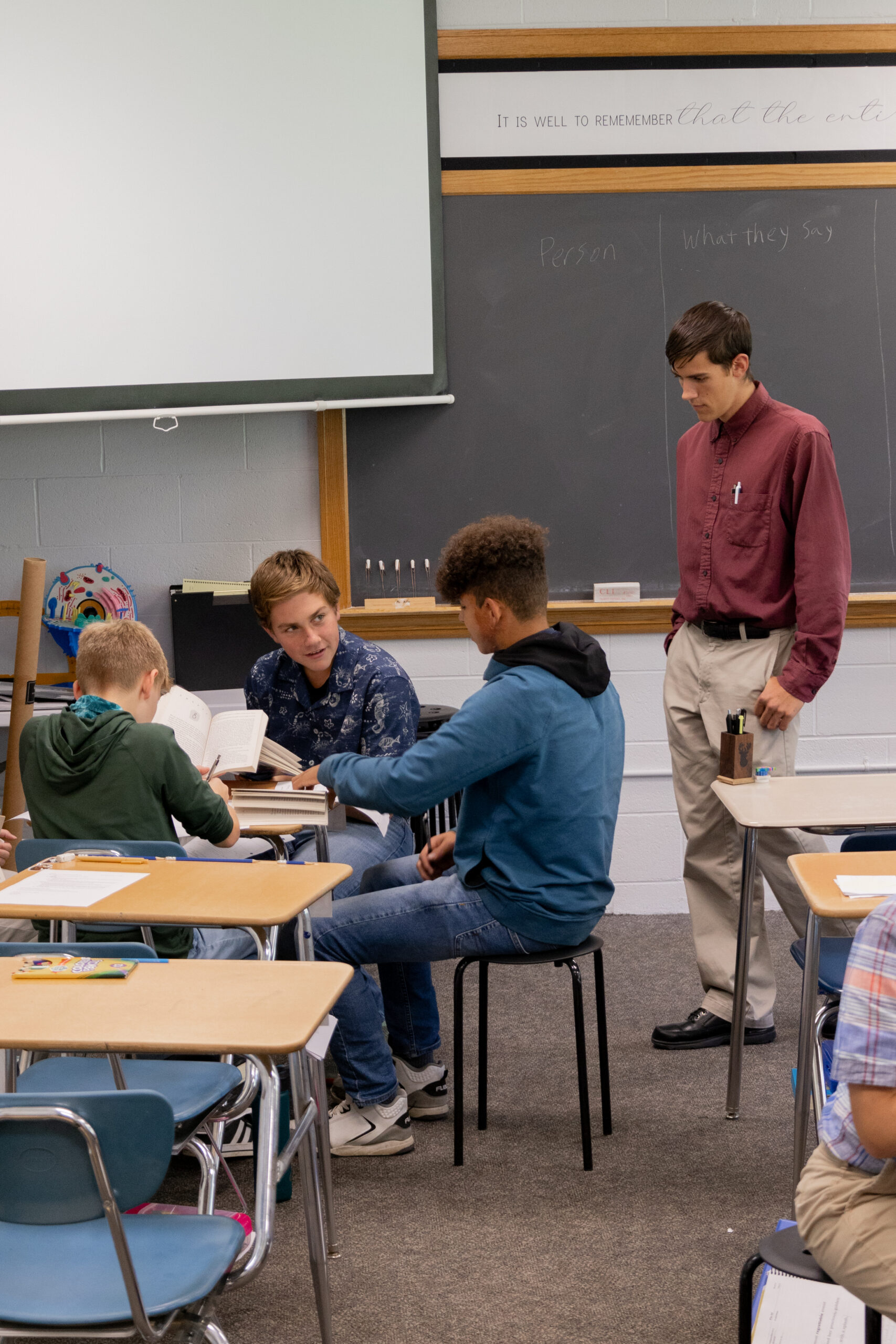
Classroom Management
Rules and guidelines are essential to keep your classroom functioning smoothly and to provide security for the students and structure for the class.
Establish early on with your students why rules are important. Discuss the rules so the students know what they are and what they mean. Give examples and scenarios to help in explaining the rules.
Rules Vs. Expectations
Differentiate between rules and expectations.
Rules are general and overarching. You will want to have around 3-6 stated classroom rules—they are the essentials of how you will expect your students to behave. They may include things like “Listen when others are talking,” “Be respectful,” or “Obey the teacher.”
Rules are intentionally general to encompass a wide range of behaviors.
State rules in the positive. For example, “Speak only with permission,” not “No talking without raising your hand.”
When rules are broken, there should be consequences of some sort.
Expectations are more specific and granular than rules—they are simply the normal way in which you do things in your classroom. A smoothly functioning classroom will have dozens of expectations in place, such as, “This is how we pass out papers,” “This is what we do if we need to go to the bathroom,” or “This is what we do if we have a question.”
As a teacher, you should determine your expectations before school starts so that you can communicate them clearly to the students. This takes time and effort but will pay off in the long run.
Model expectations to students, or ask them to show you the right way to do something (after the expectation has been clearly established). Students should see, feel, and understand what is expected of them.
If a student breaks an expectation, it is generally better to have them practice doing the behavior the right way instead of enforcing a punishment.
Implementing Rules Consistently
Rules and expectations are only as good as the teacher who implements them. What one teacher finds works for them may not fit with another teacher’s personality or preferences.
For repeated rule-breaking, consequences should be cumulative. The first offense may mean a warning. The next offense merits abc, and the third offence xyz, with each consequence level being stiffer. (The consequence sequence can start over at various intervals depending on the age of the student. It may be daily for younger students or weekly or quarterly for older students).
Be clear. Know in your own mind what the rules means. Know what you want your classroom to be. Think about the types of behavior you don’t want to see and decide how you will deal with them when they arise.
Be consistent. Students will tend to push against boundaries to discover whether the boundaries hold or not. If you as the teacher uphold rules infrequently, it will lead to more bad behavior. If you hold a line consistently, students will cooperate. Children crave security, and a consistent teacher sends the message that they are dependable and students can trust them.
The Goals of Good Classroom Management
Your goal in creating rules is to create an environment where learning is the reason for doing school. If there is disorder and distraction, students cannot learn.
Your aim is for the student to take responsibility for their own actions.
Pursue the child’s heart, not just right actions. Chronic behavioral issues do not come without a reason—unstable home environments, struggling academically, attention-seeking, impulsivity, peer pressure, lack of sleep, poor nutrition, etc. Look diligently to find underlying causes.
Keep the “why” of discipline in front of you. The goal of classroom management is not to create a herd of robots who perfectly do what they’re told without a moment’s hesitation. The goal is to be part of forming people with soft hearts that are turned towards the Father.
Developing Procedures
Some areas to consider in building classroom procedures:
Student desks—how will you arrange the desks? Traditional rows? All facing forward?
Specific arrangement of desk contents—How will students learn to organize desk contents? How often will they be asked to tidy their desks?
Morning routines—what 3-5 things do you want students to do every morning when they arrive?
Restroom plan—When will students use the restroom? May they go during class time? What behavior do you expect in the restrooms?
Moving around the classroom—Are students allowed to get up and move around the classroom whenever they want? How will they know when are/aren’t appropriate times?
Moving around the building—Do you expect students to walk in the building? Are they allowed to talk while in the hallways?
Water-drinking plan—When will students get drinks? May they get up for a drink during class time? Are water bottles allowed by their desks?
Leaving and entering the room—Will they line up before exiting/entering the classroom? What is your recess equipment plan?
Lining up—How will they line up? Who goes first? Who holds the door?
Hand/finger signals—Will students be required to raise hands to speak? Will you have signals for asking permission to leave their desk, sharpen a pencil, get a tissue, go to the restroom, etc.?
Handing in books and papers—Where will students hand in their work? When? How? Plan and label locations.
Lunch time—Where will they eat? What is your hand-washing plan? What about microwave usage?
Pencils—When will the sharpener be used and by whom? How will you make sure there are enough sharp pencils on hand?
Free time—What will faster students do when they finish their work? What if they rush through work to have free time?
Sources
Expectations and Order by Arlen Birt Expectations and Order - The Dock for Learning
Setting the Tone: Clarity, Consistency, Composure by Carolyn Martin Setting the Tone: Clarity, Consistency, Composure - The Dock for Learning
Help for Beginners and the Experienced by Betty Yoder Help for Beginners and the Experienced - The Dock for Learning
Some Advice on Classroom Management by Meghan Brubaker Some Advice on Classroom Management - The Dock for Learning
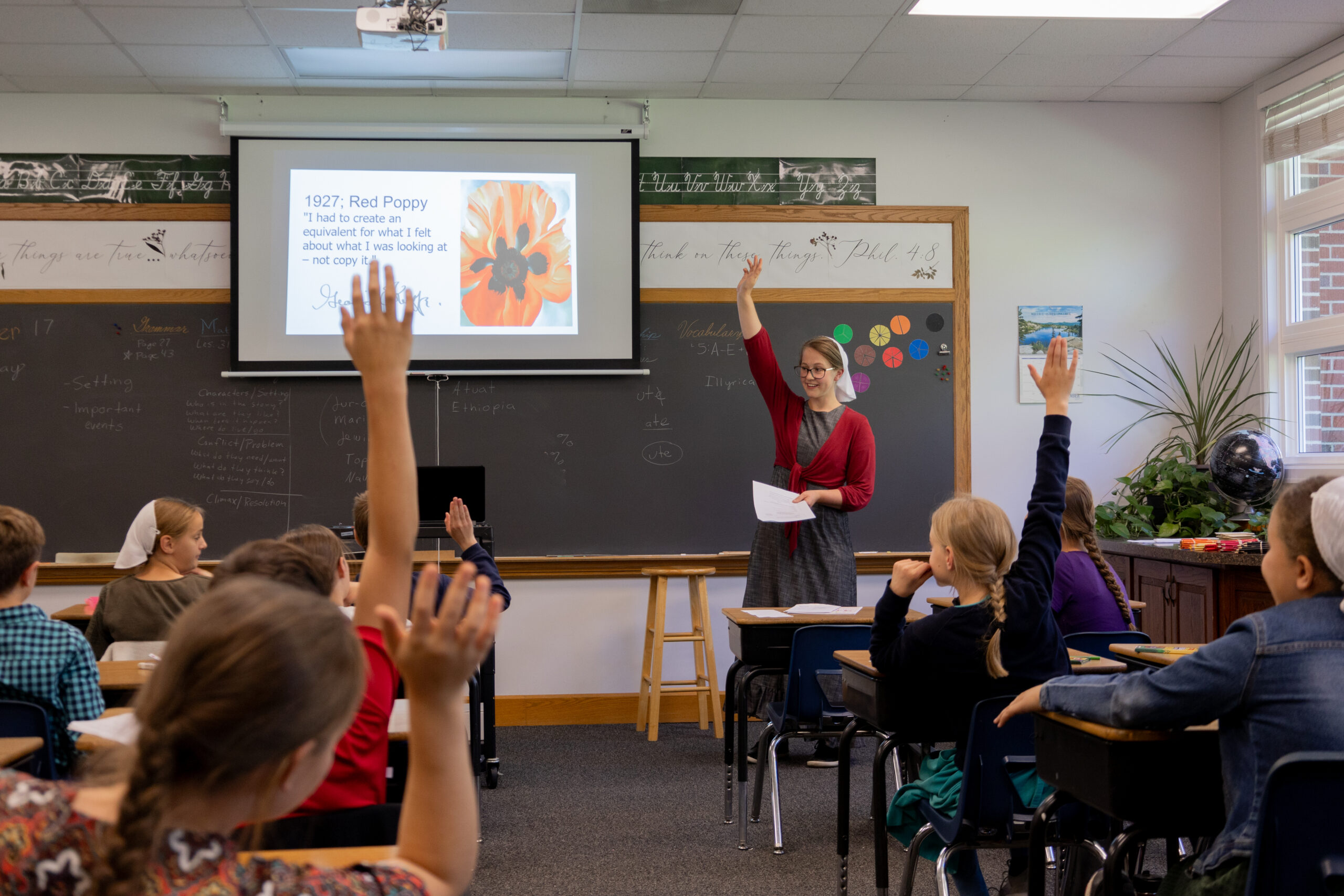
Using Powerpoints
Programs such as PowerPoint, Keynote, LibreOffice and Prezi help teachers to emphasize important points and use visuals in their lessons. Their use is an art well-worth mastering.
If you need training in the mechanics of using presentation software, go to the library and get one of those “for dummies” books. The Complete Idiot’s Guide to PowerPoint is one such example. Training videos can be found online as well.
Remember that efforts to attract attention too easily distract attention. While most presentation software gives you the ability to add flashing, buzzing, excessive color, and movement, don’t overuse these features.
Presentations should focus the audience’s attention on each piece of information. Rather than cramming as much as you can onto every slide, devote each slide to a single idea, and remove everything that might distract from that idea.
Font size should be at least 28 pt. If the text is too small to read, it loses all value.
Avoid slides filled with too much text. The words on the screen should emphasize what you’re talking about, not be a replacement for or exact copy of the words you’re saying.
The following websites offer more practical tips on how to create effective visual presentations:
Sources
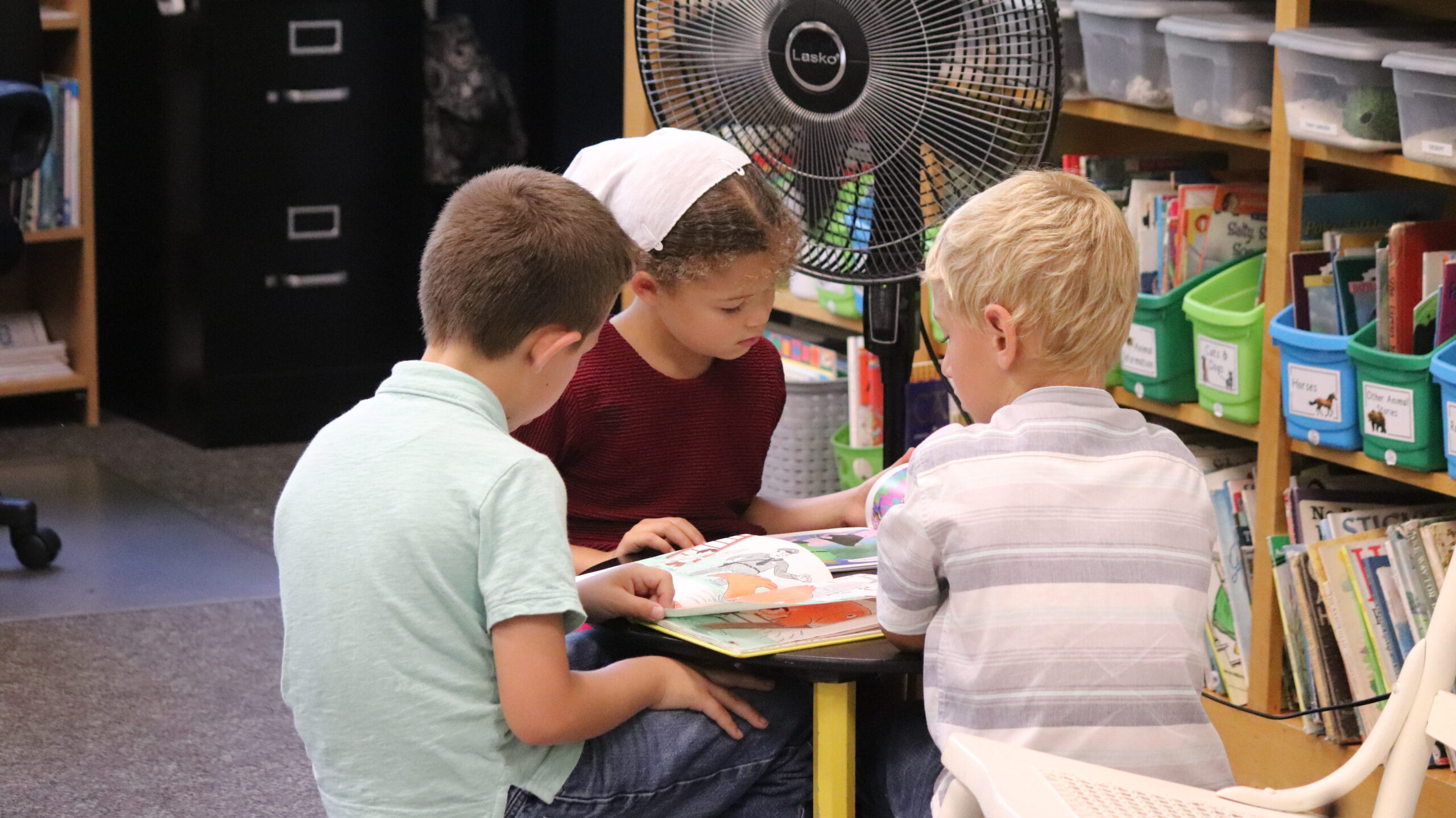
Maintaining Student Engagement
Part of your job as a teacher is to not only present material, but to present it in such a way that it makes your students want to learn it.
Find ways to give your students tactile learning experiences, where they can interact physically with the learning material.
Consider students’ individual interests, talents, personalities, and motivation levels when planning instruction.
When choosing a learning activity, aim for one that involves students in a meaningful way. Avoid busy work or tedious activities for no greater purpose than filling time.
Student disengagement or behavior problems are sometimes the result of activities not being learner-friendly. Put work into creating interesting learning experiences that draw on students’ natural curiosity.
An overwhelmed child is usually an unengaged child. Be aware of the range of learning abilities in your classroom and be willing to differentiate activities as needed for students who struggle.
Tactics to keep students engaged:
Varying voice tone
Using humor
Varying the intensity of the lesson
Clarifying the purpose of the lesson
Asking questions
Brainstorming together
Having students work in pairs/groups
Assigning manageable independent tasks
Sharing personal examples
Doing role-play
Using visual aids
Keep students moving physically
Involve all students in answering questions by using small whiteboards or scrap pieces of paper. Instead of only hearing from the smart, confident students, this allows everyone to engage with the material and gives you as the teacher an opportunity to call on shy, hesitant students when you can already see they have answered correctly.
Don’t try to compete with distractions. At times, you may need to remove the distraction before moving on with the lesson (for example, a bee is flying around the classroom). Other times, you may need to pause for a moment and experience the moment together (for example, the first snow of the season is falling outside the windows).
Sources
Effective Instruction in the Classroom - The Dock for Learning
Tips for Improving Classroom Engagement - The Dock for Learning

Lesson Planning
The Basics of Lesson Planning
A goal without a plan is only a dream. If you have a goal of teaching your students something, but no concrete plan for how you’re going to get there, your chances of actually achieving your goal are greatly diminished.
When planning a lesson, don’t simply ask yourself, “What will we do tomorrow?” That question leads to activity-based learning (for example, “we’ll read from our readers” or” we’ll complete a worksheet”). Instead, ask yourself, “What will my students learn?” This focuses on teaching a concrete body of information or a new skill.
Lessons should begin with some sort of “hook” to draw the students into the lesson and ignite their interest. It may be a short demonstration, question, joke or funny anecdote, interesting fact, object or prop that relates to the lesson, etc.
Many taught lessons naturally follow a pattern of direct instruction (you as the teacher presenting information or teaching a skill), guided instruction (giving the students an opportunity to worth with that information or skill in a structured and supported way), and independent practice (allowing each student to work with the new concept on their own). Another way of framing this is thinking in terms of “I do, we do, you do.”
Objectives
Making objectives is very important in lesson planning. An objective is a written statement of what the students will learn as a result of your teaching.
Objectives can be written in terms of “The student will be able to . . .”
Bloom’s Taxonomy is a helpful tool in writing objectives. It provides a framework of six cognitive processes, listed in order from lower order thinking skills to higher order thinking skills: remember, understand, apply, analyze, evaluate, create. In each of the six categories, there are suggested verbs you can use in your objectives to most accurately describe what you want your students to be able to do by the end of the lesson.
The following resource may be helpful in using Bloom’s Taxonomy: Bloom Writing Objectives - The Dock for Learning
Lesson objectives must begin with the end in mind. Before you can plan an effective lesson, you need to think about where you’re planning to go. Know exactly what you are trying to teach your students and what you’re going to do to get there.
Objectives keep you from generating a lot of activity without a purpose. Instead of just doing things and hoping that some of them will be productive, planning your objectives allows you to focus your energy in a specific direction.
Follow the three M’s of objectives (borrowed from Doug Lemov):
Manageable: the objective should be written in a way that it can be achieved in one day’s lesson.
Measurable: the objective should be written in a way that your students’ success can be determined. At the end of the lesson, can you tell whether the objective has been met?
Made first: the objective should be determined before you decide how you’re going to reach that objective. You should know what you want to teach before you decide what activity or assignment you’re going to use to teach it.
Textbook publishers often provide their own objectives, but you may need to adapt those to fit your classroom and students.
Assessments
Another component of lesson planning is knowing how you will assess whether or not you have met your objectives.
Assessments may come in the form of written assignments, group work, worksheets, etc. An assessment is any way that you can check for student understanding.
Objectives ask “What will the student know?” Assessments ask, “How will I know whether or not they know it?”
Other Advice
Whenever possible, try to connect new knowledge to students’ previous knowledge. This builds a scaffolding of learning that makes learning new information more intuitive and leads to better retention.
Whenever possible, avoid planning each day’s lesson in isolation the day before you teach it. If you can think in longer sections of what you’re attempting to teach, it will enable you to build lessons off each other and connect to previous learning in ways that will strengthen your teaching and greatly aid your students’ understanding.
Sources
The 4 M's of Effective Objectives: Common Mistakes and How to Avoid Them - The Dock for Learning
What Do Teachers Do? Focusing Your Lessons with Objectives - The Dock for Learning
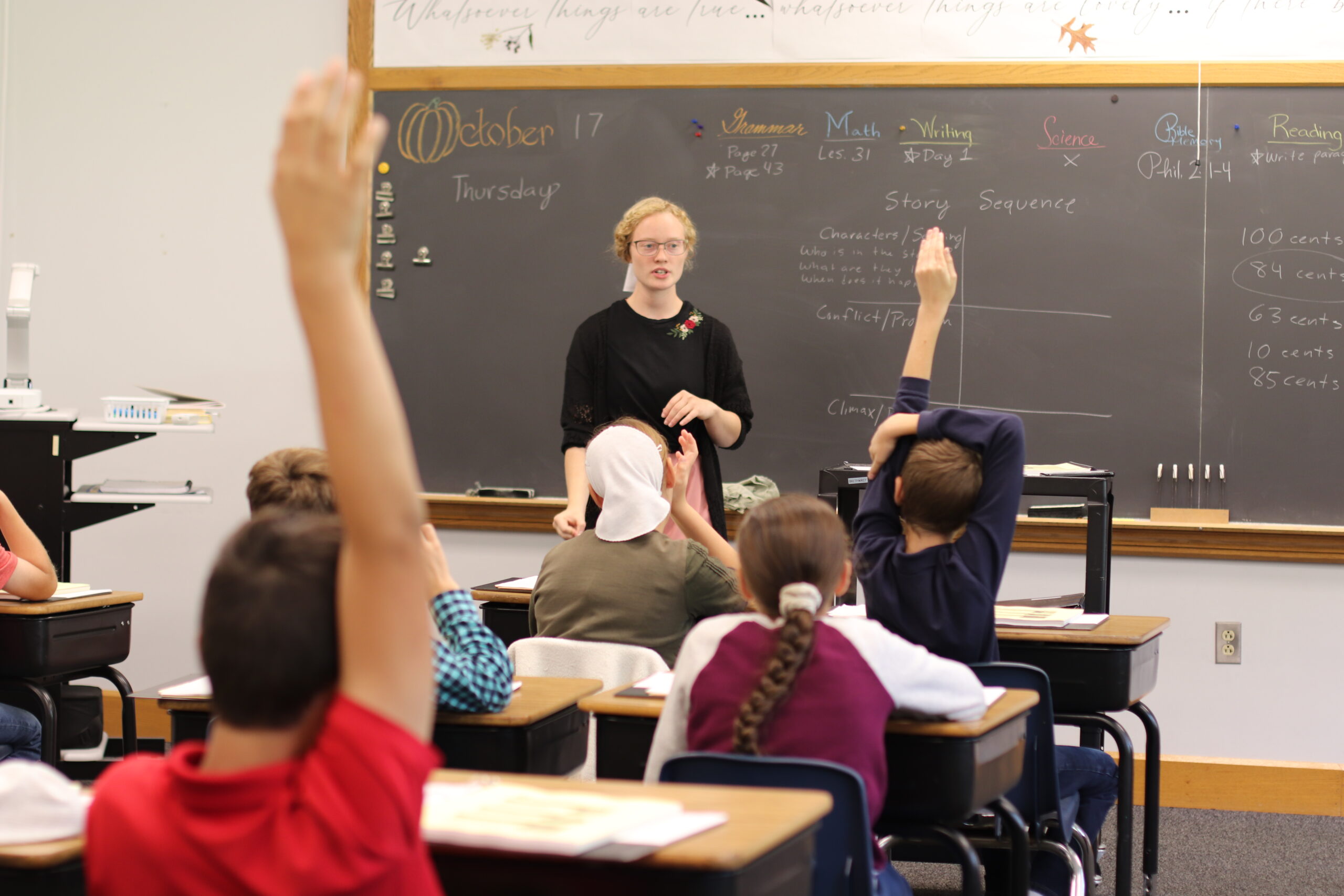
Leading Class Discussions
Stimulating, productive discussions are among the most rewarding classroom experiences for both teachers and students. Teachers can use specific strategies to ensure that a discussion doesn’t flop, either due to the excruciating silence of unresponsive students or the uncontrolled chaos of too many students talking at once.
Before the Discussion
Plan questions beforehand. Here are general types of questions that are useful in many situations:
“What connections do you see between _____ and _____?”
“What do you think about_____?”
“How would you feel if _____?”
“How would you respond to _____?”
“Can you explain _____?”
“What would cause ______?”
“What would be the consequences of _____?”
It is important to establish clear procedures. Before the first class discussion of the year, explicitly spell out how you expect your students to behave. Some examples of expectations you might establish include the following:
Instruction on what types of responses are relevant and what is distracting
Establish an environment of respect where students speak in turn and listen to each other
Demonstrate what respectful listening looks like and require it of all students (keep your own mouth closed, turn to face the speaker)
Develop hand signals to show students when you specifically do or do not want them to raise their hands before answering
During the Discussion
While a class discussion is inherently student-centered, you as a teacher still play an important role in helping the discussion to be fruitful.
Know your students—be aware of which students are likely to speak too much, which students will get overlooked, and which students are potential troublemakers.
Be prepared—in a lecture, you can decide what content you will cover. In a discussion, you will need to be prepared to explore any issue reasonably related to the discussion topic.
Begin the discussion—set the tone with a thoughtful question, controversial comment, or shared experience of reading an article or watching a video clip.
Ask questions—ask a student for clarification, to support his comment or opinion, or to respond to what another student has said.
Provide summaries—provide periodic summaries of what has been discussed so far.
Reflect—either as a group or on your own later, reflect on what worked well and what you might do differently next time.
Not all responses need to be verbal. A quick raise-of-hands poll such as “Raise your hand if you think _____. Now raise your hand if you think _____ instead,” can get all students thinking and responding without saying a word and often leads to productive comments from students who wish to explain their responses.
As long as it is sincere and relevant, every student response is a good response. Even when a student answers a question incorrectly or gives a comment that reflects faulty understanding, he deserves to be recognized and encouraged for making an effort to engage with the material and connecting it with his prior knowledge to the best of his ability.
Sources
Cultivating Healthy Class Discussions by Peter Goertzen Cultivating Healthy Class Discussions - The Dock for Learning
Effective Classroom Discussions IDEA Paper 49 Effective Classroom Discussions - The Dock for Learning
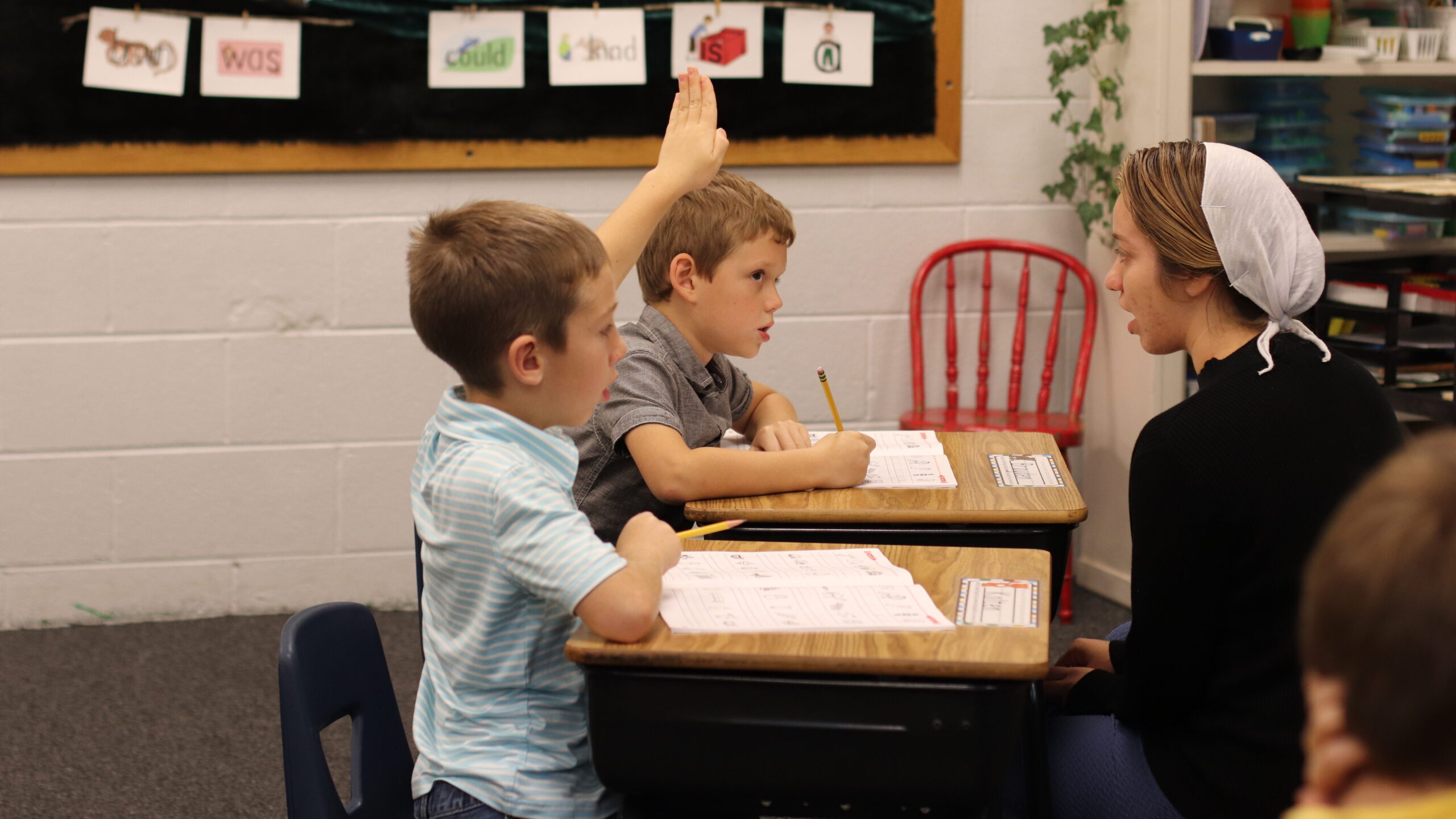
Asking Questions
The “Why” of Question-Asking
Asking good questions is a powerful learning tool that is often under-utilized. With intentionality, the questions you ask your students can provide valuable learning opportunities.
The “What” of Question-Asking
Recognize that there are different types of questions.
Some questions are fairly simplistic, asking for basic information or recall. These types of questions are well-suited to situations like a review session or parts of math class.
Some questions go deeper and require higher-level thinking. These types of questions rarely have one “right” answer, but are more open-ended, asking students to apply knowledge and draw connections.
Allow a wait time of three to five seconds for students to form a response. Calling on a student too soon or moving too quickly to the next person denies the child enough time to retrieve the information and deprives the brain of interaction with the question.
Cold calling (the practice of calling on a student randomly, not simply choosing one who has raised their hand) is a valuable technique. However, make sure you ask the question first before using a student’s name. Saying the name first, such as, “Carl, what is the purpose of photosynthesis?” can cause everyone who isn’t Carl to shut their brains off since they already know they don’t have to answer.
The “How” of Question-Asking
Plan your questions before class and write them down instead of trying to come up with good questions while teaching.
Beware of approaching asking deeper-level questions like a softball game, where you as the teacher “pitch” the question to the student, and they either hit the ball or strike at it, and that’s the end of the interaction. Instead, view asking questions more as a game of volleyball, where there is a lot of back and forth between you and the students, and you direct follow-up questions to other students as well.
For example, asking a question might look something like this:
Teacher: Asks question
Student 1: Answers
Teacher: “Student 2, do you agree or disagree? Why?”
Student 2: Responds
Teacher: “Student 3, do you have anything to add?”
Ask follow-up questions to extend student responses. For example:
What makes you say that?
How do you know that to be true?
Can you say more about what you’re thinking here?
Why is this important?
Can you explain how you came to that conclusion?
Allow students to interact with questions in various ways:
Group response: for one-to-three-word definitive answers, ask students to respond as a group. It is helpful to have a hand signal that prompts them to say the answer, that way you can control the wait time.
Partner response: if the needed answer is less objective or is longer than a few words, have students tell the answer to their partners. You can tune into their responses or ask a few students to share their response afterwards.
Written response: for a deeper-level thinking question, have students write down their answers before asking a few students to share their thoughts. This allows students to process their thoughts before needing to share them aloud and will enrich class discussions.
Further strategies for using questions (adapted from J. Doherty’s book Skillful Questioning)
On the Hot Seat: Students take turns sitting in the “hot seat” and answering questions.
Ask the Expert: The teacher asks questions of a student on a given topic and encourages other students to also ask questions.
Ask the Classroom: Display questions to encourage thinking about pictures or objects in the classroom.
Phone a Friend: A student calls on a fellow-student to answer the teacher’s question. The first student also gives an answer.
Eavesdropping: The teacher circulates in the classroom, listening in on groups, and asking questions based on their discussions.
Question Box: The teacher has a box containing a series of questions. At the end of the day, or end of the week, take some time to choose a few questions for class discussion.
What is the Question? The teacher provides the answer and encourages students to determine the question.
Sources
I Have a Question! by Arlene Birt I Have a Question! - The Dock for Learning
Pedagogical Moments: Questions by Carolyn Martin Pedagogical Moments: Questions - The Dock for Learning
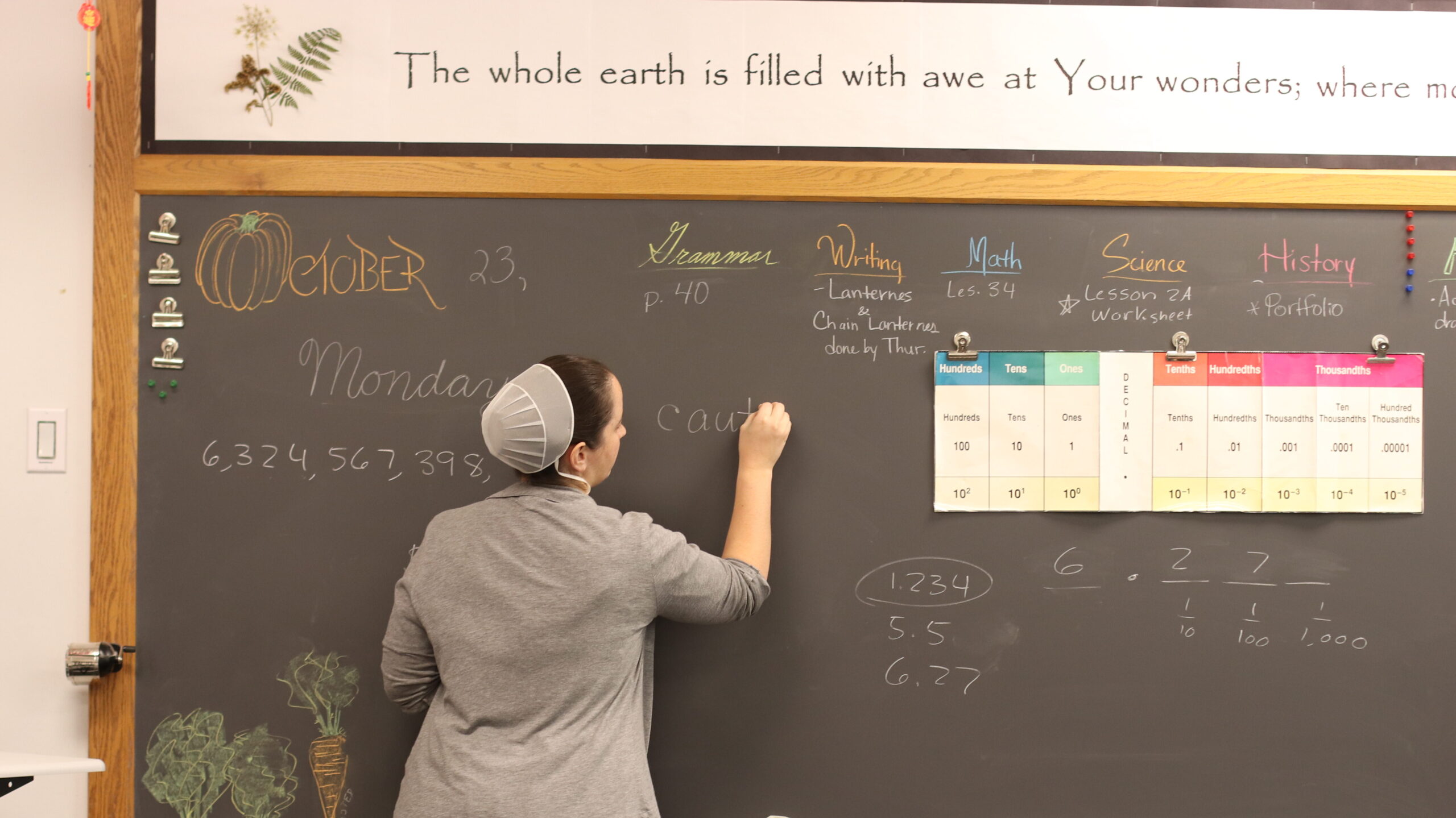
Board Work
Your chalkboard or whiteboard is an amazing tool that you use every day—it is worth investing time and intentionality into using it well.
Keep boards clean. At least once a week, wipe them down with water and then a dry cloth. Dirt and smears distract from your teaching. (Note: many teachers have noticed that any kind of cleaner eventually takes the smooth shiny finish off whiteboards. Just use water!)
Erase often. The more white space there is, the less distractions there are, helping students to focus on the task at hand.
As much as possible, use neat handwriting. You are modeling for your students what you expect their writing on their written assignments to look like. Demonstrate this every time you write on your board.
After orally presenting the main point of your lesson, demonstrate the concept you just taught on the board. This gives students both an oral and visual presentation.
Go slowly. It might be easy for you, but it is new and confusing to students.
Pause between steps. This gives the students a chance to comprehend at their own speed or think on their own about what step comes next.
You can let students practice a new concept on your board, giving them valuable guided practice.
Don’t neglect to use the board for diagrams, billboards of dates and persons in history class, showing cause and effect, or illustrating chronological order.
Sources
Tool Tips: Chalkboards and Whiteboards by Deana Swanson Tool Tips: Chalkboards and Whiteboards - The Dock for Learning
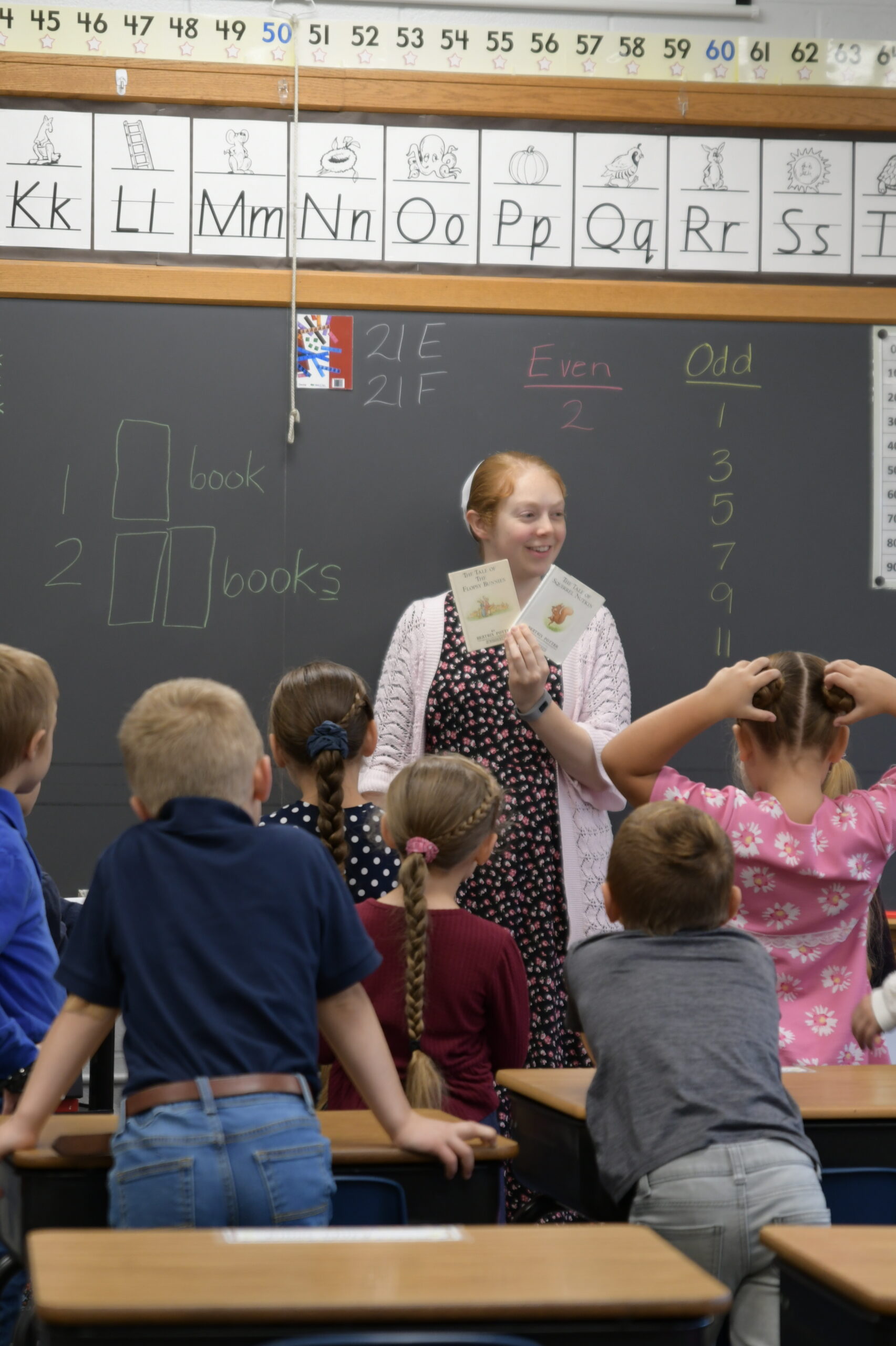
Professionalism in Student Interactions
Be sure you are pronouncing students’ names correctly, using the form of their name they prefer if they also go by a shorter version, and avoiding fun nicknames or pet names.
Personas to avoid falling into:
The Cool Teacher—don’t try to dress or act like your students in an attempt to be accepted
The Young, Relevant Teacher—don’t mimic student trends; this will actually alienate students
The Important Authority/The Professor—don’t try to project superiority through big words or sarcasm
The Flirt/The Creepy Teacher—avoid sitting with opposite-gender students, having conversations in closed rooms, or repeated one-on-one talks
The Best Friend/Youth Counselor—don’t undermine your authority by over-mentoring certain students
The Mocker—don’t mock cultural norms or join in when students are making fun of something
Aim to be mature, secure, and stable. Be interested in your students’ lives, bless the overlooked, and encourage freely.
Dress neatly and professionally. You should be dressed a level up from what your students are (e.g. wear a full button down if students are required to wear polos, etc.)
Remember that if your students see you outside of school, your actions should always be responsible and above reproach.
Avoid interacting with students online/through social media.
Sources
Relating to Students 2.0 by Jeff Swanson Relating to Students 2.0 - The Dock for Learning

Communicating with Parents
Establish a Foundation of Respect
Approach conversations with parents with compassion. Remember that parents can feel vulnerable, like failings in their children are direct reflections of them as parents. Emphasize your desire to work together with the parents to help the child thrive.
Come to the conversation with a posture of curiosity and a desire to truly hear what the parents have to say (not just share your own opinions). Ask lots of questions and consider planning your questions beforehand. This approach respects parents’ perspectives and reduces resistance.
Recognize your place in the layers of authority at play. You are in a position of service under the authority of God, the local church, the school board, and the parents.
Consider a proactive approach, in which you contact parents before the school year to learn about the child’s strengths, challenges, and effective discipline methods. This partnership approach acknowledges parents’ expertise.
Don’t let the only time parents hear from you be when something is going wrong. Send an email or pick up the phone to tell them about good behavior, too. Affirm the strengths you see in the child.
Regular, ongoing communication is valuable. Consider sending frequent progress reports detailing character growth or academic progress, regular newsletters, or a systematic personal contact with parents (e.g. sending an email to a different parent at the end of each day mentioning something you appreciated about their child that day).
Tips for Communicating Clearly
Mirror and summarize what you hear the parents saying throughout the conversation. This reflects an openness to truly listen and a clear attempt to ensure understanding. Try phrases like, “I think I hear you saying (summary of what was said). Did I hear you correctly?” “I’m not sure if I understood what you were saying about x. Could you talk more about that?” “I agree with what you said about x. What would you say about y?”
Be honest—even when it’s difficult. Parents are trusting you with their precious children, and part of that includes trusting that you will communicate with them what they need to know.
Practical advice for positive communication:
Make early positive contact—build rapport before addressing issues
Use a positive tone—avoid overly critical language about students (this can trigger a parent’s naturally protective instincts)
Use the sandwich method—offer a positive comment before and after sharing any negative feedback
Understand the parents’ perspective—recognize that parents see children as their most precious possession
Be prepared and solution-oriented: come to parent meetings with documented observations and potential solutions
Show a posture of humility—be quick to apologize for any mistakes and listen humbly to criticism
Other Considerations
Recognize the following possible barriers to parental involvement:
Intimidation by education—parents may feel intimidated due to their own negative school experiences, cultural devaluation of education, or perceiving teachers as “smart”
Separation of home and school—some parents, due to cultural norms, see home and school as separate, unaware they can contribute
Perceived inability to help—parents may feel incapable, especially when helping students with homework, fearing they’ll appear inferior to their child
Set boundaries if a parent situation becomes volatile or you are dealing with persistent parent harassment. Be quick to involve the administrator or members of the school board.
Sources:
Relating to Parent Families and the Local Church by Glendon Strickler Relating to Parent Families and the Local Church - The Dock for Learning
Facilitating Open Communication with Parents by Jason Croutch Facilitating Open Communication with Parents - The Dock for Learning
Cultivating Conversations by Anna Zehr Cultivating Conversations - The Dock for Learning
What Parents Want Most from Teachers by Shari Zook What Parents Want Most from Teachers - The Dock for Learning
Naughty Students, Naughty Parents, and Naughty Teachers! By Jeff Swanson Naughty Students, Naughty Parents, and Naughty Teachers! - The Dock for Learning
Teacher Ties with Parents by Norwood Shank Teacher Ties with Parents (Norwood Shank) - The Dock for Learning

Parent Teacher Meetings
Before the Meeting
Recognize the purposes of parent-teacher meetings:
To establish common ground between the parents and teacher
To create an opportunity for parents and teachers to communicate on a constructive level (rather than only once there is a problem)
To facilitate collaboration and teamwork in caring for the child
If you feel nervous, remember that the parents likely do, too. As one principal said, “You think you’re nervous? It’s not even your child you’re talking about. The parents are just as nervous as you are because it’s their child and they’re the ones that are responsible.”
Neither the teacher nor the parent is on trial. It’s a time of communicating and learning to see things from the parents’ perspective.
Pray over the conferences—pray for wisdom, clear communication, and understanding.
Consider an alternative to you sitting on one side of your desk and the parents on the other side. It can feel intimidating to parents who feel like they are a student again, and the desk can feel like a barrier. Place their chairs to the side of your desk or sit around a table.
During the Meeting
Always begin with a positive comment (encouragement, something the child is doing well, a way they contribute well to the classroom, etc.)
There is value to discussing “small issues” too. Don’t wait until something is a big problem to bring it up. It’s easier to deal with something early and in a non-threatening way. You could say, “This isn’t a big deal, but it could become a big deal if we let it go. I started to notice this student has this problem. What can I do about it? What can you do about it? What works at home in dealing with this sort of problem?”
There should be no surprises. If Beth is struggling in math, her parents should already be aware of this through prior communication. Do not assume they have figured it out.
Aim to spend at least as much time listening as you do talking. Parents need to feel heard. Also, they are the expert on their child, and you can learn from them.
Remember that parents do want to know how their child is actually doing. It is hard to tell them of difficulties, but it is important. Present problems in a helpful and supportive manner, not accusing or blaming the parents.
Talk about all aspects of the child’s person—academic, social, spiritual, and personal growth.
Ask questions. Prepare your questions beforehand. Here are some examples:
What does Billy say about school?
Is there anything about school that has been particularly stressful for him? How can I help?
What are areas you’d like to see him grow in right now?
Is there anything you want me as a teacher to know about your child?
How much time does your child spend on homework each night? How do you feel about this amount of homework?
Due to time constraints, some teachers prefer to ask some of these questions in the form of a paper survey the parents can fill in and submit later. See the following example: https://thedockforlearning.org/document/classroom-survey-for-parent-teacher-fellowship/
Read this article for one seasoned teacher’s step-by-step description of how she runs a parent-teacher meeting: https://thedockforlearning.org/parent-teacher-conferences-part-two/
Sources
You Are Not on Trial: How Parent-Teacher Events Can Strengthen Your Teaching by Victor Ebersole You Are Not on Trial: How Parent-Teacher Events Can Strengthen Your Teaching - The Dock for Learning
Parent-Teacher Conferences by Arlene Birt Parent-Teacher Conferences, Part One - The Dock for Learning Parent-Teacher Conferences, Part Two - The Dock for Learning

Staff Meetings
Meetings provide an opportunity for clear communication, effective planning, fruitful discussion, and professional development
Attend a meeting ready to listen to others, focus on the task at hand (silence technology or other distractions), and offer your own input
Regular meetings as staff help to create an environment of teamwork and support. Teaching is emotionally expensive and lonely, but interacting with each other as staff can combat burnout and provide fresh inspiration.
Foster growth by exploring the following:
Set personal goals—what can change tomorrow? What are your quarterly visions?
Discuss staff-wide vision—how can you make the school different next year? What aspects of school culture need to change?
Strategize—what is something that you’ve “always done this way” that needs to change? Where can you broaden your perspective?
Reasons to include professional development in staff meetings:
Giving teachers opportunities to grow in the craft of teaching can prevent burn-out
The intentional developing of teachers’ skills is to your school’s advantage
Practical tips for using staff meetings as opportunities for professional development:
Have guest speakers come in to talk about an area of expertise
Use pedagogical books as a framework for learning and discussion
Pull from staff strengths—have teachers talk about areas they have invested into and can present techniques to others
Sources
Why Meet? How Effective Meetings Can Build Your School Culture by Philip Horst Why Meet? How Effective Meetings Can Build Your School Culture - The Dock for Learning
Staff Development: Empowering the Educator to Engage the Learner by Howard Lichty Staff Development: Empowering the Educator to Engage the Learner - The Dock for Learning
We Love a Challenge: Promoting Staff Development by Ken Kauffman We Love a Challenge: Promoting Staff Development - The Dock for Learning
Maximizing After-School Chat Time by Ryan Hoover Maximizing After-School Chat Time - The Dock for Learning

Communicating with Students
Be aware of your own tendencies. If you are a task-oriented person who tends to prioritize tasks over people, make sure that in your zeal to do all the things necessary to give your students a quality education you aren’t missing their hearts
Practical ways to relate to students:
Greet your students at the door in the morning—look each student in the eye and greet them by name as they enter the classroom
Allow time for students to tell their stories—let your students talk about the things that are important to them (while still having limits to ensure you aren’t wasting a lot of class time)
Write notes to your students—praise a student for something positive you noticed or encourage a way you’ve seen them working hard recently
Be interested in the things that interest your students—put effort into learning about their hobbies and interests
Pay attention to your students’ moods and emotions. Pause if a “fine” response feels off and be willing to listen to what’s going on in your students’ lives.
Sources
Relational Practices for Task-Oriented Teachers by Rosalie Beiler Relational Practices for Task-Oriented Teachers - The Dock for Learning
Relating to Students 2.0 by Jeff Swanson Relating to Students 2.0 - The Dock for Learning

Bullying: Let It Not Be Once Named Among You
I recently talked to a teacher from another school about a sad situation that had happened with some of her students. Evidently, one of the “cool” girls wrote a nasty comment to one of the not-so-cool girls, and in the process, really hurt the girl’s feelings. The offense was exacerbated by an afterschool ridicule session on school property, in which the offending girl and her friends taunted their target.
There are four issues to be considered in this situation.
Are events related to but not directly under our supervision within our realm of authority?
Technically, the answer is “no” because no teachers or administrators were there to witness either event, although one happened in the classroom on an undetectable level, and the other was after school had been dismissed.
But, I feel that it is within our realm of authority because it was a school-related/sponsored event and thus directly related to school, so my answer would be a definite, “YES!”
It’s not okay.
For anyone to be treated like this is not acceptable, and that is one of the reasons children are in our care in a Christian setting: because their parents want them to excel not only academically, but socially and spiritually as well.
In addition, parents desire for their children to be in a safe setting and to be protected, at least for a few years, from the nastiness and meanness of the rest of the world.
Yes, that is just life and people are mean and children need to learn to deal with it. But it is unfortunate, and as much as possible, these situations should be dealt with gently. The poor girl needs to be comforted and told that being treated like that hurts, and that it was not acceptable for other students to treat her like that.
Almost every adult I know can remember some sad situation from their younger years where he or she was treated unfairly, and to be honest, it is painful. The scars are there.
The bullies need to be reprimanded.
There are usually so many excuses that could be made for behavior like this: bad home situations, parents in the hospital, a recent death in the family, bullying from older brothers, etc. That does NOT give a child permission to be cruel to other students. Granted, that student needs a wise adult to talk to, one who could help them sort out all that he or she is dealing with in a proper and healthy way. But, he or she also needs to understand that it is not acceptable or permissible, especially in a Christian school setting, to treat another person in a cruel or demeaning manner. Hopefully some self-control and control of the tongue could be learned as well.
The conversation about bullying should include all students.
It is prudent and wise for us to talk about these types of things with all of our students in general, so that they know from the beginning that this type of behavior will not be tolerated by you, the teacher.
Teachers can only directly rule in their immediate domain: their classrooms. But, if the teacher cares enough and has a good rapport with the students, the teacher can have influence outside of the classroom as well.
Our being vocal about these types of actions will hopefully make our students think before acting in this way. We should keep a running dialogue of appreciation and respect for other individuals because they are our classmates, and hopefully, will someday be part of our churches, and thus brothers and sisters in Christ.
Photo by Road Ahead on Unsplash

The Twenty Percent
In a workshop for new teachers that I attended before my first year of teaching, I remember hearing this: “You will spend eighty percent of your time on twenty percent of your students.” I found that statement hard to believe at the time, but I was not many weeks into the school year before I heartily agreed. I even thought to myself that perhaps the numbers were more extreme, like ninety and ten. And it has held true almost every year of my teaching career, that I have thought to myself wryly, If I didn’t have (insert two or three students’ names) in my class, my job would be so easy this year.
Well, if you are looking for an easy job, I do not recommend teaching school. Making provisions and adjustments for those students who struggle (whether academically or behaviorally—the two often go hand in hand), is a normal and expected part of the job. The more we can look at it as an exhilarating challenge and not as an interruption or hindrance, the better off we will be.
This post is not intended to be an overview of the many different types of learning difficulties and the resources available for helping students. But if you have found yourself lying awake at night, unable to turn off your brain because you are at your wit’s end to know how to help a student better, I hope to offer you some encouragement. As we do our best to help every student learn well, here are some things we should keep in mind:
Perfect systems and solutions do not exist.
Sometimes I find myself thinking, If only I could find that one key to this student’s brain. . . While it is important to explore different resources and to adjust our classrooms to different students’ needs, we need to avoid a “savior mentality.” You are not going to find that one big solution that will suddenly make things easy for that student. We can celebrate the small victories, the little light-bulb moments that happen for students. Having a professional evaluator do testing with students can sometimes yield helpful insights, but even experienced professionals do not have magic cures. Most progress happens in patient, step-by-step guidance, one day at a time.
They’re going to be ok.
It is easy to worry about what will become of struggling students. How will they function when they are out of school? Will they be prepared for the adult world? As I think of my own schoolmates, and of the many students I have taught who are now adults, I can reassure you that most of those struggling students are going to be just fine. Sometimes it is easy to focus on the negative stories, but I could tell you many stories full of hope. One of my own classmates had a very difficult time in school (and made our teachers’ lives difficult too), and now I teach his children. He is a faithful Christian husband and father who takes good care of his family. In a conversation with him about his difficulties in school, he told me, “As soon as I got into the work world and my job was hands-on, I was fine.” (This makes me wonder how we could change our schools to be more accommodating to those hands-on, non-academics, but that is a topic in itself). I can think of many others too who might still not know the difference between a noun and a verb, but hand them a hammer or screwdriver, and they are in their element.
Struggling in school can actually be an advantage.
Hear me out on this one. I think “doing well” in school is overrated. Some students who have always found school easy end up being unequipped to handle challenges later in life. They do not know how to fail and try again. Students who need to work hard to learn in school are used to trying and failing, so it doesn’t faze them. I think of a friend of mine who never did well academically, but she is much better at trying new things than I am. Also, some of the kindest people I know are people who did not do well in school. They are good at cheering others on, because they know exactly what it feels like to struggle for success.
When students are supported in their difficulties and not ostracized or belittled for what they cannot do, they are able to thrive in their own way. As we work to accommodate “the twenty percent,” let us do it with joy and love, always envisioning a bright future for them.
Photo by Annie Spratt on Unsplash
- 261Page 3