Board Work
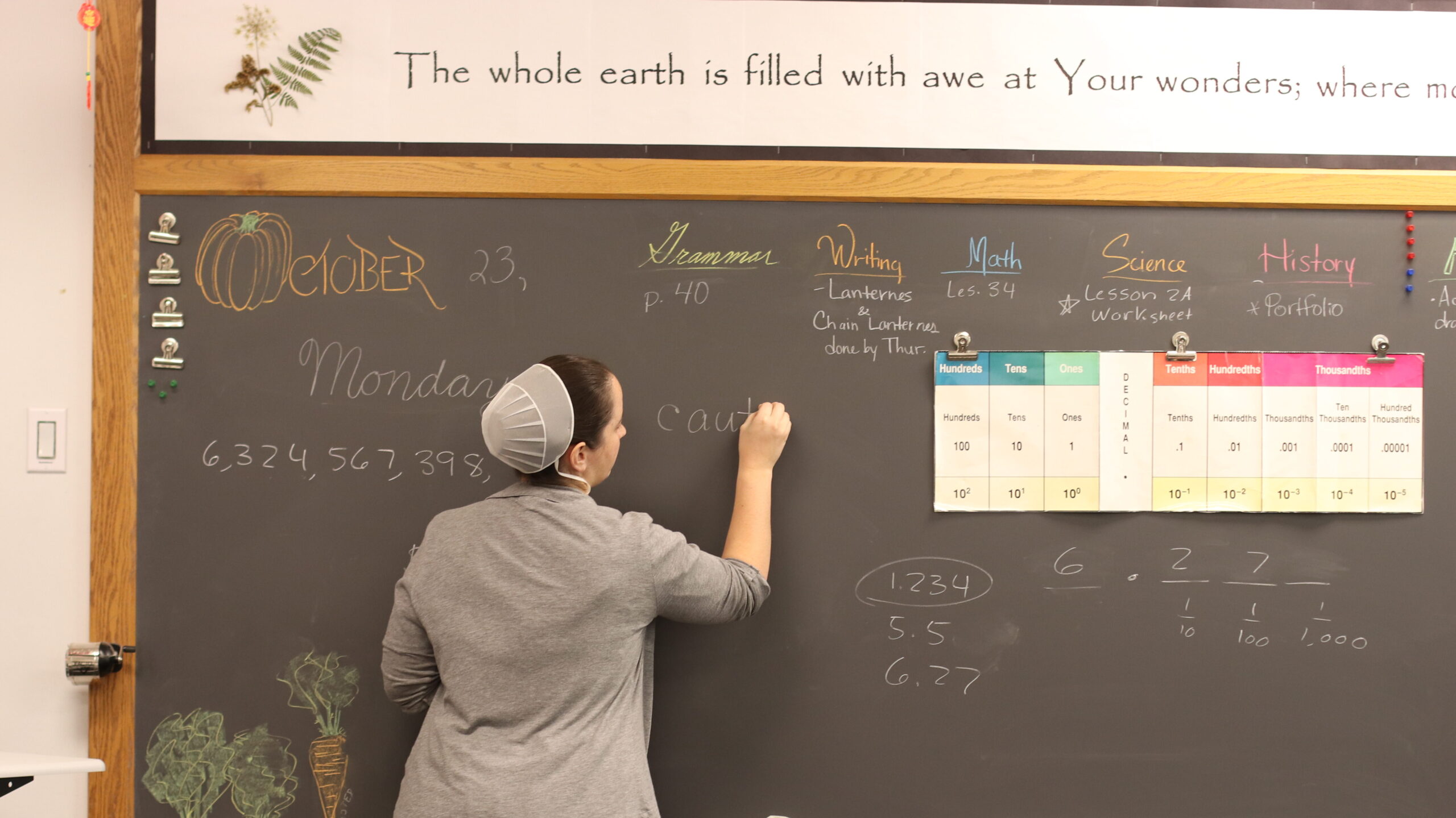
Your chalkboard or whiteboard is an amazing tool that you use every day—it is worth investing time and intentionality into using it well.
Keep boards clean. At least once a week, wipe them down with water and then a dry cloth. Dirt and smears distract from your teaching. (Note: many teachers have noticed that any kind of cleaner eventually takes the smooth shiny finish off whiteboards. Just use water!)
Erase often. The more white space there is, the less distractions there are, helping students to focus on the task at hand.
As much as possible, use neat handwriting. You are modeling for your students what you expect their writing on their written assignments to look like. Demonstrate this every time you write on your board.
After orally presenting the main point of your lesson, demonstrate the concept you just taught on the board. This gives students both an oral and visual presentation.
Go slowly. It might be easy for you, but it is new and confusing to students.
Pause between steps. This gives the students a chance to comprehend at their own speed or think on their own about what step comes next.
You can let students practice a new concept on your board, giving them valuable guided practice.
Don’t neglect to use the board for diagrams, billboards of dates and persons in history class, showing cause and effect, or illustrating chronological order.
Sources
Tool Tips: Chalkboards and Whiteboards by Deana Swanson Tool Tips: Chalkboards and Whiteboards - The Dock for Learning