Asking Questions
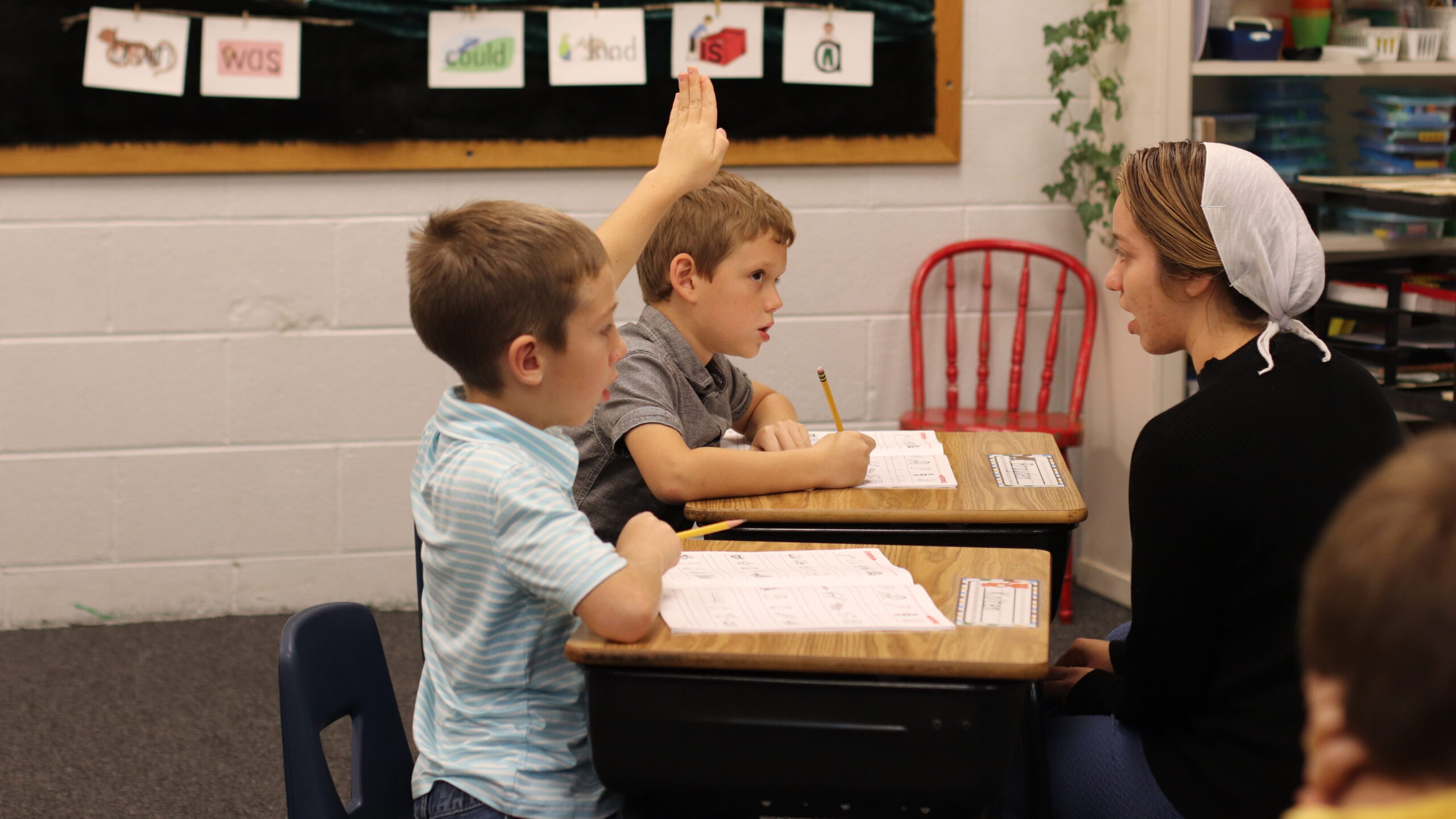
The “Why” of Question-Asking
Asking good questions is a powerful learning tool that is often under-utilized. With intentionality, the questions you ask your students can provide valuable learning opportunities.
The “What” of Question-Asking
Recognize that there are different types of questions.
Some questions are fairly simplistic, asking for basic information or recall. These types of questions are well-suited to situations like a review session or parts of math class.
Some questions go deeper and require higher-level thinking. These types of questions rarely have one “right” answer, but are more open-ended, asking students to apply knowledge and draw connections.
Allow a wait time of three to five seconds for students to form a response. Calling on a student too soon or moving too quickly to the next person denies the child enough time to retrieve the information and deprives the brain of interaction with the question.
Cold calling (the practice of calling on a student randomly, not simply choosing one who has raised their hand) is a valuable technique. However, make sure you ask the question first before using a student’s name. Saying the name first, such as, “Carl, what is the purpose of photosynthesis?” can cause everyone who isn’t Carl to shut their brains off since they already know they don’t have to answer.
The “How” of Question-Asking
Plan your questions before class and write them down instead of trying to come up with good questions while teaching.
Beware of approaching asking deeper-level questions like a softball game, where you as the teacher “pitch” the question to the student, and they either hit the ball or strike at it, and that’s the end of the interaction. Instead, view asking questions more as a game of volleyball, where there is a lot of back and forth between you and the students, and you direct follow-up questions to other students as well.
For example, asking a question might look something like this:
Teacher: Asks question
Student 1: Answers
Teacher: “Student 2, do you agree or disagree? Why?”
Student 2: Responds
Teacher: “Student 3, do you have anything to add?”
Ask follow-up questions to extend student responses. For example:
What makes you say that?
How do you know that to be true?
Can you say more about what you’re thinking here?
Why is this important?
Can you explain how you came to that conclusion?
Allow students to interact with questions in various ways:
Group response: for one-to-three-word definitive answers, ask students to respond as a group. It is helpful to have a hand signal that prompts them to say the answer, that way you can control the wait time.
Partner response: if the needed answer is less objective or is longer than a few words, have students tell the answer to their partners. You can tune into their responses or ask a few students to share their response afterwards.
Written response: for a deeper-level thinking question, have students write down their answers before asking a few students to share their thoughts. This allows students to process their thoughts before needing to share them aloud and will enrich class discussions.
Further strategies for using questions (adapted from J. Doherty’s book Skillful Questioning)
On the Hot Seat: Students take turns sitting in the “hot seat” and answering questions.
Ask the Expert: The teacher asks questions of a student on a given topic and encourages other students to also ask questions.
Ask the Classroom: Display questions to encourage thinking about pictures or objects in the classroom.
Phone a Friend: A student calls on a fellow-student to answer the teacher’s question. The first student also gives an answer.
Eavesdropping: The teacher circulates in the classroom, listening in on groups, and asking questions based on their discussions.
Question Box: The teacher has a box containing a series of questions. At the end of the day, or end of the week, take some time to choose a few questions for class discussion.
What is the Question? The teacher provides the answer and encourages students to determine the question.
Sources
I Have a Question! by Arlene Birt I Have a Question! - The Dock for Learning
Pedagogical Moments: Questions by Carolyn Martin Pedagogical Moments: Questions - The Dock for Learning