
All Content

Recess Games for Lower Elementary
Group recess games are a staple of every school playground, but sometimes teachers and students alike can grow weary of playing the same ones over and over again. Here are a few recess games you might consider adding to your rotation.
Johnny Johnny
Materials needed: Two end zones, either opposite walls of a gym or cones/other markers to delineate two safe areas. Ideal spacing depends on group size and age of the players.
Considerations: Can be played inside or outside.
The aim of the game: To be the last player to be caught.
Instructions: Choose one player to be “it.” They will stand in the middle of the playing field, halfway between the two end zones.
The rest of the players will go to one of the end zones. They will then call out in unison, “Johnny, Johnny, may we cross your bridge today?”
The person who is “it” will then respond, “Only if you’re wearing the color ___.” At that point, anyone who is wearing the specified color may cross to the other end zone, unhindered. Anyone who is not wearing the specified colour must wait until the person who is “it” says “Go!” At this point, they must try to get safely to the other side without being tagged. Anyone who gets tagged will then join the person who is “it” in the middle and help them tag players in consecutive rounds.
This repeats until everyone is caught.
Options for variation:
If your group size is large, you may want to choose two people to be “it” to start.
Another twist on this game is to allow the person who is “it” to allow crossing based on something other than color of clothing. They may make up whatever stipulations they want to, such as, “Only if you had cereal for breakfast” or “Only if you have a dog at home.”
Freeze Tag
Materials needed: If outside, a way to mark a contained area, such as the boundaries of a baseball diamond, or a rectangular area marked with cones.
Considerations: Can be played inside or outside.
The aim of the game: To be the last player to be caught and to help free those who have been caught.
Instructions: This game is like regular tag, only when someone is tagged, they must freeze in that position until another player comes and “frees” them by touching them. If a player runs out of the boundary lines, they need to freeze on the line and wait to be freed.
In order to keep the game from extending into infinity, it works well to instill a rule like “If you’re caught three times, you also become ‘it.’”
Options for variation:
If your group size is large, you may want to choose two people to be “it” to start.
Young children may enjoy a twist called “Chicken Tag” (or cow tag or dog tag or whatever animal you want), in which they must cluck like a chicken the entire time they’re frozen.
23 Skidoo
Materials needed: Two end zones, either opposite walls of a gym or cones/other markers to delineate two safe areas. Ideal spacing depends on groups size and age of the players.
Considerations: Can be played inside or outside. We also used to enjoy playing this one while skating on the rink during the winter.
The aim of the game: To be the last player to be caught and to help free those who have been caught.
Instructions: In this game, players try to run from one end of the playing field to the other without being tagged by the one or two people who are “it”. While in the end zones, they are safe and cannot be tagged. If a player is tagged, they must go to the middle of the playing field and stand with their arms outstretched.
Other players can free those caught in the middle by touching their hand or shoulder and counting aloud to twenty-three. If there is danger of being tagged while they are counting, they may run off at any time. At that point, the player who is caught in the middle may call out whatever number the counting left off at (for example “sixteen!”) At that point, any other player who comes to free them may continue counting from sixteen until they get to twenty-three. After the person counting gets to twenty-three, they must say “Skidoo!” at which point the caught person is free to run back to a safe zone and continue playing.
Option for variation: You can instill a rule like “If you’re caught three times, you also become “it.” This helps the game move faster and doesn’t tax those who are “it” as much.
Wave
Materials needed: A cone or landmark (such as a step, post, tree, etc.) to be the home base.
Considerations: Works best as an outdoor game.
The aim of the game: To be among the last players to be caught and to help free those who have been caught.
Instructions: One person is chosen to be “it.” They close their eyes and count to fifty (or some other chosen number) while everyone else runs and hides somewhere nearby. The person who is “it” may circulate freely to try to find people. If they see someone, they catch them simply by calling out their name.
If a player’s name is called by the person who is “it,” they must go to the home base. They will stay there until they see any player who has not been caught waving at them. If they see someone waving, they may run away and hide again. If the person who is “it” is nearby and sees them escaping, they may call out their name again, in which case the player must return to the base and wait to see another wave.
You will want to make it clear that players need to escape within around thirty seconds of seeing a wave, otherwise the wave is “too old” to count anymore.
Choose a certain number of students that the person who is “it” must have caught at one time before the game is over. It usually works best for that number to be around 50-60% of the total number of players.
Tennis Ball Softball
Materials needed:
Tennis racket
Tennis ball
Baseball diamond
The aim of the game: For your team to get the most runs.
Instructions: This is simply a twist on regular softball where the bat and ball are replaced by a tennis racket and tennis ball. This has several advantages, particularly for young students. One is that ball gloves are not needed. Another is that young students can hit a tennis ball with a racket much more easily than they can hit a softball with a bat. This keeps the game moving much more quickly (and makes it much easier for a lone teacher who is often trying to pitch and give batting assistance at the same time!)
This is a perfect way to introduce young students to the concepts of softball rules (how to run around the bases, how to play outfield, etc.) with less stress and hassle than a bat and softball create.
Tubes
Materials needed:
An assortment of balls; dodge-ball type balls work best, though soccer balls could be used as well. You will want somewhere between 10-20 balls.
“Tubes.” You need one tube for each player. These can be created out of a wide variety of materials. My school had large PVC pipe (around 4-5 inches in diameter) cut into chunks, each creating a free-standing tube around 12 inches tall. The same could be done with stiff cardboard tubing. Another option would be going to a department store or flooring store and asking for old carpeting tubes.
Alternatively, you could collect large empty jugs (at least gallon-sized or larger) and use those as your tubes.
A rectangular playing area with a central dividing line.
Considerations: Could be played inside or outside, though a contained space like a gym will more conveniently keep errant balls from getting away.
The aim of the game: To keep your own tube standing and knock down the opposing team’s tubes.
Instructions: The group is divided into two teams. Each team goes to one side of the dividing center line and sets their tube upright on the ground. The balls are placed along the center line. Players are not allowed to cross the center line.
Once the game begins, players may run to grab the balls. They then try to throw them at the opposing team’s tubes and knock them over. Each player is also trying to stop balls from hitting their own tube. If a player’s tube is knocked over, they are out of the game and watch on the sidelines until the game is over (which happens once all the tubes of one team have been knocked over).
Options for variation:
You could also play that once a player’s tube is knocked over, they join the opposing team.
Another variation is to delineate a narrow section at the back ends of the playing zone. When a person’s tube is knocked over, they go to the back end behind the opposing team and try to knock down tubes from there. If they successfully knock a tube down, they may return to their side and set up their tube again.
Photo by Elizabeth Dunne on Unsplash

🎶 Full Time Music and Drama Teacher 🎶
We are looking for a full time music and drama teacher to lead our K-12 students. We would be looking to this staff member to lead a refreshed arts program to instill in our students a love for music and drama. This would include teaching music theory, leading upper school choir, directing drama performances with upper and middle school students, and more! This would be a first full time position at our school so growth and development opportunities would abound. Starting compensation for a qualified candidate would be around $40,000.

How Were You Thinking? Calling Students to Think Deeply
Facing discouragement about my students’ struggle to grasp math concepts, I added a small space on an assignment requiring them to briefly explain the thinking that led to their final response. By asking “Explain how you got your final answer in the space below,” I figured that students’ detailed descriptions would allow me to see where their thinking was going awry. I hoped to use this information to maximize my reteaching the next day.
With great anticipation, I sat down at my desk that afternoon to begin reading the insightful responses, but what I found left me speechless and a little annoyed. Rather than describing their thinking, the typical response to my question was Because I did math. Needless to say, that is not very helpful to a teacher! I wanted to scream, “Of course you did math! But what did you actually do?” In reflecting on that situation, I realized that a misunderstanding of the math concept was not the root problem. It was an inability to slow one’s thinking down so that it may be described, analyzed, and modified as needed.
If you spend enough time around school-age children, sooner or later you will be tempted to use these classic words: What were you thinking? In my mind, I can hear the exasperation in a teacher’s voice as he incredulously tries to interpret a student’s work. In moments like these, I have found it more productive to approach the conversation about thinking from a different angle. Encouraging students to become more mindful of their cognition will support content mastery while also cultivating habits of mind that will support lifelong, independent learning.
The human brain is one of God’s masterpieces. Neuroscience has advanced rapidly in the last few decades, yet there remains much mystery around the way that a rather large hunk of organic matter between our ears provides us with all we need for a lifetime of learning. By observing the thinking habits of people, we note that:
The brain is wired for efficiency. You may have heard the phrase ‘Use it or lose it’ in reference to abilities or knowledge. This reflects the process of synaptic pruning in which unused neural connections weaken while those used more frequently are strengthened. This allows messages to travel more quickly among the different regions of the brain. The efficiency, however, does not stop there. Much of our everyday thinking happens at a fast pace, so our brain must learn how to fill in the gaps by recognizing patterns based on prior experiences. This is ideal for completing tasks that are both predictable and routine. Daniel Kahneman, a well-known researcher in the field of decision-making and judgement, describes this as System 1 Thinking (2011).
Our brain also has the capacity for slower, more deliberate thinking. This kind of cognition naturally requires greater effort and activates a different set of neural pathways, primarily located in the region responsible for planning and reflection. This ‘lower gear’ thinking enables us to more effectively evaluate information, consider and make judgements about multiple options, and make decisions based on evidence. This stands in stark contrast to the pattern-based thinking described above! Kahneman (2011) speaks of this skillset as System 2 Thinking.
Our automatic, pattern-based thinking helps us move efficiently through familiar tasks, yet deeper learning generally happens when we intentionally shift gears into slower, more reflective thought patterns. Developing this skill requires that we grow in our awareness of our thinking and recognizing which speed our varied daily experiences require. Students who have the opportunity to intentionally practice these metacognitive skills will develop powerful habits that will support both academic success in daily class content but also grow into lifelong, independent learners. Becoming aware of our thinking is a learning process that is not necessarily tied to any specific curriculum or school content area. My experience has shown that it takes the awareness of a teacher to help students develop this skill throughout the school day.
Incorporating intentional thinking routines into classrooms is an effective way to accomplish these objectives. To do this, we need to transition in our practice from considering thinking as something that only happens inside students’ heads into a practice that can be visually demonstrated for the teacher to see. Building in opportunities throughout the school day for students to make their thinking visible invites everyone to slow down, evaluate their reasoning, and reflect (Ritchhart et al., 2011). This allows you, the teacher, to be in tune with how students are thinking so that the appropriate feedback can be given. Here are some ways that you can begin doing this in your own teaching:
Use Protocols as Guides. For students just beginning to think about their thinking, it can feel abstract and difficult to achieve. However, providing a simple protocol or template can remove that hurdle, allowing students to constructively engage in both System 1 and System 2 thinking. One of the simplest ways to begin is the See-Think-Wonder protocol: What do you see? (Use observation to focus on evidence) What do you think is going on? (Use evidence as the foundation for interpretation) and What does it make you wonder? (Generate questions that stir curiosity and inquiry). Ritchhart et al. (2011) describe many other helpful protocols in Making Thinking Visible. Resources may be found online and in their book on the topic.
Model! We likely all have heard of read-alouds, in which a teacher reads a book out loud to his class. I suggest that teachers also engage in think-alouds. These are planned moments of the day in which the teacher audibly thinks through a problem for students to see cognition modeled that would otherwise happen only inside someone’s head. This is most effectively paired with solving problems in mathematics, analyzing text in English language arts, and processing observations in science. This activity shows your students that thinking can be an extended process and not just a final answer. You can maximize the effectiveness of this practice by also inviting your students to participate as well!
Consider Thinking as the Final Product. I have seen this done effectively in mathematics by giving students just a few problems (such as one or two) and encouraging students to explicitly describe each step taken in words, sketches, and/or calculations. Yes, achieving the correct answer is important, but encouraging students to slow down and focus on their understanding is just as important. This allows the teacher to provide feedback on the process and not just the answer. A similar approach can be used in different subject areas other than math.
When my students explained their work to the math problems in my opening paragraph, my first assumption was that their answers reflected their misunderstanding, apathy, or laziness. However, I now see these responses as evidence of students needing to cultivate an awareness of their thinking, permitting their thoughts to be examined, discussed, and (when necessary) revised. Perhaps we as teachers should reconsider our propensity for asking students the question ‘What were you thinking?’ and going no further. Modifying our approach to include the question ‘How were you thinking?’ will encourage students to make their thinking visible or audible. Nurturing this practice in our schools will equip students to think deeply while also preparing them to use their God-given minds to faithfully serve others in ways that make a difference in the Kingdom.
References
Kahneman, D. (2011). Thinking, fast and slow. Doubleday Canada.
Ritchhart, R., Church, M., & Morrison, K. (2011). Making thinking visible: How to promote engagement, understanding, and independence for all learners. Jossey-Bass.
Photo by Fernando Santander on Unsplash
2026-2027 High School Teaching Position
Zion Christian School is a small K-12 school located in beautiful Mesopotamia, OH and operated by Zion Christian Fellowship. The projected enrollment for the 2026-2027 school year is sixteen students. We have an experienced teacher who will teach grades two through four. The high school room will have eight high school students and two students in junior high.
We are looking to add to the team of involved parents, school board members, and teachers by hiring a high school teacher. Zion Christian School offers a competitive compensation package and is a well established school that has been operating for over 60 years. If you are interested in this opportunity, we would love to have a conversation with you. Please reach out to Steve Kaufman at (330) 647-1290 or Kenneth Petroski at (216) 502-5287. Email us at kenneth@zcsmiddlefield.org.
Thriving in Your Imperfect Space
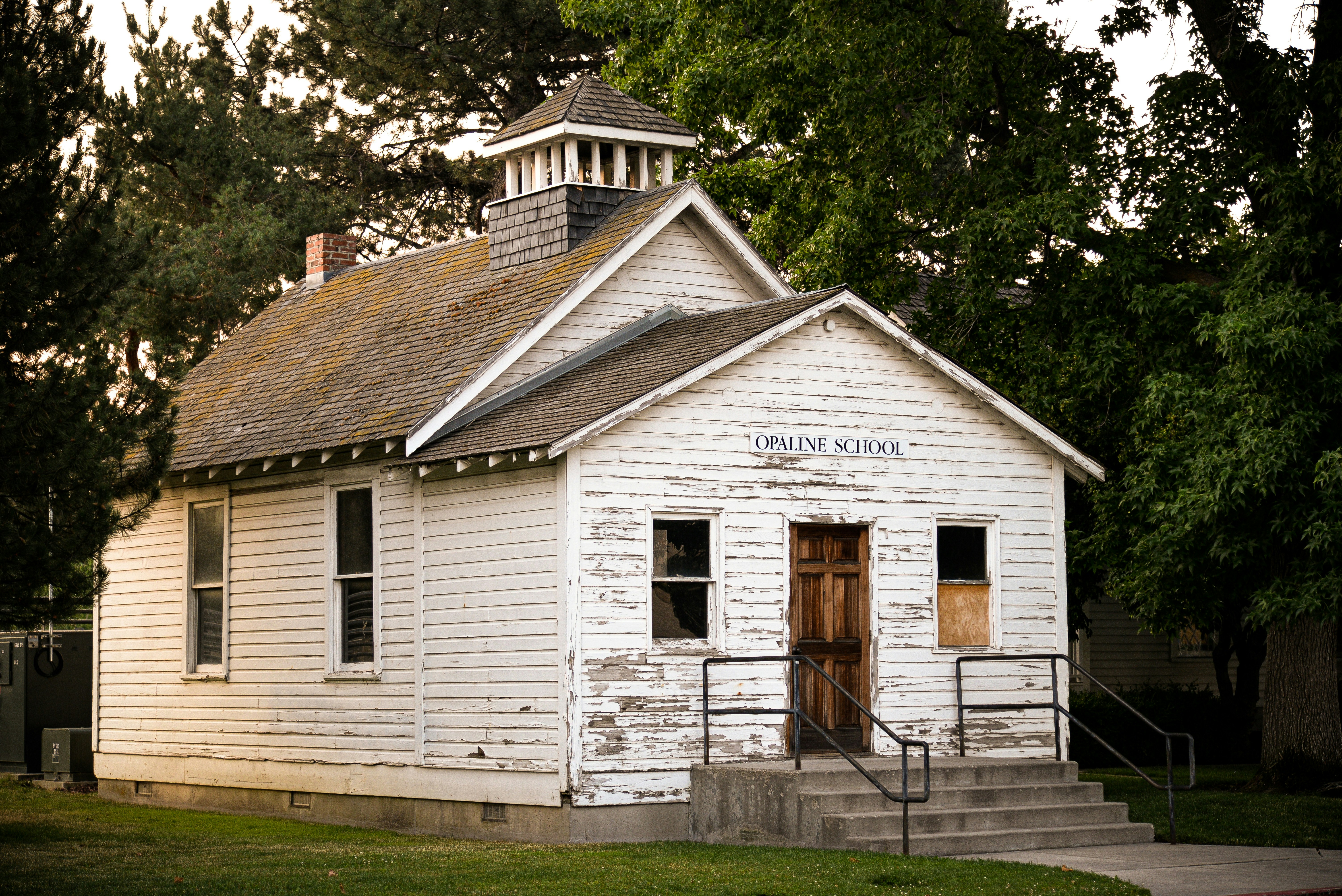
Recently I enjoyed the opportunity to visit another school while classes were in session. I visited various classrooms and was able to observe a slice of the daily life of a school somewhat like my own. This school moved into a new building only a few years ago, and the whole place is modern, efficient, and beautiful. Things appear to run like a well-oiled machine. I watched a friend of mine teach her class of fourteen in a spacious, sunlit room considerably larger than my own little basement room where twenty-two students are stuffed into a space that might be ideal for a dozen or so. You can probably imagine some of the thoughts that were running through my head.
Let me tell you about the place where I teach. During the heat of early fall each year, my first task when I arrive at school is to empty the dehumidifier that has been running overnight. I deal with the daily decision of whether to put up with the heat all day or to wear out my voice by trying to talk over the noise of the air conditioner. One day a few weeks ago when we flipped a breaker (for the umpteenth time) while running the microwave at lunchtime, the students wondered why it keeps flipping. I said, “This is an old building. It wasn’t wired to run a bunch of microwaves and air conditioners.”
“When was this school built?” asked one student incredulously. “1993?”
“Actually, 1952,” I replied.
“Well, I was close,” he said. I suppose 1993 and 1952 are equally ancient to him. I hid my amusement and noted the need to keep teaching math skills.
Old buildings have their quirks, and living creatures find ways to get in. One of the many unexpected skills I have acquired as a teacher is dead aim with a fly swatter. I’ve had a student get stung by a bee in the middle of class (Lesson learned: When there is a bee in the classroom, stop everything until that bee is dead or is chased out the window). And do you want to hear mouse stories? Ok, it may be best if I don’t get started on those.
I write all this because my guess is that most of you who read this blog do not teach in state-of-the-art buildings, nor do you teach under ideal circumstances. As we deal with inconveniences, we can choose complaining and frustration, or we can choose gratitude, creativity, and a sense of humor.
Gratitude lets us focus on what we have, not on what we wish we had. I am immensely grateful for a positive school culture, a strong staff team, and a supportive school community. All these things are much more important than having the perfect classroom with all the latest teaching tools. I would far rather deal with flies and flipped breakers than with bad attitudes or relational issues.
Creativity helps us realize that even the inconveniences can be part of our students’ education. Those ants that literally come up from under the edge of the carpet and start building a home there provide a free science lesson. Being a little uncomfortable from the heat or from the crowded room does not hurt my students in the long run, and it may in fact help them build resilience. Creativity lets me find joy in fixing the broken flushing mechanism in the toilet with a paper clip or in finding that I can make the clock work by stuffing a folded piece of paper beside the battery to make it fit more tightly. We teachers can be masters of creativity when the occasion calls for it, and it is our privilege to revel in this ability.
Keeping a sense of humor is a good way to keep our sanity. After all, sometimes the ridiculous inconveniences make the best stories afterward, and it can be delightful to laugh over them with fellow staff members. I can tell you that experiencing mouse escapades together is a quick way to create some great staff camaraderie.
Plans are underway for our school to construct a new building sometime in the next few years. Though I look forward to things like a larger classroom and central air, I will miss some things about our old school. I hope that we will not take the conveniences for granted. No matter the space in which we find ourselves as teachers, we can choose to make the best of what we have and to teach our students to do the same.
Photo by Khay Edwards on Unsplash

Schedule, Schedule, Schedule...and the Secret Ingredient
This past month our teachers visited two schools, and we have had several visitors at our school lately as well. We have found that much of our questions and discussions during these visits revolve around the school schedule.
How can we keep our students motivated?
How can we intersperse active classes with less active ones so that our students are not sitting for prolonged periods of time?
How can we reduce the amount of homework students have?
The answers to all these questions are usually the same: schedule. If we have a good schedule, all these issues will be taken care of (somewhat effortlessly), provided we plan well, teach well, and stick to the schedule.
Our Schedule
Here is what has worked really well for our school for years.
8:00 – Morning Assembly
8:15 – Bible
8:45 – Math
9:45 – Break
10:05 – English and Spelling
10:50 – Choir (Monday & Wednesday)
11:20 – Reading/Literature
11:40 – Lunch and Recess
12:10 – Creative Writing/Journals
12:20 – Science
1:00 – History/Social Studies
1:50 – Physical Exercise (P.E.)
2:30 – Choir/Music (Tuesday & Thursday)
2:45 – Art
3:15 – Dismissal
Why It Works
There is a set time for everything. We stick to our schedule (pretty much anyway—there is always room for a little flexibility where we need it), and we believe that it is better to do art, P.E., and music every day for twenty to thirty minutes rather than every other day for a longer time. These subjects are more active and enjoyable, which prevents students from getting into the sit-in-your-seat-too-long doldrums. No teacher wants his students to be in the doldrums.
The Secret Ingredient
The secret ingredient is two-fold. The first part is accountability. We grade student papers at morning break and at lunch. If they have their math turned in by morning break (and almost all of them usually do), we can have it graded by the end of break, and they have time to do any fix-ups before lunch.
If they have their language arts and spelling turned in by lunch (and almost all of them do), we can have it graded by lunch, sometimes before, and they can have their fix-ups done before or right after lunch.
In the afternoons, we work on our science and social studies together as a group, discussing, answering, and filling out worksheets together. If we work hard in the morning, most of the more challenging work is done by lunch, and the afternoon is more enjoyable.
The second part of the secret ingredient is what I call the “positive-peer pressure-snowball effect.” The teachers keeping the students accountable causes the students to focus harder and to want to get their work done. It is an amazing thing to see the students begin to try hard to finish their assignments and make good grades.
What is almost more amazing is the influence this has on the other students. They see their peers staying on task and getting their work done with good grades, and they desire to do the same.If the atmosphere is positive and encouraging, nobody wants to be the only one not getting their work done, or the one who has to miss the first ten minutes of a break.
It doesn’t hurt to praise the students a little either. “Good work, everyone. We (team effort– not “you”) all got our work done with good grades. Now, let’s all get our work fixed up so that we all have 100s. Yay!” That, said with a genuine smile, works wonders, too.
A good schedule combined with some accountability and an encouraging environment does amazing things for school morale and students’ attitudes.

5 Simple Ways to Boost Student Engagement
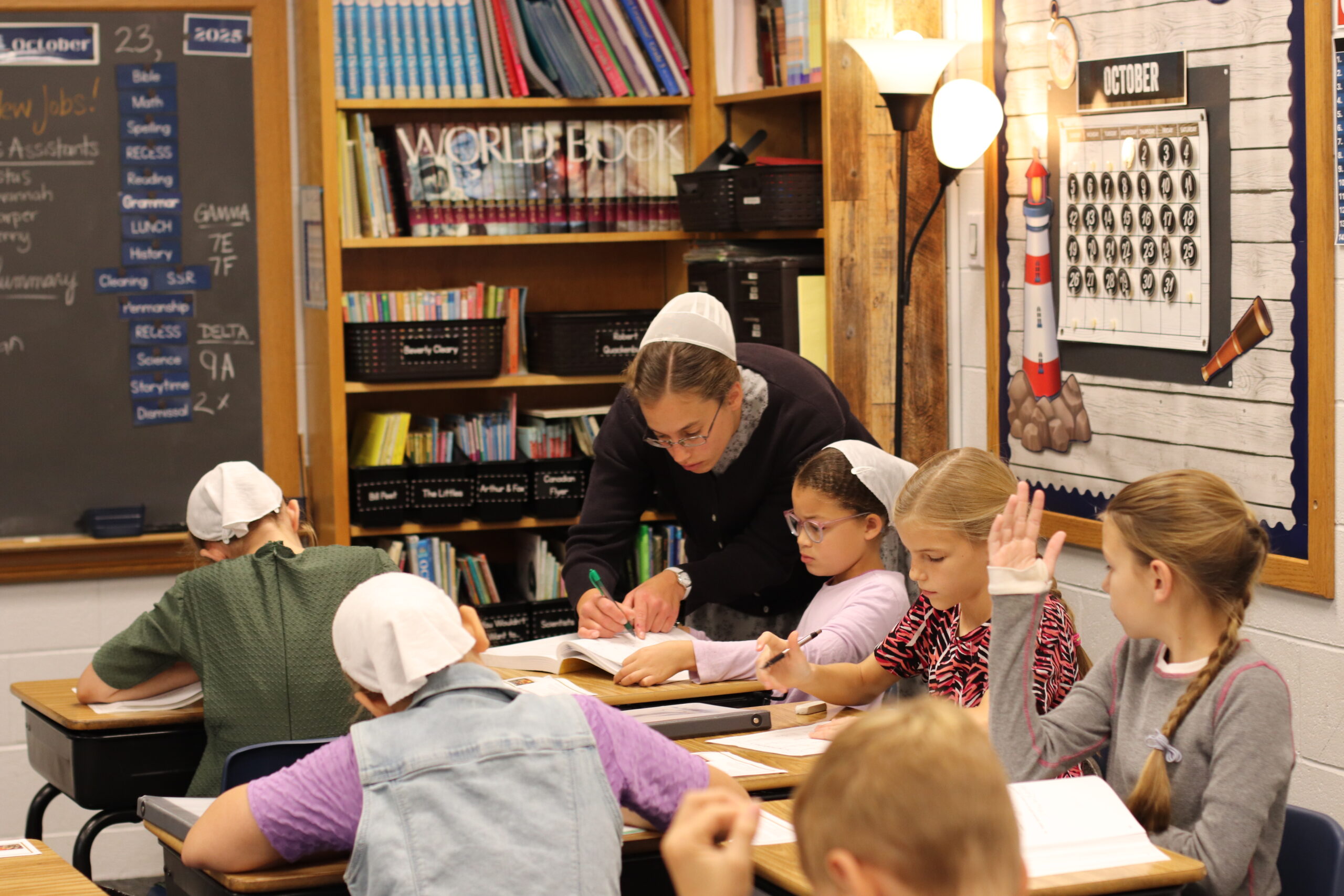
If we aren’t careful, our teaching can become a simple transaction of knowledge. The teacher gives information, the student receives it. End of story.
While there are some situations where this is the most effective way for a concept to be taught, it is generally not the most effective way to teach. Instead, we ought to be viewing our students as team members who are constantly involved and engaged in the acquisition of knowledge.
However, this can be tricky to do well all the time. It can be helpful to have some tried-and-true methods that you employ on a regular basis.
Here are five simple ways to actively involve all of your students in the learning process, easily adaptable for almost any lesson.
Popsicle Sticks
Instead of falling into the habit of only getting input from those students who raise their hands and offer answers, have an easy system to call on students at random. One simple way to do this is to write each student’s name on a popsicle stick and keep them in a cup. Ask a question, then pull out a stick to see who will respond.
Something to consider: sometimes this will work to keep students engaged only until their name is called (at which point they feel free to zone out because they know they won’t be called on again). One easy workaround is to return the sticks to the cup (although that does pose the real possibility of the same student’s name getting pulled several times and other students never getting called at all).
Another trick is to draw a dot at one end of the sticks. When you pull a student’s name, put the name back into the cup, but with the dot facing down this time. When you grab subsequent sticks, choose from the ones that still have a dot facing up. This can help to create the illusion that any name could get called at any time while ensuring that you’re calling on a variety of students.
Whiteboards
Individual whiteboards are a fantastic way to boost student involvement, and they can be used in almost any content area. Ask a question and have students write the answer. Have them write spelling words or solve math problems on them. Use them for diagraming sentences in grammar. Have students sketch a science diagram on their whiteboards. The possibilities are endless.
A huge benefit of whiteboards is that you can have students hold up their answers to show you, and you will get immediate feedback on which students understand a concept and which ones are struggling.
You can often find small whiteboards at dollar stores. Another handy option is to simply put a piece of cardstock inside of a page protector—it works the same way.
You can also buy a package of dollar store socks to use as erasers. Put a marker inside each sock for easy storage and distribution.
Thumbs Up, Thumbs Down
This is a quick and easy way to check for student understanding while also encouraging student engagement. Use this for questions framed as true or false statements or when you’re asking a question with two options. For example, “Carbon is one of the elements on the periodic table…do you agree or disagree?” Or, “What is the word for an animal that survives by eating other animals? Thumbs up if you say predator, thumbs down if you say prey.”
You can also use this as a way to expand on math problems. “Sarah says the answer is 345. Do you agree or disagree? Thumbs up or thumbs down.”
Something to consider: train students to hold their hand against their chests instead of putting it in the air. This makes it harder for students to lazily piggyback their answers based off the answers of those around them (because they can’t actually see those answers). It also keeps sensitive students from feeling anxiety that they will be the only one to get the wrong answer.
Plickers / Sign Language
Plickers is a great tool for reviewing large amounts of content and is especially effective if the teacher has done some preparation beforehand. It’s a system that requires printing a QR code for each student and having the Plickers app downloaded on the teacher’s phone or tablet. The free version has some limitations, and a paid version is also available (more details on that below).
Plickers is designed for multiple choice questions with four answers. Each student receives a card with a unique QR code, with each side of the card labelled A, B, C, and D. The teacher can ask or project their multiple choice question, and the students will hold up their cards, oriented so that the answer they choose is at the top of the card.
The teacher, with the Plickers app activated on their phone or tablet, will scan student’s responses. The data is recorded for the teacher to review (this allows teachers to see at a glance which questions students are struggling with, which is a huge benefit).
For a completely no-tech variation, teach your students the sign language for the first four letters of the alphabet. Ask multiple choice questions and have students sign their answers. This, of course, gives you in-the-moment feedback but doesn’t record student responses for you to analyze later the way the Plickers app does.
You can find more information and download the materials necessary at https://get.plickers.com/.
The free version is limited to asking five questions at a time, which you may find is inconvenient enough to make it not worth the effort. This link outlines the differences between a free account and Plickers Pro. https://help.plickers.com/hc/en-us/articles/360042744134-What-is-Plickers-Pro
For a completely no-tech variation, teach your students the sign language for the first four letters of the alphabet. Ask multiple choice questions and have students sign their answers. This, of course, gives you in-the-moment feedback but doesn’t record student responses for you to analyze later the way the Plickers app does.
Turn and Tell
Turn and tell is a way to get lots of students talking at the same time. Lay some groundwork by breaking students into partners and explaining your expectations. As you are teaching, you can then randomly instruct them to turn and talk to their partners. For example, “Turn and tell your partner one of the causes of the Civil War.” Or, “Turn and tell your partner how to use order of operations to solve an equation.”
You will want to ask a series of questions this way so that each student in the pair gets a chance to speak. You can prevent the most confident students from always doing the talking by specifying who answers first for a specific question. For example, “Turn and tell your partner one of the characteristics of a mammal. Those seated closer to the windows will speak first.”
The more often we can involve students in answering questions or responding to prompts, the more often we can be assured that their brains are actively engaged in learning. By making strategies like these a normal part of your classroom rhythms, you can help your students be active participants in the learning process.
Union Center Christian School - Teachers needed for 2026-27 School year
Union Center Christian School UCCS is located in Nappanee, Indiana. We are a growing school in the middle of our 3rd year (2025-26) with 65 students enrolled in K-12th grade.
The school is operated by Salem Mennonite Church. It is open to area church families and the community around us. Our goal is to provide a good Christ-centered education for our church families and the families in our community.
For 2026-27 we are in need of a high school teacher and a learning support teacher.
The learning support teacher works in cooperation with the home room teacher to provide specific support and tutoring as required by the student. This includes using the Barton reading program and more.
For more information contact Ken Miller (board chairman) 574-847-1369 or fill out an application here: https://form.jotform.com/231857891291164

All Is Calm (Or Not)

I turn the calendar page to December and sigh. My rather grinch-ish thoughts begrudge the unsettledness that the next month can bring to the classroom. My well-established routines, the lessons moving along like clockwork, the things that bring structure to our days, are about to shift. I prefer routine and structure and most of my first-grade students perform better when things move along in familiar patterns.
December can be full of disruptions for young students. Teachers like to add a little extra to their routines—maybe an afternoon to go caroling for the grandparents, maybe practice for a Christmas program, maybe a Christmas party or two, maybe a craft period to create and send cards to someone who needs cheer, maybe help with a community goodwill project or other service activity. And then, there are disruptions outside of school. Students may spend several evenings throughout the month caroling with their families or going to family gatherings. There are extra community happenings. Some students may be anticipating traveling in a few weeks. Students stay out later and get less sleep and so do teachers. December can be a tough month to keep our classrooms functioning smoothly and calmly.
And yet, there is an air of Christmas that we want to embrace and celebrate. December would be dark and depressing without understanding the magnitude of Christmas, the wonder of God with us—in human form, a helpless infant born of a common family—the beginning of the ultimate sacrifice.
Over the years, I’ve learned to bring Christmas into my classroom and yet not allow it to totally disrupt the routines and schedules. We can’t do anything about extra busyness outside school, but we can work to create calmness in our classrooms.
First, teachers, let’s start with ourselves. We can get extra busy, too, and then we bring our loss of sleep and our mounting pressures into school with us. Do we remember and meditate on the meaning and purpose of Christmas? Do we get the rest and nutrition we need? Maybe we need to look at our schedules and prioritize the necessary and needed. Maybe we don’t need a redecorated classroom. Maybe we forego a few of the outside-of-school activities, so we will have energy for school. Because we all know that “if the teacher ain’t happy, nobody’s happy”.
Many students, especially younger students, do not respond well to disruptions in their routines. Keeping regular structure in your day will help with classroom management and discipline issues. So, bring Christmas into the classroom in a controlled spirit. We don’t need to do every activity that would be fun to do. I like to read Christmas picture books for story time in the days leading up to Christmas. I have a simple Christmas bulletin board I reuse each year. It’s a growing board in which I put up a part of the Christmas story each evening until we have the whole nativity on the board. The students enjoy guessing which piece will go next. I also have a Christmas story flannelgraph that I use for devotions. Art classes involve art projects with a Christmas theme. Extra busy work may also have a Christmas theme. These all easily fit into our established routines and don’t create extra work for me or need extra time from the schedule.
We have a long-standing school tradition that on the last school day before the Christmas break, the high school students give a party for the elementary students. While we don’t do a public Christmas program, each classroom is asked to present a short song, poem, story, or skit as part of the party activity. The need to practice our parts can lead to disruption, but I’ve learned to keep it simple and not stress the details. It helps me and the students maintain a calmer frame of mind, both in the prior days and in the moment of.
Christmas can also be time for service activities and a time for remembering those less fortunate than ourselves. This is well and good, but it is also good to stretch some of those activities throughout the year. There is a small personal care home within walking distance of our school. So instead of going Christmas caroling for an afternoon, each classroom takes turns going to sing for the ladies every other week during the school year. If you are caroling for older people, they may enjoy having students come sing for them in January or February when their days will continue to be long and the other carolers have disappeared.
When planning an extra activity, think through the details. Is there a way to incorporate the activity into established routines? If the activity is outside of normal routine—such as decorating sugar cookies—be specific in what needs to happen. The less students are at loose ends and unsure what they are to be doing, the more they and you will enjoy the activity. If your schedule feels overwhelming, decide if the activity needs to happen in December or could something similar be done later when you need a break from the cold gray days of February?
December is a month to be enjoyed, appreciated, and savored. If we keep our focus on the priorities and not the extras, we will find a certain calm amid the busyness, even in our classrooms of bubbling excitement. May the peace and goodwill of Christ invade your classrooms and bring joy to all involved.
Photo by Alda González-Cuevas on Unsplash
Lighthouse Christian School
2026-2027 term
Now Hiring: Inspiring High School Teacher
Join Our Mission. Shape Tomorrow’s Leaders.
Are you a passionate educator who believes teaching is more than a job—it’s a calling? Our private school is seeking a dedicated High School Teacher who is committed to academic excellence, character development, and creating a positive, engaging learning environment for students.
What You’ll Do
• Teach and mentor high school students in a supportive, faith-centered environment
• Inspire curiosity, critical thinking, and a love for learning
• Build meaningful relationships with students and families
• Collaborate with a team of caring, mission-driven educators
• Contribute to school events, activities, and a vibrant campus culture
What We’re Looking For
• A passionate teacher with strong classroom management and communication skills
• Ability to connect with teens and motivate students of varying abilities
• A heart for serving, leading, and helping students reach their full God-given potential
• Energetic, dependable, and committed to excellence
Why Join Us?
• Supportive leadership and a family-like atmosphere
• Small class sizes that allow you to truly invest in each student
• Competitive pay and opportunities for professional growth
• A safe, faith-based environment where values matter
• The chance to make a lasting impact—every single day
⸻
If you’re ready to teach with purpose, we’d love to meet you!
Submit your résumé to [office@crf.farm] or call [618-218-5397]

Lighthouse Christian School
2026-2027 term
Now Hiring: Inspiring High School Teacher
Join Our Mission. Shape Tomorrow’s Leaders.
Are you a passionate educator who believes teaching is more than a job—it’s a calling? Our private school is seeking a dedicated High School Teacher who is committed to academic excellence, character development, and creating a positive, engaging learning environment for students.
What You’ll Do
• Teach and mentor high school students in a supportive, faith-centered environment
• Inspire curiosity, critical thinking, and a love for learning
• Build meaningful relationships with students and families
• Collaborate with a team of caring, mission-driven educators
• Contribute to school events, activities, and a vibrant campus culture
What We’re Looking For
• A passionate teacher with strong classroom management and communication skills
• Bachelor’s degree required; teaching certification preferred
• Ability to connect with teens and motivate students of varying abilities
• A heart for serving, leading, and helping students reach their full God-given potential
• Energetic, dependable, and committed to excellence
Why Join Us?
• Supportive leadership and a family-like atmosphere
• Small class sizes that allow you to truly invest in each student
• Competitive pay and opportunities for professional growth
• A safe, faith-based environment where values matter
• The chance to make a lasting impact—every single day
⸻
If you’re ready to teach with purpose, we’d love to meet you!
Submit your résumé to [office@crf.farm] or call [618-218-5397]

For the Lord
Click, click, click! “There, it’s loading. It should be finished in about 30 minutes.”
I’m impressed with the tech person’s expertise. My computer had “died” and lost all the data. After I sent the hard drive to a recovery company, I received a “box” with the recovered data. This was encrypted and I was afraid to work with it. What if I mess it up and lose the data again? I did manage to get some files downloaded from this “box” to my new computer, and saw where the data was supposed to be, I thought, but I did not know how to access those files. So, I got reinforcement, taking the computer to the technology company. And that’s when the tech person got everything working with just a few clicks. I was impressed.
I thought, I am thankful God gives us all different gifts and abilities! Obviously, I do not have the gift for working with technology. (Neither do I have that interest.) Likely, this tech person would not want to teach six- and seven-year-olds. That is my interest and gifting. I do not know how to upload (download?) these files; I cannot find the files; are those things even called files? And this guy probably doesn’t know how to teach first graders to read. What is orthographical mapping? What are phonemes? How do you do this Heggerty program?
I thought of this again today when I was at the dentist. I wondered to myself if the hygienist enjoys her job. Doesn’t it get boring to go over every tooth? Polish each individual tooth, and scratch around on each one? She must have an interest in this, as she completed the schooling to do this job. She is very cheerful and pleasant, so I think she enjoys her work. Here again, I am thankful for different giftings. I would not like to work in people’s mouths and take all that time on teeth. But I love to work with my students, and I can enjoy spending a lot of time working with them individually, tutoring, guiding, and leading them in learning.
As Roy W. Lowrie, Jr. says in The Teacher’s Heart, “if I am in God’s will as a Christian school teacher, then I am doing the very thing for which He created me.” (Lowrie, 1984). This will fulfill me as a person and those questions of “Who am I?” “Why am I here?” “Where am I going?” will be answered (Lowrie, 1984).
I am reminded of the song “My Task” by Maude Louise Ray. This song speaks of my task to “love someone more dearly every day, to help a wandering child to find his way” and “to do my best from dawn of day till night” and “to keep my heart fit for His holy sight.” These are tasks we can all be assigned.
Embrace the work you are called to as you serve the Lord in that area, employing your skills, gifts, talents, and interests. Whatever we are called to do, whether being a tech person, a dental hygienist (or dental genius, as the kindergartner said 😊), or a teacher, let’s do it for the glory of the Lord and give our best.
Whatever you do, work heartily, as for the Lord and not for men, knowing that from the Lord you will receive the inheritance as your reward. You are serving the Lord Christ. Colossians 3:23-24
References: The Teacher’s Heart, Roy W. Lowrie, Jr., The Association of Christian Schools International, 1984.
Photo by freestocks on Unsplash

Teaching Reading
General Advice and Teaching Tips
Utilize pre-reading activities, which prepare students for what they are going to encounter in the text and get them interested in the story before they even start reading. Pre-reading activities may include:
Vocabulary—make sure that students are equipped to understand unfamiliar words or concepts.
Brainstorming—very quickly allow students to interact with a question that introduces the theme of the story.
Hooks—give a question that has no answer, share a personal anecdote, show a picture prompt, use an object that is related to the story, predict what may happen in the story based on the title, etc.
Graphic organizer—use something like a KWL chart (letting students fill in what they already Know about a subject and what they Wonder about. After reading, they can fill in what they have Learned about the story). Bubble maps or Venn diagrams work well also.
Use questions to explore stories. This leads students to discover the truth for themselves (instead of you simply telling them what you think the meaning of the text is).
Some students struggle to understand what they’re reading. Teaching them the following tools may be helpful:
Think aloud
Model for your students how you can have an internal dialogue while reading a text. Project the first page of a story or a difficult section of a textbook. Read the text aloud, stopping often to share your thoughts. Point to the words in the text that trigger your thinking. Ask questions. Connect information from one concept to the next.
Mark the text
If a student has a personal workbook, the marking can be done directly in the book; if the student is using a shared textbook, the marking can be done on sticky notes and placed in the text.
Have students mark main ideas, background knowledge, or questions they have about the text.
When it comes to vocabulary, be aware that there is a lot of academic-specific vocabulary that students will only interact with in the classroom. In addition, there will be a vast span in the known vocabulary of your students based on their language exposure up to this point. It is the responsibility of the teacher to address these discrepancies so that every child can understand what they’re reading.
Use reading class as an opportunity to develop the following skills:
Summarizing
Identifying the main idea
Inferring (reading between the lines)
Distinguishing fact from opinion
Applying wisdom principals to life
Narrating (retelling the story from memory)
Use a variety of oral reading methods to maintain engagement:
Round robin—students read assigned portions in order, going around the room
Pulling sticks—randomly select readers using popsicle sticks with names
Chain reading—set a timer (e.g. 45 seconds) for each reader
Readers’ theater—assign dialogue or narration roles
Fill-in-the-word—teacher reads, students chime in with specific words
Popcorn reading—students read one sentence each
Group/pair reading—small groups read together
Whisper/blab reading—students read aloud softly and simultaneously
Learning to Read (Kindergarten--First Grade)
Teaching students how to read is a complex and important task. The following concepts should be cornerstones in your teaching:
Develop auditory skills. A student must be aware that words are made of individual sounds. Before you teach children how to blend sounds, they must be able to hear the individual sounds in words. Practice this orally by saying a word like “mat.” The students repeat “mat” and then break the word apart: /m/ /a/ /t/, holding up a finger for each sound. Do this daily for weeks (at a minimum).
Curriculum like Heggerty Phonemic Awareness do this type of training very well and can be added to your reading curriculum (lessons are only ten minutes per day).
Review. Learning how to blend and read words takes more review than you may realize. A child who can fluently sound out words and comprehend them is multi-tasking, which is a very high-level process. Drill the sounding out and blending process again and again until it becomes automatic.
Keep flashcards in circulation until competency is reached. Don’t switch out the words in your flashcard pack too soon.
Develop fluency before comprehension. Focus on teaching students how to read fluently first—developing comprehension and more interaction with the text can happen later.
Elementary
Work to create a culture of reading in your classroom. This can be achieved through the following:
Model a love for reading
Incorporate reading into every school day
Offer a diverse classroom library
Design an inviting classroom that encourages reading through a cozy reading corner or literary-themed bulletin boards
Teach engaging reading lessons
Promote reading at home through reading challenges or setting individualized reading goals
Recommended Resources
Below you will find some general, multi-use application resources. However, the Dock contains hundreds of reading and literature resources shared by teachers, such as worksheets, powerpoints, study guides, tests, and more. Go to https://thedockforlearning.org/ and search for your specific theme or work of literature—you may find that another teacher has shared something that can be useful to you.
Learning to Read Training (CLP)
Guidelines for Oral Reading: Guidelines for Oral Reading - The Dock for Learning
Advice for bridging the transition between CLP’s Learning to Read and I Wonder: From Learning to Read to Reading to Learn - The Dock for Learning
Oral reading rubrics:
Tips for improving reading comprehension: How to Read: Improving Reading Comprehension - The Dock for Learning
List of suggested online resources: Reading/Language Online Resources - The Dock for Learning
Reading comprehension stories (middle grades):
Word games and drills for beginning readers: Word Games and Drills - The Dock for Learning
Songs and rhymes for beginning readers: Phonics: Learning to Read - The Dock for Learning
Strategies for increasing and developing vocabulary:
Sources
Understanding Reading by Karen Birt Understanding Reading - The Dock for Learning
Pre-Reading 101: Strategies to Get Your Students Ready for the Story by Sharon Yoder Pre-Reading 101: Strategies to Get Your Students Ready for the Story - The Dock for Learning
Learning to Read by Karen Yoder Learning to Read - The Dock for Learning
Developing a Passion for Reading by Myron Brubacher Developing a Passion for Reading - The Dock for Learning
3 Components of a Successful Reading Class by Sharon Yoder 3 Components for a Successful Reading Class - The Dock for Learning
Pre-Reading 101: Strategies to Get Your Students Ready for the Story by Sharon Yoder Pre-Reading 101: Strategies to Get Your Students Ready for the Story - The Dock for Learning
Photo by Michał Parzuchowski on Unsplash

Teacher Overload and Burnout
The Nature of Overload and Burnout
Overload can be defined as excess demands impairing mental, physical, and emotional function. One can sustain short seasons of overload. Burnout, on the other hand, is a loss of enthusiasm and energy leading to cynicism, fatigue, racing thoughts, sleep issues, snappiness, reduced creativity, and relational strain. Once one is in a state of burnout, it is very hard to keep moving forward.
If you are feeling constant tiredness and a “can’t keep up” desperation, this signals a need for action. Remember that deeper holes take longer to recover from. Be alert to early signs. Ask yourself, “Can I sustain this pace?”
Advice for Teaching Sustainably
Taking time to prioritize self-care is not selfish (unless done at the expense of fulfilling one’s duties). Instead, taking time to do things that bring you rest and refreshment helps you to be a better teacher in the long run. This may include things like the following:
Maintain non-school hobbies
Get good sleep/take naps
Take walks or exercise
Embrace Sabbath rest
Spend time with Jesus often and let Him love you
Distinguish fun from obligation
Set boundaries and say “no” politely
Eat nourishing, nutritious food
Ask for help when you need it. Perhaps you can recruit parent volunteers for things like daily checking or reading classes.
A driver in burnout can be unclear expectations or nebulous job roles. Seek clarity from board/admin/principal/co-teachers on what your responsibilities are.
Another driver in burnout can be differing goals and vision, perhaps from your board, parents, or co-teachers. If this is the case, communicate humbly. Talk it out with those involved in respectful ways.
If you find that unresolved personal issues are causing your burnout, remember the importance of bringing your best self to the classroom. Seek counseling for healing and wholeness.
Poor time management and/or procrastination is an issue worth attacking head-on. Assess where you are losing time and put safeguards in place to keep it from happening often. Put energy into building positive habits. Consider making yourself accountable to a co-teacher or administrator.
Establish systems and routines for daily tasks and classroom management. Whenever you can put energy into planning responses and consequences once, it keeps you from needing to spend mental energy deciding in the moment whenever things come up.
Ensure that you have a compelling vision driving you. While you may be teaching out of a desire to serve families and come alongside parents in the important task of educating children, if this is your primary focus, it can easily lead to people-pleasing and burnout. Instead, put your focus on serving Christ, His church, and His Kingdom. You are helping to train and equip more Kingdom workers. Keeping this perspective has the potential to revolutionize the ordinary moments of everyday life in the classroom. These moments become holy as you see them through the lenses of eternity and realize the impact that your work can have.
Remember that things will not always go as you planned and you will not always be able to operate at 100%. Be gentle with yourself when you are tired, hungry, angry, or frustrated. Jesus sustains the teacher who calls out to Him. He is bigger than your sleepless night, your hastily crafted sticky note lesson plan, or your students’ low spelling scores. You can trust Him to fill in the gaps when you have done your best.
Sources
Avoiding Overload and Burnout by Arthur Nisly: Avoiding Overload and Burnout - The Dock for Learning
Help for the Harried Teacher (Remedies) by Doug Kauffman: Help for the Harried Teacher (Remedies) - The Dock for Learning
Workers in the Kingdom by Rosalie Beiler: Workers in the Kingdom - The Dock for Learning
What I Wish I Had Known About Self-Care by Ruth Anna Kuhns: What I Wish I Had Known About Self-Care - The Dock for Learning
Setting Up the Classroom
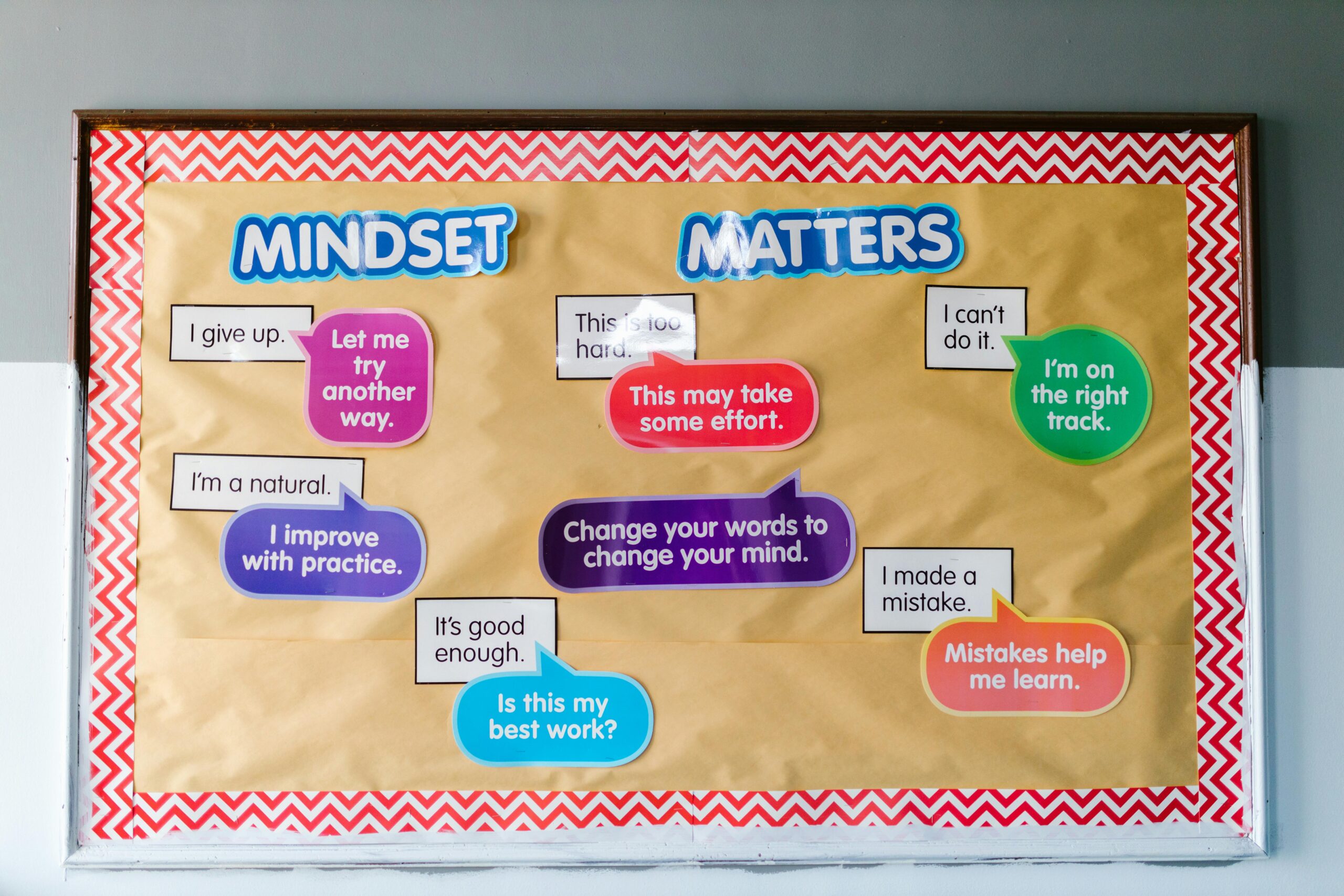
Your walls and room organization say a lot about your classroom atmosphere and your attitudes towards academics and your students. There are many subconscious messages that speak into the tone of your year.
Think about what you want to say. You should create a tone that says, “Learning is interesting. Knowledge is valuable. School is work. We work hard to be successful. Success is satisfying.” Write down what you want your classroom to say about you and what you expect from your students. Use this statement to guide your choices on how you set up your classroom.
Let the style of décor match the age level of your students.
Don’t be pressured to go with a theme, unless you find a theme freeing.
Make displays work for you. Use your bulletin boards to expand on subject material or to display student work. If you have many bulletin boards to fill, having several that don’t need to be changed often (or ever) is a huge time-saver.
Keep the visual clutter to a minimum. If it is just an accessory, maybe it isn’t needed. Students can’t handle too much sensory overload. Clutter makes the important blend with the unnecessary.
Filling blank bulletin boards is an obvious part of preparing the classroom. However, there are some less obvious, but still important décor items you may need to prepare, such as the following:
Job/cleaning chart
Birthday chart
Daily schedule (consider adding magnetic strips to the back, using tacks, or finding some way to make it easily changeable from one day to the next)
Desk/hook/cubby labels
Number lines
Student folders
Behavior systems
Supplies you may want to have on hand:
First aid basket (Band-Aids, cough drops, tissues, etc.)
Basic cleaning supplies for wiping off desks or cleaning the chalkboard/whiteboard
Blackboard/whiteboard markers and erasers
This list contains many more suggestions: Taking Stock: A Classroom Shopping List - The Dock for Learning
The following are some sample to-do lists by various teachers listing the tasks they complete before the first day of school:
Sources
Setting the Tone: Classroom Walls by Carolyn Martin: Setting the Tone: Classroom Walls - The Dock for Learning
Where to Begin: Preparing the Classroom for the First Time by Kendra Martin: Where To Begin: Preparing the Classroom for the First Time - The Dock for Learning

Recess
Reasons Why Recess Is Important
The physical body is part of God’s good creation.
Recess builds motor skills and coordination.
Exercise relieves mental and emotional tension.
Recess provides opportunities for learning relational skills like teamwork, good sportsmanship, following rules, and resolving disagreements.
Decreased physical activity can negatively affect children’s ability to learn.
Suggestions and Tips
Insist on some outdoor time even in winter. Fresh air and sunshine are important for developing minds and bodies.
One way to ensure fairness in who is “it” for games is to have a child choose a name from a bowl before the game.
Ensure that there is variety in the games being played. Even if most of the children enjoy playing the same game every day, the one or two who do not deserve to enjoy recess sometimes, too. Some ways you might choose games for organized recesses include the following:
Allow individual students to take turns choosing a game or create a “recess committee” who chooses the games for a week at a time.
Create a schedule with a different game each day; repeat the schedule again and again.
Have students submit suggestions and put into a bowl. Let a student pick out a game each day.
Find a balance between organized games and free play. Giving students open recess times helps them foster imagination.
Teacher presence at recess is important—simply being there can reduce conflict. If you can divvy out recess duties with co-teachers, it allows you to have some recess breaks where you are able to rest your mind or gather supplies for the next class.
Teacher involvement in student games allows students to see a different side of you, gives you opportunities to model good sportsmanship, and enhances the fun.
Build awareness in students of how to respect personal space and what appropriate touch looks like (especially cross-gender).
Ensure that students are familiar with the rules of the game to avoid confusion and frustration.
Nonverbal signals are essential on the playground, especially for very large groups of students. A whistle is a helpful tool. Teach students the meaning of various signals. For example:
2 short whistle blasts—freeze in place and become silent. This is helpful if you need to make an announcement about the game or name new itters.
3 short whistle blasts—new game. Students should gather around you for instructions about starting a new game.
Teacher’s raised hand—silence from everyone, eyes on the teacher. This is helpful while explaining the set up of the game or when silencing children before entering the building again.
Teach conflict resolution skills to your students and encourage them to work out their conflicts by talking to each other. This will take intentional guidance and modelling at the beginning. With practice, though, students should be able to resolve conflicts on their own.
If you do need to become involved, try to take a guiding role by asking questions like, “What is our rule for going outside boundaries?” or “What do you think is a good choice to make right now?” or “You two sit aside here and come up with a plan for how to handle this.”
Beware of the poor sport, the one who is never wrong, or the student who never gives in. A separate conversation with those individuals may be required.
Resources
Simple tips for better softball at school: Simple Tips for Better Softball at School - The Dock for Learning
Indoor games for rainy days:
Sources
Phys-Ed and Recess by Brandon Mullet: Phys Ed and Recess - The Dock for Learning
Lessons on the Playground: The Teacher’s Role by Jonathan Klassen Lessons on the Playground: The Teacher's Role - The Dock for Learning
What I Wish I Had Known About Recess by Ruth Anna Kuhns: What I Wish I Had Known About Recess - The Dock for Learning
Vision for Christian Education
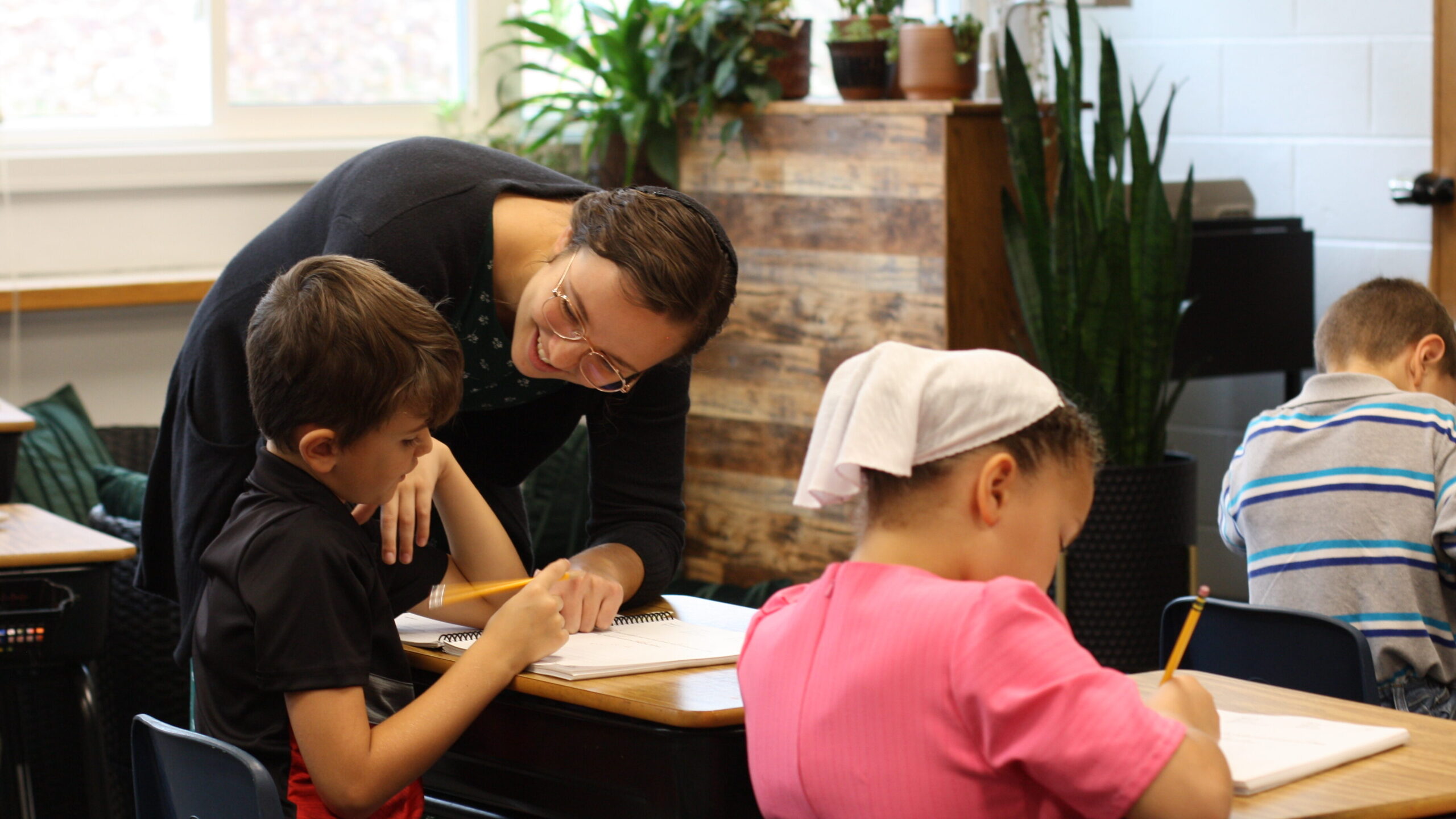
It is not enough to simply view Christian schools as “the same as secular, minus the bad stuff.” It’s not just what we don’t do, it’s what we do do.
So what is the vision of a Christian school? And how does a teacher go about bringing that vision to reality?
These two essays are a collective effort by seven administrators of conservative Anabaptist schools to describe the vision of a Christian school and the methods which can carry that vision out:

Book Recommendations: Books for Teachers
Pedagogy
The Seven Laws of Teaching by John Milton Gregory
The Seven Laws of the Learner by Bruce Wilkinson
Teach Like a Champion by Doug Lemov
Reclaiming the Future of Christian Education by Albert E. Green
Teaching to Change Lives by Howard Hendricks
Teaching from Rest by Sarah Mackenzie
The First Days of School by Harry Wong and Rosemary Wong
A Charlotte Mason Companion: Personal Reflections on the Gentle Art of Learning by Karen Andreola
The Craft of Christian Teaching: Essentials for Becoming a Very Good Teacher: by Israel Galindo
Almost Every Answer for Practically Any Teacher by Bruce H. Wilkinson
Creative Teaching Methods by Marlene D. Lefever
The Elements of Teaching: by James Banner and Harold Cannon
Shepherding a Child’s Heart by Tedd Tripp
Social Studies/History
The Proud Tower: A Portrait of the World Before the War, 1890-1914 by Barbara Tuchman
The Year of Decision: 1846 by Bernard DeVoto
The Worldly Philosophers: The Lives, Times and Ideas of the Great Economic Thinkers by Robert Heilbroner
A Distant Mirror: The Calamitous 14th Century by Barbara Tuchman
A People’s History of the United States by Page Smith
Church History in Plain Language by Bruce L. Shelley
Church History: An Essential Guide by Justo L. Gonzalez
Science
On Teaching Science: Principles and Strategies That Every Educator Should Know by Jeffrey Bennett
Math
How I Wish I’d Taught Maths: Lessons Learned from Research, Conversations with Experts, and 12 Years of Mistakes by Craig Barton
Journey Through Genius by William Dunham
Mathematics: A Brief Insight by Timothy Gowers
Mathematics: Is God Silent? by James Nickel
Mathematicians Are People Too by Luetta and Wilbert Reimer
When Are We Ever Gonna Have to Use This? By Hal Saunders
Special Education
Essentials of Evidence-Based Academic Interventions by Barbara J. Wendling and Nancy Mather
Managing ADHD in School: The Best Evidence-Based Methods for Teachers by Russell Barkley
Lost at School: Why Our Kids with Behavioural Challenges Are Falling Through the Cracks and How We Can Help Them by Ross W. Greene
Overcoming Dyslexia by Sally Shaywitz
Helping Children with Special Needs by Jennifer Anderson
Personal Anecdote/Inspirational
The Thread that Runs So True: A Mountain School Teacher Tells His Story by Jesse Stuart
The Power of Blessing by Kerry Kirkwood
Molder of Dreams by Guy Doud
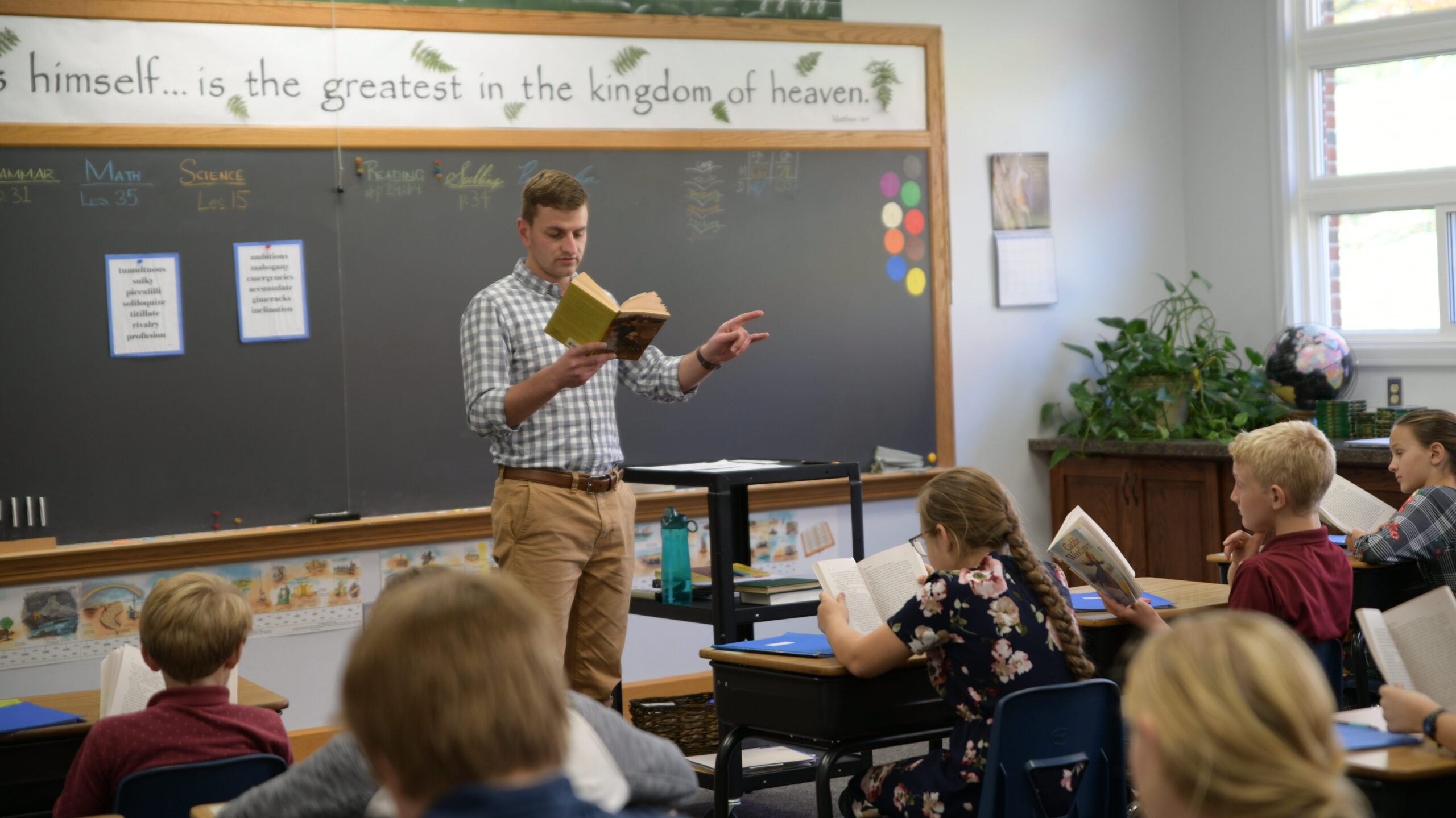
Book Recommendations: Read-Alouds
Chapter Books
Little House series by Laura Ingalls Wilder
Treasures of the Snow by Patricia St. John
The Adventures of Peter Cottontail by Thorton W. Burgess
The Bears on Hemlock Mountain by Alice Dalgliesh
A Question of Yams by Gloria Repp
Through the Green Gate by Mabel O-Donnell
Charlie and the Chocolate Factory by Roald Dahl
Mr. Popper’s Penguins by Richard and Florence Atwater
Misty of Chincoteague by Marguerite Henry
Young Prince Huburt by Sidney Baldwin
Amos Fortune, Free Man by Elizabeth Yates
The Copper Kings of Montana by Marian T. Place
Naya Nuki, the Girl Who Ran by Kenneth Thomasma
The Youngest Rover by John H. Amory
All the Glimmering Stars by Mark T. Sullivan
Where the Red Fern Grows by Wilson Rawls
The Phantom Tollbooth by Norton Juster
The Tale of Despereaux by Kate DiCamillo
A Long Walk to Water by Linda Sue Park
The Lion, the Witch, and the Wardrobe by C.S. Lewis
Summer of the Monkeys by Wilson Rawls
Mrs. Frisby and the Raths of NIMH by Robert C. O’Brien
The Miraculous Journey of Edward Tulane by Kate DiCamillo
God’s Smuggler by Andrew van der Bijl, Elizabeth Sherrill, and John Sherrill
Gentle Ben by Walt Morey
Kavik the Wolf Dog by Walt Morey
Banner in the Sky by James Ramsey Ullman
My Side of the Mountain by Jean Craighead George
From Anna by Jean Little
The Bronze Bow by Elizabeth George Speare
Picture Books
Five Little Monkeys with Nothing to Do by Eileen Christelow
Tacky the Penguin by Helen Lester
The Mitten by Jan Brett
The Bee Tree by Patricia Polacco
Rikki-Tikki-Tavi by Rudyard Kipling
The Story about Ping by Marjorie Flack and Kurt Wiese
Who Wants and Old Teddy Bear? by Ginni Hofman
What Will Hatch? by Jennifer Ward
The Golden Glow by Benjamin Flouw
When Spring Comes by Kevin Henkes
A Butterfly is Patient by Dianna Hutts Aston
The Snowy Nap by Jan Brett
Winter Is Coming by Tony Johnston
First Snow in the Woods by Carl R. Sams II and Jean Stoick
Sleep Tight Farm: A Farm Prepares for Winter by Eugenie Doyle
Home by Carson Ellis
The Uglified Ducky by Brian Claflin
Six Dots by Jen Bryant
The Little House by Virginia Lee Burton
The Three Little Wolves and the Big Bad Pig by Eugene Trivizas
Thank You, Mr. Falker by Patricia Polacco
Freedom Song: The Story of Henry “Box” Brown by Sally M. Walker
The Invisible Boy by Trudy Ludwig
Miss Rumphius by Barbara Cooney
Tikki Tikki Tembo by Arlene Mosel
Study Skills
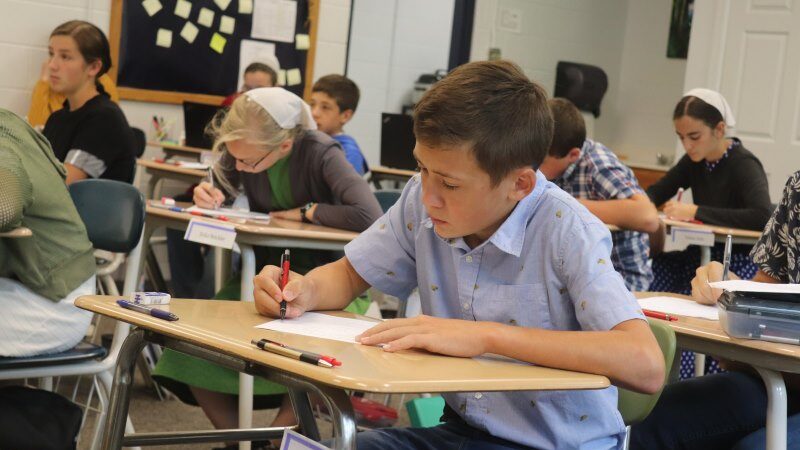
It can be easy to assume that students intrinsically know how to study information effectively, b that is often not the case. There is a lot of value in making sure these work habits are explicitly taught, not merely “caught.”
Consider asking students the following questions to enable them to self-assess their study skills and to give you valuable information about how to best instruct them:
Who taught you how to study?
How do you decide what to study next?
Do you ever come back to review the material after the class has ended?
What study methods do you usually use?
How do you know your preferred study methods work?
Study strategies to teach to students:
Low-stakes (or better yet—no-stakes) quizzes are one excellent way of having students practice retrieving information from their long-term memory. Continuing to periodically quiz students on skills they have learned throughout the year will solidify the knowledge in their long-term memories for many years to come.
Regardless of the method used, the goal is to strategically space the studying out so that the information is not altogether lost from memory but that students do need to work to remember the content. This is the “sweet spot” that optimizes the storage of information in long-term memory.
Any study strategy that does not require a student to actively think about or retrieve information tends to be relatively ineffective (this includes the very common studying approach of simply rereading notes or a textbook). Instead, teach students how to study in ways that require actual recall from their memory. This may include the following:
Delete or cover main concepts and terms from notes, then require yourself to fill in the blanks
Teach content to a mirror
Write down everything you know from memory, then compare it to your notes
Make flashcards of key content
Make a self test (better yet, have a friend do the same and switch tests)
A helpful guide in teaching students good note-taking techniques: How to Take Good Notes - The Dock for Learning
An overview to teach students to comprehend what they’re reading: How to Read: Improving Reading Comprehension - The Dock for Learning
Sources
Study Smarter and Harder by Chris Brode: Study Smarter and Harder - The Dock for Learning
- 261Page 1