5 Simple Ways to Boost Student Engagement
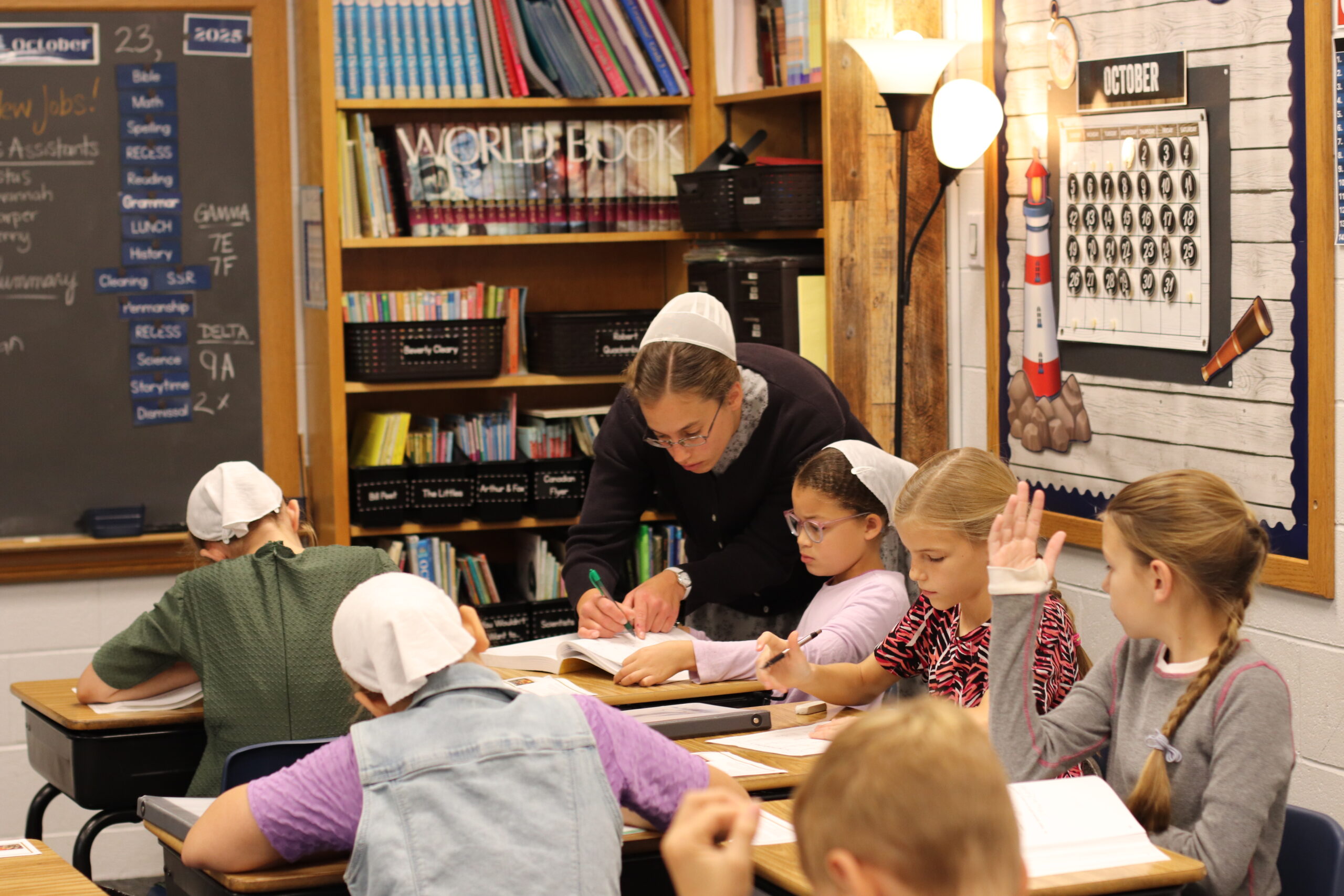
If we aren’t careful, our teaching can become a simple transaction of knowledge. The teacher gives information, the student receives it. End of story.
While there are some situations where this is the most effective way for a concept to be taught, it is generally not the most effective way to teach. Instead, we ought to be viewing our students as team members who are constantly involved and engaged in the acquisition of knowledge.
However, this can be tricky to do well all the time. It can be helpful to have some tried-and-true methods that you employ on a regular basis.
Here are five simple ways to actively involve all of your students in the learning process, easily adaptable for almost any lesson.
Popsicle Sticks
Instead of falling into the habit of only getting input from those students who raise their hands and offer answers, have an easy system to call on students at random. One simple way to do this is to write each student’s name on a popsicle stick and keep them in a cup. Ask a question, then pull out a stick to see who will respond.
Something to consider: sometimes this will work to keep students engaged only until their name is called (at which point they feel free to zone out because they know they won’t be called on again). One easy workaround is to return the sticks to the cup (although that does pose the real possibility of the same student’s name getting pulled several times and other students never getting called at all).
Another trick is to draw a dot at one end of the sticks. When you pull a student’s name, put the name back into the cup, but with the dot facing down this time. When you grab subsequent sticks, choose from the ones that still have a dot facing up. This can help to create the illusion that any name could get called at any time while ensuring that you’re calling on a variety of students.
Whiteboards
Individual whiteboards are a fantastic way to boost student involvement, and they can be used in almost any content area. Ask a question and have students write the answer. Have them write spelling words or solve math problems on them. Use them for diagraming sentences in grammar. Have students sketch a science diagram on their whiteboards. The possibilities are endless.
A huge benefit of whiteboards is that you can have students hold up their answers to show you, and you will get immediate feedback on which students understand a concept and which ones are struggling.
You can often find small whiteboards at dollar stores. Another handy option is to simply put a piece of cardstock inside of a page protector—it works the same way.
You can also buy a package of dollar store socks to use as erasers. Put a marker inside each sock for easy storage and distribution.
Thumbs Up, Thumbs Down
This is a quick and easy way to check for student understanding while also encouraging student engagement. Use this for questions framed as true or false statements or when you’re asking a question with two options. For example, “Carbon is one of the elements on the periodic table…do you agree or disagree?” Or, “What is the word for an animal that survives by eating other animals? Thumbs up if you say predator, thumbs down if you say prey.”
You can also use this as a way to expand on math problems. “Sarah says the answer is 345. Do you agree or disagree? Thumbs up or thumbs down.”
Something to consider: train students to hold their hand against their chests instead of putting it in the air. This makes it harder for students to lazily piggyback their answers based off the answers of those around them (because they can’t actually see those answers). It also keeps sensitive students from feeling anxiety that they will be the only one to get the wrong answer.
Plickers / Sign Language
Plickers is a great tool for reviewing large amounts of content and is especially effective if the teacher has done some preparation beforehand. It’s a system that requires printing a QR code for each student and having the Plickers app downloaded on the teacher’s phone or tablet. The free version has some limitations, and a paid version is also available (more details on that below).
Plickers is designed for multiple choice questions with four answers. Each student receives a card with a unique QR code, with each side of the card labelled A, B, C, and D. The teacher can ask or project their multiple choice question, and the students will hold up their cards, oriented so that the answer they choose is at the top of the card.
The teacher, with the Plickers app activated on their phone or tablet, will scan student’s responses. The data is recorded for the teacher to review (this allows teachers to see at a glance which questions students are struggling with, which is a huge benefit).
For a completely no-tech variation, teach your students the sign language for the first four letters of the alphabet. Ask multiple choice questions and have students sign their answers. This, of course, gives you in-the-moment feedback but doesn’t record student responses for you to analyze later the way the Plickers app does.
You can find more information and download the materials necessary at https://get.plickers.com/.
The free version is limited to asking five questions at a time, which you may find is inconvenient enough to make it not worth the effort. This link outlines the differences between a free account and Plickers Pro. https://help.plickers.com/hc/en-us/articles/360042744134-What-is-Plickers-Pro
For a completely no-tech variation, teach your students the sign language for the first four letters of the alphabet. Ask multiple choice questions and have students sign their answers. This, of course, gives you in-the-moment feedback but doesn’t record student responses for you to analyze later the way the Plickers app does.
Turn and Tell
Turn and tell is a way to get lots of students talking at the same time. Lay some groundwork by breaking students into partners and explaining your expectations. As you are teaching, you can then randomly instruct them to turn and talk to their partners. For example, “Turn and tell your partner one of the causes of the Civil War.” Or, “Turn and tell your partner how to use order of operations to solve an equation.”
You will want to ask a series of questions this way so that each student in the pair gets a chance to speak. You can prevent the most confident students from always doing the talking by specifying who answers first for a specific question. For example, “Turn and tell your partner one of the characteristics of a mammal. Those seated closer to the windows will speak first.”
The more often we can involve students in answering questions or responding to prompts, the more often we can be assured that their brains are actively engaged in learning. By making strategies like these a normal part of your classroom rhythms, you can help your students be active participants in the learning process.