
All Content

Don't Call Your Students Smart

Can one simple line of praise affect how a child will perform in the future? Stanford psychologist Carol Dweck and her team of researchers discovered that it most certainly can.
In an experiment conducted on 400 fifth-graders, Dweck and her team gave each child a nonverbal IQ test, intentionally easy enough for all the children to be quite successful. After the child finished the test, the researchers told the student his score, along with a single line of praise.
Some children were praised for their intelligence and told, “You must be smart at this.” Other students were praised for their effort and told, “You must have worked really hard.” This praise was assigned randomly and not given based on score or performance.
The researchers went on to give the students their choice of test for the second round. The children were told that one choice was a test that would be more difficult than the first one, but they would learn a lot by attempting the puzzles. They were told the other test was “easy, just like the first.”
The results were astounding. Of the group of students who had been praised for their effort, 90 percent chose the harder set of puzzles. Of those who had been told they were smart, a majority chose the easy test.
Dweck wrote, “When we praise children for their intelligence, we tell them that this is the name of the game: Look smart, don’t risk making mistakes.” If children believe their value comes from their intelligence, they will do anything to continue to look smart and avoid failure.
It gets even more fascinating. In a third round of testing, the fifth-graders had no choice in their test. All of them were given a difficult test, designed for seventh-graders.
Every student failed the test. But not every student had the same reaction to that failure.
Those who had been praised for their effort on the first test were very engaged in the process, trying various tactics to find the answers and finding evident enjoyment in the challenge. On the other hand, those who had been praised for their smarts seemed to assume their failure was evidence they were actually stupid. They fell apart, sweating and miserable.
In a final round of testing, the researchers gave the students tests that were the same difficulty level as the first round had been. It would seem logical that each student would achieve a similar score as the first time they had taken the test.
But again, the results were incredibly interesting—and thought-provoking. Those who had been praised for their effort improved their first score by an average of 30 percent. Those who had been praised for their intelligence did worse than they had initially by about 20 percent.
This is shocking, perhaps even horrifying. It’s almost enough to make a teacher feel terrified to say anything, lest she unintentionally damage her students. But the flip-side is also true: saying the right thing has the potential to boost students’ performance.
Dweck explains it this way, “Emphasizing effort gives a child a variable that they can control. They come to see themselves as in control of their success. Emphasizing natural intelligence takes it out of the child’s control, and it provides no good recipe for responding to a failure.”
As a teacher, you have the power to build new ways of thinking and talking about intelligence and effort in your classroom. In another study, two groups of students were given the same set of lessons on study habits. However, half of the students were also given a special module about how intelligence is not innate. They looked at pictures of brain scans and learned about how the brain can grow new neurons when challenged.
The students who had learned that intelligence can be developed through hard work clearly improved their study skills and grades. Their teachers, who hadn’t known which students were in which group, could easily identify which students had received training in the value of pushing through difficulty to increase intelligence. They were living proof that it was possible.
You, too, can give your students the gift of this knowledge. Why not take part—or all—of a class period to teach them about the way their brains work? Teach your students about the miracle of neuroplasticity (the ability of the brain to grow and change). Explicitly tell them that intelligence is not fixed. They are not stuck with the brain they’re born with. They can work hard at something and change the way their brain is wired.
An analogy that is often helpful for students is comparing the brain to a muscle that must be worked out to grow stronger. Just like other muscles in the body won’t grow significantly stronger without focused effort, the brain needs to be pushed through difficulty in order to grow. “No pain, no gain,” is not only true while working out at the gym.
In addition, here are three other areas you can focus on to shift your students’ patterns of thinking to effort-based instead of intelligence-based.
Normalize Making Mistakes
Every day in a classroom, there are hundreds of opportunities for failure—both big and small. How you as a teacher respond to mistakes is crucial. Work hard to make your classroom a place where making mistakes is as normal and undramatic as possible. Tell your students often that making mistakes is a normal part of learning. If they aren’t making any mistakes, then they aren’t learning anything new.
Encourage students to see failure as a chance to learn and grow. You may find this also necessitates a mindset shift in yourself. It can be easy to overlook mistakes or try to minimize them because that makes life easier for you as the teacher. However, the brain is wired so that in the moments after making a mistake, it is seeking to make sense of the incongruity. Our brains are primed to learn in the aftermath of failure—but not if they are shut down by shame. Normalizing mistakes and helping students learn from them are some of the most valuable learning experiences you can give them.
Promote a Growth Mindset
“Growth mindset” may be a bit of a buzzword in education right now, but it’s for good reason. The self-talk that students allow to fill their brains can make a huge difference. Changing the words they use can be incredibly powerful.
There are many ways you could promote growth mindset in your classroom, whether verbally, on posters, or on small cards each student can keep in their desk to refer to when they need a reminder.
Examples of growth mindset switches you could exemplify for your students might include:
Instead of: I can’t do this.
Say: I can learn how to do this.
Instead of: I give up.
Say: I can try a different strategy.
Instead of: This is too hard.
Say: If I work hard, this will get easier.
Instead of: I’ll never be smart enough to do this.
Say: It might take some time for me to learn how to do this.
Some have discarded growth mindset as psychobabble, but in many ways, it’s an excellent example of how the Devil wants to trap us in lies. And the antidote to lies is the truth.
Celebrate Effort and Hard Work
Your students should know you as someone who recognizes and celebrates hard work. Be on the lookout for moments when students show exceptional effort, and praise them for it. You can even praise the whole class for their effort. For example, after a particularly difficult math lesson, you might say, “Thank you for your hard work this morning. I’m proud of you for pushing through some difficult concepts.”
Celebrating effort can even come out in subtle language shifts. Perhaps your students have been working for weeks on a large project. At the end of the project, you want to celebrate their achievement with a reward of some sort. Instead of saying, “We’re going to have cinnamon rolls to celebrate being done with your projects,” you could say, “We’re going to celebrate all the hard work you poured into your projects.” One celebrates the fact that the task is completed, the other celebrates the hard work the students exhibited through the process. It’s a small shift, but as Dweck’s research showed, small shifts can make a big difference.
When students are struggling to understand a difficult concept, acknowledge that struggle. But follow it up by reminding them that they are capable of understanding; it just might take some hard work to push through their feelings of confusion. Tell them, “I can see that this is difficult for you to understand. But I know that you can get it if you don’t give up. Keep pushing through.”
All of these things may seem unnecessary or extra. However, as the research clearly shows, our brains are powerful, and what we believe about ourselves can have profound impacts on our learning. Give your students a new way of seeing themselves and the world by teaching them to value hard work and effort. The results may astonish you.
Bibliography:
Bronson, Po. “The Power (and Peril) of Praising Your Kids.” New York Magazine, 9 Feb. 2007, nymag.com/news/features/27840/.
Grose, Jessica. “Teach Your Kids to Fail.” The New York Times, 8 Jan. 2020, www.nytimes.com/2020/01/08/parenting/teach-your-kids-to-fail.html.
“Tedtalks: Diana Laufenberg: How to Learn? From Mistakes.” Youtube, 15 Dec. 2010, https://www.youtube.com/watch?v=up4hFj-jcTY&t=25s.
Photo by Milad Fakurian on Unsplash

I Remember

The following reflection was written in response to the recent anniversary of the 9/11 terrorist attack.
On September 11, 2001, I was in my classroom. It was a middle-school classroom, and I was administering a standardized test when the school secretary knocked on the door. She asked me to step into the hallway and told me that New York City had been attacked. Throughout that day and the following days, a sense of apprehension and uncertainty filled many of our minds.
On September 11, 2025, I was in my classroom. Now I was teaching older students–who were not even born when the 9/11 events occurred–and I shared these thoughts as a devotional. Our students today still see uncertainty in the world around us, with school shootings and killing of prominent leaders filling many of their minds. Some of the students may not be affected much by these events, while others are very aware. So what do we say to our students in times of unease and apprehension?
Psalm 77 tells of Asaph, the writer of the psalm, going through difficult situations, “in a day of trouble” when his “soul refuses to be comforted.” He lies awake at night, wondering “hath God forgot to be gracious?” But then Verse 11 and 12 say, “I will remember the works of the Lord: surely I will remember thy wonders of old. I will meditate also of all thy work, and talk of thy doings.” Asaph remembers that God had been faithful in the past and is comforted that God will continue to be with him in the present difficult situations.
In the twenty-four years since New York City and Washington, D.C., were attacked, we have gone through many difficulties, individually, nationally, and globally. But each believer can also testify that God has been present and at work in these situations. We may have seen God provide financially for our families or our schools. Or perhaps we have seen God heal an individual physically or spiritually. It may be that we have seen God provide peace and assurance without taking away the difficult circumstances.
Two events stand out for me that I can share with my students, and perhaps you have other examples to share with yours. In her later years, my grandmother lost her eyesight. She handled her restrictions (mostly) gracefully and seemed (mostly) content. I was discussing with another family member how difficult it would be to accept blindness without being angry, and the family member said, “She (my grandmother) knows that God was faithful in her past and will continue to be with her now in her blindness.”
And more recently, I was talking with a friend who is facing a third major cancer surgery. She doesn’t know what the outcome will be and has to wait for the operation. She told me, “I decided that I could worry and be upset for the next two months while I’m waiting, or I could trust that God’s got this. And I am trusting and I am at peace.”
So, as I told my students on September 11, 2025, I remember. I remember that God was present and in control twenty-four years ago. I remember that God has been faithful in difficulties I have seen since then in my own life and the lives of those around me. I can know and trust that God will be faithful in the current world situations, whether that be school shootings or sickness or war or…. And when we remember this, we all, both my students and I, have hope!

Assess, Plan, Implement, Improve!

As the first few weeks of school have passed, our school culture is becoming more settled and we as a staff are noticing areas that we would like to improve. At our morning staff meetings or after school, we discuss these as a group, decide which solutions we want to use, make a plan to implement those, and then do so.
Improvement should always be one of our goals. How could we make the transition between music and art class more smooth? How could we reduce distractions in a large room with two classes going on at the same time? How can we hold Johnny (not his real name) accountable and encourage him to finish his work?
This week we tackled all these issues, and by the end of the week had successfully implemented three plans which greatly improved all three problematic issues.
Discussing these issues together enabled us to brainstorm and gave us many more ideas and thus options for solutions. It also gave us the advantage of discovering which teacher had the time to be able to help the other teachers with their issues. By the end of the week, the solutions had all been implemented and were working well.
Teacher A helped teachers B and C keep Johnny accountable and offered to stay inside with him a few minutes of break, lunch, or art to make sure he got his work done. Our secretary rearranged the art room and seating plan, which greatly reduced distractions for our much-happier art teacher. The music teacher offered to work on a quieter activity for the first five minutes of class, allowing the art teacher to explain the art procedures in a much quieter environment.
Next week, I’m sure we will find a few more areas that need improvement, and thus we will begin the process again:
- Assess weak areas.
- Plan ways to fix these areas.
- Implement the plans.
- Improve!

Therefore What Shall We Have
In this session, John Coblentz examines a godly mindset for serving. His main points are
- Self-Centered vs. Godly Mindset: The rich young ruler clings to resources, unlike God’s generous nature.
- Entitlement Risk: Peter’s question, “What shall we have?” shows a focus on rewards, risking resentment and comparison.
- Parable of Generosity: The vineyard parable highlights God’s fairness, challenging entitlement.
- Joyful Service: Serve with gratitude, mirroring God’s sacrificial heart, not seeking recognition.
"Therefore What Shall We Have" was presented at REACH 2022 by John Coblentz.
The Weekly Management Meeting
Merle Herr shares insights on effective weekly management meetings, emphasizing their role in shaping organizational culture. Drawing from a personal story, he highlights the importance of structure, facilitation, engagement, synergy, and ownership. The core focus is on structuring weekly meetings to build relationships, share information, address operational issues, and drive accountability. He outlines a seven-step template for meetings and stresses preparation, consistent scheduling, and follow-through on to-dos to ensure impactful meetings.
"The Weekly Management Meeting" was presented at REACH 2022 by Merle Herr.
Sexual Addiction among Us and the Way Forward
Arthur Nisly addresses the pervasive issue of sexual addiction within conservative Anabaptist communities. He describes it as a powerful "tsunami" and a hidden "internal bleeding," emphasizing its devastating impact and the urgent need for action. He offers a message of hope, drawing on biblical teachings and his mentoring experiences to advocate for compassionate support, open dialogue, and practical steps toward freedom and restoration for those struggling.
"Sexual Addiction among Us and the Way Forward" was presented at Reach 2022 by Arthur Nisly.
If You Will, God Can
"If You Will, God Can" by Stephan Gingerich is about trusting and obeying God to fulfill His purpose through individuals. He emphasizes that God uses ordinary people to accomplish His work, sharing personal stories from his life and missionary experiences in Guatemala to illustrate how faith, obedience, and prayer enable God to work through us, transform lives, and build His kingdom.
"If You Will, God Can" was presented at REACH 2022 by Stepan Gingerich.
Finishing the Mission
Henry Blank addresses the ongoing mission of the Church to fulfill Jesus’ Great Commission. Drawing from Romans 15:7-33, he outlines four key elements required to complete this mission:
- A Unifying Purpose: The church's singular purpose is to glorify God by proclaiming the gospel to all nations.
- A Diversity of Callings: Different gifts and callings within the church must be valued and maximized to fulfill the mission.
- Intentional Partnership: Missionaries need the church's prayer, financial, and logistical support through partnerships with mission agencies to reach unreached areas.
- Radical Obedience: Fulfilling the Great Commission requires risk-taking and obedience, even at personal cost, as exemplified by Paul.
Bearing Precious Seed
This presentation draws parallels between sowing seeds in gardening and spreading the Word of God. Using the biblical parable of the Sower and personal anecdotes, the speaker emphasizes perseverance in ministry despite challenges, encouraging listeners to faithfully sow "precious seeds" without discouragement, trusting in God's promise of eventual harvest, whether in this life or eternity.
Bearing Precious Seed was presented at REACH 2022.
A Five Talent Time
Gary Miller contrasts the comfort of first-class travel with the challenges of economy class to illustrate the blessings and responsibilities of living in prosperous America. He uses the Parable of the Talents (Matthew 25:14-30) to emphasize that God has entrusted Anabaptists with significant resources—church communities, businesses, and strong families. He urges us to move beyond preserving these "talents" and instead invest them intentionally for God’s kingdom. He challenges us to start where we are, take risks, and move toward pain to bring light to a dark world, trusting God to use our efforts.
A Five Talent Time was presented at REACH 2022 by Gary Miller
Here's Why...

“Why do I need to know this?” Such a commonly asked question in the classroom! Somehow, many students think that the curriculum is chosen randomly, with teachers requiring hard work that will never be used in life. And granted, sometimes that is the case. I do not think I have ever used the basic chemical formula for photosynthesis that I memorized in high school biology class. But I have used an understanding of the process of photosynthesis, along with the logic and balance I learned in working with equations.
That is often the situation with some of the more mundane classroom learning: while the specific facts may never be needed in life, the processes and thinking strategies are used daily. Researchers Beverly S. Faircloth and Samuel D. Miller state, “Even under ideal circumstances, where students develop an understanding of academic content, believe in their abilities to learn, and feel supported in those efforts, they may not care about what they are studying” (262). However, Faircloth and Miller continue by saying that students need to engage in what they are studying. Their research shows that helping students to make personal connections with class content and to see its long-term value causes the students to care about learning, therefore increasing their learning (and incidentally, raising their grades) (Faircloth and Miller 267).
The students simply need to know that what they are doing now will benefit them later.
So when a student asks you “Why do I need to know this?” here are some answers! Starting with a few specific examples, each category gives reasons that you can develop further with students.
When will I use mathematics?
- Making a schedule
- Measuring for construction
- Keeping track of personal finances
- Thinking through the steps of a problem
- Figuring miles and gas mileage when traveling
I recently wrote an algebraic equation to find an average age and attendance at an event I worked with. While this was not a typical “how many nickels and dimes” story problem that an algebra book might contain, the processes of thinking logically, identifying the problem and the unknown, and then following through the steps of solving an equation all stemmed directly from algebra class. Another commonly used mathematical skill is spatial awareness, manifested in finding our way to a new destination or estimating how many feet are between two items. The logic of a geometric proof is similar to the logic used in developing the structured plan of a new building. Even though the precise math book problems may not show up in real life, the skills used to solve them certainly do.
When will I use English or language arts?
- Writing a resume
- Work communications, such as emails, reports, presentations
- Engaging with media and discerning what is true in it
- Reading and understanding God’s Word
- Reading manuals and following instructions
The basic goal of language arts is to communicate clearly, whether in writing, speaking, reading, or listening. To engage with the culture around us, Christians need to be able to express ourselves clearly with organized thoughts. The construction of logical arguments used in writing a persuasive essay assists in defending our faith. As we engage with the media and determine its truth, we use the critical thinking skills developed in reading class. Even the more mundane skills, such as sentence diagramming, can help in understanding Biblical concepts–I once diagrammed a lengthy sentence from the Apostle Paul’s writings at the request of a family member to help him break down the passage for a sermon! And simply enjoying a good book gives such pleasure–all these skills derived from children’s language arts classes enrich the lives of adults.
When will I use science?
- Predicting the weather
- Understanding medicinal issues
- Agriculture, farming, gardening
- Personal health and hygiene
- Food and nutrition
The steps of the scientific method, such as forming a hypothesis and then experimenting to prove it, enable us to solve problems throughout life. When the chocolate chip cookies spread across the pan, the baker tests whether adding more flour will make the next batch perfect. Or if the car is making a strange noise, the mechanic uses previous experimental data to interpret what the sound means. Understanding scientific processes of simple chemical reactions such as rust formation assists us in proper use of our possessions. All of this scientific education helps make life’s processes make sense.
When will I use social studies?
- As a missionary
- Knowing where countries/cities/states are
- Relating to people of different cultures
- Awareness of historical events and how they affect current events
- Relating history to the Bible
Applying God’s Word to the world around us requires a cultural understanding and awareness. While Christians are to be in the world and not of it, we still need to interact with people of different cultures and regions. Basic facts and principles from school social studies classes enable us to do so in an educated and Biblical manner.
Work Cited
Faircloth, Beverly S., and Samuel D. Miller. “Enabling Enriched, Empowered Education: Insights From Jere Brophy’s Legacy.” Theory Into Practice, Vol. 50, No. 4, Oct. 2011, pp. 262-68. EBSCOhost, https://doi.org/10.1080/00405841.2011.607370
Helping Young Girls Deal with Relational Drama
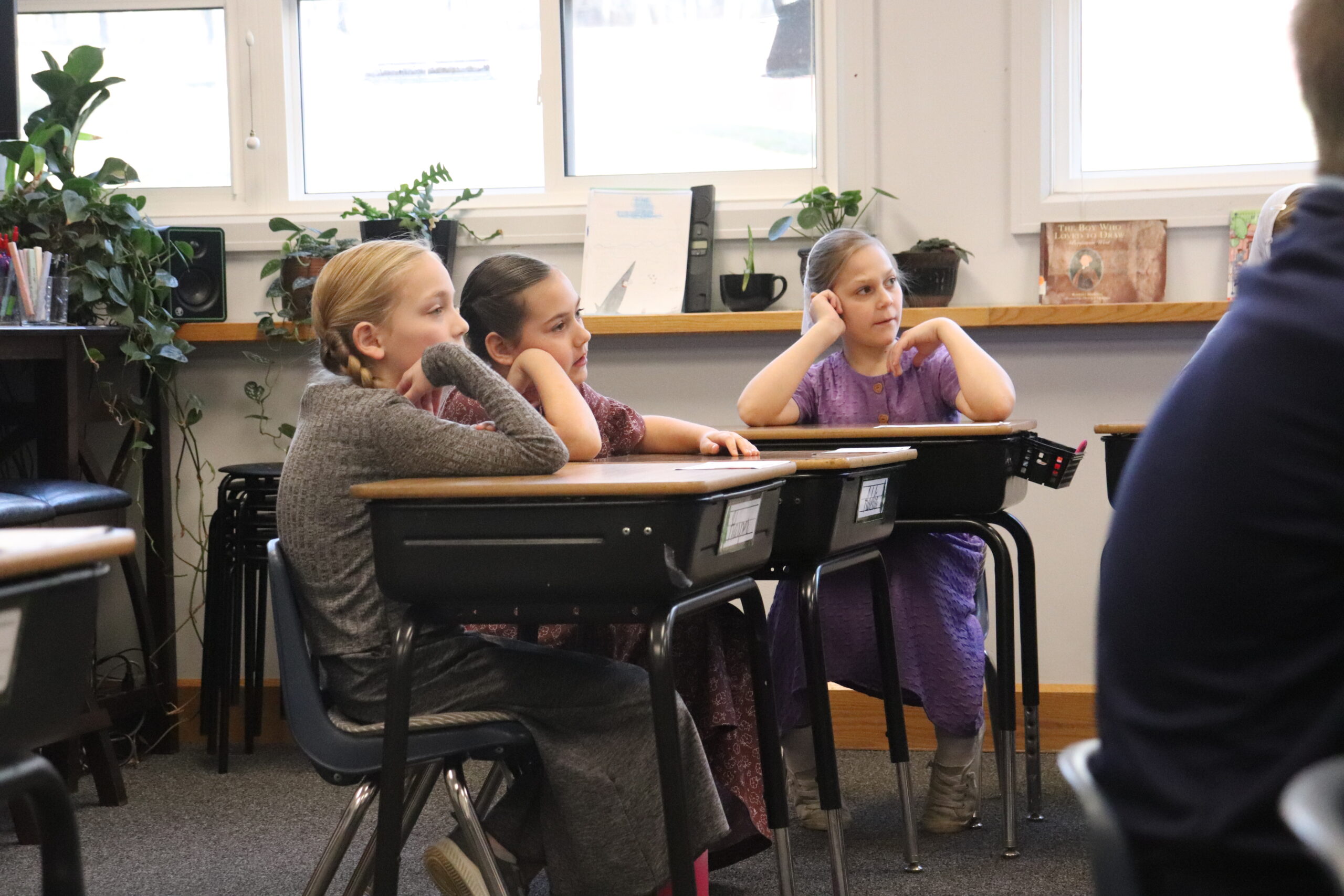
Academic struggles. High-energy boys. Negative attitudes about school. Apathy. Every class comes with its own unique set of issues—and we feel more equipped to deal with some of them than others.
One year in my teaching career, the main pervasive issue was relational drama amongst the girls. This was due to a number of factors. First, there were a lot of girls. Second, there were a lot of strong personalities that didn’t mesh well. And third, there were already years of past conflict that simmered under the surface, causing eruptions to happen far more frequently than they would have needed to.
I had a lot of moments that year where I didn’t know what to do or say in the face of yet another round of disagreements and hurt feelings. But I also learned a lot that year about what does and does not tend to work when dealing with issues of this sort.
Of course, every situation is different. What didn’t work for me might actually work for you—and vice versa. But perhaps the following thoughts can be helpful to you if you find yourself dealing with similar situations on a regular basis.
What Didn’t Work
Talking to both sides of an argument at the same time.
For the first few months, I made this mistake way too often. Something would happen at recess and one of the girls would come in crying. She would say another girl was to blame for her tears, so I would call that girl into the room as well and try to “get to the bottom” of what had happened.
This didn’t work well because often, their views of reality were completely opposed to each other. Girl A would tell me what happened and Girl B would flat-out deny it—each one likely painting themselves in the most angelic light they possibly could. That put me in an impossible position where I didn’t know what had actually happened, and any action I took would look like I was choosing sides.
Instead, I found it worked much better to talk to them individually. They were less likely to feel the need to defend themselves as strongly if the other party wasn’t in the room. The atmosphere was less emotionally charged. And I could respond to each girl the way she needed me to in that moment—you talk differently to someone who’s in tears versus someone who’s angry.
Saying things that made the girls feel guilty.
How we talk to students about their areas of struggle is important. Sometimes it was easy to think that if I could just read the perfect story or present the perfect devotional, these girls would see the error of their ways, have a change of heart, and all would be fixed.
There may be some situations where young girls need to be given explicit teaching about why they should treat each other kindly. However, I found that for these girls who had been raised in Christian homes their whole lives, this was not the most helpful approach. They already knew how they ought to treat people, and they actually did have hearts that wanted to do better (at least most of the time).
What they actually needed was not to be preached at about the importance of kindness and love, but to be given practical guidance on how to actually live that out in their day-to-day lives. (More on what this looks like later).
Not engaging.
Again, this is very situational. There are definitely times when adults getting too involved in children’s conflict can actually make the situation worse. A lot of wisdom is needed in deciding when to engage.
But sometimes, I didn’t deal with things when they came up, either because I wasn’t present enough to notice it or I was too tired or I just hoped if I ignored it, it would go away.
In general, some level of engagement is usually best, even if it’s just telling them, “I noticed you had a disagreement. I trust the two of you to be able to figure it out. If you can’t, I’m here to help.”
What Did Work
Listening.
Often, just making someone feel heard can ease the sting of a painful interaction and be enough to ease the tension. Even in times when I did still need to get involved, listening was an essential first step.
Partway through the school year, I tried something unconventional. I made a schedule of “daily meetings.” Each afternoon at recess, whichever girl’s name was on the schedule for that day would stay back and talk to me for a few minutes. With the amount of girls in the class, it worked out that each one was talking to me about every two weeks.
It was very open-ended—they could talk to me about anything. Some girls would come with their mental list of ways they had been wronged. I would listen to their complaints about other girls, but I was careful not to affirm their angst. Instead, I would challenge them to think about their role in the conflict. “I know that’s what she did, but we’re talking about you right now,” I would often say.
Other girls, who tended to be less intense or further removed from the drama, rarely had anything to say. However, I still found it so valuable to check in with them regularly, as they often got less of my time and energy than the more drama-prone girls did. It was a wonderful opportunity to get a bit of face time with each girl and affirm the ways I saw them doing well with relationships.
Interestingly, the longer these scheduled meetings went on, the less drama we seemed to have. Sometimes I wondered if some of what made certain girls come running to me for every little slight was actually just a desire to be heard and loved by their teacher. Carving out intentional time to listen and love helped them to feel more secure.
Compelling the girls to take personal responsibility.
Once I discovered this tactic, it was an absolute game-changer. Whenever a girl would bring an accusation against another girl, I would respond, “I’m sorry she treated you that way. But you’re not responsible for her actions. All you can control is how you respond.”
Then we would brainstorm together to think of ways that she could respond with kindness and love. First of all, I think this was important because it taught them not to become victims. Secondly, it allowed me to work with each girl to identify her role in a conflict. And thirdly, it took away the feeling of helplessness that can be so overwhelming when we feel mistreated and instead gave an actionable step towards improving the situation.
Of course, there were times when another student’s problematic behavior had to be addressed as well. But I would leave that for a different conversation.
Helping them take concrete, actionable steps towards resolution.
Once you’ve established a child’s responsibility to control their response, you can coach them in what that might look like. I had girls who would write a note saying something they appreciated about another girl. I had girls who knew they should walk away from a situation when they felt themselves getting angry. I had girls who kept a list of all the positive interactions they had with someone they struggled to get along with. I had girls who took ownership to apologize for things they had done. I had girls who tried to be more intentional in including those who were marginalized.
This may seem like a lot of work—and it is. But approaching conflicts with this mindset actually helps the girls build skills of relating to others, which is a gift you give them for the rest of their lives.
Calling them to the way of Jesus.
“Love your enemies” was the guiding mindset I tried to keep in front of us at all times. “Jesus knows you better than you know yourself,” I would tell the girls. “And He knows the way to true life and happiness. And so if He says that responding in love to those who hurt us is the best way—then we need to take Him seriously.”
It didn’t take long before all I would have to say to an affronted girl was, “How do you think Jesus would want you to respond?” She would get a little smile on her face and know exactly how to answer. Then I would say, “So what do you think loving her looks like in this situation?” Often, she would know how to answer that question, too.
Guiding young girls in relational conflict can be a daunting and exhausting task. But it’s an important one. Yes, some of their petty tendencies will dissolve as they get older. However, in these formative years, they are building relational habits that will stick with them for the rest of their lives. Perhaps you can be a loving adult who helps to shape them in the way of Jesus.

Two Favorite Review Games

Before I give my third graders a test in science or history class, we usually take a class period to review together on the day before the test. Since games can be a fun and useful way to review information, I am always on the lookout for new games to try with my students. While I use a variety of games and activities, following are two of my favorites that meet the criteria of effectiveness, ease of use, and student enjoyment.
Both these games require minimal preparation for the teacher, and the only materials needed are writing tools for the students. My students all keep a small whiteboard and dry-erase marker in their desks, and those work well for these games. Pieces of laminated heavy paper can also work as whiteboards.
Stump the Experts
I begin by asking a review question. The students have half a minute or so to write an answer, and then they hold up their boards. Out of the people who answer correctly, I choose three or four students to sit in the “expert” seats, which are simply chairs placed in front of the classroom, facing the other students. Then I continue to ask questions, and everyone writes. When it is time to show answers, I ask the “experts” to hold up their boards first. If their answers are correct, they are allowed to stay in the expert seats. If any of them have an incorrect answer, they need to give up their seat to someone else who wrote a correct answer. Students try to stay in the expert chairs for as long as possible, and the other students try to “stump the experts” and get their own chance to sit in an expert chair.
I love this game for its simplicity. It generates friendly challenge and competition without the need to make teams or to keep score. It also makes students individually accountable for the information, since everyone is expected to write answers; and I can quickly evaluate my students’ general grasp of the material.
Hot Seat
This game works best with three or four students on a team. In my current class of sixteen, we have four rows of four desks, so it works nicely to have each row be a team. The front seat in the row is the “hot seat.” When I ask a question, everyone writes an answer. Then I ask the students seated in the front to show me their answers first. If they get it right, their team gets four points. If someone in the front has an incorrect answer, I check the person behind them. The second person can earn three points, the third person can earn two points, and last person in the row can earn only one point. After every question, the students in the back move to the front, and everyone else moves back one seat. The goal is always to have the person in the “hot seat” answer the question correctly so that the team can get the full four points. But everyone else is also motivated to write, so that the team can still earn as many points as possible, even if the person in the front gets it wrong.
I like the high motivation and accountability in this game. Another perk is that it keeps students moving, since they switch seats after every question. If you have a high-energy class that does not do well with sitting still too long, this game is a great way to allow movement without chaos.
Photo by Nathan Cima on Unsplash
Fascinating Fix-ups

Many years ago I was visiting another school and classroom when I heard the teacher refer to “fix-ups.” I had never heard the term before and was a bit perplexed, so I asked her about it and she explained.
Fix-ups is the term used for students correcting their papers.
At first I was a little taken aback. Aren’t they just supposed to try to do well the first time? Isn’t that a bit lame giving them the opportunity to redo their work?
The more I thought about it though, I thought it was a fabulous idea, and one that I have been using in my classroom for years. Here are a few reasons why.
- Students try harder the first time, as they know that they will be required to correct any wrong answers. If approached correctly, it becomes a game or a challenge to do well the first time.
- It gives students immediate feedback so that they can see what they got wrong. This prevents establishing a wrong method, such as when learning long division. The sooner the mistakes are corrected, the better, so that no wrong habits are established.
- Grades on tests improve! The students get in the habit of working more slowly and carefully, as well as being more diligent with their work, and this transfers to tests.
- It establishes a culture of “excellence expected” in the classroom.
- It keeps students busy and hopefully not wasting any time.
Here are a few suggestions of how to implement the use of fix-ups in your classroom.
- Explain to your students what you will be doing: grading their work and getting it back to them as soon as you can so that they can correct any wrong answers. Stress that the goal is to have a 100% by the end of the day. Note: This applies only to daily work, not tests.
- Choose your subjects. We do this with math, language arts, spelling, and vocabulary, but you might want to start with just math and then work your way up.
- Grade like crazy! I have a camping chair that my students take up the stairs for me every morning break and at lunch. They set it down where I can see all of them, and I supervise and grade from my chair. I get fresh air and sunshine, the papers get graded, and the students know the parameters (don’t get the ball that went over the neighbor’s fence), so it’s safe. My goal is to have all the math papers that have been turned in graded by morning break, and the rest of everything graded by lunch. Using teacher’s keys, I can usually grade, supervise, and carry on a conversation all at the same time. Teachers have superpowers.
- Help! If my students have gotten a wrong answer the second time, I expect them to try once more, and then I will help them if they still can’t get it. This provides a good opportunity for them to see me work the problem up on the board, or to get an individual lesson at their desks.
- Good enough. I have found that students usually have a 98%-100% after the second fix-up, and I help them with the last one or two problems if they don’t. Every once in a while, we don’t have enough time for a 100%, but I expect at least an A (93% or higher), and then I call that “good enough.”
If done right, implementing the use of fix-ups can be a very positive, motivating, and helpful tool for teachers to use in their classrooms.
Photo by Chris Liverani on Unsplash
Canadian Art
These works are representative pieces of the country's most famous artists. Canadian art often focuses on wilderness and geography themes. See https://www.aci-iac.ca/art-books/ for details on many authors, etc.
Famous Artists to know
- Group of Seven, esp Lawren Harris https://theculturetrip.com/north-america/canada/articles/who-were-canadas-group-of-seven-2 & https://thegroupofseven.ca/ (has excellent overviews of each)
- Emily Carr https://www.aci-iac.ca/art-books/emily-carr/key-works/forest-british-columbia/
- Thom Thompson https://www.aci-iac.ca/art-books/tom-thomson/key-works/the-jack-pine/
- William Kurelik https://www.aci-iac.ca/art-books/william-kurelek/key-works/reminiscences-of-youth/
- Robert Bateman https://www.artcountrycanada.com/bateman-robert-midnight-black-wolf.htm
- Maud Lewis https://www.aci-iac.ca/art-books/maud-lewis/key-works/winter-sleigh-ride/
Additional famous works
- CW Jefferys: Arrival of Radisson https://en.wikipedia.org/wiki/Charles_William_Jefferys#/media/File:Arrival_of_Radisson_in_an_Indian_camp_1660_Charles_William_Jefferys.jpg
- Harris: A Meeting of the School Trustees https://www.gallery.ca/sites/default/files/styles/ngc_crop_16x9_1600px/public/canadian-art.jpg?itok=6NS679j2×tamp=1741206963
- Chambers: 401 Towards London https://www.aci-iac.ca/art-books/jack-chambers/key-works/401-towards-london-no-1/
- Colville: To Prince Edward Island https://www.aci-iac.ca/art-books/alex-colville/key-works/to-prince-edward-island/
- Riopelle: Pavane https://www.aci-iac.ca/art-books/jean-paul-riopelle/key-works/pavane-tribute-to-the-water-lilies/
- Pratt: Supper Table https://www.aci-iac.ca/art-books/mary-pratt/key-works/supper-table/
- Chee-Chee: Goose in Flight https://www.thecanadianencyclopedia.ca/en/article/benjamin-chee-chee
- McCarthy: Rockglen Saskatchewan https://www.aci-iac.ca/art-books/doris-mccarthy/key-works/rockglen-saskatchewan/
- Brymner: The Coast at Louisbourg https://www.aci-iac.ca/art-books/william-brymner/key-works/the-coast-at-louisbourg/
- Krieghoff: Merrymaking https://www.aci-iac.ca/art-books/quebec-city-art-artists/key-artists/cornelius-krieghoff/



The Mission of Kingdom Impact
Jacob Peters draws parallels between the Spartan commitment to military excellence and the Christian call to form disciples for Jesus Christ. He traces God's mission through biblical history, emphasizing the role of Christian educators in shaping students for kingdom impact. Some key points are:
God's Eternal Mission
Servant Education
Classroom as Mission Field
Personal Impact
Listen to more keynote sessions from the 2025 Midwest Teachers Week
Anabaptist Schools: A Suffering History
Ken Kauffman dives into the heart of Anabaptist Christian education, sharing stories from his research. Instead of using a chronological history, he spotlights individuals, communities, and pivotal moments—like the 1925 Scopes Monkey Trial and the founding of the first Amish school in Delaware. Through tales from Iowa and Nebraska, he explores the deep faith, costly sacrifices, and respectful advocacy that shaped these schools, urging us to cherish and carry forward their legacy.
Teaching Science Effectively
Jonathan Miller addresses educators on how to captivate students in science class. With humor and practical insights, he emphasizes the importance of clear explanations, relatable metaphors, hands-on experiments, and embracing failure to spark curiosity. He highlights making science accessible and relevant, using real-world applications and technology wisely to foster a sense of wonder and confidence in students.
- 261Page 4