
All Content
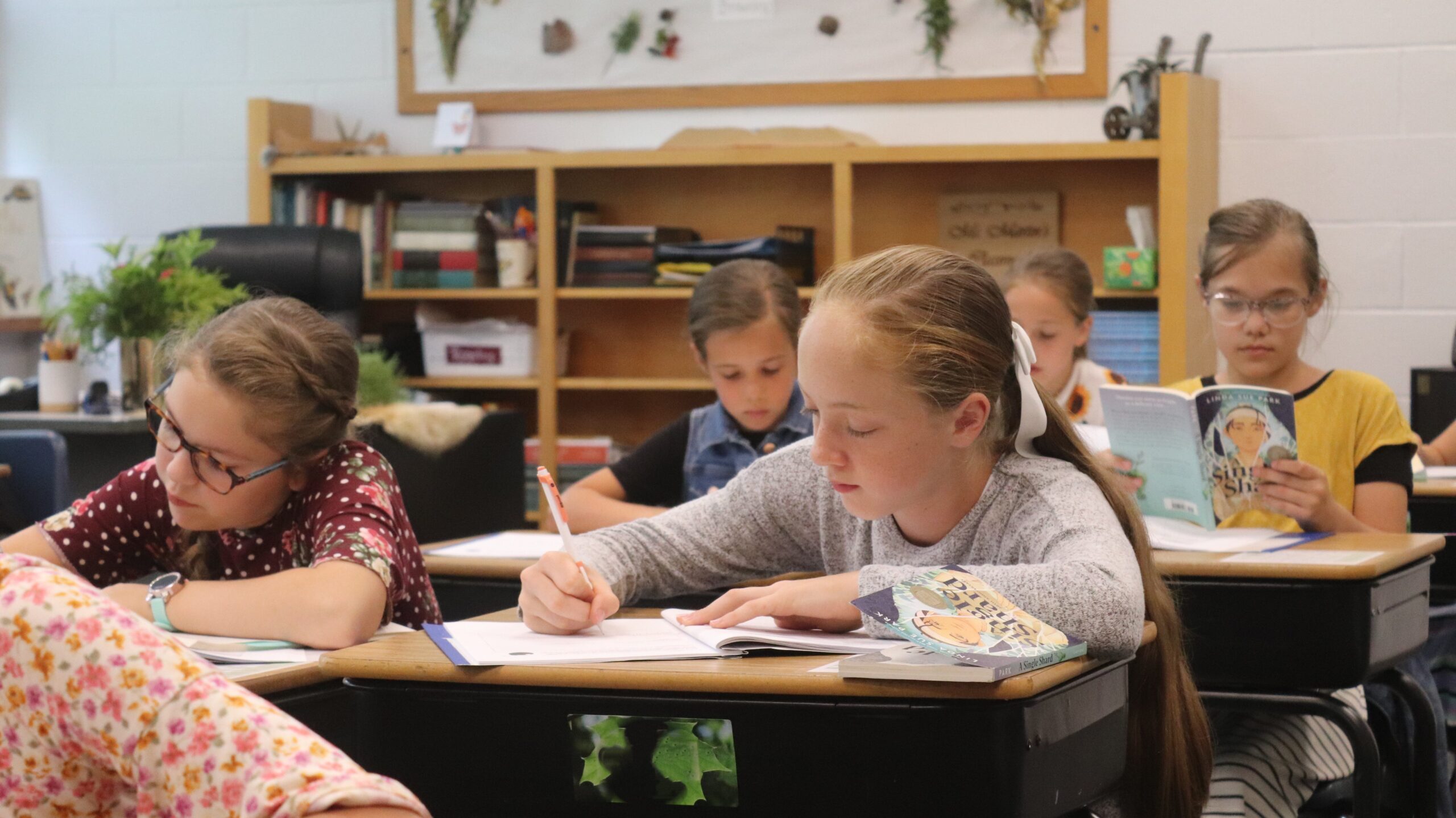
Positive Attitudes Toward Learning
Addressing the Question “Why Do I Need to Know This?”
At some point, your students will ask the infamous question, “Why do I need to know this?” There are a variety of approaches that could be taken in the way you answer them. Here are some suggestions:
Offer concrete examples of how various subjects get used by adults in everyday life.
When will I use math?
Making a schedule
Measuring for construction
Keeping track of personal finances
Thinking through the steps of a problem
Figuring miles and gas mileage when traveling
When will I use English or grammar?
Writing a resume
Work communications, such as emails, reports, and presentations
Engaging with media and discerning what is true in it
Reading and understanding God’s Word
Reading manuals and following instructions
When will I use science?
Predicting the weather
Understanding medicinal issues
Agriculture, farming, and gardening
Personal health and hygiene
Food and nutrition
When will I use social studies?
As a missionary
Knowing where countries/cities/states are
Relating to people of different cultures
Awareness of historical events and how they affect current events
Relating to history of the Bible
Point out that even if students do not end up using the specific facts, the more general processes and thinking strategies are used often.
Math: The skills of logic and problem-solving are used all the time in real life. Even though the precise math book problems may not show up, the skills used to solve them certainly do.
English: Clear communication in writing, speaking, reading, or listening is essential to relationships, engaging with the culture around us, and expressing oneself clearly.
Science: Understanding how to examine a problem and experiment how to solve it is helpful in many areas of life.
Social studies: The knowledge gained through social studies allows Christians to relate well to the world and the varying cultures within it.
Push back against the assumption that everything that is worthwhile is useful. In fact, most of the best things in life are not useful, such as relationships. Many students would say their favorite part of the school day is recess, which is not useful.
Try to determine what is actually driving the question. Often a deeper issue is driving their wondering.
The student may feel confused. Students don’t ask “Why do I need to know this?” after they’ve gotten a lot of questions correct. They always ask it after they’ve gotten stuff wrong. This is a calling for you as a teacher to be clearer in your instruction and more inviting in your approach.
The student may not have fully developed the intellectual character trait of curiosity. Curiosity is noticing the interesting and puzzling both in the everyday experiences of life and in what’s unexpected. As students get older, they tend to lose the innate sense of curiosity that children are born with. As a teacher, make sure that you are involving students in the learning process so their curiosity can flourish. If you are spoon-feeding them everything instead of inviting them to explore it themselves, their curiosity will wither.
Help students understand with a metaphor. School is like weightlifting. People don’t lift weights because they often encounter barbells that they must lift in the course of their daily activities. People lift weights to grow stronger, enabling them to do things they could not otherwise do. Similarly, many of our learning exercises in school are important not for their own sakes, but for developing abilities that will later be applied to diverse situations.
Addressing the Comment “I’ll Just Google It”
Students may point out that there is no need for them to learn facts because they can just look it up on the internet. A comment like this shows several assumptions the student is making: that education is about information and education is about facts. But really, education goes much deeper and further than just “knowing stuff.” It involves learning what to do with that information.
Another assumption that a student is making is that they can readily discern between facts and fiction when they read something online. This shows a lack of humility, a character trait that you should actively work to develop in your students.
Teaching intellectual humility involves helping students to recognize their dependence on God and their nature as fallen. As a fallen human, they are not perfect in their pursuit of truth. They have false motives. They have poor processing sometimes. These things can mess up the pursuit of truth.
Helping our students grow in humility benefits them in many ways:
A growth of knowledge and insight—if they can rejoice when they’re proven wrong because they got to learn something, they will be a wiser and more well-rounded individual.
A widening of their worldview—a posture of intellectual humility makes their worlds richer and larger.
An increase in their influence—a refusal to see someone else’s point of view or recognize their own fallibility will hinder their influence.
Addressing the Comment “I Don’t Care”
Apathy is a manifestation of human nature, and teachers usually deal with it on some level. The only real solution is for students to discover for themselves the value of knowledge. There’s no switch you can flip to turn their apathy off, but we can encourage and direct students to apply themselves more fully to learning.
The statement “I don’t care” is generally a symptom of a deeper issue, such as:
Fear of failure—a student not engaging with the material may actually be afraid of failing. Help them to develop intellectual courage and an understanding that failure provides opportunities for learning and growth.
Misplaced priorities—the student may be saying that their outside life is more important than what is happening here. Help students connect learning to real life and also encourage them to take personal responsibility for making those connections.
Malformed love—the student is communicating that they love something else more than they love school. Students don’t need to love school itself, but there are things going on at school that ought to be shaping the loves of your students. Students get shaped by what happens repeatedly. Choose to implement practices that will foster in your students a love for learning and a yearning for a deeper understanding of God’s world.
Sources
Here’s Why by Karen Birt Here's Why... - The Dock for Learning
Why Do We Have to Know All This Stuff? By Peter Goertzen Why Do We Have to Know All This Stuff? - The Dock for Learning
Why Do I Need to Learn This? By John Mark Kuhns: Why Do I Need to Learn This? - The Dock for Learning
I’ll Just Google It by John Mark Kuhns: "I'll Just Google It" - The Dock for Learning
I Don’t Care by John Mark Kuhns: "I Don't Care" - The Dock for Learning
Caring About Apathy by Peter Goertzen: Caring about Apathy - The Dock for Learning
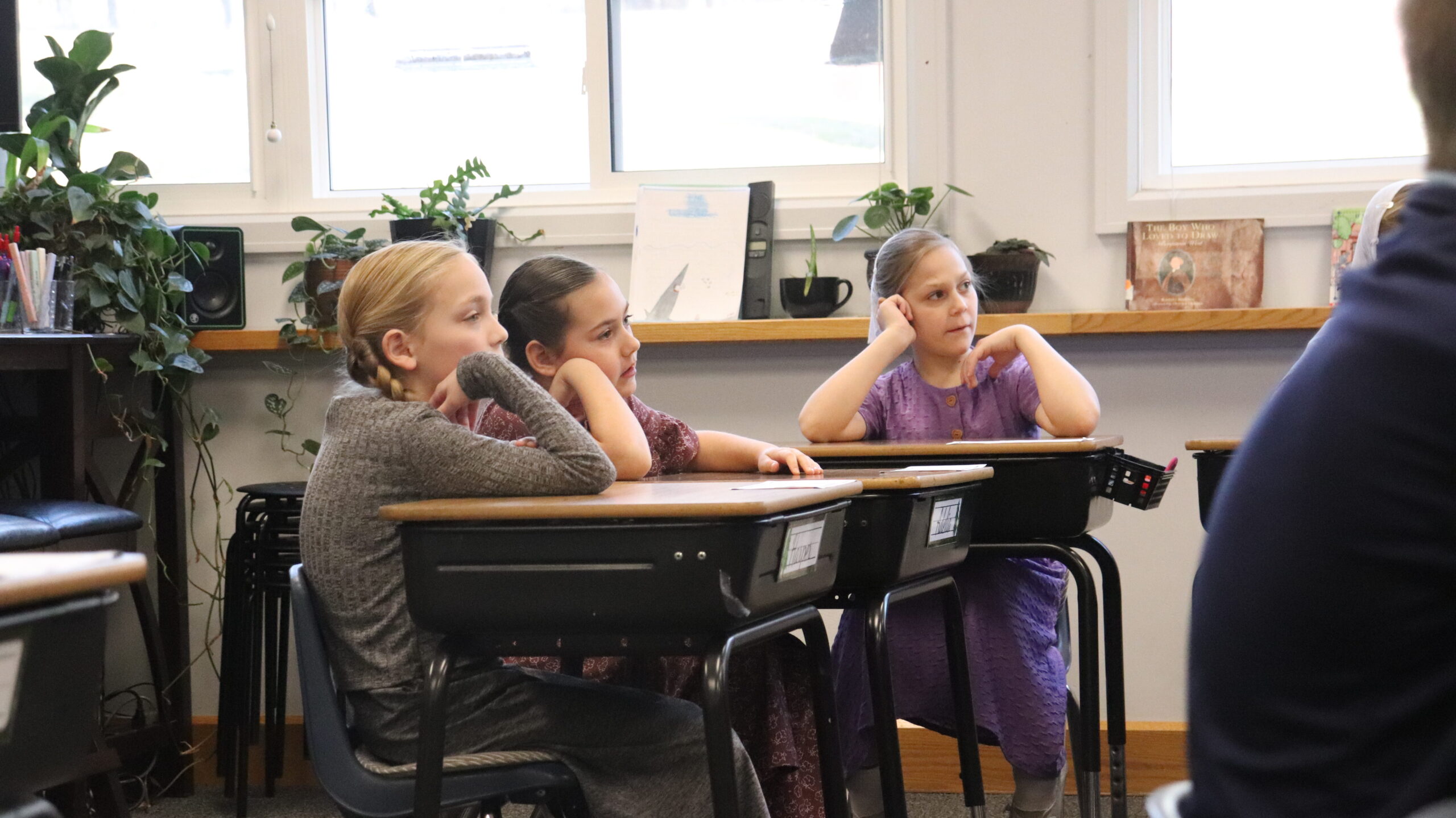
Student Relationships
General Advice
Helping students learn to relate to each other well can be a daunting and exhausting task. But it’s an important one. In these formative years, they are building relational habits that will stick with them for the rest of their lives. You can be a loving adult who helps to shape them in the way of Jesus.
Sometimes the best approach is to address issues head-on with the whole group. Have a class meeting and discuss your concerns with the whole class. Ask them to share their ideas for getting along. Give them practical, actionable steps.
Require that offended students report complaints respectfully. You can even practice how this looks. Loudly proclaiming grievances in front of the whole class is not an option.
Remember to care about a hurting child’s heart. Listen carefully to the core pain behind the anger or tears and affirm that how they feel matters. Genuine care with words like, “I am so sorry you felt disrespected,” or “What she said about you is not true,” help to heal heart wounds. Everyone needs to know that what they feel matters, including children.
Ways to Be Proactive
Set expectations of how students are expected to treat others early in the year, and review throughout the year. This may include things like the following:
Respect others. This includes respecting their property, contributing to a learning environment free from distractions, refraining from rude jokes or names, and honoring a variety of ability levels within classmates.
Respect yourself. Avoid “I can’t” negativity, complaining, and self-ridicule. This makes it hard for others to enjoy being around you.
Respect teachers/authority. Teachers will make mistakes at times, too; give them grace.
Be aware of the dynamics within your classroom and monitor hotspots accordingly. Sometimes a teacher being present is all it takes to prevent issues.
Younger students may benefit with role-play to show how they should interact with each other at recess. You could use another adult, a doll, or pictures to help with the role play. Explore questions such as:
How can we include others?
What can we do if someone is left out?
How can we be a good friend?
What do good friends do?
What can I do if I want to play with someone?
Responding to Conflict
It’s a good idea to address any cliques that form. Create an environment that encourages class-wide interaction and champion inclusivity over separation.
As much as possible, limit discussions about disagreements to those involved. If your schedule allows, plan that students have something they can work on independently after they come in from recess, such as penmanship or a fact sheet. This gives you time to deal with recess issues when they arise by stepping out of the classroom with those involved.
Pursue direct interaction between the offended and the offender. Follow the Matthew 18 directive and facilitate discussion between students who have had a relational rift. Be sure you are hearing both sides of the story. This may happen one-on-one before the group discussion, or you might relate aloud what you heard the offended student say to you and ask the child if you accurately conveyed what he is feeling. When speaking to the offender, it works much better to approach him with, “Can you tell me what happened?” rather than assume Child A told the full story.
Require eye contact during apologies. This is an important life skill and helps to usher in the correct heart posture. Also have students verbalize the underlying offense such as, “I am sorry for not respecting you,” rather than a meager “Sorry.” It is okay to wait until later in the day or even the following day to apologize. The Shepherd actively speaks to their hearts and He alone can prepare them to speak out of genuine repentance.
There are times to step back and allow students to work things through themselves. Sometimes an adult getting too involved in children’s conflict can actually make the situation worse. A lot of wisdom is needed in deciding when to engage. You might just call two students to you and say, “I noticed you had a disagreement. I trust the two of you to be able to figure it out. If you can’t, I’m here to help.”
Compel students to take personal responsibility for their own actions. Phrases that may be helpful include:
“I know that’s what he did, but we’re talking about you right now.”
“I’m sorry she treated you that way. That wasn’t okay. But you’re not responsible for her actions. All you can control is how you respond.”
“Right now I want you to only say what you did wrong. Who is strong enough to start?”
“Jesus knows you better than you know yourself, and He knows the way to true life and happiness. And so if He says responding in love to those who hurt us is the best way, then we need to take Him seriously. What do you think loving Student B looks like in this situation?”
Guide students in finding concrete, actionable steps towards resolution. Give them practical ways they can respond in love to those they are struggling to relate to. Suggest proactive ways they can be kind, appropriate ways to respond when feeling angry, or ideas for how to relate well to a difficult individual.
Sources
Building Relationships by Nathan Yoder: Building Relational Skills - The Dock for Learning
Getting Along by Arlene Birt: Getting Along - The Dock for Learning
Transforming Squabbles by Betty Yoder: Transforming Squabbles - The Dock for Learning
Helping Young Girls Deal with Relational Drama by Meghan Brubaker: Helping Young Girls Deal with Relational Drama - The Dock for Learning

Sportsmanship
Good sportsmanship contains the following core elements:
Empathy—good sportsmanship requires actively understanding and feeling others’ perspectives and emotions.
Respect—good sportsmanship treats all with dignity, valuing their efforts and varied abilities.
Fairness--good sportsmanship involves adhering to rules and responding gracefully regardless of the outcome of the game.
General guidelines of good sportsmanship to instill in students:
Be courteous to everyone
Don’t brag
Compliment both teammates and opponents
Learn and play by the rules
Follow teacher/umpire directions
Don’t blame others for the outcome of a game
Share positions
No cheating
Cheer all teammates
Be a team player
Play hard
Embrace competition
Establish expectations before leaving the classroom to play. Emphasize that the most important thing is to create an environment where everyone can have fun. Second in importance is to learn team skills (a vital life skill). When those two things are in place, healthy competition can thrive.
Consider involving students in a wide range of games and activities. Along with learning how to play basketball, softball, soccer, and volleyball, they can also experience flying kites, playing croquet and badminton, and taking nature walks. The more competitive and athletic students may balk at this, but it is a chance for them to develop character in participating well in a physical activity they don’t prefer (which is something the less athletic students need to do often).
Remember that everyone feels comfortable trying to do their best in an encouraging, non-threatening environment. That is more important than having students feel shamed, embarrassed, and humiliated just because of a silly ball. Teaching students how to be part of creating a respectful and positive environment develops the beautiful qualities of kindness and patience.
Sources
Teaching Sportsmanship by Jonathan Miller: Teaching Sportsmanship - The Dock for Learning
Why Everyone Gets to Hit and Make It to First by Deana Swanson: Why Everyone Gets to Hit and Make it to First - The Dock for Learning
Winning and Losing Successfully by Nathan Yoder: Winning and Losing Successfully - The Dock for Learning

Cheating and Academic Integrity
Define cheating. In the case of written work, explain what plagiarism is, why it's wrong, and how to avoid it. This is especially important for students who struggle with irrational guilt due to an overly sensitive conscience.
Use a pre-test checklist. This ensures procedural consistency and reinforces guidelines and expectations.
Control the environment. Prevent opportunities to cheat by thinking ahead and eliminating temptations in advance.
Before passing out tests, double check your board and classroom walls to make sure that no answers are available anywhere.
Arrange students so that no one has a direct view of anyone else’s paper during a test.
Collect study sheets or test reviews before administering a test.
Walk around the room during tests. Doing this every 10-15 minutes is infrequent enough to not be much of a distraction, but frequent enough to keep students accountable.
Never sit at your desk and work while your students are taking a test. Stand at the front or back of the room, or sit on your desk facing the students.
Know where to look. Research and understand the most common methods for cheating—notes inside pockets or desks, study guides on the floor, giving answers to other students orally, copying answers from another student, etc.
Bring the receipts. Don’t accuse a student of cheating unless you are confident that you can support the accusation with evidence.
Walk in love. If you catch a student cheating, be gentle, encourage the student to confess, and be quick to forgive.
Promote repentance with restitution. Give the student a chance to make amends by redoing the assignment correctly (usually with a points deduction for the initial offense) or by completing additional work.

Classroom Culture
Classroom culture is a “hidden curriculum” or atmosphere that influences all aspects of school life and is shaped by beliefs, history, attitudes, practices, traditions, and relationships.
Culture is always present, and is influenced by parents, students, teachers, administration, and the community. As a teacher, you play a huge role in forming the culture of your own classroom, but you cannot always do much to change the culture of the school or community at large.
Hold students to a certain expectation. They don’t always know what is best for them. Or sometimes, even if they want good things, they will often give in to the human tendency to take the easy way out.
How to Build Culture
Cultivating a certain type of culture in your classroom starts with you as a teacher identifying what you would like that culture to look like. Spend some time considering what type of people you would like your students to be, what sorts of things you want them to value, and what you would like the environment of your classroom to feel like. For example:
God is talked about often
Learning is rigorous
The atmosphere is one of joy
Everyone is respected and included
All students are given what they need to be successful
After you have determined what sort of culture you desire to have, you can develop practices that will encourage that type of culture. Think of specific things you can do to shape your students in that way or ways you can encourage it to keep growing if it is already present. These may be things that you as a teacher do/say, or they may be things you require of your students.
Remember that culture is shaped through small, thoughtful actions and often takes patience and perseverance.
Sources
Enjoying School, Delighting in God: Classroom Culture by Joseph Shantz Enjoying School, Delighting in God: Classroom Culture - The Dock for Learning
Components of Classroom Culture by Anthony Hurst Components of Classroom Culture - The Dock for Learning
Cultivating Classroom Culture by Darlene Zimmerman Cultivating Classroom Culture - The Dock for Learning

Seating Arrangements
General Considerations
There is more than one good way to set up student desks. And beginning with one configuration doesn’t mean that it cannot be changed in the course of the year—or the day.
You can create rhythms in your classroom where certain scenarios dictate certain seating arrangements. Once you have established these rhythms, your students will be able to rearrange themselves quickly and with minimal disruption. (This is especially easy if your students are sitting in movable chairs versus more stationary desks). For example:
Sitting in rows for lectures
Spreading apart for taking tests
Sitting in a circle for reading class or class discussions
Sitting in pairs or small groups for activities or projects
Having students sitting in the right spots within a given seating arrangement can be a tremendous help in the classroom. Strategic student placement can help to avoid many distractions and potential disruptions.
Specific Tips and Tricks
Watch out for classroom contradictions. For example, if you have all your desks in rows but you want students to interact with each other, you have a contradiction on your hands. You’ve set up the classroom for isolation, but the students are supposed to interact with each other.
Make sure that frequently-used items are accessible. (For example, don’t put your pencil sharpener right behind a desk).
Here are some guidelines that may be helpful in knowing where to seat “those” students:
A child who is struggles to focus may do better at the front of the room. There are fewer distractions between you and them, and it allows you to quickly and unobtrusively stand closer to them or tap their desk to regain his focus, even while you’re teaching.
Put the class clowns in the back corners. Part of their acting out is to get attention. They cannot do this as easily if they are in the back where most of their classmates cannot see them.
Place your most diligent students right next to the most distracting students.
If two students are close friends and like to communicate too often, put them in the same row with a student or two in between. This makes it difficult for them to make eye contact.
If a child has significant academic struggles, consider putting them near your desk or workspace. This allows you to be near to offer support and keep an eye on them to ensure they aren’t becoming overwhelmed.
Don’t be afraid to keep moving students around until you find something that works. If a poor seating arrangement is keeping learning from happening, it’s worth trying to overcome that obstacle!
Sources

How to Plan a Program
What is the most dreaded aspect of teaching? Is it parent-teacher meetings? The endless stacks of grading that tower over you at report card time? Dealing with a disgruntled parent? Handling interpersonal student drama?
For some teachers, the answer is “planning a program.” This yearly task can be difficult, time-consuming, and stressful.
Whether you find the process of planning and executing a program with your students to be enjoyable or loathsome, there is no denying that programs take a lot of work and thought. The following guidelines and suggestions may be helpful for you as you tackle this task.
Logistics to Consider
Style: what genre of program do you want to present? A dramatic Scripture reading will have a very different tone than a humorous, story-based skit. You will want to take your students’ strengths and abilities into consideration, as well as community sensitivity.
Length: how long should your program be? Remember that if you want to include some singing, the spoken program part will need to be short enough to accommodate that.
Props/costumes: will your program require any props and costumes? If so, who will make or acquire them?
Class dynamics: do you have some shy students who will struggle with stage fright? Consider giving them no speaking roles, minimal roles, or choral roles (speaking in unison with one or more other students).
Acquiring the Script
This may be one of the hardest parts of planning a program—figuring out what, exactly, you want your class to present and finding or creating a usable script.
This, unfortunately, can be a stressful and time-consuming part of program planning. Some teachers enjoy the creative challenge of writing their own program. Others can think of few things more overwhelming and unenjoyable. If you find yourself in the latter group, consider the following options:
Use something your class has already learned. Is there a poem or Scripture passage your students have learned that could be presented as part of the program? If you have something like that but it isn’t long enough, remember that you can always stretch the content by adding creative components such as students acting out the words they are saying, interspersing the text with songs, or doing something like shadow acting behind a white curtain alongside the reciting of the text.
Adapt a children’s book. If there is a story book that would be the right length, you can always turn it into a skit. Designate some narrators to tell parts of the story and have other students act out the words and actions of the characters.
Ask someone in your community to write something for you. There may be a gifted, creative individual in your church or school community who would enjoy creating a program for you. You never know if you don’t ask!
Find something pre-written online. The internet abounds with program scripts, some free and some for purchase. The obvious downside to this is the sheer amount of possibilities (and how to find one among the hundreds of thousands of options that will work for you). While not all the content on the following sites is worth your time, the following websites may at least give you a place to start looking.
Christian Learning Resource https://christianlearning.org/shop/educational-resources/program-scripts/
Written specifically with an Anabaptist school/church context in mind. Contains story-based scripts, poetry, Scripture-based programs, and inspirational readings for a variety of age levels.
The Skit Guys https://skitguys.com/scripts
Lots of variety in terms of style, length, and number of actors. Has both story-based scripts and more inspirational reading-type programs. Many of the options are for adults or older students; teachers of young students may struggle to find something on this site.
Bob Snook https://bobsnook.org/category.htm
A lot of content to wade through, but that means there are lots of potential options. Some would need to be adapted slightly to fit an Anabaptist context. Mostly humorous story-based scripts.
All Age Worship Resources https://www.allageworshipresources.org/category/drama-scripts/
Mostly story-based scripts that are typically quite short (a few minutes long) and only written for a few actors. There are some options that could easily be adapted or expanded for larger cast sizes. Some content editing may be necessary.
Practice Timeline
Once you’ve decided on what your students will present, the next part is guiding them in being ready to present it. But first, you will want to put some thought into how long you want to practice. There is a fine balance between having enough time to prepare adequately and starting so early that you and the students are tired of the program by the time you ever present it.
Most teachers find that somewhere between 2-3 weeks is the right amount of time. The exception to this might be learning new songs to sing; depending on the difficulty of the songs, you may want to start learning them earlier in the year.
It is helpful to spend the first few practice sessions in the classroom, either with students reading their parts from their desks or simply imagining a stage area somewhere in the room. Once you move to practicing in the actual performance space, the newness and excitement of the location can quickly become a distraction. Getting acquainted with the program in the familiar and “boring” space of the classroom can help to maximize your time.
If you want students to be able to perform the program without reading from scripts (which is highly recommended), be clear about memorization deadlines. You may want to communicate those deadlines to parents as well so that they can hold their child accountable to practice at home.
Maximizing Practice Time
Program practices can be zany, chaotic, and just plain old exhausting for you as a teacher. Try to embrace the disruption to your schedule and extra drain on your energy by remembering that this is a fun and enjoyable deviation from normal for most students. Allow yourself to get excited along with them.
Setting clear expectations before practicing can be extremely helpful. Establish when students are allowed to talk, how they should act during times when they aren’t an active participant in the program, and the importance of them giving their best focus to the task at hand.
As the teacher, there are some things you will want to plan beforehand so that you don’t need to figure it out on the spot during your practice time.
Lineups
Figure out where you want your students to stand on the stage and in what order. Then, line up accordingly before going onto the stage.
If you will have multiple standing arrangements, be sure you are giving your students adequate chances to practice transitioning to those arrangements.
Microphone use
If you are using multiple microphones on stands, plan which students will go to which microphones. Consider having back-to-back speakers go to different mics so that they can move into position while the person before them is still speaking. This eliminates dead time and helps your program run smoothly.
If you are using hand-held microphones, plan which students will use which microphones. Again, strategic planning of microphone movement can prevent your program from having lengthy silences while mics are being passed.
Teaching Presentation Skills
When it comes to school programs, some intentional training can go a long way in helping your students to present clearly. If students are mumbling, inaudible, or speaking too quickly, the audience won’t be able to take in the message of your program.
The following guidelines may be helpful in teaching your students good presentation skills:
The speaker should always face the audience. Even in a skit where two characters are talking to each other, they should stand side by side so neither actor has their back to the audience.
Model what clear, deliberate speaking looks like. Remind students that good speaking in a presentation will feel slower and louder than their normal speaking voice.
If using microphones, train students in good mic use. (A microphone only helps if it’s being used properly!) Find out from your sound technician how close the mic should be to the speaker’s face and practice that way from the very beginning.
If you are not using microphones, train students to speak loudly and clearly from the very first practice. Whenever a student isn’t speaking loudly enough, stop them and have them start again. This may seem tedious or overboard, but there is very little point in presenting a program that can’t be heard or understood by the audience.
Establish where you want your students to look while they are presenting. This is especially important during choral speaking or singing—if students are expected to look at you, it will minimize distractions.
An Opportunity for Building Character
A program is a great time to develop character traits like humility and service in your students. Remind them of the purpose of doing a program—to share a message with others and to glorify God. Encourage students to focus on that instead of their own nerves or fears of performing poorly.
This may be a helpful perspective to keep in front of you, as well. When practices feel stressful or frustrating, students are getting hyper and distracted, or you just long for a normal day with no schedule disruptions for practice time—remember the “why.” You can be a part of sharing hope, light, and truth through the program your students share, impacting people in ways you will never know. And that’s worth a little bit of extra effort.
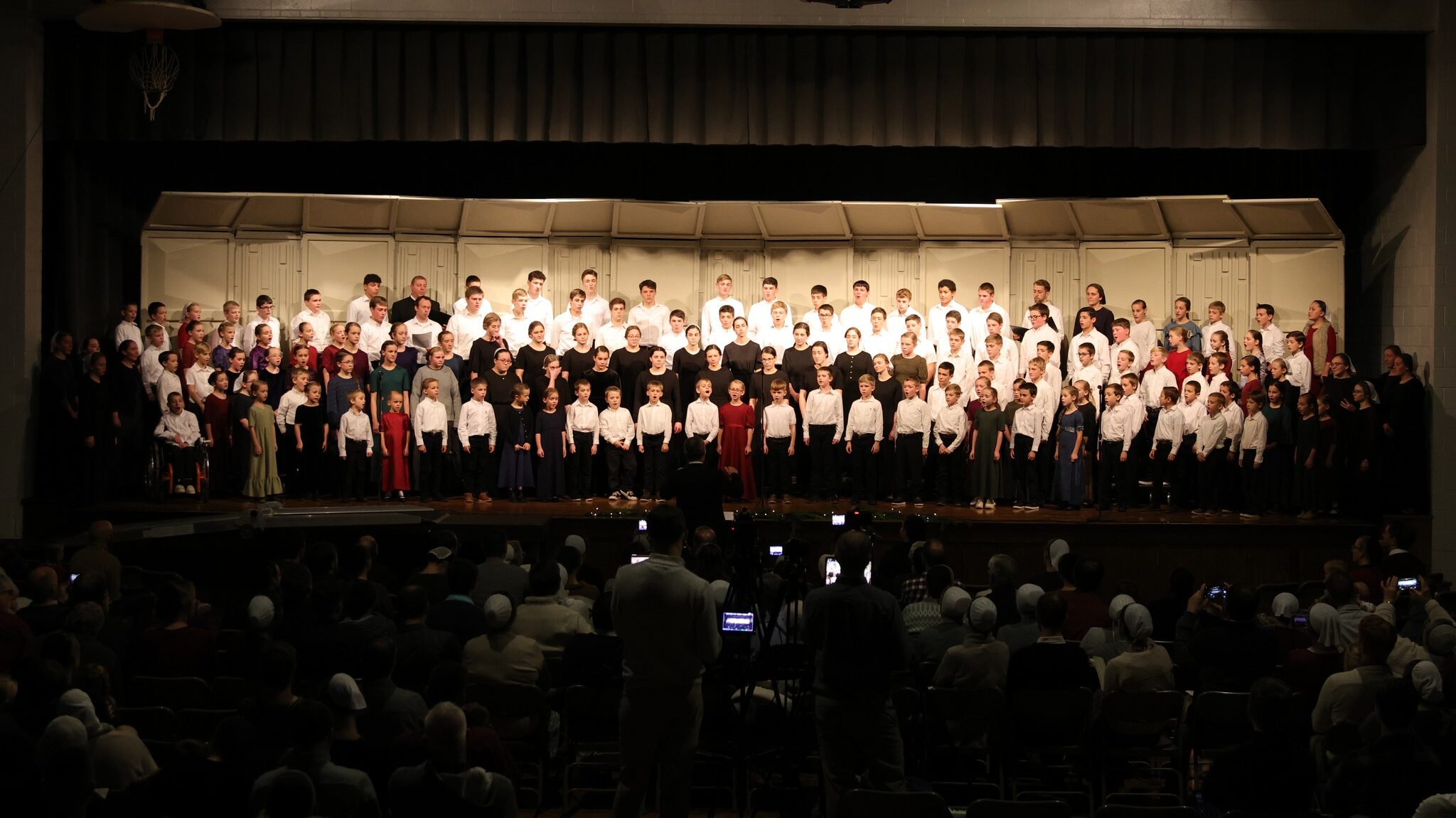
Planning Programs
Logistics to Consider:
Style: what genre of program do you want to present? A dramatic Scripture reading will have a very different tone than a humorous, story-based skit. You will want to take your students’ strengths and abilities into consideration, as well as community sensitivity.
Length: how long should your program be? Remember that if you want to include some singing, the spoken program part will need to be short enough to accommodate that.
Props/costumes: will your program require any props and costumes? If so, who will make or acquire them?
Class dynamics: do you have some shy students who will struggle with stage fright? Consider giving them no speaking roles, minimal roles, or choral roles (speaking in unison with one or more other students).
Practice Timeline
Most teachers find that somewhere between 2-3 weeks is the right amount of time to practice. The exception to this might be learning new songs to sing; depending on the difficulty of the songs, you may want to start learning them earlier in the year.
If you want students to be able to perform the program without reading from scripts (which is highly recommended), be clear about memorization deadlines. You may want to communicate those deadlines to parents as well so that they can hold their child accountable to practice at home.
Maximizing Practice Time
To avoid chaos, set clear expectations before practicing. Establish when students are allowed to talk, how they should act during times when they aren’t an active participant in the program, and the importance of them giving their best focus to the task at hand.
As the teacher, there are some things you will want to plan beforehand so that you don’t need to figure it out on the spot during your practice time.
Figure out where you want your students to stand on the stage and in what order. Then, line up accordingly before going onto the stage.
If you will have multiple standing arrangements, be sure you are giving your students adequate chances to practice transitioning to those arrangements.
If you are using multiple microphones on stands, plan which students will go to which microphones. Consider having back-to-back speakers go to different mics so that they can move into position while the person before them is still speaking. This eliminates dead time and helps your program run smoothly.
If you are using hand-held microphones, plan which students will use which microphones. Again, strategic planning of microphone movement can prevent your program from having lengthy silences while mics are being passed.
Teaching Presentation Skills
The speaker should always face the audience. Even in a skit where two characters are talking to each other, they should stand side by side so neither actor has their back to the audience.
Model what clear, deliberate speaking looks like. Remind students that good speaking in a presentation will feel slower and louder than their normal speaking voice.
If using microphones, train students in good mic use. (A microphone only helps if it’s being used properly!) Find out from your sound technician how close the mic should be to the speaker’s face and practice that way from the very beginning.
If you are not using microphones, train students to speak loudly and clearly from the very first practice. Whenever a student isn’t speaking loudly enough, stop them and have them start again. This may seem tedious or overboard, but there is very little point in presenting a program that can’t be heard or understood by the audience.
Establish where you want your students to look while they are presenting. This is especially important during choral speaking or singing—if students are expected to look at you, it will minimize distractions.
An Opportunity for Building Character
A program is a great time to develop character traits like humility and service in your students. Remind them of the purpose of doing a program—to share a message with others and to glorify God. Encourage students to focus on that instead of their own nerves or fears of performing poorly.
Sources
How to Plan a Program by Meghan Brubaker: How to Plan a Program – The Dock for Learning

Field Trips
General Advice and Tips
Any time and energy you put into arranging logistics before you go on a field trip will pay off greatly the day of the trip. This includes, but is not limited to, the following:
Make sure permission slips are signed and returned by the parents.
Plan the timeline of the day carefully (including restroom breaks). Remember that moving around anywhere with a large group of children will almost always take longer than you think it will.
Have exact dates, times, locations, and contact information available to parents.
Arrange transportation, including assigning seats if desired.
Find a sufficient amount of parent chaperones.
Decide (or find out from the program coordinator at the location) if you will need to break into groups at any point. If so, have those groups made beforehand and be proactive about grouping students in a way that minimizes misbehavior or relational drama.
Be very specific with students and chaperones about the behavioral expectations of the day. Below are a few examples to consider:
Awareness of surroundings (safety hazards, presence of traffic, respect for other people)
Attentiveness (paying attention to the leader or guide, asking questions, staying together)
Appropriate behavior (particularly if visiting a somber or sacred destination)
Be prepared with emergency items such as a first-aid kit, a Ziploc bag or plastic container in case anyone gets carsick, wet wipes, a sewing kit, and hand sanitizer.
Inform and prepare students for what they are going to see. Make sure they are educated about the history or science of it. The more they know ahead of time, the more interesting it will be for them.
Especially if you will not have a guide provided by the establishment, consider visiting the location yourself prior to going on the trip. This ensures a proper knowledge and ability to lead a group through the destination.
Encourage thankfulness by modelling it yourself (or prompting students). Thank the people working at the establishment. Thank the bus driver and the parent chaperones. Thank the students for behaving well.
Resources
An example of a school’s policy for teachers planning a field trip: Teacher Expectations for a Field Trip - The Dock for Learning
An example of a school’s policy for a multi-day senior trip:Senior Trip Policy - The Dock for Learning
Advice about planning a field trip to Washington DC:Field trip to Washington DC - The Dock for Learning
Field trip suggestions for southeastern Pennsylvania:Field Trip Suggestions - The Dock for Learning
Virtual field trips:Virtual Field Trips - The Dock for Learning
Sources
Eight Field Trip Edicts by Deana Swanson Eight Field Trip Edicts - The Dock for Learning
Teacher Expectations for a Field Trip by Jon Cassel Teacher Expectations for a Field Trip - The Dock for Learning

Grading
Open PDF
The Purposes and Limitations of Grading
It is important to recognize how limited grades are in showing true learning. Don’t focus more on grades than you do on actual learning.
Emphasize to students the importance of evaluating their own work and learning from their mistakes. This will very likely mean not grading some assignments at all, instead focusing your time and energy on creating learning opportunities out of the students’ mistakes.
Think about the purposes of tests and quizzes. What are they for? We often default to giving tests because “It’s time to give a test” or “I’d better get at least one more test grade before the end of the quarter.” There may be times when these statements are valid, but perhaps the better thought would be “We are at a point in the study when it would be helpful to measure how much students have learned.”
Purposes of grading:
Shows a student’s progress (or lack thereof): An objective measure is needed to confirm learning. Early detection of gaps will make intervention easier.Reveals weak teaching areas: Grading reveals concept areas where overall student understanding is low, signaling the need for reteaching.
Provides feedback for parents: Grades are a way to inform parents of their child’s academic performance.
Grades must tell the truth. They are like a fuel-gage on a car—only helpful if actually accurate.
Make sure grades are explainable. There should be logic and reason behind a grade, and it should reflect reality.
Pre-establish standards. Beware of changing the metrics of what you are grading for as you go. Rubrics are helpful in this. Avoid adjusting grades post-grading.
Give partial credit when applicable. This is particularly true in math, where being able to follow a process is part of what students were supposed to learn.
Ensure you are basing the grade off the actual subject content. For example, taking off points for grammar and spelling on a history test is not giving an accurate grade of the student’s knowledge of history.
Formative Versus Summative Assessment
Formative assessment is assessment for learning. It’s a teacher checking for understanding of what a student has mastered/hasn’t mastered and giving nearly instant feedback so the student can correct gaps in their understanding.
Summative assessment is assessment of learning. It’s a broad assessment of days or weeks of student learning.
Examples of practical formative assessments:
Traffic lights—the teacher issues each child three craft sticks or stop signs: one red, one yellow, and one green. The student holds up the appropriate stick when asked to do so to represent his current level of understanding. Red implies that the child completely lacks understanding of the concept. Yellow means that he has partial understanding but would not be able to explain the concept to someone else. Green shows that he both understands the concept and could explain it to someone else. This could be tweaked for older students by having them label sections of their papers with the color that corresponds to their understanding.
Teacher chart—the teacher creates a chart for the entire class, labeling columns with dates and rows with student names. Throughout the time period assigned to learning a particular objective, the teacher observes each student briefly for the same goal, such as participating in class discussions or reading fluently. The teacher briefly notes the student’s performance and can track their progress.
Entrance slips—the teacher gives students a slip of paper at the beginning of class. It may ask a question from the day before, ask a preview question of the current day’s topic, or provide them with a chance to give feedback.
Exit tickets—the teacher gives students a question to respond to or a problem to solve related to what was taught in class that day. This allows the teacher to quickly check for understanding and can inform the next day’s lesson.
Assessment of objectives—go over the list of objectives for the lesson or the chapter and read them one by one to students. Have them rate their understanding from one to ten or give a thumbs up, thumbs in the middle, or thumbs down rating.
How to Approach Difficult-to-Grade Subjects
Rubrics are the teacher’s best friend for efficient and fair marking, as well as a wonderful tool to help improve student learning.
Rubrics are ideal for subjective assignments or performance-based tasks.
Rubrics provide transparency and consistency for students and parents (e.g. “This is a C because…”)
Rubrics enable quick, specific, and effective feedback without requiring hours of the teacher’s time.
A guide to creating and using rubrics: Grading with Rubrics in the English Classroom - The Dock for Learning
A method for grading penmanship or art: stack-sort by quality (best to worst), then assign letter grades in an appropriately descending fashion.
A document with helpful tips and methods for grading various subjective subjects: Grading Difficult Subjects - The Dock for Learning
Sources
The Grading Mountain by Rosalie Beiler: The Grading Mountain - The Dock for Learning
A Test Is to Give by Chris Brode: A Hole Is to Dig. A Test Is to...Give? - The Dock for Learning
Methods of Evaluation by Derek Overholt: Methods of Evaluation - The Dock for Learning
Conquering Subjectivity in Assessments and Embracing the Rubric by Sharon Martin: Conquering Subjectivity in Assessments and Embracing the Rubric (Sharon Martin) - The Dock for Learning
Grading Processes and Record-Keeping Part I by Jonathan Erb: Grading Processes and Record Keeping, Part I - The Dock for Learning
Quick and Easy Formative Assessment by Karen Birt: Quick and Easy Formative Assessment - The Dock for Learning
More Than a Grade: Assessment as Teaching Tool by Brian Martin: More Than a Grade: Assessment as a Teaching Tool - The Dock for Learning

Gifted Students
How do you know if a child is gifted? A gifted child is one who gives evidence of high achievement capability such as intellectual, creative, artistic, or in specific academic fields. They think differently than other students and often think “outside the box.” Not all of them are gifted in all areas but rather some are in just one area. Often, they will demonstrate the following traits:
They learn information quickly and do their work very fast. However, their work is often sloppy and they become disruptive in class if not called upon.
They think independently and are self-motivated, but they tend to challenge authority and do not handle criticism well.
Prefer to work alone versus working in groups.
Gifted children, especially those who are not given space to thrive, often deal with various types of depression.
One type of depression comes from the desire to live up to standards that are set too high. These standards may be imposed by well-meaning adults or by the children themselves.
Another type of depression comes from struggling to feel accepted as a human by others, instead feeling that they are treated like a computer or only valued because of their achievements.
A third type of depression comes from worrying about the state of the world or the basic problem of human existence.
Gifted children may naturally gravitate to older students or adults for their social interactions. This is because they struggle to communicate with students their age, but don’t realize it. They need to be encouraged and guided in interacting with their peers.
Gifted children can struggle with perfectionism, sometimes setting standards for themselves that are impossible to attain. They need to be explicitly taught how to set attainable short and long-term goals for themselves.
Sources
Gifted Children by Judith Yoder: Gifted Children - The Dock for Learning
Photo by Vitaly Gariev on Unsplash

English Language Learners
Essentials of Teaching provides a growing list of bullet-point summaries of content for Christian educators. Each guide can be downloaded, printed, or viewed as a webpage and includes links to the resources we used to compile the content.
Whether a student has just moved into your area from another country and does not speak English or you are teaching in an area where English is not the first language for your students, teaching English Language Learners (ELLs) can be challenging. Here are some tips for approaching this unique challenge:
Determine what level of language the student has. Keep in mind that their listening skills, speaking skills, reading skills, and writing skills may all be on varying levels.
Use many graphic organizers and charts to help the student.
Have students use the language skills they already have, but keep building on those skills to move to higher levels.
Allow ELLs to work with student partners.
Make sure that assessment matches the language level of the ELL. Tests and quizzes may need to be shortened, rewritten with simpler terms, or given orally.
Be intentional about helping ELLs feel included and involved in all aspects of classroom life. Since they probably struggle to contribute academically, give them extra meaningful tasks in classroom and social life so they can still feel a sense of purpose and belonging.
Consider creating an individualized learning support plan for an ELL to clarify goals for the child as well as what accommodations will be given. Here is a helpful guide to creating a learning support plan: Learning Support Plans - The Dock for Learning
Online resources for ELL learning support: Online Resources for ELL Learning Support and Special Needs - The Dock for Learning
Sources
Teaching English Language Learners by Karen Birt: Teaching English Language Learners - The Dock for Learning

Special Education and Learning Struggles
General
Our classrooms are diverse places, full of diverse people. Our students have wide-ranging interests, ability levels, backgrounds, and cultures. We need to embrace each of their differences and what we can learn from them. The concepts of community, empathy, and caring for each other in spite of our differences are all things we should be cultivating in the context of the classroom.
Christians should be the biggest champions for acceptance of individuals with disabilities. Acceptance involves loving these students as they are and doing everything we can to help promote their maximum growth.
God has created each person beautifully, and they are unique and loved. Recognizing the reality of various differences and limitations in students is part of honoring their unique personhood. We do not expect the person who cannot carry a tune to be our primary song leader or expect the child with the broken leg to be able to run. In the same way, not accepting the legitimate limitations of those with neurodivergence is demoralizing and unloving.
When it comes to learning disabilities, recognize that there is a range from mild to moderate to severe to profound.
In order for an individual to be diagnosed with a learning disability, it needs to be significantly impacting their functioning in life or their performance in the classroom (compared to typical development).
Be aware of how you use labels. Labels don’t limit an individual or capture the whole person. They don’t define the entirety of who they are or enable them to have an excuse to not reach their full potential. However, labels are a beneficial tool to describe the reality of what is going on. It helps you to understand the student better and know where to look for resources to help them. Labels can be a profound relief to a student, giving an explanation to the incredible challenges a student may be facing and providing hope for a way forward.
Early warning signs that a child might have a special need:
Delayed language—by the time a child enters school, they should be able to speak in complete sentences and answer basic questions.
Delayed physical development—this can take on multiple forms, such as the following:
Impulsive/overflow movements such as head-banging desk when fatigued or other repetitive behaviors
Infant-like behaviors such as finger-sucking, drooling, easy startling, etc.
Ungraceful movements such as difficulty navigating stairs, unusual stiffness/rigidity, whole-body turns for balance, etc.
Gross motor gaps such as inability to skip, hop, bike, or swing by school age
Unmastered preschool concepts—if a child is struggling significantly with counting, sequencing, or basic concepts such as less and more, it may signal a deeper issue.
ADHD
What ADHD is:
A persistent pattern of inattention
Hyperactivity or impulsivity that interferes with functioning or development
Ongoing, continual, and interfering with the ability to complete daily responsibilities
A physical difference in some people’s brains that can be seen with brain scans
What ADHD isn’t:
An occasional feeling of restlessness you get after you’ve sat for too long or the reason why you feel like you need to fidget with your pencil
Regular forgetfulness, like not being able to remember what you wanted to get at the grocery store
A term to be thrown around jokingly (for some people, it is a real and serious issue that affects their lives deeply)
There are three main types of ADHD:
Inattentive—the individual is distractable, whether with external things or internal things. People with the inattentive style of ADHD will struggle with working memory, making it very difficult for them to remember what tasks they are supposed to complete.
Hyperactive/Impulsive—the individual is restless and keeps moving around or cannot stop talking. People with the hyperactive style of ADHD will make impulsive, rapid decisions without weighing consequences first.
Combined—the most common type, where the individual struggles with both the inattentive and the hyperactive components of ADHD.
It can be challenging to know if a child’s inattentive or hyperactive behavior is a part of typical childhood development or a symptom of ADHD. An assessment by a family doctor is required to diagnose someone with ADHD. Additionally, the following checklist could be used as a tool to help give you a frame of reference: ADHD Checklist - The Dock for Learning
ADHD is highly hereditary (75%). The other 25% is environmental, particularly triggered by stressful or traumatic experiences when a child is very young.
Some things that can help students with ADHD:
Provide a structured and routine classroom environment
Provide a few minutes of advance notice when an activity or location will change
Put a checklist on students’ desks that give a list of the tasks they need to complete
Incorporate regular times of movement into the flow of your day
Products such as a kick fix, wobble cushion, or time timer
Provide the option of “two offices,” one in a regular desk and one at an alternate spot in the classroom
Wearing earmuffs can help block out distractions
Reward good behavior and shower them with positive feedback
Plan to check in with them more regularly to monitor their work
Make curricular adjustments as needed
Dyslexia
Dyslexia is diagnosed when an individual has an average or above-average IQ, but below-average ability to read and write and spell.
Dyslexia is caused by a physical difference in how the brain processes language. This has been viewed using fMRI imaging.
Dyslexia is caused by a lack of phonological awareness, which is the ability to hear and manipulate sounds in spoken language. Children with dyslexia struggle to break the sounds of language into each of its individual pieces, right down to the individual sounds that make up words.
How to help children with dyslexia (this will vary based on the severity of the dyslexia):
Teach phonics very explicitly in the lower grades
Read tests aloud for students with dyslexia—this ensures you are testing their knowledge, not their reading ability
Provide one-on-one instruction with a tutor
Curricula that can help students with dyslexia learn to read:
Heggerty (whole-class instruction)
All About Reading (one-on-one for younger students)
Barton Reading and Spelling (one-on-one for older students)
Myths about dyslexia:
Students with dyslexia see things backwards. This is not the case, as dyslexia is caused by a problem with the way the brain processes sounds, not anything to do with the vision portion of the brain. Students with dyslexia may read saw for was, but they will also read house instead of home or horse. The problem lies with their difficulty in applying phonics to sound out the words.
Confusing b and d is a sign of dyslexia. Actually, when a child is first learning to read and write, it is normal to display some b/d confusion. This can persist through their first two or three years of learning letters, even for children without dyslexia. The time to get concerned is if they cannot verbally answer the question, “What is the first sound in ball?” by saying “b.”
Students will outgrow their dyslexia. Actually, as students get older, the gap between their reading abilities and their peer’s reading abilities will only continue to grow. The reading difficulty you are seeing in a young student will not miraculously disappear.
Students with dyslexia will always be poor readers. While it is true that those who start out struggling significantly compared to peers will always struggle compared to peers, this is only the case if they are given the same instruction their peers are given. That ends up being a key distinction, as there are many research-proven interventions that can help those with dyslexia learn to read. Brain scans have shown that Orton-Gillingham based programs (such as Barton or All About Reading) can actually rewire the brain and strengthen reading skills.
Often students with dyslexia have internalized lies about themselves such as “I’m stupid” or “I’m different in a bad way.” They may benefit from watching the following video that explains dyslexia in child-friendly language. Dyslexia: An Explanation for Kids - The Dock for Learning
Autism
Autism is a well-documented physiological disorder in which distinct changes in the neurons, gray matter, and white matter of the brain have been viewed with MRI brain images.
Autism is a spectrum disorder, meaning there is a continuum of ability levels within individuals with the disorder.
Every child with autism is different, but in general, individuals with autism might struggle with the following:
Difficulty reading social cues
Little to no eye contact when talking to someone
Repetitive behaviors
Sensory overload leading to overwhelm
Intense interests in specific areas
An unusually strong ability to remember information and share it
If a child with autism exhibits the same challenging behavior often or has outbursts at predictable times, start by thinking about what is happening before the behavior. Is it happening in a certain place, at a certain time, or when they’re encountering a certain challenge? If you can identify what is triggering the unwanted behavior, you know how to help the child work through it.
Children with autism benefit greatly from one-on-one teaching of specific skills. They often need to be explicitly taught how they ought to behave in social settings.
Suggestions for sensory therapy that may be able to be implemented at school: Sensory Therapy at Home - The Dock for Learning
Down Syndrome
Resources compiled by a educator and mother of a child with Down syndrome: Teaching Resources for Children with Down Syndrome - The Dock for Learning
Trauma
Trauma is when a person experiences or observes an event that triggers emotions like intense fear, helplessness, or terror. This could be from a singular event or ongoing circumstances.
Risk factors of a trauma response include difficult pregnancy or birth, early hospitalization, neglect, abuse, or separation trauma (such as from birth parents in adoption).
A traumatic event can significantly impact brain development.
The upper part of the brain, the cerebrum, is not wired at birth. It allows us to think, remember things, plan, regulate our emotions, and learn. It develops as we grow.
The lower part of the brain, the limbic system, is wired at birth, allowing a newborn to eat, sleep, drink, stay warm or cool, and respond using reflexes.
If a child experiences trauma, the lower part of the brain overdevelops and the upper part of the brain remains underdeveloped.
Particularly in the first year of life, if the child experiences trauma, their brain will develop a survival mode of operation in which they’re never really at rest and able to do the upper brain activities of thinking and learning.
Trauma memories can be triggered, activating the limbic system and causing the brain to go into survival mode. When this happens, the child is physically unable to use the rational, thinking part of their brain, instead responding with fight, flight, or freeze.
Children who have experienced trauma are often living in a state of constantly being on edge, meaning their emotions are much more difficult for them to regulate.
Tips for helping children with trauma:
Recognize the root cause of many of their challenging behaviors as being due to the way their brains are wired, not deliberate disobedience or rebellion.
Create a sense of belonging and community. Teach students to care for and listen to each other.
Keep a high level of structure and routine. Warn students about upcoming changes to schedule. This helps them to feel safe.
Communicate often with parents. Find out what are common triggers for the child and how you can help them de-escalate.
Administer consequences consistently and calmly. Once the child is in a workable frame of mind, require them to right their wrongs (e.g. if they destroyed property, they need to fix it; if they scribbled on their desk, they need to clean it off; if they threw things across the room, they need to pick them up, etc.)
General Resources
Guidance in creating an individualized Learning Support Plan for a struggling learner: Learning Support Plans - The Dock for Learning
An article on the whole range of learning disabilities a child may encounter: Specific Learning Disabilities - The Dock for Learning
Bibliography of resources for learning disabilities: Bibliography of Resources for Learning Disabilities - The Dock for Learning
Resources for understanding and helping struggling learners:
Sources
Introduction to Diverse Learners: Part 1 of 5 by Becky Bollinger: Introduction to Diverse Learners: Part 1 of 5 - The Dock for Learning
The World of the Exceptional Learner by Lynell Nissley: The World of the Exceptional Learner - The Dock for Learning
History and Frequency of Special Education by Lynell Nissley: History and Frequency of Special Education - The Dock for Learning
Identifying Special Needs by Aquilla Martin: Identifying Special Needs - The Dock for Learning
Introduction to Diverse Learners: ADHD by Becky Bollinger: Introduction to Diverse Learners: ADHD - The Dock for Learning
Helping Students with ADHD: The Anabaptist Advantage by Austin Shenk: Helping Students with ADHD: The Anabaptist Advantage - The Dock for Learning
Blessed with ADHD, Part II by Arlene Birt: Blessed With ADHD, Part II - The Dock for Learning
Introduction to Diverse Learners: Autism Spectrum Disorder by Becky Bollinger: Introduction to Diverse Learners: Autism Spectrum Disorder - The Dock for Learning
The Gift of Neurodivergence by Trent Clugston: The Gift of Neurodivergence - The Dock for Learning
Introduction to Diverse Learners: Trauma by Becky Bollinger: Introduction to Diverse Learners: Trauma - The Dock for Learning
To the Teacher of the Difficult Student by Carolyn Martin: To the Teacher of the Difficult Student - The Dock for Learning
Introduction to Diverse Learners: Dyslexia by Becky Bollinger: Introduction to Diverse Learners: Dyslexia - The Dock for Learning
Myths about Dyslexia by Lynell Nissley: Myths about Dyslexia - The Dock for Learning
Photo by Element5 Digital on Unsplash

Teaching Electives
General Advice and Tips
Electives offer students as much diversity in learning as possible. With a small high school and limited resources, you may need to be creative in how you offer a variety of classes for your students. Not all electives can be traditional, teacher-taught classes. Some examples:
Homeschool courses
Online courses
Programs like Rosetta Stone or DuoLingo for language study
As a school, you will need to find the balance between offering diversity to expand students’ horizons and not stretching yourself too thin. There is a time to cut out what you’re not doing well and focus instead on what you can do well.
Another option is to offer not-for-credit learning experiences during lunch. They are optional and can change every quarter. They might include things like art, photography, foreign language study, fitness classes, etc.
Actively encourage extracurricular study in areas of student interest. Try to give students time to read, research, and explore the things they are wondering about.
Resources
The following are examples from various schools of how they implement elective courses for their high school students:
Vocational skills syllabus: Vocational Skills Practicum Syllabus - The Dock for Learning
Work studies: Work Studies - The Dock for Learning
Shop classes:
Home Economics: Hospitality Takes on a New Dimension: Our Home-Ec Program - The Dock for Learning
Sources
Priorities for High School: Making Electives Manageable by Howard Lichty and Douglas Groff: Priorities for High School: Making Electives Manageable - The Dock for Learning
Priorities for High School: Focus on the Core by Douglas Groff: Priorities for High School: Focus on the Core - The Dock for Learning
Extra-Curricular Study by Robert Heatwole: Extra-Curricular Study - The Dock for Learning

Teaching Bible
Reasons Why Teaching Bible Is Important
As an educator, you have the creative position of a sculptor who shapes people who learn, ask questions, and grow skills in studying and talking about the most important text of their lives: the Bible.
Faithful Bible reading and teaching is not only for adults with the spiritual gift of teaching. It is for everyone. You can help to normalize the process of reading, studying, and teaching the Bible so that it becomes part of the fabric of your students’ lives.
The Word of God is living, powerful, and precious. Because of this, it is of inestimable value to have God’s Word become deeply ingrained in the hearts and minds of our children from a very young age. This happens through things like regular Bible class and required Bible memorization.
When done well, teaching Bible class creates world-changers. It teaches students to be relational with God, humble doers, and equipped for kingdom service.
General Advice and Teaching Tips
Try to find the balance between academic rigor in Bible class (this is important; it should be treated with equal importance as other subjects) and keeping the curriculum manageable (frustration kills joy).
Model the skills of reading, studying, and teaching the Bible in your classroom. Then give your students opportunities to practice and improve in the skills themselves.
A big part of learning to tell Bible stories well is practicing saying it out loud to yourself first. You want to be able to engage with the students while telling the story, not be tied to reading from a book.
Use maps. Point to them and show the students where things happened. You can also get little maps and have students color them as you are studying about that particular area.
Have students read the Scripture passages aloud, one verse per person. Have them all open their Bibles and follow along.
Make things practical to your students’ lives whenever possible.
Show pictures or bring in items for every noun that is unusual. For example: leeks, pomegranates, shofar, ephod, showbread, oil lamps, etc.
One helpful format for teaching a Bible passage is Hook-Book-Look-Took:
Hook: Awaken hunger and interest with an evocative question, interesting prop, or startling statement
Book: Read Biblical text together
Look: Explore the meaning of the verses
Took: Apply the passage to students’ own lives
Elementary
Study and discussion skills to model and cultivate:
Use picture posters, a flannelgraph, or an illustrated book. Read several verses or a paragraph while showing the corresponding picture.
Explain/narrate/interpret.
Read the next section of verses while holding up its illustration.
Display pictures as you go. When you finish the story, you’ll have a series (5-6) of pictures on the board. Or you can draw simple figures on the board to show characters, action, and story progression.
Use this lineup of pictures to review key vocabulary and plot points. Ask them questions. Themes and important points will come out of this exchange of questions and observations.
Have students summarize the story to a conversation partner. They can refer to the pictures and your review as they do.
Junior High and High School
As students get older and their minds develop, it is appropriate to move from factual, knowledge-based Bible teaching to deeper, heart-level issues.
Focus on modelling and cultivating presentation and discussion skills.
Assign students to share devotions or lead discussions. If you have too many students for each to take a turn to speak to the whole group, divide them into smaller groups and appoint several presenters to share simultaneously.
Encourage students to study, listen, and interact with Scripture with others in community (i.e. their classmates).
Complete an evaluation sheet for a student’s presentation and/or have them reflect on their own presentation and other students’ presentations. Reflecting, evaluating, and giving/receiving feedback is crucial because it offers perspective and interaction that the individual would have missed if reflecting only by him/herself.
Requiring students to prepare before a discussion can greatly aid student involvement. For example, the night before a discussion of Acts 1-2, you could give students a homework assignment of writing a short paragraph in response to the question, “What is the importance of the ascension?” This gives students time to think about the topic beforehand, which especially helps those who need longer to think about a topic before they are comfortable contributing their thoughts. Also, if students are not engaged, you can call on them, knowing they have something to answer.
Have students take a moment to reflect following a discussion. This may be as simple as handing out notecards and having them write down what they learned today.
Bible Memory
Especially for younger students, be sure to devote some time to discussing the meaning of the passage and explaining difficult words.
Intentionally build systems into place that prevent students from a “cram it and forget it” mindset. Group practice each day is an easy first step in accomplishing this.
Tips for helping students memorize passages:
Type out the passage including clipart, various colors, and different fonts to help make it more visual.
Split passages into sections of two to four verses and learn a section at a time.
Make up motions for the verses.
Model using good expression and voice inflection.
Allow students to study with a partner.
Give students opportunities to practice their verses throughout the day, perhaps while waiting in line or as a transition between classes.
Give older students a sheet that has only the first letter of each word of the passage. For example, John 3:16 would be written ”F G s l t w, t h g h o b s, t w b i h s n p, b h e l.” This forces the brain to recall and is a very effective memorization tool.
Consider the pros and cons of various ways of having students present the passage. Consider giving students a few options, as different individuals will prefer different methods.
Have students recite it individually during class time such as handwriting, silent reading, or study hall.
Have students recite it individually before or after school or during recess.
Allow students to write the passage by hand. A variation of this would be giving the students a sheet that has a blank for each word of the passage.
Allow young students to recite the passage in small groups.
Recommended Resources
Planning tips and ideas for elementary devotions:
Fruitful Dreaming: Ideas for Planning Devotions (Part I) - The Dock for Learning
Fruitful Dreaming: Ideas for Devotions (Part II) - The Dock for Learning
The Creation—A Picture for Little Eyes - The Dock for Learning
Planning tips and ideas for junior high and high school devotions:
Planning School Devotions for the Year - The Dock for Learning
Bible Survey Syllabus for the Sermon on the Mount. - The Dock for Learning
Opening Questionnaire for Bible Study Methods Course - The Dock for Learning
Practical video examples of presenting Bible stories in various ways: Show Them, Tell Them: Techniques to Communicate the Stories of the Bible - The Dock for Learning
Swedish Bible study method: The Swedish Method: One Way to Study the Bible with Your Students - The Dock for Learning
List of Jewish holidays and ideas of how you could celebrate them with your students: Jump-start Your Bible Class with These Five Tips - The Dock for Learning
Examples of whole-school Bible Memory schedules:
Bible Memory Scope & Sequence (K-12) - The Dock for Learning
A high school teacher’s method for having students grade each other’s Bible memory: Bible Memory Scoring - The Dock for Learning
Sources
Study to Show by Anita Yoder: Study to Show - The Dock for Learning
Jump-start Your Bible Class with These Five Tips by Deana Swanson: Jump-start Your Bible Class with These Five Tips - The Dock for Learning
Bible Memory Tools by Rosalie Beiler: Bible Memory Tools - The Dock for Learning
I Know My Verses! By Arlene Birt: I Know My Verses! - The Dock for Learning
Prepare, Summarize, Reflect; Encouraging Discussion in Bible Class and Beyond by Shawn Stoner: Prepare, Summarize, Reflect; Encouraging Discussion in Bible Class and Beyond - The Dock for Learning
Teaching the Bible Effectively and Joyfully by Patrick Heatwole: Teaching the Bible Effectively and Joyfully - The Dock for Learning
Teaching Secondary Bible by Steven Brubaker: Teaching Secondary Bible - The Dock for Learning

Teaching Art
Reasons Why Teaching Art Is Important
Investing in children’s artistic gifts can profoundly shape their life and service to God’s kingdom.
Art fosters innovative thinking and creative expression, along with building fine motor skills.
Art class may be a chance for certain students to shine, especially some who may not excel in athletics or academics.
Art is a way of creating, something that humans are uniquely gifted to do as made in the image of a Creator God.
It’s very valuable for students to be able to express themselves through the arts. Not every student will be a naturally gifted artist, but art class gives even those students an opportunity to learn about how others express themselves, as well as the ability to be able to read and interpret what they’re seeing when they look at art.
General Advice and Teaching Tips
If you are coming up with your own art projects (i.e. no curriculum), do some research of what artistic concepts and skills your grade level should be learning. Use that information to guide the types of projects you choose.
Try to give your students experience in a variety of mediums (e.g. pencil, chalk, pastel, paint, charcoal, sculpting clay, etc.)
Plan ahead before school starts
Get enough art ideas together for most of the year.
Make an example of each one.
Note any preparation that needs to be done before art class such as parts of the project that will be too difficult for your age level.
Make a list of supplies needed for the project.
Make a list of the art projects that you have ready to go so that you can see at a glance what you have available when art class rolls around. Make an educated guess about how long an art project will take and write that down as well.
Prepare any harder parts of the project that you need to do before class.
Go shopping and get enough supplies for the year!
Plan ahead the day before art class
Have an example to show the students.
Have all the copies made and supplies handy.
Think through the art class keeping in mind your students’ abilities.
What is going to be new for them?
On which parts will they need the teacher’s help? Will one teacher reach around for this project or should you ask someone else to come and help?
What is the best way to explain how to do this project? Can you just explain how to do it at the beginning of class or will you need to have them do it step by step all together? Would this be a good project for working in pairs?
Have extra supplies ready so that they can practice a new skill before trying it on their project.
Plan to keep the students busy. Will you be able to keep twelve second graders busy the whole time with this project, or do you need another simple project that they can work on by themselves while they are waiting for the teacher’s help on a difficult part?
Plan cleanup time
For messy projects, it works well to put wax paper or newspaper on the students’ desks before they start.
If they are painting, have cups of water for the children to wash their brushes. Have rags handy to dry their brushes and wipe up spills. You may want to have a dishpan of water and a towel in the room for them to wash and dry their hands.
Make students responsible to help you clean up. Give them clear directions about how you want them to clean up, where you want them to put their project, etc.
Plan ahead the day of art class
Give clear direction about what you expect during art class and stick to your word.
Are you going to ask them to be quiet, allow them to whisper, or allow them to talk?
Are they allowed to get out of their seats without permission?
Require your students to be quiet and pay attention when you are explaining something. It is no use talking if your students are not listening.
Encourage positive comments. Help students to compliment their classmates’ work and accept compliments graciously on their own work.
Recommended Resources
Art scope and sequence for K-8: Art Scope and Sequence - The Dock for Learning
Elementary art project ideas:
Upper elementary and junior high art project ideas: Art Lessons Through History for Upper Elementary and Junior High - The Dock for Learning
Descriptions of the ARTiculations curriculum:
An overview of ARTistic Pursuits curriculum:
Suggested online resources for art: Online Resources for Art - The Dock for Learning
In-depth teaching of various art techniques:
Sources
Planning Ahead for Art by Becky Sue Kreider Planning Ahead for Art - The Dock for Learning
Why Teach Art? By Howard Horst Why Teach Art? - The Dock for Learning
Art: How and Why Should We Teach It? By Hannah Nolt Art: How and Why Should We Teach It? - The Dock for Learning

Teaching Music
Reasons Why Teaching Music Is Important
Music is something eternal, something worth putting time and energy into. There aren’t many things that all age groups in a community can do together, but music is one of them.
Music is essential in the kingdom of God, not optional. It connects to God’s heart, drives out darkness, speaks truth, and draws us to worship.
Songs impact us and stick with us. They shape our loves and desires. They are powerful influences in our lives.
Singing is a joyful, embodied experience—a way to love God with the whole self.
General Advice and Teaching Tips
Teach students to sing with their tongues up against their bottom teeth. This creates more resonance.
Start music classes with regular pitch-matching exercises.
Teaching students systems like takadimi and solfege hand signs is helpful in giving students concrete ways to work with music.
If singing is a struggle, consider doing it in smaller segments to keep everyone’s mood from deteriorating. If you are frustrated and it’s showing, it will undermine the good feelings and joy that singing is supposed to promote.
Consider trying to achieve the following goals through music class:
Students will have proficiency in reading music.
Students will have basic singing skills such as accurate pitch, the ability to blend to a unison choral sound, and experience in participating in group harmony.
Students will be able to lead singing.
Students will have an understanding of baseline theory (i.e. note names, rhythms, time signatures, key signatures, and accidentals).
Elementary
Help elementary students gain confidence in singing solos by making a game out of it. Have a few finger puppets and have students sing “as the puppet.” Another option is to toss a ball or beanbag to various students while standing in a circle. Whoever is holding the object sings a phrase of the song, then tosses it on to another person, who sings the next phrase.
Especially for younger students, incorporate motions and movement with singing. Singing is a whole-body experience.
Tips to help monotone singers:
Recognize that this is very normal in young students, and many will outgrow it by third grade.
Daily practice (very few people are actually tone deaf; many who struggle to match pitches just haven’t had enough exposure to singing).
Place struggling students near confident singers.
Have students match a pitch you sing on a hum, then note discrepancies (“You sang __. Try a little higher like this __.”) You can do this in pairs to make students feel less singled out.
Junior High and High School
Be aware and empathetic of the voice changes that students encounter through grades 6-9. Boys’ voices change, drop unpredictably, crack, and have a limited range. Girls’ voices often have a breathy quality during these years. Change your expectations during these years, perhaps focusing more on building rhythmic skills than in doing a lot of pitch-matching.
Recommended Resources
Practical vocal training tips: Music Gold: Vocal Training for Children in Every Grade - The Dock for Learning
Video example of a With Glad Voices music class: Ta, Ta, Ta-Di Ta: Music Class Exercises for Rhythm and Beat - The Dock for Learning
Practical advice for music class: I'm a Music Teacher. Now What Do I Do? - The Dock for Learning
Sources
Music Gold: Vocal Training for Children in Every Grade by Jeff Swanson Music Gold: Vocal Training for Children in Every Grade - The Dock for Learning
How Can I Get My Students to Sing? Positive School Culture, Engaging Music Practices by Anthony Hurst How Can I Get My Students to Sing? Positive School Culture, Engaging Music Practices - The Dock for Learning
I’m a Music Teacher. Now What Do I Do? by Yuriy Kravetz I'm a Music Teacher. Now What Do I Do? - The Dock for Learning
Teaching Music by Brandon Mullet Teaching Music - The Dock for Learning
Why Teach Music by Lyle Stutzman Why Teach Music? - The Dock for Learning
Elementary Music Culture 3 by Regina Troyer Elementary Music Culture (3 of 3) - The Dock for Learning
Photo by Richard REVEL:

Teaching History
Reasons Why Teaching History Is Important
The purpose of teaching history is to help students understand the world so they can more effectively serve God in it.
History is messy and many ugly things have happened. History class is a chance to dive into that messiness and see how God is working to redeem this broken world.
History class is a chance to teach students foundational truths about the world and about people, such as the following:
People are created in God’s image. They are intelligent, creative, and resourceful, and can be brave and compassionate. Humanity can do great things.
People and the world are fallen. Sin has corrupted humanity. People are idolatrous, vain, foolish, selfish, and stubborn. Sin has broken the relationship between humanity and the universe.
People act in their best interests as they perceive them. People do not act randomly; rather, they act according to their desires. However, human desires are corrupt and short-sighted, tending to lead to misery.
People set themselves in opposition to those they perceive as different, leading to war, genocide, and exploitation.
Very few of history’s conflicts involve the good guys vs. the bad guys. We have a natural tendency to look for narratives of good vs. evil, but it’s usually the bad guys vs. the other bad guys, and sometimes the bad guys vs. the worse guys.
God is redeeming the world through Jesus. God’s grace has been at work throughout all of history, and He promises to redeem the world fully one day. We can teach history with hope.
History class is a chance to explore topics like God’s sovereignty and His hand at work in world events.
General Advice and Teaching Tips
Keep the purpose of teaching history in front of you (to help students understand the world so they can serve God more effectively). Don’t worry about getting students to memorize every bold term in the history textbook. Instead, teach them how the world got to be the way it is. This teaching will include many of those bold terms, but they must be part of the story and not substitutes for the story.
It’s important not to bend history to fit into a narrative you are trying to teach your students. Sometimes people tend to learn what they feel like learning from history. Instead, it takes a lot of work to teach the skill of seeing what the past has left to us and drawing conclusions from that instead of imposing conclusions on it.
Suggestions for making history more engaging for your students:
Show actual pictures. Use drawings when pictures are not available.
Put the students into the scenario being studied. Guide them in using their imaginations to do this.
Embrace project-based, hands-on, and discovery-driven learning.
Use mnemonics to memorize facts.
Use primary sources when possible.
Beware of subtle messaging that may be present in history textbooks, even Christian ones. Christian nationalism, just war theory, and America-centric statements need to be addressed as contrary to the way of Jesus.
Strong history teaching requires preparation beyond facts. It’s important to also emphasize the following:
Cohesive worldview—a right view of God as sovereign and redemptive, a right view of this world as fallen, and a right view of humans as unique in God’s eyes but fallen and imperfect.
Development of skills—history class should offer the building of text-reading, geography, and research skills.
Storytelling—history should be seen and taught as a broader story, not an isolated telling of certain events.
Recommended Resources
Below you will find some general, multi-use application resources. However, the Dock contains hundreds of history resources shared by teachers, such as worksheets, powerpoints, study guides, tests, and more. Go to https://thedockforlearning.org/ and search for your specific curriculum or time period—you may find that another teacher has shared something that can be useful to you.
Online Resources for Pennsylvania History: Online Resources for Pennsylvania History - The Dock for Learning
World History Culmination Project: World History Culmination Project - The Dock for Learning
Historical Figures Ethics Debate Activity: Historical Figures Ethics Debate Activity - The Dock for Learning
Family Tree History Project: Family Tree History Project - The Dock for Learning
Ideas for Teaching World History: Teaching World History Ideas - The Dock for Learning
Sources
To Better Serve God with His People: Teaching Church History by Peter Goertzen To Better Serve God with His People: Teaching Church History - The Dock for Learning
Teaching History Beyond Names and Dates by Peter Goertzen Teaching History Beyond Names and Dates - The Dock for Learning
Finding Their Place in the World: Teaching History with a Redemptive Perspective by Austin Shenk Finding Their Place in the World: Teaching History with a Redemptive Perspective - The Dock for Learning
Building a Framework for Making Sense of History by Peter Goertzen Building a Framework for Making Sense of History - The Dock for Learning
Five Go-to Practices to Energize Your History Class by Deana Swanson Five Go-to Practices to Energize Your History Class - The Dock for Learning
Who Are We? The Role of History Books and Teachers by Patrick Heatwole Who Are We? The Influence of History Books and Teachers - The Dock for Learning
Photo by Patrick Schneider on Unsplash

Teaching Civics and Economics
Reasons Why Teaching Civics and Economics Is Important
Humanistic and materialistic values are subtly displayed in messages all throughout daily life. The goal is to disciple youth to recognize and counter this “invisible” saturation.
Anabaptists have a unique culture of strength from which to approach these subjects (e.g. prioritizing community over self and the two-kingdoms theology).
Giving students knowledge about these topics enables them to:
Pray and respect from an informed position
Determine their responsibilities relating to the law
Better understand current social problems and tensions
Develop critical thinking skills
Make informed financial decisions (personally and on a business level someday)
Understand how the past informs the future
Develop a calling of their duty to their community, nation, and humanity as a whole
General Advice and Teaching Tips
Instead of focusing only on rote facts, let your underlying push be to transmit truth across generations, using history and culture as identity markers. Make it your goal to instill Anabaptist identity without fostering egotism.
To keep a two-kingdom concept in mind while teaching civics, consider teaching rights and responsibilities through the lens of being “responsible aliens.”
Recommended Resources
Principles for personal economics: Principles For Personal Economics - The Dock for Learning
Economic standards and concepts: Economic Standards and Concepts - The Dock for Learning
Classroom economic system activity: Classroom Economic System - The Dock for Learning
Advice for navigating election-related conversations: Navigating Election Years in the Christian School Classroom - The Dock for Learning
Christian perspective on law and politics:
Biblical perspective of church and state:
Teacher version: Biblical Perspective Of Church and State - The Dock for Learning
Student version: Biblical Perspective Of Church And State Handout - The Dock for Learning
Overview of Canadian parliament: Canadian Parliament - The Dock for Learning
Crash course in economics: Economics Crash Course - The Dock for Learning
Sources
Helping Students Think as Anabaptists through Teaching History, Geography, and Civics by Pete Peters Helping Students Think as Anabaptists Through Teaching History, Geography, and Civics - The Dock for Learning
Living Out Our Faith in Economics and Civics by Arlyn Nisly Living Out Our Faith in Economics and Civics - The Dock for Learning
Why Should We Teach Government? By various authors Why Should We Teach Government? - The Dock for Learning

Teaching Science
Reasons Why Teaching Science Is Important
Science cultivates wonder, and a posture of wonder is a very Christ-like posture.
Nature declares God’s glory, and science class is a chance to explore those declarations.
God has commanded us to care for the earth and to love and serve our neighbors. Learning about the earth is part of caring for it well. On the other hand, ignorance about the way the physical world works can be harmful.
General Advice and Teaching Tips
Do not expect to inspire wonder in your students if you do not first engage in the preparation it requires to thrill yourself in what you’re teaching.
Beware of giving explanations too quickly. Instead, ask students “Why?” and let them puzzle over the answers before you explain things in detail.
Don’t shy away from doing experiments—students learn so much more when they see actual things being done rather than just reading it in the book (though reading it in the book is important, too). Make experiments easier for yourself by planning ahead. Before school starts, get a bin and collect everything that you will need to do the experiments, or at least look a few days ahead and get the supplies that will be needed.
Science sketchbooks are a wonderful teaching tool. Give each student a blank sketchbook with no lines. As you are going over the lesson, encourage students to draw (using colored pencils) and label the main points of what you are studying that day. Tell your students what to draw and model it for them on the board.
Go on nature walks. You can use this time to find examples of what you have been studying in science.
Consider assigning text reading as homework. This allows you to maximize class time for exploration and demonstrations.
It’s okay to admit when the full understanding of something is beyond your grasp—in fact, knowledge limits highlight God’s expansiveness. You can tell students, “I know it works, here’s what I grasp.”
Recommended Resources
Below you will find some general, multi-use application resources. However, the Dock contains hundreds of science resources shared by teachers, such as worksheets, study guides, tests, and more. Go to https://thedockforlearning.org/ and search for your specific theme or science curriculum—you may find that another teacher has shared something that can be useful to you.
An overview of the history of science and the modern scientific method: The Method of Science - The Dock for Learning
How to use experiments to draw students to wonder and worship: Wonder through Science - The Dock for Learning
Suggested resources for teaching science in first and second grade: Suggested Resources for Teaching Science in Grades 1 and 2 - The Dock for Learning
Chemistry lab safety guidelines: Chemistry Lab Safety Guidelines - The Dock for Learning
Advice on foraging and edible plants: Tasting the Seasons - The Dock for Learning
Sources
Top Five Practices for Science Class by Deana Swanson Top Five Practices for Science Class - The Dock for Learning
Wonder through Science by Steven Brubaker Wonder through Science - The Dock for Learning
Science by the Textbook by Jesse Hurst Science by the Textbook - The Dock for Learning
Why Teach Science? by James Goering Why Teach Science? - The Dock for Learning
Photo by Pavel Danilyuk
- 261Page 2