
How to Plan a Program
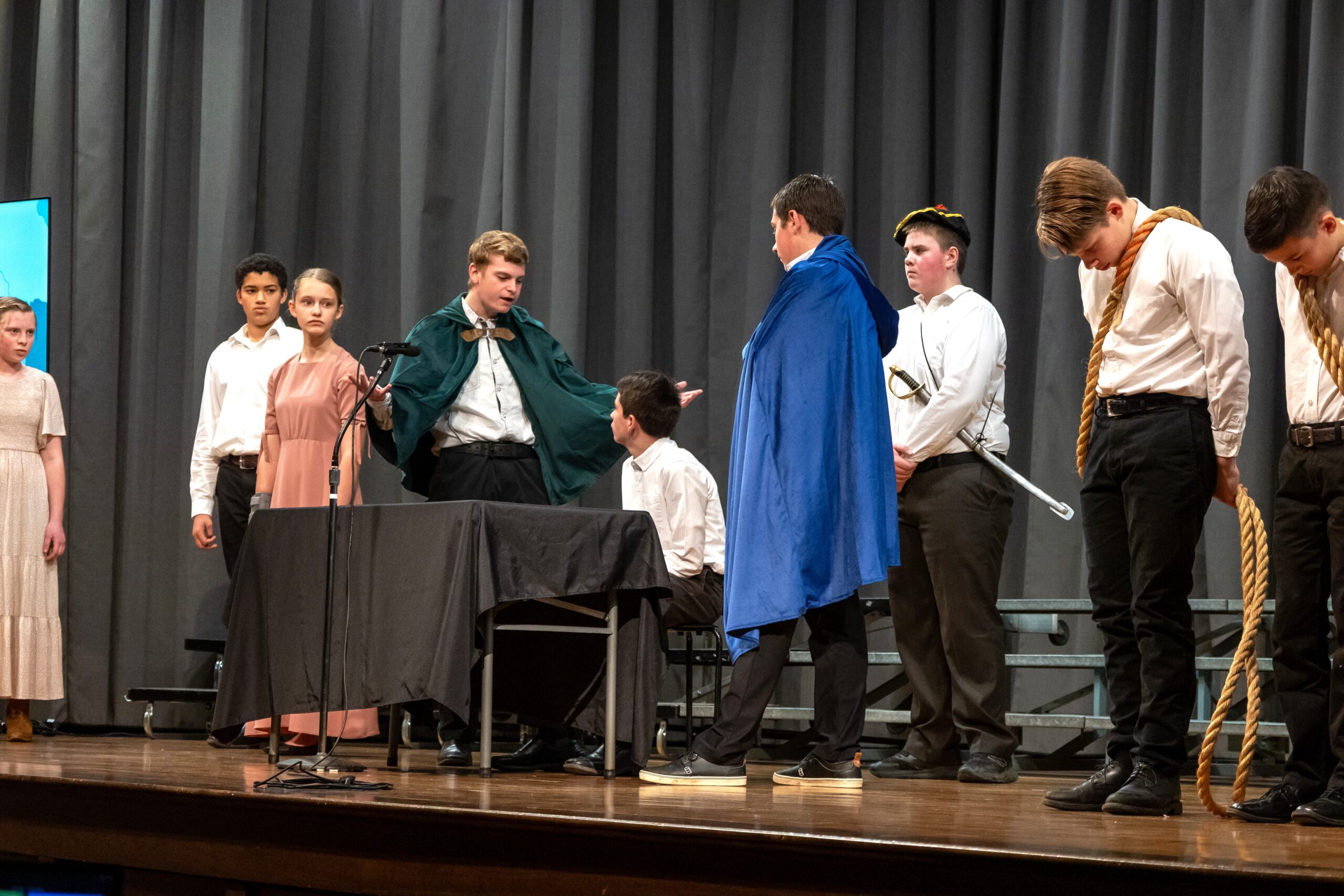
What is the most dreaded aspect of teaching? Is it parent-teacher meetings? The endless stacks of grading that tower over you at report card time? Dealing with a disgruntled parent? Handling interpersonal student drama?
For some teachers, the answer is “planning a program.” This yearly task can be difficult, time-consuming, and stressful.
Whether you find the process of planning and executing a program with your students to be enjoyable or loathsome, there is no denying that programs take a lot of work and thought. The following guidelines and suggestions may be helpful for you as you tackle this task.
Logistics to Consider
- Style: what genre of program do you want to present? A dramatic Scripture reading will have a very different tone than a humorous, story-based skit. You will want to take your students’ strengths and abilities into consideration, as well as community sensitivity.
- Length: how long should your program be? Remember that if you want to include some singing, the spoken program part will need to be short enough to accommodate that.
- Props/costumes: will your program require any props and costumes? If so, who will make or acquire them?
- Class dynamics: do you have some shy students who will struggle with stage fright? Consider giving them no speaking roles, minimal roles, or choral roles (speaking in unison with one or more other students).
Acquiring the Script
This may be one of the hardest parts of planning a program—figuring out what, exactly, you want your class to present and finding or creating a usable script.
This, unfortunately, can be a stressful and time-consuming part of program planning. Some teachers enjoy the creative challenge of writing their own program. Others can think of few things more overwhelming and unenjoyable. If you find yourself in the latter group, consider the following options:
- Use something your class has already learned. Is there a poem or Scripture passage your students have learned that could be presented as part of the program? If you have something like that but it isn’t long enough, remember that you can always stretch the content by adding creative components such as students acting out the words they are saying, interspersing the text with songs, or doing something like shadow acting behind a white curtain alongside the reciting of the text.
- Adapt a children’s book. If there is a story book that would be the right length, you can always turn it into a skit. Designate some narrators to tell parts of the story and have other students act out the words and actions of the characters.
- Ask someone in your community to write something for you. There may be a gifted, creative individual in your church or school community who would enjoy creating a program for you. You never know if you don’t ask!
- Find something pre-written online. The internet abounds with program scripts, some free and some for purchase. The obvious downside to this is the sheer amount of possibilities (and how to find one among the hundreds of thousands of options that will work for you). While not all the content on the following sites is worth your time, the following websites may at least give you a place to start looking.
- Christian Learning Resource https://christianlearning.org/shop/educational-resources/program-scripts/
- Written specifically with an Anabaptist school/church context in mind. Contains story-based scripts, poetry, Scripture-based programs, and inspirational readings for a variety of age levels.
- The Skit Guys https://skitguys.com/scripts
- Lots of variety in terms of style, length, and number of actors. Has both story-based scripts and more inspirational reading-type programs. Many of the options are for adults or older students; teachers of young students may struggle to find something on this site.
- Bob Snook https://bobsnook.org/category.htm
- A lot of content to wade through, but that means there are lots of potential options. Some would need to be adapted slightly to fit an Anabaptist context. Mostly humorous story-based scripts.
- All Age Worship Resources https://www.allageworshipresources.org/category/drama-scripts/
- Mostly story-based scripts that are typically quite short (a few minutes long) and only written for a few actors. There are some options that could easily be adapted or expanded for larger cast sizes. Some content editing may be necessary.
- Christian Learning Resource https://christianlearning.org/shop/educational-resources/program-scripts/
Practice Timeline
Once you’ve decided on what your students will present, the next part is guiding them in being ready to present it. But first, you will want to put some thought into how long you want to practice. There is a fine balance between having enough time to prepare adequately and starting so early that you and the students are tired of the program by the time you ever present it.
Most teachers find that somewhere between 2-3 weeks is the right amount of time. The exception to this might be learning new songs to sing; depending on the difficulty of the songs, you may want to start learning them earlier in the year.
It is helpful to spend the first few practice sessions in the classroom, either with students reading their parts from their desks or simply imagining a stage area somewhere in the room. Once you move to practicing in the actual performance space, the newness and excitement of the location can quickly become a distraction. Getting acquainted with the program in the familiar and “boring” space of the classroom can help to maximize your time.
If you want students to be able to perform the program without reading from scripts (which is highly recommended), be clear about memorization deadlines. You may want to communicate those deadlines to parents as well so that they can hold their child accountable to practice at home.
Maximizing Practice Time
Program practices can be zany, chaotic, and just plain old exhausting for you as a teacher. Try to embrace the disruption to your schedule and extra drain on your energy by remembering that this is a fun and enjoyable deviation from normal for most students. Allow yourself to get excited along with them.
Setting clear expectations before practicing can be extremely helpful. Establish when students are allowed to talk, how they should act during times when they aren’t an active participant in the program, and the importance of them giving their best focus to the task at hand.
As the teacher, there are some things you will want to plan beforehand so that you don’t need to figure it out on the spot during your practice time.
- Lineups
- Figure out where you want your students to stand on the stage and in what order. Then, line up accordingly before going onto the stage.
- If you will have multiple standing arrangements, be sure you are giving your students adequate chances to practice transitioning to those arrangements.
- Microphone use
- If you are using multiple microphones on stands, plan which students will go to which microphones. Consider having back-to-back speakers go to different mics so that they can move into position while the person before them is still speaking. This eliminates dead time and helps your program run smoothly.
- If you are using hand-held microphones, plan which students will use which microphones. Again, strategic planning of microphone movement can prevent your program from having lengthy silences while mics are being passed.
Teaching Presentation Skills
When it comes to school programs, some intentional training can go a long way in helping your students to present clearly. If students are mumbling, inaudible, or speaking too quickly, the audience won’t be able to take in the message of your program.
The following guidelines may be helpful in teaching your students good presentation skills:
- The speaker should always face the audience. Even in a skit where two characters are talking to each other, they should stand side by side so neither actor has their back to the audience.
- Model what clear, deliberate speaking looks like. Remind students that good speaking in a presentation will feel slower and louder than their normal speaking voice.
- If using microphones, train students in good mic use. (A microphone only helps if it’s being used properly!) Find out from your sound technician how close the mic should be to the speaker’s face and practice that way from the very beginning.
- If you are not using microphones, train students to speak loudly and clearly from the very first practice. Whenever a student isn’t speaking loudly enough, stop them and have them start again. This may seem tedious or overboard, but there is very little point in presenting a program that can’t be heard or understood by the audience.
- Establish where you want your students to look while they are presenting. This is especially important during choral speaking or singing—if students are expected to look at you, it will minimize distractions.
An Opportunity for Building Character
A program is a great time to develop character traits like humility and service in your students. Remind them of the purpose of doing a program—to share a message with others and to glorify God. Encourage students to focus on that instead of their own nerves or fears of performing poorly.
This may be a helpful perspective to keep in front of you, as well. When practices feel stressful or frustrating, students are getting hyper and distracted, or you just long for a normal day with no schedule disruptions for practice time—remember the “why.” You can be a part of sharing hope, light, and truth through the program your students share, impacting people in ways you will never know. And that’s worth a little bit of extra effort.