
All Content
In School We Trust? Part 3, Mycorrhizae of Our Faith
Which does your school emphasize: The word of God or mathematics? Personal moments with students or a disciplined schedule? The knowledge of Jesus or the ability to sing? Rather than set up dichotomies like this, Kyle offers the metaphor of a tree, with roots, trunk, branches, and the mycorrhizae--fungus--that supports it all. Education is the bringing together of many topics under the lordship of Jesus--and in the person of the teacher.
In School We Trust? Part 2, Old School, New Clothes
What does Christian school do for a child that secular school does not? Perhaps the difference is often less important than we think, says Kyle. Although Christian schools avoid particular problems--for instance, Anabaptist schools do not have students watch movies or salute the flag--too often we conform to the same ideas about what knowledge is and how education happens. Kyle probes the philosophical background to modern education and pushes us to evaluate: have we dressed up modernist school in Anabaptist clothes?
The Necessity (and Fun) of Grammar, Part 2

My last blog article shared research and reasons why grammar should be taught in all English classes because it improves communication, helps with learning a second language, enhances analytical skills, and boosts reading comprehension. After I wrote that piece, I did an informal survey among former students, asking them if learning grammar had helped them in “real life,” specifically in college classes and in learning foreign languages. Every student who answered affirmed the teaching of grammar; many of the responses focused on how grammar helped their writing skills.
Comments from these former students include “the most helpful parts that come to mind are knowing sentence structure and punctuation. Both helped tremendously in writing papers…to emphasize points and vary the writing” (this from a student who works in a design and communications job). Another said, “Sentence structure and learning how to construct a well-written essay are two of the most useful things [covered in my high school English classes].” And a third mentioned, “I fully believe that the six years of learning grammar (which I loved, and still do!) helped my writing immensely AND it’s been very helpful in learning other languages.” The last former student included here shared a story from her current life as a missionary: “I remember really struggling with grammar in school and even asked you at one point why we needed to learn it. It was a comment I threw out in frustration, but you took it very seriously…. At the time I was annoyed because I didn’t think I would ever be learning another language or using grammar skills to interpret Scripture into other languages. Here I am 15 years later learning German, and I’m so grateful…. German grammar may still be the death of me, but it makes so much more sense due to the foundation I have in English grammar.”
So, I will continue to teach grammar. But as the second part of the title says, grammar can be fun! While it may at times include worksheets or sentence applications, it can also incorporate hands-on activities and games. Here are a few “grammar-is-fun” activities to include in your next English class. (While these are geared mostly toward grades 7 through 9, they may be adapted for younger or older students as well.)
Grammar Games
- Irregular verbs race: Make small laminated cards, each containing one of the principal parts of an irregular verb (e.g. do/does, did, (have) done; has/have, had, (have) had). Make two sets of cards. Divide the class into two teams and have the members of each team sit together. Distribute one set of cards to each team so that the students have an equal number of cards, making sure that a student does not have two from the same verb (this can easily be adapted for the struggling student by giving him/her fewer cards). Call out the infinitive of a verb (e.g. “to do”). Three students from each team should have cards and race to the front. The students should arrange themselves in order: present, past, past participle. Call on the team that has theirs in order first; they receive a point. They should recite them, saying “Today I ___. Yesterday I ____. I have ____.” (This gets especially fun with some of the tricky verbs like “to lay” or “to rise.”)
- Indefinite pronoun candies: Give each student about ten individual candies, such as Skittles or M&Ms. Call out specific indefinite pronouns and have them sort an appropriate number of candies to determine which pronouns are singular or plural or either. Some of these pronouns are tricky (e.g. why is “everyone” singular?), so this sorting process makes it more obvious. And of course, the students can eat them at the end.
- Grammar sword drills: Find a few Bible verses that show examples of whatever you are discussing and have the students race to find the verses. The first one who finds it stands and reads the verse. The rest of the class then identifies whatever grammatical concept you are looking for. For example, when studying gerunds, use Ezra 3:11 (praising and giving), Zephaniah 3:17 (singing), Colossians 1:29 (working–a good verse to use because it also requires students to distinguish the gerund from the participle “striving”), and Philippians 1:26 (rejoicing).
- Scoot: While this is certainly not original to me, I often use Scoot as a class test review to give the students a chance to get out of their seats. You can find free Scoot worksheets online, or make your own by printing a table with numbered boxes to use as an answer sheet. Then write approximately ten to fifteen numbered questions on separate pieces of paper. Place the questions on various desks or other places around the room. Tell the students to take their answer sheets and pencils to one of the questions and write the answer on their answer sheet. Keep a timer and after approximately twenty seconds (you can vary this depending on the class), say “Scoot!” The students should move in a clockwise direction to the next question and answer it. Continue until they have answered all questions and then check their answers together.
Hands-On Grammar Activities
- Forming group sentences: A quick activity that can be completed multiple times in a year consists of writing sentences on notecards to cover whatever grammar topic is being discussed, with one word per card. Distribute the cards, one per student, in random order. Have the students go to the front and arrange themselves so the sentence makes sense, showing their words to the rest of the class. Then tell them to do certain things depending on what you are studying. For example, you can have the students who are the complete subject take one step forward and the students who are the complete predicate take one step back; the student who is the simple subject takes another step forward while the simple predicate/verb takes another step back. Do this with several sentences to make sure all students in the class get a chance to go to the front. You can also ask sitting class members to answer questions about the ones in front (e.g. Which students are adjectives?) This activity works well with adverbs: one of the tests for descriptive adverbs is that they can be moved in a sentence, so have the students who are adverbs move to wherever they make sense in the sentence.
- Forming compound nouns: Take a piece of paper approximately 4x6 and cut it into two puzzle-piece shapes. Write one part of a compound noun on each half of the puzzle. Make enough puzzle pieces for each class member; distribute them and have the students find their partners. (If you have an odd number of students, do a three-part compound like “sister-in-law.”) To make it more challenging, cut several of the pieces in the same shape, so that they have to match the words instead of just the shapes.
- Diagramming sentences: Write each word of a sentence on a separate card. Give a group of students the cards, along with several strips of paper to serve as lines, and have them diagram the sentence on a table or the floor.
- Touch the punctuation mark: Make a worksheet with sentences (written in large font) that are missing their punctuation marks. Have the students glue objects on the paper to fill in the missing marks. Use elbow macaroni for commas, apostrophes, quotation marks, and the bottom part of a semicolon. Broken spaghetti noodles can form the top part of exclamation marks, dashes, and hyphens. Yarn works well for question marks, while red hots make good colons and periods.
Photo by Surendran MP on Unsplash
Age-appropriate A Cappella Activities
Younger grades. Note names. Sight singing. Vocal training. What age? When? How high should they sing? MONOTONES !!! What is Kodaly? Jeff, who has taught music for more than 15 years, answers lots of questions about starting and maintaining a successful elementary school music program.
Called to Lead in the Elementary Classroom
To fulfill your commitment to be the leader in your classroom, you need to prepare for the year, manage, and teach in a way that controls the leaning and calls them to follow, and then reflect and reshoot. This is a general elementary session focusing on first- and second-year teachers, taught from the perspective of an upper-elementary teacher.
Four Great Helps for a Multi-grade Classroom
Juggling two or more grades in a classroom definitely has its challenges. This session covers four ways you can work toward an efficient, organized classroom with motivated and happy students. This may be especially helpful for teachers of multi-grade classrooms, and is presented from the perspective of a teacher with 8 years of experience teaching in a multi-grade classroom.
Healthy Teacher, Happy teacher
Are you tired and fatigued while you teach? Does your voice hurt after school? Does your back hurt? Your feet? Do you lose your voice every year? Are you a stressed mess? Do you find yourself thinking more negatively than positively? Things really do not have to be this way. Jeff shares solutions to all of these problems from personal experience and research. Breathe…

4 Metaphors for Teachers, Metaphor 1: Kings
Have you reckoned with the power that comes with your position as a teacher? You choose, decide, and judge the affairs of your classroom. Dodging this responsibility is not an option: Like it or not, you will rule. How can you use your authority with integrity, to the benefit of your students?


Teaching to Expose to the Great Commission
I am a stranger to much of the Christian Curriculum as well as the Church schools in North America. I feel least qualified to comment on the same. But my visit to a few schools and interactions with learners in some classes gave me a window glimpse and got me thinking. My interaction with some of the curricula books also kept feeding me with certain impressions. So, I do accept my limitation even as I pen my thoughts on the stubborn reflections that glare at me from the few observations that I made. To this end, I also do express that I remain open to your corrective thoughts on my perspective.
To what extent would our teaching and content be exposing the learners to the Great Commission? Would there be any additional room for our teaching and content to do a little more in this area? If yes, then this needs to be far more intentional and strategic. Each teacher and every curriculum developer needs to be conscious about the existence of this need. There seems to be more nostalgia about what we don't want for our children (learners) and the curricula and content are particularly designed and delivered from that protective edge. While not losing sight of these, how would we help our learners to receive more of what we equally want for them. My relationship with missionary and expat staff families in Kenya has given me a hint that those who grew up in the mission field find it easy to step into the mission field. Likewise with those who have had satisfactory contact with close people, known to them, who serve or have served in the mission field.
As such, what would be the impact if a little more of the mission field focus was integrated into our teaching content and curricula approaches. For example, this can be done by integrating formative stories as part of our content. Such stories will go a long way in shaping the beliefs and values of the audience learners. I am persuaded that we do have stories, past and present, from the mission field, rich with Anabaptist or conservative Mennonite characters which demonstrate the joy and agony of serving the Lord in the mission field. It would enrichen the minds of the learners with examples of those who have made sacrifices in their love for the Lord God and His people. I do slightly assume that with the little more comfort in North America, many learners may find it hard to step out of their traditional Mennonite communities to serve elsewhere. Many presently shrink their service experience to the classical mission or nursing homes, youth camps or choir-singing tours. How about if the curriculum and content explored fields like drug addiction or homelessness as fronts that can form their mission focus.
What if that little more in the mission field can be in the form of exposure to another culture. I know there is already relevant coverage in the curricula in terms of learning a foreign language. That reminds me of the joy we shared in some of the US church schools as I introduced them to some Swahili or Luo words (which are the local languages that missionaries in Kenya get to learn). They seemed so interested and expressed eagerness to learn even more but that was not the focus of my time with them. I guess I am allowed to guess that the interest would be much more intense if they knew they were soon going to use these languages to serve other people. What if by learning about that other culture provokes in them a desire to go and serve God among those other people. Learning another language may also become handy when there is need to translate some of the available literature to that language. How can these aspects be integrated into our lessons and content.
As mentioned from the start, this article is not assuming that there is not anything happening along these lines. It is meant to stir up the doing of more in these areas to the glory of God. You can contribute more and improve my thoughts through your comments that are welcome.

Pedagogical Moments: The Story
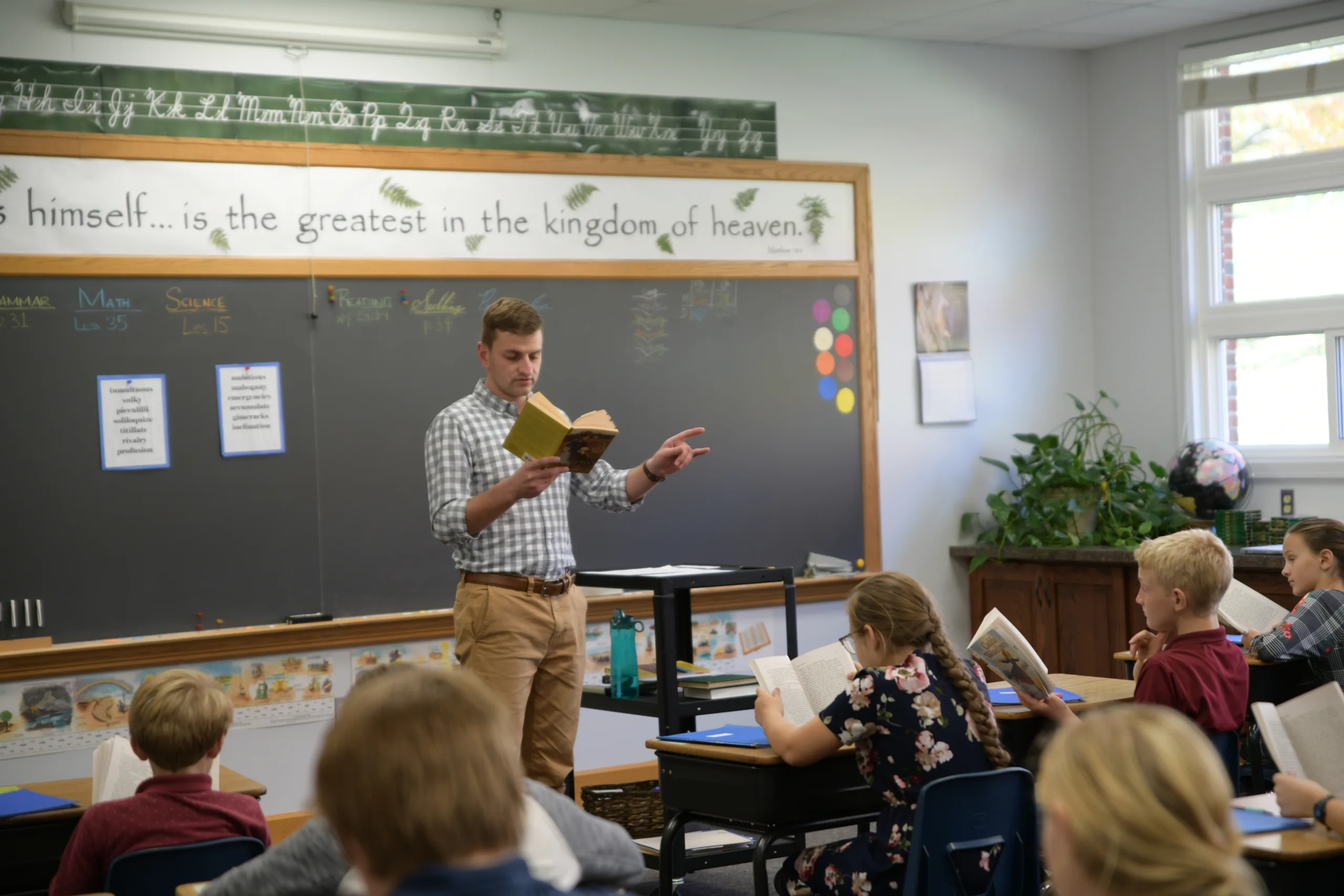
Once, long ago in a land across the sea, there lived a Great Teacher. To this Great Teacher there came a young man of an influential family. This young man sat down with those who surrounded the Great Teacher. He listened to the words of authority and wisdom. The young man, like many young men before him, had a question. He asked the Great Teacher, “Sir, what must I do so that I may live in the hereafter?”
The Great Teacher turned to the young man and said, “Do you know the Law?”
The young man replied that he had been taught the Law from his boyhood.
“And what is the first part of the Law?” asked the Great Teacher.
“It is to love the Lord God with one’s whole heart, mind, and strength,” stated the young man. Then to further show his learning he continued, “and the second Law is to love one’s neighbor as he loves himself.”
“If you truly follow these Laws,” the Great Teacher replied, “you will live.”
But the young man was not satisfied. He asked, “but who is my neighbor?”
The Great Teacher turned to those who listened and said, “A certain man was on a journey when he fell among thieves who took what he had and left him for dead…”
Why should you use a story?
The use of the story is an ancient pedagogical method. Ancient oral history was presented as story—Creation, the Fall of Man. Myths of human existence are man’s story version of life—the Gilgamesh epic. Values are passed on through story—the Illiad of Homer. Stories connect the listener to thoughts and ideas that are greater than the simply stated fact or opinion—Aesop’s fables. Stories are powerful tools you can use in your classroom.
Stories catch our attention and help us remember things. There has been more than one Monday morning conversation in my first-grade classroom about a story the minister told at church the day before.
Stories bring to life other places and times. They invite us to see other perspectives than our own. Stories add flesh to otherwise dry facts.
Stories pass down traditions and shape the loves in our lives.
When do you use a story?
Stories have a place in every part of the school curriculum. Some subjects, such as reading and history, are story-oriented subjects. Can you imagine trying to teach first graders to read with no story, only lists of words or facts? It is the story that first makes reading palatable and attainable. Story also has its place in math and science and even in physical education.
Story in reading and literature
Literature and reading are all about story. These are the subjects that dissect the story and examine its contents. But in all the dissection be careful that you don’t kill the story. Nothing makes reading or literature class more boring than not allowing the story to speak for itself.
Story in history
History is full of stories of real people, places, and happenings and it is perhaps my favorite subject to study. I’ve found, though, that many students and teachers list history as one of their least favorite subjects. Is it because they encounter history as names, places, events, and dates to be learned devoid of the story? Blessed is the history class taught by a teacher who makes Alexander the Great and his discouraged soldiers in far-flung India live again; who captures the terror of Londoners during the Battle of Britain; who walks with George Washington through the starving army camp at Valley Forge; or who makes the escape from Saigon by helicopter during Operation Frequent Wind seem real.
History is an excellent class to bring in story to what is being studied. If you can’t tell the story, find a story that will do it for you. Paul Harvey’s The Rest of the Story is a book of short anecdotes that can be read. Or find his old radio addresses on the internet and listen to them. Biographies can add interesting flesh to dry bone facts. Choose stories that bring the personal close. Hitler Youth by Susan Campbell Bartoletti and The Candy Bomber are two books that provide stories into lives of real people living during Nazi Germany and the Berlin blockade.
Story in science
The natural world is full of stories from Creation to the James Webb telescope. But science can also be thought of as dull, dry, and uninteresting to the student who doesn’t understand it. Bring the story back into the dry facts. Introduce young nature learners to the stories of Robert McClung such as Bufo the Story of a Toad, Tiger the Story of a Swallowtail Butterfly and others. That is, if you can find them. Ms. Frizzle and her Magic School Bus not only delights young students but gives them information in a fun and interesting way.
Biographies and stories of scientists add human interest.
Story in math and language
While stories about the history of math and word usage and their importance in the world can be added to the daily lesson, story is also a great way to teach and recall concepts.
When teaching simple addition and subtraction to beginners turn the facts into stories about the students. Andy’s mother gave him five cookies and told him to give two of them to his brother. He has how many left? The use of story involves imagination, has sensory appeal, and holds attention. Stories can also be mnemonics to aid the memory of certain facts. For the fact family of 4,7, and 11; Polly can go to Seven-Eleven and buy four Slurpees.
Share the story of the Penn Walking Purchase when teaching perimeter and area to fourth graders. Make up a story about Tom and the fence he needs to keep his sheep in their pen. I can still remember my algebra teacher telling us a story about her figuring a time, distant, rate problem on a recent trip. Bring the story into the class.
Language and words all have stories. In spelling class share the story of language change, the Great Vowel Shift, and how the printing press helped freeze spelling. Once students know that knife was once pronounced /k/ /n/ /ih/ /f/ /eh/ (and yes that was in English) they will know how to spell knife.
Humans are hard-wired for story. Tap into this inherent trait to bring interest and purpose into your classes.
…And the Great Teacher turned to the young man and asked, “Which of these three was the neighbor?”

Eight Field Trip Edicts

There are a few responsibilities teachers and/or administrators should handle regarding field trips. Here are the ones I think are pretty important.
1. Logistics. Have your ducks in a row. Make sure permission slips are signed and returned by the parents. Have exact dates, times, locations, and contact information so that the parents can reach you if they need to. Do your homework and find out how far away the place is, how long it will take to get there, what hours it is open, etc. Ask about any extra charges, if teachers and chaperones get in free, and what you might need to bring. We've brought extra money so that students could feed the animals, umbrellas in case of rain, and bags to collect specimens.
2. Preparation. Be prepared. My usual list includes a jacket and my back pack with the following items: a large Ziploc bag with a few paper towels in it in case anyone gets sick to their stomach (an ice cream bucket with a lid works well in vehicles), a sewing kit (three different times I've had to stitch up a girl's zipper on her dress while she was in it), a first aid kit (miniature version), and hand sanitizer.
3. Information. Inform students ahead of time, and make sure they are educated about where they are going to be. Teach them about the history of where you are going or about the science of it. The more they know ahead of time, the more interesting it will be for them. They'll learn more, ask more intelligent questions, and get way more out of it. Show them pictures, let them watch a documentary, and/or show them items they might find there.
4. Donuts. I have some wonderful patrons who, for the last three years, have provided donuts for the teachers and students on every field trip day. It's just a fun added bonus.
5. Order. I assign seats on the bus or vans. Sometimes it's just guys in the back and girls in the front; sometimes it's with a buddy (older student helping a younger one), but it's never a free-for-all. And I usually encourage the students to sit with someone else halfway through the trip or on the way home.
Inform students of how they should behave. Hopefully, the rules have been well-established at school and shouldn't be that different in another situation, but it is still good to let students know what you expect while traveling as well as at the field trip location. On one amazing field trip, one of the workers asked us where we were from. She left, then returned with bookmarks, calendars, stickers, and a book. She gave them all to me and explained that this was one of the most well-behaved groups she’d ever had visit the establishment.
We also walk in a line two by two if it will help us stay together better, and people get out of the way and let your group through if you're lined up and moving together. Order prevents chaos, and students can get pretty excited on a field trip.
6. Redeeming the time. This includes travel time, too. Unless it's a really short distance to wherever we're going, we use the time in the vans or bus wisely. We bring our music folders and sing through our program songs. We sing our scripture memory songs.
We read books, both individually or as a group, with a teacher or student reading a book aloud and showing everyone the pictures.
We look for license plates and color in a state on a map for every different state we find.
On our last trip, the students started noticing all kinds of different animals, so on the back of our maps, we began writing down every animal we saw.
7. Wise decisions. Especially when we're at wherever we're going, I don't like to waste time doing stuff that the students already do on a normal day; for instance, when students ask to take a soccer ball to the beach. They can play soccer any old day at school, so why would we waste time at the beach playing soccer when there are all kinds of other things to do that we could never do at school?
8. Thankfulness. Thank the people working at the establishment. Thank the bus driver, thank the parent chaperones, and thank the students for behaving well. Hopefully, they will thank you, too.

An open letter from the Education Committee
October 12, 2022
Christian greetings!
The Dock is owned by the Conservative Anabaptist Education Committee, and jointly operated between CAEC and the Resource Group at Faith Builders. Since its launch in 2017, The Dock has seen steady growth and increased demand. Its reach has expanded to include users in most of the world’s nations. The Dock is entirely funded by donations, and users like you can be an active part of its ongoing success. The Dock’s annual operating budget is $30,000, and your donations help not only to maintain The Dock, but also expand its offerings. You can use PayPal for single or recurring donations, or send checks to: CAEC c/o Mark Webb, 10555 Lew Jones Road, Rawlings, VA 23876.
Cordially,
The Conservative Anabaptist Education Committee
Gerald Miller
Mark Webb
Adin Stoltzfoos
Chet Stoltzfus
Matthew Peachey
- 261Page 45