
All Content

Continuing the Journey
There are principles of perseverance that perhaps we need to review occasionally. What are some overarching principles that can keep you going when your hands hang down?
“Continuing the Journey” was presented by Conrad Smucker at Western Fellowship Teachers’ Institute in August of 2018 at Lighthouse Mennonite School in Halsey, Oregon.
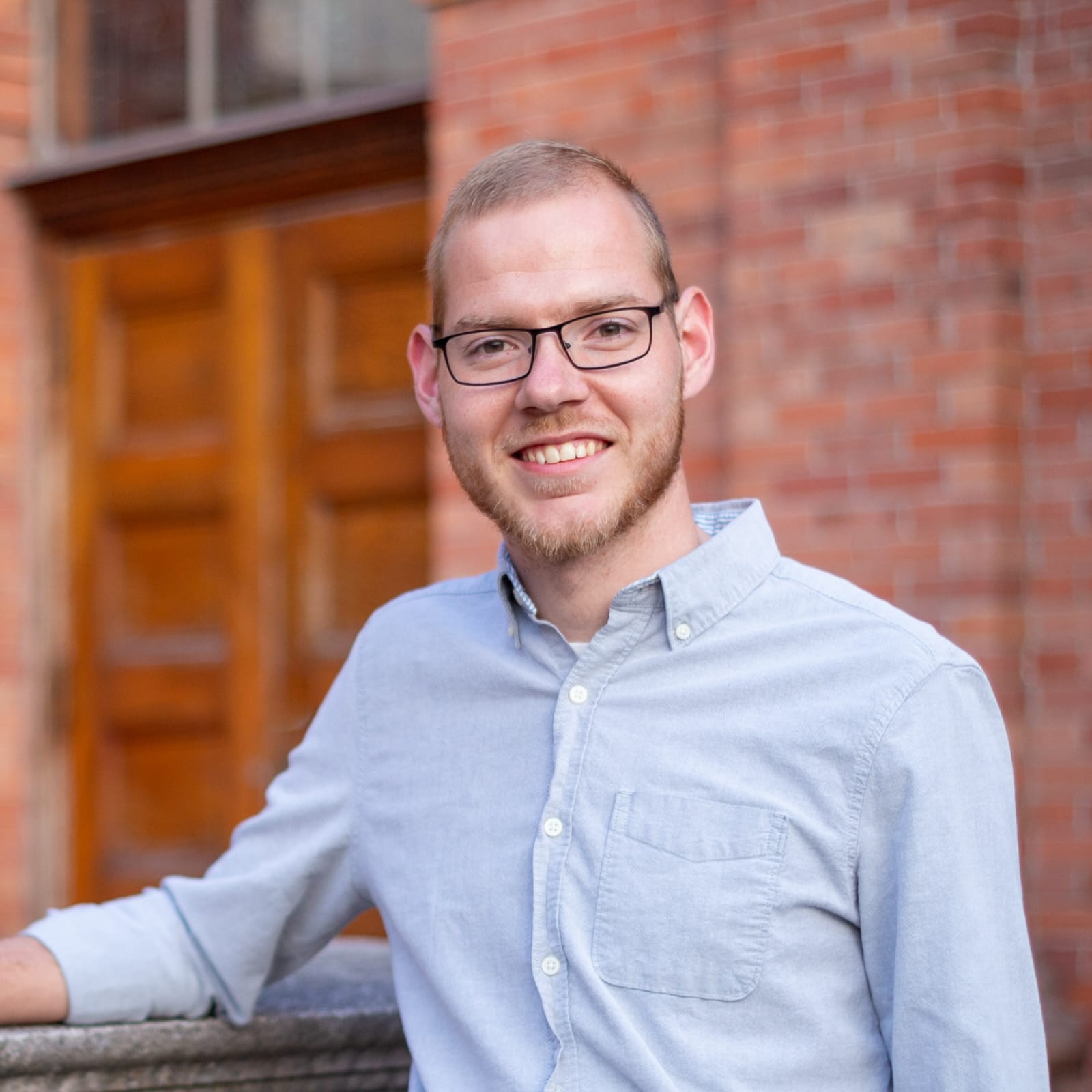
Creative Review Ideas
When I plan my lessons for the next day, I occasionally include an activity or an object to reinforce the new concept, engage the students senses, and connect them with real life objects.
This list includes out-of-the-workbook ideas for reinforcing concepts and integrating hands-on learning in your classroom. They cover a range of grade levels and are presented in no specific order.
Math Facts
- Froggy Hop – Teacher lays a row of flash cards on the floor for the student to jump over when he says the correct answer. The teacher or student walks alongside the “jumping” student to ensure he says the right answer.
- Around the World – One student stands beside another while the teacher flashes a math fact. The student who says the correct answer first moves to the next student’s desk.
- Addition and multiplication graph – Make a graph with numbers 1-10 or 12 both vertically and horizontally. Each student finishes as quickly as he can, then records his time.
- Equations – Write equations onto the chalkboard, each student only solves one step.
___ + 8 = 56
6n + (23 – 1) – 13 = 11(3)
13 = n + 5
53 – n = 102
- Oral drills – Call out math facts instead of using flash cards.
Long Division
- Around the World – Form two rows of students. Each row gets a division problem to solve. Each student does only one step and goes to the back of the line. Small marker boards work well for this activity.
Formulas
- Find the area of real objects
Classroom, desktop, school property, sidewalk.
Frisbee, clock, protractor, microwave dish.
Doritos chip, slow moving vehicle sign.
- Find the volume of real objects
Classroom, lunchbox, desk, microwave, Rubik’s cube.
Soccer ball, golf ball, baseball, earth.
Ice cream cone, pylon.
- Flash cards – Have students identify the shape for the formula and dictate the formula for a given shape.
Reading – Oral and comprehension
- Choral reading – Reading all together helps the slower ones learn new words.
- Dramatic reading – Assign students to different characters in the story.
- Ask questions during story time – Helps students catch foreshadowing and analyze story details.
Parts of speech and their functions
- Oral – Call out random words and the students say the part of speech.
Teacher: “Capital.”
Student: “Noun.”
Teacher: “Wow.”
Student: “Interjection.”
- Write a sentence on the board to drill the functions.
E.g. “The capital of Canada is Ottawa.”
Teacher: “What does the word ‘capital’ function as?”
Student: “Subject.”
- Label sentences on chalkboard.
- Around the World – Use the oral method
- Sentence patterns
E.g. s | av, do A grizzly bear can smell food from a mile away.
- Diagram sentences
- Chant prepositions
- Define the parts of speech
Rhymes, poems, and songs
A noun is a person, place, or thing. As in farmer, market, or a pretty bird’s wing. -unknown
Public Speaking – Ideas to reduce stage fright
- Read stories to classmates
- Read with lots of expression
- Present a science project to class or school
- Sing a solo – Gets students used to their voice.
I’ve gathered many of these ideas while visiting other teachers’ classrooms.
Remediation and Techniques
Come explore the importance of evaluating and pursuing remediation. We need to execute remediation that will address the specific issues that block the doorway of academic success.
“Remediation and Techniques” was presented by Peter Whitt at Western Fellowship Teachers’ Institute in August of 2018 at Lighthouse Mennonite School in Halsey, Oregon.
Science by the Textbook
How can we maximize the potential that a science textbook can bring to our classroom? We need a textbook, but is it possible to get too much involved in a textbook to the point that our students become bored even if there are state-of-the-art graphics in the textbook? Come here to find out ways of making science interesting while using a textbook.
“Science by the Textbook” was presented by Jesse Hurst at Western Fellowship Teachers’ Institute in August of 2018 at Lighthouse Mennonite School in Halsey, Oregon.
The Art of Memorization
Memorization...It’s that pesky thing that is somewhat easy to avoid in an era of internet-connected devices. Does memorization have any value these days? Yes, indeed. Here are some ideas on how to have successful memorization for the school year.
“The Art of Memorization” was presented by Aaron Derstine at Western Fellowship Teachers’ Institute in August of 2018 at Lighthouse Mennonite School in Halsey, Oregon.
Presentation
Jonah Avina uses a fishing analogy to teach three steps for effective presentations:
- Bait (Introduction): Grab students' attention with engaging methods.
- Bite (Explanation): Maintain attention with clear, relevant explanations.
- Catch (Application): Guide students to apply knowledge through practice.
“Presentation” was presented by Jonah Avina at Western Fellowship Teachers’ Institute in August of 2018 at Lighthouse Mennonite School in Halsey, Oregon.
First Grade Phonics
Phonics is one of the building blocks of reading. How important is it? Is there a difference between phonetics and phonics? Is it important that lower grade students ‘get it’ in the lower grades or do we want to be teaching phonetics in 7th grade as well?
“First Grade Phonics” was presented by Kayla Hartman at Western Fellowship Teachers’ Institute in August of 2018 at Lighthouse Mennonite School in Halsey, Oregon.
Plain Speaking
How important is it that we are teaching the adult men and women of tomorrow the concepts of Biblical and concise speaking? There is value in knowing how to clearly and accurately use words to speak in a public setting or even in a more informal setting. Is content important or is it more important that we raise our voice in a way that gets everyone’s attention? Is it possible to have good content, but a bad delivery?
“Plain Speaking” was presented by Kyle Lehman at Western Fellowship Teachers’ Institute in August of 2018 at Lighthouse Mennonite School in Halsey, Oregon.
Classroom Accomodations
We must be flexible and creative when it comes to helping every student experience success and accomplishment in school. Sometimes we should step out of the set classroom routines to meet the needs of those that process differently.
“Classroom Accommodations” was presented by Peter Whitt at Western Fellowship Teachers’ Institute in August of 2018 at Lighthouse Mennonite School in Halsey, Oregon.
Redeeming Recess (Lower Grades)
Recess has a good reason for appearing regularly on our schedules, but perhaps there are some things that we can do to better redeem the time we spend away from our studies.
“Redeeming Recess (Lower Grades)” was presented by Aaron Derstine at Western Fellowship Teachers’ Institute in August of 2018 at Lighthouse Mennonite School in Halsey, Oregon.
Redeeming Recess (Upper Grades)
Recess has a good reason for appearing regularly on our schedules, but perhaps there are some things that we can do to better redeem the time we spend away from our studies.
“Redeeming Recess (Upper Grades)” was presented by Austin Smucker at Western Fellowship Teachers’ Institute in August of 2018 at Lighthouse Mennonite School in Halsey, Oregon.
English--Writing and Composition (Upper Grades)
We are going to delve into some of the intricacies of creating a composition that is worth the time to read. Come prepared to learn about writers of the past and what makes their writing great.
“English--Writing and Composition (Upper Grades)” was presented by Joel Schrock at Western Fellowship Teachers’ Institute in August of 2018 at Lighthouse Mennonite School in Halsey, Oregon.
English--Writing and Composition (Middle Grades)
We are going to delve into some of the intricacies of creating a composition that is worth the time to read. Come prepared to learn about writers of the past and what makes their writing great.
“English--Writing and Composition (Middle Grades)" was presented by Kyle Lehman at Western Fellowship Teachers’ Institute in August of 2018 at Lighthouse Mennonite School in Halsey, Oregon.
English--Punctuation (Middle Grades)
What does a sentence look like with no punctuation It certainly quite certainly if you think about it changes the look and even perhaps the meaning of a sentence Come to this class to think about the important place that punctuation fills in written and even verbal communication
“English--Punctuation (Middle Grades)” was presented by Kyle Lehman at Western Fellowship Teachers’ Institute in August of 2018 at Lighthouse Mennonite School in Halsey, Oregon.
English--Punctuation (Upper Grades)
What does a sentence look like with no punctuation It certainly quite certainly if you think about it changes the look and even perhaps the meaning of a sentence Come to this class to think about the important place that punctuation fills in written and even verbal communication
“English--Punctuation (Upper Grades)” was presented by Joel Schrock at Western Fellowship Teachers’ Institute in August of 2018 at Lighthouse Mennonite School in Halsey, Oregon.
Organizing the First Grade Classroom
In this session, Kayla Hartmann covers essential strategies for creating an effective and engaging classroom environment. She shares practical advice on setting up a welcoming classroom, maintaining teacher organization, teaching students to be organized, establishing routines, fostering responsibility, using incentives, and managing discipline. Drawing from her experience, she emphasizes creating a safe, fun, and structured space that supports both student learning and teacher well-being, with tips adaptable to various grade levels.
“Organizing the First Grade Classroom” was presented by Kayla Hartman at Western Fellowship Teachers’ Institute in August of 2018 at Lighthouse Mennonite School in Halsey, Oregon.
Why Some Children Learn Differently
God has created us with uniquely different processing abilities for His honor and glory. Recognizing and accepting these can help us better understand ourselves and our students.
“Why Some Children Learn Differently” was presented by Peter Whitt at Western Fellowship Teachers’ Institute in August of 2018 at Lighthouse Mennonite School in Halsey, Oregon.
Preparation
The teacher needs to know what he is going to teach. How does the teacher know when he has enough?
Jonathan Erb emphasizes the critical role of thorough readiness in delivering effective and efficient classes. He addresses:
- Spiritual preparation
- Setting Expectations
- Knowing students
- Understanding school culture and curriculum
- Organizing schedules and records
“Preparation” was presented by Jonathan Erb at Western Fellowship Teachers’ Institute in August of 2018 at Lighthouse Mennonite School in Halsey, Oregon.
The Teacher, A Mentor
The teacher is not the parent. The teacher is not the preacher. The teacher is the teacher though, and perhaps sometimes we will need to mentor. Mentoring students who struggle in school or in life can be a challenge.
"The Teacher, A Mentor” was presented by Jerry Troyer at Western Fellowship Teachers’ Institute in August of 2018 at Lighthouse Mennonite School in Halsey, Oregon.
I Will Study and Get Ready
Wes Bauman stresses preparing for diverse roles like teaching, preaching, and defending faith through study and life experience. His key points are:
- Varied Roles: Prepare for teaching, ministry, and faith discussions, each needing unique readiness.
- Daily Study: Use life experiences and scripture to build a foundation for sharing knowledge and faith.
- Classroom Prep: Master material, anticipate questions, and learn humbly with students.
- Faith Defense: Be ready to explain faith reasonably and humbly.
“I Will Study and Get Ready” was presented by Wes Bauman at Western Fellowship Teachers’ Institute in August of 2018 at Lighthouse Mennonite School in Halsey, Oregon.
- 261Page 16