


Blog

Recess Games for Lower Elementary
Group recess games are a staple of every school playground, but sometimes teachers and students alike can grow weary of playing the same ones over and over again. Here are a few recess games you might consider adding to your rotation.
Johnny Johnny
Materials needed: Two end zones, either opposite walls of a gym or cones/other markers to delineate two safe areas. Ideal spacing depends on group size and age of the players.
Considerations: Can be played inside or outside.
The aim of the game: To be the last player to be caught.
Instructions: Choose one player to be “it.” They will stand in the middle of the playing field, halfway between the two end zones.
The rest of the players will go to one of the end zones. They will then call out in unison, “Johnny, Johnny, may we cross your bridge today?”
The person who is “it” will then respond, “Only if you’re wearing the color ___.” At that point, anyone who is wearing the specified color may cross to the other end zone, unhindered. Anyone who is not wearing the specified colour must wait until the person who is “it” says “Go!” At this point, they must try to get safely to the other side without being tagged. Anyone who gets tagged will then join the person who is “it” in the middle and help them tag players in consecutive rounds.
This repeats until everyone is caught.
Options for variation:
If your group size is large, you may want to choose two people to be “it” to start.
Another twist on this game is to allow the person who is “it” to allow crossing based on something other than color of clothing. They may make up whatever stipulations they want to, such as, “Only if you had cereal for breakfast” or “Only if you have a dog at home.”
Freeze Tag
Materials needed: If outside, a way to mark a contained area, such as the boundaries of a baseball diamond, or a rectangular area marked with cones.
Considerations: Can be played inside or outside.
The aim of the game: To be the last player to be caught and to help free those who have been caught.
Instructions: This game is like regular tag, only when someone is tagged, they must freeze in that position until another player comes and “frees” them by touching them. If a player runs out of the boundary lines, they need to freeze on the line and wait to be freed.
In order to keep the game from extending into infinity, it works well to instill a rule like “If you’re caught three times, you also become ‘it.’”
Options for variation:
If your group size is large, you may want to choose two people to be “it” to start.
Young children may enjoy a twist called “Chicken Tag” (or cow tag or dog tag or whatever animal you want), in which they must cluck like a chicken the entire time they’re frozen.
23 Skidoo
Materials needed: Two end zones, either opposite walls of a gym or cones/other markers to delineate two safe areas. Ideal spacing depends on groups size and age of the players.
Considerations: Can be played inside or outside. We also used to enjoy playing this one while skating on the rink during the winter.
The aim of the game: To be the last player to be caught and to help free those who have been caught.
Instructions: In this game, players try to run from one end of the playing field to the other without being tagged by the one or two people who are “it”. While in the end zones, they are safe and cannot be tagged. If a player is tagged, they must go to the middle of the playing field and stand with their arms outstretched.
Other players can free those caught in the middle by touching their hand or shoulder and counting aloud to twenty-three. If there is danger of being tagged while they are counting, they may run off at any time. At that point, the player who is caught in the middle may call out whatever number the counting left off at (for example “sixteen!”) At that point, any other player who comes to free them may continue counting from sixteen until they get to twenty-three. After the person counting gets to twenty-three, they must say “Skidoo!” at which point the caught person is free to run back to a safe zone and continue playing.
Option for variation: You can instill a rule like “If you’re caught three times, you also become “it.” This helps the game move faster and doesn’t tax those who are “it” as much.
Wave
Materials needed: A cone or landmark (such as a step, post, tree, etc.) to be the home base.
Considerations: Works best as an outdoor game.
The aim of the game: To be among the last players to be caught and to help free those who have been caught.
Instructions: One person is chosen to be “it.” They close their eyes and count to fifty (or some other chosen number) while everyone else runs and hides somewhere nearby. The person who is “it” may circulate freely to try to find people. If they see someone, they catch them simply by calling out their name.
If a player’s name is called by the person who is “it,” they must go to the home base. They will stay there until they see any player who has not been caught waving at them. If they see someone waving, they may run away and hide again. If the person who is “it” is nearby and sees them escaping, they may call out their name again, in which case the player must return to the base and wait to see another wave.
You will want to make it clear that players need to escape within around thirty seconds of seeing a wave, otherwise the wave is “too old” to count anymore.
Choose a certain number of students that the person who is “it” must have caught at one time before the game is over. It usually works best for that number to be around 50-60% of the total number of players.
Tennis Ball Softball
Materials needed:
Tennis racket
Tennis ball
Baseball diamond
The aim of the game: For your team to get the most runs.
Instructions: This is simply a twist on regular softball where the bat and ball are replaced by a tennis racket and tennis ball. This has several advantages, particularly for young students. One is that ball gloves are not needed. Another is that young students can hit a tennis ball with a racket much more easily than they can hit a softball with a bat. This keeps the game moving much more quickly (and makes it much easier for a lone teacher who is often trying to pitch and give batting assistance at the same time!)
This is a perfect way to introduce young students to the concepts of softball rules (how to run around the bases, how to play outfield, etc.) with less stress and hassle than a bat and softball create.
Tubes
Materials needed:
An assortment of balls; dodge-ball type balls work best, though soccer balls could be used as well. You will want somewhere between 10-20 balls.
“Tubes.” You need one tube for each player. These can be created out of a wide variety of materials. My school had large PVC pipe (around 4-5 inches in diameter) cut into chunks, each creating a free-standing tube around 12 inches tall. The same could be done with stiff cardboard tubing. Another option would be going to a department store or flooring store and asking for old carpeting tubes.
Alternatively, you could collect large empty jugs (at least gallon-sized or larger) and use those as your tubes.
A rectangular playing area with a central dividing line.
Considerations: Could be played inside or outside, though a contained space like a gym will more conveniently keep errant balls from getting away.
The aim of the game: To keep your own tube standing and knock down the opposing team’s tubes.
Instructions: The group is divided into two teams. Each team goes to one side of the dividing center line and sets their tube upright on the ground. The balls are placed along the center line. Players are not allowed to cross the center line.
Once the game begins, players may run to grab the balls. They then try to throw them at the opposing team’s tubes and knock them over. Each player is also trying to stop balls from hitting their own tube. If a player’s tube is knocked over, they are out of the game and watch on the sidelines until the game is over (which happens once all the tubes of one team have been knocked over).
Options for variation:
You could also play that once a player’s tube is knocked over, they join the opposing team.
Another variation is to delineate a narrow section at the back ends of the playing zone. When a person’s tube is knocked over, they go to the back end behind the opposing team and try to knock down tubes from there. If they successfully knock a tube down, they may return to their side and set up their tube again.
Photo by Elizabeth Dunne on Unsplash

How Were You Thinking? Calling Students to Think Deeply
Facing discouragement about my students’ struggle to grasp math concepts, I added a small space on an assignment requiring them to briefly explain the thinking that led to their final response. By asking “Explain how you got your final answer in the space below,” I figured that students’ detailed descriptions would allow me to see where their thinking was going awry. I hoped to use this information to maximize my reteaching the next day.
With great anticipation, I sat down at my desk that afternoon to begin reading the insightful responses, but what I found left me speechless and a little annoyed. Rather than describing their thinking, the typical response to my question was Because I did math. Needless to say, that is not very helpful to a teacher! I wanted to scream, “Of course you did math! But what did you actually do?” In reflecting on that situation, I realized that a misunderstanding of the math concept was not the root problem. It was an inability to slow one’s thinking down so that it may be described, analyzed, and modified as needed.
If you spend enough time around school-age children, sooner or later you will be tempted to use these classic words: What were you thinking? In my mind, I can hear the exasperation in a teacher’s voice as he incredulously tries to interpret a student’s work. In moments like these, I have found it more productive to approach the conversation about thinking from a different angle. Encouraging students to become more mindful of their cognition will support content mastery while also cultivating habits of mind that will support lifelong, independent learning.
The human brain is one of God’s masterpieces. Neuroscience has advanced rapidly in the last few decades, yet there remains much mystery around the way that a rather large hunk of organic matter between our ears provides us with all we need for a lifetime of learning. By observing the thinking habits of people, we note that:
The brain is wired for efficiency. You may have heard the phrase ‘Use it or lose it’ in reference to abilities or knowledge. This reflects the process of synaptic pruning in which unused neural connections weaken while those used more frequently are strengthened. This allows messages to travel more quickly among the different regions of the brain. The efficiency, however, does not stop there. Much of our everyday thinking happens at a fast pace, so our brain must learn how to fill in the gaps by recognizing patterns based on prior experiences. This is ideal for completing tasks that are both predictable and routine. Daniel Kahneman, a well-known researcher in the field of decision-making and judgement, describes this as System 1 Thinking (2011).
Our brain also has the capacity for slower, more deliberate thinking. This kind of cognition naturally requires greater effort and activates a different set of neural pathways, primarily located in the region responsible for planning and reflection. This ‘lower gear’ thinking enables us to more effectively evaluate information, consider and make judgements about multiple options, and make decisions based on evidence. This stands in stark contrast to the pattern-based thinking described above! Kahneman (2011) speaks of this skillset as System 2 Thinking.
Our automatic, pattern-based thinking helps us move efficiently through familiar tasks, yet deeper learning generally happens when we intentionally shift gears into slower, more reflective thought patterns. Developing this skill requires that we grow in our awareness of our thinking and recognizing which speed our varied daily experiences require. Students who have the opportunity to intentionally practice these metacognitive skills will develop powerful habits that will support both academic success in daily class content but also grow into lifelong, independent learners. Becoming aware of our thinking is a learning process that is not necessarily tied to any specific curriculum or school content area. My experience has shown that it takes the awareness of a teacher to help students develop this skill throughout the school day.
Incorporating intentional thinking routines into classrooms is an effective way to accomplish these objectives. To do this, we need to transition in our practice from considering thinking as something that only happens inside students’ heads into a practice that can be visually demonstrated for the teacher to see. Building in opportunities throughout the school day for students to make their thinking visible invites everyone to slow down, evaluate their reasoning, and reflect (Ritchhart et al., 2011). This allows you, the teacher, to be in tune with how students are thinking so that the appropriate feedback can be given. Here are some ways that you can begin doing this in your own teaching:
Use Protocols as Guides. For students just beginning to think about their thinking, it can feel abstract and difficult to achieve. However, providing a simple protocol or template can remove that hurdle, allowing students to constructively engage in both System 1 and System 2 thinking. One of the simplest ways to begin is the See-Think-Wonder protocol: What do you see? (Use observation to focus on evidence) What do you think is going on? (Use evidence as the foundation for interpretation) and What does it make you wonder? (Generate questions that stir curiosity and inquiry). Ritchhart et al. (2011) describe many other helpful protocols in Making Thinking Visible. Resources may be found online and in their book on the topic.
Model! We likely all have heard of read-alouds, in which a teacher reads a book out loud to his class. I suggest that teachers also engage in think-alouds. These are planned moments of the day in which the teacher audibly thinks through a problem for students to see cognition modeled that would otherwise happen only inside someone’s head. This is most effectively paired with solving problems in mathematics, analyzing text in English language arts, and processing observations in science. This activity shows your students that thinking can be an extended process and not just a final answer. You can maximize the effectiveness of this practice by also inviting your students to participate as well!
Consider Thinking as the Final Product. I have seen this done effectively in mathematics by giving students just a few problems (such as one or two) and encouraging students to explicitly describe each step taken in words, sketches, and/or calculations. Yes, achieving the correct answer is important, but encouraging students to slow down and focus on their understanding is just as important. This allows the teacher to provide feedback on the process and not just the answer. A similar approach can be used in different subject areas other than math.
When my students explained their work to the math problems in my opening paragraph, my first assumption was that their answers reflected their misunderstanding, apathy, or laziness. However, I now see these responses as evidence of students needing to cultivate an awareness of their thinking, permitting their thoughts to be examined, discussed, and (when necessary) revised. Perhaps we as teachers should reconsider our propensity for asking students the question ‘What were you thinking?’ and going no further. Modifying our approach to include the question ‘How were you thinking?’ will encourage students to make their thinking visible or audible. Nurturing this practice in our schools will equip students to think deeply while also preparing them to use their God-given minds to faithfully serve others in ways that make a difference in the Kingdom.
References
Kahneman, D. (2011). Thinking, fast and slow. Doubleday Canada.
Ritchhart, R., Church, M., & Morrison, K. (2011). Making thinking visible: How to promote engagement, understanding, and independence for all learners. Jossey-Bass.
Photo by Fernando Santander on Unsplash
Thriving in Your Imperfect Space
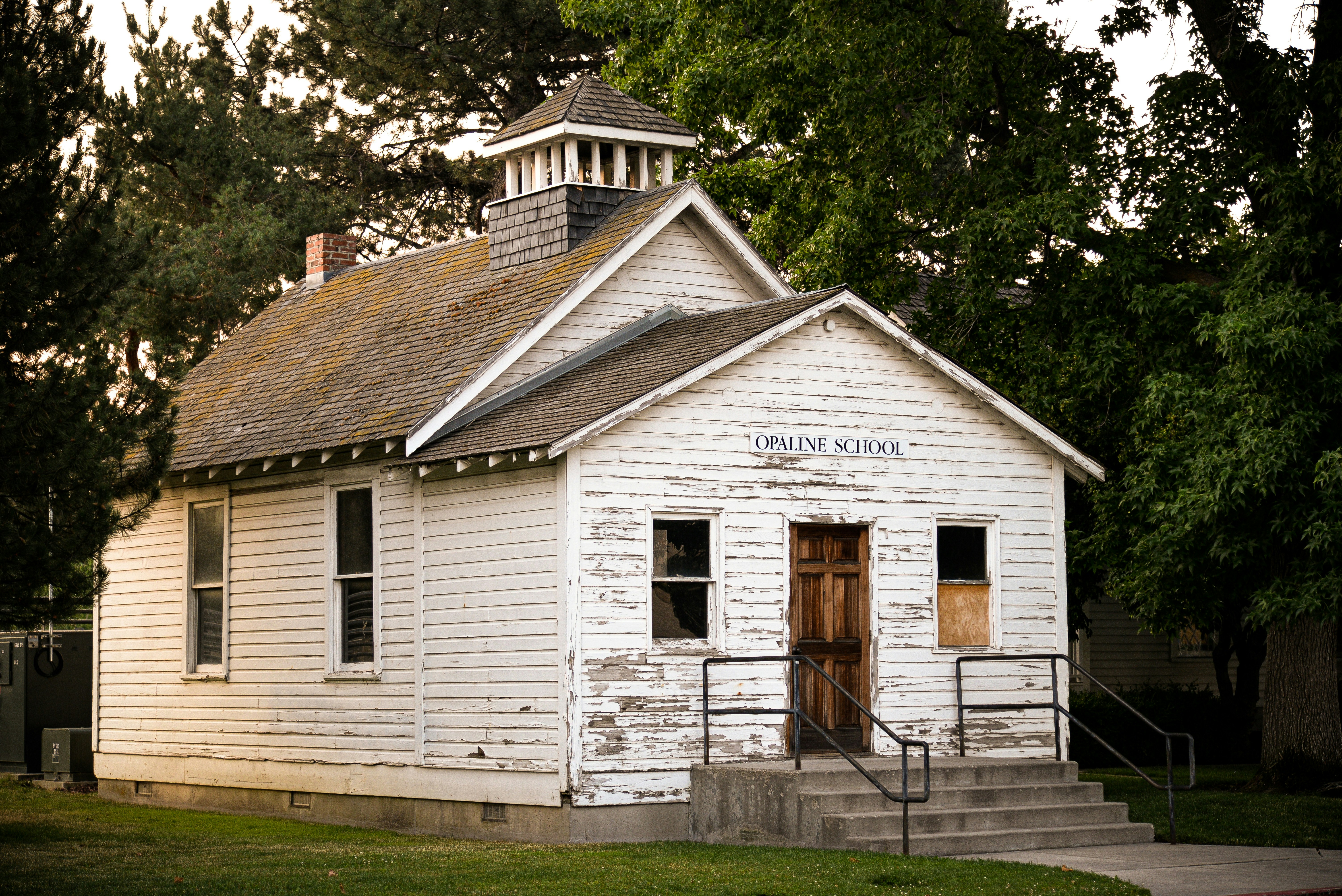
Recently I enjoyed the opportunity to visit another school while classes were in session. I visited various classrooms and was able to observe a slice of the daily life of a school somewhat like my own. This school moved into a new building only a few years ago, and the whole place is modern, efficient, and beautiful. Things appear to run like a well-oiled machine. I watched a friend of mine teach her class of fourteen in a spacious, sunlit room considerably larger than my own little basement room where twenty-two students are stuffed into a space that might be ideal for a dozen or so. You can probably imagine some of the thoughts that were running through my head.
Let me tell you about the place where I teach. During the heat of early fall each year, my first task when I arrive at school is to empty the dehumidifier that has been running overnight. I deal with the daily decision of whether to put up with the heat all day or to wear out my voice by trying to talk over the noise of the air conditioner. One day a few weeks ago when we flipped a breaker (for the umpteenth time) while running the microwave at lunchtime, the students wondered why it keeps flipping. I said, “This is an old building. It wasn’t wired to run a bunch of microwaves and air conditioners.”
“When was this school built?” asked one student incredulously. “1993?”
“Actually, 1952,” I replied.
“Well, I was close,” he said. I suppose 1993 and 1952 are equally ancient to him. I hid my amusement and noted the need to keep teaching math skills.
Old buildings have their quirks, and living creatures find ways to get in. One of the many unexpected skills I have acquired as a teacher is dead aim with a fly swatter. I’ve had a student get stung by a bee in the middle of class (Lesson learned: When there is a bee in the classroom, stop everything until that bee is dead or is chased out the window). And do you want to hear mouse stories? Ok, it may be best if I don’t get started on those.
I write all this because my guess is that most of you who read this blog do not teach in state-of-the-art buildings, nor do you teach under ideal circumstances. As we deal with inconveniences, we can choose complaining and frustration, or we can choose gratitude, creativity, and a sense of humor.
Gratitude lets us focus on what we have, not on what we wish we had. I am immensely grateful for a positive school culture, a strong staff team, and a supportive school community. All these things are much more important than having the perfect classroom with all the latest teaching tools. I would far rather deal with flies and flipped breakers than with bad attitudes or relational issues.
Creativity helps us realize that even the inconveniences can be part of our students’ education. Those ants that literally come up from under the edge of the carpet and start building a home there provide a free science lesson. Being a little uncomfortable from the heat or from the crowded room does not hurt my students in the long run, and it may in fact help them build resilience. Creativity lets me find joy in fixing the broken flushing mechanism in the toilet with a paper clip or in finding that I can make the clock work by stuffing a folded piece of paper beside the battery to make it fit more tightly. We teachers can be masters of creativity when the occasion calls for it, and it is our privilege to revel in this ability.
Keeping a sense of humor is a good way to keep our sanity. After all, sometimes the ridiculous inconveniences make the best stories afterward, and it can be delightful to laugh over them with fellow staff members. I can tell you that experiencing mouse escapades together is a quick way to create some great staff camaraderie.
Plans are underway for our school to construct a new building sometime in the next few years. Though I look forward to things like a larger classroom and central air, I will miss some things about our old school. I hope that we will not take the conveniences for granted. No matter the space in which we find ourselves as teachers, we can choose to make the best of what we have and to teach our students to do the same.
Photo by Khay Edwards on Unsplash

Schedule, Schedule, Schedule...and the Secret Ingredient
This past month our teachers visited two schools, and we have had several visitors at our school lately as well. We have found that much of our questions and discussions during these visits revolve around the school schedule.
How can we keep our students motivated?
How can we intersperse active classes with less active ones so that our students are not sitting for prolonged periods of time?
How can we reduce the amount of homework students have?
The answers to all these questions are usually the same: schedule. If we have a good schedule, all these issues will be taken care of (somewhat effortlessly), provided we plan well, teach well, and stick to the schedule.
Our Schedule
Here is what has worked really well for our school for years.
8:00 – Morning Assembly
8:15 – Bible
8:45 – Math
9:45 – Break
10:05 – English and Spelling
10:50 – Choir (Monday & Wednesday)
11:20 – Reading/Literature
11:40 – Lunch and Recess
12:10 – Creative Writing/Journals
12:20 – Science
1:00 – History/Social Studies
1:50 – Physical Exercise (P.E.)
2:30 – Choir/Music (Tuesday & Thursday)
2:45 – Art
3:15 – Dismissal
Why It Works
There is a set time for everything. We stick to our schedule (pretty much anyway—there is always room for a little flexibility where we need it), and we believe that it is better to do art, P.E., and music every day for twenty to thirty minutes rather than every other day for a longer time. These subjects are more active and enjoyable, which prevents students from getting into the sit-in-your-seat-too-long doldrums. No teacher wants his students to be in the doldrums.
The Secret Ingredient
The secret ingredient is two-fold. The first part is accountability. We grade student papers at morning break and at lunch. If they have their math turned in by morning break (and almost all of them usually do), we can have it graded by the end of break, and they have time to do any fix-ups before lunch.
If they have their language arts and spelling turned in by lunch (and almost all of them do), we can have it graded by lunch, sometimes before, and they can have their fix-ups done before or right after lunch.
In the afternoons, we work on our science and social studies together as a group, discussing, answering, and filling out worksheets together. If we work hard in the morning, most of the more challenging work is done by lunch, and the afternoon is more enjoyable.
The second part of the secret ingredient is what I call the “positive-peer pressure-snowball effect.” The teachers keeping the students accountable causes the students to focus harder and to want to get their work done. It is an amazing thing to see the students begin to try hard to finish their assignments and make good grades.
What is almost more amazing is the influence this has on the other students. They see their peers staying on task and getting their work done with good grades, and they desire to do the same.If the atmosphere is positive and encouraging, nobody wants to be the only one not getting their work done, or the one who has to miss the first ten minutes of a break.
It doesn’t hurt to praise the students a little either. “Good work, everyone. We (team effort– not “you”) all got our work done with good grades. Now, let’s all get our work fixed up so that we all have 100s. Yay!” That, said with a genuine smile, works wonders, too.
A good schedule combined with some accountability and an encouraging environment does amazing things for school morale and students’ attitudes.
Latest Contributions

Recess
The Dock
Study Skills
The Dock
Vision for Christian Education
The Dock
Positive Attitudes Toward Learning
The Dock

Book Recommendations: Books for Teachers
The Dock
Student Relationships
The Dock
Book Recommendations: Read-Alouds
The Dock

Sportsmanship
The Dock
School Leader Podast
Events
Jan
1/5/26
Every winter, Faith Builders offers classes during a five-week term. The courses offered are focused on Bible, theology, Kingdom living, and music.
This five-week term offers courses and schedules to serve a wide variety of students, from young people seeking spiritual growth and practical teaching to seasoned pastors seeking refreshment and encouragement. Students can attend for two, three, or five weeks. Winter Term includes courses to challenge and deepen your faith and equip you to serve your church better, whatever your phase or direction in life.
Applications for Winter Term 2026 will be available late September, 2025.
Nov
11/21/25
This is an event where school board members, school administrators, church leaders, school teachers, and their respective spouses are all welcome and encouraged to attend as a group. It will be held in a gym-style area with mixed seating at round tables to encourage open discussion.
Snack, coffee, and lunch are provided.
It is highly recommended that schools are represented by the different members of their team. Our goal is that your school staff will leave this event a better and more cohesive team than when you came.
Oct
10/10/25
The effectiveness of our schools depends significantly on the vision and experience of our teachers.
At Teachers Conference, teachers take a step back from the day-to-day practices of school and focus on personal, spiritual, and professional development and refreshment. We offer the event to strengthen their vision and long-term commitments to building God honoring, Kingdom-oriented schools. Our annual themes focus on practices and enrichment for long-term teachers*. Teachers Conference features main sessions, breakout sessions, and space for reflection or networking with other teachers.
For many teachers, Teachers Conference falls a few weeks after their school year has begun. This warm and relaxing weekend provides a chance to catch your breath, be refreshed, and gather renewed energy for Christian education in the year ahead.
The keynote addresses for Teachers Conference 2025 will be given by Dan Rutt, administrator and teacher at Terre Hill High School. The talks will focus on the Foundations of Education. Dan will draw on his years of experience to discuss foundational concepts regarding the purpose of education, regarding the individuals who are involved in education, and regarding the process of education.
Oct
10/1/25
Christian Light is pleased to announce the 45th Annual Christian Educators’ Workshop. Please click here for the brochure that details the itinerary, program, and speakers. Pick the location you’d like to attend and register with the local coordinators at least two weeks in advance.
Event Recordings

CASBI 2024

CASBI

Teachers Week 2023

CLE Workshops

Teachers Week 2022 - Audio
CASBI 2010
Teachers Conference 2022
CASBI 2015