All Content


More Reading on a Reasonable Response
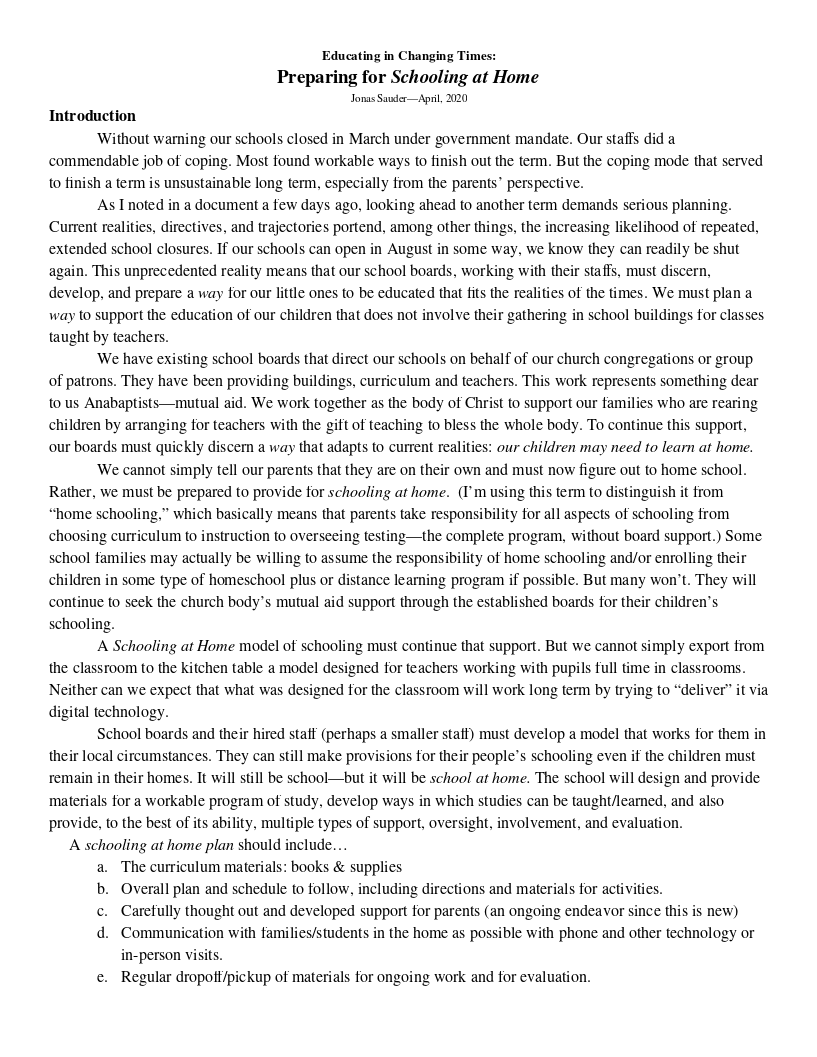
This post suggests guidelines for schools transitioning to homestudy programs.
An computer science teaching organization compiled a list of resources for schools. Although many of the example responses are relevant to larger schools, the infographic at the top of the page suggests technologies for a variety of instructional needs.
Read an infectious disease expert's recommendations for churches.
If you need a video-conferencing and/or remote learning solution, Anabaptist schools have recommended Zoom (videoconferencing), Microsoft Teams (videoconferencing and remote classroom), and Google Classroom (remote learning).
Arlyn Nisly writes
You may want to consider if your teachers are working from home and you have a file server at school. As an alternative to Dropbox, Google Drive, etc., you could have them connect via ZeroTier, a virtual network app that essentially puts your computer on the same network as any computer on your school's network, regardless of where you are, with almost no configuration. So far, we haven't had to change any firewall/router settings, which means the school's network isn't open to the world. All you do is install the utility on each computer or virtual machine, join it to the 'network,' and on the 'Networks' page on my.zerotier.com, allow that computer to join the network.
If you have questions about implementation, message Arlyn.
Poll: How is your school responding to the coronavirus?
 Image by Diese lizenzfreien Fotos darfst du zwar verwenden from Pixabay
Several states are asking schools to close in an effort to slow the spread of COVID-19. How are you responding?


Department Supervisor Opportunity
Are you an experienced teacher looking for a different role in education? Do you enjoy working with and leading others? Come to Christian Light and help support schools and homeschools educate their students with excellence. The homeschool department supervisor leads the team of academic counselors, administers Christian Light’s accredited record keeping service, and relates daily to Christian Light customers. If administration and relationships are your gifts, this is an opportunity for you to help spread the use of Christian curriculum and support many teachers in schools and homeschools around the world. Give us a call to find out if you are a good fit for this role.

Remember to STAR: Honing Communication Skills in Reading Class
As teachers, we want our students to engage well and participate in discussions in our classroom. We want them to focus and pay attention, but I find that ultimately we want them to be able to communicate well. To communicate with the teacher, of course, and then the other classmates and to think about life beyond that, and communication skills.
What I find is that in our classrooms, our typical setup of rows is not very conducive to fostering good communication skills. What tends to happen, I find, is that our discussions can end up being between a specific student and myself, the teacher. The other students participate if it sounds interesting to them, or if they really would like to get the work done. Then they try to slip in a few answers or—It’s not—They don't feel accountability to participating in the discussion that's happening.
Something that I did this past year in my classroom was I would have a poster on the wall that would look something like this. I would remind them to STAR. STAR is an acronym for “Sit up,” “Track the speaker,” “Ask and answer questions,” and “Respect those around you.” I read about the technique in Doug Lemov's book Teach Like a Champion.
When we had reading class, I would ask my students to bring their books and we would sit in a circle. We would do our reading. Students could see each other. We would pause in our reading. We would be discussing something, then everyone is supposed to look at the person that's speaking. That's what we call tracking the speaker, looking at them and showing them that what they're saying is worthwhile listening to. That's part of being respectful to someone who's talking.
Then asking and answering questions, of course, is just participating in the discussion that's happening. In our classroom sometimes we get interesting remarks from students or things that others might think are a little bit off the wall. Respecting just involves listening to them, maybe even if you disagree with them. It doesn't mean you can't voice your opinion otherwise, but you listen.
Something that we can work on is when students have things to say, they're sitting there with their hand up. It's all about my hand and what I want to say. We're not really listening to the people that are talking. Just put your hands down until they're finished talking. Then we'll take the next one.
Last year, when I used the STAR technique in my classroom, I had 18 students. Depending on what your classroom setup is like, it's harder to form a circle. My students could move their chairs. We would just sit around the desks that were there, but we would just form a circle. Of course, the sitting up and asking and answering questions and respecting, those are all—You can do that when they are in rows. Tracking is a little harder, especially if you're the person in the front row. There are gestures you can use, such as even turning your head slightly, pausing in your work or whatever you're doing.
In my fifth and sixth-grade reading class, we were doing a trade book Door in the Wall. We read the book together. When I introduced the book, then I showed them how we'll sit in a circle. I talked about how STAR is going to be part of their participation grade. I just stepped through these and talked about the importance of them and why we do this.
We would get to reading class and someone's slouching or reading ahead when they should be tracking the speaker. I would then just say, "Remember to STAR." So, it brings them back to, "Oh, yes, this is what I need to do." Having the chart on the wall is a very easy way for them to, "Oh, yes, this is what I'm doing. This is what STAR means." A checklist for them to see, "Am I participating well in this discussion?"
It didn't revolutionize my classroom or my discussions, I would say, except that just the factor of sitting in a circle where we can see each other—I don't know, it does something to the environment. We're reading the story together. It becomes—We're experiencing it together in a different way than if we're sitting in our typical rows.
We're part of a community. Life is about more than just what I'm doing right now and reading my book and communicating what I want to communicate, but to be able to think about communicating with the people around me, not only communicate, but also to listen to other people, which is all part of working well in community.
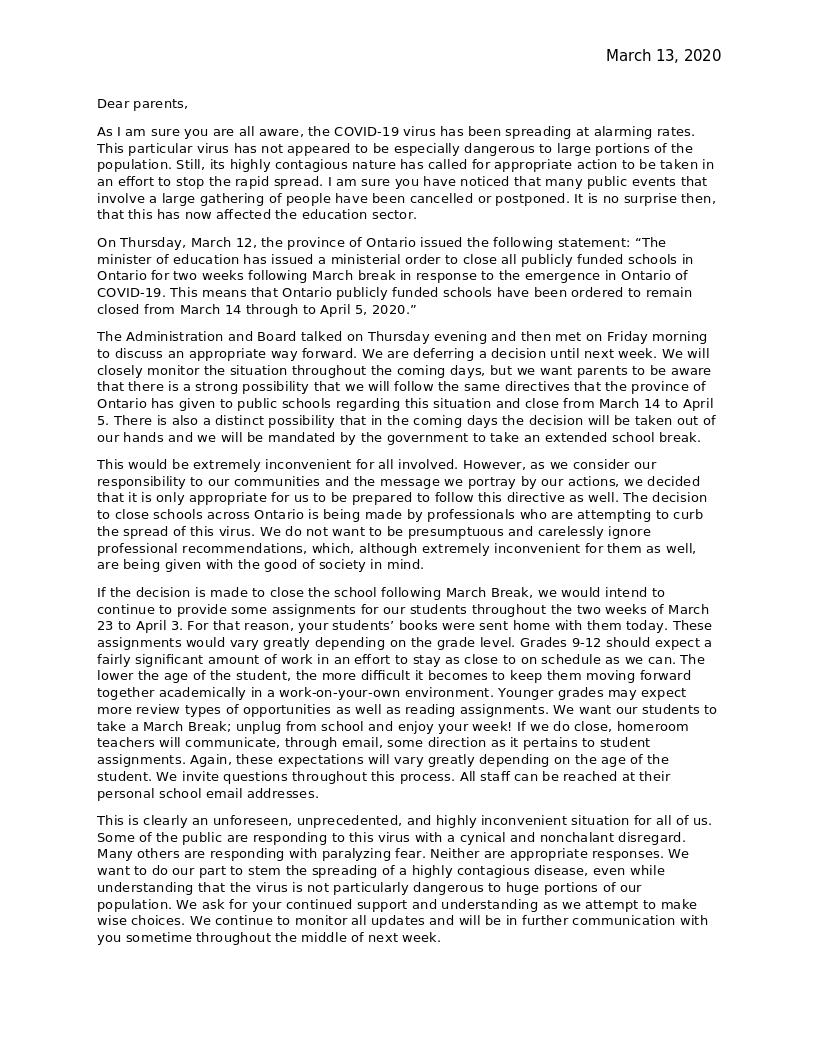
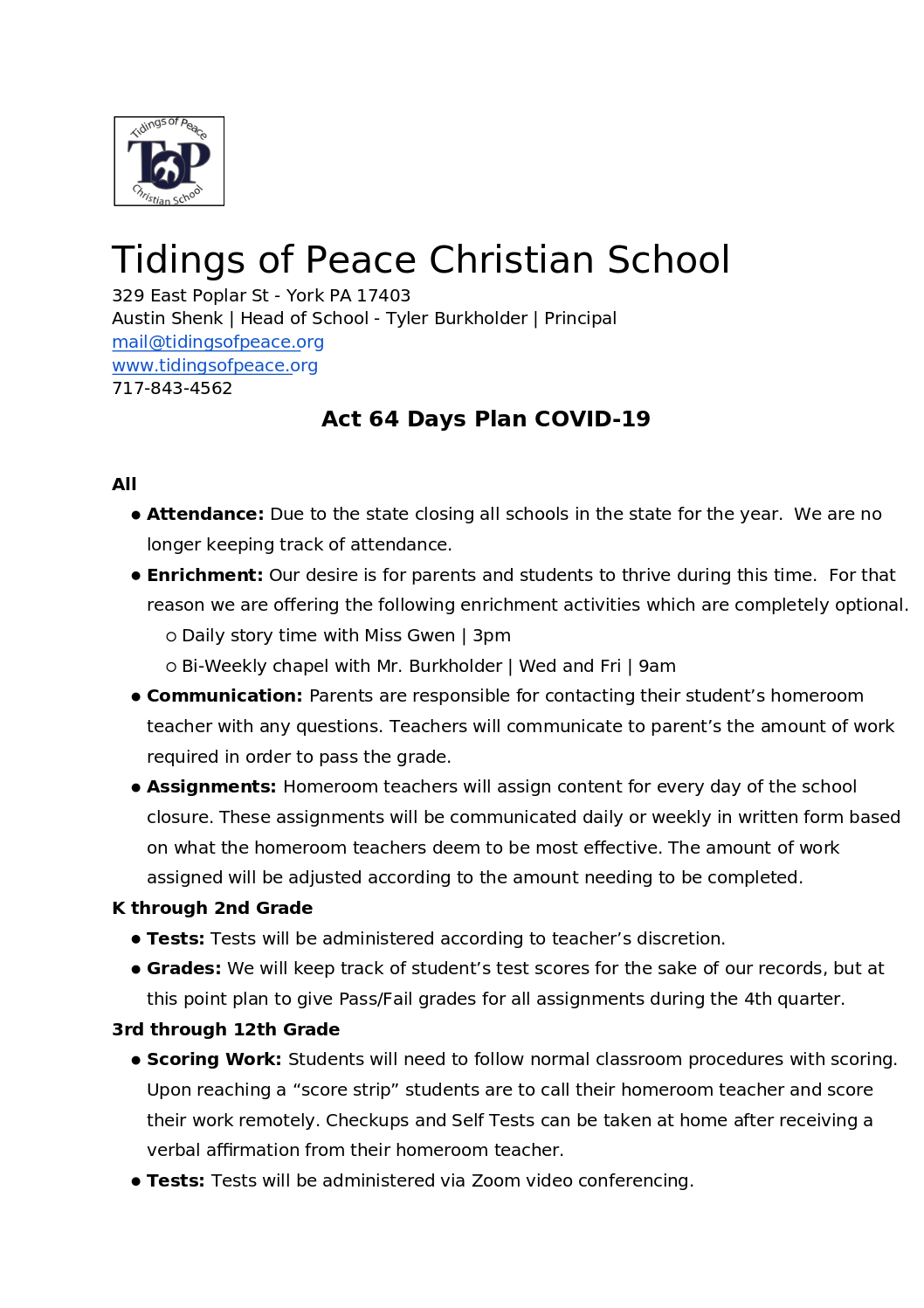
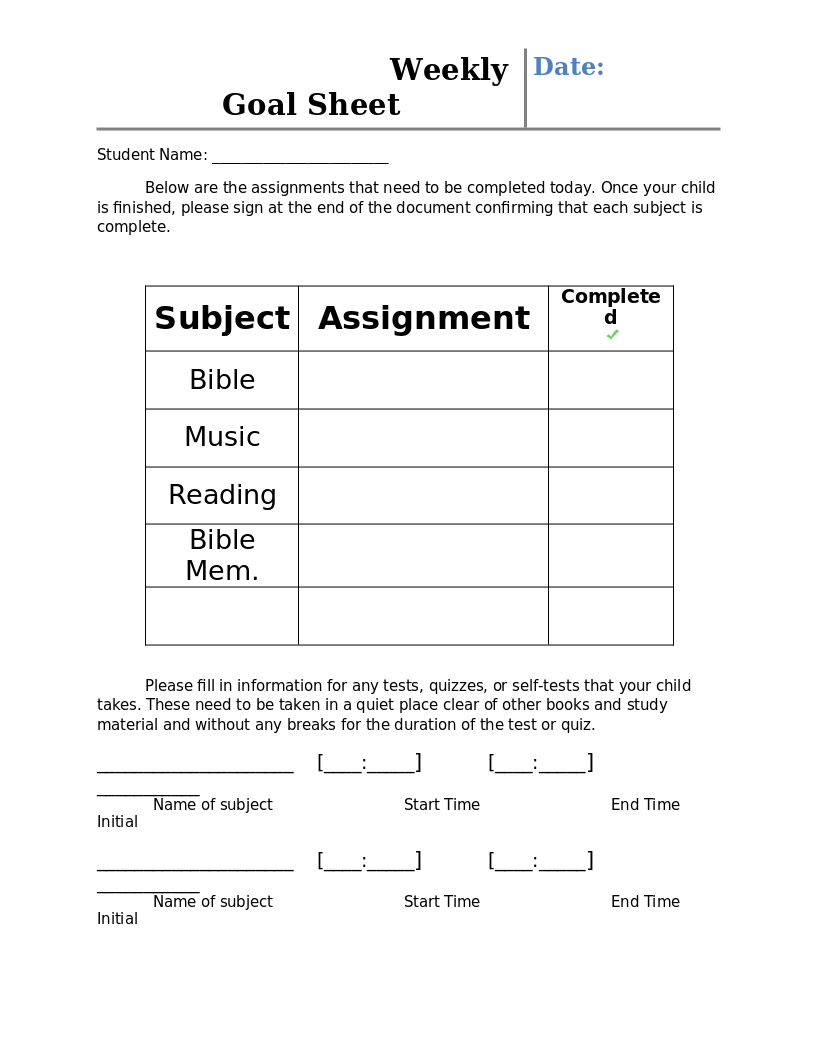
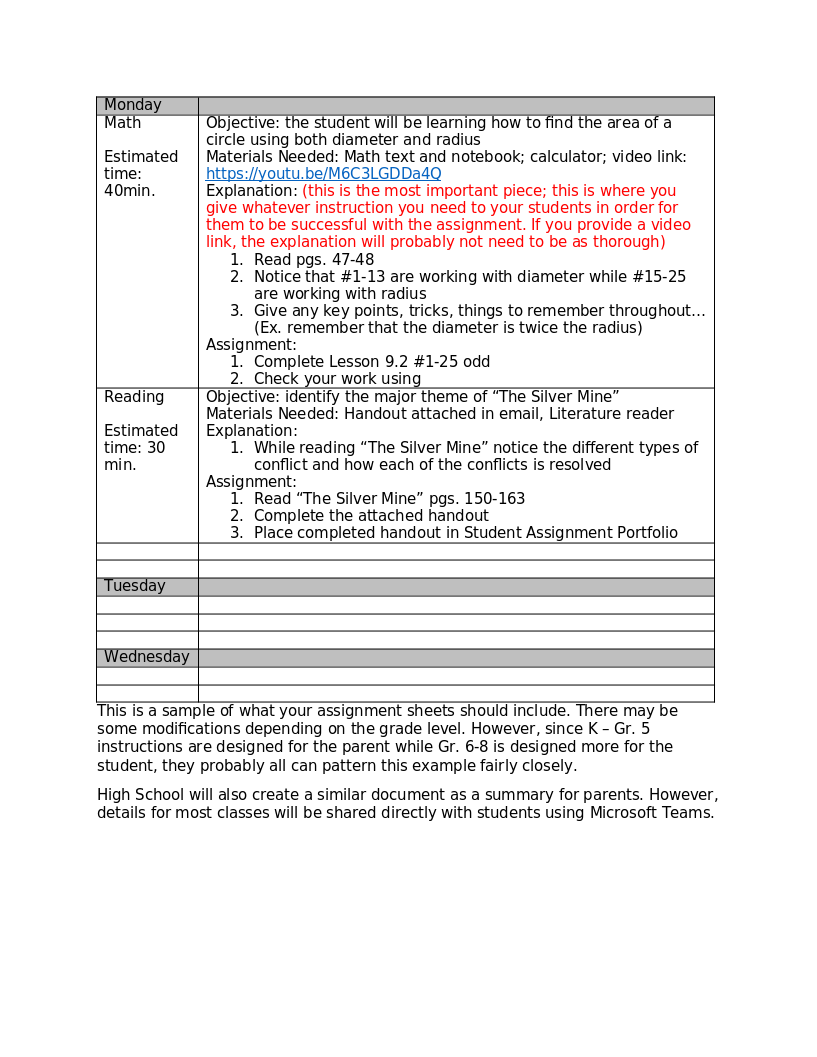
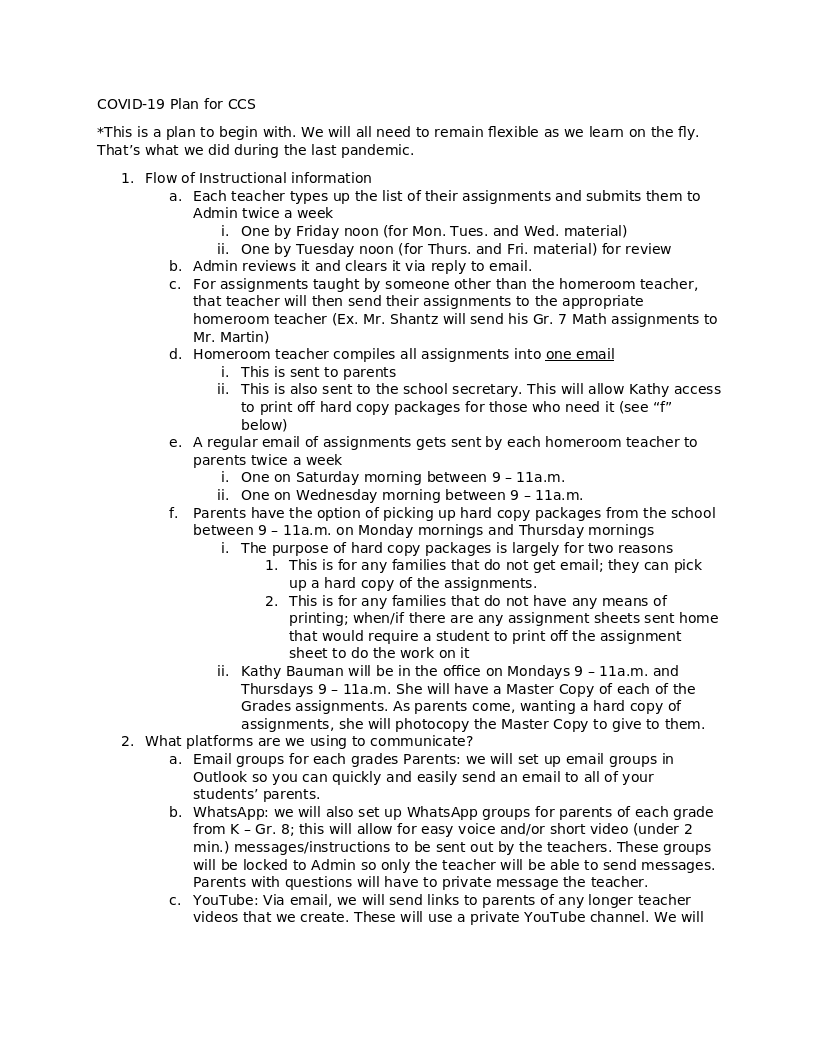
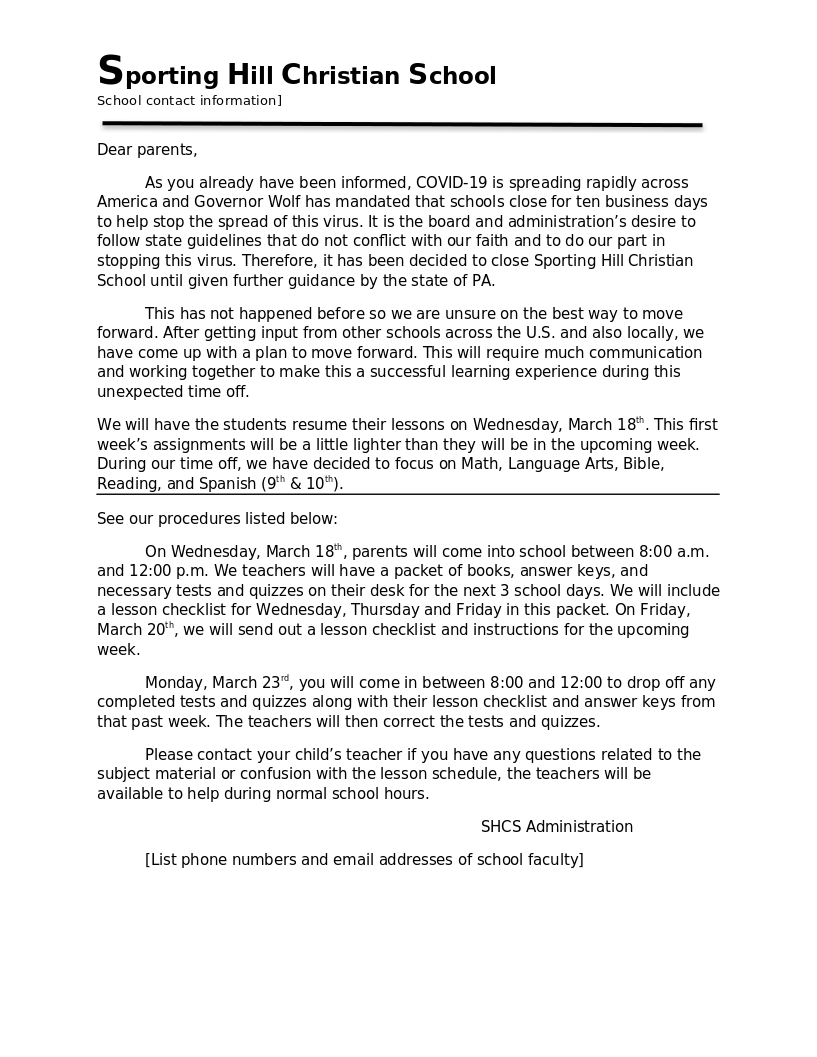
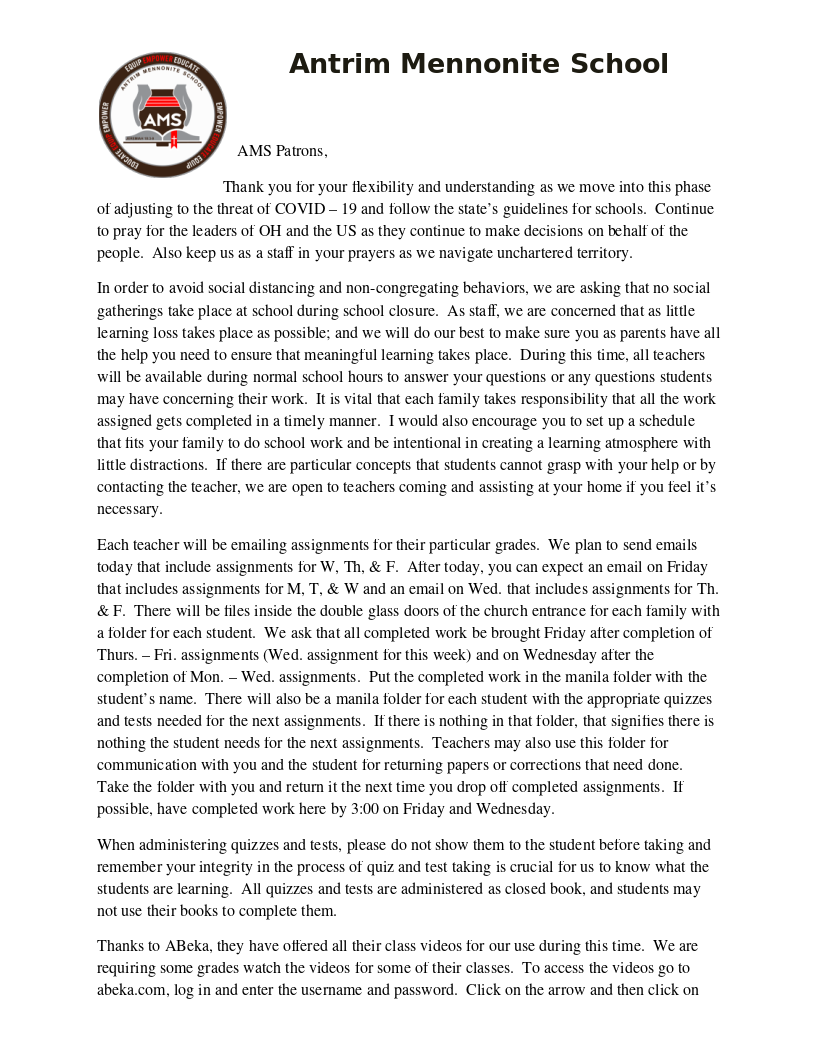
A School-from-Home Plan (PA)
Tidings of Peace Christian School drew up this plan in case it becomes illegal or inadvisable to have students attend classes due to a disease outbreak.
Act 64 DayMy understanding is that Act 64 is the part that applies to us as non-public schools. We created a plan for our students. This is helpful for other schools using the ACE curriculum. For our K-2 which is elementary we plan to send home some textbooks, but also looking into A Beka's videos.
This is what allows us to send home assignments and count them as instructional time. As long as there is a verifiable way of confirming:
- Attendance (at home)
- Completion
The document above was updated April 14. Download the original version (March 13).

Perpetua: A Compelling Story for Devotions, History, or Literature Class
 With this post, Lucinda begins a series of stories of Christian martyrs and heroes from the past. We hope you will be inspired by these histories and perhaps find them helpful in preparing for school devotions.Year: 203 ADPlace: Carthage, North AfricaPerson: Perpetua, a twenty-two-year-old mother and recent catechumen (Christian convert going through a period of instruction before baptism)Event: Conversion, imprisonment, and death
Perpetua, a Roman noblewoman and mother of a small baby, came to faith in Christ during a time when it was illegal to convert to Christianity. She was arrested, along with four other catechumens. Two were slaves: one of the slaves was a pregnant woman named Felicitas. Later, their mentor Saturus voluntarily joined the group to give his life along with theirs.
Perpetua came from a wealthy family and had received many privileges growing up, including an education that taught her to read and write. In prison, she wrote down her experiences and several visions that God gave her. Just before her death, she gave the journal to a fellow Christion. Her story was edited by Tertullian of Carthage, who added a preface and an account of her martyrdom, and the work was preserved for posterity. It has convicted and inspired many thousands of Christians since. Perpetua is notable both as an early Christian writer and one of the earliest who was a woman.
I Am a Christian
Soon after her arrest, Perpetua’s father tried to persuade her to give up her faith. “Father,” she said to him, “do you see, let us say, this vessel lying here to be a little pitcher, or something else?”
“I see it to be so ,” he said.
“Can it be called by any other name than what it is?” she asked.
“No.”
“Neither can I call myself anything else than what I am: a Christian.”
Two Mothers and their Faith
Perpetua was separated from her baby boy when she went to jail, and as any mother would, suffered great anxiety. During a visit with her family, she tells of nursing the baby, who was faint from hunger. Eventually, she was allowed to keep the baby with her in prison and then, she says, her health returned and the dungeon became a palace.
One day, while the prisoners were eating breakfast, they were unexpectedly hurried away to the forum, where court trials were held. A crowd gathered to watch as each prisoner in turn admitted their guilt of having converted to Christianity. Just before Perpetua’s turn, her father came to her, holding her baby. “Have pity on your baby,” he pleaded with her.
Hilarianus the governor took up the father’s plea. “Have pity on your father's grey head; have pity on your infant son. Offer the sacrifice for the welfare of the emperors,” he commanded.
“I will not.”
“Are you a Christian?” asked Hilarianus.
“Yes, I am.”
When Perpetua’s father continued to plead with her, Hilarianus commanded him to be thrown to the ground and beaten with a rod: a pity-inducing specimen of age and grief. Hilarianus then sentenced the imprisoned Christians to death by wild beasts in the arena, and they returned, joyful, to their dungeon. Perpetua sent for her baby, but her father refused to give him back. However, Perpetua tells us, God willed that the child no longer needed to be nursed and that her breasts did not suffer any inflammation. Thus, she was spared both worry for her baby and pain in her breasts.
As the day of their sentence grew nearer, the slave Felicitas, eight months pregnant, grew more and more distressed. Since it was illegal for a woman with child to be executed, she feared that her martyrdom would be postponed and—rather than facing death with her fellow Christians—she would have to face it later with strangers and criminals. Two days before their sentence, the imprisoned Christians as a body cried out to the Lord in “one torrent of common grief.” Soon afterward, Felicitas went into labor.
Because of her early delivery, the labor proved to be difficult. “You suffer so much now,” one of the prison guards said to her. “What will you do when you are tossed to the beasts? Little did you think of them when you refused to sacrifice!”
“What I am suffering now,” Felicitas replied, “I suffer by myself. But then another will be inside me who will suffer for me, just as I shall be suffering for him.”
She gave birth to a girl who was raised by a fellow Christian woman as her own daughter.
A Courageous Death
On the “day of their victory,” the prisoners were marched to the amphitheater “joyfully as though they were going to heaven, with calm faces, trembling, if at all, with joy rather than fear.” When they were to be forced to wear robes honoring the Roman gods Saturn and Ceres, Perpetua bravely spoke out. “We came to this of our own free will, that our freedom should not be violated,” she said. We agreed to pledge our lives provided that we would do no such thing. You agreed with us to do this.” Even the military tribune recognized the justice of this, and soldiers marched them to the arena as they were.
Perpetua and Felicitas were sent out together to be mauled by a savage heifer: an animal deliberately chosen to match their gender. The heifer tossed Perpetua, throwing her to her back and ripping her tunic. She sat up, hastily pulling the torn tunic around herself—more concerned for her modesty than her pain—and asked for a pin to fasten her dishevelled hair. It would not do to go to her death with untidy hair, as though she were mourning instead of triumphant. Perpetua then stood and, seeing Felicitas crushed on the ground, went over to her and helped her up. Together they stood.
The mob’s thirst for violence now satisfied, they were called back through the “Gate of Life” to safety. The mob then demanded to see the final death of the martyrs—all of them having been maimed but not killed by the wild beasts. Perpetua, Felicitas, and their companions took themselves of their own accord to the place the mob desired, where “they sealed their martyrdom with the ritual kiss of peace.” One by one, soldiers ended their lives with a sword. When Perpetua’s turn came, the nervous young soldier struck wrong, causing her to scream as the sword struck bone. While his hand still trembled, she took it in hers and guided it to her own throat. Thus, she died.
Further Resources
I have included only some of Perpetua’s story in this retelling. The story as she and her editor wrote it is not lengthy but includes more details, including the visions that she and another prisoner were given and a description of her fellow martyrs’ deaths. While the story is available in several English translations easily found through an online search, my favorite is an updated, easy-to-read translation published by Paul Pavao (originally translated by Dr. Peter Holmes in 1868). Pavao’s side notes and pictures add background and aid in understanding:
In addition, you can find an abridged and easy-to-follow translation done by Herbert Musurillo, published in The Acts of the Christian Martyrs and online. This one that could work well for reading aloud.
Voice of the Martyrs tells Perpetua’s story in Torchlighters, a video series for children highlighting heroes of the faith. You can stream the thirty-minute drama for a small fee, or buy the DVD. It includes not only Perpetua’s story, but a leader’s guide and student handouts and a 61- minute documentary with early church experts, filmed in Tunisia where her story took place.
Why It Matters to a Teacher
Perpetua’s compelling story could be used in the classroom in multiple ways. Here are a few suggestions:
In a devotional: The story of her conversation with her dad (told under the heading “I Am a Christian”) could work well as an object lesson using a vase or pitcher. Her simple, profound statement of faith is appropriate for a young person of any age. Her complete story could be told to young children, or read to older ones, as an example to inspire their own devotion.In history class: A study of Perpetua would complement a study of Roman history or of the early Christian church. For older students who are learning about primary and secondary sources, her story would be an excellent choice as a short but complete primary source.In literature class: Persecuted Christians inspire our Christian faith, but we seldom delve deep enough to discuss the motivations and thought patterns of the persecutors. Literature class would be a good time to do so. We might wonder:- How could one person so dehumanize another as to make a game out of their death?
- Have similar things happened at any other times in history and to any people groups other than Christians?
- What prejudices, preconceptions, and learned patterns of thinking might influence this way of acting?
- Are people who persecute completely evil, or only misinformed?
- Do we detect any persecuting tendencies in our own selves or cultures?
A great story to complement this discussion is “Marriage Is a Private Affair” by Chinua Achebe.
Perpetua. The Passion of the Holy Martyrs Perpetua and Felicity. Edited by Tertullian. The Robert-Donaldson translation. Early Christian Writings. https://www.earlychristianwritings.com/text/tertullian24.html Accessed 2/28/2020 ibid ibid ibid ibid ibidUrban Mennonite Ministries
Is God calling you to serve in mission school in an urban setting? Urban Mennonite Ministries is looking for people from the Mennonite faith to staff their school.We are looking for an elementary teacher for grades 6-7. This is in Baltimore.See our staff needs page for more information.