
All Content
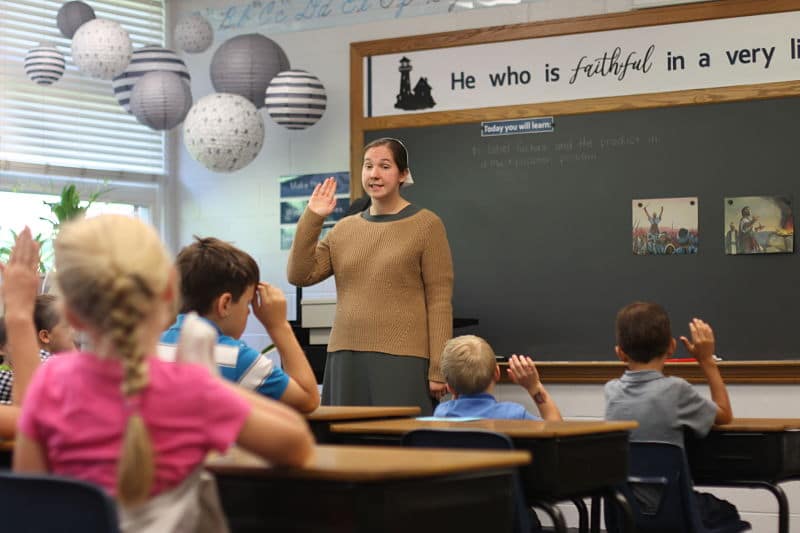
Tools for Classroom Management
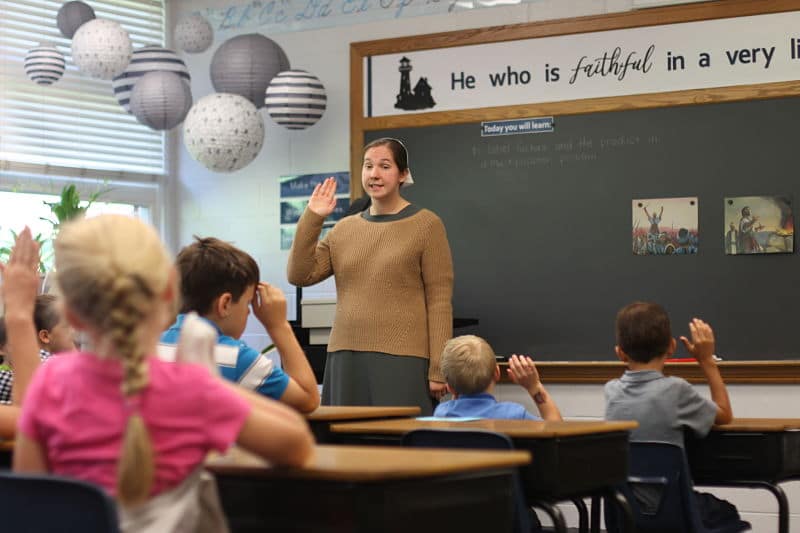 FBCS, Sept. 2019
Motivation
My sixth-grade teacher pulled me into the hall for a conversation. “I know you can do better than this. These pages are sloppy and this is not your best work,” she said.
The workbook pages she was referring to were not neat. I had filled them drawings, swirling figures, and doodles. The writing was not done carefully and the o’s and a’s had been colored in. I had been bored in class, as the reading lessons came easily to me, so I entertained myself with this designing. My teacher’s comments motivated me to do better and to take more pride in my work. She had noticed my poor work and cared enough to challenge me to do better.
Teachers must value motivation in classroom management, as it is important to students' academic success. The teacher needs to be aware of motivation levels in students and make changes in instruction or the classroom as needed (Selig, 2010).
Teachers should present tasks in a way that builds enthusiasm by saying how the task will be useful, giving a vision of what the students will be able to do, relating it to skills they already know, and generating enthusiasm, especially for challenges (Sprick, 2006). High expectations and effective instruction let students see that they can be successful if they apply themselves (Sprick, 2006), which leads to motivation and positive behavior. The teacher needs to use engaging and meaningful learning activities to build motivation and higher-level thinking skills (Jones, 2011).
Professional Development Activities
- Discuss your students’ engagement and list strategies to capture their attention. Plan to use one of the strategies this week.
- How are high expectations for students beneficial? How can you develop and maintain high expectations for your students?
Feedback
Feedback is important in behavior management. Teachers should monitor their feedback to ensure they are not always negative or critical of children with behavior challenges. The child should not be receiving the teacher’s attention and help only when he is off-task or breaking a rule. Studies have found that children with challenging behaviors received four times as many negative interactions with teachers as they did positive interactions (Cicantelli, 2011).
Feedback should inform students of what they are doing that is appropriate and helpful in learning or relationships. Teachers must support appropriate behavior rather than reacting to inappropriate behavior. Students may need explicit instruction in positive behavior and guidance in how to meet their own needs without jeopardizing the needs of others. Giving concrete and specific feedback to students will help, as teachers may show a child when he behaved inappropriately, explain what he should have done, and help him speak or act appropriately.
I told a student, “You need to behave!” and then realized this student was still learning English and did not know what “behave” meant. I realize now that telling any student to behave is not good feedback. I must make sure students know what action I am talking about. They may need my specific directions and guidance. I can model the behavior I want to see and we can practice the appropriate actions together.
Students need challenges, but they may become discouraged if they always face only challenges and continue to make mistakes. The teacher must give clear instruction and opportunities to practice. He may need to give more instruction and adjust lesson plans. Discouraged students may misbehave if they are not engaged. Students need prompt feedback so they know what they are doing correctly or what they are missing and can learn from their mistakes (Sprick, 2006). Feedback should be given in a variety of ways, and should be accurate, descriptive, and age-appropriate (Sprick, 2006).
As I remember the feedback of my sixth-grade teacher, I can gain lessons for myself as a teacher as I give feedback and motivation. One lesson is to be aware: notice student work, think about their motivation, and realize that the child can do better. It is important to remember to give admonition or correction privately, not in front of other students. Give correction in a helpful manner and acknowledge the capacity of the learner. Also, prepare challenges for bored students.
Professional Development Activities
- Determine a method for tracking the feedback you give. Perhaps you will make a checklist, jot notes, keep track on a shared Google document, or use sticky notes.
- Implement your method of recording feedback, then analyze the types of feedback and plan how you can use feedback to encourage and instruct the students.
References
Cicantelli, L. & Vakil, S. (2011). Case study of the identification, assessment and early
intervention of executive function deficits. International Journal of Early Childhood
Special Education (3)1. Retrieved fromhttps://www.int-jecse.net/files/MOZ80VRTAOGOO34J.pdfJones, V. (2011). Understanding effective classroom management, chapter 1. Upper Saddle
River: Pearson. Retrieved from https://ptgmedia.pearsoncmg.com/images/9780137082117/
downloads/Jones-ch01.pdfSelig, G., Arroyo, A., Jordan, H., Baggaley, K., & Hunter, E. (2010). Loving our differences for
teachers. Boston: Pearson Learning SolutionsSprick, R. (2006). Discipline in the secondary classroom. San Francisco: Jossey-Bass.

Technology Detox
 Stock image from Unsplash
As a foster parent, I regularly come into contact with children who have been raised with technology as their wet nurse. They may have been born on a screen, for all I know—certainly under the sight and sound of one. When they were tired, or bored, or hungry, or restless, or wakeful, or alone, they found comfort and excitement in the constant novelty of a flickering television or PlayStation.
They could say PS4 before they knew who Jesus was, and discuss the intricacies of Fortnite and Call of Duty before their moral formation knew what to say about it.
I will not propose for a moment that technology toxicity is to blame for who they are, and who they became, for the gaps in their minds and hearts. By the time they land in my home, most of them have had enough trauma, isolation, unmet needs, and heartbreak to work measureless damage on its own. But I will add that technology didn’t help.
Toxicity is not a word I use lightly. Current science shows that early screen time in frequent doses damages a child’s development. In baby and toddlerhood, his eyes and heart and brain crave human interaction and responsive connection. Sedentary screen time at this age is detrimental, across the board.
Are you enjoying my categorical statements? Here’s another:
The content my children have seen should not be enjoyed by any human, much less a preschooler. When I look up the titles they cite, I have no words. Who thought unleashing this on innocents was anything less than criminal?
They are hollow-eyed and restless, unable to focus on anything for long. What are books? Books are boring. Their hands are soft little flabbypads, noticeably weaker and less coordinated than those of children half their age—unable to open a jar of peanut butter or press an eraser effectively to a page, much less perform the intricate muscle movements required to write their name, use a scissors, or build a craft. I am not making this up. I’ve watched it.
What do they do, little urban citizens of virtual worlds, when they arrive in a home where the only screen time for preschoolers is an hour video with the family on Saturday night? How do they live?
Here are some of the strategies we use for detoxing.
1. We communicate.
Children raised on excessive technology have not learned the most basic rules for talking and listening to other humans. To answer a question. To respond physically when their name is spoken (turning a head, calling a reply). To stop rattling after a while, and let another speak. Especially, to look into the eyes.
We are big talkers and listeners in this family; it’s our best strength.
So without thinking about it, we step closer when they call. We get down on our knees and we look into their eyes and we listen. We say each other’s names dozens of times a day. We sit in a circle and eat our dinner facing each other, and we chat. We request verbal responses to verbal instructions. When we are not sure what a child is telling us, we stop and wait and ask questions and put on our detective hats and sometimes call in another family member for help, until the Ah-ha! moment breaks. The child looks into our eyes and smiles a little, startled by the satisfaction of difficult communication resolved. You heard me.
Within days, we see a change in a child’s ability to communicate meaningfully. Eye contact improves. Automatic responses pop out. Enunciation sloppiness cleans up because someone is listening, and it matters that he understands me.
2. We listen to the monologues, then change the subject.
We don’t forbid discussions of video games, and what level my cousin was on, and the superninja demigod who just about got us at the intersection blah blah blah. We listen peacefully while we drive to a family visit or church or the grocery store, and then we say, “Oh look! A robin!”
We don’t force engagement in the here and now—the real. We just make it as tantalizing as we can.
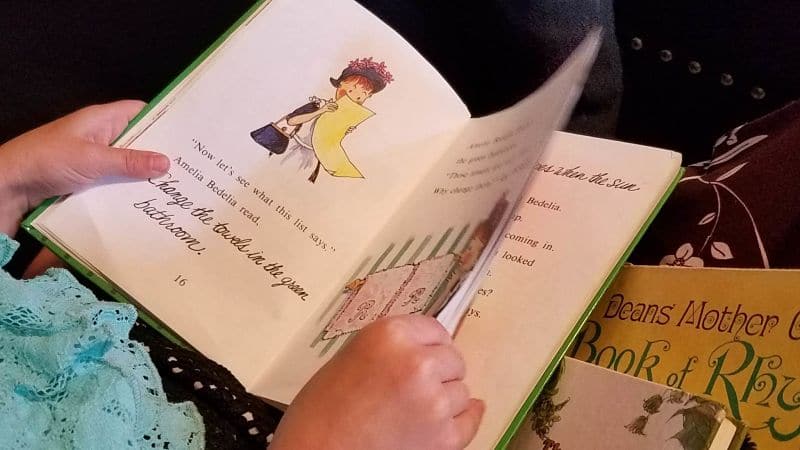
3. We invite engagement with books.
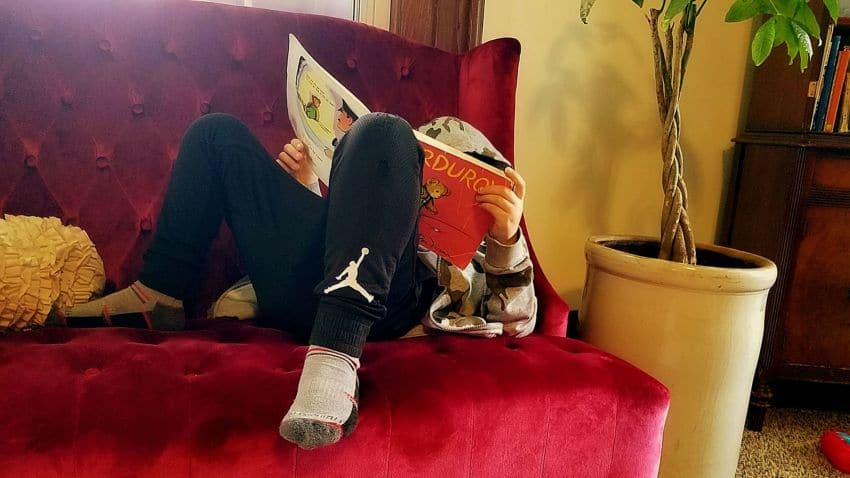
Again, we do not require involvement. But books are always lying around our house. At any moment, someone is usually sprawled on the couch, lost in the pages. Dad or Mom sits down for story time, and invites each kiddo to bring two books.
For techie children, it usually takes a few days. Maybe weeks. Books don’t move and flicker and change and glow. But we’ve never met a child yet who didn’t come around—who didn’t find that + + + + + equals quiet peace and great pleasure.
Then one day, they are too silent, and we go flying to check on them, and find—miracle of miracles—they are lost in a book of their own.
4. We wear clothing free of advertisements and digital characters, with few exceptions.
Don’t underestimate it. We quietly tuck away the Hulk shirts and Loot Llama hoodies and Spiderman shoes. We choose the stripes and the polka dots and the pretty colors. We are no longer identifying ourselves with that set, and certainly not performing free advertising for them.
My husband made this choice early in parenting, for our own family’s sake, and we do not regret it.
5. We play and play and play and play and play and play and play and play. Outside.
“I made a snow angel once,” my newly-arrived foster child says, in his soft squeaky voice, “and I almost froze to my death from cold.” The woods are scary, because “that time when I lived in the trailer there were mean kids hiding there, and we ran away and got scratched by the thorns.”
Perceptions can change.
When shared with siblings who know the magic (how to light a fire and build a fort and push the swing and bounce us really high and pull the wagon), the outdoors is a place of endless delight, discovery, and imagination. Not so much alone. Because while you would think that living in fantasy worlds enables imagination, it actually kills it. All the imagining was done for my foster children. They didn’t have to ask questions. They didn’t have to invent or create or fill in the details. They were splashed and bombarded and choked by endless stimulation.
The school questions that drive my son to tears are not, “What is four plus six?” but, “If you had a clean-up machine like The Cat in the Hat, what could it do?” Or “What do you think will happen next in our story?” How am I supposed to know?
Play is education. And nature is incredibly therapeutic. It’s dynamic and wholesome and earthy and huge and robust. There are chickens in it, and darling new kittens. There are pinecones to turn into people, and daffodils to pick for Mom. (Sorry they came out of the flowerbeds, but LOOK AT THESE FLOWERS RIGHT HERE IN MY OWN HAND!) My children come inside rosy-cheeked and filthy, full of stories.6. We have fun as a family – as real live people.
We invite our new kiddos into the joy of family togetherness.
- Going out for ice cream.
- Cooking supper on sticks in the backyard.
- Planting the garden.
- Baking cookies with Mom.
- Cleaning the house, three M&M’s per job completed.
- Taking a long walk to the park.
- Sharing “Family Time” just before bed, sitting around the couches singing and talking about our day.
- Best of all, what my kids call “Wrestling/Tickling Matches” on the living room floor with Daddy. Nothing else brings so much joy, and our foster kids, who hang on the fringes and watch and declare they don’t like being tickled… and then edge in a little closer… are soon shrieking and tackling with the rest. (I personally will have none of it. But my husband is a boss.)
Maybe this doesn’t feel like detoxing from technology. But the joy of the one doesn’t compare to the other. There are people! Who like me! And we get up and do stuff!
7. We provide tactile toys.
Building and manipulating objects happens with the hands, not the controller. We offer a big bin of Lego, and a huge car blanket with roads and houses, and Matchbox cars to drive on it. We keep a large stash of crayons, and child-friendly scissors. We love Play-Doh. It strengthens the hands and pleases the fingers and engages the mind. We do a lot of giant floor puzzles. Magnetic tiles to build into cars and structures. Bubbles to blow. Sidewalk chalk for writing it big. Watercolor paints. Mr. Potato Head pieces to assemble. A toy kitchen with lots of pots and pans.
8. We remain what we are, and the majority wins.
The lovely thing about adding one or even two people to a home is that they can add their glorious personhood and diversity and interest and flavor and uniqueness and joy to our family, without us being overcome by it. We add it in. And gently, we dismiss what we cannot permit. But our family, our core unit of constancy and change, remains the same. New children are the raindrops. We are the river, always receptive but not easily diverted into fresh streambeds.
If our new big brother isn’t into Xbox games, and we never play them anymore, our interest kind of peters out. Maybe it revives when we meet birth grandma at the visit; we may talk as animatedly as ever about the fifth level and our dangerous escapes, but with the Zooks we begin to merge into new paths.
Kids adapt. They are not as resilient as we’ve always been told, but I’ll hand it to them – they are highly adaptable. Detoxing can happen. Harmful effects can be mitigated.
And guess what? Our big brother has a really cool whistle made out of an acorn cap.
Sources and Further Reading
- Screen-Free Parenting – Have You Spoiled Your Child Today? Meet S.P.O.I.L.
- BBC – No Sedentary Screen Time for Babies
- American Academy of Pediatrics – Children and Media Tips
- Kids Health – Screen Time Guidelines for Babies and Toddlers

Optical Isomers: Chemistry's Right Hand and Left
An understanding of optical isomers helps us to better appreciate the amazing work of the Creator. This article is designed for high school chemistry students who have a basic knowledge of elementary organic chemistry. The endnotes provide extra information for those who want to enrich their understanding of optical isomers.

My Vision for My Students
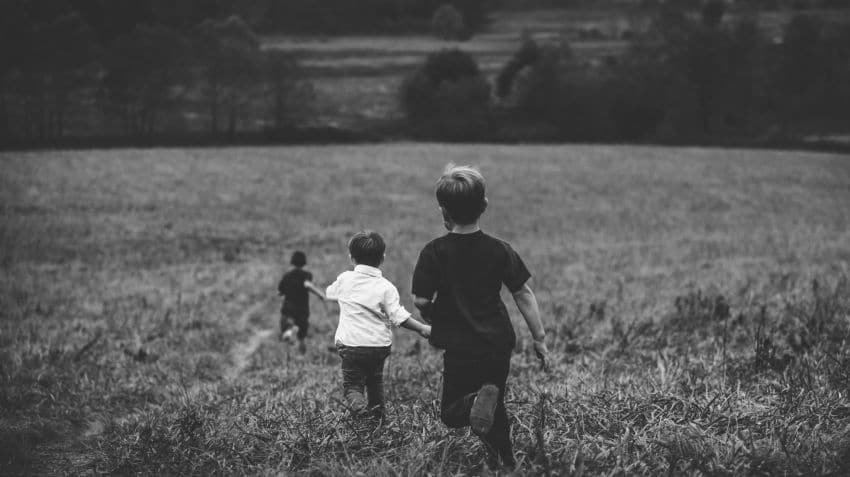 Image by Jordan Whitt on UnsplashSamuel shares a plethora ideas for emotionally and intellectually healthy activities for upper elementary students.
Now that school is over for the year and summer lies ahead, my students have tremendous opportunities before them. What will they do with themselves this summer? Getting more sleep, sleeping in, playing outside, baking cookies, helping Dad with some projects, getting together with friends—these are all things they might be anticipating.
One time Pooh and his friends went on an expedition to look for the North Pole. None of them, of course, knew what the North Pole actually was. They ended up finding something that they thought was the North Pole, but it actually was not. Often when we look to what lies ahead, we have only a vague impression of what we hope to find. Summer can feel like an endless possibility, but we don’t have a clear idea of what we hope to do with our summer. Heading into summer without clear direction is a bit like trying to steer a ship without a compass through a foggy sea. Without a goal in sight, we randomly hit whatever comes along.
In the following paragraphs, I present to my students my vision for their summer. I write it in the present tense, not in an effort to predict the future, but to make the vision more accessible and compelling.
My students eagerly anticipate their summer vacation, and they have some definite goals for themselves to accomplish before the beginning of the next school term. They are forward thinkers. They don’t passively wait for things to come their way. They understand that if they aim for nothing, they will hit nothing. They want to make the most of the several months that lie ahead.
My students are helpful people who contribute to the lives of those around them. They are thinking of ways they can be of help to Mom and Dad. They actively do what they can around the house, even before they’re asked to. They don’t always feel like taking out the trash or doing the laundry or cleaning out the garage, but they still do it cheerfully. Sometimes they surprise their family by doing something extra, such as washing the car or cleaning out the dog kennel.
My students exercise self-discipline. Sleep is a delightful, wonderful, sweet thing, but my students realize that sleeping too much can dull their senses like too much sugar can make them sluggish. They have developed their self-discipline so that they get up early without needing their parents to wake them. Their morning schedule looks something like this. They get up around 7:00 – 7:30 and tidy their bed. They spend approximately thirty minutes doing exercises similar to what they learned in Health this year. After exercising, they take a shower, read their Bible or some other inspirational book, and eat breakfast. If their parents prescribe something different, they willingly do as their parents ask. Whatever their morning schedule is, they consistently get up on their own and follow a set plan of action.
My students make good use of their time. Much of the typical day is likely planned and dictated by their parents, but my students do have a significant amount of time for their own plans. They don’t need to plan every minute of it; but they do have specific goals they want to accomplish, which means that that they are intentional about how they spend their time.
My students read. They read some for entertainment, but they also read thicker stuff that makes them think. They take great delight in learning from books. They spend very little time in front of a screen, because they know that watching things on a screen (even if it’s a video game) has a negative impact on their brain. Instead of watching videos and playing video games, they stick their nose into a good book regularly and frequently.
My students write. Most days they keep at least a short diary of what they did and learned that day. They write down things that they notice. Periodically they write letters to friends and grandparents. A few exceptionally ambitious ones even write stories from time to time.
My students make things. They use their imagination and creativity to make some really neat and functional stuff. When making things calls for measuring and calculating, they either do the math in their heads or on paper; they rarely use a computerized calculator. The following is a list of ideas:
- Building a birdhouse or bird feeder
- Crafting model vehicles such as cars, boats, or airplanes out of wood, cardboard, etc.
- Making a doghouse
- Practicing cooking and baking skills – perhaps making a meal or part of one
- Making a trebuchet
- Building a fire without matches or a torch of any kind
- Building a teepee or some other shelter and spending the night in it
- Starting a collection
- Rocks
- Insects
- Minerals
- Feathers
- Etc
- Making a bookshelf
- Building a windmill
- Learning how to crochet and/or sew
- Building a generator out of an old electric motor and a bicycle
- Making a handbag or purse out of leather
- Making a journal or sketchbook, using Coptic stitching
- Building picture frames
- Making a roadside stand from which to sell homemade cookies and lemonade
- Making trails in the woods
- Building a “house” among the trees – making little trails, outlining rooms with rocks, etc.
- Growing flowers and/or vegetables
My students share what they learn. While they’re working with Mom in the kitchen, helping Dad with a project, or eating together at the supper table, they ask their family members what they are learning; and they share their own discoveries and observations.
My students thoroughly enjoy their summer vacation. They lie on their backs with a hat to shield their eyes as they watch puffy clouds and imagine dragons and lions. Sometimes they camp out under the stars, where the crickets serenade them to sleep. Evenings after the sun has set on a clear, hot day, they sprawl out on the warm grass and breathe in its languid freshness. They watch beautiful sunsets and appreciate God’s thoughtfully prepared masterpieces.
I could further develop my vision for my students, but I want them to think for themselves, too.
God has blessed them with wonderful minds with which to develop their own plans and ideas.
The summer lies ahead. The possibilities seem endless. But summer won’t last forever.

To Grow as a Teacher, Embrace the Unusual
How can you become a better teacher? In Intentional Growth, Melvin explores a range of steps you can take to develop your understanding and your ability to communicate. In this excerpt, he highlights an uncomfortable strategy: teach in unusual situations.Although Melvin doesn't mention Meet, Zoom, or Teams, his advice highlights the opportunities for growth during the COVID-19 pandemic.

Be Respectful and Break It Down

There is an attribute that lubricates relationships and mechanics of home and classroom. It allows learning to flourish and exhausting power battles to diminish. The word itself sounds austere, yet it shows up in small ways, multiple times in a single day. The attribute?
Respect.
We value respect. Each child needs it to serve God and people well, yet how do we teach and train respect?
It is helpful to break these large areas of training into smaller bits. Here are three areas in training respect that have significant payoffs.
1. Always ask an adult—never command.
“Please, sharpen my pencil."
“Check this for me, please.”
While these are polite commands, there are three assumptions happening here.
First, there is an assumption of expected service. The child assumes the adult to have the time to help. Teaching children to ask services from adults forms in them an understanding that services are a gift. They should never assume that someone has the time or interest but instead ask if they do.
Second, the child assumes who is responsible for the task. A command puts the responsibility of a task on a specific person. A child who says, “Get me some paint,” has placed the responsibility of that job on the adult. By asking, rather than commanding, the child is not presuming it is the adult’s responsibility but allows room for it to be someone else’s, maybe their own.
Third, the child is assuming the power to command. Requesting help or items reminds the child they live in a hierarchy of power. We as adults also have people in our lives to whom it would be out of place to give a command: God, elderly, peers, parents, school board, administration, and policemen. It is amusing when a three-year-old gives instruction to an adult, but we blush for the teenager or adult who has not learned the skill.
How can we train this? When they give a command, simply ask them to rephrase as a request. All it takes is sharp ears and a three seconds.
2. A respectful person responds verbally.
A head nod, staring at the desk, breezing past the teacher’s goodbye – why does this behavior not suffice?
Responding verbally is an act of the will. Can you remember when you were a teen struggling to respond to your parent’s conversation or question because you were standing up inside? I do. There is something in the act of uttering words to another person that bends your will to them in a way that a head nod or a grunt can’t do.
Responding verbally is polite. A child may have a heart of respect, but if they do not have the social skill to respond when spoken to, they will appear disrespectful. I noticed a group of students in the library restocking their book stash and I asked if they had found any good ones. They were a bit nervous and quiet natured, so they chose to ignore my question and kept talking among themselves. I don’t doubt their heart, but this type of response is a breach in respectful social decorum. A simple “Yes, ma’am,” and a shy smile would have been perfect.
How can we build this skill?
Prep them for the experience. Before I take my crew on a field trip we talk about what the interactions will look like on this outing. I give them tips on how to respond in the setting.
Show them how. At the beginning of a school year I have a student help me demonstrate how to enter the classroom in the morning. Watching me ignore their classmate’s greeting at the door opens their eyes. Every town run with your child is a chance for them to observe and learn from you skills of responding and carrying conversations.
Field trips, church events, guests over for dinner, town runs—so many chances to hone the skill of respect!
3. A respectful person corrects carefully.
We make mistakes, lots of them. We welcome children’s input, yet children too free to correct adults can lead to nitpicking, a false sense of their own perfection, and an unhealthy view of making mistakes.
First, show them what areas validate correction.
In the classroom if my mistakes lead to confusion, I want them to let me know. If everyone knows what I meant to say, no correction is needed. If I write a math fact incorrectly or misspell a word, I welcome correction. This begins to show the difference between nitpicking and giving valuable input.
Second, shape the attitude in which they correct.
In the classroom, I found thanking them for catching errors normalizes mistakes and makes the students less aggressive.
I listen for prime examples of students correcting me and publically note it. “Thank you for catching that, and I also appreciate how you pointed it out.” Do a few rounds of this and most students get it.
To those who remain aggressive, giving them phrases to use may help. When correcting someone say, “I think you meant….” “I thought that…..” After using phrases like this for a while, they usually can transfer to saying “It its spelled with ee not ea,” in a tone that has no arrogance or disrespect.
Respect. It’s a heart issue. We cannot implant it into their life as easily as we can a math fact. We are just one of the tools of the Holy Spirit. May the gift of respect allow joy and learning to thrive in our home and classrooms!

Enjoying Oral Reading
 Photo by Ben White on Unsplash
School prepares our students for life in the adult world. So why bother with oral reading beyond first or second grade? Most students can read faster silently than orally. Some students find oral reading embarrassing. Other students become impatient with slower readers. Is it necessary to have students spend time with a special oral reading class?
I propose that an oral reading class is important and should be taught in all grades. We teach speech as a high school course, but in many ways an oral reading class can be considered a type of speech class. In the adult world, people who read orally are usually reading to someone. They have something important to share. A teacher reads to her class. The minister reads the scripture to his congregation. A mother reads to her children. Teaching students to read orally is a very practical adult skill.
For most oral reading classes, you might follow a routine of assigning parts, practicing, and presenting. Adding variety to the routine occasionally can spice up the routine. Many of the following ideas work best with second graders and higher. Most first graders do not yet have the reading skill needed to use these ideas well.
- For a story with a variety of characters and conversation, assign a character to each student and the part of narrator to one or two students. Students read the words of their character with the narrator filling in the unspoken parts. Take this idea further and allow props for the characters to present the story to a younger class. This gives the students a purpose to read the story and provides a pleasant break for the younger class.
- Divide the class into two groups. One group will act out the story while the other group reads the story. This will require some planning on the part of the students. They will need to decide who reads/plays each part. Both groups need to be familiar with the story in order to present it well. Again, they can use props.
- Have students choose their favorite part of the story. Ask them to read this part orally. This works best with a small class because you may have students choosing the same part each time. You may also want to give them parameters on the length of the part they choose.
- Use choral reading. This is a great way to read poetry, scriptures, or other pieces that have a rhythm or cadence to them. Depending on the age and ability of the students, you may want to first read the piece to them to set the pace and structure of the reading. They should practice it themselves several times, so they are familiar with the words. Then read it together several times—a few times to get the feel for the piece and once they become competent, have them read it one more time so they can just enjoy it.
- Have students find and read the part of the story that answers a question you ask. This method will not give the students time to practice their own part but they should be familiar with the text, so they have an idea of where to find the answer.
- Younger students often just need to read! And, many of them need to read aloud. Allow them to bring a stuffed animal or doll to school for a few days. These are their reading buddies. They should read their stories to the animals. Several years ago, a co-teacher brought her large mastiff pup to school as a special treat. He made a good reading buddy.
Does all oral reading need to come from their reading books? No, students can enjoy sharing from other sources, as well as their readers. The important idea is to have students reading orally to share information.
- Follow Christopher Dock’s example and allow students to read the morning Scriptures as a reward for work well done. Students should be taught how to read Scriptures well. Use the oral reading strategies of expression and clarity to bring God’s Word to life.
- Older students enjoy reading picture books to younger students. They need to practice the best way to convey the story to the students to which they are reading. They should make eye contact and show the pictures in the book. Often picture books require more use of expression than longer stories. This is a good way to practice correct expression. And, the younger students enjoy a story well read.
- Students may bring a story or article of their choice to read to the class. This was a favorite exercise of our junior high teacher. The students enjoyed listening to a variety of readings and the teacher enjoyed seeing the personalities of her students come alive in their chosen pieces.
- Take a class to visit a nursing home and the students can share a story with the residents. They will need to practice enunciation, volume, and clarity to make the presentation worthwhile.
Don’t neglect the skill of good oral presentation. You are laying the foundation for the next generation of ministers, teachers, speakers, and story-readers!
Finish Line
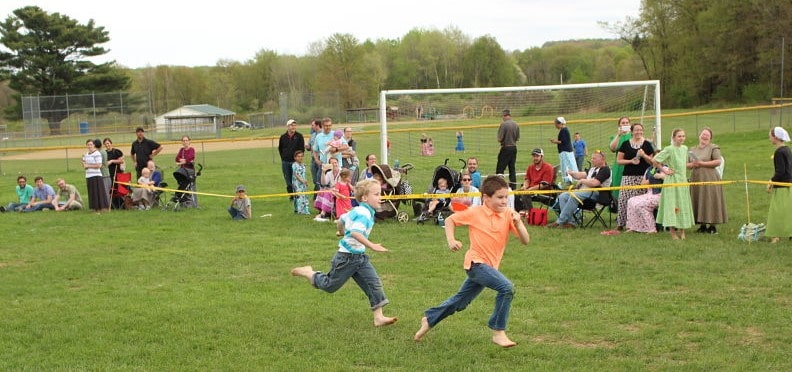 File photo: 2019 FBCS field events
Perhaps the only thing worse than flubbing the end of a project is not being allowed to complete it at all. You find a measure of satisfaction in crossing any finish line, no matter how exhausted you are, how badly you stumble, or whether your effort ranks as a personal best.
What if the finish line is removed? Or the race cancelled when you are three-quarters of the way through?
For teachers in many communities, the final quarter of the school year found the classrooms empty. The hall lights dimmed themselves. The gym sat vacant. The parking lot refused to fill. Oh, the work continued! Parent packets needed to be stuffed, and then emptied and graded and refilled. Plans made. Tests distributed. Treats awarded. Promises kept. Online forums manned. Assignments collected.
All this without all the things that made it worthwhile – the faces of children, the progress of teens, the final celebrations.
The school year of 2020 will be over, but it will not exactly Finish. You may not hear that click of a door closing for the last time, breathe the satisfied sigh of reaching an expected ending.
Instead of finishing the race yourself, you have handed the baton – to parents, and perhaps to students themselves. Here, take this. I am not legally permitted to finish the task I set myself last fall. Take the baton, and run for the endgame. Suddenly you’re not running with the pack, in the same way as before. You become the friend cheering on the sidelines, the support station offering cool water. You can do it! instead of, Let’s do it together!
There is more pleasure, more resolution, and more glory in finishing yourself. More endorphins, frankly. Who wants to hand off when the finish line is in sight?
But I commend you teachers for doing what needed to be done: for sharing your grit and grace with others, for working faithfully behind the scenes while parents taught the lessons you prepared, and for staying supportive when your students lost ground, or gained it, outside of your reach.
That’s the thing about passing a baton: it’s passed. Your hand isn’t on it anymore.
Perhaps this is how God feels, sharing His work with His children, self-limiting His power to intervene, allowing us to stumble and blunder and take the wrong path by mistake and double back to find it again. He could race better, Himself. But He chooses to let others join His efforts, and He takes a step back and lets us learn to run.
Perhaps the only thing worse than flubbing the end of a project is not being allowed to complete it at all. But you have, through trusting and enabling the steps of others. You’re almost there! We’re almost there!
Well done.
Faithful to the End: A Web Meeting for Administrators and High School Students
On April 24, a group of teachers and school leaders met to discuss: How can teachers support struggling students at a distance? How can you and a disappointing school year positively? What does the future hold for our schools?

Tired and Cynical

I love teaching. I find Jesus there.
I watch rude students become gentle and stumbling readers become book lovers. We set goals and celebrate victories. I relish those split second incidents that thrill: the moment of wonder that crosses the young, hardworking choir as they hear the tough chord reach harmony, or the shout of joy when we take the final count of Christmas money– and it met our goal! Yes, I love teaching.
But sometimes I get tired. Tired of saying no. Tired of holding a firm line. Tired of cheering and then witnessing defeat. Tired of petitioning Jesus for the same need every day for weeks, for months, sometimes years.
Too many tired days can lead me to guilt. Where is God’s power? I am missing something here. I am not holy enough, smart enough, organized enough, creative enough, social enough, or something enough. Along with guilt can come cynicism. I am not sure why I am teaching. Is there any good happening in this school, in my classroom?
This semester I had two moments that helped me refocus. One morning the students worked together to compile our prayer requests from the year into three categories: answered with yes, answered with no, still waiting for answer. I was going to be happy with at least a few in the "yes" column, but God and the students were thinking of more. Our "yes" column was long! God is present in my classroom.
The second moment happened as I filled out Christmas cards for my students. I decided to mention one skill or character quality connected to each one. “I can see that you have a heart for the hurting. I wonder how God will use that gift.” When the job was about half completed, I realized I was seeing my crew with fresh eyes. There is good in my classroom.
Tired?
Take time to document God’s presence. I find that doing this with staff or students is helpful. My own list often feels small and hesitant. Other perspectives can boost your faith and open your eyes.
Take time to assess your students. What good is happening in your classroom?
Who is organized?
Who notices the trash on the ground or balls left out?
Who can you send to do an errand?
Who do you put in charge of a poster? Why?
Who does well with the younger students?
Who cheers others on to success?
Who can handle heavy loads without buckling?
Who wrestles until they get it?
Who loves learning and seeks to grow?
Who loves what is good and right?
Who puts thought into life and thinks things over?
Who can win a game with no effect on their ego?
That’s your crew. God grace is with you! Carry on with joy!
Seeds to Carry with Us: Anabaptist Values in the New Normal
 Image by Eric Michelat from Pixabay
We know that our spiritual heritage and teachings and life come first. (Seek ye first…) My purpose in writing is not to address our spiritual/church/congregational walk directly—I leave that to our church leaders. My thoughts are directed to us educators: What/how must we teachers be thinking about our responsibilities in these precedented times? What are the heritage seeds we must preserve? What fruit did they bear for our fathers and us? How might we go about preserving them? Such considerations are foundational to any educational methodology that fit the times. This requires hard work. A few thoughts to help us consider…
In the midst of the sudden TMI nuclear accident in 1979, I (along with many others in our area) evacuated my young family to the shelter of church friends 80 miles west. In just a few hours, we decided what to take and what to leave. Because we might never return. What could not be replaced? We quickly chose a few essentials and some heirlooms (some storied dishes, photographs, wedding clock, a small piece of furniture). The other material goods could be replaced over time since the accident did not portend the introduction of a new economy or way of life. The items we chose, by their nature, were irreplaceable by either purchase or handicraft. Today, different elements of our heritage are at stake.
When Russian Mennonite immigrants moved from Ukraine to Kansas in the 1870’s, they brought precious seed grain with them. Their children (according to the stories) helped pick out the best grains from their home supply to be carefully carried on the long trip and used to grow a new crop in the new land—a land in which they would need to grow their own food. Turkey Red wheat as a staple food thrived and became a legend in Kansas.
Heirloom furniture; heirloom seed; heirloom traditions; heirloom knowledge; heirloom skills; heirloom _____________… What heirlooms shall we carefully bring out, keep—and cultivate—as we anticipate life in a new normal whose parameters are still unknown? What practical precedents can we carry forward that are biblical, viable, universal, timeless—and achievable?
The new normal on today’s horizon hints at the opposite of refugee flight or refugee camps. Rather, it introduces “sheltering” at home, limited travel, limited close personal interaction, limited opportunity for business as we’ve known it for the last generations, limited options/choices, limited anything. Life with limits.
We must ask ourselves, “What is that in your hand?” What have we had in our possession for generations that may now need to be brought out and used again within the new limits? Or re-purposed? I’ll suggest a few to help us start thinking…
1. Heirloom of Contentment
A primary heirloom treasure to bring out, dust off, and revive is the ability to be content with food, raiment, and shelter. Contentment frees us from “extra weights.” The Apostle Paul learned to be content in whatever state he was—with abundance or privation. (See Phil. 4:11-12.) We’ve known abundance. We face a steep learning curve.
Paul admonishes us to be truly content with the basics.
For we brought nothing into this world, and it is certain we can carry nothing out. And having food and raiment let us be therewith content. But they that will be rich fall into temptation and a snare, and into many foolish and hurtful lusts, which drown men in destruction and perdition. -I Tim. 6:7-9
Contentment truly frees us to live on the manna of the day, free to adorn the world as do the birds and the lilies (which do, along with us, suffer from the ravages of this world, but live as fully as they can while they live).
2. Heirloom of Brotherhood
The heirloom of working together. Body life. The whole tenor of Scripture and especially the implications of the Gospel as applied to the life of the church call us to “bear one another’s burdens—and so fulfill the law of Christ.” Body life is the antithesis of atomistic individualism. We are not “in this together” as discrete elements in a herd, but as participating, interactive, interdependent members of a body. In addition to the spiritual applications of this teaching, many opportunities for daily, practical, real-life practices of interaction with others abound. We need to discover how the principle that was put into practical application through the once-upon-a-time sharing of farm machinery and labor (think threshing crews), or the frolic (work-socials) can be re-purposed. What can we do together? Group gardening? Learning how to butcher? Food preservation? Teaching one another? Storytelling? Learning from/with one another?
3. Heirloom of Neighborhood
“Love thy neighbor as thyself.” I’m old enough to recall the term neighbor used as a verb. Our people once knew how to neighbor. My father’s generation enjoyed a personal acquaintance with scores of people living within a five mile radius, had a working relationship with dozens, and frequent interaction with adjacent neighbors.
Thine own friend, and thy father's friend, forsake not; neither go into thy brother's house in the day of thy calamity: for better is a neighbor that is near than a brother far off.” -Pro. 27:1
In everyday life, interaction with literal neighbors, whoever they are, is more fundamental for everyday living in ways that more distant brothers cannot provide. Experiencing genuine interactive “neighboring” relationships can expose the limitations of the merely virtual relationships available through social media, with its insulating buffering and distancing.
4. Heirloom of Resourcefulness
Paul, although quite learned in the tradition of the Pharisees, pursued a marketable skill to support himself (tent making). What skills are basic for survival?
- Food: seeds, gardening, food harvesting and preservation, food preparation, animal husbandry, meat dressing and preservation…
- Shelter: All types of property and building maintenance and construction
- Entrepreneurship: Recognizing marketable services, skills, and products. Working to that end.
5. Heirloom of Home Economics
See Proverbs 31:13-27. Although this passage describes the role of a housewife in the endeavor, study it as an example of what activities characterize a thriving household. (It goes without saying that husband and children would be involved.) Note its balance of practical skills (weaving both practical and beautiful items) and non-tangible elements (strength, honor, wisdom, kindness, ways).
We scarcely have even a cultural memory of what home economics is. We’ve been trained to think of “the economy” as an idol that can somehow provide for us if we carefully offer it our purchases and hold one of its jobs. While a few schools still have a semblance of a “home ec” class, often we think of little more than some cooking and sewing, which are “skills” that one can “take or leave” as extras, since in our days it’s been easier to buy processed foods and ready-made clothing. Can we have a renaissance of genuine home economics? The world desperately needs the light—and salt—of Godly households of families that thrive interactively in simple ways that can involve neighbors and be spread among neighbors.
6. Heirloom of Service
“By love serve one another” (Gal. 5:13). While embedded in the above heirlooms, service deserves its own mention. Two major forms of service are:
- Mutual aid. The able, supplied, talented, healthy, etc., helping “their own (people)” who are less able, in want, incapable, or ill. This can be done on multiple levels.
- Caring for “others” however we can, near and far. Relief work. Disaster aid and development work wherever possible.
7. Heirloom of Resident Alien
Over the years, our people have often exhorted each other to remember Paul’s and Peter’s admonition to live as pilgrims, strangers, and ambassadors who shine as lights in an alien world (see 1 Cor. 5:20; Phil. 2:15; 1 Pet. 2:11). Those living words bear fresh meaning today. Unfolding events remind us that to identify with our brethren in Hebrews 11 is to anticipate a share in similar experiences. We need to consider anew the implications of being fully present and engaged in kingdom work in the temporal activities of the time and place in which we live while holding citizenship/allegiance elsewhere. Let your light so shine…
8. Heirloom of Humility
Just as Jesus humbled Himself to live as a man in a broken world, so His followers, His children, are called to accommodate themselves to the realities of their circumstances. If the new normal requires citizens to become subjects and serfs, history is simply repeating itself.
Servants, in everything obey those who are your masters on earth, not only with external service, as those who merely please people, but with sincerity of heart because of your fear of the Lord. Whatever you do , work from the soul , as for the Lord and not for men, knowing that it is from the Lord that you will receive the inheritance which is your reward. It is the Lord Christ whom you serve. For he who does wrong will be punished for his wrongdoing, and there is no partiality . -Col. 3:22-25, Amplified Version
Christians around the world have been and are living (and dying) in all types of circumstances.
Denigrating heirlooms, disregarding precedents both good and bad, and willful amnesia have plagued our day. The burden of teaching “what mean these stones?” and “How shall we live?” is upon the teachers, not the learners. Many things are known only in the doing. It’s often in the “breaking of the bread,” not in the mere “opening of conversations” that life is known. As we ponder how to educate our children faithfully in the new normal, let us carefully consider the precedents. Precedents of all types: those that warn; those that enlighten; those that encourage; those that serve as models. May a plethora of precedents inform our methods.
Note: This post follows an earlier article in which Jonas reflects on the precedents that should guide us through times like these:
https://thedockforlearning.org/contributions/unprecedented-times-learning-from-precedents/

Why Meet? How Effective Meetings Can Build Your School Culture
Meetings wear us out. They do, they wear me out. Meetings are hard work; they should be hard work.
Different people have different views on meetings. For myself, I actually enjoy meetings. I just do. For me, personally, in the business world, I spend about 30% of my working day sitting in meetings. There's something that's thrilling, or even rewarding, about being able to come together with a group. A group of minds that has the ability to take even a contentious subject, and difficult questions difficult content, discuss it, turn it inside out, dump it upside down, recount history, draw from parallels.
We bring all this together into a more united and positive action plan that will bless others. In the business world, it's about progress and growth. In the school it's not much different: it blesses others. The outcome of meetings should bless others.
Meetings are biblical: When we read verses like Proverbs 11:14, let's say, “Where no counsel is the people fall. In the multitude of counselors there is safety.” That's a meeting. That's a meeting right there. “In the multitude of counselors, there is safety.”
There's been times when I have been preparing for a meeting. I saw the agenda. I saw the agenda item. I had a strong opinion on a particular item on the agenda. I was going to the meeting to basically help the other board members see it my way. I went to the meeting and as the discussion progressed, what happened to me was something like this: I became less and less sure of my stance. I listen to others, the discussion progresses, and I become less sure of my stance. In the end, I actually vote against my own idea. I vote against my own stance. This has happened to me. The verse in Proverbs comes back: “In the multitude of counselors there is safety” and this is what meetings are all about.
This is the premise and the reason why we have meetings, it's to gel together as a group, and there's safety in that.
No action, activity or process is more central to healthy organization than the meeting. If someone were to offer me one single piece of evidence to evaluate the health of an organization, I would not ask to see its financial statements, review its product line, or even talk to its employees or customers. I would want to observe its senior leadership team during a meeting. This is where values are established, discussed, and lived. This is where decisions around strategy and tactics are vetted, made, and reviewed.Bad meetings are the birthplace of an unhealthy organization. Good meetings are the origin of cohesion, clarity, and communication. -Patrick Lencioni
When I read that, I immediately thought of school board meetings, because in a sense, the school board meetings are the senior leadership team of the organization. We do well to look at it that way. When you sit at a school board meeting, you are the senior leadership team of this organization. I have come to truly believe that that statement is not only true in business, but also true in schools. Our school culture, and organizational health is birthed right here in our meetings, in our board meetings, if you will. The next time you head to a board meeting, pause and say to yourself, maybe ask a little prayer for God to guide you during the meeting, because we know that the outcome of this meeting will establish the health of the organization. This is where school culture starts, right here at the board meetings.
Meetings of any kind in the business world, anywhere, there's really two reasons that meetings are called: they're either tactical or problem-solving meetings or they're strategic and forward-planning meetings. Now a lot of meetings actually have a mix of both. That's just the nature of meetings. We tend to mix this stuff up, I would comment that that's not always the best way, but that's how it is, especially in the school setting. We tend to mix the tactical problem-solving subjects in along with the strategic and forward-planning content.
In regards to technology and how we use technology to run efficient meetings: In the setting that I'm in, currently, we do a lot of web conferencing, where we have multiple people join from all over the place, and that adds a dynamic that we don't have at board meetings. We do meetings on the screen in that case, and it's great, it works very, very well.
Even though I'm a tech guy by nature, and I enjoy technology, (I believe that) technology's an accelerator of healthy meetings, of effective and efficient meetings; it's not a driver. Technology should be on the sidelines.
I've used simple things like cloud storage. I use cloud storage. I use Dropbox, personally, (but it) could be anything: could be Google Drive, could be OneNote, could be Box, to store your communication around meetings. If you have a board, the secretary does meeting notes, drops them into cloud storage, everyone can see them. You can interact with them. You can pull them up at any time. That's effective because it allows everyone to see everything. As a chairman, I tend not to put some of my notes in there because my notes are messy as I build up to a meeting, but the official documents should be filed where everyone can see them. That should be a clean central repository.
I've tried using things like OneNote. Those are very effective tools. I personally have never got on to that.
Laptops in meetings: different people have different opinions on that. I'm a tech guy and I do, I like to have my laptop there. I feel like something's missing if I don't.
Technology should not be a distraction in a meeting, phones should be silenced. There's a number of things like that. Technology should take a backseat role, an active, but a backseat role in a meeting.
There's a couple good books that I've enjoyed. Patrick, I mentioned Patrick Lencioni, he has another book called Death by Meeting. It's a fable. It's a great read. Everyone that does meetings should read that book.
Meetings have got a bad rap over the years, in the sense of, “Aw, do I need to go to another meeting?" Throughout my career, I've heard this numerous times: disgruntled and, "Man I need to sit through another meeting.” “That was a boring meeting." If meetings are boring, do something to make them that they're not boring! Have some more conflict. You should enjoy meetings.
Meetings should wear you out, meetings should not be a social huddle. There's times to have social interaction, but meetings should be hard work, but they should be fun, they should be engaging.
No one should be ever tempted to fall asleep in a meeting. If that happens, you either have the wrong team at the meeting, or you have the wrong chairman or you have the wrong setting or… there's a number of things.
Or you should never have the meeting. I will absolutely not get myself involved in a situation where I know the decisions are going to get made outside of the meeting and the meeting is simply a guise or a facade of group decision, and yet the decisions are being made by key individuals that may or may not be at the meeting. I'm not going to involve myself in that setting. I want to own the decisions as a group, as a board. Never ever make puppets out of anyone.
Meetings should be engaging, meetings should be fun, but they should be hard work.

Unprecedented Times? The Pandemic in Its Historical Context
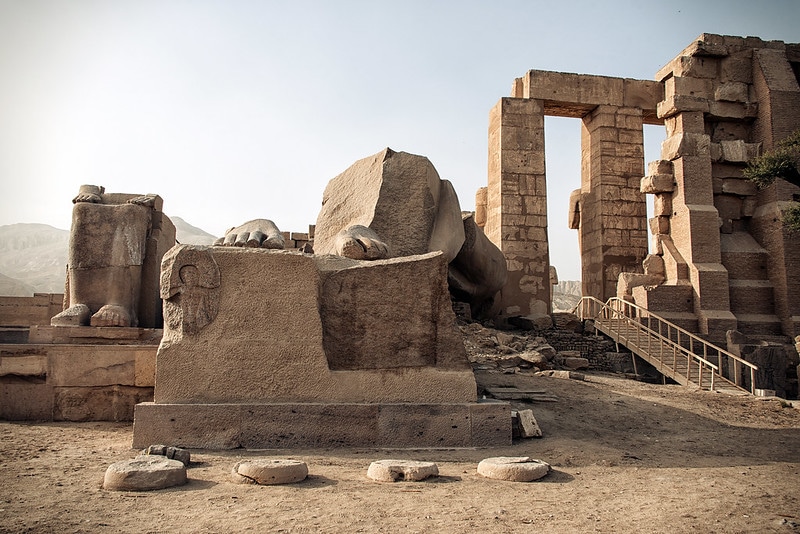 Ramesseum image by Christopher Michel on Flickr
I suppose I’ve heard the term unprecedented used more often in the last six weeks than I have in the last sixty years. I’ve used it myself. Until I realized how often it’s being misused.
"This is unprecedented!" What many people mean to say is “I’m not aware that such has ever happened before in my lifetime.” Which testifies either to the youthfulness of the speaker or the limits of his awareness.
"This is unprecedented!" Others mean “I’m not aware that any such thing has ever happened.” Which testifies to either not knowing the stories of history or not comprehending their meaning. Or not understanding Solomon’s insight:
The thing that hath been, it is that which shall be; and that which is done is that which shall be done: and there is no new thing under the sun. Is there anything whereof it may be said, See, this is new? It hath been already of old time, which was before us. There is no remembrance of former things; neither shall there be any remembrance of things that are to come with those that shall come after. Ecc. 3:9-11
Amnesia is as common to man “as the sparks fly upward.” We do well to ponder precedents as we encounter circumstances unlike any we have experienced.
A Plethora of Precedents
Pondering the cascading events of Spring 2020, noting their trajectory, experiencing their acceleration, and witnessing their cumulative effects reminds me of more historical precedents than I can list here. It’s increasingly common to see news headlines use the term biblical as they seek for an adjective to capture the enormity of unfolding tragedies. A grasshopper plague, famine, or pestilence that seems to have no precedent in modern history is labeled biblical. Which reveals tacitly that while the tragedy may seem new to us, it has precedents which are actually more solidly documented than is any modern historical record—they are noted in Scripture. They are not unprecedented.
Several categories of precedents along with sample illustrations of each include…
A. Precedented New Normals
We are being conditioned to anticipate what is euphemistically termed a new normal. One of the most common precedents in history is for people to be subjected to a new normal, ushered in by plague, famine, war, revolution, inventions, or decay—or a combination. A new normal is a radical change in the way daily life is lived. A new normal is required for survival under radically changed circumstances. Changes so radical that someone from a previous generation or so before, were he to step into the current way of life, may feel totally disoriented by what is going on around him. Or unable to survive.
It’s often claimed that one of the few constants in history is change. New normals are not new. What would be unprecedented is the passage of a century or more without a new normal.
The first new normal accompanied the expulsion from Eden: thorns, sorrow, sweat—and death.
A short sampling of new normals from Old Testament records:
- Post Flood restart.
- Post-Babel scattering, with ensuing tribalism.
- Israelite migration to Egypt.
- Needing to hide the firstborn from Pharaoh’s death decree.
- Rigors of slavery/bricks without straw.
- Wilderness wanderings.
- Conquering for possession of a Promised Land. Rest.
- Idolatry. Suffering marauding bands. Copying neighboring paganism. Oppression.
- Dispersion and captivity.
- Multiple OT kingdoms, as they conquered/reconquered each other.
Many of the radical, far-reaching new normals we read about in history draw hardly more than a yawn from us, insulated as we are from them in time and geographical distance, and also by our unawareness of how the same could befall us. A few candidates for such yawns are to ponder the new normal experienced by:
- Peoples subjugated by the Mongolian horde
- Europeans under the threat of Vandals, Huns, & Norsemen
- Peoples subjugated by Alexander the Great
- Serfs living under feudalism as it developed in its various forms in Europe, Russia, Japan, China
- Europeans adjusting to Post-Black Death or Post 30-Years’ War life as Europe reorganized with a great re-start.
To avoid yawns, we might consider a few more recent new normals such as…
- Life of pre-colonial-era Africans→colonial-era Africans→post-colonial-era Africans
- The Cherokee people pre-white contact→in the time of Sequoyah→post Trail of Tears
- Native American life pre-white contact→during “Manifest Destiny” era→current reservation life
- Irish life before the enclosure movement→famine years→post-enclosure movement years
- Pre-industrial agrarian life→industrial era city life→post-industrial/service “solutions.com” life
- Chinese peasant life before Mao→Great Leap Forward famine→mushrooming industrial cities
- African-Americans as slaves→under Jim Crow→current conditions
- Russian Mennonite life in Prussia→wealth in Ukraine→devastation in Ukraine→life in Canada and other places of dispersion (Mexico, U.S., Bolivia, Belize…)
The experience of the colony Mennonites of Russia just 100 years ago is particularly instructive for us to consider. If you’ve never listened to the account of their story recorded in Mysteries of Grace and Judgment, you will find it instructive. You can find it posted on The Dock.
- Swiss Anabaptists under persecution & oppression in Europe→free to worship, own land, and develop prosperous agrarian economy in Pennsylvania→recent shift to business economy
- Formerly well-established residents from Africa and the Middle East overflowing refugee camps
Some new normals grow imperceptibly, perhaps noticed only by the older generation. Or by historians. Or by nobody. Others happen suddenly. But what they share is common is a great shift (change) in one or more elements:
- Location: group migrations, or mass refugee movements, or moves for better opportunities
- Opportunity: (without moving): economic opportunity and/or religious freedom—or the opposite
- Language: by choice, acculturation, or government edict
- Livelihood: type of work, role as worker, source of income or food—or lack thereof
- Housing and home life: serf/slave quarters, cottage, house, tenement, apartment, refugee camp
- Education: From freedom to teach your own children (at home or school) to required state-controlled schooling (or vice versa)
- Land ownership: From peasant/serf way of life to land ownership/self-sustaining yeoman. From land ownership to worker status via land confiscation/communal farms. From family farm to agribusiness.
Precedented Ruins
Numerous ruins across the earth leave mute testimony to the fall of great civilizations that probably assumed they would last indefinitely (many did in fact last much longer than any modern era civilization). Consider Angkor Wat, the Incas and Macchu Picchu, Mali under Mansa Musa, Norte Chico of Peru, the Harappans, Nubians, Guptans, Mayans, Mughals… Many of these endured for centuries, developed writing systems, engaged in commerce, built huge cities with elaborate temples and infrastructure—and left only ruins.
Like a tombstone, a civilization has three parts: date of birth, the life of the dash, and date of demise. Ozymandias (by Shelley) captures the irony well: Look on my Works, ye Mighty, and despair! Isaac Watts states the same theme: “…all nations rose from earth at first, and turn to earth again.” Bible prophets named specific empires that would fall to ruin. One, the mighty Hittite empire, disappeared so completely that only the Bible testified to its existence. Skeptical historians in modern times questioned its existence until they found supporting archaeological discoveries in the late 19th century. A common precedent is for a highly developed empire to disappear.
Precedented Plagues and Pestilences
These decimated populations worldwide. In the wake of the Black Death, Europe’s economic system underwent a complete makeover, with feudalism fading out, ushering in the Modern Age.
Unprecedented?
Because our historical knowledge is finite, we can’t prove from history that any given event is unprecedented. Nevertheless, I’ll suggest a few recently unfolding events or situations that might actually be unprecedented. Judge for yourself.
- Unprecedented Quantity? The scale of unfolding events today is greater in its magnitude due to a much greater world population now than in former centuries. As noted above, war, famine, plague or new political/economic systems have often ushered in radical changes. However, the same changes occurring in a world population numbering in the billions rather than hundreds of millions are greater in scale and quantity. So while the quality or degree of change in the “new normal” may not be greater today, the quantity or scope is.
- Unprecedented Material Prosperity? It’s likely that the ease of life and the material wealth enjoyed by so much of the West from the end of World War II to 2020 in the West is an anomaly in the history of the world. We’ve probably just lived through an “unprecedented” era with little awareness of it. If the West now needs to shift to a survival mode, that would be precedented.
- Unprecedented Expectations? It’s probably unprecedented that so many people blithely assumed that the prosperity of their times would continue unabated. Again, this is probably based on quantity. Have there ever been so many people who assumed ease and prosperity was here to stay?
- Unprecedented Unawareness? It may be unprecedented that so many people, with unprecedented access to unprecedented amounts of information available at unprecedented speed and ease ever witnessed the speed and scope of disintegration around them, yet seem unaware of its enormity.
- Unprecedented Speed? The ungoverned speed to which we have become conditioned in the last several decades was typified by fast foods, same day deliveries, and instant digital downloads. Now we witness a correspondingly (and exponentially) fast unraveling towards a new normal.
Consider
In the day of adversity, consider. Consider the precedents. Hebrews 11 reminds us of God’s faithfulness to His people as they join their forebears by sharing current (precedented) experiences with them.
Bursting Balloons
Watching someone blow up a balloon produces a degree of suspense: we know it will burst if he keeps blowing, but we don’t know when. Some balloons are so resilient that it seems their stretching can go on forever. But they will burst.
My generation has been watching balloon blowing from our youth. I’ve been shaking my head since the turn of the century at the seemingly unprecedented inflation of balloons on several fronts, including economic and ethical. At the multitude of truly “unsustainable”–even by the world’s standards—trends and practices. Wondering when and how the burst would come.
We know that the law of sowing and reaping is built into God’s order: it’s just a matter of time until the “seed” bears its fruit. And while we don’t what form the fruit (new normal) will take, we know what its nature will be: after its kind. Every seed bears fruit of its own kind. Virtual reality bears virtual fruit. Man cannot live by virtual fruit. A great re-ordering is upon us. To prepare to adapt, we do well to utilize the remnants of heirloom fruits in our hand. In the next post, let’s examine our storehouses and bring out our treasures new and old:
https://thedockforlearning.org/contributions/seeds-to-carry-with-us-anabaptist-values-in-the-new-normal/
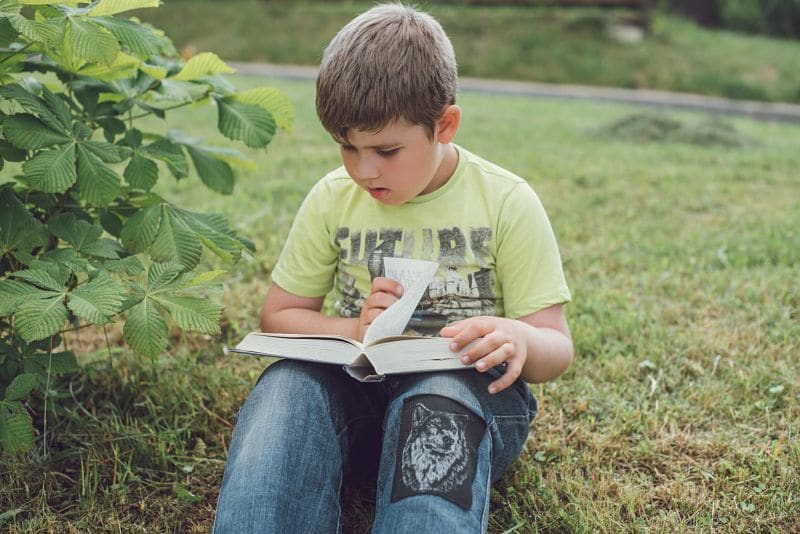
Effective Oral Reading
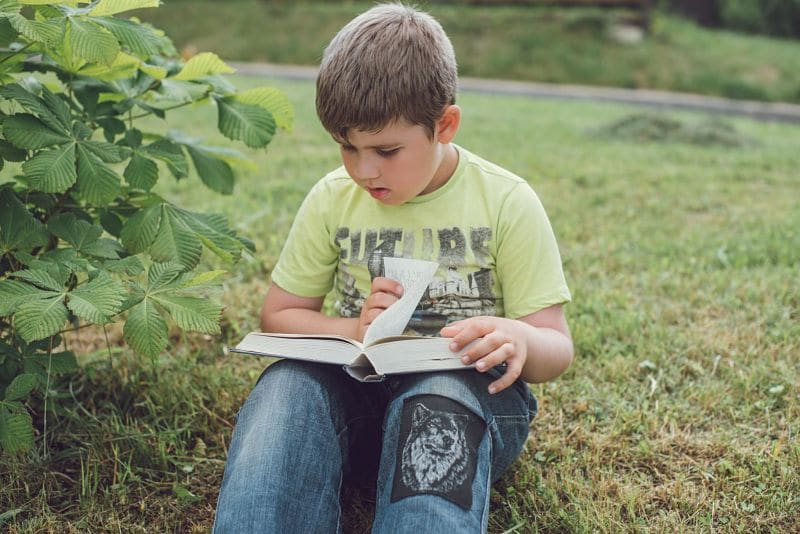 Photo by Tanya Gorelova from Pexels“Ok, class, open your reading books to ‘Candy Pills for the Stomach.’ Kay, you may start reading. Each of you read one paragraph when it is your turn.”“Mumble, mumble, stumble, pause, wait to be helped with a word, mumble, mumble,” thus Kay starts reading. Whew, her paragraph is done. On to David’s turn. He quickly speeds through the words in a barely audible manner. “Steven, Steven! It’s your turn to read!” “Uh, where?” Once Steven is back on track, he painstakingly reads, sounding out every third or fourth word. When it’s David’s turn again, he’s a page or two ahead of the rest and has no idea where he should be reading, because he can read fast and he’s tired of waiting on all the slow readers. And through the whole process, the teacher finds herself frustrated—frustrated with the slowness, frustrated with students not following along and not knowing where they should read, and then at the end of the story frustrated because the students don’t seem to know what they just read.
This scenario is one way, though not the most effective way, of holding an oral reading class. I would like to suggest that a class that follows the above pattern is a waste of time. How else then, can teachers implement oral reading class so that students enjoy and learn from it and the experience is effective?
Oral reading class serves several purposes. It gives the student practice in reading. It gives the teacher a means of assessing the reading abilities of students. It gives students practice in delivery and fluency. It can deepen the understanding of the story and provide an enjoyable capstone to the reading lesson.
I prefer to think of an oral reading session as a presentation rather than a means of just reading the story aloud. It is most effective if students are already familiar with the text and know what part they may be called upon to read. The student’s first encounter with the written text should not be the oral reading session. Ideally, the student has read whole the story to himself, knows the part of the story he will be reading aloud, and has practiced the part enough times that he knows the words and knows the proper expression to take in the reading. The class is then ready to present the story to each other.
The following tips will help your oral reading class be an enjoyable experience.
- Assign specific parts for each student. I prefer to assign each student one section, such as a page or several consecutive paragraphs. This allows efficiency for practice and presentation. A larger section also aids comprehension.
- Practice beforehand is essential to smooth reading. Many teachers and ministers like to have an idea of what they are reading before launching into a complicated text, and these are people who do a lot of reading. Providing time for practice before the oral reading session helps the student see the piece in its entirety and realize that Mom whispered or that Sarah was happy in her words in the story. Practice beforehand will also help the student who dreads to read aloud, giving them more confidence in their ability. The teacher may want to practice with the struggling reader, especially in first grade.
- Model good oral reading whenever you read orally—the noon story and the morning Bible lesson and all other lessons. And, then sometimes model poor oral reading. Read a story with exaggerated mumbling and monotone. Race through the punctuation. Read in a singsong, one-word-at-a-time style. Read as quickly as you can. Skip the inconsequential words. Read poorly until the students beg you stop. Then read the story again. This time, model excellent oral reading skills. Let the students enjoy the difference.
- Teach good oral reading skills. Demonstrate how to stop at periods and slow down at commas. Teach students to read at speaking pace. Many readers tend to read too quickly. A good oral reader reads no faster than he normally speaks. Some students read at a halting pace. Teach them to become more fluid. Demonstrate proper phrasing.
- Teach students to use good expression. Model how a piece should be read. Have students read it with you, mimicking your expression. For proper expression in conversation, have students imagine themselves in the character’s shoes. How would they say it if it were them? This can also help students understand good expression if you demonstrate right and wrong ways to say a piece and have the students choose the correct expression.
- Require correct volume. Stand in an opposite corner and have the students read loud enough that you can hear them well.
- Use this tip with caution: mimic the words and method the student used. Ask them if that really sounds like they want it to. Many times, they aren’t really hearing how they sound when they read but they hear it when you copy them. Have them try it again. (Know your students and do not embarrass them.)
- Make oral reading a safe time of reading. Do not allow sniggering at mistakes or eye-rolling and sighing at the slow reader. As the teacher, make sure you also have the correct attitude.
- It can be tempting to let the good reader read the greater part of the story, but the poor reader is the one who needs the practice. My goal is to have approximately the same amount of oral time required for each student. Therefore, some students cover more text but each one reads for the same length of time.
- Don’t always require the students to follow along in their reader. They should have a good idea of when it may be their turn to read but allow them to enjoy just listening to the story. However, be alert for the wandering mind. Students should be “making a movie in their head of the story being read” as they listen to other students read.
Good oral reading skills do not happen overnight. It takes practice and practice and more practice, but every student can attain good oral reading skills. Some will be better oral readers than others, but given the right atmosphere, good modeling, practice, and corrective teaching every child can have a measure of success. Happy reading!
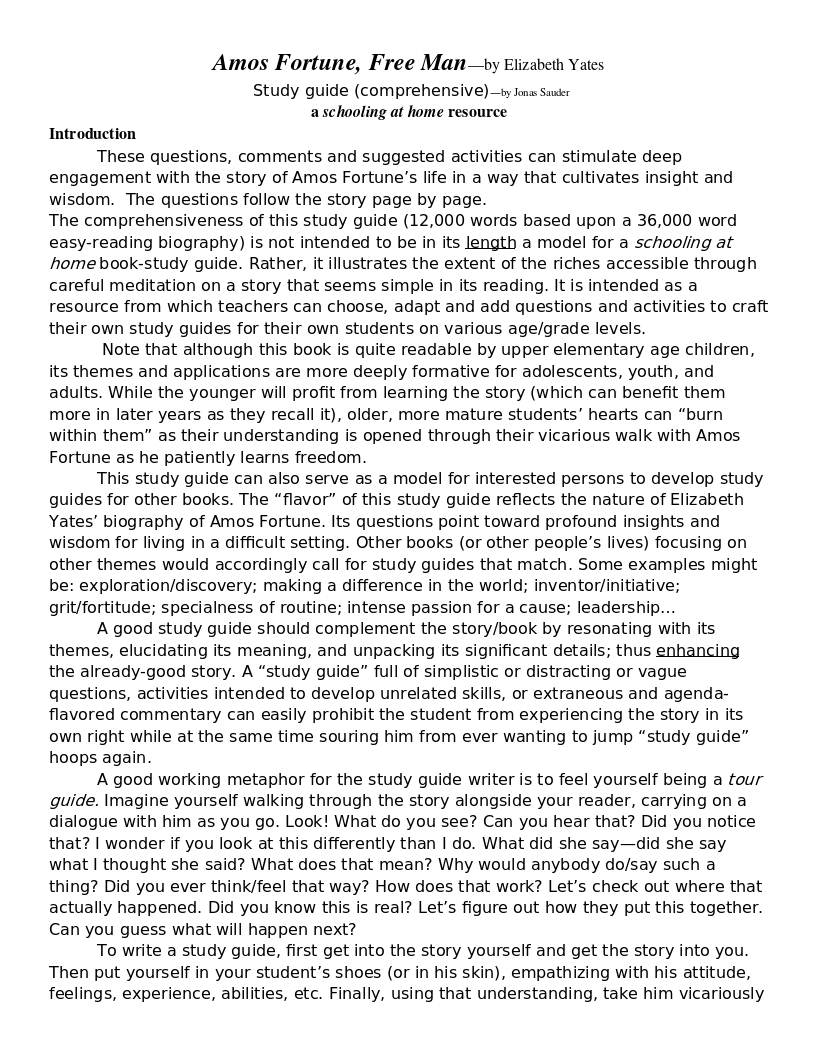
Comprehensive Study Guide for Amos Fortune: Free Man
These questions, comments and suggested activities can stimulate deep engagement with the story of Amos Fortune’s life in a way that cultivates insight and wisdom. The questions follow the story page by page.
Download the study guide or preview it below.
A Christian Response to the COVID-19 Crisis
 Photo by Patrick Fore on Unsplash
The body of Christ has been given the mandate to preach the gospel to every creature. Our very job description is to be fishers of men. But how does a person fill this mandate when he can’t go fishing? How can the body of Christ preach the gospel when we can’t get close to anyone? These are the questions that we are all grappling with. But in every generation, faithful Christians have lived out the commandments of Christ under every circumstance. The truths in the Word of God are timeless! God’s principles can and should be applied to every circumstance.
So how can we be a light to the world in this situation? Consider how light can be seen from a distance. “A city on a hill,” as Jesus put it, “cannot be hid… let your light so shine before men that they may see your good works and glorify your Father which is in heaven." I’d like to suggest that we can continue to let our lights shine.
I’ve heard a variety of ways that Christians are reaching out during this time. My goal was to take the combined creativity of various communities and compile a list of ideas that we can all use. Please remember that everyone’s situation is different and some of the suggestions may not be suitable for your current situation. It is crucial to be respectful of government guidelines and to be sensitive to the feelings of those we are trying to reach. We don’t want to ruin the reputation of our Saviour while trying to promote it. But maybe just seeing these ideas will inspire you with one of your own.
I’d like to suggest that there are three powerful ideas that come straight from Scripture.
Peace. Think about it. If the Prince of Peace is living inside of us, then our soul will be calm, even when the storm is raging all around us. There are many other little ships as Mark 4 puts it, that are facing the same storm that we are except for one important difference: they don’t have Jesus in their vessel! We do. As we get groceries or chat with a passing neighbour, we can shine the light of Christ by our facial expression, our speech, and our conduct. Many people do not have peace. They will notice someone who does!Prayer. When Paul and Silas were put under “lockdown” in Acts 16, how did they respond? They prayed and sang praises! And guess what? They weren’t the only prisoners in that prison. I love how Luke includes the little comment, “and the prisoners heard them.” What a receptive audience they must have had. Those other prisoners shared the same jail, the same chains, and the same treatment. But what was this praying, this singing? What a witness! God give us what Paul and Silas had!Most of us have more time than ever on our hands. I challenge us to increase our prayer time. Do not underestimate the power of prayer. History is full of examples of its power especially when there was intensity, and persistence. Nothing is stopping you from praying and nothing ever can as long as you have a sound mind. Have you considered calling up a brother or sister and having a prayer meeting between the two of you? Conference calls and other platforms can permit us to pray in even larger numbers.
The Bible says that Elijah was man who had passions just like us. Had he lived in 2020, it’s quite possible that he would have struggled with spending too much time on social media just like we do. But he chose to pray fervently! Soon, he had the entire nation’s attention (James 5: 17-18). So pray! Pray for weary health workers. Pray for our government. Pray for opportunities to witness. Pray for revival! Pray alone! Pray together! Pray!
Praise. If Paul and Silas could sing praise during their lockdown experience, we can too! There are multiple ways to do this. Individual praise to God is important. Singing as a family is important. The Bible makes over 400 references to singing and gives fifty direct commands to sing!It is tempting to be discouraged because we can’t sing together with other believers, but let’s remember that this doesn’t mean that we can’t sing. Music speaks to the deep places of the soul, and it is a wonderful way to share light.
Whistle while you rake the grass and don’t be afraid to have the window open or even congregate on the deck when you sing as a family. Those who live in town have an advantage here. But you can also call an elderly person and sing or play an instrument over the phone to them. They will love it! The virus seems to be bringing a spirit of heaviness. Let’s replace it with the garment of praise and sing praise unto God among the nations!
Here is the list I’ve compiled so far. It doesn’t cover many of the digital options that are available to us. Feel free to add to it and pass it on to others who are interested in being a light for Christ. May God receive glory as we let our lights shine!
We can be light and salt by:
- Displaying Gods peace, praying faithfully, and proclaiming His praise in song.
- Obeying what the government is asking of us during this time and speaking about them respectfully.
- Partnering with Christian Aid Ministries in their Covid-19 response to help local food banks and soup kitchens. For anyone interested in sewing, check CAM’s website for specifications and instructions to sew hospital gowns and face masks and donate them directly to CAM.
- Sewing face masks for donation to local hospitals or people in the community.
- Blessing grocery store employees by buying gift cards or coupons for local take out, a thank you note, etc. This could be personal or a larger gift for all employees, given to manager.
- Donating resources (money, food) to, and/or partnering with organizations who are supporting frontline workers with meals. Give accommodation for people who need to shelter in place.
- Encouraging healthcare workers through thank you cards, a sign in your window, or gift cards.
- Recognizing the efforts of those with less noticeable jobs, such as garbage collectors and postal workers. Give a thank you note, baking (use discretion), gift card, etc.
- Helping those who are in need (such those that can’t work) through a gift card or food box.
- Reaching out to the elderly, or those who live alone, by calling them on the phone, sending cards, or offering grocery runs. (Make a extra effort to sanitize!)
- Offering to lend magazines, puzzles or audio books to help pass the time because many elderly folk are bored.
- Taking/making opportunities for conversations with neighbors and people you meet. People seem to be more open and willing to talk now.
- If you live in town, do outside/yard work at a strategic time and place that will allow you to chat with neighbours who are walking by.
- Volunteering at the local soup kitchen. These places are receiving new clientele—even whole families right now as people lose their jobs and can’t afford food.
- Telephone witnessing – calling people (especially those with whom you already have a relationship) to see how they are doing and then sharing words of hope and truth.
- Write out your personal testimony and mail it those whom you know, but you have never witnessed to. Writing it out, allows you to say exactly what you want to say, and they can read it over and over.
- Ordering flowers for someone who needs encouragement.
- Write an encouraging poem about hope found in Jesus and hang it up on the bulletin board of your local grocery store. (Include your phone number or email at the bottom.)
- Send encouragement to friends and neighbors through a text, or a card, or letter.
- Paint a small rock with an encouraging message and leave it in an appropriate place like a local park.
- Tell the grocery store clerks that you are praying for them.
- Personal growth efforts:
- Bible reading plan—more Bible knowledge will allow you to be more effective in witnessing.
- Bible memorization—you could memorize as a family focusing on verses about witnessing.
- Type out your own personalized gospel tract including your testimony and contact info.
- Research potential needs and make plans for ways to reach out when things start to open up again.
- Researching a false religion like the Jehovah’s Witness’s beliefs so that you can witness to the witnesses more effectively.

What is True?
 Photo by d0n mil0 from Pexels
Social media and news outlets seem intent on convincing us that COVID-19 is either a) an overblown, politically saturated, economy ruining bad joke or b) an unprecedented, deadly health threat that way too many ignorant people are not taking seriously. Increasing efforts are being made to prove the validity of one side or the other. Speculation runs rampant. Even stats have diminished value as both camps use them as proof of their position. Where do we, as followers of Jesus, fit in this swirling fog?
An obvious initial solution to this far left and far right polarization may be to define our own conclusion. Perhaps Option C goes something like this: COVID-19 is a new virus strain that is forcing political and medical leaders to make difficult judgment calls based on limited data and scattered professional consensus. Option C at least recognizes the incredible difficulty those in leadership are currently facing. Perhaps you can write a better Option D.
But even an exercise like that holds danger. Again, in feeling the need to determine exactly what is going on, we often quickly drown in our own bias and devote unhealthy amounts of time and energy in speculation. In times of great uncertainty and question, whether from fear or frustration, I have found it helpful to saturate myself in what I know for sure to be true. From the platform of the known, the unknowns either become easier to endure or accept, or they begin to fade into a new and surprising clarity.
God remains in control. We can trust Him. None of this has caught Him off guard. He’s not reeling. He knows our fears or our frustrations. He knows our current limitations, our job situations, our finances, our ruined plans. He says “Please don’t worry. I am your Father. I’ve got you just like I have the birds and the lilies” (Matt. 6:25-34). “Stop trying to figure it out and come rest. Bind yourself to Me and you will find that my yoke is easy, and my burden is light!” (Matt. 11:28-30).
Has He ever said, “Be still” (Psalm 46:10) in a louder voice? And yet, it is hard for us to see enforced slowing down as opportunity, and the quiet spaces quickly get filled with the noise of our desperate attempts to restart the treadmill of our busy lives. “I don’t want what you can do; I want you. I yearn jealously for the spirit that I created within you,” Jesus whispers (James 4:5).
“Come under your authorities. They are placed there by God and exist for your good,” (Rom. 13:1) the Apostle Paul says, without qualification, while living under the cruel and bloody hand of Emperor Nero. “My Kingdom is not of this world,” Jesus says (John 18:36). “Yet I want My people to live in this world, (John 17:15) to be My hands and feet, (1 Cor. 12:27-31) and to live in such a way that people know that I am in them and they are in Me” (John 17:23).
These words of Jesus are still true, and His call to us hasn’t changed.
Perhaps this virus is a gigantic political scheme. Or maybe it is worse than even the most liberal estimations and millions more will die from it. Is it necessary for God’s people to figure that out in order to do what is required of us today?
If Jesus still walked this earth in physical form, how might He engage with the present circumstances? What would He be about? Perhaps He would be finding creative ways to proclaim Good News to the poor and liberty to the oppressed (Luke 4:18). Perhaps He would have withdrawn to a desolate place to pray (Luke 5:16). Perhaps He would be giving food to the hungry and clothes to the naked (Matt. 25:35-40). Surely, He would be finding ways to encourage and build others up (1 Thess. 5:11). Very likely He would instruct His puzzled disciples, “Give to Caesar what is Caesar’s and to God what is His” (Mark 12:17). Almost certainly, to those caught in the emotional and political crossfire He would offer, “My peace I give unto you, not as the world gives it; let not your hearts be troubled” (John 14:27).
His promises, embedded with personal direction, offer hope, joy, and confidence! “If my people will live righteously, if they will love demonstrating mercy, if they will walk humbly with Me.” (Micah 6:8) “If they will love Me first and their neighbor second” (Matt. 22:37-40) then “I will lead them. I will guide them. I will turn the darkness before them into light, the rough places into level ground. These are the things I do, and I do not forsake them.” (Isaiah 42:16)
Amidst the cloudiness of the present, His aims have not wavered, and therefore, neither have ours. “Thy Kingdom come. Thy will be done on earth as it is in heaven.” (Matthew 6:10)
Study to Show
 Photo by Oladimeji Ajegbile from Pexels
When you look into your students’ eyes, perhaps you sometimes imagine who they’ll be in 10 or 20 years.
Will that sparkling face be a teacher or preacher someday, with their own audience? Will those thoughtful, sensitive eyes look into their own children’s eyes and tell them who Jesus is? When he’s a dad, what will he say when his child asks why Jesus had to die or where grandpa is when they buried him? What will the future homemaker say when a stranger stops her in the grocery store and asks her why bad things happen to good people?
As an educator, you have the creative position of a sculptor who shapes people who learn, ask questions, and grow skills in studying and talking about the most important text of their lives: the Bible. This is not a skill only for men to use when they’re speaking or preaching in church. In God’s Kingdom, both men and women who love God commit themselves to studying His word because they long to hear what He says and want to understand His character.
Faithful Bible reading and teaching is not only for adults with the spiritual gift of teaching. It is for everyone! As a teacher, you can give all your students basic study tools to equip them to serve their homes and churches. You can help to normalize the process of reading, studying, and teaching the Bible so that it becomes part of the fabric of their life.
First, you can model these skills in your classroom. Then you can give opportunities for your students to follow your lead, practice, and improve in the skills themselves. Listed below are categories of skills and ways students can practice them. Following that are ideas for how you as their teacher can model the skills.
Study and Discussion Skills to Cultivate: Grades 1-6
Consider preparing your Bible or reading lesson with supplements such as picture posters like these, flannelgraph, or illustrated book. Mount the pictures/figures on the board as you read the story. You can read the Scripture and explain/broaden/expand interchangeably.
- Read several verses or a paragraph while showing the corresponding picture.
- Explain/narrate/interpret.
- Read the next section of verses while holding up its illustration.
- Mount picture on board.
- When you finish the story, you’ll have a series (5-6) of pictures on the board. Or you can draw simple figures on the board to show characters, action, and story progression.
- Use this line up of pictures to review key vocabulary and plot points. Ask them the questions listed above in the “Interact with text” section. Themes and important points will come out of this exchange of questions and observations.
- Students can refer to the pictures and your review when they summarize the story to their conversation partners.
Study and Discussion Skills to Cultivate: Grades 7-12
You can model these skills in your own Bible, literature, and history classes. You can assign students to share devotions or lead discussions, focusing first on one skill, then gradually assigning more. If you have too many students for each to take a turn to speak to the whole group, divide them into smaller groups and appoint several presenters to share simultaneously.
While studying the text for one’s self is very important, we believe, as Anabaptists, that we hear from God and follow Jesus in community. This is why presentation and discussion skills are so important. Your classroom can be the place where students can see this modelled and begin to take formative steps toward studying, listening, and interacting with Scripture and their neighbors.
When a student is ready to share with his/her group, complete an evaluation sheet and discuss it with the student. It can be useful for several in the group to fill out evaluations, but it may be too much to ask of them to listen and evaluate simultaneously. At a minimum, you can ask students to reflect on their own presentation. The goal here is not perfection but learning to be comfortable with basic study and presentation skills that will serve them for the rest of their lives. Reflecting, evaluating together the elements of the presentation, and giving/receiving feedback is crucial because it offers perspective and interaction that the individual would have missed if reflecting only by him/herself.
Conclusion
If students have learned to approach the Bible only as a textbook that has the answers, they’ll miss the richness of entering a dynamic, living relationship with the God of the universe. As adults, all of them will walk into situations and conversations where they’ll talk with people and grapple with questions about God, His love, sovereignty, presence, and goodness. Knowing simple ways of approaching the text can open them to increasing their knowledge and comfort level in studying and telling others about the person of Jesus whom they’ve met in Scripture.
I dream of communities and churches that have waiting lists of people who want to teach Sunday schools and Bible studies. Where no one says, “I could never teach Sunday school—that’s too scary. I’ve never done anything like that.” Instead, they say “I remember when my teacher taught us to look at the context of John 4, and I’d like to explore another passage. Sure, I’ll lead the Bible study!” They will be humble in their sharing, because they see how much they don’t know. But they will also be excited and enthused about the truth, beauty, and goodness they find in the text.
The world needs people like this!
Resources:
Anna Zehr wrote “Cultivating Conversations.” She offers ways to equip students to engage in conversations that build and enhance relationships. She also gives sentence frames and pointers for teaching students listening and speaking skills.
Piper Burdge uses the “Swedish Bible Study Method” for her 7th and 8th graders. The document also includes links that further explain the method and rationale of this kind of simple, straight-forward approach to studying the Bible.
Bloom’s Taxonomy provides a framework for your own study and how you can shape your students’ education by the questions you ask and the approach you use. Observe the progressive building blocks of understanding and use the appropriate question frames when you plan your own lessons.

Urban Mennonite Ministries
Is God calling you to serve in mission school in an urban setting? Urban Mennonite Ministries is looking for people from the Mennonite faith to staff their school.We are looking for an elementary teacher for grades 6-7. This is in Baltimore.See our staff needs page for more information.