
All Content
Children Thrive on Routines: The Power of Rhythms for Individualized Classrooms
I just realized how much children depend on routine and things being the same. You change one thing they'll let you know. Even though they want something out of the ordinary sometimes. Like the other week, I decided I was going to move the ball boxes. Did not tell anybody, I mean it wasn't like something us teachers had agreed on or anything, I said, "I'm just going to move 'em and see what happens." Well, my recess was done, I told my children, "I put the ball boxes here so when you're done put the balls in here." Well, our recess was done, Room Three came out, zoom right to the place where they're used to having the ball boxes. "The ball boxes are not there," and they don't look around, they just zoom into Brother Troyer's room and say, "Where's the ball boxes?" And it was just, you know, just a small incident but it proved to me how much children thrive on something being constant.
Well to me a routine is super important. Children thrive on it. They know that I'm going to keep the same routine every day, they know what to plan on and then I can also hold them to that. You know, if they knew that they were supposed to have their corrections at this time and they didn't then there's a consequence for not having that done. So it makes life easier for me and them both.
So I have class periods every day and I know not every individualized school has that but I have been pretty firm on that ever since I've taught. It is, we start out our morning, we have Bible first and then we do math and then after that is language.
I just feel that it's the teacher's responsibility to instill that in them 'cause they're not going to just, most of them, will not naturally come to that. That way we all stay together as a class because it's chaotic if you let some be here and some there in their work and I get frustrated because it just, it just doesn't work well. I don't want to be lecturing this over here to this student and this over here to this student because this one's fast and this one's slow. And so, you kind of have to find the spot where, between the slow student, to where they can try to keep up and to pull back the fast student.
When they come I try to give them a few basics and I add along the way 'cause it's overwhelming to, the first day of school, to say, "This is how it all is," it's too much. They can't remember it.
And I always have it up on the wall so that they can learn to read clocks and so they can see what time, what time the clock, or the hands are supposed to be when it's a certain class period. And while it gets kind of boring the children do depend on those clocks every year, especially when they're just learning what my schedule is. I've seen it work.
I always require them to make sure that they take care of corrections, from the day before, which I write on front of their Light Units. And then they may not do the new stuff, whatever new material they have, they may not do that before I lecture that to them. They can work on the We Remember, which is simply things they've learned previous days, and then they need to be working on that subject in that class period only.
Another reason I think it's so important is these children are not old enough to be self-disciplined in knowing how to manage time. So it's my responsibility to manage that for them. And hopefully by the time they become older it has helped them to learn how to manage their time for their classes or for their subjects.
Sometimes students, even with this setting, they have troubles so I make lists, and say, "Don't think about anything else except for this and don't think about anything else except for this," and then they can mark it off and they can see what they got done and feel good about what they've accomplished. If they don't get this subject done within the class period, they will not finish it up the next class period until that subject has been done. So, if they didn't get done in math we just put math away while we do language arts. If they get done with their language arts early then they come back and finish up math.
Now that has a potential of stacking up if you don't get anything finished in every period. But my experience has been, almost always, the children learn that that's what's going to happen and so they learn to manage their time and get it done.
That's not saying we don't have plodders, I always, usually, I have one or two that just, you have to push and push 'em. There again, it's not that I never make exceptions. Students that struggle, you can tell that it's not that they're not trying but they simply struggle in school. You have to make exceptions for them. Say they got done early this time in this subject, I'll say, "Go ahead and get started with the next thing," but I might not let the fast student because the fast student needs to be slowed down, otherwise he'd get all his work done in the morning and wouldn't have anything to do in the afternoon.
I usually tell them, "You just need to do something quiet at your desk," and the ones that routinely get done early, they can go, I let them go look at a book, like, they can look at any of the books that are back there on the shelf or maybe they have a library book that they read and if I see them doing that I know they're done with their work for that period.
(When students are done with their work for the day, they can visit the classroom play area.) Yeah, it's just they're not allowed, I do not let them play back there until after last recess and then they have to say their Bible memory, they have to say a verse and usually one that we have not worked on in the morning. And then once they've said that, then can go back there after last break and they play games—and today they were all reading, which is not, that was kind of abnormal, really—draw on the chalkboard and anything that's just not too disruptive.
If there's any children in a classroom that maybe come from a home that is less than ideal, maybe things are anything but routine there, they come to school where's there's one place that they can depend on that things are going to be the same every day. And it's security for them. If a struggling child or... come to school and at least provide some sort of haven of something, a safe place, a routine place, a secure place that they can... they know what to expect next.

What I Wish I Had Known About Recess
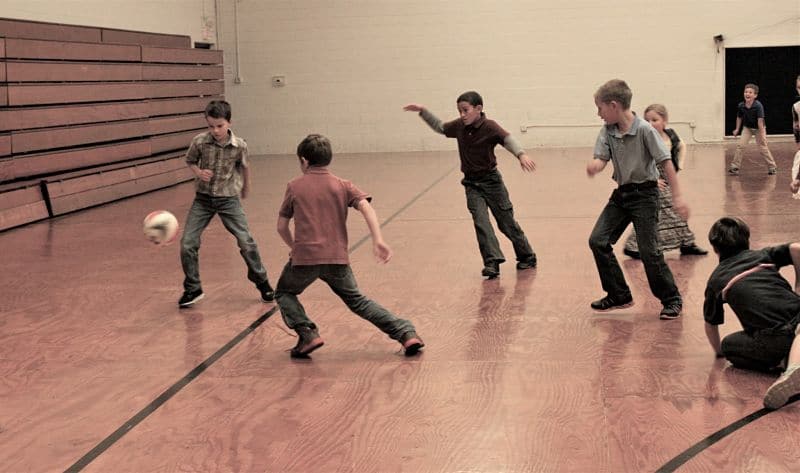
Recess. Do you rejoice? Moan? Feel uncertain? Yes, I have been there too. Recess is designed to give students a break from study, and a chance to exercise. Our little people's minds are working quite hard, and they deserve a break from the intensity of sitting still. If you have not planned well, however, recess can become utter chaos.
What do I wish I had known about recess?
Plan, Plan, Plan
First of all, collaborate with your co-teachers. Perhaps you can divy out recess duties. Aim to have at least one adult monitoring the playground at all times for the safety and well-being of all the children. However, there is no need for 5 teachers on the playground. Plan which adult will be on the playground for each recess. This serves a two-fold purpose. First, you know when it is your turn to be monitoring recess. Second, you can take advantage of your recess breaks to plan for your next class or gather art supplies.
Establish Recess Line-ups
Establish recess line-ups on your very first day of school. Lineups help to eliminate chaos and provide an orderly way to enter and exit the building. If your students line up in your classroom or the hallway, they can follow you or the recess teacher outside. This eliminates that child running through the hall and cuts down on pushing/shoving. Each child knows their assigned place in line and follows carefully, keeping hands and feet to themselves. Everyone hears the teacher announce the game and the itters.
Line-ups also cut down on arguments. Each person has their assigned place in line, so there is no arguing about being first or last or butting in line to get beside the person that is “my new best friend.” Students simply find their assigned place, walk outside or to the gym, and wait for instructions from the teacher.
Have Methods of Non-Verbal Communication
Nonverbal signals are essential on the playground, especially for very large groups of students. A whistle is my favorite tool. Teach the students the meaning of various signals. My signals often looked like this:
- 2 Short Whistle Blasts = freeze in place and become silent. Sometimes I want to make a new announcement about the game or name new itters. If the students do a silent freeze, I can make announcements without competing with their yelling and general recess chatter.
- 3 Short Blasts = new game. Students may come and gather around me for instructions for a new game.
- Teacher's Raised Hand = silence from everyone, eyes on the teacher. I use this at both the beginning and end of recess. While the teacher is explaining the set-up of the game, students should listen silently and only ask questions when the adult is finished explaining. At the end of recess, a raised hand from teacher works well too. When students see your hand, they know it is the signal to stop talking and become silent before entering the building again.
Find the methods that work in your specific teaching situation and use them. You will be rewarded for planning well.
Establish your General Playground Rules
Established playground rules that everyone understands eliminates a lot of arguing. Some general rules at my school look like this:
- A person going outside of the boundary area is caught.
- When there is a tie (for example, when playing kickball) the benefit goes to the runner.
- When in doubt whether a child is “caught” or not, the child should ask the itter. The itter has the final word. The guideline “You are caught if you felt the person tag you” does not work well for me. Some children never feel tagged. Instead, if they are uncertain, they discuss the matter with the person who tagged them.
Teach Conflict/Resolution Skills
Petty arguments do come up on the playground. Running to the teacher for resolution to an argument is an easy way out. First, it puts unnecessary pressure on the teacher/recess monitor because now you need to decide the best course of action.
Instead, teach your students to work out their conflicts by talking to each other. At first, you will need to model how to speak with each other. With practice, though, students should be able to resolve conflicts on their own. When my students solve their problems without involving me at all, I feel grateful.
In the event that my students come running to me, hoping I will side with them, I attempt to stay general, not taking either side, and ask questions like, “What is our rule for going outside boundaries?” or “What do you think is a good choice to make right now? or “You two sit aside here and come up with a plan for how to handle this.” Your first graders are capable of resolving conflicts, plus they are learning a great life skill. Beware of the poor sport, the one who is never wrong, or the student who never gives in. A separate conversation with those individuals may be required.
May your school year be blessed with many happy hours of joyful play! Recess, here we come!
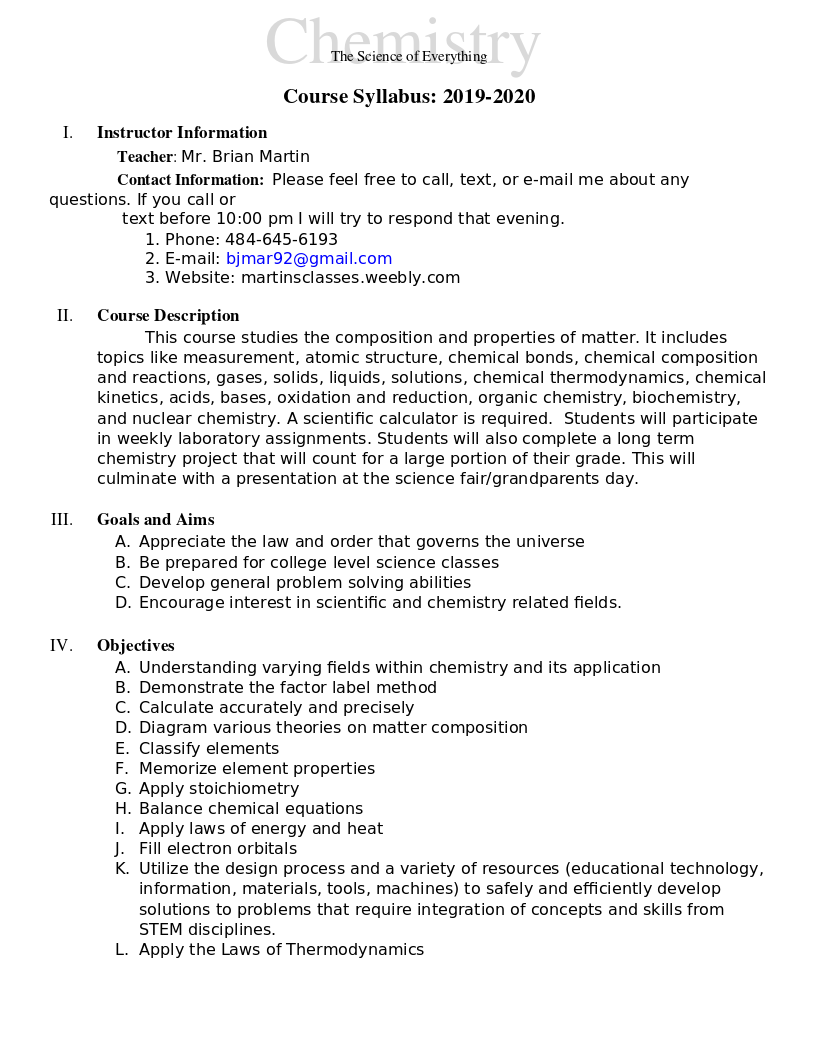
High School Chemistry Syllabus
 Brian shares his objectives, texts, and materials for teaching high school chemistry.
Download the syllabus or preview it below.

Educating in Changing Times
Resources for Schooling at Home
 Photo by Kelly Lacy from Pexels
A ship lost at sea for many days suddenly sighted a friendly vessel. From the mast of the unfortunate vessel was seen a signal: “Water, water. We die of thirst.” The answer from the friendly vessel at once came back: “Cast down your bucket where you are.” A second time, the signal, “Water, send us water!” went up from the distressed vessel. And was answered: “Cast down your bucket where you are.” A third and fourth signal for water was answered: “Cast down your bucket where you are.” The captain of the distressed vessel, at last heeding the injunction, cast down his bucket and it came up full of fresh, sparkling water from the mouth of the Amazon River. From Booker T. Washington’s "Atlanta Compromise Speech," 1895.
The lost ship with its thirsty crew had unknowingly entered the fresh waters of the mouth of the Amazon. Ironically, the crew dying of thirst was floating in the very resource it needed for survival. Sometimes we simply need to open our eyes to perceive that our necessary resources are at hand—at our fingertips.
When it was time for Moses to transition from being a shepherd to becoming a leader of the Israelites, his rod was repurposed from a shepherd’s crook to a leader’s staff. The shepherd’s staff became the rod of God.
In the struggle to transition from schooling at school to schooling at home, we do well to remember these stories. We are surrounded with multiple resources and are using multiple tools. But we need eyes to perceive which of our multiple possessions are also resources. And we may need to repurpose some familiar tools for new applications.
School teachers consider many factors in planning their work. Among them are…
- The purpose of our endeavor—what understandings, skills, habits, and “fruit” we wish to cultivate…
- The pupil—his age, background, previous learning, skill level, attitudes, interests, motivation…
- The subjects—their significance and meaning, content, scope, how they may “fit” the pupil…
- The teaching/learning setting—classroom, classmates, resources on hand, time available…
- The methodologies—how we go about teaching: what we do, what pupils do, types of activities, how materials are used, how we evaluate/grade…
These five steps apply to both schooling at school and schooling at home. The first three are similar for both settings. However, d and e differ greatly from the school to the home setting, and require radical adjustments in teacher planning.
For the setting (d), teachers must vicariously “enter into” the atmosphere of each individual home setting, putting themselves into each pupil’s home, shoes, and skin, feeling with him/her, and looking at the whole learning endeavor through their pupil’s eyes and heart. They must consider each home’s available resources and tools; its strengths and limitations. What was once considered “individualized instruction” to meet specific pupil needs must include “individualized plans” for specific homes. For example, plans for a single second grade pupil who is the oldest in the family, whose dad works away from home, and whose mother is busy with three pre-schoolers will differ from those for a second grade pupil who is the youngest in the family, has three older siblings also working in the schooling at home program, has a dad working at home, and a mother with more time available to help.
Teachers must plan an approach and activities (e) for learning that can “live” in the home environment. They must indeed have faith that the “dry bones” (materials, directions, and activities) they deliver to the home can “live” and thrive (Eze. 37:2-3), given the setting, attitudes, abilities, and resources of the family.
Do not frustrate. This could well be the guiding caution for e. (Compare to the ancient maxim for doctors: "Do no harm.") Ephesians 6:4 warns us to avoid provoking our children to anger/wrath/exasperation. One way to frustrate is to ask pupils/homes to do the impossible. Shall the pupil be asked to do hard work? Yes. To follow disciplined routines? Yes. But these must be achievable. They must not be “too grievous to be borne.”To frustrate is to set something before the child (and/or his parents) that is unattainable. To be frustrated is to be set in a maze with no outlet, to be asked to lift yourself by your own bootstraps, to make bricks without straw. To do something that you cannot do, no matter how good your intentions or how hard you try. Frustrating approaches to learning are offenses that can provoke antipathy in the pupil toward what may have otherwise become his favorite subject. And frustrations can at the same time elicit despair in parents with the whole project. Probably the quickest way to unwittingly sabotage any schooling at home endeavor is to build frustrations into its warp and woof.
Frustrations take many forms. A few include…
- Overload. Expecting too much of even a good thing. It’s hard to survive under a waterfall of even the best water. Another overload would be introducing too much variety at once. While juggling three balls may be challenging, trying to juggle 12 frustrates. Even the skilled blacksmith avoids having too many irons in the fire. Great wisdom and discretion is needed in designing the appropriate load—small loads are not taken seriously; overloads crush.
- Incomprehension. Trying to identify the “main idea” of a paragraph when you have no idea whether the paragraph had any ideas of its own. Borrowing 1 from the ten’s place when you don’t see any 1’s there to borrow. Underlining the helping verbs when you need help to find the main verbs. Pupils (and parents) who do not understand what it is they are to do switch to a coping mode such as underlining random words or hoping to pass by guessing. They shift attention away from the subject to trying to survive. And in the process they develop an antipathy for the whole project.
- Age-inappropriate expectations. “When I was a child, I thought as a child.” So did you. It’s OK for children to think like children. That’s who they are. Understand how your pupil thinks, plan to engage his thinking on those terms, and build/progress onward and upward from there. See the document entitled Age Group Characteristics of Children for ideas to stimulate your thinking as you plan.
The paradox here is that being asked to tackle a challenge is one of the strongest motivators, with great potential for “I thought I could!” euphoria. But there’s a huge difference between “setting your face steadfastly toward” a hard-to-understand task that sheds new light on each succeeding step and being asked to do something if you can’t figure out what it is you are to do, how you are to do it, and what the correct result will look like.
In planning lessons for his pupils, the schooling at home teacher’s work becomes somewhat like that of a writer, who must think ahead to how his work will be received and interpreted. The writer is not present to help interpret his work to the reader. For schooling at home, the teacher must envision what materials his pupils will have available, empathize with the pupils’ home setting and circumstances and patterns. Then he must imagine what kinds of profitable learning assignments and activities are realistic in that setting and communicate this in a way that inspires learning.
Re-purposed tools.
- The format of the familiar Sunday school quarterly could be used as a model for study guides for a schooling at home program. Both a pupil’s edition and a “teacher’s” (actually a parent’s) edition (or supplement) could be produced for use…
- As a study guide for an individual “trade” book that will be used for the month or quarter. The book might be a biography, story book, book of poems, history book, nature study book—or some other subject. The study guide format could provide necessary background/introductory material, supporting illustrations, anecdotes and questions for each lesson, and assignments and activities to do along with supplemental ones to choose from. The teacher/parent supplement could include a variety of ways for the parent to monitor the child’s progress, ideas for cross-age interaction, suggestions for ways to have the child share his learning with the family or others, and directions for quizzing/testing if applicable.
- As a study guide to accompany a standard textbook, such as a math, history or science textbook. Each guide might deal with one or two units of the text. It would break the work down into manageable daily/weekly chunks and provide suggestions for how to master challenging concepts such as making cut-out fractions to understand equivalent denominators. It would particularly focus on ways for the pupil to maximize learning in the home setting by drawing upon home resources.
- Material resources from the home workshop, garden, kitchen, playroom, neighborhood, flower bed.
- People resources such as siblings, extended family, grandparents, and neighbors.
It would anticipate projects that extend the learning and may actually fit the home better than the school, such as developing a flower bed, small raised bed gardening, keeping an animal, or feeding and identifying birds.
- A voice recorder can be used in multiple ways.
- Some learning material can be provided on audio files.
- Pupils can listen to audio files for read-along.
- Pupils can practice reciting, storytelling, or recording answers as an alternative to writing.
- The telephone could be a tool for each teacher to connect with each pupil on a set schedule…to answer questions, listen to verbal assignments, give directions/instructions, and encourage.
Activity Resources
- Routines
Life is very daily. It’s made up of routines. It’s the routines we celebrate as we look back over life. “Do you remember how we always did this…?” Families already have routines—or at least they should! When something is honored by being put on the daily routine, it gains significance. Typical home routines for children include getting up and bedtime routines, self-care/toiletry routines, mealtime routines, chore routines, and family activity routines.Some routines come and go with the seasons. The power of routines can be harnessed by attaching them to schooling at home work. When the schooling season approaches, the daily routines adjust accordingly. Now the routines include structured book studies, disciplined learning activities, memory work, and focused projects that find their place on the already-existing schedule of routines. The new routines are not a cancerous, malignant tumor unrelated to anything else that happens in the home. They are a necessary addition supplied and supported by thoughtful teachers who have found ways to plan learning that can be integrated into the home setting.
- Storytelling, visiting, chatting
One of the most powerful routines to expand and capitalize upon is the talking times surrounding daily routines such as mealtime conversations, dishwashing times, driving-down-the-road times, and end of the day winding down/devotion times. Without making these into “classes,” parents can stimulate meaningful conversations and discussions related to the ongoing topics their children are currently studying.
- Playing games time
Teachers can design certain learning activities into games that can be included in family game time, without completely usurping the place of traditional games. Some subjects lend themselves to game-type review or drill activities. Flash card use can be incorporated into games.
- Family projects
Projects can become intentional learning projects. Some may require extensive parental involvement; some minimal. Categories can include learning to make specific foods, preserving foods, flower beds and gardening, home maintenance or improvement, service. (See list in Preparing for Schooling at Home”).
Miscellaneous Resources
- Some homes have extensive collections of books; others have few. Schools can provide plans for pupils to take advantage of available books in the individual home based on their availability.
- Some homes make extensive use of electronic technology; others little. Plans can utilize available technology, from stand-alone activities such as electronic flashcards, audio files, and word processing to communication between teacher and home/pupils, to real-time instruction sessions if possible.
- The number of older people available (siblings, relatives, friends) to interact with pupils can be a factor in what the individual pupil can be expected to accomplish.



It Can Be Done: Preparing for a School Leadership Transition
And the whole idea that the school board was willing to allow you to have plenty of time to plan. Think about that one with us a little bit.
Austin: Yes. I also appreciate our school board and the chairman who took time to say, “Okay, this is our timeline that we need, but we need you to tell us what you need in regards to the transition.” They gave me the freedom to say, this is what I would like to see.” I wrote it out. I talked with our chairman and talked to you and our chairman. We had a really good plan about how the transition was going to look. They put me in the driver's seat, but not fully responsible for it. They allowed me to get input from them. That was really helpful. Then part of that plan and part of my desire was to take a whole quarter of the school year, right before taking over leadership, just spending time in planning and just looking at the future and what I want to have in place so that it'll be easier to do.Because as I watched you lead for 24 years, I've seen that there was a lot of pressures on you that you can't plan for: the unknowns and the things that come at you. It's very nice to have this time now to plan, and I've been very blessed by that.
Clayton: I've never been through a transition before. Our school board has never been a through transition before. We don't have a lot of practice. Hopefully, you don't have to repeat that; once every 25 years you transition from the administration. The board was serious about getting plenty of opportunities and other voices to ask other people how they have done it, to research it. It wasn't just simply a, “Oh, well, we'll see who's willing and put them in," [but] to search the willingness of other people and other men and to go out and to do a diligent search. I think that's very, very critically important. One of the things that I think about was, Austin, I've often said each generation should become better: build on the good, forgive the bad, and become better.I saw in you sitting down and saying, “Okay, how do we want to do fundraisers?” and spending several hours thinking through it. “And how are we going to do PTF's? How are we going to do…” Just every detail of the school, so that when you take over, it's not a, “Oh, whoops, I need to think that through.” It's already done. I commend you and praise the Lord for all the others who spoke into your life and helped train you to become a better man. I think the school will benefit from them.
What other aspects would you recommend that other school boards would repeat if they're looking at transition?
Austin: As I mentioned, they put me in the driver's seat and allowed me to say what I would enjoy. The one thing that I said I want, and they allowed, is for us to have an hour meeting every day to just talk through any questions that I have. That's been extremely precious and very helpful. They also very much cared about allowing it to become a team because you were allowed to grow with the school, and now I'm coming into a school that's much more established, and they allow it to become a three-person team. Allowing that to happen and allowing the other members of the team to join in with our discussions has been very helpful.Clayton: Very good. As we think about the boards, we think about other boards saying, “Well, I'm not in quite the same situation.” I mean, there are some people who say, “Never ever pass it from founder to his son. Never ever repeat.” And yet, is there a right or wrong way? What part of this whole transition was just simply, “Okay, God help us figure this out?”Austin: I really feel that it was bathed in prayer. I think that's very essential. I feel blessed by, as you mentioned, the board looking beyond me asking the question, “Should the son take the place?” And I was very willing, but I also through the process of the interview, through the process of all this planning have become very aware that God has to be in charge and just everyone's awareness of that has helped tremendously.I just would like to hear more about the thought process that you had to do to get the board to think ahead as well.
Clayton: I said, “When I'm 60, I want to be out. I want to retire, but I give you I'm going to give you five years' notice.” I don't know why God put 60 on my heart. I've observed many men who should have retired five years sooner than they did. At 60 you could still go for a while you could still have energy and ideas, and you could run the school for way longer than 60. But why not turn it over to new energetic blood, new energetic enthusiasm? I won't retire, we'll get retreaded and we'll have some other ministry, another option.Austin: As the board led the transition for us, they also led it for the staff. At the beginning of this school year at orientation, they had a letter from the chairman that explained how it was going to work, how we are going to transition through the school year, how our principal is going to continue teaching but become the principal halfway through the school year, and I would take over your place. That explanation came from the board. Then they also planned two staff interviews this year, specifically for the purpose of finding out if there's additional stresses or things that they need to know.Clayton: I think one of the aspects that we did is to ask staff for names. “Okay, we're looking for a new administrator, and the school board is open to any and all ideas.” And so we had staff from Ohio and from Ontario, and we had staff from many places that would have names that we would not even know of. We allowed them to give names. You've been part of the staff already as a teacher, and now assuming the part administrator also helped that it wasn't a complete stranger coming in, that was going to take over that role.Austin: One of the experiences that Faith Builders gave me was an internship. During my internship at Gehman’s, they were also facing somewhat of this question, although not transition of leadership, necessarily; they were talking more of the dispersing of leadership. I got to walk beside Michael Burkholder, helping him to think through how to create a team and how the responsibilities would be divided up. And so, since now we're moving to a team I think that experience was very helpful for me in thinking about how to divide that up.Clayton: I think one of the things that we can't minimize at all—you mentioned it earlier—was God: just really dependency on God. Because the transition of administration is something you hope you don't have to do very often. There are new people on the board, there are people on the board who have never ever experienced a transition, and so for them, they're going to have to really depend on each other. We praise God, we also praise the Lord for the school board and the unity that they had, the unified direction. It worked very, very well.It can be done!
Austin: Amen. It's very enjoyable. Thank you for your good leadership in the process.Clayton: Well, praise the Lord. I'm excited to hand it over to good hands.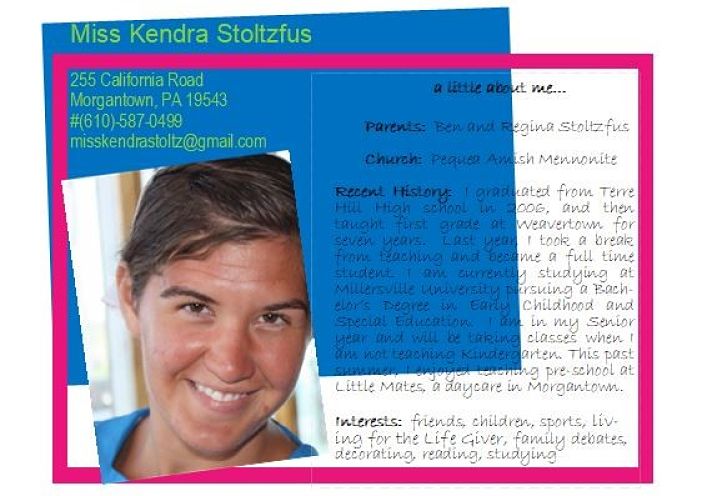
Communicating Well from the Beginning
 Image by Jim Varga from Pixabay
Communication can make or break your school year. From the onset, you want to be intentional on communicating your expectations to your students and patrons as well as hearing their expectations, hopes, and dreams for the year. As your year progresses, you will build on the communication that you have established from the onset. If you have built a strong foundation of communication at the beginning of the school year, you will find it much less difficult to handle the behavior struggles, the academic challenges, and the unmet expectations that crop up at some point through each school term.
Near the beginning of August, you should send out a packet introducing yourself and your expectations for the year. Certainly, for any new student/family, this will be their first impression of you as a teacher. And for any students/families you have had previously, it will give them an idea of what will be the same/different about this school term with you.
Introduction of Yourself
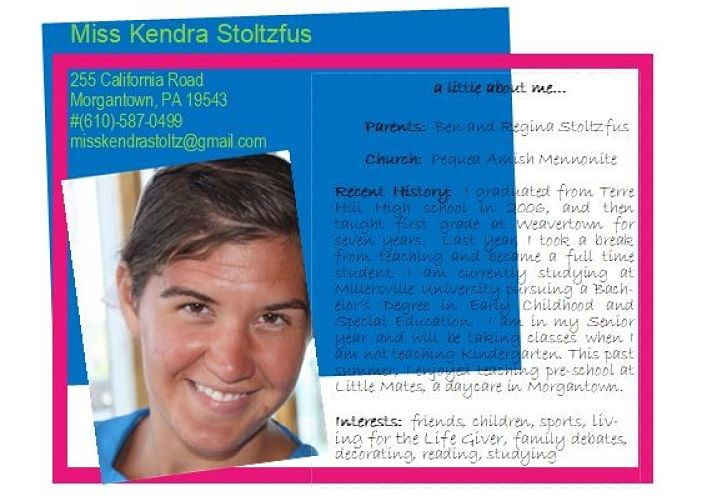
- Contact information: your mailing address, email address, phone number
- Hobbies and interests
- Recent history
- Your parents and home church affiliation (so that they can play the Mennonite game and make some type of connection to you?)
I preferred introducing myself via a prayer-card-style so the parents could keep it on their fridge and remember me in prayer throughout the year.
Beginning of the Year Letter
My letter was formatted in the style of the weekly communication letters that I sent home throughout the school term. Ideas of what you could include in your beginning of the year letter:
- A list of recommended student supplies
- A list of supplies that the school provides for each student
- A list of what not to send along with your child (novelty erasers, pencil sharpeners, huge packs of crayons, etc.)
- Goals for the year (changes that you plan to make to the curriculum, an area of study that you wanted to focus on with the students based on the achievement test results of the previous year, ways you plan to grow as a teacher, etc.)
- The behavior management system (classroom expectations, 3-5 classroom rules, reward system, consequence system, and how I planned to communicate the student’s behavior to the parents)
- The microwave schedule (who gets to use the microwave first on which day of the week)
- An invitation to the parents to contribute to the classroom (recess volunteers? read one of their favorite stories to the children over story hour? do a craft or celebrate a holiday with the students? provide transportation? help supervise an extra-curricular activity? introduce the students to a parent’s hobby or talent?
Student/ Parent Survey
You have introduced yourself to them, so now is the time where you allow them to introduce themselves to you. I asked them to return the survey to me on the first day of school, and then I compiled the student section with the individual photo that I took of each student on the first day of school. Your students are wearing their best outfits and prettiest hair styles on the first day of school – that is the day you want to be snapping their photo! ? Each of the student’s picture and survey was put into a class binder and handed to visitors as they entered the classroom. Now visiting parents and grandparents no longer have to interrupt your teaching to question whether or not that child is so-and-so’s or if that girl with the brown braids and blue eyes is a sister to their third grader’s classmate.
The parent section of the survey is cut off and stored in the individual student’s file inside my filing drawer of my desk.
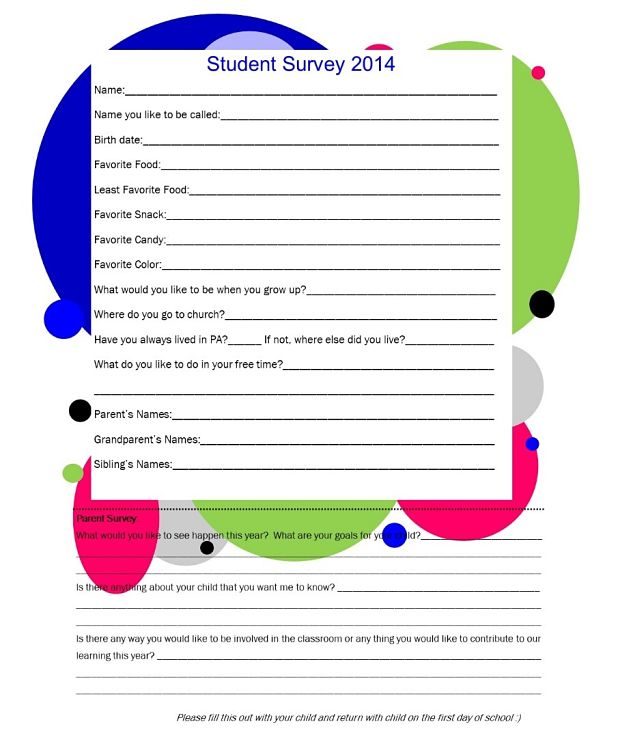 The survey I used with my students/patrons.
The beginning of the school year is one of the most exciting times of a teacher’s career. We often spend a lot of time preparing our classroom, arranging desks or tables, decorating and designing bulletin boards, tweaking our curriculum, and thinking through procedures. This year, I am encouraging you to be intentional on how and what you communicate to your students and patrons in order to establish a foundation of communication that is easy to maintain in the upcoming months.
Effective Instruction in the Classroom
 Photo by Gautam Arora on Unsplash
“Effective instruction practices are an integral part of effective behavior management practices” (Sprick, 2006). Effective instruction influences student behavior and will prevent much misbehavior. When students are engaged in meaningful tasks, they have no time for misbehavior. When students succeed, they feel a sense of accomplishment which motivates them to behave in a responsible manner (Sprick, 2006).
A behavior problem may be an instructional problem. A good behavior plan can prevent many problems, but teachers need a good lesson plan, which will help prevent misbehavior from boredom or frustration (IRIS Center). Students with higher levels of problem behaviors may have difficulty meeting the academic and social requirements of the classroom, which leads to their inappropriate behavior. The teacher should make the demands in the classroom environment more learner-friendly to help decrease problem behavior.
Teachers must consider students’ individual interests, talents, personalities, and motivation levels when planning instruction. In choosing an activity, teachers should think through its qualities and appropriateness in terms of management, and make sure it contributes to learning and engagement. It needs to involve students in a meaningful way (Maclennan, 1987). Teachers can use differentiation to ensure that students at all levels grow in learning. Teachers should seek to understand students’ readiness, use flexible instruction and continual assessment, and remember that students learn at different rates and in different ways. They might use an alternative method of doing a standard activity, alter the sequence of activities, or adapt an activity (Maclennan, 1987).
The teacher can implement effective instruction in their presentation style and require active involvement of students, which encourages a high success rate for students. Varying your voice tone, using humor, varying the intensity, clarifying the purpose of the lesson, and clarifying the information presented will aid the presentation. Keeping students engaged by using questions, brainstorming, working in pairs, assigning small independent tasks, sharing personal examples, doing role-play, and using visual aids and guided practice helps students to stay involved. Students should receive immediate feedback on their performances (Sprick, 2006).
Some strategies that can be used effectively with all grades and in all areas and are backed by research are:
- Compare/Contrast strategy
- Jigsaw strategy
- Window Notes
Teaching students to identify similarities and differences is the single most effective way to raise achievement (Silver, 2007). The Compare/Contrast strategy assists in this as students compare and contrast two separate objects, concepts, or readings. The purpose is established, points given for analysis, and criteria used in describing each item. The teacher establishes a purpose, gives points to analyze, and gives criteria to describe them. Students use a comparison organizer to distinguish between the two objects and record similarities and differences. The process is discussed with synthesis questions and students are led to do this independently.
The Jigsaw strategy is an effective cooperative learning strategy and teaches research, communication, planning, and cooperative skills. The students are put in teams with each child becoming an expert in one aspect or subtopic of the content. The experts in each area work together to research their subtopic and work within their expert groups to plan to teach what they have learned. They teach their parts to their Jigsaw teams and learn about the other subtopics from their Jigsaw team members.
The Window Notes strategy helps with comprehension as students think while they read and learn. When they use Window Notes, students draw a window shape and place one topic in each “pane” of the window, using this form to take notes. They write in panes topics such as “Idea”, “Feeling”, “Question”, and “Fact” (Silver, 2007 ). They reflect on and improve their performances as learners and give words to their own ideas, feelings, questions, and associations. Window Notes does away with the boredom of copying or taking notes and helps students to be actively engaged in collecting and recording ideas. It also gives the teacher insights into students’ minds and learning.
A nonstrategic approach to instruction is unfair to students, bringing on boredom, frustration, and needless difficulty in achieving success (Silver, 2007). Teachers must use a variety of strategies so all students can get what they want and need.
Professional Development Questions:
- What strategies will actively involve students in their lessons? Choose a new strategy to try this week.
- How can you design the curriculum of the classroom to enable student learning? Consider sequence, pacing, student needs, group needs, content, learning activities, and media.
References
Maclennan, S. (1987). Integrating lesson planning and classroom management. ELT Journal
Silver, H., Strong, R., & Perini, M. (2007). The strategic teacher. Alexandria: ASCD
Sprick, R. (2006). Discipline in the secondary classroom. San Francisco: Jossey-Bass
The IRIS Center modules. Retrieved from The Iris Center
The Summer Bucket List for the Teacher

At the end of a school term, I sent off my students with a list of fifty tasks to complete over the summer. Certainly they were all optional, and some were more educational than others. This year, I want to give you as a teacher a bucket list for the summer. It will not include fifty tasks, and you will find yourself being drawn to some of the tasks more than others. It is an optional list to stimulate your thinking about ways that you can refuel before the new school term starts.
Relax & Rest
Teaching is a demanding vocation. While some may consider it an 8:00 AM to 3:00 PM job, anyone who has had the responsibility of educating young people on their shoulders knows that teachers are constantly planning, thinking, and preparing. You spent evenings attending parent teacher meetings and conferences and compiling report cards. You spent mornings in prayer, running through your day mentally as you drove to school, and double-checking to make sure that you had all your supplies and props on hand for the lessons that day. You spent afternoons checking student’s assignments, planning lessons, and agonizing over accommodations and support for your struggling students.
To successfully pass students on to the next grade level is an accomplishment. It is worth taking a break to simply relax and have no one to worry about except yourself. On that final day of school, you suddenly went from being responsible for twenty (more or less) students’ education to only being responsible for yourself.
Bask in the weight being lifted off your shoulders.
Refocus: What Is Your Purpose?
Certainly, we are all called to be Kingdom builders. We all have that broader purpose. However, what is your individual purpose within the Kingdom of God? What talents, gifts, passions, and personality has God given you in order to accomplish a certain role in His Kingdom? Take some time to focus on yourself—not for the sake of becoming self-centered, but so that you can better fulfill God’s purpose for your life.
If you do not already know the following, take some time to delve into each of these areas. If it has been more than five years since you analyzed these areas of yourself or if you have encountered a career/area of residence change, take the time to re-assess now. Your new situation may be calling out new giftings, a slight change of personality, or a different purpose for this season in your life. Find others who know you well to give you input as well, because you may find that others are able to assess you more accurately than you are able to assess yourself.
- Spiritual giftings. What are your top three? How are these gifts evident in your classroom? What is a gift that you would like to have? Are there ways in the next school term that you can work on developing this gift?
- Personality. Take a personality quiz or assessment such as the DISC, Enneagram, or the four temperaments test. What are your strengths? What are your weaknesses? How does that play into your current vocation as a teacher? Who do you find yourself communicating well with/not so well with? What can you do about it?
- Passion. What do you care deeply about? Who has God given you a burden for? What dreams, desires, and visions has God placed on your heart? Is there a step that you can take during this coming school term that will kindle that passion and draw you closer to that dream?
- Past Experiences. What has God called you to so far? What have you been involved with? How have those experiences grown and shaped you into the person you are today? What assets do you have because of those experiences? What in those experiences has been detrimental to you?
After taking some time to consider the above areas, can you complete the following statement?
“I am called to ______________ (action word) using _________________ (your spiritual gifts) in order to focus on _______________ (your passion) expressing through _____________________ (particular ministries that I am involved with) so that ______________________ (what is accomplished) in the Kingdom of Heaven.” (Showalter, 2018)
And if you have not chosen a life verse or a verse for this season of your life, now is the time to find it.
Refill and Receive
Go on an adventure. Travel. Take a road trip. Visit a continent that you have not explored yet. Visit a local museum. Become a tourist in your home area. During the school term, you focus on the education of your students. Now is the time to focus on your education. You have spent nine months out of the year investing in others’ brain development. Now is the time to invest in your own brain development. How do you plan on teaching your students about both the Kingdom of Heaven and the world the King has placed you in if you are not a life-long-learner of them yourself?
You have spent the majority of your days giving—instruction, correction, encouragement, and reproof. Now is your time to receive.
Ideas for refilling:
- Spend ten minutes a day learning the language of your choice via Duolingo
- Attend your church’s revival meetings or Summer Bible School as a student
- Go to music camp
- Spend six weeks out of your summer at Faith Builders to develop yourself as a teacher
- Find someone local to teach you how to play an instrument
- Take a cooking course
- Read books geared toward teacher growth and development
Revise and Renovate
Now that you have taken some time to relax, refocus, and refill, now is the time to revise. What worked or did not work from the past year? What should you tweak or completely revamp? What can you do differently to approach the math concept that most of the students never truly mastered last year? When you are in the middle of the school year, there is little time and energy to invest in thorough curriculum development and revamping. Now is the time to tackle that project. Is there one unit or one subject matter that you could rework now?
While changing the décor or organization of your room is more evident to the eye on the first day of school, true teacher growth comes about in the critiquing, editing, and revising of the content that you will be teaching throughout the year.
After you have spent adequate time revising what you will teach, then you can spend time renovating where you will teach.
Renovate your classroom:
- Organize and Declutter. Are you still keeping filing cabinets full of lesson plans or extension activities that the teacher fifteen years ago filed away in hopes that some day maybe you will find them useful? If you have taught two or more years and have not used an item that is taking up space in your classroom, now is time to either use it or let it go.
- Analyze your space. Are you making the best use of the space available to you? Could your classroom benefit from a more open plan? Do you need an additional bookcase or storage area? Is there any way to minimize the eye-sore in the corner? Where will your visiting parents sit? Where is the ideal spot for your desk? If your desk is in the back of the room, would a podium or rolling cart be the best for you to teach from? Organize the desks. Will your students work best in individual rows or as pairs or in groups? Can you arrange the seating areas in such a way that you can easily alternate between individual seating, paired seating, small group, and large group?
- Critique your classroom décor, posters, and bulletin boards. A mixture of aesthetic and educational is preferable. But often, classrooms can tend to be more aesthetic than educational or more educational than aesthetic. Which of those two areas does your classroom need more of?
- Give your students something to look forward to entering. I well remember the palpable excitement of the great revealing as an elementary student. There were several teachers who always had the most eye-catching rooms, and I looked forward to seeing how they had transformed the classroom for the year. And, as a teacher, I loved to watch the students excitedly roam from room to room during the first week of school commenting on the changes since they last saw the room in the spring.
We have heard it said that teachers teach for three reasons. Some for the enjoyment and love of the content that they teach, some teach for the relationships and interactions with students, and some teach for June, July, and August! I sincerely doubt that you are a teacher who teaches only for the love of summer vacation. However, it is here now, and it is a good thing. Use it to your advantage and personal growth.
Source:
Showalter, C. L., & Showalter, N. D. (2018). Discovery Handbook. Lancaster, PA: LMC.

Line by Line: Memorization as a Daily Rhythm
The other day, I heard one of my students out on the softball field. He was kind of repeating lines from the poem we had just said.
Recently, I read an article about poetry memorization. Last year, I had read poetry some to them so I thought about how I could use it more in my classroom this year. I started out with thinking about the importance of reading poetry to my students and modeling it being read well.
Well, it doesn't work well when you have a poem and you say, "All right, everyone. I want you to memorize this poem," and you hand out copies of the poem. Students are typically more or less excited about sitting down and memorize the poem. Like, "I have homework tonight. I have to sit down and memorize this piece of poetry."
So the way I do it in my classroom is I find a poem that I would like to have my students memorize and I hang it from my classroom door. During transition times, I will say a line of the poem and they repeat it after me. What I find is that they typically will respond in the same way that I have said that line. They're using my voice inflections, expressions, and so forth, which they enjoy because they get to say it like they're crying or say it loudly, and it's a part of doing it together. I would think about it as an"I say, you say," type of thing.
The poem that we're working on this month is called How The Leaves Came Down by Susan Coolidge. It's one that goes with our season right now. They think about how the leaves came down from the great tree and how they were sad.
So, I have my students line up before we go out for recess, before we go anywhere pretty much, we line up and get ready to go. So, we might be waiting on a student yet, and then I'll just start saying lines from the poem, and they'll repeat them after me. It's a way of using those down times where things can degenerate quickly if we're not doing something profitable. They use them to memorize poetry, and it's amazing how well they can memorize. They don't even think about it that: "I'm memorizing a poem."
My goal this year is to have about one or two pieces of poetry per month that we memorize. Then we occasionally come back and repeat the one from the month before. Then after that, what I did this past month was, I opened it to my students and I asked them if any of them would like to come up front and recite the poem for the rest of the class, and I had various volunteers that wanted to do that. I'm thinking more about, “How can my students present what they've memorized?” It could be at a parent event, or even to have some of my students go into the first and second-grade classroom and recite the poem that they've learned.
Living History Threads Worksheets
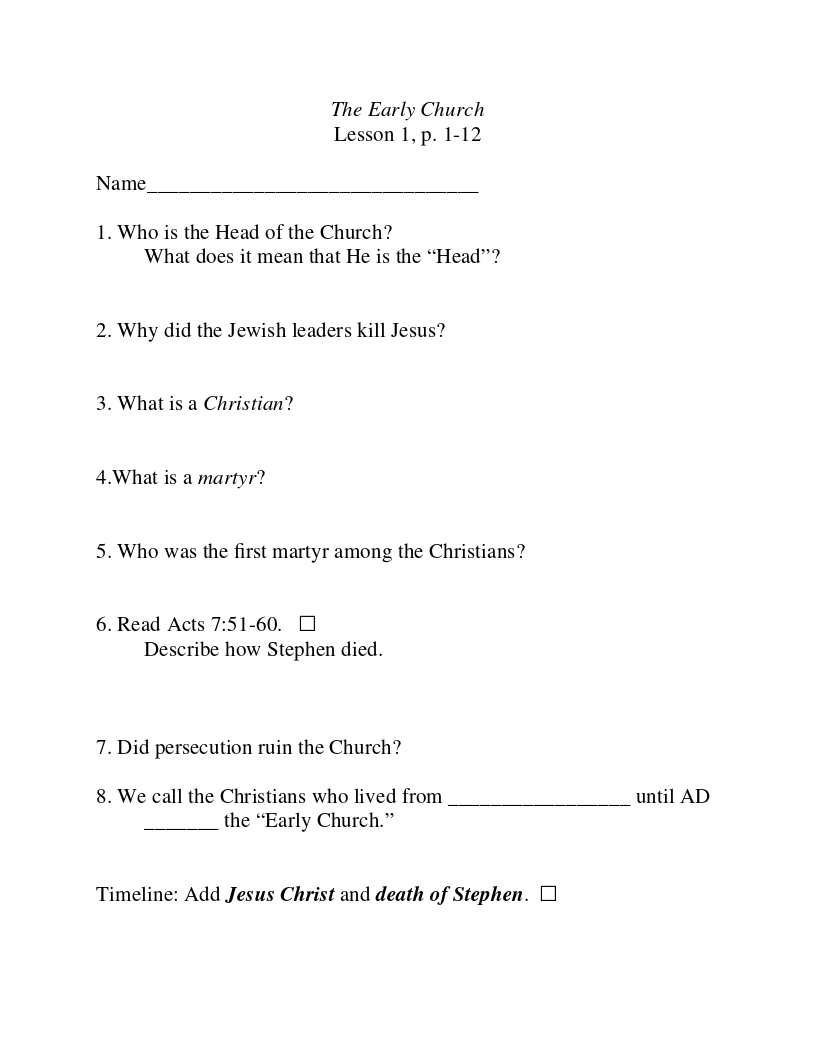
Libby made these worksheets to go with five Threads booklets written and published by Faith Builders. She writes, "My school (in Ireland) couldn't afford the whole curriculum, so I just purchased the booklets and then divided them into lessons and made worksheets for them, as a church history study. The worksheets are probably about 3rd grade level (could be used by any lower grade, I would say, according to teacher discretion.)
The books and divisions are as follows:
- The Early Church—4 lessons.
- Medieval Church and the Bible—5 lessons.
- Anabaptist Beginnings—6 lessons.
- Mennonites in the Netherlands and Russia—8 lessons.
- Revival and Missions—8 lessons.
Each student will need to create a timeline at the beginning of The Early Church, which they add on to as they proceed throughout the booklets. They will each also occasionally need access to maps similar to (or copies of) maps in the booklets, so they can fill things out on a copy of a map.
At different times throughout the course students will need access to a set of encyclopedias; the Martyr's Mirror; and a hymnal.
I had originally done these worksheets with British spellings, since I was teaching in Ireland; I tried to change them all, but I may have missed a few.
Download the documents now or preview below
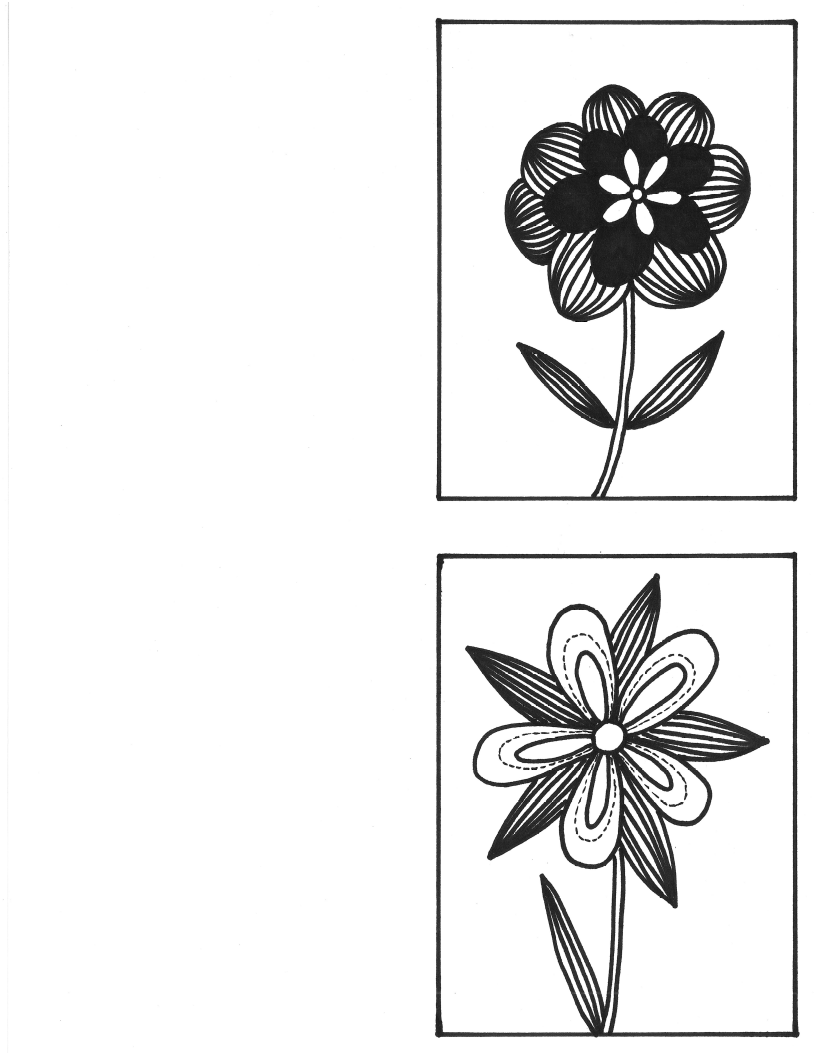
Doodle Greeting Cards
Use these pages to print your own single-fold cards. Add some color with markers, crayons, or colored pencils. Or use these as inspirations to create your own doodles.
Download the cards now or preview them below.

June, July, August, and the Teacher
 Photo by David Fintz on Unsplash
Every teacher has seen the sentiment that the best months of the school year are June, July, and August. Every teacher knows the inaccuracy of the witticism but there are ways that we can use June, July, and August to make us better teachers.
Summer vacation provides us with a break in routine and the stress and demands of school life. This break is necessary but we can use it or waste it. June, July, and August should not be months to just forget about school and enjoy life. Many of the ways we enjoy life can also enhance our teaching in the next term and beyond.
Summer vacation provides time to do the extras for school that we don’t get done during the year. We have time to clean out our closets, organize the flashcards, books, and boxes, make those worksheets or tests we’ll need, and mend text and library books. A wise teacher cleans and organizes the classroom at the beginning of summer break. Then in the middle of August, he is ready to launch into the new preparations for the year.The summer months provide a time to focus on other priorities besides school. Some of us may hold another job. Some of us are able to catch-up on things around home. Some of us will be able to do things such as travel that we couldn’t during the school term. Refocusing on other priorities lets us rejuvenate from the demands of teaching.The break also provides time for continued learning. We may choose to enhance our teaching in a formal learning environment such as classes in our local area or Faith Builders’ Summer Term. However, continued learning does not have to be about school to help us become better teachers. Taking a class in horticulture, or blacksmithing, or photography adds to our life experience, giving us a larger teaching repertoire. Informal continued learning should also be a part of our summer break. Many summer activities are opportunities to learn.We can use the summer months for travel. Travel can help us re-focus, provide opportunities for learning, and build relationships. In the summer, teachers have the time to work with disaster relief projects, go on short-term mission trips, visit out-of-the-area family and friends, or learn about other cultures, geography, and historical moments. Travel can be as close as the next town or half-way around the world.Several summers ago, my co-teachers and I spent ten days in Ireland. Not only did we come home with nuggets of Irish history, culture, and geography, but we also built relationships and a new appreciation for each other.
Spend time learning about local features. Summer is a good time for us to explore places and stories connected with our local area. Some of what we learn will make it into our classrooms in the fall. Take the summer months to visit museums, geological features, natural history, historical events and places, manufacturing—all the many features of the local area that enhance your learning. Summer can also be a good time to scout out places for next year’s field trips.We live in an area surrounded by Civil War history. Summer gives us the opportunity to explore battle sites, preserved historical buildings, and other places connected with the Civil War. We have time to hike the mountain trail to Potter John’s cabin; the hiding place of the Mennonite man who allegedly walked backwards in the snow over the mountain to escape from the Confederate army.
Summer allows us time to visit people. Brighten up an older person’s day by taking time to visit. Make a point of visiting people with skills you’d like to learn about such as beekeeping, quilt-making, or bird-watching. Not only do you build good relationships; by listening, you acquire knowledge of a wide variety of subjects.Take the time to learn new skills. Use this time do something you’ve always wanted to do. Last summer, I learned to make soap. Not only have I gained a useful hobby, I’ve also become fascinated with the chemistry process that turns oil into something that combats oil.Summer is a good time to catch up on reading. Read books that interest you and will help you be a better teacher in the fall. This may include books such as Teaching with Love and Logic by Jim Fay and David Funk, different by Sally Clarkson and Nathan Clarkson, Seeking Allah, Finding Jesus by Nabeel Qureshi, Church History by Keith Crider, Vera’s Journey by Judy Yoder, Please Don’t Feed the Bears by Gary Richmond, or good fiction books. Read through the new social studies textbook you will be teaching this fall. If you have never picked up the book The First Days of School by the Wongs, plan to do so this summer.Teachers, unlike most job holders, have the gift of several months of summer vacation. What we do in those months can help us become better teachers in the next term. It is up to us whether we use that time or waste it.
***
Companion post: June, July, August, and the Student
June, July, August, and the Student
 Image by Sharon McCutcheon via Pexels
School is out. The students have closed their books and taken the last tests. The books have all been sent back to the school house. It’s time to forget math and language and reading for a few months!
Whoa, not so fast! Summer is a time to let school simmer on the back burner, but do let it simmer and not grow totally cold. When a cook lets a pot simmer, she is letting the contents cook together and become a flavorful dish. Summer simmering of school work can be a time for students to take their book learning and turn it into practical learning. If the cook turns off the burner once the ingredients are in the pot, the dish will be cold and not very tasty. If a student leaves his books and their ideas in the school room all summer, he will find a cold return to school in the fall. Students should allow their learning to simmer this summer.
Depending on the age of the student the simmering may take different forms. For the child who has just completed first or second grade, parents may need to take an active role in stirring the pot once in a while. The young student who plays away his summer hours without picking up a book will find himself disadvantaged when he re-enters the classroom. Older students should make practical applications of reading and math as they help out at home. Following are some ideas that enable summer simmering.
Students need responsibility. It will vary according to age but children should be required to complete chores in a timely manner. Willingly sticking at a task until completion aides attention and focus back in the classroom. Summer is a good time to work in added responsibilities to a child’s daily routine.Students need word encounters. All students should be encouraged to read during the summer months, but some need more encouragement than others. The child who is reluctant to pick up a book is the very one who should spend extra time reading. Usually, good readers need no encouragement. Create space in every day, maybe a half hour before they turn out the lights at night, for children to read. Have students read stories to entertain younger siblings. They can take a turn reading in family devotions. And parents, continue to read stories to your children. Especially in the early grades, a child’s listening level is much greater than his reading level. Reading to your children provides stretching their vocabulary and encountering ideas beyond what they will read themselves.For the reluctant reader, provide an incentive for reading. Some libraries offer summer reading programs, or you can develop your own. An incentive should be something worth working for. It could be as simple as read ten books and we’ll have pizza for supper, or read ten books and we’ll get an ice cream cone at the ice cream stand, or take an afternoon and go swimming at a friend’s pool, or take a picnic to the park, or have a friend over to play. Find a goal that interests your child. Whatever you do, purpose to make reading a necessity.
Continue working at math concepts during daily life. Math surrounds us in all we do. Take the opportunity to keep math concepts alive. Young students often need practice with telling time and counting money. Throughout the day use the clock. Ask students what time it is. Tell them at 3:00 they may have a lemonade break and have them watch the time and let you know when it is 3:00. (Having at least one analog clock in a main living area is a good idea. We are seeing students who never encounter analog clocks except in their math text.) When they go with you to the store, use cash and let them count the change you get, or better yet have them pay for the purchase from your wallet. (This is not exactly practical for Walmart shopping, but choose shopping encounters where this will work. We are also seeing students who don’t see actual cash and change very often.) Following a recipe uses math, so does helping dad change the lawn-mower wheel by handing him the correct size wrench. Planting and harvesting the garden provide many opportunities to practice math concepts. And don’t forget good old-fashioned flash card practice for the younger students who are still learning the facts. Even five minutes a day will do wonders in keeping the facts in their minds.Children need to play. “Play is the work of childhood.”1 For the younger child, summer should also be a time for play, the outdoor-use-your-imagination kind of play. Even older students should spend their recreation time with non-electronic, non-screen activities. Give the screens and phones a break. Go outside, get hot and sweaty, run around, soak up Vitamin D, grow muscles, and improve your imagination. Organized play, such as softball games with friends, has its place. They learn valuable life lessons when playing by the rules. Unorganized play, such as building a fort in the woods, also has a place. (And in play, students are also using what they have learned whether they realize it or not.)Add geography, science, history, art, and music to the summer pot for extra flavor. Are you traveling this summer? Students can learn to read the map as you go. (A GPS is handy, but map-skills are also essential.) Fishing can be an excellent biology lesson. Making your own compost for the garden and growing plants with the compost is also science. Listening to Grandpa tell stories about by-gone years is a good history lesson. Enjoy singing together as you work. Students can make a card for Grandma and then write her a letter to put with it. The possibilities are only limited by your ingenuity.The summer months provide many opportunities for learning to simmer. If students make use of these opportunities, they will find that they’ve cooked up a wonderful appetizer for the next school term. Happy simmering!
1Jean Piaget
The Last Words of Nokseng: The Story Behind "I Have Decided"
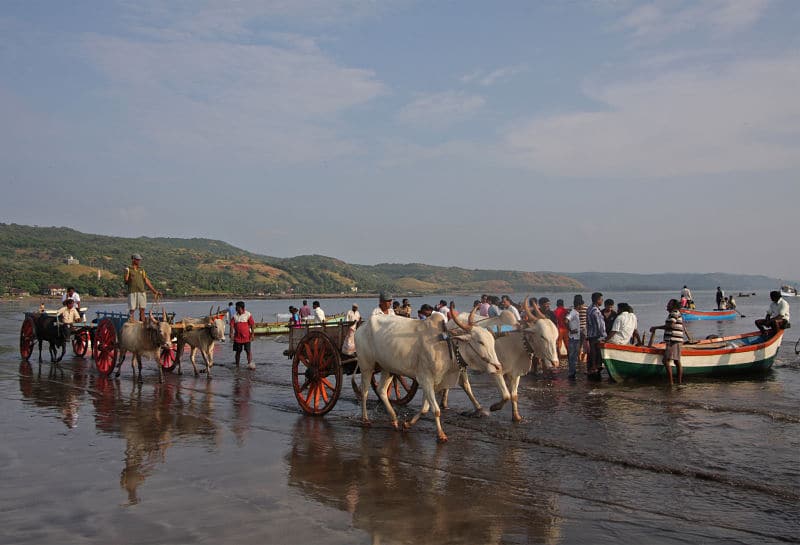
Harnai port, India by Cj.Samson/Wikimedia Commons
Lucinda continues the series of stories of Christian martyrs and heroes from the past. We hope you will be inspired by these histories and perhaps find them helpful in preparing for school devotions and other lessons.
- Year: mid-1800’s
- Place: Assam, India
- Person: Nokseng
- Event: A man’s last words convert a village
In the days when fierce headhunters inhabited the jungles of Assam in India, missionaries traveled to the land to tell the Garo people about Jesus. Now the Garo in those days “were looked upon as bloodthirsty savages,” (Playfair 1909, 76-77) the hills they roamed were covered with impenetrable jungle, and the climate was so deadly it was considered impossible for a white man to live there. Nevertheless, missionaries inspired by revival in Wales came to share the gospel, and a Garo man named Nokseng, along with his family, gave his heart to Jesus.
The chief of the village was angry and summoned the man, his wife, and his two sons. In front of the entire village, he demanded that the family renounce their new beliefs or be executed. Moved by the Holy Spirit, Nokseng replied, “I have decided to follow Jesus. No turning back.”
Enraged, the chief ordered his archers to shoot the two boys. “Now give up your faith,” he ordered Nokseng. “You have lost both your children, and I will kill your wife next.”
“Though none go with me, still I will follow Jesus,” Nokseng replied. “No turning back.”
Even more furious, the chief ordered his archers to kill the wife, and when she was dead, he turned to Nokseng. “If you don’t renounce Jesus, you will die, too.”
“The cross before me, the world behind me. No turning back,” Noksung declared.
The chief’s archers shot the man where he stood, but the chief was deeply moved by his faith. “Why should this man, his wife and two children die for a man who lived in a far-away land on another continent some 2,000 years ago?” he wondered. “There must be some supernatural power behind the family, and I too want that supernatural power.”
The chief declared publicly that he too would now belong to Jesus, and the entire village, after seeing the family’s faith and their chief’s conversion, also decided to follow Christ.
An Indian Christian missionary, Sadhu Sundar Singh, formed Nokseng’s last words into the hymn which we still sing today.
***
Several versions of this story are told, all similar but with some differences in details. This story is based on the account by Indian Christian evangelist Dr. P.P. Job in his book Why, God, Why?
Avoiding the Summer Slump: Staying Connected with Your Scholars
 Image by Markus Spiske on Unsplash
Due to COVID-19, many of us are experiencing a longer summer vacation than normal. And even if your summer vacation has not come early this year, many of us have not been able to have a normal classroom with our students over the past several months. With rumors of schools not opening normally in the fall, many are wondering if an entire generation of scholars within America will have academic repercussions when students do eventually return to the classroom. What measures are your staff putting into place to ensure that your students will not fall “behind”?
While our students will not be spending their summer vacation within the walls of our classroom, they are still in the best classroom of all: the big, wide world that God designed which is full learning opportunities. This classroom may not be traditional, but with a bit of prompting, your students can make great headways over the summer months in discovering more about math, literacy, communication, and science.
Create a Summer Challenge: 50 Things To Do This Summer
Miss Anna Zehr was the first one to introduce this challenge to me. Tweaking her list and adding some of my own, I sent my students home in the summer with a list of fifty tasks to complete. I offered a prize at the beginning of the next school term for those who completed more than half the list.
Ideas for your list:- Keep tally of all the books you read! When you have read 50 books, give (teacher’s name) a call (teacher’s phone number).
- Keep a journal of what you do during the summer. Write in it at least 2 times a week.
- Use a paintbrush and water and write the numbers from 1 – 500 on your blacktop, porch, or sidewalk. Don’t worry if the number disappears soon after you write it.
- Make something in the kitchen involving the use of measuring cups.
- Pull out your math flashcards. Practice them on Mondays, Wednesdays, and Fridays.
- Cut out words from a newspaper or magazine, one for each letter of the alphabet.
- As you read, try to picture what’s happening in your head. Stop and wonder about what you’re reading. Ask yourself “why?”, “how?”, and “what do I think will happen next?” questions.
- Ride your bike.
- Go outside. Collect natural objects and organize them into these categories: smooth, soft, hard, dry, prickly, and wet.
- Find an object in your house that begins with each letter of the alphabet.
- Find the answer to these questions: How long does it take an ice cube to melt outside in the summer heat? In the refrigerator? In an air-conditioned room or basement?
- Make a scrapbook of mammal pictures.
- Go to the library. Find a book that we read this year at school, check it out, and read or look through it at home. What was your favorite part of the book?
- Play the alphabet game with your family as you are driving. Who can see something first that starts with each letter?
- Make little signs to name things in your room. Put them up in your room.
- Math in the car: Decide on a number of points for each animal that you might see (cow = 1 point, horse = 1 point, pig = 2 points, etc.). As you drive, add up the points. You can race by playing until someone reaches 10 points, or you can work together to see how many points you can get in one car ride. Were you able to find more or less on the next car ride?
- Go outside and collect ten different sticks. Put them in order from smallest to largest.
- Play store. Make price tags for things in your room. Use real or pretend coins to buy the things.
- Gather six different items that you think might sink in water and six different objects that you think my float. (For example: soap, sock, bottle of shampoo, rock.) In a pool or the bathtub, test your hypotheses and see if you were correct.
- Cut words from a magazine. Make sentences out of them.
- Write the numbers from 501 to 700.
- Make a sandwich. Cut it in halves, then in fourths. See if you can cut it into eighths too.
- Make a list of everything you can find that is orange.
- Go on a hike outside. Collect something from nature that represents each primary color and each secondary color.
- Go outside. Ask your mom or dad to help you learn which direction is north, south, east, and west. Walk 10 steps south and 5 steps west. Where are you? (Stay off the street!)
- Make up a song that has all the number facts in the 10 family.
- Write a story about one of your pets or stuffed animals and read it to your family.
- Ask your mom or dad to take you to a senior’s nursing home with your friends so you can read a story to the people who live there.
- Write numbers by 10’s to 1,000.
- Look at a United States map. Find Virginia, Ohio, Florida, and California. Find your state.
- Go outside and find 3 different kinds of leaves. Make a Venn diagram explaining how are they alike and different.
- Write all the names of the animals you know and have a friend do the same thing. Set the timer for five minutes and see who can write the most.
- Plan a picnic for your family. Make a list of the food you want to take and the games you want to play. Then help your mom or dad get ready for the picnic. If it doesn’t suit them, have a pretend picnic with your friends and stuffed animals.
- Keep track of the weather for a whole month on a piece of paper. Are there more sunny days, cloudy days, or rainy days where you live? Can you predict what tomorrow’s weather will be?
- Draw a map of your house and label all the exits you could use if there was a fire. Call a meeting with your family to discuss what you would do if there was a fire.
- Find objects around your home that begin with the consonant digraph Write or draw them on paper.
- Cut out food pictures from magazines. Arrange the pictures into 4 categories: 1. Fruits and Vegetables 2. Dairy 3. Meats 4. Bread and Cereal. Arrange the pictures under the correct category.
- Sit quietly outside and watch for birds. Use chalk to make tally marks on your driveway/porch/sidewalk for each bird that you see.
- Get a book about birds and mark the ones you have seen this summer.
- Make a paper airplane.
- Play the What’s Missing? Find 5-10 objects. Put them on a tray or table. Have someone look at them for several seconds then close their eyes while you take one away. Can they guess what is missing? Then let them remove an item so you can guess what is missing.
- Write the days of the week on a piece of paper. Beside each day write down the fruits and vegetables you ate.
- Use a ruler to measure things in your house.
- Memorize a poem or Bible verse and recite it to your family.
- Read a book. Close the book and try to remember what happened at the beginning of the book, the middle of the book, and the end of the book.
- Look for rocks in your neighborhood. See if you can find ten unusual rocks.
- Imagine that you have an alligator as a pet. Write a story about it, then read it to someone else.
- Volunteer! Ask your mom or dad if they have a job you can do.
- Take small objects like cereal or stones and make addition and subtraction problems with them. If you are outside, write the problems with a stick in the dirt.
Are there items that you could add to the list that are specific to what you studied in your classroom this year? Did you study about the cloud types? Or memorize a Bible passage that they could recite to a grandparent? Or try different types of writing—informative, fiction, biography, etc. Try to add several things to your list that are unique to your classroom this past year.
Send them a Postcard about One of Your Summer Adventures
Whether you go camping, traveling out of the country, or studying for a week at Music Camp, you will be doing something in your summer that you do not normally do through the school year. Take a picture while on the adventure, make it into a postcard at Walmart or snapfish.com, write several sentences about your adventure, and send it off to your students.
Not only will they love the fact that you remembered them, but they will also feel the inclination to write you back.
Give Them a Call
Everyone loves to receive a phone call from a friend. And, I found that my first graders were more than thrilled to hear “Miss Stoltzfus” on the phone line. It gives them a chance to practice their “speaking-on-the-telephone” skills, and it gives you a connecting point with them over the three months of not seeing them.
Ideas of what to discuss:
- What has been their highlight of the summer
- Where have they visited/travelled
- Who do they get to play with
- Why do they like summer time
- When have they last seen their classmates
The Satisfaction of Learning: Affirmation, Correction, and Guiding Students to Discovery
I feel that affirming a student is very important to their success. I think it's important because for a student to feel successful, they need to feel built up. I generally don't say, "No, that's the wrong answer", but instead, I try to steer it in a way that gives them a way to think toward the right answer.
After his marriage in February, 1522, Conrad came to the end of themselves. What does it mean when you come to the end of yourself? Does it mean you come to your toes or what does it mean? When you come to the end of yourself. Sometimes you guys are a fan of yourself, but before that, if you come to the end of yourself, it means that you are at the lowest place and you're feeling like you can't do it anymore and you decide that you should do something different. That's what he did.I don't like to say that an answer that is incorrect is correct, but taking their answer and guiding it toward a more correct answer, if I can do that in a way that doesn't negate what they said, then I feel like that's a good way to affirm them.
Very nicely done. Lots of you did very, very well with that. Something I noticed is that some people’s eyes came off of this and you lost track of where you were so we're going to do it one more time and make sure that your eyes are following the trail so that you don't get lost on your way out of this.Chris: On one occasion, one of the students gave you an answer or didn't have an answer ready for when you asked her, I think you said something like, “Look that up and then we'll come back.” Is that something you do regularly, and why?I like to vary the way that I have students find answers. Sometimes they will say, “I don't know the answer.” In a case like that, I would have them either go and look up the answer if they have it close by or there's a place where they can go to look for it, or sometimes I will have a student in the same class help them out. Sometimes I'll say “Malachi, or another student, can you help this person out?” Most often, I would rather have them go and look it up if they can.
I think just the importance of that is so that they can retain it longer in their memory, not just for the test, but beyond that, just so that they can also feel the satisfaction of having found the answer but then it also sticking better. The thing of finding satisfaction for themselves, I just feel like that will stick with them if they can feel like they have achieved something themselves rather than a teacher just telling them or them just guessing an answer. I feel like it will boost their confidence more if they can feel like, “I found this myself.”