
All Content


Dear Second-Year Teacher
 Photo by William Iven on Unsplash
Dear Second-Year Teacher,
Welcome back for another year in the classroom! It’s good to see that you stuck around, that you were brave enough to try it again. It would be a shame to let all the learning you did last year be wasted.
The second year is supposed to be easier. What makes it that way?
Whether you consider your first year a grand success or an utter failure—in reality it was probably neither—you likely hit rough patches along the way. You probably found that the actual teaching experience didn’t exactly fit the idea of that teaching experience in your mind. You found that you were working with frail, willful human beings, not robots waiting your programmed command. You found that the clock went faster than you thought it did. You found that your superior knowledge was still not enough to help every child understand every time. You found that your supply of patience was less than you thought it was. You found…lots of things that didn’t go like you thought they should.
As you go into this new year you can make proactive plans. You now know a little better what you will be working with. You know that many students need help curbing their selfish desires (we don’t sit in a hard seat and work on difficult material just because we want to). You know that students are happier when they’ve learned self-control (we aren’t happy when we procrastinate, argue, or sulk in a corner). You know the rough places in the curriculum. You see the whole picture better. You now have an idea of where you want to end up before you start. You are better prepared to meet the challenges.
As you plan your new year, think about the areas that went well. Was your schedule effective? Did your method for passing in books work? Was your system for dealing with class disruptions successful? Don’t throw away the things that worked for you.
In your plans for the next year, give a lot of thought to the trouble areas of the past year. Was the book/craft corner a place for disruption, whispering, and distraction? How can you change that? Could you limit the number of people who can be there, or specify the time period students use it (say, only in last period if their work is completed), or be more specific in your expectations of the privilege, or eliminate it altogether? Did students have trouble getting their math completed on time? What might be a solution—more flashcard practice so they speed up, or do you need to move math to a longer class period so they have a larger chunk of time to work on it? Was the problem that hands waved constantly over the classroom? Are you spending enough time in class, or do you need to spend more time in review and drill, or do you need to teach your students to pay attention during class time? One advantage you have this year is that you better know the trouble spots and can prepare yourself and the students for them.
You learned much in your time last year, but teachers are just like students. Throw too much new material at us and we only catch part of it. We also need review and reminders. One way to prepare yourself for this year is to go back over all the beginning teacher material you were given last year. You will probably find a few nuggets you didn’t notice last year. Here are a few you may have overlooked.
- Routines are very important. Students thrive when they understand and know what to do. Teachers who let routines work for them are less harried and have more time for the important things.
- Routines must be communicated, modeled, and practiced for them to be successful.
- Rules (different from routines) must be enforced—remember, to have a rule is to invite someone to break it. The solution is not to have no rules. The solution is to have a consistent, non-emotional method of reinforcing the rule. (Getting angry, frustrated, or complacent will not work.)
- Rules must also be communicated, modeled, and practiced.
- Students perform to the level of your expectations. Do you expect them to sit quietly? If you are pretty sure they can’t, you will be correct. Do you expect neat work? If you don’t, you will have sloppy papers. Do you expect students to memorize the multiplication tables? If you think that is too hard for them, they will not get the facts memorized. As teachers we must be realistic in our expectations but many times, we expect too little.
- Students need to see, hear, and handle material to understand. Teaching is not a one-way tunnel where the teacher funnels in all the information and learned students come out the other end. Students need to interact and grapple with the material. The teacher facilitates the interaction.
- Parties, prizes, and treats do not make a successful school year. Rewarding a job well done is not wrong; however, hinging student performance or classroom management on a tangible reward system will not bring about satisfaction or success.
- Realize that teaching for the teacher and book work for the student is hard work and not play. Spice in the classroom should be spice and not flour or sugar. That does not mean that learning and hard work cannot be interesting. But spice should not be added just because it’s time to do something fun. Putting pepper in cookies doesn’t work, but adding some cinnamon is pleasing.
Yes, teaching the second year is easier. But there are areas where you as a second-year teacher may find it more difficult. For one thing, the enthusiasm of your first year is hard to surpass. As we teach longer, we start to realize how much work certain things take and we shy away from projects and activities that demand so much from us. We have also learned how hard a job teaching can be. We realize more realistically that teaching means being on-demand for six straight hours. It means we never quite get away from the classroom. It means working with various personalities and various parental expectations. Teaching a second year brings with it a greater sense of responsibility.
Another challenge you may face is when you teach the same students that you had the year before. Those students come back to school expecting the same experience of the year before. When you try to make changes, the students may provide some push-back. If your reasons for the change are well thought out, you can calmly and firmly stand on those reasons but you must be on your guard. It may take students a while to adapt to the changes.
So, Teacher of the Second Year, welcome back. I am glad to see you again! And, as it was last year, I’m still happy to help you with the questions you have. I’m still willing to listen to your struggles, success stories, or times you feel you’ve failed.
May God bless your year!
~A teacher who once stood in your shoes
Learning Paths for Teachers
Utilizing The Dock for Learning as Teacher Preparation for the School Year

Planning intentional development through The Dock
This guide was originally developed as a resource for teachers who could not attend large events during COVID-19. Though we are grateful for the return of in-person events, these learning paths remain highly useful guides for exploring the resources on The Dock.
We offer the following content as one option for teachers, principals, and school boards to consider when planning for teacher orientation in their schools and communities. The Dock offers thousands of recordings and documents that could provide a starting point for teacher orientation. The lists below were curated by long-term educators to highlight some of the best content in various categories.
We encourage teachers to take a group approach to this preparation. Teachers prepare best in collaboration, and the conversation that happens in a group is one of the significant benefits of a large gathering. Perhaps all the teachers from a school could gather for one or two days of focused preparation. If it is not possible to gather with teachers from the same school, perhaps teachers who live in the same geographic area could gather. Groups could plan to eat lunch together to maximize the benefit.
School boards could ask their teachers to devote several days to this sort of development. A school board or principal could enable that gathering by identifying a place and time, or by providing lunch or supper for the teaching staff.
Whether the teacher listens to content alone or with a group, there are ways to maximize the learning that occurs. Here are some ideas to try after listening to a session:
- Think together about ways in which you’re already applying the teaching strategies described.
- Talk about ways you could strengthen your practices and methods.
- Choose one or two new things you’re going to try.
- Choose a core subject (math, reading, etc.) you’re going to focus on teaching extra well this year.
We offer this suggested schedule as a starting point for groups to plan their time together.
Sample Daily Schedule |
| All Teachers Together
Listen to one segment of a multi-session series |
| · Give time for discussion |
|
| Breakout 1
Split into grade level groups to watch or listen.
All Teachers Together Discuss the content experienced so far.
Listen Together |
| Eat a meal together. |
New and less experienced teachers could round out their preparation by listening to at least one presentation from each of the following categories: learning difficulties, classroom management, and class culture. In addition, they should take in as much content as possible from the most relevant grade level section to their teaching position. The grade level sections below are Lower Elementary (Grades 1-3), Upper Elementary/Middle School (Grades 4-8), and High School (Grades 9-12).
Besides learning about methods of teaching core subjects such as math and reading at their grade level, new teachers also need to spend time thinking more generally about how to plan lessons and assess the learning of students. The shaded section in the New Teachers category provides videos and lesson plan templates to help teachers start thinking about these important topics.
The lists below include more content than any school could hope to cover in a few days of teacher orientation. In addition, these are only some of the resources available on The Dock. In many cases, related items are listed on the page for each item; those related items may offer additional help in a given area.
We hope that this material will assist teachers in their preparation for the school year ahead. We pray that God will bless the efforts of school boards, principals, and teachers as they engage in the challenging work of this year!
Preparation for New Teachers—General
The items below will help new teachers start to think about the vital topics of planning lessons and assessing the learning of students. Some of the documents are templates that can be edited.
| Speaker | Title | Format |
| Anthony Hurst | *Becoming An Effective Teacher | Audio
4 sessions |
| Steven Brubaker | *Texts for Teachers | Audio
4 sessions |
| Jonas Sauder | Essential Personal Qualities of Teachers | Audio
1 hour 24 minutes |
| Deana Swanson | Incorporating Good Books into Any Curriculum | Audio
1 hour |
| Paul Harrison | Start with Simple: Tips to Make the First Year Less Stressful | Video
5 Minutes |
Preparation for New Teachers—Lesson Planning and Assessment
| Speaker | Title | Format |
| Peter Goertzen | What do Teachers Do? Focusing Your Lessons with Objectives | Video
6 minutes |
| Rolin Martin | The 4 Ms of Effective Objectives | Video
15 minutes |
| Brian J. Martin | More than a Grade: Assessment as a Teaching Tool | Video
5 minutes |
| Betty Yoder | Help for the Beginners and the Experienced | Document for new teacher orientation
25 pages |
| Jonas Sauder | Basic Lesson Plan Template | Document |
| Arlene Birt | Introduction to Teaching Master Document (includes lesson plan template) | Document |
General Interest for Experienced Teachers
| Speaker | Title | Format |
| Daniel Rutt | *Biblical Integration | Audio
30-40 minutes each session; Video summaries, 2 clips 5-6 minutes each |
| Daniel Rutt | Biblical Integration Summary | Video
2 clips 5-6 minutes each |
| Kyle Lehman | *Swords to Ploughshares: Knowledge to Wisdom | Audio
30-40 minutes per session 4 sessions |
| Gerald Miller | *A History of Christian Education | Audio
1 hour per session 4 sessions |
| Sharon Martin | Called to Teach | Audio
1 hour |
| Sheldon Kauffman | Peaceful Classrooms | Audio
1 hour |
Content for Lower Elementary Teachers
| Speaker | Title | Format |
| Carolyn Martin | Welcome to First Grade Part 1 and Part 2 | Audio
1 hour per session |
| Verlin Miller | Teaching Elementary Math | Audio
50 minutes |
| Glenda Miller and Ruth Anna Kuhns | The Exciting Journey: Guiding Your Class to Successful Reading | Video
12 minutes |
| Ruth Anna Kuhns | Making Elementary Math Come Alive | Video
2 clips 2-3 minutes each |
| Yvonne King | Show Them, Tell Them; Techniques to Share the Story of the Bible | Video
3 clips 6-10 minutes each |
| Becky Bollinger | Sing, Chant, Learn: Making Memorization Easier with Songs and Chants | Video
8 minutes |
| Martha Stoltzfus and Karen Yoder | Helping Struggling Readers | Video
5 minutes |
| Marla Bear | Children Thrive on Routines: The Power of Rhythms for Individualized Classrooms | Video
8 minutes |
| Yvonne King | Responding to the Challenge: Teaching Lower Elementary | Video
6 minutes |
| Yvonne King | 10 Resources for Elementary Math Review | Document |
Content for Upper Elementary/Middle School Teachers
| Speaker | Title | Format |
| Sharon Yoder | 3 Components for a Successful Reading Class | Audio
1 hour |
| Sharon Yoder | Teaching Fictional Elements in the Reading Class | Audio
1 hour |
| Jonas Sauder | Developing Levels of Reading Comprehension | Audio
2 hours 14 minutes |
| Jonas Sauder | Speaking Skills Across the Curriculum | Audio
1 hour |
| Amy Zimmerman | Making Your Curriculum Work For You | Audio
1 hour |
| Melvin Lehman | Teaching Math | Audio
1 hour 40 minutes |
| Bethany Peachey | STAR in Reading | Video
5 minutes |
| Rebecca Beiler | Turn and Learn | Video
5 minutes |
| Denise Martin | Ways to Call on Students | Video
4 minutes |
| Amy Zimmerman | Too Long, Too Hard: Making Your Curriculum Work for Your Class | Video
6 minutes |
Content for High School Teachers
| Speaker | Title | Format |
| Sharon Martin | Conquering Subjectivity in Assessments | Audio
1 hour |
| Dana Atkinson | The Hills and the Valleys: Geology from a Young Earth Perspective | Audio
1 hour |
| Dana Atkinson | Astronomical Adventure: Is Orion’s Belt a Waste of Space? | Audio
1 hour |
| Rolin Martin | Girls and Math: How Going Beyond the Rules Helps Students Engage with Math | Video
9 minutes |
| Peter Goertzen | Teaching Church History | Video
5 minutes Linked Resources |
| Peter Goertzen | World Cultures and Geography | Video
5 minutes |
| Sharon Martin | Rubrics | Video 3 minutes
Document: 3 sample rubrics |
| Brian J. Martin | Now They Know: Why and How to Differentiate Instruction | Video
5 minutes |
Content on Learning Difficulties
| Speaker | Title | Format |
| Lynell Nissley | Exceptional Learner: Defining the Terms
A series of blog posts that should be read first to give an overview to this complex topic. Dyslexia is a common disability that teachers will encounter, so special attention could be given to these blog posts. | Blog Posts |
| Anthony Hurst | ADHD | Audio
1 hour |
| Becky Bollinger | Dyslexia: Signs, Symptoms, and Solutions | Audio
1 hour |
| Becky Sue Kreider | Trauma: How Can I Teach This Child? | Audio
1 hour |
| Deana Swanson | Accommodating Special Needs in the Classroom | Audio
1 hour |
| Hannah Johnson | Memory | Video
8 minutes |
| Wesley King | Coping with RAD | Audio
1 hour |
| Lynell Nissley | Resources to Consider | Document |
Content on Developing Class Culture
| Speaker | Title | Format |
| Anthony Hurst | Components of Classroom Culture | Audio
1 hour |
| Jeremy and Diana Sauder | Improving Communication with Your Students Part 1 and Part 2 | Audio
1 hour each |
| Melvin Lehman | Authority in Action | Audio
50 minutes |
| Sheldon Kauffman | Peaceful Classrooms Excerpt | Audio
7 minutes |
| John Mark Kuhns | Relationships with Students | Video
4 minutes |
| Joseph Shantz | Enjoying School, Delighting in God: Classroom Culture | Video
5 minutes |
Content on Classroom Management
| Speaker | Title | Format |
| Conrad Smucker | Managing a Multi-Grade Classroom | Audio
50 minutes |
| Brian Martin | Setting Up Your Classroom to Enhance Student Learning | Video
4 minutes |
| Karen Nolt | Sample Classroom Procedures (5th grade) | Document
|
| Regina Martin | Classroom Management Plan (Grades 1-3) | Document |
| Amy Zimmerman | Code of Conduct | Document |

Love for the Challenging Student
How do you love the child who constantly pushes the boundaries and does not mesh into your ideal for a smoothly-functioning classroom? The goal of this breakout is to inspire and renew our love for, commitment to, and understanding of the challenging student. Led from the perspective of a 3rd grade teacher with 20 students, this breakout will focus on the needs of elementary teachers.
Teaching High School History
High school history class can offer the student a deeper understanding of the human condition across the ages. Engage with my reflections on teaching high school history as it relates to content scope and instruction. I have taught high school history at Terre Hill Mennonite High School for five years.
Healthy Personal Discipline for Teachers
Every successful teacher has personal and private habits and practices. These may vary but they stand behind and before success in the classroom. Important questions to be explored are: What are these habits and practices? How can one adopt, internalize, and make such habits and practices a part of daily life?
Teaching Fictional Elements in the Reading Class
In elementary grades, it is easy to overlook the fictional elements of story. We tend to focus only on the important skills of comprehension and word building. This breakout is designed to aid your reading class by expanding your teaching strategies in emphasizing the fictional elements of a story. You will participate with some hands-on activities that will give you ideas to implement in the reading class with any reading curriculum.
Laying a Solid Preschool Foundation
Because of current parenting trends, fresh attention is needed to encourage parents to ensure their children are getting the solid social, emotional, physical, intellectual, and spiritual foundation they need in preparation for first grade. Lacking that foundation, students are ill-equipped to learn, and teachers cannot do in a few weeks in the classroom what should have been done over the last six years. This breakout provides lower grade teachers and principals with information and recommendat
Classroom Accomodations: When And How?
As teachers, we can either accentuate our students learning and behavior needs or we can support and empower them to rise above their challenges. This breakout will explore a rationale for classroom accommodations, including when and how to appropriately implement them. Specific accommodations for common student challenges will be discussed from the perspective of an elementary teacher of 20 students.
Making the Pen Mightier than the Sword
The metonymic adage the pen is mightier than the sword is rarely true without some purposeful effort. How can we make our writing and the writing of our students more effective? This session will be geared toward middle school and high school teachers, and presented from the perspective of 34 years in a high school English classroom. Ideas from the participants are welcome.


Becoming an Effective Teacher: Developing Proper Relationships
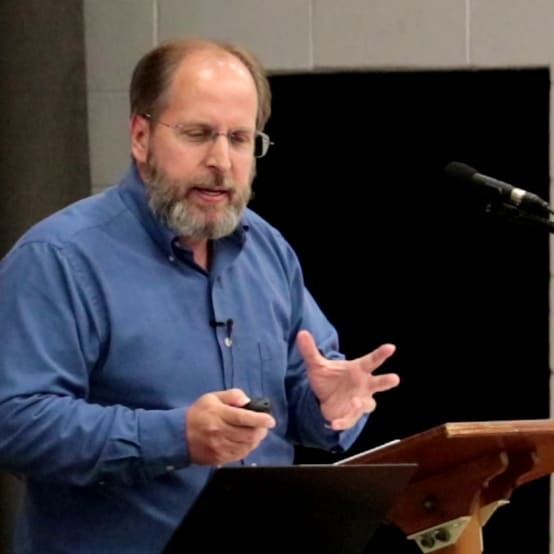
Teachers are professionals. You have a job to do. But when you've successfully made it through the English book, your job is not done. Relationships with those around you are vital to your success and to theirs. Anthony encourages us to consider the way we relate to students, co-teachers, patrons, and the church community.
Trauma: What Has It Done To My Student's Brain?
Why cant Johnny focus on his lessons? Why does he blow up in anger over minor provocations? In Part 1, we will explore how trauma alters brain development and chemistry. This topic is especially helpful for those relating to foster and adopted children. Becky Sue enjoyed eleven years of teaching, four of which were in Honduras teaching at the school next to the Good Shepherd Childrens Home
The Hills and Valleys
A broad overview of geological deposits and processes forming the landscapes of Pennsylvania and surrounding areas, explained in context of the Genesis flood. For middle-to upper-grade teachers who wish to connect earth sciences to the students local landforms from a biblical framework. Presented by an avocational geologist with 20+ years pursuing geological interests.