
All Content

Habits

During the summer the 25-mph speed limit sign was moved up the hill a few hundred yards. This morning on my way to school I realized that, once again, I cruised through it at a higher speed, only slowing down as I approached the bridge that had previously marked the lowered speed zone. A habit formed from thirty years of traveling that road five days a week is hard to break.
My thoughts then traveled to the habits we want our students to form. We are at the beginning of a new school term. Now is the time to work on the habits we want to see and perhaps work on breaking the old habits from previous years. The first step in forming a new habit is to become aware that it is necessary. Then we need to put effort into performing that habit continually until we do it without thought. Good habits take much more effort than bad habits. One must be vigilant and persistent to form good ones.
Many habits we want to see in school are not necessarily good or bad but are just the method we want to see something happen. It does not exactly matter where on a paper the student puts his name, but most of us do want to see it at a consistent place each time. So, we need to show, remind, and possibly reinforce where to write one’s name. It doesn’t really matter which on side of a desk students get out of but many times one side works into the classroom flow more easily. The habit needs to be practiced. Many school routines should become habits to help the classroom function smoothly and efficiently.
We need to help our students form good habits on the playground. Good sportsmanship does not come readily to most children. It takes teaching, modeling, and trying again to help students learn to play fairly, honestly, and kindly.
Reinforcement must be given to help students form good habits. At times reinforcement will be negative in recognition of not following the habit. (If the local town policeman stopped me for forgetting to slow down soon enough, I would remember for a long time.) Just as important is positive reinforcement when a student demonstrates a good habit.
The other day our junior high teacher asked me, “Do you still make your first graders hold their pencils correctly?” Well, I try but sometimes the effort it takes to form a correct grip habit is greater than the time I have to spend on it and students slip by without forming the correct habit. She always reminds me of what I did to help her and her classmates correct their wrong grip when she was in first grade. To help it stick in their minds, I used Frank Gilbreth’s (of Cheaper by the Dozen fame) idea for teaching his children to type. He stood behind them and whenever they made a mistake, he thumped them on the head with a pencil. So, in my class, a wrong pencil grip while they were writing got a mild thump on the head. It did help her to form a good habit, though I haven’t tried it since because I’m not really sure it was a good idea.
Teachers, too, need to develop habits in the classroom. We need the habit of being consistent in discipline. We need the habits of kindness, punctuality, neatness, organization, fairness, and persistence just as much as our students do. With new school procedures put into place because of COVID, I’m finding it takes work to change my old habits to fit the new. It takes effort.
I have driven through the new speed zone enough now that I do remember most times. But I have to consciously make the effort to remember. If my thoughts are elsewhere, I do not remember until I find myself automatically slowing from habit once I get to the bridge. This habit is going to take a lot more work until it has changed to something I do without thinking about it.
Does Curriculum Matter? Is the Ladder Leaning Against the Right Wall?
In school and at home, children encounter so many influences. Which ones are important? Jonathan urges us to take seriously the influences we place on our children. Each teacher in our school is curriculum, a system of living values by which our student learns. Our community culture is curriculum present in our schools. And of course, the course books present are curriculum too. This is intended to be a reminder about influence, heroes, and how our lives and our school shapes children’s worldvie

Free Image Resources
 Images add more than visual appeal to your lessons. They let students imagine the emotions of historical characters, appreciate the nuances of geographic description, and appreciate the power of artistic works. Below is a list--far from complete--of sites that offer free images for reuse. Just keep in mind that...
- Although most of the pictures are free, some of these sites also carry ads for paid stock photos.
- The fact that an image is free doesn't mean you don't have to give credit to the author. In some cases, you are not required to give credit--but it's still a respectful thing to do.
- Some of these sites carry a range of images, including inappropriate ones. Some sites offer a mature content filter to block these from your view.
Sources for Free Images and Illustrations
| Creative Commons Search | Pulls in CC-licensed images from a number of sources. |
| Wikimedia Commons | Free images, many of which need to be attributed |
| Pixabay | One of the broadest selections of free images |
| Stock Pictures for Everyone | India images for free (nonprofit rate) |
| Library of Congress images | Public domain images, many of historical interest |
| Site Builder | A search engine that catalogues a number of free image sources; limited, but good quality |
| Web Gallery of Art | Fine art from the past |
| Unsplash | An emphasis on artistic photographs |
| Flickr | Some images with Creative Commons licenses; on search results page, filter by license (drop-down at top left). |
| Burst | Free stock photos intended for ecommerce, but with a variety of subjects. |
| Pexels | Free stock; includes some video. Some of these are sourced from Pixabay, so content is not necessarily unique. |
| Freepik | Emphasis on backgrounds and vectors. Also has premium offerings. |
| RawPixels | Free and premium offerings; tend to be good quality and less stock-looking |
| Life of Pix | Scenic and minimalist |
| pxhere | Registration (free) required to download; free with a focus on scenic and atmospheric |
| EveryPixel | Searches across 24 free image sites, including Unsplash and Pixabay. |
| Awesome Stock Resources | Large collection of links to sites offering free photos, videos, and graphics resources |
| Europeana | Great trove of cultural items--letters, photos, paintings--from Europe. Many but not all are free to use. |
| Free Illustrations | Doodles and illustrations intended for the web Images in this post come from a link listed there. |

Preschool Preview
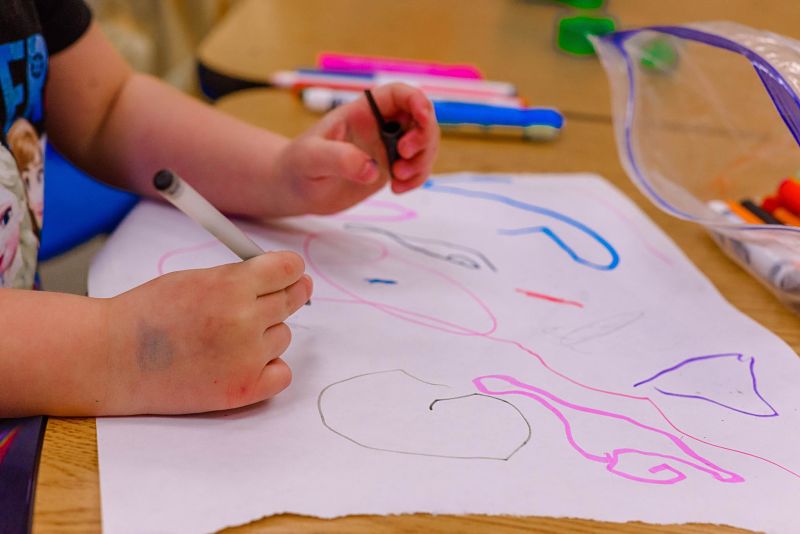 Photo by Erika Fletcher on Unsplash
When four- and five-year-old children think about school, what do they imagine? Do the smatterings they hear from older siblings, cousins, and friends give them a fun picture or a bleak one? I was curious to find out, so I asked. This is what they said.
What do you think school will be like?- It feels like rest time, I think. Cuz it’s really quiet and comfortable.
- Ummmmmmmm. Like church.
- At the first I know I’ll feel a lil scared maybe? At the first. An then I think it might be fun. At the end of school I will want to go back, and when I get used to it, I think I’m gonna like it.
- Colorin’ pictures.
- You will get teached a lot.
- Fun! To ride on a school bus. I’m excited that I can color. When do they do coloring?
- I’m gonna miss my mom. And I hope she’s gonna miss me.
- Be like? I don’t know… Be quiet and write words. And write pictures. That will be easy because I already know how to write people. But not hands. I just do a line down, and then arms across, and then a head, and then two dots, and then a nose that’s a dot, and a smiling face. And then umm do legs. Actually I know how to make another kind of people…
- I don’t know. Maybe easy. I like writing in books so that’s gonna be my fun thing.
- Hard. Cuz of colorin’ pictures. I don’t like colorin’ pictures.
- Easy. Because. Because… I KNOW that it’s gonna be easy. You just gotta sit still. Easy! I can already write good. But I’m gonna have to learn to write words before I go to school. Because I needa write words on my books. Kinda hard. I might have to practice.
- At the first it will be hard an’ then it will be easy at the last. Cuz I’m not gonna know the teachers.
- It will be easy in first grade, but then harder. Because there is more stuff to do when you get older.
- Yeah. Easy!
- Hard. Because I needa do math and do doublecase numbers. And doubleknot my shoes.
- No.
- Chloe. One of my girlfriends. All the people that are kids go. But that’s gonna be fun on the bus. Is there beds on the bus? Awww. I LOVE sleeping.
- Kelly and Regan and Aarick. And me. I’m GONNA go to school. And my doll. Hahahahaha. No, she didn’t go to school.
- Makenna has some sisters that go to school, and Ellie goes to school but now she’s sick, and I can’t talk much else.
- Devon. That’s all.
- I don’t know because I like so many stuff. I don’t know.
- Letters.
- I wanna know how to do everything.
- I want to learn how to read so I can read my own books.
- How to listen and how to read stories to the children. How to write letters. And write my name, and write letters RIGHT.
- I wanna learn about Jesus.
- Well, math. And umm… Breaktime!
- How to count to one hundred and ten.
- About snakes.
- I wanna learn about letters and numbers and taking care of a real baby. And making good soup and carving good, and cleaning dishes and sharp knives.
All in all, not a bad impression. A little bit easy and a little bit hard, book learning mixed with a few real life skills, and being away from Mommy but getting to ride on a school bus?
They’ll take it.
*Thanks to the mothers who asked their children these questions for me, and shared their audio recordings of the results. Social distancing does not automatically prohibit interviews. Yay!

More than Math and Science: Caring for the Emotional Needs of Your Students
The teacher's job is to impart knowledge and to train skills. But students are more than knowledge acquisition machines. Anthony calls us to follow Christ's example in caring for children's needs for belonging, closeness, and blessing. As we care for children as whole persons, we prepare them to grow academically as well.Download the audio instead
Attitude Adjustment
 Photo by Markus Spiske on Unsplash
Bop! “I need an attitude adjustment,” Loren announced, as he hit himself on the head to give the adjustment.
“I smell your attitude, and it’s stinky!” Rachel informed her older sister.
Today I had a serious chat with my student, Calvin, regarding his work. He has been performing very poorly, is very messy, and getting many answers incorrect. His head was hanging, and he didn’t seem to care. I asked him to look at me, which he did rather defiantly. So I also addressed his attitude. When I commented, “It seems like you don’t care,” he sullenly replied, “I don’t.” I had already figured that out! Now I need to figure out how to help him and how to get him to care. I was concerned about his attitude, as he didn’t want to complete his work, he wouldn’t smile, he was grouchy, and he was putting minimal effort into school. He glared at me and challenged my authority.
I wanted to help Calvin to be happy and to be successful with school. How could I do that? I tried to find any underlying problems. Is he feeling insecure? Is he physically well? Is he dealing with problems outside of school? Is he feeling unsuccessful in his work and studies, so he’s putting on an attitude of defiance and unconcern to cover up his feelings? Does Calvin have social problems?
I didn’t know the answers to all of my questions, but I could observe Calvin and his interactions and start to find some answers. I see that he has friends and is playing soccer at recess; he is involved with the other children and not seeming to be left out. (I wonder if he is responding to negative peer pressure? I don’t think so – he seems to be a leader. I’ll have to watch that he is a good leader!) He is struggling in some of his lessons. This may be affecting his attitude.
I will try to build on his interests and find a motivation for him. I decide to “call in the reinforcements” so I communicate with Calvin’s parents. We conference and they set up a motivational plan at home and talk to him about his attitude.
Calvin’s attitude did improve when he realized that teacher and parents were working together to help him. Having a motivation boost with the plan at home helped him in his work and I think the improved work helped improve his attitude.
Obviously, the teacher will not be “bopping” children on the head to give attitude adjustments, so how we can help students to improve their attitudes?
- Pray over the child. Sometimes I stand beside a child and pray silently for him. I might put my hand on his shoulder and pray silently. I sometimes sit at a child’s desk (or stand beside it) before school and pray for that child and for me as I work with her. I pray aloud with a child. One day after we had worked through a behavior challenge, I asked Brenda, “Shall I pray for you?” She quickly agreed, and we stood in the hallway and I prayed for her and that seemed to relieve her. I pray for wisdom in working with the children. I may need to pray for myself to have the right attitude about the child.
- Consult with parents. Ask for their input. Discuss what is motivating for their child. What is important to their child? What does the child say about school? Come up with a plan to help the child. For Calvin, whenever he earned a certain grade on his spelling test he received a sticker at home. When he had filled his chart with stickers, he could go shopping for a favorite hobby item. He was excited about the plan and kept me up-to-date on how it was going. He let me know when he was going shopping.
- Give the child a special job or responsibility. This helps the student feel needed and gives him a special role. I purposely asked Chad if he would be in charge of emptying the pencil sharpener. It was not a big job, but gave him some importance and he was pleased that he was the only one who had that job. When the sharpener was full of shavings, I would call him over to take care of it.
- Build relationships with students. One day I noted, “Vernon has been very cooperative and thoughtful to me this afternoon. He was one of the culprits this morning (in a scissors incident!) He has not had a good attitude some days and has not been respectful to me. I think what made the difference is that he had lunch with me today! He chatted and asked questions, and I said if he wanted to share anything he could, and he told me some things. He wondered if I get lonely when I eat by myself. Is that why I invite them to eat with me? =) It made me realize again the importance of building relationships and listening.”
- Is the attitude problem a heart issue? This may require prayer and asking for wisdom to deal with it.
- I need to examine myself. Maybe a change of heart is required in me. Some children are more challenging to work with. Maybe I need to have more patience, love, and understanding for this child. As I pray for the child and myself, and purpose to care for her, I can have an attitude of love for her.

New Art Curriculum
Studio ARTiculations Art Curriculum was born out of the dream to help Christian school teachers and homeschool families gain access to a quality art education without burdening the teacher with excessive planning.Over the past two years Studio ARTiculations has offered the curriculum on a subscription basis, mailing unit plans out to subscribers every month. This year, Studio ARTiculations is excited to offer the entire curriculum in book form, a compilation of the past two years lessons. Currently there are four levels: Level 1 (Grades 1-2), Level 2 (Grades 3-4), Level 3 (Grades 5-6) and Level 4 (Grades 7-8). A high school introductory course is in the works and new lesson plans will be uploaded to the Studio ARTiculations website throughout the year.Head over to the website for more information. Like us on Facebook and Instagram to stay updated with the latest lessons and offerings!


Recommended Reading Lists
 Photo by Rabie Madaci on Unsplash
During my childhood, my mother had a habit of regularly visiting the local library and bringing home stacks of books. When we finished reading these stacks, we turned to our bookshelves, because my mother was also an astute thrift store book shopper, filling our home with many classics and not-so-classics. The authors of books on our shelves offered a wide range of writing quality, style, and topics, from Laura Lee Hope to Enid Blyton to Christmas Carol Kauffman to Lucy Maud Montgomery to Jules Verne to Jane Austen to William Shakespeare.
Not all of us children took to reading easily in our first years of school, but we all became voracious readers. I believe both the stacks of library books and overflowing bookshelves in our home were the “secret sauce” that enriched us in our formative years. Those books established our reading lives and strengthened our abilities to learn in school.
Last spring as we stripped education back to the essentials, I found myself especially focusing on the reading of my students. I wondered how to mitigate the negative effects of the long summer slide after a truncated school year. Reflecting on the joy and richness of our childhoods that were jam-packed with books, my co-teacher and I created a series list for Grades 1-4.
We shared this list with the parents of our lower elementary students, in hopes that the list would do several things. First, we wanted to enable moms to get books at local libraries all summer long. In our area, libraries allowed curbside pickup only, which eliminated the opportunity to flip through books to check for quality and soundness. Anticipating that this series list would introduce parents to authors and books their children would enjoy, we hoped the process of choosing books would be less stressful, thus making library books more accessible to every family.
In addition, by offering lists of series, we hoped to reach the struggling and reluctant readers in our classes. While series are often not the best quality literature, they do offer a gateway to reading for reluctant readers. Many children find the predictable plot lines easy to follow and enjoy meeting the same unchanging characters in book after book. The vocabulary in beginning to read series is usually not challenging, allowing students to gain reading fluency and confidence that will prepare them for bigger and better books.
As a teacher, I’ve recommended series to parents, even series of poor literary quality, because these series may pique the interest of students and build their reading stamina, getting them ready to enjoy the best and richest of books. Our series list was only the means to a greater end, which was to create another list—a list of high-quality literature that feeds minds, nourishes souls, and forms hearts of children and youth.
Standing on the shoulders of giants, we took the recommended reading list our bookstore, Christian Learning Resource, had offered since time immemorial and we expanded it to create a must-reads list for pre-school to grade 12. It’s not a perfect list; it’s a work in progress. But we think it has potential as a resource for parents, teachers, and even students who want to know what to read next. Teachers may find it helpful to reference this list when looking for engaging books to read aloud in story time or excellent books to study in literature class.
We teachers can enable the parents of our students to offer the great gift of broad, deep, and wide reading to their children. One way to do this is to share recommended book lists with them. Bookshelves overflowing with quality books make every home and school more beautiful. Take these lists with you to a library, thrift store, or bookstore today!
View the lists:
https://thedockforlearning.org/contributions/must-reads-book-list/
https://thedockforlearning.org/contributions/recommended-book-series-for-elementary/
Recommended Book Series for Elementary
 Photo by Klim Sergeev on Unsplash
From two elementary teachers, this list suggests series that provide your child with material to grow into reading. The list is in progress; download the file and edit it to fit your situation.
Download the list or preview it below.
New book: The Teacher's Manual
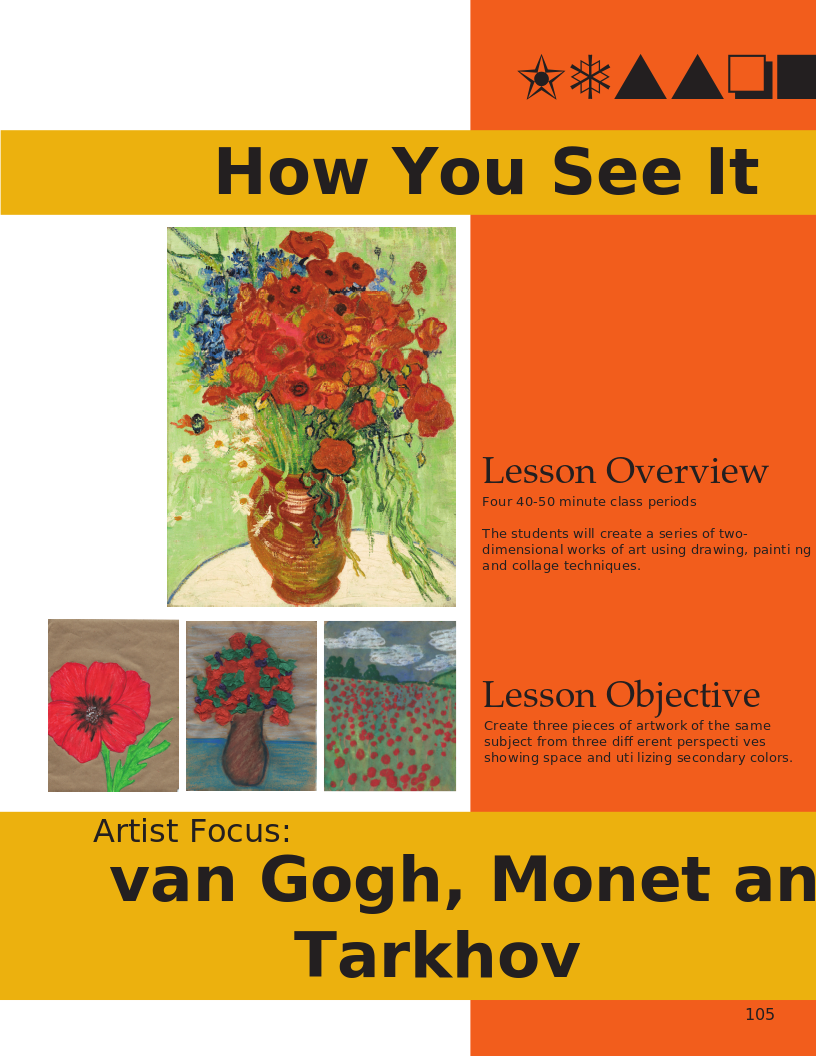
Studio ARTiculations Art Curriculum Sample Unit Plan
Studio ARTiculations Art Curriculum was born out of the dream to help Christian school teachers and homeschool families gain access to a quality art education without burdening the teacher with excessive planning.
Over the past two years Studio ARTiculations has offered the curriculum on a subscription basis, mailing unit plans out to subscribers every month. This year, Studio ARTiculations is excited to offer the entire curriculum in book form, a compilation of the past two years lessons. Currently there are four levels: Level 1 (Grades 1-2), Level 2 (Grades 3-4), Level 3 (Grades 5-6) and Level 4 (Grades 7-8). A high school introductory course is in the works and new lesson plans will be uploaded to the Studio ARTiculations website throughout the year.
Head over to the website for more information. Like us on Facebook and Instagram to stay updated with the latest lessons and offerings!
Below is a sample lesson plan taken from Level 1.
Download the lesson or preview it below.
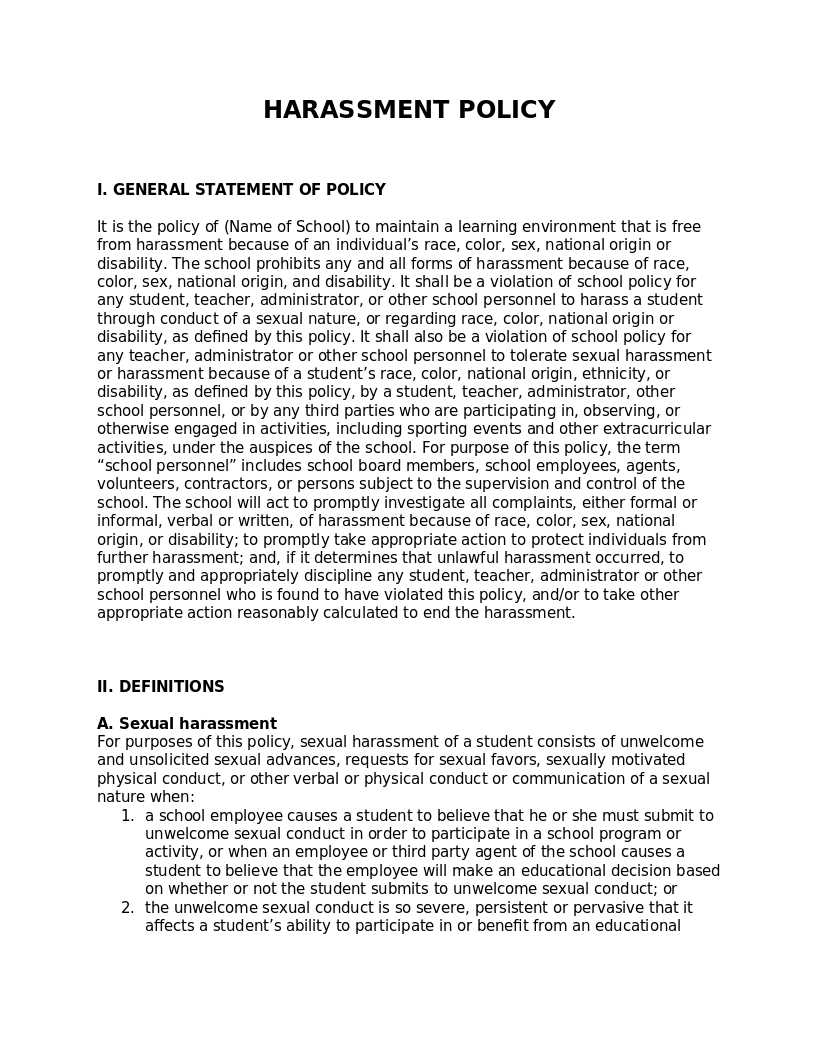
Harassment Policy Template
None of our schools intends to allow sexual harassment or discrimination because of race, ethnicity, or disability. But ignoring the possibility of such harassment does not mean it won't happen. In this sample policy, a school specifies the kinds of behaviors that are unacceptable, and the steps to be taken when a person believes harassment has occurred.
Download the document or preview it below.

Hope Emerging
 Photo by Wulan Sari on Unsplash
One day, a squirmy thing full of legs and brown stripes was carried into my classroom. It was a caterpillar, but an unusual one. Shades of brown and tan patterned its body, giving it a snake-like appearance. The children were awed at the strand protruding from its end. Was it a hair? Or maybe a tail?
Our new pet nestled into a glass jar. Before long, another one of its kind was found to join it. We learned they were sphynx caterpillars. They needed leaf juices from the tree with sacuanjoche flowers that stood on our playground. The students nurtured them, stuffing huge leaves into the opening of the jar. The efforts paid off, for the caterpillars stretched greatly in length. Thick white feet carried their plump bodies over the arms of their owners and around in the jar.
Then one day, huddled beside the leaves, lay one caterpillar--black and dry and still. What happened? we wondered. At last we pitched it onto the dust outside. One tender-hearted lass buried it as a final gesture of affection.
The other caterpillar continued to grow. Then one day, he disappeared. We spotted him beneath a cluster of leaves. He was dry, much as the other one had been. What now? We clung to a bit of patience and decided to save him just a little longer.
Not long after, we saw it: a beautiful cocoon in that clump of stuff. Brilliant orange lines contrasting with black glowed through the shell. Thrilled, we watched and hoped and watched some more. One weekend, with no big eyes peering into its transparent home, our caterpillar wrestled out of its cocoon. It hung on the side of the jar, alone. It perched, a sphynx moth at last, with a fuzzy appearance of whites, blacks, and browns. The next week, the students released it into fresh air and blue sky, where it belonged. No more barriers holding him back. He was free to soar!
What about his former companion? Perhaps we had buried him in the middle of his life cycle! Had we given up hope too soon?
Around this time, my co-teacher and I stood outside the door at the beginning of recess. Branson, a first-grader, skipped around the corner past us on his way to play.
My co-teacher commented on his happy expression. “That boy has really changed,” she said. “He’s not as bratty as he used to be.”
Slightly surprised, I considered her words. And I remembered.
One day, several months earlier, Branson had entered my classroom. He was a first-grader, a five-year-old barely beyond toddler stage. In academics he was sharp, but in social interaction he lacked. He amused the other students by chasing dragonflies during recess and annoyed them by picking fights. “I am not caught!” he whined during recess. He clashed with a classmate who was also high-strung.
I tried to calm him down. I tried to stay calm myself as I dealt with the combined wills and energies of all my students. I reminded and lectured and put marks on the board for misbehavior. I asked a veteran teacher for advice and spilled my frustration to Mom. “I’m a teacher, not a mom!”
Now, looking back, I could see a difference. Branson’s cocoon was splitting open, and he was finding freedom to soar above life’s petty annoyances. The change had been so gradual that I had barely noticed it.
Yes, we still had our recess struggles. But they were not nearly as bad as they had been. What if I could not have seen results in April because I thought Branson impossible to deal with in January? What if I had given up hope too soon?
I thank God for the special people who have not given up hope on me. Those special people have prayed for me throughout the years, through telephone lines and across countries, during sunrise hours and twilight shades. They have kept on loving and encouraging no matter what. They have blessed my life more than I realize.
I want to be one of those people—one who does not throw away a work in progress. One who sees beyond what a child is now. One who keeps urging and loving despite another mess-up. One who recognizes the most itsy-bitsy step toward improvement. One who sees the likeness of God in a child, despite his immaturity. One who beholds a splendid moth in a humble caterpillar.

Addition and Subtraction Flashcards
Download and print this document to create 202 flashcards drilling basic addition and subtraction facts.