
All Content
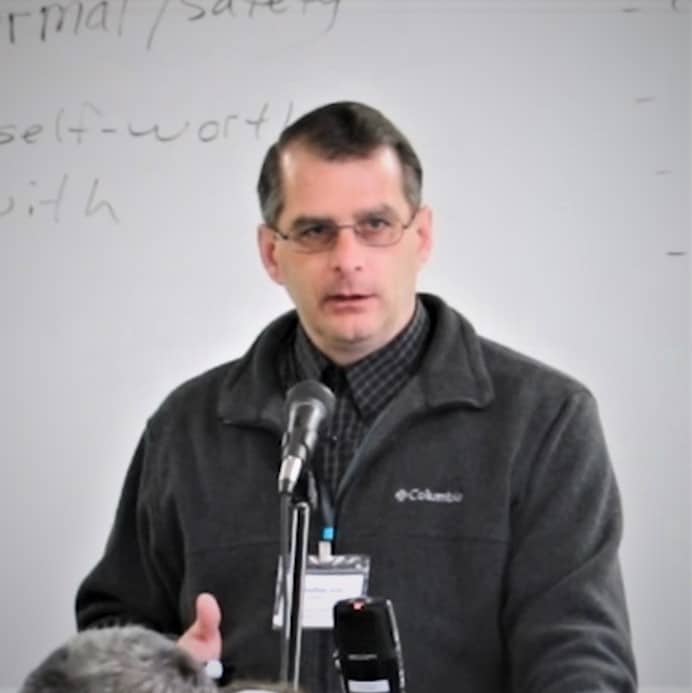
Dealing with Dysfunctional Homes: What Teachers Can Do, What Boards Can Do
You heard about the teacher that sent a note home with the Rufous, and it just simply said, "Rufous stinks. Please give him a bath."
And the parents sent a note home, not home, sent a note back to school that said, "Rufous ain't no rose. Don't smell him. Learn him."
I personally feel that teachers—that's one category. School board is another category, and church leadership is yet another.
I think as a general operating principle that teachers ought to have in relating to dysfunctional homes is, when they discuss with the parents, they need to talk about the what and not the why about the situation. The what not to why.
Let me illustrate. We had something more on a slightly annoying side of things that was occurring in a school where I taught. The children came from a home. They were they weren't really being raised. They were just kind of growing up. (It was. I mean. They were they member families. I mean, very, very admirable in many ways, but their parenting skills were perhaps a little lower than average. I don't know how to describe this. I'm just trying to say it kindly and honestly. The children maybe were a bit neglected, but yet there were many things that we can learn from them, if you understand what I'm saying.) The children came to school with their barn boots. The same boots that they milk the cows with were coming to school, and they line them up with the rest of the children. And it was a problem.
It was it was slightly annoying, the first and second and third time that happened. But when wintertime came, then this stuff would be frozen on their boots, and it would make long rivulets across the hallway. OK. And this was this was making a problem in school.
Now, let's go back to what it was demonstrating. As a teacher, the teacher should... I think at that point there should have been some communication with the him, right? Because it was actually affecting the way the other students were looking at those children. Those kinds of things obviously will.
For the teacher to go in to that conversation on a why premise, it's going to sound a little bit like this, "You guys really need to buy two pairs of boots for your children. You're just too... You're not thinking. Come on! Wake up!” That that would be more of a why premise. Or that's, of course, very direct and very, very much in response to what's on the floor. But it was true that the children were being neglected. It was true that their hygiene had issues and so on.
It would be much better to say, "I just thought you might want to know what is happening at school. In the morning, the children's boots are going out. It's making a problem in the hallway. That's what's happening."
And what I have found as a teacher very often the parents, at that point switch into a why. If you're invited into a why type of conversation, that is completely different than using that as your point of entry.
I really think that somewhere we need to determine, is this making a problem at school? Is it truly making a problem at school? If it's truly making a problem at school, than address it.
And now I'm coming around to this question, when does the minister get involved? (Wherever that was raised.) If it's a school problem, then let's not overinflate the situation by getting the minister involved too soon. I would hope that the our boards are proactive enough that many of these things can be handled on a school level. I think there are those times when we need to realize that even Jesus Christ can't help everyone if they don't want help, if they don't respond to his... I mean, he was the one that always gets it right so far as compassion and care and extending help, but a lot of people reject his offers as well. Yes.
[Audience Question]That's one thing that is a guiding principle for me, specifically thinking about this instance, that we're not a public school. We don't take everybody. And there's instances where we have to be honest, the school is not a place. We have 15 other families that need our attention. The school is not the place to help this child. Let's go to the community and find somebody that's willing to give brownies every day. We're not that place.
[Jonathan Erb]I know of a community that has multiple Mennonite communities in the same geographical area where there was a needy family that wanted to enroll their children to school. And the one school said, "We're not equipped."
Me, looking on, I would have thought they had more resources, but I didn't know the whole story, obviously. They just said, "we're not equipped, we can't take you on right now." But they actually recommended another school that I would have said, looking on, was looking on was less equipped. That less equipped school—you know, my own incorrect judgment—took them in and did most of that family and is having a reasonable measure of success.
We can't help them all, right? We need to give a good, honest assessment when, you know, we're that enrollment question, "are we really equipped to deal with this?"
And I would—right along with that—I would strongly urge the board to stay in touch with their teachers. They are, after all, the ones that are engaging these students on our hourly basis. And it can be energy-draining work.
When Jesus dealt with people that were needy, Jesus himself said that, "Who touched me? Virtue went out." This is a virtue, whatever, you know what I mean. Virtue flows out of your teachers, and you need to stay there as a support role for sure.
Another thing that I think, along with this, as far as what boards can do, is be sure that you have a communication chain. Have it clearly understood who the teachers should be talking to. And, you know, when some of these things get get messy, maybe the teacher, you know, should be following a different channel of communication than what we would normally. Maybe there needs to be one contact person in the board and that kind of thing.
By all means, support your teachers or your teacher may burn out unnecessarily.

Gratefulness
 Photo by Debby Hudson on Unsplash“Make a joyful noise unto the Lord, all ye lands.” Psalm 100:1
Psalms 100 is our current Bible memory selection. It has left me pondering about making a joyful noise. How do we make a joyful noise unto the Lord? Some of my first graders have interpreted it to mean that they should raise the volume of their voices tenfold when reciting those words. They pour their heart into the words and it does create a joyful noise. But doesn’t making a joyful noise also mean proclaiming the Lord’s goodness, mercy that is everlasting, and the truth that endures forever?
During this season of the year gratefulness becomes a focus for many. While we should live gratefully all year it is not wrong to take time to intentionally reflect on God’s goodness. With that thought in mind I offer a few areas of gratitude in relation to our school year.
- I am grateful we can go to school in person. I am grateful for parents who support the school’s COVID requirements with little negative comment. I am grateful that we have gotten this far into the year with no COVID outbreaks or major disruptions.
- I am grateful for a school board and administration who have spent much time creating a workable plan and seeing it put into place, especially when they would prefer stepping back from the spotlight and staying away from controversy.
- I am grateful that my first graders are mostly innocent of the swirling controversies in the surrounding world. Elections, mask pros and cons, or coronavirus arguments seldom enter our classroom. They are more concerned about the hawk that killed their pet chicken, the beloved puppy that ran in front of their brother’s truck, the calves they feed every morning, and hunting in the farm fields with Daddy.
- I am grateful for the privilege of teaching in a Christian school where parents do want the best for their children, even though we may not all agree on what the best consists of. I am grateful we can work together with respect for each other.
- I am grateful for the connections with the broader community that school brings. Especially in this time of limited contact with others, the school connection is much more important.
- I am grateful for the good relationships among the staff. We have differing circumstances, personalities, and even come from different generations; but we can enjoy spending time with each other. School is our common ground but I am grateful that by learning to know each other beyond school we can appreciate one another for who we are and not just what we bring to the school.
- I am grateful for good relationships with the parents. And I am grateful for parents who step in when there is a problem, who realize their child is struggling in an area and are willing to work to help correct the problem whether it is academic or a personal relationship.
- I am grateful for the days when all goes according to plan, but I am also grateful for the days that are hard, the days that leave me wondering what the best steps are to take, the days when there are little girl conflicts to mediate or boisterous boys to calm down. These days remind me that I’m not the self-sufficient one with all the answers but I have a God who gives wisdom liberally if He is asked.
- Most of all, I am grateful that we have a God who holds all things in His hand. He knows the future but only gives it to us one day at a time. I am grateful that I have only the ability to look backwards and not the ability to see into the future. “…sufficient unto the day is the evil thereof.” Matt. 6:34b



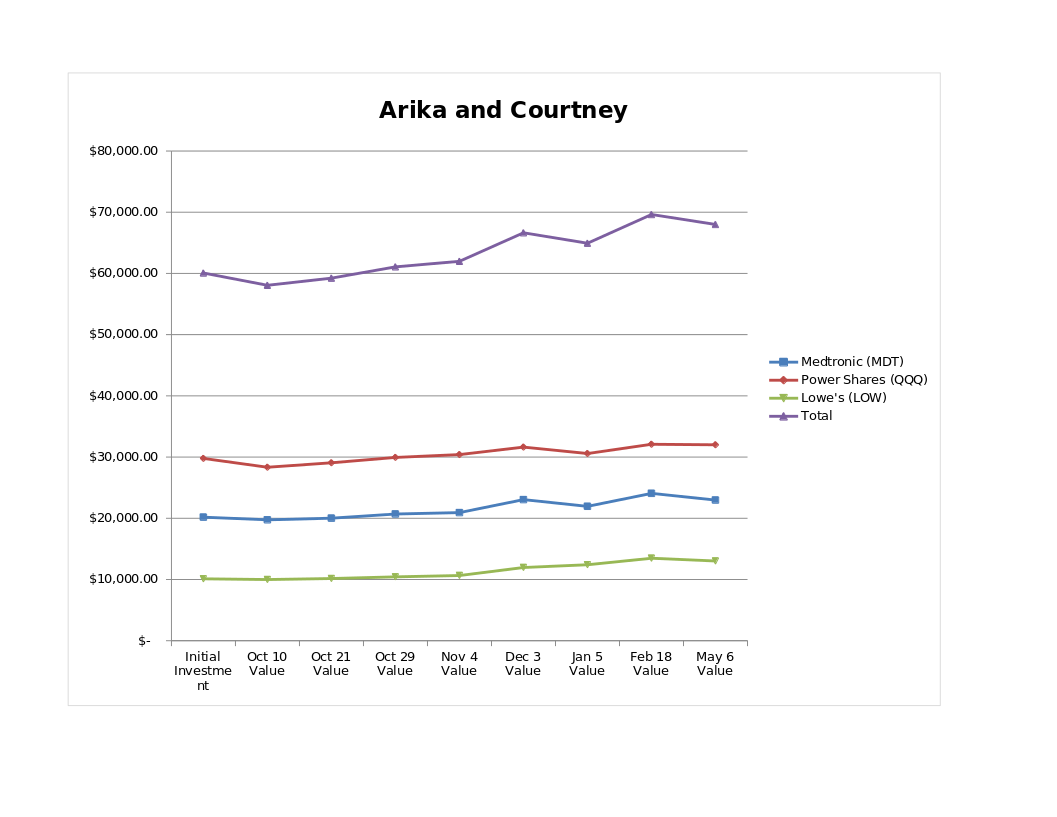
Example Stock Chart Project
This Excel workbook contains a chart based on real-world market data tracking the performance of students' stocks. Use the format to create your own dataset and charts as students experiment with the stock market.
Download the chart or preview it below.
Real-World Loan Cost Project
This worksheet provides a template for students to use in calling banks to obtain real-world interest rates and loan costs. Note: Replace bank information with banks local to your area.
Download the project or preview it below


Class Notes for BJU Consumer Math
This series of documents captures a teacher's notes on teaching Consumer Math from Bob Jones University Press. Topics include notes to students, exercises to assign and skip, and helpful notes regarding the text.
Note that these materials were written for the 2nd edition of Consumer Math. The correlation with other editions may vary.
Tell Me a Story!
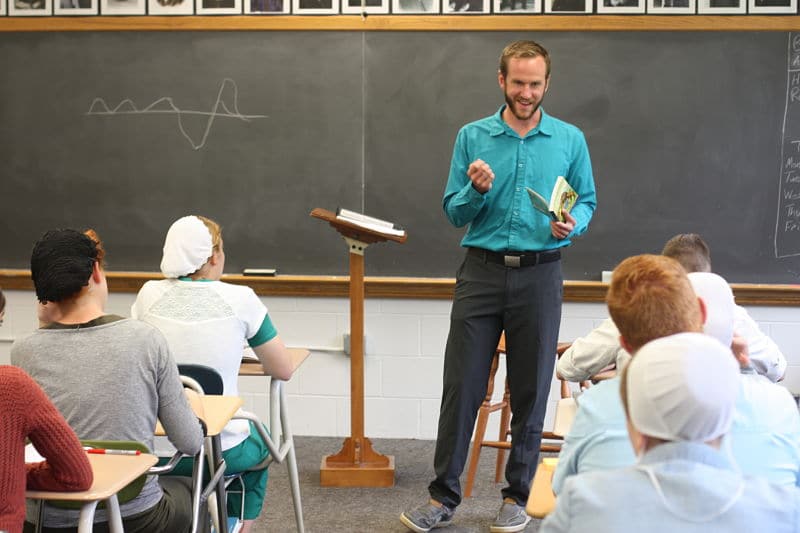
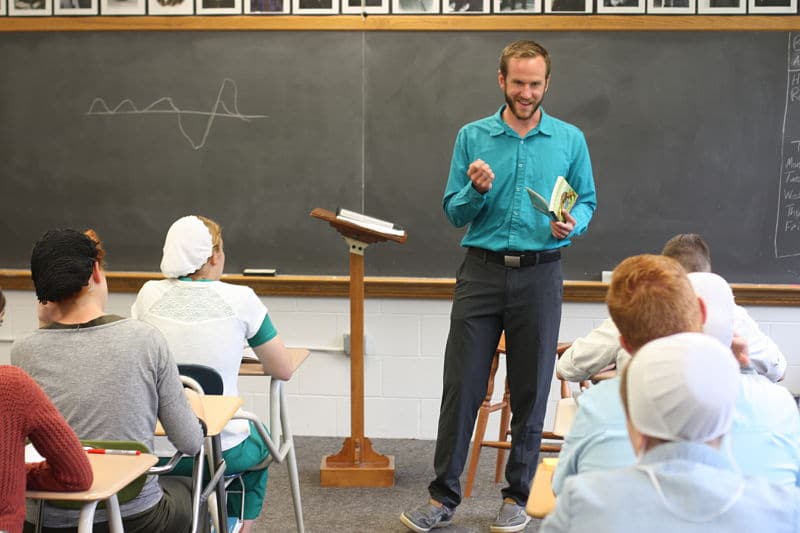
Stories are great for teaching academic lessons, spiritual lessons, and life lessons. Tell the story of “The Boy Who Cried Wolf” to teach about telling the truth and what happens when someone is lying. Relate experiences from your life to teach lessons about living wisely. Refer to Bible stories to strengthen a point. Find stories in books or story collections. Use fables to present lessons.
Stories engage people and capture their attention. Notice how everyone perks up when the minister announces he will be telling a story. Students who are fidgety will settle and relax as they listen to your stories.
I like to tell stories from my experiences and share how God has answered prayer and to show how God is faithful. I enjoy incorporating stories in different subjects – I tell a story about a monkey for our skip counting lessons. I may make up a story about the class and include the students in it. Some stories are for enjoyment, while others teach lessons, or expand on a point.
Here are a few stories as examples.
On the importance of telling the truth
One summer when I was in high school, I was cleaning house for a neighbor. The first time I was there, she asked if I like iced tea. I do not care for iced tea, but I was so hot and had been working hard and was thirsty, so I said, “Yes.” She brought me a big glass of iced tea! I had to drink it because I had said I liked it. After that, nearly every week when I was cleaning for her, she gave me a big glass of iced tea, and I always had to drink it. I never did learn to like iced tea, but I did learn an important lesson: tell the truth!
On working diligently and honestly
When I was little, a tornado blew our barn down. After that, Dad was making yard in that area. There were lots and lots of rocks! Dad would park his trailer there and we would take our little buckets, fill them with rocks, and dump them in the trailer. We would also pick up rocks in the garden. Sometimes we just had to pick up rocks because that was part of our job as a member of the family. Sometimes there were incentives for our work. We were delighted one time when Mom promised us Pop Tarts after we picked up rocks! I especially remember the time when we were going to be paid for each bucket of rocks we filled. My brother picked up many buckets of rocks, because he only emptied about half of the rocks out each time he went to the trailer. So he filled his bucket, went to the trailer, dumped out about half the rocks, went and filled the bucket again, dumped out about half the rocks, and so he got paid for quite a few bucketsful! He eventually felt guilty for cheating and confessed.
On being responsible
When I was young, I was to take table scraps out to the dog. This food was in the big roasting pan. I took the dog her treat, but I didn’t feel like going back in the house then, so I just set the pan on the back porch by the door. I went to play and didn’t think anything more about the pan. After a while, my Dad came out of the house, not knowing there was a roasting pan setting in front of the door. He stepped in the pan, lost his balance and fell down the steps, landing on the grass beside the well. He just laid there, stunned, for a bit. I saw it happen and was very worried. I thought he was dead! He got up after a bit, and hobbled away, but he was okay.
A history lesson
After World War 2 there were many displaced German families. People in the United States could sponsor German families to come to America and provide housing and jobs for them. There was a Mennonite family in Pennsylvania who sponsored a German family to come. They found a place for them to live and a job for the father. Soon after the German family arrived, the Mennonite family invited them to go to church with them during their revival meetings. The German family agreed and attended one evening.
When the visiting minister got up to preach, the German father became very upset. He stood up and began yelling, “SS! SS! SS!” He was quite worked up. They got him settled, and later he talked about this man whom he had seen in Germany. (Explain a bit about the SS – Secret Service.) They found out some information on the minister, who had indeed been a part of the SS, but had become a believer, was forgiven for the horrors of the SS, and now was following God and preaching.
Like I said, this story really did happen in Pennsylvania. It happened in southeastern Pennsylvania, in a church near Lititz, called the Hess Mennonite Church. The former Hess Mennonite Church meetinghouse is now the Lititz Dunkard Brethren Church, which is where I go!
We all have stories to tell and stories make our lessons easy to remember!
Music in Class: A Whole Body Approach with Singing
Music is a whole lot more than just singing and learning notes and all of that. It is more of a whole body experience, and it involves thinking and internalizing and just creativity in general. And so I've just learned a lot more about how to be creative and try new things with songs and try to help my students come to that place where they can be creative.
And singing doesn't need to be just a boring exercise. It can be something they can make up. It can be something they can do, not just in singing time or in music class; it can be done in history class. It could be done in math class, if necessary, or when you're walking down the hall.
I just want it to be a kind of exercise where they can feel free to sing, and it doesn't need to be an embarrassing sort of thing or anything like that. It's something to do, or that's something that should come easily and naturally. And so that's something I've learned through this curriculum. It's just to think out of the box and sing out of the box.
I stole the idea from another school. We have been already singing for many years, singing about memory. And what I did in years past is that I made up songs to find verses, and it was causing a lack of sleep and sorts of things like that. And so I knew that wasn't sustainable, so I have been looking or wishing for just either a curriculum or some sort of just a Bible, a bunch of Bible verses set to music that had already been made by other people. And so I did find something like that. It's a little booklet of portions from Psalm 119. I think it's the full chapter of Psalm 119, just in little eight verse sections. And it's a little booklet that is you can copy it and you can also copy the CD that accompanies it. It was put together by—I don't remember for sure who it was that put it together—but it is very handy to be able to stick it in the player, and play the song for them, and then once they've learned it, they can sing it on their own. The booklet has music with it. It is just put to sheet music, and so it's just very simple to get that out every morning and to sing. It doesn't take any extra work for me. And so that's very, very nice. It's a good way to remember Bible verses. It's just to sing them. It seems like it sticks a lot longer than if they just recited.