
All Content





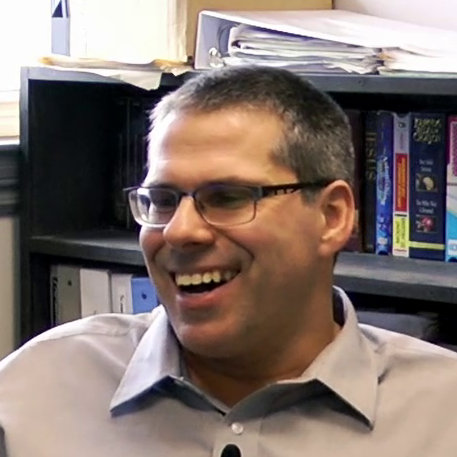
Passing the Baton: How to Transition Administrations Well
Howard
When I sat down with the school board to talk about looking for a replacement and charting a course for that, one of the things they came back to me with was, "can you quantify what it is that you do?"
Transition is Hard
Howard
One of the harder aspects or different aspects of school that you hope doesn't happen too often is is the transfer of or the transition from one administration to another.
We've been on the lookout for someone to step into the role of administrator here at [Countryside Christian School] for several years. And we are very thankful when Mr. Shantz joined us here on staff and also having completed his teacher's apprenticeship program at Faith Builders.
And as part of that, I went from five days a week here at school to four days a week.
Transition Here
Joseph
Well, here at Countryside, we are going through a transition. And so my official role this year is vice principal, and Howard Lichty is the principal, and Sharon Martin is the academic dean.
Howard
It's been a journey for me. I think we all understand that what it would all be involved in that, but also it's been a journey for him as well. And I know that.
Joseph
And so with a school of one hundred and sixty five students approximately and a staff team of 12 to 14 —kind of including part timers—that's a significant amount of administration to do.
Ready to work
Howard
One of my goals in this transition is that we would do well and that Mr. Shantz would be as ready as possible to to jump in and take over when that time comes, so we've been working at that transition over the last year, year plus, here at Countryside. We've been running this school year like that, and then the goal next year is that I will be here at the school two to two and a half days per week, and he will be principal, and I will be vice principal.
Change of Roles
Howard
Some of our job responsibilities, we will keep. For example, one of the main job responsibilities that he took from me this past year was dealing with student issues and any behavioral challenges—that became his role—which are typically a part of the vice principal role. I will not be assuming that next year. So we were changing titles, but not necessarily completely changing some of the roles and responsibilities as we move through the transition.
Boards Require a Transition Period
Joseph
I would really encourage boards to be thinking seriously about writing it into their contract for principals, current principals, that that they're supposed to be giving a two year a two year window of time for when they want to leave, just so that there can be a little bit more continuity, a little bit more passing the baton in a good way, a healthy way, so that any momentum that has been built with the current administration can be passed. There's still lots of space for change and new ideas and stuff like that.
Strong Board Involvement
Howard
I think one aspect of a good transition is that the school board needs to be highly involved. I like the fact that they talk to both myself and Mr. Shantz individually and ask, "How are things going? How is this transition going there?"
We all know that there's the possibility that something might not go well, and both he and myself need to have the freedom to be able to speak to someone clearly about that.
So a strong board involvement, I think, is key to this.
Strengths of an Administrative Team
Howard
And basically, they said we need you to write down a list, both small things and bigger things of everything that you do, and we'll take a look at that list. So that was a big task and was one that was kind of ongoing as I tried to be as detailed as possible. And I know we've missed some things, but we've tried to catch them along the way. We sat down to do that, to quantify that.
Maybe as a side note, one thing that we are doing here at Countryside is we are, at least for now, moving towards an administrative team.
Joseph
This is our first year doing it this way. In the past, we've only had a principal as far as doing administrative work here at school.
Howard
So we've been finding our way. And so we took that list of administrative job, and we kind of spread them into three job descriptions, and that's how we divvied out the responsibilities at this point.
Joseph
From the perspective of the new guy, new guy on the administration side of things, it has it has just been so ideal. It's been a model that I would encourage. I would encourage other schools to begin thinking about—other school boards to be thinking about—just with the reality that administrators don't stay forever.
Howard
So this is the first year that we've been running with an administrative team, and my experience and my perspective as an administrator is this is the best thing. And so I'm pretty biased towards them and I think they can work really well.
And I would suggest that they're a good idea for mid to large sized schools. Mid schools, if you have if you have 60 to 70 students, I think you easily could benefit from having an administrative team.
I think there's a lot of benefit in having our administrators still involved in the classroom teaching. And so if there's any way that you can divide the administrative load so that it still allows the teacher, administrator, to teach in the classroom, I think that's a benefit in keeping the administrator connected with the student body.
Also, I think when you have a team, you are able to help each other in your strong points and cover your weaknesses. And that's been, for me, the biggest thing is I look at having been in this role for a long time, at least to myself, my weak areas have become glaringly obvious. Whereas the administrative team is just has really balanced me out in those things. And I think a school as a whole is just better off for that. So that's a little side note, but I've put a plug in there for really thinking about using administrate team approach for your school administration.
Apprenticing Administration
Joseph
And so I've just been blessed with having Howard modeling for me what I'm supposed to be taking on next year in a really focused and intentional way, training me on specific things, what I'm going to have to be looking after next year, things that I didn't even know happened. He says, "Hey, this is something else that happens once a year. Come, I'll show you what we do." Government reporting and stuff like that that I just wasn't even aware of.
And so I can only imagine for someone trying to take on administration, never having had that model of never having somebody show it, and in many cases, probably even not necessarily having someone to just call up and ask in the moment, just having to figure it out on their own. That can really cause for a lot of additional stress and time out of their day to be trying to figure things out.
There's still lots of space for change and new ideas and stuff like that, but at least the good things can be passed on from one administration to the next.
Communication Addresses Challenges
Joseph
When I think about challenges with an administrative team, I realized that the challenges are minimized or done away with through increased communication. So I think the importance of it is that it's an administrative team that they meet together often, that they're talking, that they're all aware of situations to try to minimize surprises.
Clarify Roles and Responsibilities
Joseph
But as I thought about the challenges, I think that one of the big ones is, is you have to clarify roles. You have to make sure that you know who is supposed to be doing what—if there's assumptions made, I'm pretty sure that's his responsibility or her responsibility. It leads to frustrations.
Transitioning Well is Important
Joseph
And so with transition being a fact of of all schools, but probably at a higher rate with smaller Christian day schools, I think that the transition happening well is so important.


Invisible?
 Photo by Florian Schmetz on Unsplash
“We must be invisible!” my sister and I said to each other when a truck pulled out right in front of us as we were traveling. We did feel invisible – didn’t the driver see us? I wonder if students sometimes feel invisible.
Didn’t she see me?Did she forget about me? I just want someone to notice me.Some children demand attention by acting out, being dramatic, getting in my space, or talking, but others don’t make demands. I want to make sure I notice these quieter unassuming children and draw them into the class and relationship, too. Another teacher and I were talking about some of my students and commented on one child who is very sweet but just talks nearly all the time and seems to need so much attention. And he gets attention! I said I feel bad sometimes because this one is talking so much, and that one is pushy, and this one struggles academically and gets extra help, and I’m afraid some children are left out. I want to intentionally notice EACH child in the class. This child is quietly doing her work, coloring and writing beautifully, and very cooperative – I want to affirm her. This child is paying attention in the virtual instruction group of three, while the other two children are slouching and disengaged. I want to recognize the one who is on task.
I think of Rick who commented, “To Greg I’m just a bug.” Rick was disappointed because Greg didn’t ask him to go along to get the milk. I want each child to feel valued.
One of my students shared with me, “I just feel like no one really cares about me” and the other children don’t want to be her friend, etc. She has a lot of concerns, so I was not alarmed with this, but I did feel for her and understand what she’s feeling. “Having a voice” and “feeling valued” are topics that keep coming up in my professional reading. This is very important to people: feeling that they have value and have a voice. I’m thinking of it as the V’s – Value and Voice. I want each of my students to feel Valued and know that they are valued by God and by us at school. I also want them to feel like they have a Voice (to an extent – I don’t think children should always make the decisions as they are still learning and being trained).
This can apply to staff, as well. Do some teachers feel invisible? Some people are naturally more outgoing; some may have positions that are more visible. Some staff are often recognized for their work and others rarely hear that commendation. Let’s look for those who don’t push themselves forward and make them feel valued, too. Sometimes I feel like “the V’s” don’t apply to me, then I was struck with thoughts from Philippians 2. “Your attitude should be the same as that of Christ Jesus” who “made himself nothing” and humbled himself.
How can we help students and co-workers to feel valued and visible, rather than invisible?
I can show them they are valued – I talk to them, “visit” with them, ask questions about their lives, and then listen, and remember what they share. I check in later. “How’s your new puppy doing?” “What did you get for your birthday?” I can notice them. “Looks like you have new shoes.” “I like that coloring.” To a colleague I might comment, “Your students made nice projects!” or, “That is a good idea for _____________.” I can ask, “How was your weekend?” “What was a positive thing in your day?”
I should tell them they are valued and important. I remind them God loves them, and they are special to God and to us at school. I gave a little speech before I gave my students their Christmas gift, and said I enjoy being their teacher and I am glad each one is in my class, and they are each special. One of the children responded, “I love you” and then I told the class I love them.
I need to be intentional about this. I could keep a checklist – who have I talked with today? Whom have I asked a question? Whom have I called on? I can send emails or notes home to share good news from school and recognize achievements, and let parents know of positive behavior or growth. If I have corrected someone, I need to acknowledge their improvement. If I have notified parents of concerns, I try to follow up on that and send some good news.
I can be intentional in relating to staff, as well. I can visit with teachers and ask, “How was your day?” I should follow through on things. If a teacher shared that this was a challenging day, I might write a note of encouragement, send an email, or give a piece of chocolate. The next day I can ask if this day was better. I can acknowledge the value and voice of my colleagues. I might give someone a card, remember birthdays, or ask if I can help with something. I need to “come out of my shell” and think of others.
Think of the value of all people. As Jesus tells us in Matthew 10:29, “not a sparrow will fall to the ground apart from your Father” and verse 31, “Fear not, therefore, you are of more value than many sparrows.”