All Content

2021-2022 Teacher Positions
Hi, we are looking to fill several positions for the 2021-2022 school year.-2nd grade teacher-3rd and 4th grade teacher-Future administrator positionPays a living wage, located in Brownsville, OR.Feel free to reach out to Chad with any questions!Fill out an application here.
Elementary Teacher Needed
Island Creek Mennonite School is a small school (~20 students) in southwest Virginia. We are seeking to hire a teacher for grades 3-6. Instruction would include a mixture of self-paced and conventional approaches--customizable to the teacher's preference and skill level. Tentatively, the class will total 6 students for the 2021-'22 school year.

Behind the Mask
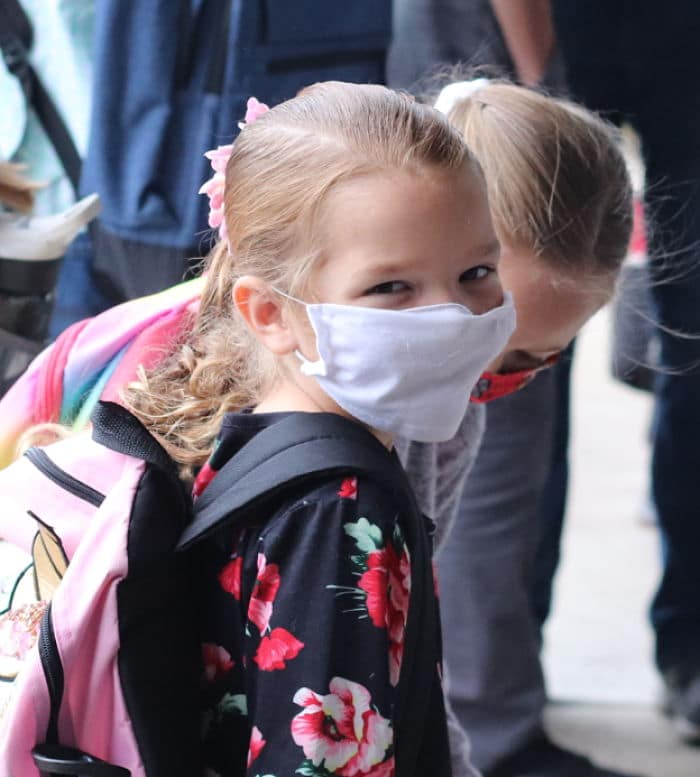
“Good morning…uh…uh…uh,” I said to the girl coming down the hall. Her mask was over her nose. Her hood covered her head so only her eyes peeked out. Who is the girl behind the mask? “Uh…uh…oh! Carla, it’s you,” I said as she got closer. We chuckled together.
On another day, I greeted the girl going into the next-door classroom. “Good morning, Faith.” Dark eyes twinkled at me above the neck gaiter stretched over her lower face. A half-minute later another group of students trooped down the hall. “Good morning, Faith. Wait a minute, who was that I just saw go in the door?” because this really was Faith. Who was the other girl behind the mask?
I recall a student from years past who spent their school days questioning teachers, throwing out snide comments, and at times retorting disrespectfully when they were called out. This student was difficult to work with. Then I saw them in their home setting and I saw a different child. Who really was the child behind the mask?
Another child was quick to think I can’t. Yet, they could do it if it was of importance and interested them. Who was the child behind the mask? Did the mask cover up laziness? Or did the mask cover up a genuine inability?
This child is very quiet at school. Yet at home they come alive. Who is the child behind the mask?
This student is a clown. If life gets a little tense or they get backed into a corner the clown mask comes out and everyone has to laugh. But is the clown wearing a mask or not? Maybe not but then again, they may be.
This student went through school seemingly enjoying being the one who didn’t want to fit in. They went out of their way to break out of the expected mold. Their attitude seemed to be I’m going to get you before you get me. They always had a quick quip or dry comment to make. Who was the real child behind the mask? Because, in later years the mask began to slip and the hurting individual began to emerge.
I sat in the parent conference quietly fuming to myself. The accusation was unjust, the child of the parent just as much at fault as the child they were blaming. But with my mask of self-preservation in place, I found myself agreeing with the parents.
Today my students and co-teachers are wearing literal masks but every year we encounter students wearing figurative masks. As teachers, we put them on ourselves. Literal masks today impede our relating with other people. Our words get muffled, we can’t read expressions, and sometimes we don’t even recognize those around us. Likewise, the figurative mask keeps us from knowing the real person and the real issues. How can we see behind the mask?
Sometimes a mask is necessary. We expect doctors and nurses to wear masks in their work. A poultry farmer wears a mask to combat dusty conditions. Other occupations require masks. Currently, masks are doing some good in protection against infection.
As teachers, we should mask the frustration we feel with the student who isn’t understanding and isn’t attempting to understand. We should mask our distaste for cleaning up the mess left behind by a sick student who left his breakfast all over his desk. We should mask the impatience we feel when we are running behind schedule and students don’t understand how to move more swiftly. We should mask the initial sharp response we feel when our authority is questioned. A mask is a protection against a perceived unpleasantry or threat. Many times, bringing out our mask for a short duration makes our responses to unpleasant situations more Christ-like. But masks can also be detrimental. Masks can hide evil – think of a bank robber. Masks can be worn in a dishonest way.
Why do our students, co-teachers, and we ourselves wear a mask at times? The most obvious reason is that of self-preservation. Underlying that is often an issue of trust and honesty. We want those around us to think we have life under control, that we understand what is happening. We do not like to be uncomfortable. Putting on a mask is a way to maintain our image. As teachers, we do well to examine our motives for what we do and say and work to be honest in our dealings with others.
How can we as teachers see what lies behind our students’ masks? These days, when I get home from school, I put my cloth mask away. I’m in my safe place surrounded by my “bubble.” I don’t need the mask’s extra protection. I believe that gives us a clue on how to get behind the figurative mask that some students wear. We need to create a safe place for them. They need to know that we care about them as a person. We celebrate what they celebrate. We help them work through problems without getting frustrated ourselves. We lovingly correct them when they need correction. We work to become someone they can trust.
It is good to expand what we know about our student beyond the space they occupy in our classroom. Many times, I will talk with parents to get a better understanding of the child they see at home. It’s often not quite what I see at school. I want to know about their hobbies and enjoyments. Listening to lunch time conversations with their friends tells me a lot about what a child’s interests are. Getting to really know the child God created, building their trust in you, and granting them a safe place to go to school can help you see behind the mask a little better. Asking God to give you eyes to see each child as He sees them will also reveal their hidden faces.
Quite a few years ago, I was writing on the chalkboard, my back to the class, when one of my little first graders clambered up to me, gasping in her fright. I whirled around to see what was the matter and saw that a strange man had entered the open classroom door. He appeared to be an older man, but besides the fact that I had no idea who this person could be, something was wrong. The hands at his side and the legs did not match the Ronald Reagan head. They were much too youthful. My mother bear instincts rose to the surface and I hoarsely yelled, “Get out of here! You get out of here right now!” Immediately, the head mask was torn off and to my immense relief, it was only one of the older students in the school—a student with whom I had a very good relationship. While he hadn’t thought very far ahead, it had not been his intention to terrify me and my class. He was fairly contrite about it. Weak with relief, I admonished him, “Don’t you ever do that to me again!” Removing his mask brought the situation under control and revealed who the stranger was.
In many situations, if we take the time to see behind the mask our students present to us, we learn to know the real person and are able to speak to the real issues. May God give us wisdom to recognize who it is behind the mask.

When You Think You’re Doing It All Wrong
 Photo by Green Chameleon on UnsplashIf you’re on top of the world, this letter is not for you. Come back soon, on a day when you need it.
Dear Teacher,
I know you’re trying super hard. You started the school year with high hopes and good resolutions, but you’re feeling a little slumpy today, aren’t you? Maybe some of your systems didn’t work out, or took more maintenance than you expected. Maybe a child is resisting your best efforts to connect with him. Or you just can’t help another into the lightbulb moment she needs, in reading or subtraction or typing or obedience.
You might simply have too much to do, and feel important things are slipping through the cracks. Maybe you’re not getting the support you need, or your questions don’t have easy answers. Perhaps personal stresses are bleeding over into the classroom, and you feel you don’t have anything more to give.
I’m not even going to start on what might be happening with the school board, your relationships with fellow teachers, and the disturbed parents of the child you rebuked yesterday. I’m not going to mention the COVID health protocols and new ways of doing. (Oops. Too late.) Nor the fraught political scene, but I’m guessing your students have a few thoughts on that, don’t they? And might try sneaking them into history and lunch and recess, right after your brilliant devotional about being “in” but not “of” this world?
Believe me, I know you’re up against a lot this year.
Perhaps you worry you’re doing it all wrong, and that serious harm will come from your best efforts – not to mention your worst mistakes.
So.
Let me tell you a mathematical impossibility, for starters. It’s impossible to do it ALL wrong. Let’s just clear that up right now. Some of the things you are doing are truly making a difference, and I don’t think you can step back far enough to see yourself and the hopeful changes you’re bringing. The children are better for having known you. (I mean, statistically this is likely. I don’t know you, but I’m sure at least half of them are glad they do. Can’t speak for the other half.)
Are you still able to laugh? Give thanks for this.
Second, it’s not only mathematically but also spiritually impossible to do it all wrong. Have you heard of the Redeemer, the great Second Chance Giver, the Savior? Do you know He is fully capable of arranging the evils and inadequacies of this world to accomplish His glorious purposes? Even if you were deliberately trying to do wrong, you couldn’t ruin His plans. And you are trying to honor Him, welcome His little ones, give sacrificially of yourself. You are in Him, and your success is not dependent on your performance, but on His goodness.
“For the word of the Lord is right and true;
he is faithful in all he does.
The Lord foils the plans of the nations;
he thwarts the purposes of the peoples.
But the plans of the Lord stand firm forever,
the purposes of his heart through all generations.
Psalm 33:4, 10-11
Third, there are resources that can help you. Reach out for them. If it’s just a droopy evening, find a large mug of hot tea and some refreshing music. If it’s a hard week, get some good sleep and great protein this weekend. Spend time with somebody you love. If you’re regularly coming home discouraged or exhausted, day after day, talk to someone. See if you can outsource a few pieces of your job, cut a few extracurriculars, take regular times to recharge. Or seek additional training in your particular place of uncertainty. Your pastor and a YouTube tutorial might do the trick. It seems astonishing, but people can change. You can grow to become capable of things you weren’t before.
You’ve got this. Or more accurately, He’s got this, and He set you in this place for a reason.
“We wait in hope for the Lord;
he is our help and our shield.
In him our hearts rejoice,
for we trust in his holy name.
May your unfailing love be with us, Lord,
even as we put our hope in you.”
Psalm 33:20-22
You’re doing fine. It’ll be okay.
Best of blessings,
One of the moms
Getting Our Students Outside Every Day, Part 1
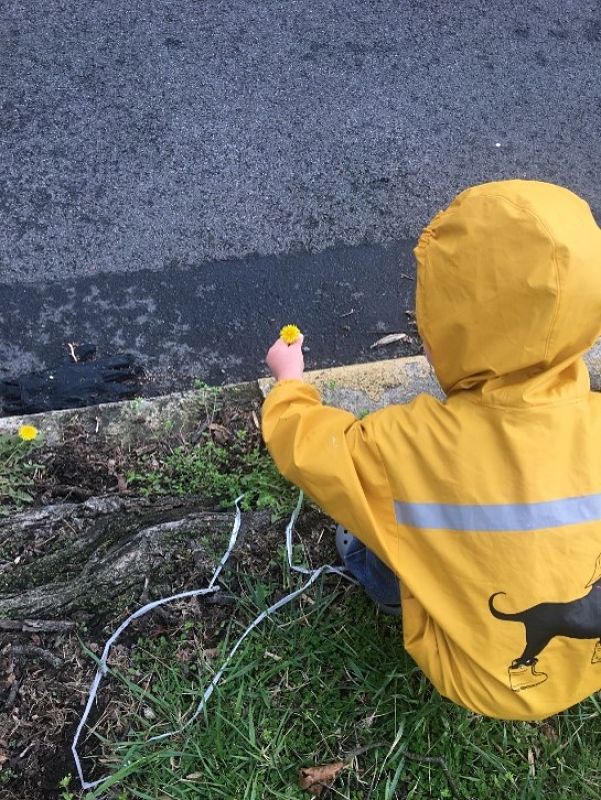
I spent eight years teaching at an Anabaptist school; and to be honest, the least favorite part of my winter days was outdoor recess. Granted, after I got all my first graders as well as myself bundled up, the sun and crisp air DID feel refreshing. Upon returning to the classroom after twenty to thirty minutes, the rosy glow on my students’ cheeks showed that the moments outside had not been in vain. Still, even though I could see that outdoor recess had been good for us all, I continued to see outdoor recess as more of a discipline than a joy.
Most of the school patrons understood that outdoor recess was a normal part of the school day. They sent their children to school dressed in warm layers. Occasionally, there was that parent who would request that their child remain indoors due to asthma or a head cold. But for the most part, the parents seemed supportive of having their child play outside.
While I was teaching in the public school setting as well as helping at a community daycare I learned that teachers in America are not permitted to allow outdoor recess when temperatures dropped below a certain point. In fact, there was much that was not permitted outdoors. If the sidewalks or blacktop had ice, the children needed to stay off of them. Children playing around could lead to accidents with broken limbs which could lead to lawsuits. Also, much of the recess equipment such as monkey bars, balance beams, and sea-saws were off limits until a certain age for fear that a child might injure themselves. There were strict rules on the playgrounds that varied from “no going up slides” to “no running.” The teachers were not trying to punish but rather to keep accidents from happening that could end up getting themselves or the school in trouble.
Then I started having children of my own while living in an urban environment. For us, outdoor play needs to happen at the park, on our sidewalks, or within our tiny backyard. Because my boys both love the outdoors, we try to get out regularly. It is common for us in both the cold months and the hot summer months to be the only children at the park that we frequent. These days, we rarely pass other children on the sidewalks. And we live in a city where the children are not able to attend public school in-person due to COVID-19 concerns, which means that they must all be staying inside their homes or at a daycare.
America’s View of the Outdoors in Contrast with Other Countries
Counties within the Scandinavia such as Sweden, Denmark, and Finland have even colder temperatures than America but respond quite differently to outdoor activities than American teachers do. In Finland, students typically get a fifteen-minute break after every lesson which ends up being a total of approximately 75 minutes of break time a day. Many teachers in Scandinavia use the school yard and nearby nature areas to teach math, science, history, and other subjects on a regular basis. According to the Danish, the concept of teaching students outside the school is called “udeschole,” or outdoor school. They see it as a way for students to build a relationship with their environment and get in contact with nature during the school day. According to Anders Szczepanski, the director of the National Center of Environmental and Outdoor Education at Linkoping University in Sweden, “Studies show that if you alternate outdoor and indoor learning, and the teacher is prepared, you get good results.” (141-142)
Scandinavian parents, too, seem to see messy, wild, outdoor play as perfectly natural. Going outside in any type of weather with their children is probably a reflection of a belief that being able to cope with all types of weather will make their children more resilient. (p.192) No weather is so bad or a mud puddle so big that cannot be conquered with good coveralls, waterproof mittens, and fleece-lined boots. With the proper gear, both adults and children see going outdoors as the norm rather than the exception to the rule.
A Call to Reflection and Evaluation
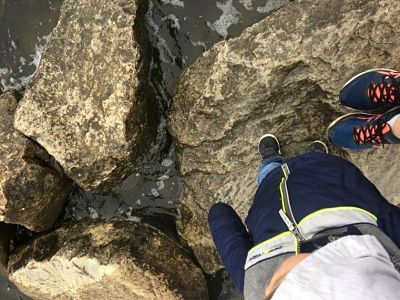 Is “indoor children” a growing trend within America? And if so, are we unknowingly having the children within our own families and schools spending more time indoors than they did a hundred years ago? And if so, is this a trend that we want to embrace as Anabaptists? Most of my research within this article is due to McGurk’s research in her book, There’s No Such Thing as Bad Weather.Stay tuned for a following post on both the benefits of the outdoors on a child’s health and body development.Sources:
MCGURK, L. K. (2018). THERE'S NO SUCH THING AS BAD WEATHER: A Scandinavian mom's secrets for raising healthy, ... resilient, and confident kids. SIMON & SCHUSTER.