
All Content

The Curious Ones
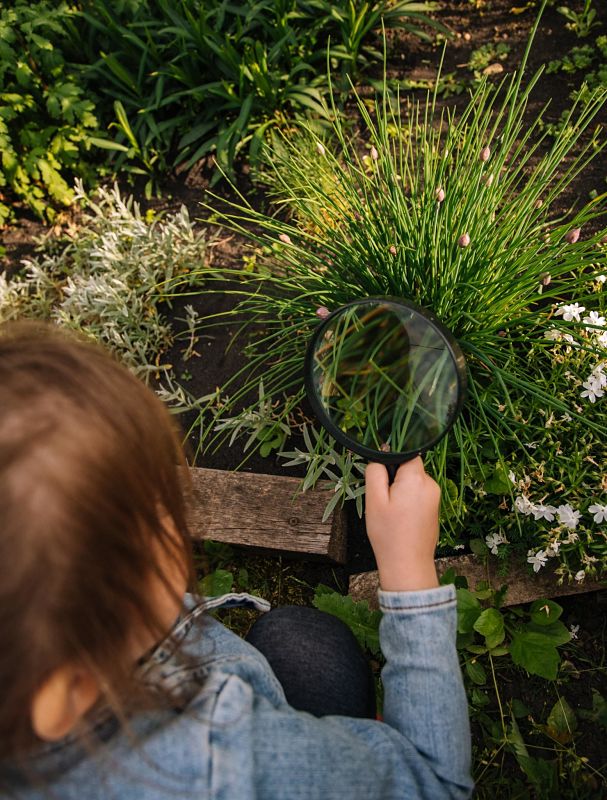 Photo by Katherine Volkovski on Unsplash
Albert Einstein said, “Education is what remains after one has forgotten what one has learned in school.” Clearly, Einstein had a good education; he was considered to be the most influential physicist of the 20th century. Yet as a child he was told by a teacher that he would never amount to anything. This unfortunate remark was made to a child who was too original and creative for the educational style of the day. It seems he kept being distracted by ideas about light waves and magnetic fields. I can imagine how frustrating this was for a teacher trying to show him how to identify a French verb. After all, not many people were curious about space/time in the 1800’s.
It is easy for educators to classify successful students as those who diligently lean over their books, finish assignments, and care about their grades. They are the ones we expect to do well in life, the easy ones, and we send them out into the world feeling like they are well prepared for its challenges. It only takes a little while to see whether a person continues to learn or whether they stopped learning back at school where they think it belongs.
Our goal should be to inspire a lifelong love of learning in our students. May I suggest that the curious ones will do better at this than the ones who check off all the high-school credits and stuff their brains into a frame along with their diplomas?
There are some students who thrive on following meandering trails off the beaten path of the course outline. These wanderers are curious about the cute kangaroo in the illustration on the page of prepositions. “Do you think it could also jump over a wall? Over a car? What about over a house?” At which point the teacher says, “Okay, let’s get back to the word over.”
They make unsolicited observations about the habits of the cardinals at the bird feeder and forecast precipitation because the clouds are stratus. This would be great if they didn’t do it during math class. They have burning questions about history, “Why is it called the Mason-Dixon line?” and have an uncanny way of catching their teacher off guard. Teachers learn not to seat them close to the window or in the back of the classroom, murmuring platitudes like, “Stay at your work,” and, “Focus,” as they walk past their desks.
It has been helpful for me to recognize the inherent intelligence that underlies curiosity. These are the children who love to learn, and random questions are a good indication that they have a thirst for knowledge, as well as enough imagination to wonder. Distraction is a problem, and it amplifies if a child learns to derail the whole class as a stall technique. At those times the teacher is tempted to tamp down any questions and rigidly stay the course. It takes wisdom to encourage learning about interesting things while at the same time assigning “boring things” such as verbs and nouns. Hats off to those who turn boring things into interesting ones!
In our home we call the distracting questions “squirrels”, because they are exactly like the squirrels that tempt our dog to break away from the leash and dash willy-nilly into the woods. We do chase squirrels a lot, because they are so exciting! Children do not easily forget research that they do when they really want to know. In fact, the genius of this sort of research is that it doesn’t feel like school or even like learning. It feels like fun. One year my son took a great interest in watching the skies. I bought a small cloud tracker with illustrations to help him identify each one. All of us learned a lot about clouds, and he took great satisfaction in marking the ones he saw. It didn’t occur to him that he was doing science in his spare time. Of course, there are times to be on the discipline of the leash. This is the teacher’s challenge: encouraging the curiosity while simultaneously teaching students to push through hard things.
In our quest to inspire love of learning, there are some valuable resources to help. A collection of field guides is very useful when Jonny wants to know what kind of trees are planted alongside the school yard and what kind of birds are eating the berries in the trees. He can look it up after class and tell everybody about it at lunchtime. Encyclopedia sets are a treasure trove for lovers of trivia, and dictionaries are great for the word nerds. Even if you know the answers to their questions, let them look it up and then tell what they learned. Obviously, for very young students, it takes a lot of the teacher’s time to help them find answers. The intersection of wonder and industry is often where curiosity gets shut down and learning becomes a grim business in textbooks.
Teachers are very busy people and squirrels do not seem so wonderful when the goal is to hike three miles at all costs. We, the educated ones in their eyes, model to our students what we believe about learning. It takes humility to say that we don’t know the answer to their question but we will try to find out. This reinforces in a student’s mind that we never stop learning, even when we are old enough to be the teacher.
Recently my fifth grader taped a simple motivational poster onto the wall above her desk. It came from a dollar store multi-pack and said one word, “Focus.” I applauded her for her insight into what tended to be an ongoing struggle, especially when it was time to do homework assignments. “Yes,” she agreed, “but there is also one that says, ‘Not all who wander are lost.’”
I couldn’t argue with that.

Faith Mennonite High School is currently accepting applications for the 2021-22 school year
FMH is hiring! Join our school community. We are committed to professional development and developing excellence in academic, vocational, and Biblical disciplines. If you desire to impact young people - email principal@FaithHighSchool.org for more information.If you would like to join a professional staff committed to excellence in education, please consider contacting the school for more information. We are anticipating being able to add one or two staff and we have flexibility around the specific subject areas.· English· Art· Science· Industrial arts· Business / computer-related coursesEmail Principal@FaithHighSchool.org for more information and to request an application.Learning Excellence in Academic, Vocational & Biblical Disciplines

A Review for Creative Writing Curriculum
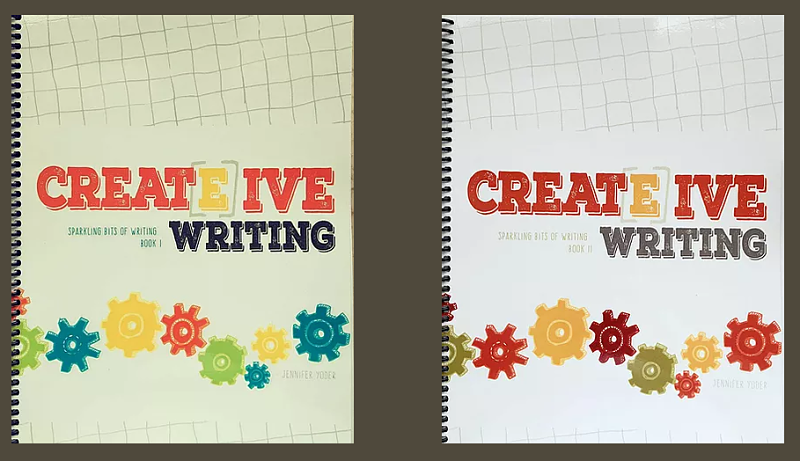
Andrew and Jennifer Yoder’s curriculum is called Creative Writing: Sparkling Bits of Writing, and comes in two books. The first is recommended for grades 5-6 and the second for grades 7-8.
How the Curriculum Developed
The curriculum grew from Jen’s own creative writing classes at the school where Andrew still teaches. When Jen became a mother to their first child, she didn’t feel able to continue teaching. Andrew wanted to keep on with the creative writing classes but didn’t have time to prepare all the lessons. Jen stepped in to help by compiling her class notes into book form. The books have been under development for six years now, two years under the current student-and-teacher-tested edition.
The Layout of the Curriculum
The curriculum is designed for grades 5-8 and is intended to be a fun approach to creative writing rather than a grammar heavy one. According to Andrew, “Our goal is to stimulate the thinking process in a fun way rather than teach all the mechanics. That makes this a supplement to a grammar course, not a replacement. We feel examples are key to learning; therefore, we have student examples in the lessons.”
Browsing through the books, I found the assignments to be fun and engaging. A few of my favorites, rephrased here for brevity:
- Use the letters of your name to create an acrostic describing yourself.
- What happens on a terrible, horrible, no-good, very bad day?
- Create a dialogue between two non-living objects, such as a hamburger and hot dog.
- Answer this question: Would you rather live inside a glass house or a twig house?
- Paraphrase a parable as if it happened in today’s world.
- List 25 uses for a shoestring.
- Tell what happened after the “happily ever after” in a common children’s story.
The assignments are short, most easily doable in 30 minutes. Lessons are flexible, easy to pick up and do whenever it fits into your school schedule, with little forethought needed. Jen and Andrew encourage writing that stimulates enjoyment and imagination, with teachers providing critique rather than a grade.
The books hold three types of lessons:
Mini Writing Lessons: These short writing assignments encompass a nice variety, from writing simple poems to writing a letter to an endangered species. All are imaginative and engaging. Although Jen and Andrew deemphasize grades, every so often, a star appears at the top of a lesson, indicating a “gold piece lesson,” which teachers may choose to grade. Students are encouraged to spend extra time revising and polishing these pieces of writing, and a rubric is provided in the back by which to measure a grade. Lessons with a “friends” icon at the top are intended to be done with a friend, providing another fun piece of variety.Free Writing: Coming every five lessons, free writing lessons require students to respond to a writing prompt by writing non-stop for 8-10 minutes, “brain dumping” whatever comes to their minds. As a teacher, I used this technique on my elementary students, and they loved it. Free writing takes away all the pressure students associate with writing. Because there are no expectations besides writing continuously, students relax and enjoy seeing what comes out. Both teacher and students are almost always pleasantly surprised by the results. In fact, free writing became my most successful method of teaching creative writing, and the CLP team also plans to include it in the curriculum we are developing. I was thrilled to see it included here.Reading Response: Also coming every five lessons, reading response lessons provide a story for students to read, along with several questions to answer about what they’ve read. According to Andrew, reading response lessons are intended to “stimulate thinking and to learn techniques from published examples.” Excerpts come from a variety of classic literature: Oliver Twist, The Secret Garden, Not Regina, Daddy Longlegs.Each book holds 75 lessons, about the right amount to get you through a school year by completing several a week. Although Jen and Andrew recommend Book I for grades 5-6 and Book II for grades 7-8, I can easily imagine my former teacher self using one book to teach my entire class because at one time, I had five students in grades 1-8. Assignments could be modified slightly for younger or older students. The curriculum is flexible that way.
Strengths of the Curriculum
- Fun. I see this as really fun curriculum that will capture and engage students’ imagination and enjoyment. As a teacher who loves writing but has struggled to pass that enthusiasm on to my students, I believe this is the most important attribute of any elementary creative writing. If students learn in the early years how much fun it is to express themselves, they will put far more effort and creativity into writing when they reach high school years.
- Flexible. The curriculum is easy to fit into your schedule in the way that works best for you. Assignments are easy to modify, to pick and choose from, or to teach to several grade levels at once.
- Includes important writing concepts. Although this is a supplement rather than a complete curriculum, it does teach simple writing tools that provide an important base for young writers. The tools include:
- Show don’t tell.
- Active versus passive verbs.
- Concrete nouns
- Figurative writing such as simile, metaphor, hyperbole, and onomatopoeia
- How to structure paragraphs and essays
- How to vary sentence structure
- Story setting
Weaknesses of the Curriculum
- Not a complete curriculum. As mentioned, this is intended as an introduction to writing, rather than a comprehensive curriculum. Though the assignments are given in simple language that most students will be able to follow with ease, don’t expect review and repetition of concepts learned. Occasionally, for students who don’t have a strong base in a grammar curriculum, you may need to provide some extra explanation for certain assignments.
- Intended for beginning writers. While not necessarily a weakness, note that the curriculum is intended for beginning writers. Christian Light Publications does sell these books as a curriculum supplement and lists them in their catalogue as appropriate for grades 7-12. However, Andrew emphasized that field testing has confirmed the curriculum is appropriate for grades 5-8, not high school grades. As a multi-level teacher in need of ideas, I could easily imagine myself picking and choosing and perhaps modifying assignments for grades younger than 5th or including a high school student in a whole-room lesson. However, the difficulty level of the assignments is most appropriate for 5th through 8th grades.
Teacher for grades 6 - 12
We have a position open for a teacher for grades 6 - 12.This classroom uses predominantly individualized learning, with a few lecture based classes, and is expected to have ~14 students.The school has ~35 students total, and there are currently 3 teachers. Please contact Jason for information.
Diagramming Sentences: Strategies for Learning Sentence Structure
These are just a few teaching tips that I've picked up over the years, a lot of them from other teachers.
Cards that leave out nobody
One of my favorites is to put all the students’ names, on these names, on these little cards, and that way nobody gets left out. I scramble them up, and I go through the first one, and I'll set it down or else I'll put it at the back here with my other finger.
And then once I've gone through all of them, and they all have to answer, and if a student doesn't answer—they don't answer correctly—I'll just stick it back in there. And that gives them another chance to answer correctly.
And then when I'm done—and I do this so they know that I'm doing it, and they watch me do it—I tell them, "OK, we're going to shuffle the cards again," and I shuffle them all up so they know that I'm going to call on them to read or answer a question. And they know they might be the next one because they can never figure out the order. So this is one of my very favorite things to do because it causes every student in the room to be focused, to be paying attention, and to know I might be next.
Lessening sentence diagramming confusion
Whenever we're diagraming—again, I use my cards and I will call on them and they can mark—they can tell me whatever they see up here.
For instance, one of them might say, "I see a preposition."
Deana: “OK.”Student: "with."Deana: “So what's the prepositional phrase?”Student: “Well, I'm not sure.”Deana: “What's the next one? What do you see?”Student: “Well, I see subject and verb.”Deana: “OK, what is it?”Student: "I agree."We mark it. I agree.
Deana: “And then what is this? What do you see?”And I'll call in the next person.
Student: "Well, I see another subject and a verb."Deana: “What is it?”Student: "You decide."Deana: “Good.”You decide—subject and a verb.Deana: “So if I have a subject and a verb here, and the subject and the verb here, this must be a clause. Do you see what we call a deer antler or a subordinating conjunction or a relative pronoun, whatever it is.”And they'll say, "whatever," and I'll say "yes." So we mark that.
And again, I like to mark mine. The guys love this. We put deer antlers on it. We'll make him a ten point or whatever that is. A twelve point.
And so we'll say, "Ah ha! This is a clause." And the next student will mark it, and then we go to diagram it.
And we've already done all the hard work. We don't have to see that and then go back and forth and mark it and get all confused. This really helps, especially some of the guys that seem to want to crisscross everything and get all confused.
So we'll mark it.
I agree.And then we'll say, "Now this is a prep phrase, so where does it go?" You agree with whatever you said. So then we'll put it there. And again, nothing crisscrosses.
This is the subject. This is the verb. This prep phrase modifies the verb. Here's our little pedestal because it's a noun clause.
And you. And they'll get tripped up here.So we'll say, "subject and verb."
Deana: "You decide what"?Student: “You decide, whatever."Deana: “Does whatever get decided?”So we'll mark that even as the D.O. There. And that way everything is neatly marked. They just have to bring it down—and it makes it much less confusing—rather than trying to look at it and write it down here. Just take—I always tell them it takes, what, five seconds or something. Just mark it up there.
All the hard work is done. There you go.
Getting Our Students Outside Every Day, Part 3
 If you missed Part 1 and Part 2, you may want to read them before reading this post. Part 1 looked at the differences between the way American parents and educators seem to view outdoor play for children in contrast to the way it is viewed within harsher climates such as the Scandinavian countries. Part 2 looks at the way outdoor play affects a child’s development and health. And now, I would like to continue using McGurk’s research in There’s No Such Thing as Bad Weather as a springboard for this post which will look at how we as Christians should be viewing the earth. I also want to give you several practical ideas on how to get your students into the great outdoors more than you were yesterday.
Interaction with Nature Helps Develop Students Who Care About Nature
While many people in a developed and industrialized country often believe that nature and its resources are mainly there for humans to master and extract from, we should be counteracting this mentality as Christians. Rather, because we believe that God has entrusted us to be His stewards, we have a responsibility to care for His creation. By creating positive experiences within nature for our children, we can influence the next generation to continue caring for His creation.
Within our American natural parks, it is common to see “Leave No Trace” signs which encourage you to both leave no footprint on the environment and not to take anything from the environments such as a shell, driftwood, or pine cone. However, Thomas Thomas Beery, an assistant professor in environmental science at Kristianstad University, Switzerland, found that collecting natural objects can foster play and creativity as well as knowledge of the outdoors. In another study, he showed that college students who had collected items like rocks, shells, insects or foraged foods when they were younger, thought of themselves as more connected to nature than the students who did not collect (p.143). Another study went on to research the natural environments themselves and it was found that environments where there had been some wear and tear actually had better growth and foliage than environments where there had been no trace of human contact and interaction. Using this research, we can draw the conclusion that is both beneficial to humans and to nature to interact with God’s creation.
Practical Ideas to Increase Outdoor Activity for the Children Under Your Care
Let’s get practical. What are some ways that we can get our students out to the greatest classroom on earth, the earth itself? Nature makes subjects like math and physics come alive in a way that simply are not possible inside the classroom such as comparing stick lengths, using the sledding hill to learn about friction (sliding with a wax cloth, plastic shed, or on shoes with grooves), or building canals after a large rainstorm (p. 80).
Every classroom has treats and celebrations that students work towards. Can you take those celebrations and treats outdoors? During the winter, use a sledding hill as a reward system and build an open fire to warm up around with hot dogs to grill. An ice-skating party at a local pond is sure to be a good motivator as well. During the fall, have a leaf raking party and jump in those leaves together. During the spring, allow your students to read outside as much as possible. And throughout the entire year, go on nature hikes to record and observe the changes within the seasons. “Nature looks and acts differently depending on the season and the weather, and in order to understand the changes, you need to experience them firsthand” (p. 192).
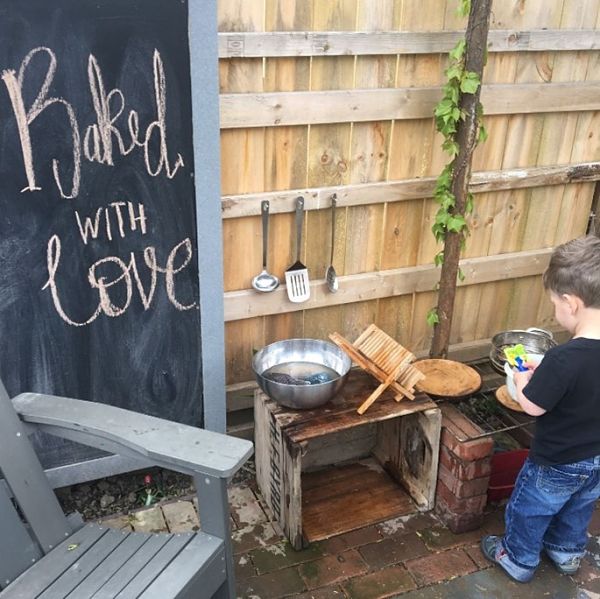
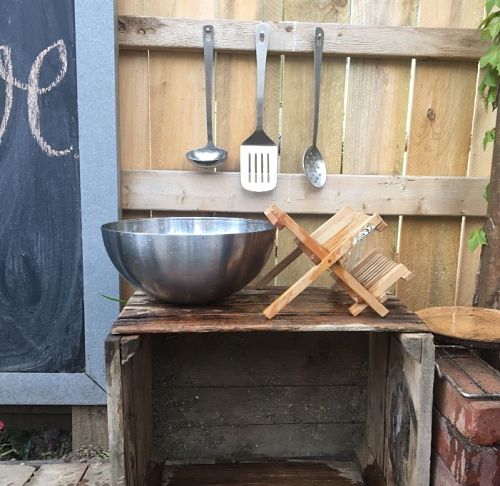 Finally, provide time for unstructured play and child-led activities. According to McGurk, “Another advantage of having fewer structured and more child-led activities is that it can improve children’s executive functioning. Essentially, this makes them better able to delay gratification, show self-control, and reach their own life goals” (p.123). If possible, reserve a spot in your school yard where children are allowed to dig in the dirt and create a simple mud kitchen with old pots, pans, cups and other kitchen utensils. As a teacher commented to McGurk, “The outdoors is a free space where children can take risks—it’s how children learn, a form of trial and error. Sometimes it is better for the adult to step back, observe, and not intervene.”
A Call to Reflect and Evaluate
Americans were not always so concerned about the “dangers” of the outdoors. If your parents are anything like mine, they can tell you how they had to walk to school for two miles up hill in every type of weather. Coming back home during the winter, they would sit on their lunch pails and slip and slide down the macadam. According to studies done by McGurk, 70% of American mothers played freely outside while they were young, but now only 29% of their children do so. Instead, the majority of children are spending significant amounts of time getting transported to organized activities and sports instead of having unstructured outdoor play (p.215).
Within our Anabaptist schools, are we slowly following the trends of the world around us and keeping our children inside more than they were a hundred years ago? And if so, is it the trend we want to continue? If not, let’s find ways to encourage each other to get our children into the great outdoors more than we did yesterday.
Sources:MCGURK, L. K. (2018). THERE'S NO SUCH THING AS BAD WEATHER: A Scandinavian mom's secrets for raising healthy, ... resilient, and confident kids. SIMON & SCHUSTER.
Getting Our Students Outside Every Day: Part 2
 If you have missed Part 1, you may want to read that before delving into this post. Within that post, we looked at the differences between the way American parents and educators seem to view outdoor play for children in contrast to the way it is viewed within harsher climates such as the Scandinavian countries. Using McGurk’s research in There’s No Such Thing as Bad Weather, I am writing this post as an encouragement for you as an educator to make better use of God’s creation within the hours you are entrusted with a child’s education and development.
Outdoor Play and Childhood Health
We all know that physical exercise is beneficial for children, but many of us see indoor exercise as being equivalent in benefits to outdoor exercise. And this is where we are wrong according to studies done by a research team in Sweden. After comparing children at nine different preschools, they found that the more varied and versatile the outdoor environment is, the longer children will stay outside and the more active they will be. According to their research, the places with plenty of trees, shrubs, rocks, and hills also had children with normal body mass instead of the children being overweight. (122) A 2011 study of children in Missouri showed that both genders take more steps and work up higher heart rates when recess is held outside instead of in a gym or classroom. (84-85) In the past, most of our private Mennonite schools did not have the resources or finances to build a gym for the children. However, as of late, more and more schools are choosing to build gyms for their students to spend their recess of time of physical education. When looking at children’s play from a health perspective, we do not seem to be doing our children a favor by having them spend the majority of their active hours indoors instead of outdoors.
Further, a study by the University of Copenhagen showed that the children who played freely outdoors got more exercise than when they participated in organized sports. (122) In contrast to these studies, we have seen childhood obesity continue to rise in America. Instead of only attacking the processed foods and unhealthy diets, can we simply encourage our children to spend more time playing outdoors? Studies have shown that children who are active in school are more likely to stay active after school as well; and of course, the reverse is also true.
Today, about one in ten children within the US suffers from asthma and as many as forty percent have been diagnosed with allergies. In contrast, asthma and allergy remain very rare conditions in many poorer, less-developed countries. Many researchers believe that smaller family sizes, increased antibiotics use, less contact with animals, more time spent indoors, and an obsession with cleanliness have all contributed to our immune systems slacking off in the past fifty years. Many parents (and certainly it is more true today due to COVID-19 than any other time) believe that bacteria and germs are found on playground equipment in parks. And certainly, it is true but are these germs and bacteria so dangerous? Sometimes, we perceive that all germs are bad and should be eliminated at any cost with a bucket of bleach or at the very least, hand sanitizer. Yet, in reality, it seems that our modern, sanitized lifestyle has wiped out a lot of beneficial microbes in our gut that actually help us stay healthy. When we are exposed to certain microbes in the womb and early childhood, that exposure can actually the immune system and protect from illnesses later on. It is when the immune system is not challenged enough, that it might start looking for stuff to do, like overacting to things that are not really dangerous such as pollen and peanuts. (p.181)
While scientists do not know exactly what type of dirt can help protect us but some speculate that by simply being more removed from nature has become the main reason for the epidemic. Perhaps an easier way to support children’s health could be by allowing them to play outside as much as possible and not panic when they eat dirt or lick an earthworm. (185) Scientists have found that the mycobacterium vaccae (a type of bacteria that is found in dirt) is beneficial to health. In a research study, it was found that Amish children as well as children who live in poorer and dirtier conditions had a greater exposure to it than children in most developed countries. (182-184) Another study was done on mice showing that mice that were exposed to the M. vaccae did better than those who weren’t. Scientists believe that the M. vaccae may decrease anxiety and improve the ability to learn new tasks. (183) In fact, according to The Dirt Cure: Growing Healthy Kids with Food Straight from the Soil, “Bacteria, viruses, parasites, and fungi play a critical role in developing and maintaining a healthy gut and immune system. Playing outside, digging for worms, planting vegetables, and essentially coming into contact with plenty of dirt and livestock are actually good things. Not just good – essential.” (184)
McGurk’s research shows there are many other health benefits of outdoor recess. The fresh air helps to oxygenate the cells with fresh air which in turn makes one feel more energetic and alive. Also, several studies have shown that outdoor recess can help prevent nearsightedness because children’s eyes need bright, natural light to develop appropriately. An educator confided to McGurk, “We’ve never had to explain to a parent why the kids are outside. Everybody understands that it’s good for them – the fresh air, the big space. There are fewer conflicts and infections, because the kids are not on top of each other all the time. We may have had a couple cases of stomach flu but we don’t get the epidemics that other places have. There’s also less noise. We see a lot of advantages of being outside.” (84)
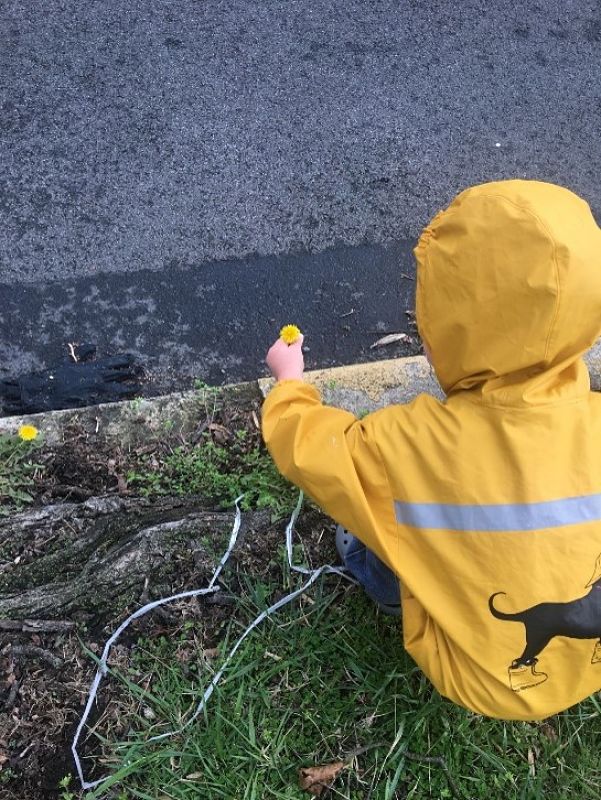 Outdoor Play and Childhood Development
In addition to health benefits, outdoor play has also shown to greatly benefit childhood development. In a study done by a kindergarten teacher comparing the differences between richly stimulating outdoor environments, found that “those who played in a forest daily had significantly better balance and coordination than children who only played on a traditional playground. Once again, the reason is believed to be that children are faced with more complex physical challenges in nature, and that this boosts their motor skills and overall fitness.” Again, not all exercise seems to be created equal and not even all outdoor activities seem to be of equal importance. She went on to say that children who spend a lot of time in nature have stronger hands, arms, and legs and significantly better balance than children who rarely get to move freely in natural areas. In nature children use and exercise their joints and muscles, if only given the opportunity.” (123)
Outdoor play is also the ultimate sensory experience. Barefoot running, sinking into mud, listening to birds, and feeling raindrops are all part of stimulating sensory integration. In a country like America where autism and ADHD is on the steady rise in contrast to children in Norway who are spending more time outdoors (89), any research pertaining good sensory integration is important. Sensory integration relates to the body’s ability to process and organize information that is received through the senses. There are certain parts of the brain that are stimulated when interacting in a varied environment. (141-142)
Stay tuned for Part 3 which will reflect on how we should be approaching nature as Christians. The post will also give you several practical ideas on ways you can make use of the great outdoors with your students.Sources:MCGURK, L. K. (2018). THERE'S NO SUCH THING AS BAD WEATHER: A Scandinavian mom's secrets for raising healthy, ... resilient, and confident kids. SIMON & SCHUSTER.
Classroom Management: Practical Advice for Large Classrooms
I teach in a very large class. There's twenty students, and we typically have somewhere between fifteen to twenty-three students in our classes. So that requires some classroom management in a way that you may not need if you are doing a smaller class. So I thought I would focus in on some things that you definitely need for a larger class. It may apply to a smaller class, but it's absolutely needed for a larger class.
Expectations
First of all, it's really important at the beginning of the year in any classroom to be very clear about your expectations and to have some procedures set ahead of time that you practice that the students know exactly what's expected.
Distributing Papers
One thing, for example, is to practice handing papers in and out that they know exactly what's expected. You can waste a lot of time with twenty students if they're not sure what to do or if it happens different ways every time. So I practice handing the papers out. I actually have them passed across rather than back in front so that they are ready to—they can see their neighbor ready to hand the paper to them. That requires me to walk down the side of the classroom, but it works a lot better than them handing papers over their heads. The papers always go the same direction. I hand them out on one side of the room. They're always passed across that direction and when they hand them in, they end up on the opposite side, so that papers always go the same direction. The student in the front of the classroom and in the back of the classroom on that side are taught and prepared to stand up and collect the papers and either take them to the back of the room or bring them to me in the front according to what it is. And they know in a moment what to do.
We practice that on the first day of school and a little bit in the first weeks, and then for the rest of the year it can happen very smoothly. They sometimes need a reminder, but that's very helpful in getting papers passed in and out and usually only a simple reminder later we'll brush that up.
Maintaining Silence
I think it's especially important with a large classroom to maintain a moderately quiet classroom. Every school kind of has its own culture of what is OK and what's not. But if you allow a large class to be very noisy, it will get out of control very quickly because there are so many of them, so I think you need to be very clear about those expectations. If that means there is no talking between, whether it's classes or between activities, then enforce that. Or if you have a small amount of talk aloud, then teach them how to end that at a certain time and end it very quickly, and practice that so they know that it's time for the next thing. The time for talking is over and you don't need to spend a lot of time getting their attention, whether that's a clapping or ringing a bell or whatever. However you choose to do that, have some signal that the time for talking is over, and expect that they will do that quickly.
Keeping Track of Papers
It's also really important with as many students to have methods of keeping track of their papers, especially if you expect them to do corrections. So I have a paper on my desk that has a spot for their math papers each day, and I keep careful track of when their math papers are one hundred percent completed, and I mark it off so that I can quickly look at the paper and see exactly who in the class still has work left to be done. Of course, sometimes they've handed it in and it's waiting on me at the time, so I don't always know that immediately. But I can always check up on that, and it really saves a lot of searching for papers and figuring out what happened.
I'm also very clear about the marks I will put on their papers when the papers are finished. So when they get the paper back, they know what to do with the paper. They know if they're supposed to put it away or continue working on it. It doesn't necessarily need to be the same for every class, although it can be a little confusing. I structure my English papers and my math papers a little differently, and it takes a little time in the beginning of the year for them to figure that out. But it works better for those two classes, so I do it and they do learn it after a few weeks with a little practice and a few reminders.
I'm usually very gracious with them at the beginning of the year as far as if they thought they were done and they're not. But then after I've taught them and they know, then I hold them to it. And so having some sort of system where you keep track of it and it's written down is really important. And while it takes a little time to do, it usually saves you time in the long run or saves you from having students who never get their homework done and you never realize it or never do the corrections and you don't realize it. So that can be very helpful.
Leaving Work in the Students’ Hands
Another thing I like to do is put as much of the work in the student's hands as I can, and depending on your school culture and your class and the dependability of your class, you can probably do more or less of that. I rarely hand out papers myself. I put them out at a certain spot on my desk. They know if the papers are there, they're ready to be handed out. I don't include quizzes and tests with that. If I'm going to pass out a quiz or test for some reason, I'll do that myself. We typically send them home. They don't actually get handed to them at school, so I don't need to deal with that. But I wouldn't do that. I don't want a student to see everyone's grades for something, but I do for their homework. I would do that. They can hand them out, and that saves me a lot of time.
Grading?
Another thing that I think can be done, if you have a lot of students, some teachers have a habit of grading a lot of papers, maybe more than necessary, something it's good to look very carefully at how many of the papers you're actually giving a percent grade and including on their report card. I really grade very few of their papers. They're testing quizzes are graded, a few math assignments are graded. I grade none of their English papers. And so they're handled in a little different way, and it saves me a lot of work. They are all checked. They all know they know which problems were done correctly and which ones were not. And we practice in class. But I don't count the practice for a grade, and that saves me a lot of time not needing to grade that many papers. So I would strongly encourage that. Generally, we don't like to be graded on our practice either anyway, and it often relieves a little pressure both for you and for the students if those papers aren't graded. Even though that's pretty standard at our school it's still a little hard for students. Sometimes they really want to know how many they got wrong on the paper. So it takes a little homework to teach them that it doesn't really matter how many wrong exactly. They should be able to look at the paper and see what they did wrong, and that's actually what's most important. But that saves me a lot of time. If I had to record twenty students grades in every subject for all papers every day, I would—I don't know—I would never do anything other than school. So that's really helpful to limit the amount. You need enough. You don't want to do too few. That can also be unfair, but you want to limit it to the point where students can relax and do their homework and not be worried about their grade necessarily. And it also saves you a lot of work as far as recording grades.
I have fifth grade, so I understand that for younger grades this is not possible. But as the students get older, the more checking that can be done in class is actually to their advantage. They are more aware of the problems they get wrong if they grade it in class then if you do. And so and it saves me a tremendous amount of time. I actually like to do a small section of math and check that before we even move on. And we will sometimes do that two, three, four, even five times throughout the class. It depends a lot on the lesson in some lessons. I don't do any of that just because of the time limit. If it's a long lesson, I will sometimes choose to not do any of it just simply to get the lesson done so they don't have so much homework. But if they don't understand the first section, and you don't realize it—they don't realize it—and you move on to something more difficult, sometimes they never catch their initial mistake. So it's a help to them. It's a help to you, and they feel kind of good about getting to the end of the day and having the majority of a paper finished. Most of it's actually checked already. They know how they did, and they know what to proceed with on their homework.
Involving Every Student
In class it can be difficult in a large class to get around and make sure that you include every student during class, so a few things that I think are really important. You may have possibly heard of the technique that is referred to as "cold call" when you simply call students without them raising their hands. I think that should be a very normal part of your class where students know that, especially in a large class, if a student chooses to never raise their hand, they can feel like they simply are not accountable for what's happening in class. So I call on my students whether their hands are up or not. Sometimes I tell them not even to raise their hands. Sometimes I do call and raise my hands, but I call on them, and they're very used to that. That doesn't usually take them by surprise. It's just a normal part of class so they know they can be called and whether their hand is up or not and it really helps keep them engaged. Other times I allow them to raise their hand and that keeps them engaged. But they really do need to be used to being called on, to being active part of class. In spite of the fact that they have nineteen classmates, they can't hide behind that. So however you choose to do it, you want to make sure that each student is involved in class as much as possible.
Students Who Struggle with Learning
If you have students that struggle with learning, you may need to be especially, I don't know, pay special attention to which questions you give them. Sometimes those are the students I give more questions, and at other times I may give them less, just depending on the subject matter and how prepared they are. But I do want to try to make sure I give them what they need. The students who do better typically don't need the questions asked, but it does make them part of the class, so I don't want to overlook them either. I try not to hold them, put them on the spot, too much, especially occasionally I'll say, "I'm sorry. "That was maybe a more difficult question then I realized," or I try not to hold them too accountable for something that I suddenly realized it maybe was too difficult for them, and they simply weren't prepared.
Beating the Blahs
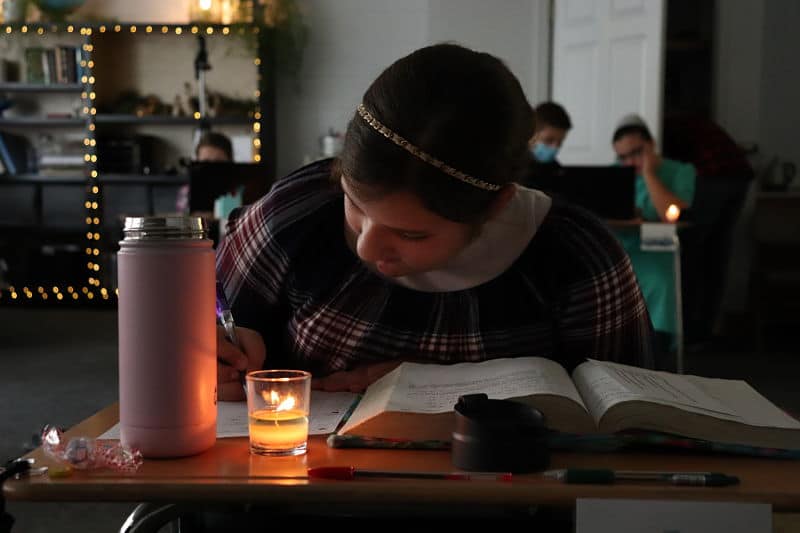
February school days are their own kind of special. The holiday excitement has worn off, the days are still short and chill, and the school term is barely half-way done, with the second half stretching into the dim future. I sensed early in my teaching career that morale tended to drop to its lowest in February, and it became imperative to learn some good coping mechanisms. While I, too, was tempted to sink into apathy, I couldn’t indulge myself or I risked having my entire classroom slide into the doldrums with me.
The following list is comprised of ideas I tried in my teaching, with varying degrees of success. I have done some as a brick- and-mortar teacher, while others have worked better in a homeschooling setting. Certainly, we do not do all the things in one February!
- Pay attention to your clothes. Wear cheerful colors. This may seem like a no-brainer, but there was a reason why Soviet prisoners wore grey uniforms in grey prison buildings. Costume days for the children are lots of fun. You can earn all the mothers’ gratitude by doing this in a low-key way. Simply instruct your students to wear the brightest things they already own, in as many colors as they can layer.
- Switch up the routine. Once I selected a day to write all our subjects on slips of paper and inserted them into balloons. The children got to pop a balloon at the beginning of each study session to see what they would do next. This was more fun for the students than for the teacher, but it did keep me on my toes! You can also vary the ways you teach a subject. Instead of traditional spelling tests on paper, try a spelling bee, or learn states and capitals to a familiar tune. A day of novelty can be the break that everybody needs to get back on track with ordinary days.
- Decorate your space. It should be a place where students like to be. A string of lights hung on command hooks creates instant ambience when the weather outside is frightful. Light a scented candle or diffuse some fresh smelling oils. When my husband taught junior high, he bought some wing chairs and end tables at a thrift store and set up a corner for free-time reading, complete with a stereo for playing classical music at appropriate times.
- Invest in plants. Winter is a great time to force bulbs in a vase of water on the windowsill. Another simple project is sowing a handful of grass seeds in a shallow pan of potting soil for a tiny lawn inside. Children will expend great effort to earn the privilege of “mowing the grass” with a scissors, and the whole thing becomes a wonderful fairy garden base. Sprouting trays full of alfalfa seeds is another great way to almost instant gratification if you want to not only grow greens but eat them too.
- Buy or borrow some new books. Read-aloud time after recess was my favorite part of the day, both as a student and as a teacher. When energy is flagging, that is a great time to read a comedy or a mystery that makes everyone beg for another chapter.
- Do simple free-writing exercises in tiny notebooks. We have found some of the cutest little journals at dollar stores. The point is for them to not look like regular notebooks. Give your students five minutes to write on any subject you wish, such as “The Most Important Thing in my Treehouse,” or “If I Had a Hundred Dollars.” When the five minutes are up, they can quit writing. Nothing gets checked or graded. Generally, all it takes is one spontaneous writer sharing their paragraph for the contagion to hit the less enthusiastic writers.
- Tea and poetry is a perfect combination for dreary days. While this is considered a homeschooling classic, it could be adapted for the classroom if every child brings a mug and the teacher has facilities to boil a large pot of water. Brew and sweeten a whole pot to avoid sticky spoons and soggy teabags everywhere. Poetry read in this atmosphere is for simple pleasure. Read a bunch of limericks, a rhyming children’s storybook, or an epic poem. The wonder of words in cadence will lift even the droopiest spirits.
- Incentives are every teacher’s ace up the sleeve. I once bought a stash of tiny stuffed animals from a party supply store. Then I propped them all around my classroom and gave the students a list of challenges diverse enough that everybody had a chance, even if they weren’t academic stars. By the end of February, all of them had achieved at least one prize.
- Learn something new as a class. In my seventh grade year, a lady with the patience of a saint came to teach all the girls to crochet, and someone else taught the boys simple wood burning techniques. You can learn some fresh games, or a catchy song, or do a version of “Word of the Day” where you pick a new word out of the dictionary and explore its meaning. Bonus points go to any students who use it properly in ordinary conversation at school.
- Don’t forget to smile. I remember one grim mid-winter when I had heavy things on my mind, and I simply wasn’t feeling it in the classroom. To remind myself, I put smiley stickers all over my planner and made a point to actually look into each student’s face and smile genuinely every day. The atmosphere became lighter immediately and I recognized a universal truth: if the teacher’s not happy, nobody’s happy.
They say, “Variety is the spice of life,” and they are right. There is no need to have a clumpy porridge quality of life when cinnamon and cream are available! Sometimes we object to spicing things up for lack of funds, but imagination doesn’t cost anything. Given that most of us remember best what we learned when it didn’t seem like a lesson, keeping up the spirits in the classroom pays off richly in the long run.