
All Content

Alberta PowerPoint
A PowerPoint presentation on Alberta.
Presentations in this series were created with the Living History Threads curriculum (Level 43) in mind, but they can also be used more generally. Each presentation covers a single Canadian province or territory, including quality photos of primary geographical features, capital city, and one or two visuals for a key historical event or other item of interest.

Elementary Assistant
Hampden Christian School is a mission school in Baltimore, MD, serving middle-class families and children ages infant – 8th grade. We are needing an elementary assistant to move here and start work August 31.Our enrollment for this fall has grown significantly, from 19 to 31 in the elementary. We have a large (for us) incoming kindergarten and first and second grade. Thankfully, we have filled all of our homeroom teacher positions with experienced teachers, a plus for the person coming in as assistant.The assistant we are looking for does not need to have previous teaching experience, but needs to be at least 20 years of age.The assistant would be teaching some reading and math classes in 2nd and 3rd grade and helping other teachers as needed. The assistant would supervise some recesses and be in charge of before and after care for students that are signed up for extended care.We’re an elementary school and daycare right here in Hampden, a middle-class neighborhood in Baltimore. Our school has about 40 kids in daycare/preschool ages 0 – 4 and about 30 in elementary K – 8th. This is a very secular and non-Christian community, and people don’t expect to see Mennonites here. Our mission is to live real Christianity out in front of our neighbors and our school patrons, build relationships with them for the purpose of bringing them to Christ. We’ve got a tremendous opportunity to do that because we have so much contact with people. I live smack between two neighbors and almost every time we go in our backyard we can have a conversation with one of them. We’re lucky to have nice neighbors. In school, we have 35 – 40 patron families, bringing their children to us every day for a full day of life-on-life nurturing and teaching with our teachers. It is an incredible opportunity.Our staff of mostly ladies, about 15 of them, live a fairly independent life. Our goal is for YOU to become a part of the neighborhood through your own hospitality and interaction with the neighbors. So you get your own house to share with other staff—all houses are spread throughout the neighborhood but within walking distance of the school. Evenings after school are mostly free. Weekends are mostly free as well—you can travel, but we encourage you to stay here in Baltimore as much as possible so you can get to know people.
Cook/Domestics Person
Hampden Christian School is a mission school in Baltimore, MD, serving middle-class families and children ages infant - 8th grade. We are needing a cook to start in August.Cook/DomesticsOur cook maintains the kitchen and prepares and serves lunch for 50- 60 people daily, plus breakfast and snacks. The cook is able to circulate throughout the building and serve almost everyone in the school daily. This person typically cleans in the afternoons, and spends 1-2 hours in a daycare classroom giving breaks to the teachers.The cooking is relatively easy. You are heating and serving mostly frozen food.Consider the following: written by Ms. Judy, our current cook/domestics person.A day largely consists of giving breakfast and snacks, preparing and serving lunch, washing dishes, cleaning, doing laundry some days, and being in the infant room a small part of the day.Why should someone consider this job? A big advantage of this job is you are able to know who all the children are, and they know who you are too! You are a hero to many kids!I love when the children are happy when I bring them food, and I love to hear them when they thank me for it.What are some disadvantages? You don’t have any children to call your “own.” You don’t have as much interaction with children as a teacher would.“The cook is a very comforting person to us teachers and very important to the kids as well. She kind of holds us together in tangible and intangible ways (sort of like God, to a much lesser degree. Like being Jesus to us. :) Things just feel kind of unstable when the regular person isn't cooking.” -quote from a teacher
Elementary Teacher Needed
Island Creek Mennonite School is a small school (~20 students) in southwest Virginia. We are seeking to hire a teacher for grades 3-6. Instruction would include a mixture of self-paced and conventional approaches--customizable to the teacher's preference and skill level. Tentatively, the class will total 6 students for the 2021-'22 school year.
Lower Grade Teacher Needed in Central Pennsylvania
Spring Creek Homeschool Co-op in State College, PA is looking for a lower grade teacher for the 2021/2022 school term.There will likely be 4 girls and one boy in grades 1-3.The teacher is expected to teach the basic subjects of Math, Reading, and Language Arts, using mostly CLE individualized curriculum. Additional curriculum for slow learners may be used at times. Classes begin at 8:15 AM and continue until 12:30 or 2:00 depending on the day of the week. Additional tutoring or checking work for lower grades or other students may be needed for 1-2 hours after lunch. If the tutor/teacher is interested in teaching history, science, or music in addition to the basic subjects, they could make their interest known, but this is not required. Anyone with questions or interest in this position can contact Joel Martin | 814-954-7298 | joelnkelsey@gmail.com
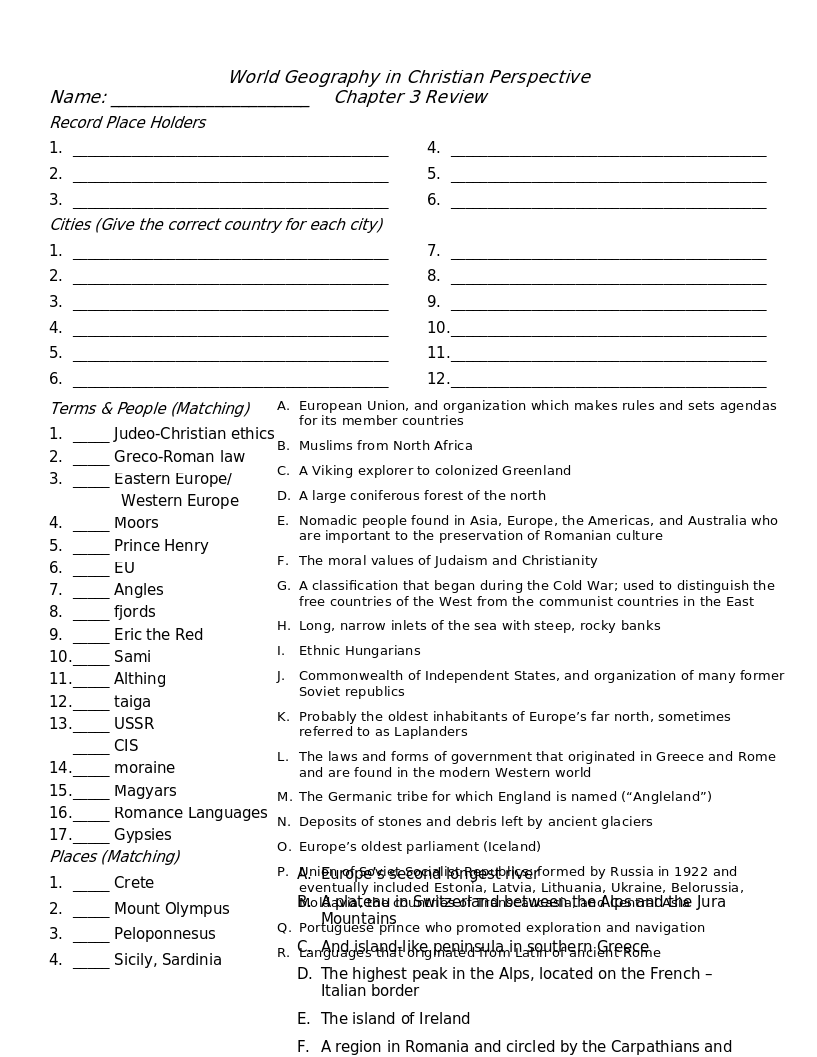
World Geography Chapter 3 Review
This is a review worksheet for Chapter 3 of Abeka World Geography in Christian Perspective.
Related: World Geography Chapter 2 Review
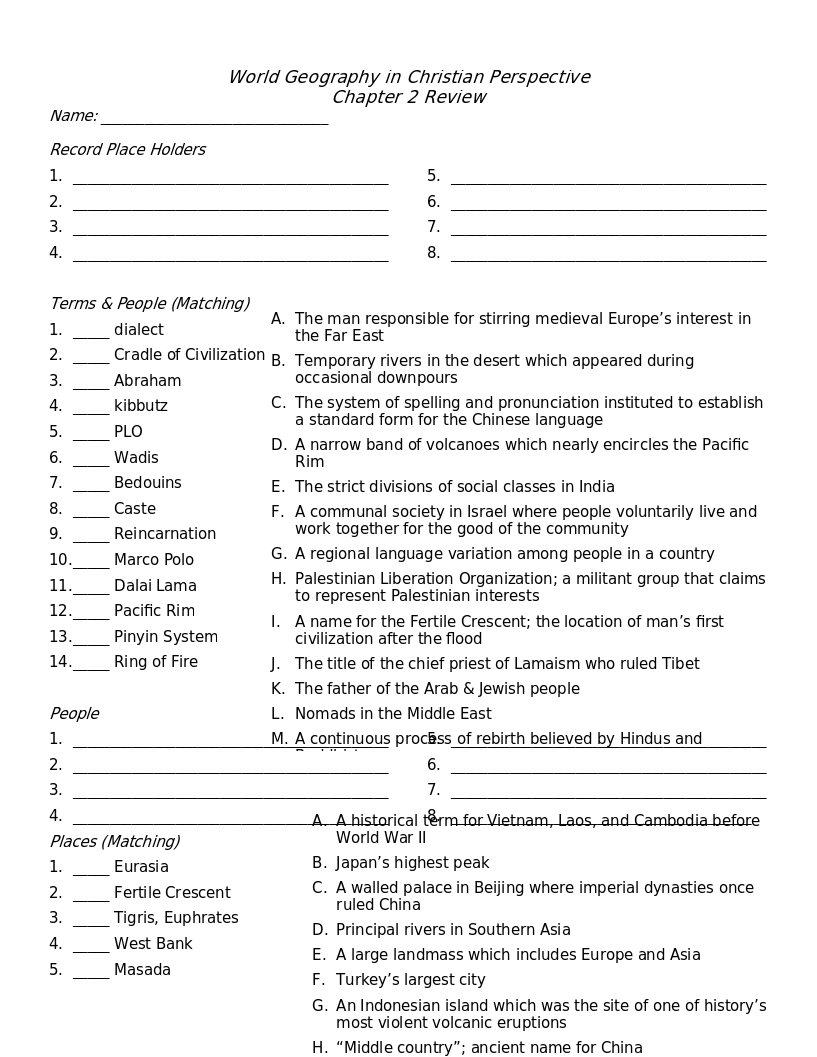
World Geography Chapter 2 Review
This is a review worksheet for Chapter 2 of Abeka World Geography in Christian Perspective.
Related: World Geography Chapter 3 Review

This Eternal Kingdom or That Mini Kingdom?
 Image by Gvantsa Javakhishvili on UnsplashImagine this scenario:
You want to be the leader of a new civilization on a beautiful island in the South Pacific, so you apply and get accepted to this position. You hire a personal tutor to educate and train you in everything you need to know for your new life and your future responsibilities. This guy is really, really good at everything from science to politics to personal relationships. He is supremely talented and incredibly wise. He has a knack for reading everything right.
So you give him control over every aspect of your training and agree to learn and do everything he tells you. He has daily teaching and training sessions with you that address every single facet of your life—your character, your personality, your knowledge of the world, your physical fitness—everything.
At the beginning of your training, he tells you, “I want you to keep going to school and to keep taking all the classes that you are already taking. Even though your teachers there don’t know nearly as much as I do and not all of the learning is really on track with mine, I want you to be as good a student as possible and learn everything you can. You will hear things there that won’t line up with what we are learning in our private session; just ignore this and keep going. The school also has some expectations of their students that would jeopardize your qualifications for the South Pacific Mission (like learning how to spin the truth for your own advantage); you need to refuse to participate in those activities. The goals and attitudes of your fellow students won’t be the same as yours, but just keep your eyes on the mission that you are about and stay focused.”
Looking at this student from the outside, he will look similar to all the other students. He is enrolled in the school and learning the same things and playing the same games. He completes all his assignments but often goes well beyond the requirements of his school and completes them with an eye toward satisfying his private tutor. He listens to the teachers, follows their instructions, and abides by the policies of the school (most of the time). Once in a while he deviates and seems to do his own thing. But through careful observation, one can see that he has a bit of a far-off look in his eye and seems to be listening to something outside of the school as he goes about his day. It looks like he is operating under the authority of the school, but his real authority is that man out there with whom he is going to meet after he gets home from school.
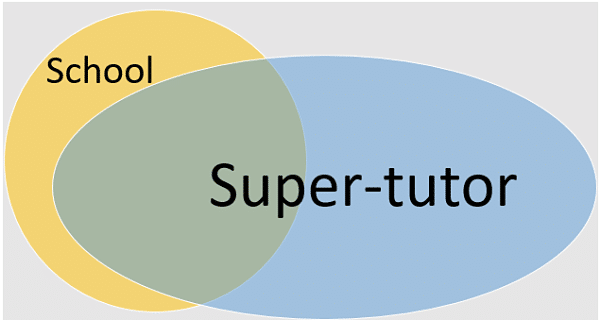
In our high school history class, we used this imaginary scenario to discuss a Christian’s position in civil society. He operates as a citizen of a nation-state and in its socio-economic structures but is being actively directed by an outside source of authority and with a core identity that is different from his peers. This diagram illustrates the rank and over-lap of this citizen’s authorities. Just as our imaginary student lives wholly within the sphere of his guide, a Christian lives wholly within the blue oval, the Kingdom of Jesus. That sphere extends into yellow territory, but the way that he participates in that arena is dictated by the purposes and norms of Jesus, the super-tutor.
In history class, we look at the timeline of world history, the rise and fall of kingdoms, and the Kingdom Jesus talked about when He entered history’s timeline. Studying this raises questions of how His Kingdom compares with other kingdoms.
History began with God creating the world. It belongs to Him. But the world—nature and humans--have been twisted and cursed because of sin.
The majority of the world’s inhabitants have given free rein to their twistedness, creating an existence that opposes the rule and will of their Creator. They have used their God-given abilities to develop systems—rebellious mini kingdoms—to insulate themselves from God. These rebellious systems include political structures, educational institutions, philosophical propositions, ethical systems, cultural norms, and economic structures. Over time, these systems become more sophisticated and more corrupt.
However, God has never ceased to be the Ruler of His creation. It has always been God’s desire that His creation—the earth and humans—be restored to a place of submission, love, and shalom, under His caring lordship.
Jesus inaugurated the Kingdom of God on earth with His life, death, and resurrection. The first message of His public ministry was, “Repent, for the Kingdom of God is at hand.” With this message, He announced God would turn the current rebellious mini kingdoms on their head. “God is coming to reclaim what is rightfully His. Acknowledge Him and submit to His rule voluntarily.” Jesus made it clear that anyone was welcome to join His Kingdom: “Fear not, little flock, for it is the Father’s good pleasure to give you the Kingdom.”
Christians are those who respond to Christ’s call to repent with faith and humility. They renounce their former allegiances in order to become a liege of the King of Kings . They recognize that the self-serving systems that they were a part of oppose God’s will. In doing this, they are “translated from the kingdom of darkness to the Kingdom of His dear son.” Local congregations of believers are the outposts of this God’s Kingdom, seeking to bring His will and rule to bear on everything within their sphere of responsibility and influence.
God’s Kingdom provides a stark alternative to the rebellious systems and mini kingdoms of the world. Like the experience of our imaginary student in the introduction, submission to God’s rule puts Kingdom citizens into an entirely different orientation toward life. Instead of seeking to avoid their Creator, they seek to know Him and love Him. Instead of putting themselves at the center of the universe, they acknowledge Christ at the center. The Kingdom provides them with a new identity, a new society, a new culture, a new agenda, and new methods.
As Christians live in submission and obedience to Christ, the Kingdom of God is their home, both in its current form and in its promised future form of perfection. As they live on the earth and see their place in history’s timeline, Christians do not find identity or meaning in race, class, political party, nationality, economic status, geographical setting, historical era, IQ, level of education, appearance, or competence—the things that history usually values. They find their place as they kneel before the throne of their Creator in love and worship. In coming under Christ’s rule, the rebels have come home, and “nothing can separate them from Him.”
Earthly activity as God originally designed is good and worthwhile. “Be fruitful, multiply, have dominion.” But now Christ has given a new and more urgent mandate for His Kingdom in this enemy-occupied era—the mandate to make and teach disciples. Christians prioritize their resources according to God’s priorities. Creating a rose garden, for example, aligns with God’s original intent for man and can be a good activity. However, in light of the world’s current needs, God calls Christians to put the majority of their resources into growing the church.
Christians look forward to the ultimate triumph of King Jesus over sin and death—the devastating aspects of a broken, twisted world. Jesus, our eternal King, accomplishes this triumph through the resurrection of human beings and the re-creation of the new heaven and the new earth where He reigns forever. Christian will enjoy life with Christ eternally in the new heavens and the new earth. This Kingdom is far superior to any temporary mini-kingdom that we study in history!
Questions for reflection or discussion:
- What kind of Kingdom is Jesus’ Kingdom?
- Where does this Kingdom exist?
- When does it exist?
- Who is a part of it?
- Can we tell who is a part of the Kingdom?
- Is “the Kingdom” synonymous with “the church”? What is their relationship with each other?
- What are the implications of being a part of Christ’s Kingdom? What difference does it make for those who are a part of it? How would people act if they became fully convinced that the Kingdom is established already and Jesus is reigning over it right now?
- What are the agenda, the laws, the style of governance of this Kingdom?
- What is its relationship with all of the other kingdoms of the world?
- What is the future of Christ’s Kingdom?
Introduction to Diverse Learners: Part 1 of 5
Classrooms as Greenhouses
I found it helpful to think about our classrooms like a greenhouse. If you imagine a greenhouse full of plants and full of all different types of growing things, each of them needs different things to help them to thrive. So some plants need much more water than others. Some need more sunshine than others. And some plants—their beauty is shown with greenery, and other plants are quick to flower and show their beauty in that way. And so each of our students, I feel like, it's helpful to think about them as being plants, kind of. So they're the plants. Our classroom is the green house, and as the teacher, we are the gardener.
And our task, our job as a teacher, is to help them or to create a classroom environment where each of the students is able to thrive in spite of their differences. Our job is the teacher: some of us will need to water here and prune here. We'll need to encourage here and challenge them forward—to call them to something higher. So each student is needing different things.
Embrace Differences
Our classrooms are diverse places, full of diverse people in them, and our students have a wide ranging interest, and ability levels, and backgrounds, and cultures, and we need to―I really believe that we need to―embrace them, embrace their differences and what we can learn from each of them. The concepts of community and empathy and caring for each other in spite of our differences is something that I feel we should be cultivating in the context of our classrooms.
Student of our Students
I believe as a teacher, we need to be student of our students and be studying, how do they learn? How does this student... how can I best help them to grow and to thrive? How do we begin studying our students and figuring out how to best teach them? Starts with having a foundational understanding of the learning differences or learning disabilities that students can be facing. And so that's the goal of this video series, is to give you some foundational understanding of the various differences that students can be experiencing or people that we come in contact with in life as well.
Types of Diverse Learners
I have here a chart or a graph, and this is a graph that's showing the percentage of students that are receiving services in 2017 and 2018 in the public school system. And if you look at this graph, you will see that this Specific Learning Disabilities category is the largest with 4.6% percent of students in public schools receiving services with these kinds of needs. Then there's Speech and Language Impairment, Other Health Impairment, Autism, and the list goes on. In the other category are things like a visual impairment or deafness or an orthopedic impairment like cerebral palsy.
In this series, we're going to take a look at three specific categories of disabilities that we might experience more often in our Anabaptist schools. The first one is dyslexia, which would fall under the Specific Learning Disabilities category. Then we will look at autism, which falls under its own category there in the yellow. And the third one would be ADHD, which falls under the other health impairment category.
Of course, in addition to these disabilities, there's many other causes or factors, things that can be impacting a child's success or performance at school. And some of those things could include like trauma, or attachment disorders, or different behavioral or emotional... the different level of emotional or mental health, or things like having a limited English language proficiency. All of these things can be playing into a student's... how they're doing in school.
Teachers as Problem Solvers
And so as teachers, we really have to be problem solvers and think about, well, what are all the factors here? What are all the different things that could be going on? And sometimes our first take or our first impression is not correct. And so we need to dig into that and look into and see what could be going on, and how could I be a help to them?
Things to Understand
In general I think there are some things that we should understand about disabilities. First, they can really range from... Like so say that someone has dyslexia. It could range from mild to moderate to severe to profound. You could have a mild case of dyslexia or a severe case that is very difficult to overcome or to work with. And so there is that range there.
Also, I think it's important to understand that, in order for an individual to be diagnosed with one of these disabilities, to be significantly impacting their functioning in life or their performance in the classroom. That's always compared with typical development. So a child... a first grader is going to be more moving more readily, and that's expected of them when we think about something like ADHD. It's always compared with what's typical for the child or the individual at their current age. Sometimes we joke about having disabilities like we're feeling restless. After we stop for a while, we kind of joke around like I have ADHD or something. And I, I really caution us against that. I think that that discredits the fact that these disabilities are real. These disabilities are very impactful for many individuals. And so we... Yeah. Let's be careful about how we talk about them.
Also, I encourage us to think about our role as educators in that we are professionals, and we want to be doing our job and talking about these kinds of needs in a professional manner.
People First Language
And one way that I think is important to keep in mind when talking about disabilities is using something called “person first terminology.” And that just means that, say that someone has Down syndrome, we wouldn't say "the Down syndrome child." We would say "the child with Down syndrome.” Or the same way we wouldn't have an "ADHD child" or a "dyslexic child." We would have "a child with dyslexia" or "a child with ADHD." It's just a small thing, but I think it can show respect. It can show that they're a child first, and the problem that they're encountering is not defining who they are.
Labels as a Tool
Also, I hear a lot... there's a lot of talk about labels, and how do we think about those? And there's a lot of pushback on labels. We don't want to label this person with this, with this problem. And we have to be careful with labels. We really do. They don't limit an individual or capture the whole person. That doesn't define who they are. And labels also, we don't want to use them as an excuse, as something that now I don't have to be putting forth my best effort, or I don't need to... like this behavior is OK because I have this problem. Like it's not an excuse.
And so I do want us, though, to think about labels as being a tool. When someone has been diagnosed with a specific disability, it opens up the door for resources. And as educators, it helps us all to have a sense like... It helps us to define what's going on, to know maybe where to look for resources, where to... It gives us direction for how to help our students whenever we kind of have a better understanding of what specifically is going on for them.
Labels also, I feel like, can be a relief for some when it kind of can explain why school has been so hard for me. It's not that there's something that I'm doing wrong. Yeah, it can be an incredible explanation of the challenges, and it can also give a way forward.
Conclusion
So as an educator, you won't need to be teaching long to encounter many of these disabilities in your classroom. And so I just encourage us to lead with empathy, to continue growing and learning and as educators. Do your research, look into things, and let's be advocates for our students, and help them, so that they can thrive, just like the plants that we've talked about earlier.
Tasting the Seasons
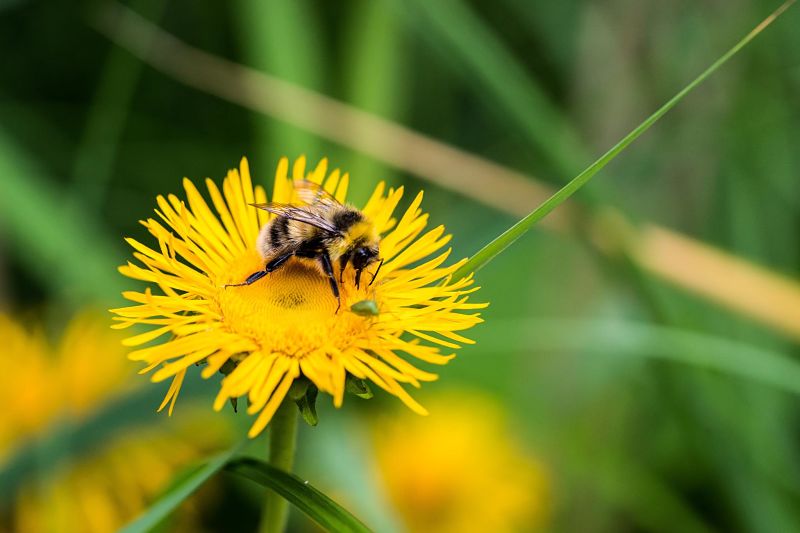 Photo by Stefan Steinbauer on Unsplash
Imagine with me a walk in the woods or along a path in a state park, carrying a foraging basket. You bend to pick a purple violet, marvel at its velvety petals, sniff its sweet scent, and then you chew it slowly, sensing the delicate essence of the season. There are so many violets blooming, it is easy to pick a cupful for garnishes on salad or to make a small batch of lavender jelly.
Around a bend in the path, you see a hemlock tree (not the hemlock plant that killed Socrates) with elegant fresh growth, and you pinch off some tips to make a refreshing tea. You keep your eyes peeled for wild mint with its strong scent. If you are not a tea person, you can pull a few fat dandelion roots to roast and grind for ersatz coffee. Many state parks trails have shiny, low-growing wintergreen at the edges, with their bright red berries that taste a little like Grandma’s candy if you chew them slowly. The wintergreen leaves themselves are not very tasty until they have been made into an infusion or soaked in water for a few days, so they do not yield the instant gratification of the berries.
Unlike the pioneers who spoke with affection about finding the first dandelion leaves and chickweed to relieve the boredom of their winter diet, we are privileged to have plenty of fresh greens available year-round. There is, however, a deep satisfaction in picking sprigs packed with vitamin C in the wild. Purslane is another abundant and easily recognized “weed” with a juicy, tart flavor that enlivens sandwiches and salads. If you fancy a tangy bite to your salad, look for the prolific garlic mustard with its feathery white flowers that bloom early.
Maybe you are wondering about the vegetable course in your foraging. Wild asparagus is easily identified once you see it, but it can be hard to find in tall grasses unless you have memorized where it bolted to seed the previous year. Fresh hosta shoots, tightly furled, taste similar to asparagus and are so abundant in landscaping that they are easy to forage, with permission, of course. There is always wild garlic shooting up in the lawn, or you may find pungent ramps in shady, low-lying areas of the woods. You may even enjoy fern fiddleheads, sauteed lightly.
As you finish your stroll in nature, you look into your basket with pleasure. All of this variety was just growing out there, with the amazing flavors that God created in each plant.
Tasting Safely
As a teacher, your thoughts naturally turn to how you can teach this interesting skill of foraging to your students. Many children only hear one mantra, “Don’t eat the berries!” when they are on a nature walk. People tend to be held back by the fear of eating something that will kill them on the spot. In fact, there are very few things that are that lethal. Many toxic plants either taste nasty or cause a stomachache or warning rash. In the case of children, who like to taste everything, it is good for them to learn exactly what it is that they may eat. That means that the adults in their lives need to educate themselves, and then go on those nature walks and introduce the children to the joys of tasting nature.
Mushrooms are one aspect of foraging that can be potentially lethal if you misidentify them, so I do not recommend trying them unless you have an experienced forager to show you the characteristics of the edible species. Probably the most familiar mushroom in our region is the morel of early spring, and the thrill of the hunt is likely as great as the taste of the fried mushrooms.
Resources for Learning to Identify Edible Wild Plants
Foraging is not only an enjoyable experience, but also a valuable survival skill. As a young adult, my one provision for the looming threat of Y2K was to buy a Peterson’s Field Guide to Edible Wild Plants. My logic was that it would be easier to find some cattail roots for dinner than to store buckets of lentils. Thankfully, the need never arose, but the field guide remains a great resource on our bookshelf. It is so comprehensive, however, that it can be a little confusing. You do not want to search for a plant that grows in the Pacific Northwest if you don’t live there. We have been happier with regional field guides such as Northeast Foraging. And there are many regional guides available. Our top favorite guide is one that would likely work for most areas of the United States, because it is simply Backyard Foraging, a guide to sixty-five edible plants that people have in their landscaping.
Even better than field guides are people who can show you where to find plants, and who can explain how to prepare them. These people guides are also valuable when it comes to berries and fruits. There are roadside median strips, (usually public property, but you should make sure) dripping with ripe blackberries in August. There are acres of huckleberries in boggy places, or overgrown apple trees on abandoned homesteads. There are saskatoons and mulberry trees in state parks, with their luscious fruit falling to the ground. You will want to check the laws in your state for foraging, but in Pennsylvania state parks, it is legal to harvest nuts, fruits, and berries in reasonable amounts to feed your family.
If you are interested in learning the art of foraging, start slowly with the most obvious plants. Download an app that helps you identify plants, and then start tasting! You will be pleasantly surprised at how much fun it is to pop a rose hip into your mouth and have a vitamin boost as you stroll along, or daintily nibble on a daylily petal. If you have children with you, they will be following right along on the adventure, broadening their food horizons one dandelion at a time!