
All Content

Boys Will Become Men
In this talk given at Faith Builders Teacher's Week 2010, Luke Bennetch shares stories and gives insights on relating with care and understanding to boys who are being boys. Having a vision of what boys can become helps inspire a deeper appreciation for them and a wiser approach to their training.
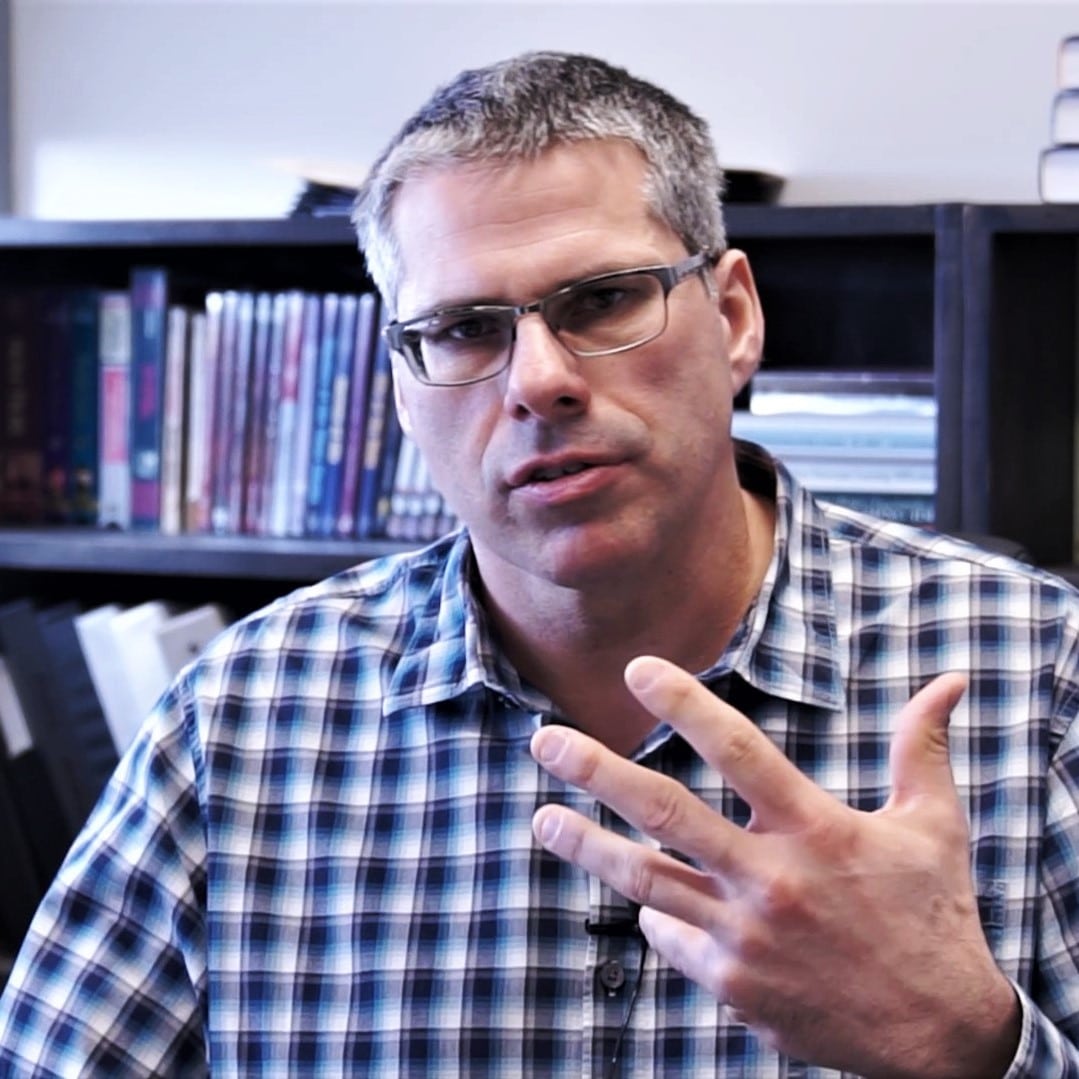
Staff Development: Empowering the Educator to Engage the Learner
When I first started doing some staff development sessions probably 10, 12 years ago, we, as my typical fashion is, I probably went into it too gung-ho and scheduled way too many and didn't do a very good job with them, and staff probably ended up being fairly—maybe disillusioned is too strong of a word— but we're real enthused with staff development. That being said, probably the best way to judge the effectiveness of our meetings would be to talk to the staff here rather than my own personal opinions.
Schedule
I think we've settled into a rhythm where we try to have between four to six sessions a year (a school year). Here at Countryside we have a staff meetings at 7:30 in the morning. On this year it's a Wednesday morning. We have them weekly for about an hour. So when I make up the staff meeting schedule, we will schedule these into that schedule for the year, trying to front load them to the beginning of the year, in the middle of the year, rather than the last two or three months.
Administrators Are Not the Source of All Knowledge
If I think of hints to someone starting doing some staff development or if you've been thinking about it, a couple of things that I've maybe personally struggled with in doing staff development is just recognize that you don't have to be the sole source of knowledge. I think that's the biggest trip-up that we can maybe get... The biggest trip-up we can have as administrators is to think that we have to be the source of all the knowledge. And that's just not true. And when you think of trying to build your staff team, you want to pull from the strengths from your staff as well, not just making them dependent on yourself. And so I think I erred at the beginning of thinking I had to be the source of all the ideas and all the knowledge, and that's just not--that's not healthy. And it tends to, you know, I get fatigued with it and staff get fatigued with listening to me talk as well. Whereas as your teachers will be able to contribute a lot of things.
Delegation
The thing that if you do pull other people in is you can delegate it, and that gives them the responsibility. So a couple... maybe an idea is if you have six sessions a year, if you plan on bringing one or two guest speakers in for two of them, and you plan on doing two sessions and then delegate one or two to one of your staff members—maybe an individual. And then all of a sudden staff development becomes much less onerous on you as the administrator, and you're drawing from a wide group of people, which tends to keep it—you'll be able to focus well on what you're presenting.
Schedule Early
I also would suggest planning it out at the beginning of the year, get it on the schedule. Get it in your calendars. Have it on a scheduled day, not something that's flexible, that can be... you're just going to try and fit it in sometime throughout the year. Because we all know that that's just not going to happen, and it won't get done. So beginning of the school year, sit down and plan out the schedule. Delegate the people. Contact who you want to have come in. And have it all squared away before the school year starts.
First Aid Training
When it comes ideas, we've done a lot of different things. And like I said before, some successfully, some not successfully. But some ideas, we haven't actually done this one as a whole staff, but I know schools that do. And that is to take first aid training. Have everybody do a first aid course of some sort. I think that's an excellent thing.
Child and Family Services
In Canada here, Child and Family Services is a resource that we sometimes need to touch base with or we need to be up to date on some of the policies and things. And so maybe having a representative from them that you trust come out and just speak to your staff about issues and things that they need to be aware of.
Software
Something that we've done, if we introduce a new piece of software into the school or maybe a new piece of hardware, is we'll take a staff development time to train on that software, on that piece of hardware, to learn how to use it. We had a dad come in and give us a teaching on how to use Microsoft Outlook. Some of the staff are very proficient already. So was this a boring, staff development class for them? Yeah, probably others were newbies at it, and so this was a training environment that we could either be benefited or we could benefit others by helping them along.
Staff Strengths
Pull from your staff strengths. Maybe you have someone on your staff team who is just a really good art teacher or things, and they can share with other teachers little techniques that can be useful in the classroom for teaching art or giving some art ideas. A number of our staff here at Countryside have presented at Faith Builders throughout the years. And one thing that we like doing for staff development is we'll have them redo that presentation here for the staff team and then we benefit because not everybody from here goes to Faith Builders for the Teachers Week or similar. And so we've had them redo that. So we've had sessions on writing rubrics or visualizing math and working with math. I did a session on understanding yourself as a teacher, which we also did here as a staff team as well.
Resource Room Teachers
I've also had over the years our resource room teachers talk through some of the different resources they're using and explaining how the resource that they're using maybe emphasizes or works with an area, whether it's in phonics or in spelling. That is not necessarily where it's approaching the curriculum from a different perspective and helping with students who struggle. And what we've been able to do with that is being able to take some of those ideas that are used in the resource room. And if it's a great idea, we'll incorporate it into the classroom as well. And just to make more effective learning as a whole.
Teach Like a Champion
I think probably the most successful staff development sessions we've had here at Countryside revolve around the work and the book called Teach Like a Champion. And the way we've utilized this is initially we brought it in as a as a staff book that we read through the summer and then came back at the beginning of the year. And we worked our way through a number of the techniques in the book. That was OK. But it has become more effective over the last couple years to just cycle back through those—through that book. And this is where I've pulled in our staff team and I'll just say I'll tap someone on the shoulder. I'd like you to pick one or two techniques and study it and be prepared to present that technique to the rest of the staff. And then we'll have a little bit of time of discussion together. But if we have two techniques in a morning that covers an hour, and we have a lot of good discussion. We talk about what this looks like in the classroom, and it varies from grade one through grade 12. But there's a common theme that that works. And the feedback that I get from the staff is that these are just very practical sessions and that they always come away with one takeaway that they'll probably go right to the classroom and start utilizing it that day. And so it's just an excellent source of tidbits and ideas for classroom management or effectively communicating with your students. And we just need to hear this over and over again. And so I can see Teach Like a Champion being a part of our staff development on an ongoing basis year by year that probably will have two or three days that throughout the year that we'll just have those as topics. And so that has been a very effective one for us here as a staff.
Let’s Pray
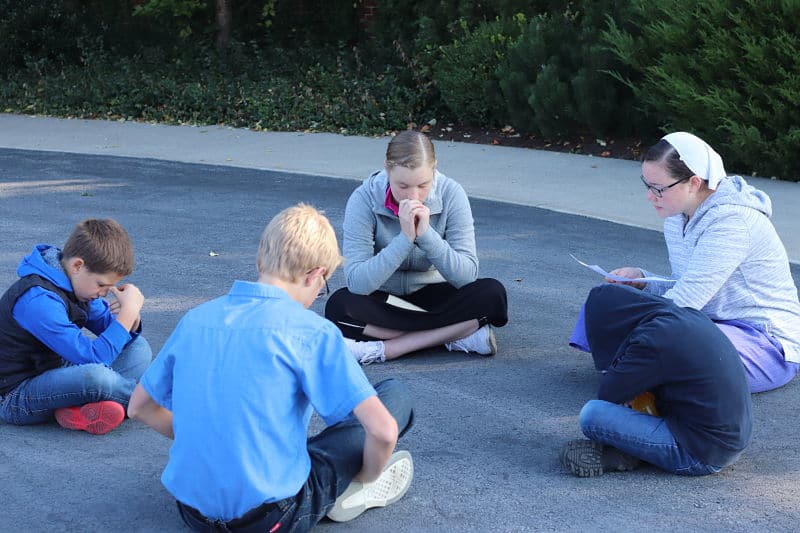
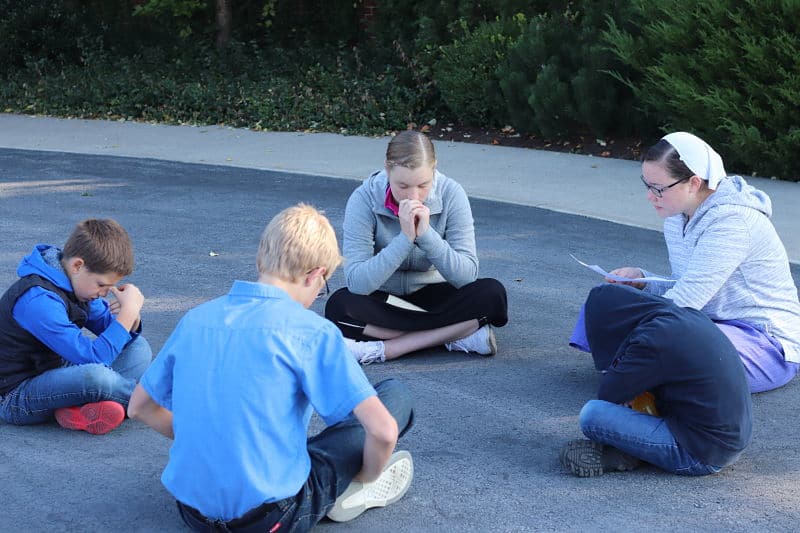
“Don’t forget to pray for Monster!” This request was called out just as I was preparing to pray at the end of the school day. I had to think quickly—“Who is Monster?” Then I remembered: Monster is a cow that has a hurt leg. So we prayed for Monster.
Prayer is a vital part of our school day. We pray to start and end the day, we pray before eating lunch, and we may stop throughout the day to pray. Whoever is the “math person” in our class is asked if they want to pray for lunch. Most of the children want to pray and pray their own prayers. I am often touched by the things they say to God. Some years I give them the option of praying or not for the first round, and after that I ask each one to pray when it’s their day. I want them to learn to pray, and I will help them know what to say if they can’t think of anything.
One day I prayed for a cat with a hurt leg, a dog (that her puppies would be healthy), and a cow (Monster), and some grandparents and a little brother. Praying for these animals amuses me, but I am blessed by the faith of my students as they freely share their prayer requests and believe that God cares and will answer. I appreciate their faith.
Once when we heard sirens and the children were concerned, I commented that we could pray for the situation. We paused math class and prayed for whatever was happening. After that, every time we heard sirens, someone would say, “Let’s pray!” A few times I wondered if it was just a fun way to stop having class for a few minutes, but I realized the concern of the children was genuine and appreciated this call to prayer.
I teach a unit on prayer in devotions/Bible class and will share ideas here for teaching prayer in the classroom.
- Take prayer requests from the students. At first, I explain what a prayer request is, and give some guidance, so the children know what this means.
- Write the requests on the board and pray for them throughout the day.
- Encourage the children to pray for the requests.
- Write their requests on a poster board, post it, and note answers to prayer.
- Write prayer requests on slips of paper and put the slips in a jar. Students can write their prayer requests and put them in the jar, too. Select a few to pray for each time you pray.
- Remember to share answers to prayer!
- Thank God for listening and answering (even when the answers aren’t as we would like).
Many of our students learn to pray at home. I can tell some of their phrases come from their parents, and we can reinforce that learning at school and continue that dependence on prayer. Some of our students do not have that background and we can teach them to pray, as the disciples said to Jesus, “Lord, teach us to pray.” I have learned about prayer from my students, too!
One day I was hiking with my brother’s family when a storm hit and trees were crashing all around us. My brother and nephew, Jordan, were trapped under several trees, and I was stuck under another fallen tree. I heard three-year-old Jordan crying, “Let’s pray!” as trees continued to fall and the wind roared. There was not time for his daddy to teach him to pray but Jordan had already learned to pray and take his needs to God.
Yukon PowerPoint
A PowerPoint presentation on the Yukon Territory.
Presentations in this series were created with the Living History Threads curriculum (Level 43) in mind, but they can also be used more generally. Each presentation covers a single Canadian province or territory, including quality photos of primary geographical features, capital city, and one or two visuals for a key historical event or other item of interest.

Saskatchewan PowerPoint
A PowerPoint presentation on Saskatchewan.
Presentations in this series were created with the Living History Threads curriculum (Level 43) in mind, but they can also be used more generally. Each presentation covers a single Canadian province or territory, including quality photos of primary geographical features, capital city, and one or two visuals for a key historical event or other item of interest.

Quebec PowerPoint
A Power Point presentation on Quebec.
Presentations in this series were created with the Living History Threads curriculum (Level 43) in mind, but they can also be used more generally. Each presentation covers a single Canadian province or territory, including quality photos of primary geographical features, capital city, and one or two visuals for a key historical event or other item of interest.

Prince Edward Island PowerPoint
A PowerPoint presentation on Prince Edward Island.
Presentations in this series were created with the Living History Threads curriculum (Level 43) in mind, but they can also be used more generally. Each presentation covers a single Canadian province or territory, including quality photos of primary geographical features, capital city, and one or two visuals for a key historical event or other item of interest.

Ontario PowerPoint
A PowerPoint presentation on Ontario.
Presentations in this series were created with the Living History Threads curriculum (Level 43) in mind, but they can also be used more generally. Each presentation covers a single Canadian province or territory, including quality photos of primary geographical features, capital city, and one or two visuals for a key historical event or other item of interest.
Nunavut PowerPoint
A PowerPoint presentation on Nunavut.
Presentations in this series were created with the Living History Threads curriculum (Level 43) in mind, but they can also be used more generally. Each presentation covers a single Canadian province or territory, including quality photos of primary geographical features, capital city, and one or two visuals for a key historical event or other item of interest.

Nova Scotia PowerPoint
A Power Point presentation on Nova Scotia.
Presentations in this series were created with the Living History Threads curriculum (Level 43) in mind, but they can also be used more generally. Each presentation covers a single Canadian province or territory, including quality photos of primary geographical features, capital city, and one or two visuals for a key historical event or other item of interest.
Northwest Territories PowerPoint
A PowerPoint presentation on the Northwest Territories.
Presentations in this series were created with the Living History Threads curriculum (Level 43) in mind, but they can also be used more generally. Each presentation covers a single Canadian province or territory, including quality photos of primary geographical features, capital city, and one or two visuals for a key historical event or other item of interest.

Newfoundland and Labrador PowerPoint
A Power Point presentation on Newfoundland and Labrador.
Presentations in this series were created with the Living History Threads curriculum (Level 43) in mind, but they can also be used more generally. Each presentation covers a single Canadian province or territory, including quality photos of primary geographical features, capital city, and one or two visuals for a key historical event or other item of interest.
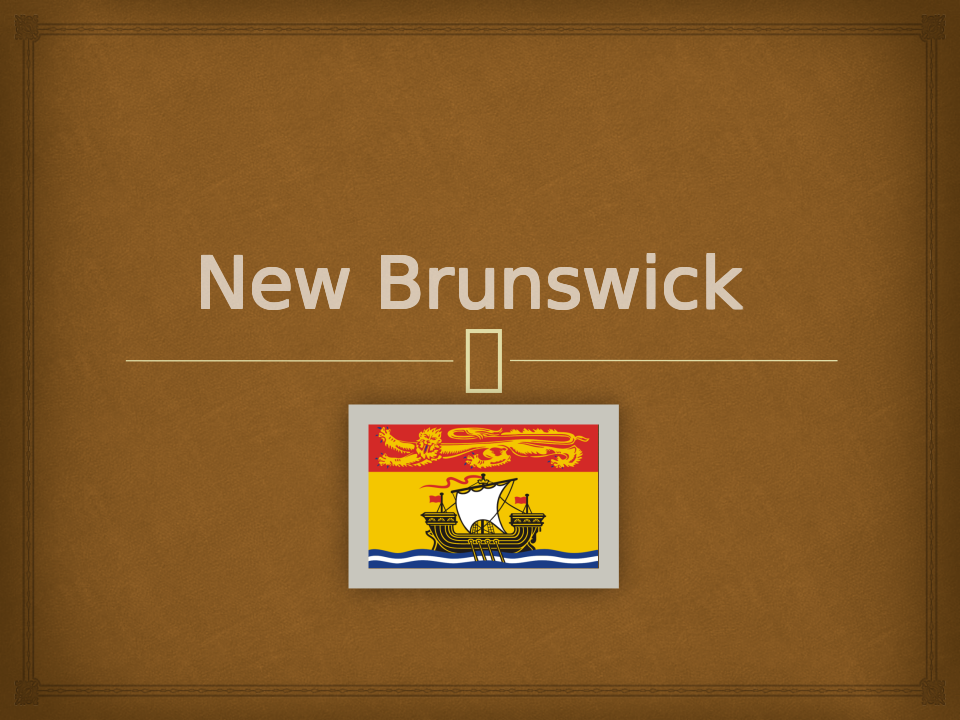
New Brunswick PowerPoint
A PowerPoint presentation on New Brunswick.
Presentations in this series were created with the Living History Threads curriculum (Level 43) in mind, but they can also be used more generally. Each presentation covers a single Canadian province or territory, including quality photos of primary geographical features, capital city, and one or two visuals for a key historical event or other item of interest.

Manitoba PowerPoint
A Power Point presentation on Manitoba.
Presentations in this series were created with the Living History Threads curriculum (Level 43) in mind, but they can also be used more generally. Each presentation covers a single Canadian province or territory, including quality photos of primary geographical features, capital city, and one or two visuals for a key historical event or other item of interest.

British Columbia PowerPoint
A PowerPoint presentation on British Columbia.
Presentations in this series were created with the Living History Threads curriculum (Level 43) in mind, but they can also be used more generally. Each presentation covers a single Canadian province or territory, including quality photos of primary geographical features, capital city, and one or two visuals for a key historical event or other item of interest.