
All Content
Prepare
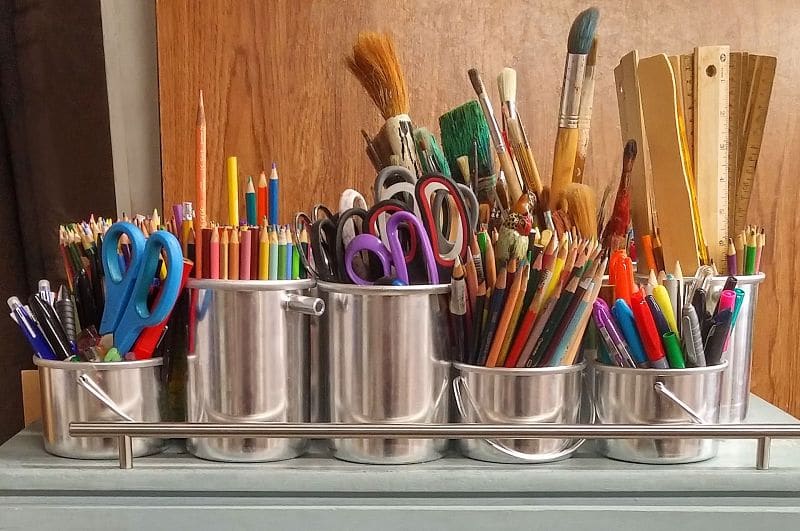
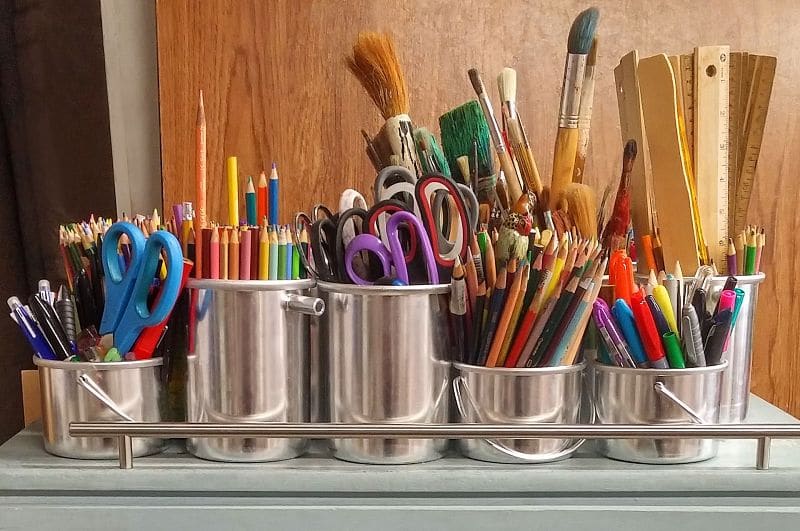
Back-to-school supplies are stocked in stores, teacher meetings are beginning, and school cleaning is happening. We are preparing for another school year!
As you think of getting ready for school, maybe this is your first year and you’re not sure how to prepare. Perhaps you’ve taught multiple years and have specific things that you always do to prepare for a new year. Maybe you aren’t ready to think about preparing for another year!
I’m considering this preparation and have several areas in which teachers need to prepare.
- Prepare the teacher! Be sure you’ve had a break this summer, with some time to relax and rejuvenate. Prioritize spiritual preparation for your ministry of teaching. Read journals or articles about education or certain topics you want to learn about. (For example, I’m working through some modules on phonics and reading.) You might need to prepare with some time management—plan a schedule for yourself. You could prepare for packing lunches. Put some individual servings in the freezer (fruit, left-overs, baked goods, fruit slush). I like to make a new dress or two. As we get nearer to the first day of school, start getting on a school schedule by getting up earlier.
- Prepare your classroom. Determine a seating arrangement, possibly talking with the teacher who had the class last year to see which students work well beside each other, or who needs to be in the front or back of the classroom. Arrange the desks and put name tags on them. Put up bulletin boards. Put up a welcome sign or note. Post the classroom rules/procedures. Think about traffic flow and arrange other parts of the room, such as computers, trash cans, and stackers. If you have a theme for the year, post that or do any decorating that accompanies it.
- Prepare some lessons. This is important preparation! I try to lay out basic lesson plans for the first week, and specific plans for the first day. After the first day, I can better plan the rest of the week. Decide on some extra lessons or activities to fill in those odd moments that crop up at the beginning, or the transitions that you didn’t know about, or for those times when lessons didn’t take as long as you or your substitute anticipated. I have a goal of doing some curriculum mapping for the year, when I go through the books and figure out how far I should be at the end of each quarter and lay out plans for covering that content in that length of time.
- Prepare the books. Find the textbooks; number them if needed. Pass out books to student desks or have them organized for students to pick up. Arrange classroom materials and supplies.
- Prepare for aides and volunteers. I have a list of expectations for a classroom aide and a list of helps for volunteers. I also typed up my guidelines for grading so I can hand that task to an aide or volunteer. I have a specific stacker for my aides and volunteers to use. I keep a class list, the expectations, grading guidelines, and guidelines for Bible memory testing in there, and add the daily list of tasks, along with materials or supplies for their work.
- Prepare the students! Even though they are not actually in your class yet, you can start preparing them. Send them a friendly letter of introduction, telling them about the class, what you are looking forward to, and what they can anticipate. I like to tell them something that they should bring on the first day. (This year they will be asked to bring a favorite stuffed animal on the first day.)
- Prepare the families. Along with the letter sent to students, send a letter to the parents. Introduce yourself and your classroom. Share your contact info and the ways you prefer they contact you. Some teachers send a questionnaire about the children and ask parents to complete the questionnaire and return it with their child on the first day of school.
The anticipation of a special event can be a fun part of the event. May your preparations lead to a wonderful and blessed school year!

Ready for the First Day

Photo by Kuanish Reymbaev on Unsplash
“I can’t wait for the first day of school,” commented my ready-for-second-grade niece one day at the end of June.
There are others anticipating the first day too. Some of you are looking forward to starting this new occupation called teaching. Beginning teachers fall into varying categories. You may have dreamed about this day since you were an elementary student. Some of you have not given teaching much prior thought but are willing to take up the challenge God has presented you. Some of you are teaching more because of necessity than because of a dream. Some of you have known for months that you will be teaching come fall. Some of you have only given your consent a month or two before the beginning of the school year. There is one way you are all alike. You are not sure exactly what you may be in for. You can plan and dream but until that first day happens and the first months go by, you cannot know what you will be working with and how you will need to respond to the various challenges thrown your way. Teaching is the same as many other things: with practice it will go better.
To all the beginning teachers, I say, “Welcome!” Welcome to one of the most satisfying careers you could have. Welcome to new relationships. Welcome to new learning. Welcome, also, to new challenges and frustrations. Welcome to times of satisfaction when things are going well and to times of uncertainty when things are not going well. Welcome to a job that should leave you dependent, not upon your own strength and knowledge, but upon God and His direction. It is good to have you as part of this life we call school.
The first day of school is approaching and it is time to start getting ready. But where should you start? Let’s look at some areas of preparation for the new term and think about possible options and priorities.
- First of all, know what the expectations of the school are. You don’t want to plan a classroom theme that does not fit in with school policy. You will want to know what the curriculum plan involves to know how to schedule classes. You will want to know if you are responsible to supervise playtimes, if your students clean the school on Fridays or not, and anything else you aren’t clear about. Does your school have a plan of action established for discipline or do you need to make your own set of rules and consequences? Maybe all these decisions are left up to you. Maybe your school has clear expectations they wish to have followed. Find out what your school expects.
- Figure out the course of study. Do you know the subjects you are to teach and how much material you are expected to cover? Schools do not all prioritize the subject matter in the same way.
- Acquaint yourself with the general ideas contained in the material. If you are teaching Algebra 1 for the first time, you may need to work through the material yourself. To be the most effective, you need to thoroughly understand what you are teaching. Because teaching means covering the material in a way that the students understand while, at the same time, you monitor the classroom and make sure students are engaged. It is difficult to do this if you keep your nose in your teacher guide. If the course material is unfamiliar, request an extra set of student books and work through them yourself. This is more important than having the classroom readied to the nines.
- Work out a classroom management plan. Make your rules be few but your procedures and expectations be detailed. Remember, rules require consequences. Rules and procedures will need to be clearly communicated, modeled, and practiced. If you are a new teacher, don’t make the mistake I did the first year I taught. I went over my rules on the first day of school and tacked a small list on the wall and then was frustrated when my first and second graders continued pushing the boundaries. But I hadn’t taught them what I expected. I felt they were being disobedient when they were really just six-year olds being six-year-olds. I wasn’t giving them a clear message of what I expected.
- A few rules to consider: follow procedures; talk only with permission; keep your hands, feet, and other objects to yourself; be on time; leave your seat only with permission.
- A few procedures to consider: hand signals for requests for permission to do certain things, line up before dismissals and after recess, how and where you hand in completed assignments, what to do in the mornings upon arrival at school, how to set up papers for assignments, how to participate in class, and so on. Think through your school day and have a working plan for whatever you anticipate doing. Younger students will probably need more detailed procedures but older students will also benefit from group standard procedures.
- Rules and procedures can change if they aren’t working. However, if they change, make your expectations clear to your students.
- Plan out a weekly and daily schedule. Which days will certain classes or events happen? What time will math class be?
- Take care of the record keeping needs. Fill out student names in the grade book. File any student information you receive. Store tests and quizzes until needed. Make sure you have the books and materials you and your students will need. Make a seating plan.
- You will want to create a positive atmosphere in your classroom. Be intentional with your attitude toward this. Work toward a team effort where teacher and all the students pull together. You are in charge but you are on the same team, not pulling against the students but with them. Love all your students. Look for the good in each one, especially those who add the bumps to your teaching career. Be aware that incentives can add spice to a school atmosphere but don’t depend on incentives to run your classroom.
- Make your walls and bulletin boards work for you. They should not only be pretty decorations. Use them to set the tone of your classroom. A frivolous, cutesy display may say, “Let’s have fun this year.” Displays of interesting facts and learning posters can say, “School is interesting and informative.” Decide what you want your room to communicate to your students and say that with your displays.
As you prepare for those first days of school, talk to other teachers: those you will be teaching with, the teacher you are replacing, and other teachers you meet. Listen to their advice with open ears. Learn from their mistakes. Ideally you will find a mentor you can run ideas past and get their feedback. And then, use what you’ve learned from others and take your place in your classroom.
May you be able to say, “I can’t wait for the first day of school!”

Introduction to Diverse Learners: Dyslexia
In the previous video, we took a look at 14 of the different categories of disabilities, and today we're going to talk about one of those specific categories, which is a Specific Learning Disability or SLD for short. And one of those specific learning disabilities is dyslexia.
Definitions
Dyslexia is a common learning disability, one that we know a lot about. In the Greek, "dys" means difficulty with, and "lexia" means language or words. And so dyslexia is difficulty with words. When a child has dyslexia, he has an average or above average IQ, and he's very intelligent. But when it comes to learning how to read and write and spell, that task can look insurmountable.
And I think that is important for us to understand; when a psychologist is evaluating a child for dyslexia, they're going to first test their IQ, or figure out their intelligence quotient, and then they compare that with their academic performance. A child is not diagnosed with dyslexia unless there's a very large discrepancy between their IQ and their performance or their reading and their spelling skills.
Dyslexia is something that's inherited, so it's often passed down from one generation to the next. And there are quite a few signs or symptoms, things to look out for. If you're wondering if this child might have a dyslexia, linked in the description below we'll include a signs and symptoms sheet that was written by Susan Barton.
Teaching Phonological Awareness
I really think that if we as teachers understand this skill or understand what is going into reading, that's going to help us when we think about "I have a child that's struggling with reading. How do I help them? What can I be doing in the classroom to be assisting them?"
Phonological Awareness
I think it's important for us to understand that dyslexia is not a vision problem. It is something called a phonemic awareness problem to understand this person, to talk about something called phonological awareness. And you can think about phonological awareness as being the umbrella term, the overarching term. It has a lot of different pieces or components to it. Phonological awareness is the ability to hear and manipulate sounds in spoken language. And so we use our ears, not our eyes, for phonological awareness.
Phonemic awareness is one piece underneath this umbrella, and there's a progression of skills as someone grows in their phonemic awareness. So when a child is very young, they may just hear—like when you speak a sentence—it's just like one long blur of language or a sound. And at some point a child is able to identify each of the individual words in a sentence. So, for example, if we have a sentence, "The cow plodded down the streets," a child will first need to be able to identify that there are 1) The, 2) Cow, 3) Plodded, 4) Down, 5) The, 6) Street. Six words in that sentence.
The next step in the progression is understanding compound words. So if we have "cow boy," we put that together and it becomes "cowboy," and "air plane" becomes "airplane."
The next step would be to identify syllables in a word. So let's say you have "table." A child should be able to identify that there are two syllables in that word, [clapping on each syllable "ta ble," or "banana" would have [clapping on each syllable] "ba na na."
You could also have the child make those motions on their on their legs and they could say [slapping one’s own thigh on each syllable] “ba na na," or say that we do "dictionary" [slapping one’s own thigh on each syllable] "dic tion ar y."
Phonemic Awareness
Then as they get better at this skill of phonological awareness, we get to the place where it's called phonemic awareness and that's taking the word and breaking it down to each of the individual sounds.
So let's say we have the word "go." A student would be able to identify, "g-oh," makes the word "go." Or sometimes it's helpful to use this motion. We can say "g-oh" and then teach the child to slide. And you blend it together, and you have "go." Also that would work with like "past" "p-as-t." And these are the types of skills that a child with dyslexia is struggling with. They're having difficulty breaking down a word into its parts, and that happens when they need to read a word.
Also, when they need to spell. It's the same skill. It's just, you know, encoding and decoding. Then we can even make this even trickier, and I can say, if I ask you to say the word "hop," you can say "hop," and then I can say change "h" to "st," and the word is "stop." And then I can just say change "p" to "k," and the word is "stock." And then I could change "o" to "i," and now the word is "stick." And so you have the ability to manipulate all of those sounds and change those words around just by changing one phoneme or one piece of the word.
Spotting Dyslexia
And so when a child has dyslexia, as you grow more experience with this, you'll be able to spot it in your classroom.
Spelling
One of the most common things with dyslexia is the difficulty with spelling. And that that is because, when a child goes to write a word, they're just trying to remember how it looked. They're not thinking about how it sounds and all of the different parts that are part of it. And so they might just wildly guess the spelling or, if they have a spelling list, they might be trying to memorize the words when instead they should be sounding the word out in their head.
A child with dyslexia will do things like, when they're reading along and the word should be “horse,” and they might say an entirely different word because of the picture. So let's say there's a dog, they might read puppy because they are basing what they're reading off of the pictures.
Nonsense Words
One of the true tests of phonemic awareness is being able to read nonsense words. So a word like "mip"—they should be able to read that because they can sound out the individual parts. A child with dyslexia is going to struggle with that because it doesn't ring a bell to them as far as having remembered it from somewhere else.
Relationship of Testing and Content Knowledge
In older grades, as students are learning to be more independent with their work, sometimes it's— it can be really common that a child does really... like they know all of the information. They understand all of the content. And when you ask them questions in class, they can give you back the answers. They remember what they're being taught. But then when it comes down to having a test and needing to read the test and write the words out, that can be extremely difficult. And so there's like the question of, "is my test testing their knowledge, what they know, or is it testing their ability to read and write?"
Those are some of the things that I often see in students when they're having dyslexia.
And as we mentioned in the previous video, there is a wide range. So it could be just a mild case where this shows up a little bit, but with help in the classroom, some accommodation or some extra teaching here and there, they will be just fine. And then dyslexia can also be a really severe problem. There's a range there.
Tips for Responding to Dyslexia in the Classroom
Clear on Phonics
What should we do about this? And we've kind of touched on this already, but I think first as teachers we can think about preventing this problem or being intentional about our teaching, especially in the kindergarten through the lower elementary grades. If we can teach phonics very explicitly.
Motions
If we can incorporate motions like I was showing you and some phonemic awareness practice right— kind of incorporated—in with our reading and spelling, teaching that can be... we can maybe avoid some problems, especially when there's just a mild or a little bit of a struggle for a student.
Adapting Tests
Also in the classroom, we're going to need to be accommodating and doing things like reading the test out loud for them when they need us to. And I always think about, so I teach third grade and students, for the first time that they're really having some of these... a lot of testing that they need to read on their own, like a bigger test, that they need to be independent as they do it.
Building up Stamina in Reading
And so I think about building up a child's stamina in their reading ability. So maybe, maybe I'll start by reading it for them, but then we'll take turns and I'll have them read it to me. And we kind of, or like they read a sentence, I read a sentence, and gradually we can build up, and until they're at the place where they're confident enough that they could push through and read on their own.
And often when I've when I worked with children with dyslexia, sometimes their reading is not very strong. But because they kind of know what it's supposed to be saying, they're able to use their comprehension and their other strategies to be able to be successful on the test.
One on One Help
Sometimes or often when a child has dyslexia, they're going to need one on one help, one on one tutoring, to teach them how to read. A child with dyslexia can learn to read. They're just going to need a different way to go about it, or they're going to need some different strategies to help them to do that.
Resources
Resources
And perhaps you have heard about the Barton Reading & Spelling [System] that many different schools have begun using to help a child when they're struggling to learn to read. And the foundation of Barton of that curriculum is teaching phonemic awareness, is teaching students each of the pieces, each of the components in words. And this is called Orton-Gillingham based instruction, and basically that means it's a curriculum. It's multisensory. It's structured. You hear each individual sound. There's progression with mastery.
All About Reading
And another curriculum that is Orton-Gillingham based that our school has begun using is something called "All About Reading." And I feel like this is a little bit more child friendly than the Barton curriculum. But it's taking the same techniques, the same procedures to teach a child to read. And there are many books out there that are resources that we can look at to help us to understand this a little bit more.
Overcoming Dyslexia by Sally Shaywitz
One of the—this is kind of the staple of books about dyslexia—"Overcoming Dyslexia" by Sally Shaywitz would be a really good book to read.
The Alphabet War by Diane Burton Robb
Also, I came across this children's book recently. It's called "The Alphabet War." And this book is just a story about dyslexia, helping children, even helping adults understand the challenges that are the struggle that a student can feel when they understand, but they just these words are so hard to understand them or to be able to read them. And so this book also points out that children with dyslexia often have significant strengths in other areas, and so kind of like we already mentioned, these children usually are auditory. They can just listen and soak in the information, but they struggle then with putting it on paper.
Seeing the Strengths in Students
I think that we need to also look for those strengths, look for the ways to encourage these students and build on what they're good at and the ways that they that they shine.
Conclusion
And so, if you're a parent or an educator of a child with dyslexia, I encourage you to keep learning, keep pressing into resources, and let's be well-informed so that we are understanding so that we can be prepared and be able to support and accommodate these children as best we can.
Resources
All About Reading. All About Learning Press. https://www.allaboutlearningpress.com/all-about-reading/
Barton, S. (2002). Warning Signs of Dyslexia. Barton Reading & Spelling System. https://bartonreading.com/pdf/Dys-warning-signs1.pdf
Robb, D. B. (2004). The Alphabet War: A Story about Dyslexia. Albert Whitman & Company. https://www.amazon.com/Alphabet-War-Story-about-Dyslexia/dp/0807503029
Shaywitz, S. (2020). Overcoming Dyslexia (Second). Vintage. https://www.amazon.com/Overcoming-Dyslexia-Complete-Science-Based-Problems/dp/0679781595/

2021-2022 Teacher Positions, 5th & 6th; 2nd
We are looking for a second grade and fifth and sixth grade teacher for the 21-22 school year.Second grade will have around 12 kids. We use Abeka curriculum with living threads history.Fifth and sixth will have around 13 kids. Their studies are entirely Abeka and taught classroom style.Please feel free to reach out with any questions.

Do All Students Have the Same Advantage in Your Classroom?
 Photo by Jessica Lewis on Unsplash
Can we predict if students will succeed or struggle before they begin their school journey?
Over the past several years, I have had the privilege of screening students before they come into kindergarten or first grade at two local Mennonite schools. I have then followed-up with the teachers as to how the students continue to progress through their school years. It is typically the same students who tested lower on the Gesell screening conducted before school began who are still struggling in second, fourth, and sixth grade. This opportunity of testing students coming into school always causes me to analyze and re-analyze the way we are starting our students off on their school journey: where is our education system failing these students?
An Extra Year of Brain Development before their School Journey Begins
In Outliers: The Story of Success, Gladwell begins by showing how the majority of top hockey players in Canada have birthdays in January, February, and March. He goes on to conclude that this is because the eligibility cut-off date for the hockey teams is January 1. A six-year-old child whose birthday is January 2 would be playing alongside a child who also does not turn six until December 31. When you are an adult, the difference may not be great. But when you are a child, the difference is much larger. The brain development, gross motor skill development, fine motor skill development, and language processing development of a child who is six for almost an entire year before another child turns six has a significant advantage over the younger child. And when groups are made choosing the best hockey players in the team to be in varsity or junior varsity versus second string, those who appear bigger, more coordinated, and stronger on the ice are put into the top groups. Varsity gets extra practice, better coaching, more play time and before long, players from those top groups grow up and become chosen for the big leagues. And, Gladwell concludes, that is why you see the majority of top hockey players having birthdays within the first three months of the year.
Are we doing the same thing in our schools? The students whose birthdays fall in September-November are in the same grade level as those whose birthdays fall nearly a year later in June-August. Again, they have nearly an entire year of advantage in brain development, gross motor skill development, fine motor skill development, and language processing.
If you are not doing some type of developmental screening test on your students before they are entering kindergarten or first grade, I encourage you to implement one as standard practice for entering your school. Those born in June-August will have to work harder than their counter parts in those first several years, especially if they are already displaying a weakness in one or more of those areas of development. For parents who feel that there may be a negative stigma attached to holding a child back a year before starting school, remind them of these two factors: 1) If you send your child, he will be competing against students that are nearly a year older than him for 8-12 years of his life. 2) By waiting, your child will have a year of additional brain development, gross motor skill development, fine motor skill development and language processing before he starts school.
Focused Instruction for an Elite Group
More importantly, are we separating our top students in math, reading, or sports and giving them better instruction than our lower-performing students? Is that ability grouping and specific instruction increasing the performance gap between our students or decreasing it? When teaching first grade, I had approximately twenty students in one grade. It was very difficult to give effective reading practice to that many students unless they were split up into smaller groups.
There is certainly a time and place for grouping students. However, it is important to keep the groupings fluid so students can move in and out of the groups easily. And, if possible, give your “slower reading group” double the amount of practice time and instruction than your “top reading group.” Our groupings should seek to lessen the gap between students rather than increase it.
Conclusion
Is it possible for an August child to compete with students born nearly a year earlier and still be successful as a student? Absolutely. My birthday is August 28, and my parents chose to send me to first grade even though I had barely turned six. I have no memories of struggling in school, and I thrived in the competitive, academic environment. As a teacher, I have seen several other students who tested well on the Gesell development test and were admitted to kindergarten or first grade at nearly a year younger than some of their fellow classmates, and they too tasted success within the classroom. But it is not typical.
There are far more “May-August” students who show delays in one or more areas of development when tested against their counterparts who are nearly a year ahead of them. First, let’s allow those students another year of development before asking them to start their school journey. And secondly, if they have already begun their school journey and are struggling, let’s give them more focused instruction in order to lessen the learning gap between them and their counterparts in your classroom.
Will we ever completely solve the age-old question of why some students thrive and others struggle? No, not on this side of heaven, but we can continue to analyze, make adjustments to our teaching, and always strive to help students to thrive.
Source
Gladwell, M. (2008). Outliers : the story of success. Back Bay Books, Cop.

Relational Challenges Facing Men in School Settings
In this talk given at Faith Builders Teacher's Week 2010, Howard Lichty talks about the advantages and disadvantages of being a male in the classroom. Along with the need for humility and authority, Howard spends significant time discussing the importance of male teachers comporting themselves with wise, friendly reserve in their interactions with older girl students and women colleagues.
Relating to Parent Families and the Local Church
In this talk given at Faith Builders Teacher's Week 2010, Glendon Strickler goes over some practical advice for keeping good relationships between teachers and parents, and for healing poor relationships. Things like good communications, common courtesy, positivity, humility, humor, and keeping the student's well being in focus goes a long way.
Principals Helping Teachers Succeed
In this talk given at Faith Builders Teacher's Week 2010, Jason Croutch discusses ways principals can do well at supporting teachers, such as helping with teacher-parent relationships, supporting new teachers, joining in with student life, and being a servant in small ways.
Modeling and Teaching the Anabaptist Christian Faith in a Practical Way through Informal Interactions with the Group and Individuals
In this talk given at Faith Builders Teacher's Week 2010, Glendon Strickler identifies numerous ways for teachers to shape the character of their students, such as establishing rapport, modeling character, developing relationships with students, listening well, mentoring, teaching with excellence, participating in student's interests, and using humor.
Modeling and Teaching the Anabaptist Christian Faith in a Practical Way Through Formal Classroom Teaching
In this talk given at Faith Builders Teacher's Week 2010, Glendon Strickler begins by sharing his burden for the importance of retaining a distinctive Anabaptist Christianity in opposition to continual secular pressures of doubt and corruption. Strickler reminds teachers to create an environment where they can be relatable models of true spirituality, to teach principles along with facts, to teach the Bible with charisma and color, and to look for God's wisdom in unlikely places.
Modeling and Teaching the Anabaptist Christian Faith in a Practical Way Through Discipline
In this talk given at Faith Builders Teachers Week 2010, Glendon Strickler shares many specific and creative tips for effective discipline. He discusses the purpose of discipline, examples of matching the seriousness of a punishment to the need, when to escalate, and a few things to always avoid.
Involving Parents in Classroom Instruction
In this talk given at Faith Builders Teacher's Week 2010, Howard Bean shares his own stories and ideas and also taps his audience for ideas on getting parents involved in children's education. Many of the ways to do this involve extracurricular, less academic projects such as shop class and other practical skills, but sometimes curricular classes like art can also be made to draw from parents' skills and expertise.
Helping Students Think as Anabaptists through Teaching Math Logic and Science
In this talk given at Faith Builders Teacher's Week 2010, Pete Peters speaks about the importance of respecting the 'hard sciences' as reflecting God's truthfulness and consistency. There is perhaps less in a proper teaching of these subjects that is particular to Anabaptism, but they can certainly be a reflection of general Christian commitments to the reality of objective truth.
Helping Students Think as Anabaptists Through Teaching History, Geography, and Civics
In this talk given at Faith Builders Teacher's Week 2010, Pete Peters reflects on the distinctiveness of Anabaptist education when studying cultures. The two kingdom concept, reminding us of our citizenship of a heavenly kingdom, will run somewhat counter to the nationalistic tendencies of popular curriculum. Peters has some practical pointers on how to inspire students to study their own unique history, as well as the cultures and histories of people around the world.
Helping Students Think as Anabaptists Through Teaching Bible and Guidance in Informal Activities
In this talk given at Faith Builders Teacher's Week 2010, Pete Peters shares stories from his thirty years of teaching relating his burden for students to grow up as true disciples of Christ. The ways we think of competition vs teamwork can support the Anabaptist focus on brotherhood. The importance we give Bible study and spiritual discussion in the classroom can have a lasting impact.
Facilitating Open Communication with Parents
In this session at Faith Builders Teacher's Week 2010, Jason Croutch discusses reasons and ways to stay in touch with students' parents, sharing numerous stories and addressing some audience questions. Healthy communication fosters parent support for the learning project and helps avoid problems.