
All Content

Two Teachers Needed
Need of two teachers, grades kindergarten through eight.Kindergarten to grade two; eight studentsThird grade to eighth grade; six studentsWe have a small school, parents who support the school; support the teachers a real blessing!Do have good pay for teachers and places for them to stay.Pickens, located in the foothills of South Carlina, Pickens school been operating for six yearsPlease pray about this and feel free to call or text or email for more info.Using Abeka curriculum
2022-2023 High School Homeroom Teacher
We are looking for a long-term, high school homeroom teacher. We are looking for someone who is not only an academic leader but also able to lead out in the school if necessary. We are a community school with 70+ students. Feel free to reach out with any questions.Chad Schrock417-893-8756www.pioneerchristianacademy.com

Creating Enthusiasm for Writing
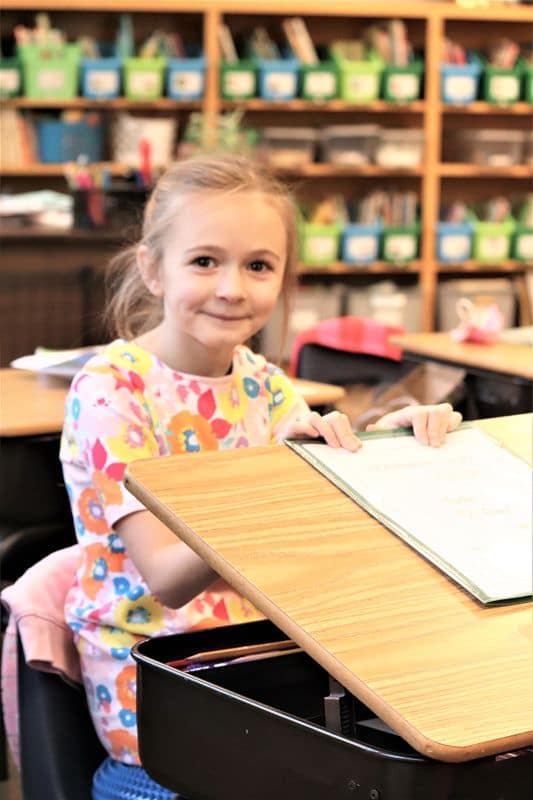
“Is today journaling?” eagerly asks my little student, a non-native English speaker.
“Yes!” Their cheers greet the announcement of journal class.
I’m greeted by students in the morning. “I know what I’m going to journal about. Can I whisper it in your ear?”
Do I simply have a class of students who all enjoy writing; or is an enthusiasm for writing something that can be cultivated? I firmly believe that all students can learn to enjoy putting thoughts on paper, even though they are not the compulsive writers that their fellow classmate may be. And, the time to begin is during the first days of school.
Have a routine time for writing and require everyone to participate during this time
You can have a five-minute journaling slot every day. You can have a thirty-to-forty-minute slot twice a week. A key to writing without groans is for it to become ordinary and routine. Students learn to anticipate the class and mentally prepare themselves for it.
Make the writing time a priority. A co-teacher recently shared that her journaling time has not been as successful this year because she did not set a certain time for the students to actually write. It became one more thing they should do when they finished their required subjects and less students actually participated in the exercise.
Writing is somewhat like a physical exercise routine. If the habit is maintained, interest and participation will remain high. If one slacks off the routine and skips some days, it is easy to become lazy. Writing takes discipline and effort. It is an exercise of the mind.
Keep writing pertinent
Most of us have students in our classroom who, if allowed, would tell stories all class period. Younger children, especially, love to tell others about themselves. Journaling is a time they can share these stories.
Older students enjoy creative prompts or creative ways to write about the ordinary. There are many resources available to help spark creativity, including resources on The Dock.*
Give students a reason to write
Younger students enjoy sharing their stories and pictures with each other during a journaling share time. The shyer student may need encouragement but I seldom let a student skip sharing with their classmates. I have yet to have a child that has not overcome their reluctance to stand in front of their classmates and share their story. When this becomes the normal and expected experience it is no different than any other class process. As I comment on the stories they share, it is a way to give them recognition and affirmation.
Older students may be more reluctant to read their writings in front of classmates but at least some of their writings should be for an audience, even if it’s just a class booklet of their favorite pieces or a letter they send to their elderly grandparent.
Encourage creativity more than polished and proper papers
There is a time and place for critiquing student writing. However, allowing students to put their thoughts on paper without worrying about proper spelling, grammar, and punctuation can be freeing to the child who struggles in these areas but has creative things to say. Students should be required to read back over what they’ve written to make sure it says what they wanted it to say and to catch the obvious errors. They should not need to feel the need to edit and rewrite most pieces.
Keep the proofread and edited pieces for those in the Language Arts program or those pieces that need polishing for printing purposes. (This is an important skill to be learned—just not at the expense of creative writing experiences.)
Provide help as needed
Writing blocks often fall in two categories: lack of subject material, or lack of ability to produce what is envisioned. You as the teacher can provide aid for the student in both of these areas.
In introducing a topic or prompt, have a brainstorming session to warm up. Help the students get the creative juices flowing. If you as a teacher have an example to show them, it will provide a model for the less creative.
For classes where students choose their own topics, have a few suggestions available.
In my first-grade journal classes, telling the story is as much about drawing pictures as it is putting words on the page. Some students are uncomfortable with their drawing skills; however, with encouragement and no criticism most of them are willing to put something on their pages.
Spelling issues can also hinder some students. Along with allowing phonetically spelled words, each of my first graders has an index card of words that they ask me to spell for them. They keep these cards and can use the lists the next time they need the same word.
Provide an introduction to each class
Take a few minutes at the start of each journal period to pull students into the class. My journaling periods usually start with a short well-written, age-appropriate story. We enjoy the words and pictures together before they launch into their own compositions.
An introduction to the prompt and a brainstorming session can get the creative juices flowing. Depending on the type of writing, a discussion of various samples may be appropriate.
Set the students up for success
Writing is personal. Each person has their own style and unique ability. Encourage the best in each student but allow them their own expression. The key ways that help students be successful with writing is to provide a writing routine, focus more on expression than structure, and make it purposeful.
The groans may not disappear right away, but keep at it. Eventually the students will realize that writing is not such hard work after all!
Suggested resources:
Lower Elementary Creative Writing Lesson PlansTen Ways to Promote Creative WritingA Dozen Writing LeadsShort, Fun, and Often: Using Journals to Spark Creative Composition

Early Intervention: Before School Age
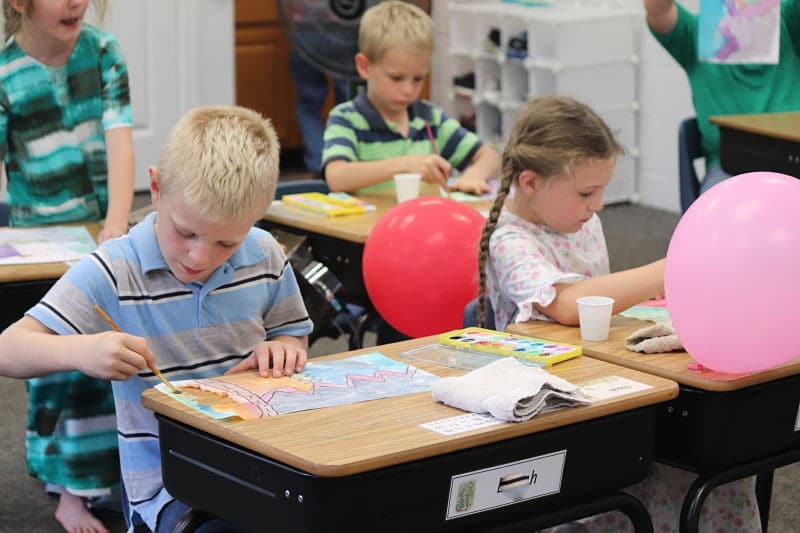
This is the time of the year when I start screening students entering the classroom in the fall. For two private Anabaptist schools in the area, I test any new students wanting to apply to kindergarten. If they have chosen to do kindergarten at home, I test the student going into first grade. Or if the kindergarten teacher of the school has a concern about one of her students, I will retest the child before entering first grade. My purpose in administrating the Gesell Developmental Test is to fulfill the following three questions:
- Is this child ready to enroll into kindergarten/first grade?
- Would this child benefit from an additional year at home before enrolling in a traditional classroom environment?
- Does this child need extra learning support coming into the school? And if so, is the school able to provide it or is there additional learning support that they should be receiving that the school is unable to provide?
Identify the Children Who Are Not Meeting Typical Milestones in Development
After screening the students, most students will fall into the first category. Often, there are several who fall into the second category and would really benefit having an additional year of brain development before entering traditional schooling. (Read Outliers: The Story of Success if you want some type of idea of what an extra year or half year of development can do to a child.) It is rare that I will find a child who falls into the latter category—needing extra learning support from the onset. It is even more rare that they will need learning support that the school is unable to provide. But in my seven years of testing students, there have been students who not only need learning support from the moment they enter the classroom but they also would have benefitted from receiving learning support earlier and have not been receiving it.
Those are the students whose condition breaks my heart. When a child comes to kindergarten or first grade with a large gap in their development or abilities, they have a long, grueling climb ahead. The learning process happening in the classroom that is so enjoyable to the rest of their peers is daunting and frustrating for them. It is those students who could have benefited from Early Intervention, and I wonder why we are not allowing our students to benefit from this one-on-one service and learning opportunity.
In too many cases, we are waiting until our children are already entering the traditional classroom before we are addressing speech difficulties, ADHD tendencies, dyslexia, symptoms of autism, and other learning difficulties. That is not necessary! Early Intervention is designed to help children narrow that developmental gap BEFORE they reach the classroom. For example, if you have a child with a speech impediment or delay, they could be receiving free high-quality speech therapy in their own homes rather than having to wait to be pulled out of the classroom or taken after school hours for speech therapy. Why not work on the gap in development before school age so that it does not 1) cause embarrassment to confusion for the student 2) distract or take away from classroom time 3) negatively affect learning literacy and communication skills.
Early Intervention: What Is It?
Each state within the United States of America provides Early Intervention services for children between the ages of birth to five years old who are experiencing delays in development. They provide coaching support and professionals services for families who are interested. According to Pennsylvania’s Early Intervention website, they provide services for the following:
- Physical development, including vision and hearing
- Cognitive development
- Communication development
- Social or emotional development
- Adaptive development
In most cases, the support and services are done within the home. After the initial evaluation to see if the child qualifies for services, the therapist or teacher will come into the home on a weekly basis for about an hour to teach within a play-bases setting. It is of no cost to the family, and the family has the right to request or refuse services at any time.
Early Intervention: Debunking the Skeptics
If we know there is something we could do to give greater academic advantage to our child, why would we not use the services? I believe that about 25% of the students whom I test on a yearly basis would have needs or gaps in development that would qualify for receiving Early Intervention services. And yet, I rarely meet a family who has pursued it or received any assistance for their child. Why is that?- Ignorance: I believe that most of our parents do not know about the services. Because we have had so few people over the year who have used it, receiving the services is not “normalized.” A speech therapist who actually comes into the home for free and works with your child and from whom you can get tips to work on helping your child’s incorrect speech patterns? Most families have no idea that the service is available.
- Government Program: “It is a free handout from the government that we should not be receiving.” To that I ask, are you not paying your taxes? As homeowners, we pay a mandated school tax every year. You are paying for those services whether or not you are using them. You enjoy driving on roads that are maintained and cared for by the local municipality, why not also make good use of your tax dollars by giving your child assistance that could help them to have a better school experience?
- Negative Stigma: “I do not want to be known as a parent whose child needs extra help.” If your child would have a broken leg, you would not hesitate getting them a crutch. If your child had bad eyesight, you would have no hesitance with getting them glasses. Why then are we so resistant to developmental help? If a year or two of occupational therapy would allow your child to have better eye-hand coordination or speech therapy would help them to not be so embarrassed to read aloud, would you not want to help them in that way? Pride must not stand in the way of giving the help to your child. As more and more families step forward to help their child in these ways, you can help to normalize getting developmental help just as having glasses or crutches has become normalized.
- Public School Program: I have worked in the public school and our Anabaptist private schools. And I deeply value our Anabaptist schools and the work being done there. I want to continue to support them with my dollars, time, and energy. If there were Anabaptist groups offering speech therapy, occupational therapy, physical therapy, or other services for children younger than school age, I would want to support them. However, as far as I know, there are none in my area. If you know of one in your area, then use their services. But please do not refuse the use of Early Intervention simply because it is linked to the public school. If you choose to, there is a form that you can sign asking that all your information or use of the services is not shared with the public school in your area.
- “It’s Not That Bad”: True, your child may not NEED the services. Neither does your child NEED to eat vegetables. They may grow up and develop just fine without the services. The speech issue may correct itself. But if it could help your child in some way, why not try it? It’s not going to hurt your child to eat the vegetables, and it may benefit their growth and development. When I thought my son’s speech was more unclear that it should be at two and a half years old, I had him evaluated by Early Intervention. He passed the test. According to their assessment, he did not NEED the services. However, the evaluators understood my concern and agreed that his speech clarity could use extra assistance. Because I wanted tips on how to best help him, and because I wanted to have a firsthand experience with Early Intervention, they talked with their supervisor and we chose to accept Early Intervention services in our home. Not because my son NEEDS it, but because I want to do all I can to best equip him for a life of service in God’s Kingdom.
Conclusion
For all children under my care, my calling as a teacher is to help my students maximize their gifts and minimize or compensate for their weaknesses so that someday they can use those gifting and talents for service in God’s Kingdom. Part of that calling also entails walking alongside the parents and raising their awareness of Early Intervention services. You can advocate for the services for any child (from birth through five years old) that you believe may qualify.
I speak of Early Intervention from a personal standpoint. First, because my heart breaks when I see a student entering the classroom who could have and should have been receiving one-on-one professional services earlier. Likely, if they would have been provided with Early Intervention, they could have been spared some of the difficulty ahead that they will undoubtedly face when trying to learn alongside of peers whose development and abilities are above their own. Secondly, because I have a two-year-old son who is not speaking as clearly as his peers. While many fondly characterize incorrect pronunciation as “adorable” or believe that a child will simply grow out of the speech impediment, I have seen far too many children entering our schools with speech problems that continue to be speech problems in middle school. As parents and teachers, we all want to make learning as easy and intuitive for our children as possible. If that is the case, then why not equip them as much as possible before they enter the classroom?
Stay tuned for a following post on our personal experience with Early Intervention. What is involved in “signing up” for it? Can a teacher refer a child? How much time does it take out of a family’s daily schedule? Has it benefited us? Is it more headache than worth? What are the cons/pros? If you have any additional questions, drop them in the comments below and I will do my best to answer in a following post!
Sources:Gesell Program in Early Childhood. (n.d.). Retrieved February 12, 2022, from https://www.gesell-yale.org/pages/what-is-the-gesell-developmental-observation
Pennsylvania Department of Education. (n.d.). Retrieved February 12, 2022, from https://www.education.pa.gov/Early%20Learning/Early%20Intervention/Pages/default.aspx

A Personal Application of Educational Philosophy

Everyone learns, all the time. Some of the learning is controlled; other learning simply happens. For the teacher, a periodical consideration of philosophical aspects of this teaching/learning process is beneficial.
Who do I teach? Students obviously are the focal point of education. As a twelve-year-old or a thirty-year-old, the student is created in God’s image. Whether gifted or disabled, young or old, wealthy or poor, each student is an individual person with individual needs and abilities. The goal for a teacher should be to help each student to develop spiritually, morally, socially, and academically. I teach “for the kids.” When I quit teaching for a brief period, I found that I greatly missed the interaction with teenagers.What do I teach? Ultimately, any teacher should strive to teach truth as revealed by God. This truth comes forth in any subject matter for any age group. The teacher should be intellectually fit, knowing his subject matter and striving constantly to improve his teaching methods. While some schools dictate carefully the curriculum taught and others allow more latitude for teachers, in any educational setting the curricular goals must be met. For me specifically as a language arts teacher, I aim to teach my students to communicate truth through improved reading, writing, speaking, and listening.Why do I teach? Education is always redemptive, pointing students to higher levels of knowledge, whether physical or metaphysical. Learning new ideas gives depth and meaning to the student’s life. It prepares the student for life, providing skills necessary for careers or everyday tasks. Specifically in my life, I believe teaching is a spiritual gift and a calling from God.How do I teach? The quality teacher models what is being taught, in and out of the classroom. He uses different manners of presentation, such as storytelling, models, audiovisuals, and straight presentation of fact, to engage the student. A successful teacher maintains control of the classroom by using preventative discipline and justice tempered with love. She organizes and runs the classroom to enhance learning and carefully plans lessons to meet the needs of individual students. Recognizing these differing needs, an effective teacher accommodates as necessary for students. In my classroom, I always attempt to keep these goals in mind, realizing that varied methods of presenting language arts encourage students not only to learn but also to enjoy reading, writing, spelling, and grammar.So, who do I teach? Students. What do I teach? Life skills as presented in language arts. Why do I teach? I’m called to do so. How do I teach? Lovingly, with skill and planning.
Middle School Teacher Wanted
We are seeking a middle school homeroom teacher for either grades 3-5 or 6-8, depending on your interest.This is a unique opportunity to serve at a mission school, working with primarily middle-class patrons, in the Hampden neighborhood in Baltimore.Please see the attached PDF for my presentation to prospective patrons as well as a recent parent story.
Beating the Mid-Winter Blahs
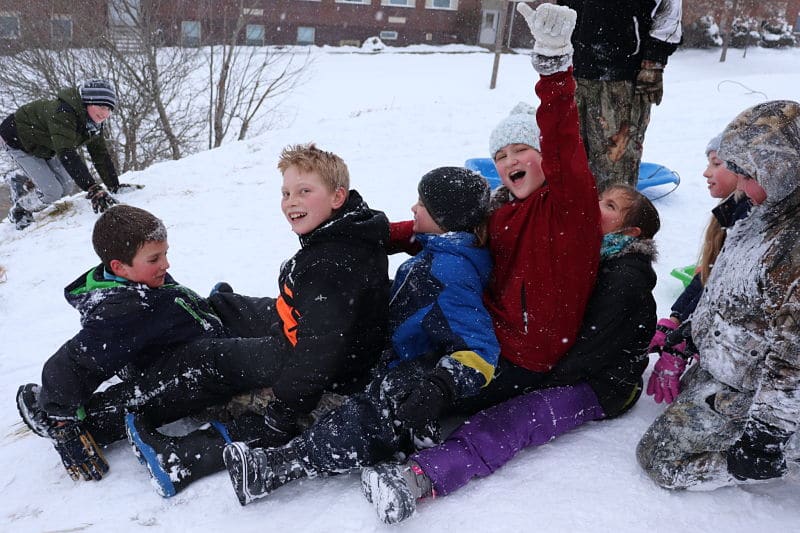
The cold wind persistently blowing makes being outdoors miserable. The gray skies cover up the sun for days at a time. Absences and coughs are as common as the dandelions in a springtime lawn. The enthusiasm of the first half of the school has worn off. Life in the classroom looks drab, dreary, and boring as the same routines plod along through each week and spring seems far away. The mid-winter blahs will affect us all if we are not watchful and take care to prevent them. Contrary to what you may think, keeping the blahs away does not need to take lots of extra energy and time at the expense of normal routine. There are many simple, small ways to keep life in our teaching and our classrooms.
Wake up, Teacher.You are the thermostat of your classroom. If you are in a dreary mood, your students will be also. You are the first deterrent to keeping the blahs at bay. Do you still bring the same enthusiasm to the room that you did at the beginning of the year?
Take stock of your life. Are you getting enough sleep? Do you drink enough water? Are you getting fresh air and exercise? What are your eating habits? All of these can be difficult to maintain in a healthy balance during the cold winter months. However, if you feel well you don’t have to fake enthusiasm for the day. What about your spiritual and social life? Are they in the proper order?
Winter days have less sun shine and this has a differing affect on people. If you are a person who does not do well in the gray days of winter, be aware and be proactive. Take care of yourself—not selfishly, but so you can care for other people.
Wake up, Classroom.Look around the classroom. Are your bulletin board displays old? Are the charts on the wall falling off? Is the art on the wall still from fall? Are the shelves dusty and cluttered? Are student’s desks messy and disarranged? Are the windows smudged and the lights dirty? Are those cobwebs in the corners? Take an hour to brighten up the classroom. Let the students help. Rearrange the classroom furniture if practical. Give the classroom a fresh look.
Classrooms often become stuffy and smelly, especially during the winter months. Burn a jar candle, warm wax melts, or use a diffuser to freshen the air. Open the windows at recess or after school if appropriate.
Wake up, Routines.The school day ticks along as steadily as the clock. Our routines have become as comfortable as well-worn shoes. Making our routines work for us is important but if we don’t keep our eyes open, some of the routines become muddy ruts that we allow ourselves and our students to wallow in. Watch for those areas where the routine is no longer working for you but against you, and make adjustments.
An example: First grade has a page of daily math fact drills to complete. For the first part of the year, I used them as extra practice work for the students to do when their lessons were done. Lately, I’d noticed students taking a long time to complete their page, staring dreamily into space between writing each answer down. The page was becoming a drudgery and no one like them. Change was in order. Now, we start the class period with the drill page. They have five minutes to complete it. If we can do the paper in five minutes from Monday through Thursday, we will skip it on Friday. Suddenly they’ve found they can get the page done in good time and it’s no longer such a hard job.
Maybe you want to add a new routine to your day to add a little spice. Learn a new song and sing it every morning until the class knows it well. Work on a long narrative poem as a class, reciting parts of it at dismissal until you have it memorized. Add an extra ten-minute singing period after recess twice a week and sing songs in canon. Take five minutes each day to read a picture book (even older students enjoy a good picture book).
Wake up, Classes.Teachers, here is where we can do the most to change the blahs into something interesting. It is easy to just routinely and methodically teach the lessons in our increasingly dog-eared books. Are we still teaching the lessons with as much interest and enthusiasm as we did when the term first started? What can you change? Is there a hands-on method to make learning fractions more interesting, or those predicates in grammar, or the vocabulary words in reading? Could you incorporate any games into your reviews?
Science and history lessons lend themselves to out-of-the-box ideas. Instead of completing a workbook page for a particular lesson; have students make a poster, or a diorama, or give an oral demonstration, or make a booklet, or… (you fill in the blank).
Hold “show and tell” about a particular lesson. Ask a student or students to bring something to class that fits into the lesson (such as the Civil War cannon ball that was found in the pre-war home of a student; or a slice of a tree trunk demonstrating the age rings).
Ask a guest speaker to come in and share about a topic you are learning. Invite a parent to share an art class or other extra-curricular activity.
Take a short break from the reading textbook and read a trade book instead. This takes extra planning as a teacher which can boost your interest and enthusiasm.
Wake up, Recesses.Winter recesses can become more of an energy drain than an energy booster. Students are tired of the same few games you can play on a muddy playground in dreary weather. Maybe you are blessed with snow. Use it to your advantage! Have a creative snowman building contest (or simply a creative snowman display that greets the parents arriving to pick up their children). Introduce a new game or play the games that you’d forgotten about. If it’s too cold and dreary to play outside have a ping-pong, checker, or chess tournament during recess times.
Maintaining interest and enthusiasm for school during these winter months does not necessarily mean needing to do lots of special days and activities to celebrate things like 100 days, February Fun, Balloon Days, Game Day, etc. They have their place but if the teacher renews the life of the daily routines and classes, the students will not miss extra activities. It is often the simple things that bring the lasting results. May you find sunny days inside your classroom even if the sun is not shining outside!

Introduction to Diverse Learners: Trauma
We have discussed numerous specific disabilities, but there are many other factors that can impact a child's development, a child's ability to learn. One of these factors that I want us to consider is the role of trauma and attachment in a child's development.
Defining Trauma
So what is trauma? Trauma is when a person experiences or observes an event that involved threatened or actual physical injury, or a threat to the safety and security of self, or important others in a person's life. This traumatic event becomes traumatizing to the child. When it involves this intense fear, helplessness, terror, other really unmanageable emotions. Then, in the response, that is what makes it traumatic to them. This could be a singular event or a onetime thing. Or also it could involve complex event, things that are ongoing.
And risk factors of a trauma response include things like difficult pregnancy or birth, early hospitalization, neglect, abuse, trauma like in a war or even like system effects like the trauma of separation from birth parents in adoption.
Upstairs and Downstairs Brain
A traumatic event can significantly impact brain development. And I would like us to imagine that my hand is a brain, so my fingers up here will represent the cerebrum, which could be known as the upstairs brain or thinking brain. This part of the brain is not wired at birth. It's the part that allows us to think, remember things, plan, to regulate our emotions, to learn. This would be our learning brain.
Then underneath here, my thumb and the lower part of my hand is going to represent the limbic system. And this is known as the could be known as the downstairs brain or survival brain. And this part of the brain is wired at birth. It allows the newborn to eat, sleep, drink, stay warm, or stay cool. Also, the reflexes that a newborn is born with are all wired down here in the downstairs brain. So if a child spends too much time being afraid or never receives comfort or help regulating his emotions from an adult or like he's forced to fend for himself, what happens is the downstairs brain, his survival brain, overdevelops, and then his upstairs thinking brain remains undeveloped.
That first year of life is so critical to healthy brain development and healthy attachment relationships. During that time, the infant is so dependent on his caregiver that whenever that care is not provided, then it completely changes how the child develops. And what can happen is that this neglect or abuse, those kinds of things, can lead to insecure attachment where a child doesn't trust other people in his life and he lives in this survival mode—"I have to fend for myself"—and then he's not at rest and really able to do the upstairs brain things of thinking and learning.
Triggers
Perhaps you have heard of the term "trigger." What is a trigger? That is something that activates this limbic system, the downstairs brain, causing the child to go into survival mode. And then the thinking, parts of his brain shut down. And so trauma memories can be triggered. Usually they're triggered by sensory things. So any of the five senses, something that you see or smell or hear, that reminds you of the traumatic event can be a trigger. And those triggers are different for every individual.
Other things similar like specific people that remind you of someone or places or feelings, for example, if someone... Or I heard of someone who, when they went into a city and saw these tall buildings that reminded them of the orphanage where they had grown up, or certain scents, specific times of the year, dramatic shifts in plans—all of these things could be a trigger to a child. And so sometimes we might need to help them understand why are they feeling so afraid uptight over these certain situations that we wouldn't perceive as being dangerous or something to be feared.
So what happens when a child experiences a trigger of some sort? There's various responses that they can have. And so those three responses are fight, flight, and freeze. And probably the most common that I have seen in my classroom is the freezing, which is like we shut down, we're not able to think anymore. We're not able to move forward. And maybe one day you completely can solve this math paper, no problem. And the next day your brain freezes up, and it seems like you don't know it anymore. Some of those things can show up when a child is experiencing triggers, things that are causing their lower brains to take over instead of their thinking brain.
Regulating Emotions
One of the things that a child who's experienced trauma can struggle with is regulating their emotions. And I think it's helpful to think about our emotions as like they're in a thermometer. So we hopefully have a low baseline, as in the red in our thermometer is down close to the bottom. And when something happens to upset us, like we stub our toe or we lose a game or someone said something unkind to us, the red, our temperature will rise a little bit, but it will stay within a manageable emotional level, and then we'll return back to normal again.
What happens in trauma is that a child's baseline, their level of emotions, is going to start closer to the top of the thermometer to begin with. And so they're always going to be up there because they're kind of on edge. They're easily become afraid. It's that survival. They're watching what's happening around them. And so they're not a restful place like we would wish for. And so when their baseline is higher, then it happens a lot quicker that something sets them off that you have this volcano effect or anger or even violence, throwing something. That can happen because or when their emotions get out of hand.
Three Pillars of Trust-Based Relational Intervention
So when we recognize that a child is struggling with the results of trauma that they've experienced, what is the path to healing? TBRI stands for Trust-Based Relational Intervention. And this is this model of therapy that was developed by someone known as Karyn Purvis. And there's many videos online describing this. She talks in depth about understanding children who have experienced trauma. So I really encourage you to check some of those out. But in the model of TBRI, there are three main pillars, three things that are kind of the core of what they believe.
The first one is felt safety. And this is the idea that there's a difference between a child being safe and a child feeling safe. And so the child will be completely safe in my classroom, but they might not perceive that they are. And this is different for different children. So one child might feel safer if they're up front because they're closer to the teacher, and another child might feel safer because they're in the back of the room and there's no one behind them. And so they can see more of what's going on, and they feel safer in that location.
The second pillar is connection. It's been said that if harm has happened through relationship, the only way for healing is through relationship. And just that connection is so important that children believe that we have their back, and they're going to push back on that relationship because it doesn't feel safe. They don't want to be hurt again. And so that's why when a child has been adopted, they can really push back against the mother figure, the father figure in their life because of their distrust of relationship.
The third component is self-regulation. And so we need to create an environment that helps the child regulate, kind of models, what it's like to regulate self, to manage stressors as well. And so each of these pillars need to be present in this healing relationship as part of TBRI.
Hearing From the Student
When we understand trauma and its impact, it really changes how we view, or we start to shift the way we see our students and their challenging behaviors. A child might be doing something that they should not be, and we could view it as willful disobedience, like, "They have chosen to disobey. And so I'm going to punish them, and you're going to have a power struggle here."
When we recognize that maybe this behavior has a different root or a different cause, if we view it as a survival behavior, like, "Oh, they're doing this because this is how their brain is wired. This is how they've learned to make sense of their world." It changes how we approach it.
I think we should view this behavior as a cry for help. Like, what is a child trying to communicate to us? What's the reason behind their behavior and what does he really need? How can I meet that need in his life? There are some general principles that we can follow to create a trauma-informed classroom or a classroom that is functioning in such a way that a child who's experienced trauma can feel safe, that they can thrive.
And these principles really are helpful for all of the students in our classrooms.
Belonging, Community, and Structure
First, we need to create a sense of belonging, a sense of community. "You are one of us. You belong here. Listen well to each other." Teach our students to care for each other, to listen to each other.
We also need to have a classroom that's designed for regulation, giving opportunities for movement, also keeping things simple in our classrooms, giving snack breaks and opportunity to get a drink. Even things like classroom pets and the sound of water flowing in a fish tank can be helpful in helping a child with trauma to regulate. Words like predictability, consistency, stability, all of those things are really, really important in a trauma-informed classroom.
Also, as we think about managing our classrooms, we need to have a high level of structure or routine, a certain level of expectations in our classroom. But we have to make sure we balance that with the relationship part, the nurturing, love, affection. If we have high structure and high nurture in our classrooms, that would be a place where our students can thrive. When a child feels safe and understood, we think back to our brain. When he feels safe and understood, his lid will stay down and he'll be able to engage his thinking brain and make progress. If the classroom doesn't feel safe to him, he's going to flip his lid. His lid is going to be up, and he's going to be in survival mode, watching his surroundings. "Is this a safe place for me to be."
And so we want our classrooms to be places of rest, places where our students can thrive. When we are working with a child who has been adopted, a child who has experienced trauma in those early years of life, it's going to be very important that we communicate well with his parents and that there's this team effort as we try to identify, what are triggers for this student? How can we help them when they are struggling with behaviors at school and at home?
Communication with Parents
Because of the child's lack of trust and healthy relationships, they can tend to use triangulation, which is this trying to set the two authority figures in their lives, to set them against each other. This is part of his survival strategies to protect himself from being hurt again, to try to stay in control of what's happening around him. And so it's going to be critical that parents and teachers are communicating, perhaps frequently, to work with the difficulties that they're experiencing. As teachers, I think we need to ask questions, ask questions of parents. What are you seeing at home? What do you do when your child is struggling with this behavior?
Do you have recommendations for what I could do differently and listen well to parents, listen to what they're saying and work with them. If parents and schools are a team, it's going to be hugely helpful in providing this place of security, this place where a student can make progress, that they can move toward healing.
Correct Identification
In general, as we think about these challenges, it's important to realize that one difficulty can look like another. So, for example, when a child has come from hard places, it can look like a severe case of ADHD. Or when a child is experiencing trauma, it could look like dyslexia because they're struggling to learn to read when really maybe what's going on is this trauma piece that's inhibiting their ability to learn.
Also it's not uncommon for children to experience multiple things at once. So maybe they have dyslexia and ADHD. Maybe they have experienced trauma and they have ADHD and so it can be really challenging to pick apart those pieces, kind of figure out, "where do we start here?" And I think it's important to identify what's maybe the biggest problem here and let's start with that. We can't tackle it all at once, but pick one thing.
Set specific goals that you can work toward that feel maybe attainable to the student, to the parents, to you as the teacher.
I've worked with children from hard places, and it's not easy. Most of all, I think we need to remember, in the words of Karyn Purvis, that each child is precious and there is hope for them. God bless you as you love the children in your care.


Don’t Be a Lazy Daisy–Try February Fun Days!
The first time I heard about them at Teachers Week about ten years ago, I had lots of excuses for not having February Fun Days. It was just for the younger grades; it was too much trouble; it was a little silly, etc. They were good reasons.
That same school year, the first and second grade teacher in the school where we taught did February Fun Days with her students. At first, I just shrugged it off. Then I was a little intrigued. Then, on Popcorn Day, the whole school smelled wonderful. The first and second graders were enjoying their popcorn, and the rest of us had decided that maybe February Fun Days weren’t so silly after all. One of the older high school gentlemen begged me to plan them for the next year, so we did. And we were all very happy that we did.
February is just a hard month. The holidays are over, the newness of the snow and or colder weather isn’t there like it is in January, and the days in February are long and dreary. February Fun Days are an answer to all of those obstacles. I often feel like if we can make it through February well, with the students having good attitudes through the roughest month, then the rest of the school year goes better. After having them for one year, your students will probably really look forward to February.
While these were an incredible amount of fun, we always did our lessons as usual and expected our students to still focus and make good grades. It is helpful to state this ahead of time (and maybe threaten to stop the Fun Days if students aren’t focusing) so that students know what to expect. Many of the activities were done at lunch, recess, and/or first thing in the morning before school started.
There are just a few decisions that need to be made before you start.
- How often will we do them? Some schools do once a week, some do twice a week, and I chose to do them every single day. It made this dreary month just fly by.
- How will the students find out about what fun day it is? I have found that the younger students like to pop a balloon or open a sealed envelope with the name of the fun activity inside it to find out. You can do this in the morning, or better yet, at the end of the day before so they will know what they can bring to school. The older students seemed to prefer a list that we would print out for them so that they would know well ahead of time and could plan.
Note: We teachers always brought enough of whatever it was (popcorn, hats, etc.) so that every student could participate without having to bring anything. This helps those students who aren’t so organized, and it keeps the parents happier as they don’t have to do anything. But, we also told the students that they were welcome to bring whatever they wanted (with permission) as long as it went along with the theme for the day and wouldn’t distract from our lessons. We also had a rule that if they were to bring something (such as chocolate or cookies to share), that they had to bring one for every student in the class. February Fun Days are a time for sharing, team-building, and encouraging esprit de corps—not a time for cliques and sharing only with one’s favorite friends.
Here are a few of our favorite February Fun Days that worked well for grades 3-12. Other teachers have had some great ideas for the younger grades like Teddy Bear Day.
Kite Day We’ve even made our own kites and flown them at lunch and recess.Paper Airplane Day Students researched aerodynamics and designs, and we had a contest at recess to see whose paper airplane could fly the furthest.No Desk Day This was a favorite. We let them bring pillows and blankets.Draw the Schedule Out of a Hat Day Students took turns pulling a piece of paper out of a hat. Whatever they drew was the class we would have next.Move Your Desk Wherever You Want to Day We expected them to stay quiet, which they did. This one was always a favorite as well.Backwards Day We wore clothes backwards, did the schedule backwards, and sometimes even walked backwards.No Electricity or Candle Day Turn off all the lights (but leave the heat on!) and let each student have an unscented candle on his desk. I always brought extra candles, candle holders, and small paper plates so that wax didn’t get everywhere. If anything such as a school paper caught on fire, that student lost their candle for the day. This is a great one if your students are trustworthy. Use with caution.Other ideas:
Chocolate and Cookie Day
Funny Sock Day
Balloon Day
Switch Classrooms Day
Slipper Day
Popcorn Day
Funny Shoe Day
There are many more possibilities, and every year we try to add some new ones. I encourage you to try February Fun Days if you haven’t yet. If you keep order (as you should anyway), you and your students will really enjoy the dreary month of February!

Celebrating Success
 Photo by Kuanish Reymbaev on Unsplash
Our team meeting agenda said we would celebrate successes and find areas to improve upon as we discussed testing results. I was disappointed after the meeting that there were no successes noted for my class, while other classes and teachers received many words of commendation. I decided to turn this into a learning experience for myself in my classroom – I will think about these questions, “How can I make sure that ALL of my students feel celebrated? Do I recognize each child every day?”
It can be difficult in a large class to recognize each child every day, but I purpose to do so. I begin the day by standing at the doorway and saying “hello” to each child as they come in. I will listen to those who come to me with questions. (Sometimes I can’t listen at that time, but will tell them I want to hear it – can they tell me at break or lunch?) At break, recess, and lunch I can continue making contacts. As I circulate throughout the classroom while the children are working, I will comment on each one’s work. I may alert them to a correction, or encourage them to be neat, but they will be noticed. I might not get to each student on every page, but throughout the day I will comment to everyone.
As I read over this, it sounds rather ambitious! I’m thinking back over this day – I greeted each student this morning; I listened to several stories and questions; I chatted with some students at break, lunch, and recess time. I commented on work, I complimented some things, I apologized to a student, I purposely praised a student who had been corrected. I think everyone was recognized positively today.
Sometimes this celebration may be for the whole class: “Thank you for working quietly and independently while I was listening to the Bible memory tests. That really helps me.” “Everyone has 100% on this assignment!” “Yes! We all remembered how to come in from recess.”
Many times, the celebration is with words – a comment, a written note, or words to the class. It might be a sticky note, a certificate, or an email to parents. The celebration may be in actions – we give a cheer for our class, we do a silent cheer (waving our arms), we pat ourselves on the back, we shake hands with our partners. I have a large “clapper” (hands that clap when shaken) and sometimes we use the clapper to celebrate success. I also use puppets and other little fun things to show success. The puppet looks at students’ work and affirms good work. A student who is putting good effort into handwriting may be allowed to write with “Super Pencil.” We may celebrate success by putting stickers on charts or adding a sticker to a page of good work.
A colleague said she wrote students’ names on popsicle sticks and each day she would go through that stack of sticks, taking a stick, talking to that student or commenting to them, or in some way giving them attention. She put that stick aside then so she knew which students had been recognized, and she would continue pulling sticks from her beginning stack.
Teachers could write students’ names on cards and go through a stack of cards to make sure each child was noticed. Names could be checked off a checklist to remember who was spoken to that day. These are ways to help us remember each child so no one is left out.
I think it is important to make sure the child who has been corrected or disciplined later receives a positive comment or affirmation. I also try to make sure that a child who gave an incorrect answer in class has a chance to succeed after that. I was in communication with Taylor’s parents over behavior support, and now I am purposely watching for a positive behavior or learning so I can send an encouraging email to his parents.
I do believe there is a time for failure and we can learn from that, and not being recognized can help us with humility. I am sharing my experience as a reminder for us to encourage students and make sure all children feel needed and celebrated. I felt bad when one of my students said, “I can’t do anything right!” as her eyes filled with tears. I want to support each one and help them find success, and celebrate success.
- 261Page 69