
All Content

Creating Church Culture
Most missionaries discover soon enough that it is one thing to lead unbelievers to receive Christ as Lord and Savior. It is another thing to do the hard work of creating church practices and traditions that result in a culture that nurtures and disciples each other in the way of Christ. This session explores ideas that create culture rather than react to culture both at home and abroad.

Why Do I Need to Learn This?
I've just finished teaching a lesson in trigonometry, a lesson on proving identities. And I've led the students through some really intricate steps, these involved some non-obvious substitutions. Like, for example, replacing negative cos squared theta with sine squared theta minus one. And we get done, and I show that the one equals the other. And now it's the students' turn to practice.
"Mr. Kuhns, why do we have to learn this? When am I ever going to use this again? My dad doesn't even know this, and he's successful."
"What? It's fun It's a puzzle. Don't you see? This is great!"
In that moment, every single response I can think of is going to be completely unhelpful. Because guess what? Once they walk out of the doors of the classroom--unless they go to teach it to somebody else or unless they go to college--they're never going to have to do this again. That's the fact.
So, here's the question. How do I respond?
The Student’s Mind
There are several things I think about that might be going on in the mind of the student when they see this. First, let's just take the surface level of this.
So, it looks as though what the student is saying is that everything that is worthwhile is useful. That's an assumption that it looks like the student is making. Now, I'm going to contend in just a moment that they don't actually believe that, but let's just think about that assumption for a few moments and recognize that most of the best things in life are not useful. Your friendships are not that useful. If your friendships are useful, you're using your friends, and they don't really like that very well. Most of the most important things in life are not useful in the sense of making more money, becoming better self-actualized, and so on.
Maybe what the student is saying is, "I don't see anything valuable in this material." And certainly one of the things they might be saying is that they know what is going to be useful in their future.
Now, I've tried using this line--it doesn't work. "I know so and so who studied this and didn't think it was going to be useful, but later in life, they found that they were really glad they knew it." None of that really connects with my students.
So on the surface, it looks as though students are saying that what is worthwhile must be useful.
Now let's just recognize that they don't actually believe that because the number one answer that students give when you ask them "what's your favorite subject at school" is recess. And lunch. Lunch is useful. It gives you sustenance, right? But recess is not useful. Think too about how many people, when you're sitting at an airport, how many people are sitting there doing a Sudoku. Not useful. So I don't think students actually believe that the only things that are worthwhile are the useful things. Here's what I do think is going on. Well, sometimes what's going on, is that students are confused at this moment.
Teaching
In the book, How I Wish I’d Taught Maths, the author puts it this way.
I've never had a student ask me that question when they've just gotten loads of questions correct. They always ask it after they've gotten stuff wrong. So, when I hear a student asking me, "When am I ever going to use this?" I don't tell them this, but what I'm hearing is, "I'm confused right now as a student." What I hear when a student asks me, "Why do I need to learn this?" "When will I use this?" Is I hear them saying, "I'm confused right now, and I'm also not being stimulated.
We'll get back to the "I'm not being stimulated" in a moment.
"I take it as a call for myself to be clearer in my instruction, to be more inviting in my approach."
However, at the same time, I would argue that there is an opportunity for growth in the intellectual character of a student who asks that question. So while we bear some responsibility, we bear a lot of responsibility to teach as well as we possibly can, we ought also to recognize that when a student asks this question, they have not fully developed the intellectual character trait of curiosity. Curiosity is innate in young children, but somewhere along the way we tend to lose the development of curiosity. Schools get blamed unfairly for this; we'll get back to that as well.
Developing curiosity
Curiosity, the way I'm going to define it is, that it is an earnest desire to know the truth. It's a habit of asking "why" often enough that you get to the real meat of the thing, not accepting the simple answers, the simplistic and shallow answers that do not lead to any growth.
It's the habit of asking, "Why?" Not the "why do I have to learn this" kind of question, which is removing my responsibility to do anything further; it's "why do trees lose their leaves in the fall?" "Why don't pine trees lose their leaves in the fall?" And so on. “Why?”
Curiosity is noticing the interesting and puzzling both in the everyday experiences of life and in what's unexpected.
What do we do to make our students curious? Here, kindergarten teachers have an advantage. Their students haven't lost it yet, and your job is just don't kill it. I think it's Howard Hendricks who said, "If you want your students to bleed, you have to hemorrhage." So if you want your students to be curious, perhaps maybe being curious yourself is a good place to start.
One of the things we need to do is to stop killing curiosity. And the best way to kill curiosity in students is to spoonfeed them everything they need to know.
"I am the source of knowledge.
You are the receptacles of my knowledge.
I am going to pour my knowledge into your heads, and then you will have everything you need."
That does not invite students to become involved in their own learning in any way.
The quote is attributed to Einstein, but Einstein said a lot of things he didn't actually say. The quote is, "It's a miracle that curiosity survives formal education." And that's kind of a cutting quote, really. But if our formal education is this spoon-feeding of everything the students need, then what we're going to do eventually is we're going to kill all of their curiosity.
One of the things that we can start very young, and should continue all the way into 12th grade, is to invite our students to observe. Take a kindergarten class, give them a flower, and ask them to observe it. Just say what they see. Take a third grade class, give them a complex picture, and ask them, "What do you see?" Ask the question, "What stood out to you?" And then give time, just give some time for students to observe, and then cut it off before they're quite done. Just like you want to want one more bite of dessert, like you want to run out of dessert when you still want one more bite. Gives you a much better memory of the dessert than if you'd have one extra bite. Same with this. Same with this.
When students are invited to be involved in their own learning, their curiosity can flourish. When students are given activities and challenges that invite them to further exploration, their learning can flourish. But again, curiosity is not enough. Just giving students a challenge is not enough.
Building the Scaffolding
I also enjoy Sudokus. We get a magazine, a weekly magazine that has a Sudoku in it. And I'm not very good at them, okay, I'll just put that out. I'm not very good at sudokus; I enjoy them. They rate the Sudokus by how hard they are. If it says super hard, I don't even start. Why? Because I know that I'm going to get frustrated, and I'm eventually going to have to quit because I can't solve it. Maybe some of you can give me tips and strategies for doing that. In the same way, inviting our students to explore, that's good. But we also have to give them success along the way.
So, one of the things I want to do for my students is I want them to be able to do their own independent science report or, actually, their own independent science project and write a really good report about it. So I have these great ideas of what I'd like them to do. But if I just throw them into that and say, "this is what you're going to do," and I don't scaffold along the way, I don't build them up to it, they're going to get frustrated. And frustration kills curiosity. So I'm saying that we need to take time to develop their observation skills. We need to give them hands-on activities. We need to get them involved in their own learning process, their own learning. We need to have a vision for them to be curious about the world around them, but we need to build them up to it.
When you achieve success, what happens inside your brain is that there's a little dose of dopamine that gets released, and when that happens, that's a reward that you seek again. So, going back to my example, this intricate identity in trigonometry. If students have been built up to it, they can see this as a puzzle--and some do--but if they don't have the proper background, it's just confusing, and they're not going to be curious anymore.
So what should I have done? They need to know it to pass the test. What do I do?
What if, instead of walking them through all these intricate steps, I just ask them what they know. And we take a little longer, but I have students involved in the process. What if, before doing all of that, I check and make sure that they actually understand all the background material needed? What if I put a couple of trig identities on the board ahead of time just to make sure that they have those in hand? In other words, what if I build them up to seeing these math problems the way I do?
[Question from Audience]One of the things we need to do is we need to be paying attention to where our students are. Sorry, I'm going to throw a big term out. Zone of Proximal Development is a term we need to be teaching. So if you think about the students’ knowledge as being kind of like an island, the zone of proximal development is the beach on the island where you can kind of extend things. It's the area of knowledge in which they can learn. If I'm trying to teach calculus to third graders, I don't care how curious they are, they're not going to follow me, right? If I'm trying to teach addition facts to 12th graders, they're going to be bored no matter how curious they are because that's well within the island. So that's part of us being good teachers, is recognizing where their zone of proximal development is.
It's a great question. Thank you.
Conclusion
I believe that our schools should be places where curiosity flourishes. I believe that our students ought to learn in our schools, but more importantly, they ought to learn to love learning. Our schools ought to be places where we as teachers and they as students together can enjoy the process.
And when that happens, no longer will it be said that curiosity has to survive formal education. Rather, curiosity survives longer because of formal education. I should say that it flourishes in formal education. And if that is true, then indeed "knowledge will grow from more to more." And, more "reverence will be built in us." And then "the mind and soul" together "will make one music as before," but faster.
Breathing Life into History
How can we get our students to see history as moving, as seeing, as being visual, as responding, communication, information going both ways?
Stories
In the Dim, the temple in North Africa, the boy repeated the words, "I will hate Romans. I will have no other goal in my life but to punish the accursed Romans. I will reject appeasement; I will reject compromise, and I will win complete victory." Hannibal was only nine when he clasped his father's hand and repeated those words after his father in that Dim temple in Carthage. The first Punic War had been a humiliation for Carthage, and now Hamilcar, Hannibal's father, was plotting revenge on the Romans. He wanted his nine-year-old boy to enter into that revenge with him, so the first tactic for resuscitation that I have is to tell stories.
Do you ever think about that the Bible is largely stories? Stories are tremendous focus builders. The Bible is not so much names and dates as it is stories.
Tell a story and the chattering and the restlessness fades. The eyes focus, the minds are engaged, the imagination is fired. Students are transported back to that threshold of time, and they start to hear things and see things, and their imagination connects with what you're trying to tell them.
And so stories are captivating and promote concentration. They're entertaining, and they feel excitement.
One tip that I have found to be exceptionally helpful with telling stories is to make sure the characters have names. Even if you don't know their names, give them names or simplify them down to their primary characteristic, and then refer to them in that way through the story. Utilize your voice and your facial expressions and your gestures. Use an object or a picture if you can. If you can make those people stick, it'll go a long way into the overall concepts sticking.
William Henry Harrison was the only US president formally trained to be a doctor. The poor guy died 30 days into his term from pneumonia because he refused to wear a topcoat to his inauguration and proceeded to give a two-hour inaugural address in the rain.
Ulysses S. Grant, the butcher of the Civil War, coincidentally could not stand the sight of blood. So if you can just find snippets of that type of information, those will stick.
Mnemonics
Use fun mnemonics. If a picture is worth 1000 words, a mnemonic or a memory device is worth 1000 reviews. I'll just give you one.
Who's that?
Henry VII.
And who is behind him?
His six wives.
If you want Henry VII to stick in your student's minds, here's a mnemonic I picked up that'll help you remember Henry VII.
Show Visuals
There are lots of visuals. I tend to be a visual person.
Timelines, I think, are incredibly important to history, and this is not something I did the first year I taught. It took me a number of years to get this all pulled together but I put two timelines around the entire classroom. One was world history, and the other was American history. I could switch them out depending on which year I was teaching. They provide visual spacing.
So I started with Columbus and went around to 2020. So that's roughly 500 years. And then you can say, "Okay, so from here, the whole way around is 500 years. When were the Vikings? Five hundred years before Columbus. That means we would have to take Columbus and go the whole way around the room again to get to the Vikings. Now, what do you think happened in America in that whole 500 years?"
Maps
Maps: political maps, topographical maps.
I had my whiteboard screen, or I was projecting on my whiteboard here and my map was here. And some days I didn't have any space to write between them because I needed them both.
Maps are hugely important.
Primary Sources
One of the benefits of primary sources is that you're not relying on the interpretation of others. You can do a lot of your own interpretation. It also helps put in the historical time context. But keep it brief and interesting.
I found that it does not work well to read entire book pages of primary sources. And of course, primary sources don't have to just be text. Some photographs are technically primary sources.
Keep it brief and interesting. Take your eyes off the page and move around while you're reading. Connect with the audience.
When you study the Hippocratic Oath, show them a copy. Give them a copy of the Hypocritic Oath. Don't just rely on them to recognize the Hippocratic Oath, show them. When you study the Church Creeds, bring in the Creeds and show them how they evolved.
Real-Life Examples
Spin real life examples. Get your students involved. And there are a couple of ways to do this. Involve the students. Use their names in examples. I use this, for example, when we study Hammurabi. Hammurabi said everybody who commits the same crime should be punished in the same way.
Use them in examples. So if Jordan does this and Andrew does this. And I like Jordan because he just gave me a candy bar. And they'll get this sort of sheepish expression; the teachers calling on me again, look. But they love it. And you won't find those students daydreaming so quickly.
Another place I would use it is the forms of government, like the monarchy and the oligarchy and the dictatorship, that cycle of Greek government. So, Tom whispers in all the peasants ears, and he promises them--and you know your students--he promises them this and this. They'll connect.
Help them understand the Inquisition. Students like to--or children like to trump up stories about each other.
Cause and Effect
Show cause and effect. Connect stories to previous stories. How does it affect us today?
Imagination
Imagine how it was. And this can be a tie into composition class: write as if you were there. Write a newspaper article that covers the event that we're studying. "What do you think their fears were? How were their fears and concerns different than yours? How are they the same as yours?"
Keep a historical diary, Oregon Trail diary. "What do you think happened today on the Oregon Trail?"
Take them to a forest and say, "Now, how would you develop this forest into"--this may be for a little younger students-- "but, if you were a pioneer and I brought you to this clearing, how would you go about changing it? Where would you get your source of heat? Where would you get your water? Where would you get your food?"
"How would this city have looked 100 years ago, 200 years ago?"
"What would you do and why?"
You got to be careful with this. I always tried to steer clear of situations that would put them into scenarios where they would weaken their nonresistance or their morality. You don't want to put them into a situation and say, "Soldiers barging through the front door; what would you do?" Be careful with it.
But Oregon Trail; I did this with my students, gave them a list of supplies, how much they weighed. "Here's your weight limit. What would you take?" Or "Here's the size of the wagon." (It's not as big as you think, by the way.) "How would you fit everything in?" Get a big piece of paper, draw it out, and have them try to fit the barrels and trunks in.
The Great Depression. Put them in the situation. Some families in the Dust Bowl, if they could not make their ends meet, if they could not lay up enough supplies for the winter, would literally send their children out. "Go, try to make money, and send it home." Some of those families were never reunited.
"What would you have done?"
"Would you have run a station on the Underground Railroad?" Now, that's one where you can address moral dilemmas head on. "What were some of the things that you could have done, but what were some of the things that you couldn't have done?"
Projects
Do hands-on.
Projects. I had my American history students do projects, write a little report. They profess to hate it, but deep down in, they'll never forget it. He did a little water wheel. This fella explored different types of fencing.
Resources
The Library
The library. I think this is incredibly important.
I don't know how many books I have, probably more than what I should. I remember when Melvin Lehman said at Teachers Week a number of years ago, "My wife and I didn't have a lot of money, but we decided we'd always have money for two things: good books and good music."
And you really don't have to spend that much. Go to use book sales, library sales. The type of books that are on that list, like from Readers Digest, National Geographic, are books that people gave other people for Christmas. And the other people say, "What are we going to do with this big book of pictures of Ancient Egypt?" "Nice thought, Aunt Matilda," and they get rid of it. That's a great resource for somebody like me. Hold up pictures of what the different styles of pyramids were. Amazon, eBay, there's tremendous online resources.
Periodicals
Subscribe to history magazines. This is a great one. American History. I've gotten this one for 20 years. I have 20 years worth of these. National Geographic: go to used bookstores and see if you can get back copies. Got a complete set back to about 1960. From 1888 up to 1960, you can get on CD/DVD Rom and print them. I'll let this up here. You can take a look at it. This is one that I would highly recommend: National Geographic History. It's by National Geographic with the same quality of pictures and all of that, but it is dedicated primarily to history. That has tremendous resource material. Smithsonian is not quite as good, but it's another good one.
Get a national daily newspaper, at least secondhand. I couldn't afford to buy The Washington Post, but I got it secondhand. Who cares that it was two months old? An article like those poppies-- I didn't have to have that the day it happened, but I've got it now.
But, have some efficient filing system. My cabinets are color coded, the drawers are A-B-C-D, and the files are numbered. So it's in my database. I do a spreadsheet that I can search. If I'm going to put the article in-- I put this in as “Shipwreck” Kelly So “Shipwreck" Kelly sat on flagpoles for 45 days at a shot simply as part of the excess of the Booming Twenties. So I would put that in as "Shipwreck” Kelly, and then I would put keywords in-- Roaring 20s, “Shipwreck” Kelly, flagpole, and then I could search. And then it would tell me. This one was B67.
Travel
Visit historical places and take pictures. The pictures I've taken over the years visiting Colonial Williamsburg come in wonderfully handy when you study colonial government, and when you study the "classes".
Okay, so here's a picture.
"Do you think this was upper class, middle class, or lower class?"
"Here's a house."
"Is this upper class, lower class, or middle class?" And you're engaging them.
And that's where I bought the Valley Forge poster. And I got these at the Capital Gift Shop. That one at the White House gift shop.
This was one that I was going to mention. You have to have a book like this. This is called a Historical Atlas of the United States. And it doesn't have to be a 2021 edition. It can be a 1990 edition that you can get cheap. These things, brand new, are probably $100. You can get them used. This is Henry Ford's assembly line with a key. The boys will be over that like flies over a piece of meat, at break.

July 2022 Progress Report
In 2022, we worked to improve the layout of the home page and improve the visibility of high quality content. We also improved the search experience, tweaked the home page, and made highly valued content more visible to users.
We are grateful to have regular quality contributions from our bloggers.
If you or someone you know has produced classroom materials, board documents, or administrative policies that could benefit other schools, share them here! Bring your questions and ideas to Conversations at The Dock.
Learning Disabilities
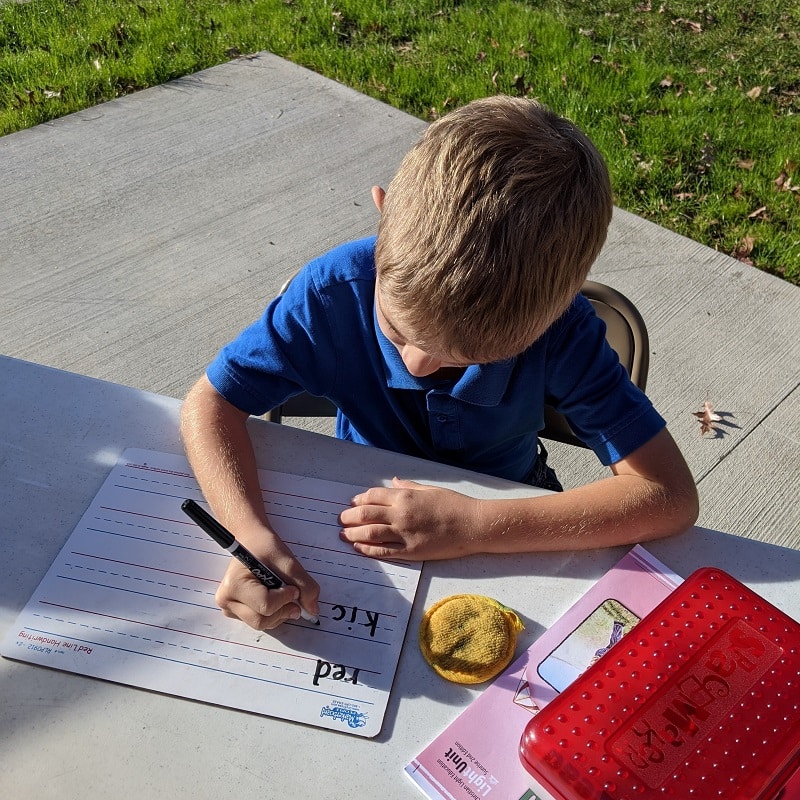
Chris has difficulty forming letters with his pencil; his arm twists around in a circle, and he pushes his pencil through the paper. Anne jumps up from her desk every few minutes and is constantly turned around backward in her seat. Louis reads “dab” instead of “bad” and writes “god” instead of “dog.” Have you had any students show these traits?
Three common learning difficulties are dyslexia (difficulty decoding words and letters), dysgraphia (difficulty writing), and attention deficit disorder or ADD (difficulty paying attention). This can cause students to have a hard time in all classes, especially with writing essays or completing long projects. A teacher may recognize these traits even in students who do not have a specific diagnosis. And while they may be indicative of a deeper learning disability, there are simple ways that the teacher can start addressing these difficulties early to assist students in being successful in the classroom.
For any students with difficulty learning, it is important that the teacher help the student to build skills rather than just complete homework or get a good grade. Additional time to complete assignments, peer tutors, and a reduced number of problems are effective ways to start. High interest/low vocabulary reading passages can replace the normal reading passages for the struggling reader. And whenever possible, the teacher should praise the student for any skill at which he or she excels (Yanoff, 2007).
Some specific tips for the student with ADD include giving the student extra breaks and allowing him or her to work incrementally. Sliding a bookmark or straight edge down the page helps easily distracted students keep their place reading. Reading passages that connect their lives to the text or lets them see why the content matters aids the ADD student’s focus (Berrett).
For the student with dyslexia who maybe turns letters around backwards, flips letters or words, or only sees the beginning letters of the word, the teacher can show him or her that reading is a code. Language should be taught sequentially and systematically, meaning that each letter combination or word may need to be taught separately and in specific order (Berrett). Some specific manipulatives that help the student with dyslexia are using colored transparencies over the text and using calculators for math problems.
Students with dysgraphia or difficulty with handwriting can improve their motor skills through practicing pencil grip, manipulating clay and wiki sticks, or squeezing tennis balls. For more advanced cases, the student may need to speak their thoughts into a computer speech-to-text program (Crouch & Jakubecy, 2007). Any student with dyslexia or dysgraphia can talk their thoughts first and then outline to get those thoughts down without worrying about mechanics. The thoughts can be turned into sentences and paragraphs later. The teacher’s provision of graphic organizers or partially completed outlines assist those students who have difficulty in note-taking (Berrett).
While Chris, Anne, and Louis may always have a harder time learning, the observant teacher can begin with small steps to assist them. Not every student will need extra help all the time, but every student needs extra attention from the teacher at some time.
Sources:
Crouch, A., & Jakubecy, J. (2007).Dysgraphia: How it affects a student's performance and what can be done about it. Teaching Exceptional Children Plus, 3(3), Retrieved from https://files.eric.ed.gov/fulltext/EJ967123.pdf.
Yanoff, Jerome C. (2007) The Classroom Teacher’s Inclusion Handbook. (Second ed.) Chicago, IL, Arthur Coyle Press.

Book Review: Total Participation Techniques

Book Review: Total Participation Techniques: Making Every Student an Active Learner by Persida Himmele & William Himmele
One of my goals this year was to involve my students in my lessons and learning as much as I possibly could. This book is full of practical suggestions on how to get students more active and involved in class. I found it to be extremely helpful and full of ideas that are easy to implement in many different situations and for multiple ages of students.
Some ideas were simple, such as to have a group answer at the count of three, or to walk around the room while students are working on individual answers and encouraging them to write on a deeper level. While others were more complex, such as having student interviews and presentations, almost all of them are practical for classroom use in most situations.
Before any of these will work well, the authors point out that having a classroom culture where students feel safe enough to participate without being ridiculed by other classmates will really help these suggestions work better. Also, making constant assessments so that we as teachers can observe growth, and validating students to build their confidence, making them more likely to share and participate in the future, can greatly help the process of involving students in our lessons.
I appreciated the variety of techniques presented as it gives me more “tools in my toolbox” that I can use while teaching my students. The authors encourage teachers to try to use one of these or something similar every ten minutes. That’s a tall order, but anything we add, even if it’s small, will help us to grow as teachers. Here are listed a few of these participation techniques with a brief description of each.
- 3 Sentence Wrap up In only three sentences, summarize what was just learned. To involve more students, call on three different students to each give one sentence each.
- Higher Level Thinking Ask questions that will cause students to analyze and synthesize information rather than just repeat what was taught. Have several students give their answers or have a class discussion.
- Pause to Apply After asking a question, give students time to process the question, apply it to what they just learned, and give an answer. Often jotting down a few notes can help them do this.
- Validate Students Encouraging students with appropriate earned praise (if they’ve truly earned it) is a way to build trust between students and the teacher, and will result in more participation by students in the future.
- Rankings Have students jot down the three most important aspects of the lesson and rank them in order of importance.
- Pair students in groups of 2-4 and have them discuss the content, and then appoint one student to give a summary for the group.
- Quick Write After giving students a prompt, allow two to three minutes for them to quickly write down an answer or their thoughts. Take turns sharing and discussing these.
- Partner Interview Assign partners and then give students a few minutes to interview each other on the material being studied.
- Hand Motions or Charades These can be used individually for vocabulary words in any subject. Groups can act out words, and the class can guess which word they are attempting to present.
- Cut and Paste Even older students enjoy cutting and pasting, matching words and definitions, pictures, or concepts learned in class.
- Graphic Organizers These are great for writing assignments and many are available for free on the internet.
- Picture Notes Draw pictures and use arrows for motion. Students will remember concepts much better if they use hand motions or draw concepts rather than just writing down the words.
I found Total Participation Techniques to be a very helpful resource because it describes many ways to get students involved in class, and it gives practical examples on ways to carry these out in a classroom situation. Involving our students more in our classes and having them participate directly in what we are studying not only creates a better learning environment, but it also increases student retention and understanding of material.

That Destructive Comparison Game
 Photo by Elisa Michelet on Unsplash
“My lunch is better than yours!”
“I don’t like my drawing. Johnny can draw much nicer than I can.”
“It’s not fair that math is harder for me than it is for Katie!”
We elementary teachers often hear proclamations of this nature. While friendly competition can be healthy and motivating, unwise comparisons too often lead to unkind words and discouragement. I have been the mediator in many childish debates. I have been the encourager for students who were harboring an unhealthy self-image because they were comparing their own abilities with the superior abilities of their classmates. I have tried to instill in my students the nastiness of boastful pride. Yet, how many times have I been guilty of playing the comparison game myself? Far too many times!
Dedicated teachers have the desire to do an important job well. This is a good thing, but that same energy can quickly turn into dangerous perfectionism and comparison. Do the following scenarios sound familiar?
- You are happily preparing your classroom for the school year until you peek into another teacher’s room and see all their cutesy décor that centers perfectly around an exciting theme, and suddenly your room seems drab by comparison.
- You see the beautiful artwork hanging in the hallway, produced by students younger than your own, and you wonder what magical tricks that teacher performed in order to get results like that.
- You see the thoughtful year-end gifts that another teacher gave to her students, and you have this sinking feeling because year-end gifts never even crossed your mind.
- You see another class walking quietly down the hall, and you wonder why you can never get all your ducks into such a docile row.
- You peruse Pinterest to find ideas for a project, but all you find is a smothering sense of your own lack of creativity compared to everyone else.
Let me tell you a secret: The ideal teacher doesn’t exist. Somehow, we humans are really good at seeing the varying strengths in other people, especially strengths we do not possess ourselves, and forming this composite ideal image. We then compare ourselves to this impossibly perfect image, find we can never measure up, and experience a paralyzing feeling of inferiority. As a teacher, you notice the talented teachers around you: the Fun Teacher, the Awesome Projects Teacher, Miss Organization, Mr. Motivator, The Teacher Everyone Loves, and of course the list continues. Guess what? No one possesses all those strengths!
While you are wishing for the skills of Miss Organization, she may be admiring your spontaneity and flair for drama. While the Fun Teacher may plan terrific class parties, his students may be failing math. Younger teachers may feel intimidated by the age and experience of older teachers. Older teachers, meanwhile, may wish for the youthful energy and fresh perspective of the young. “But when they measure themselves by one another and compare themselves with one another, they are without understanding” (2 Cor. 10:12b ESV).
We teachers ought to be each other’s best cheerleaders. When you see the strengths of others, commend them. Learn from their expertise. But then, instead of dwelling on all the gifts you wish you had, recognize the many gifts you do have. You have your own strengths—use them!
Book Review: Why Don’t Students Like School?
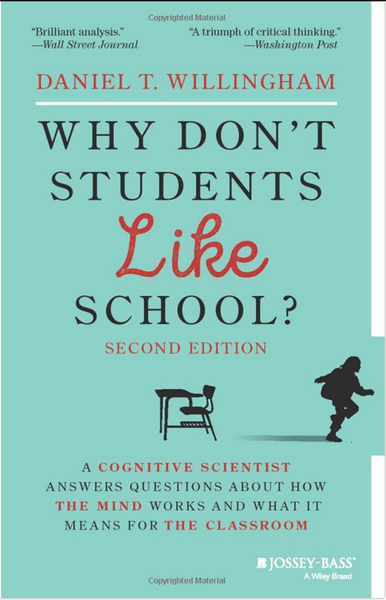
Daniel T. Willingham, a cognitive scientist, wrote this fascinating book about how the mind works, how this relates to student learning, and to how and what we are teaching in the classroom. The answers to these questions he answers well, and I agree with most of what he writes because I have seen these concepts demonstrated in the classroom on a regular basis.
First of all, he states that thinking is just hard work. Students will not enjoy learning if the material is too hard or too easy. We’ve all seen that. If the content is too easy, students tend to tune out. But if the content is too far over their heads, they get frustrated and give up. Thinking is hard. We teachers need to make sure to give students material that is attainable for them to comprehend. Students who excel should be challenged and given harder work or extra incentives. (I will often say, “You need to have at least three pages; an A paper will have four or more.”)
Secondly, students need to have mastered basic facts and knowledge before they will be able to think critically. That’s why first, second, and third grade teachers are so important.
Willingham states that students remember what they think about. If we as teachers can present material in a way that is interesting and easy to understand, students will be able to relate to it more and make a connection with it. Then, they will think about it more. Of course, the absolute best way to do this is by telling stories. That’s a whole separate topic but think of examples from your own life or research and find relevant stories. It’s well worth the few extra minutes it takes to do so. Stories can get the students to care about the question; your lesson is the answer to the question.
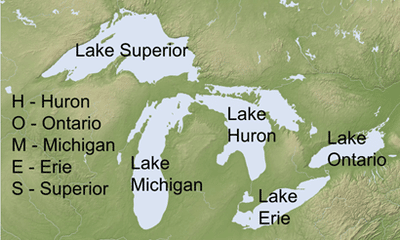
Some lessons and information have no real meaning and just need to be memorized. In these instances, Willingham recommends using mnemonic devices. Once students have learned, understand, and memorized basic facts and procedures, then they are ready for deeper levels of thinking. (Example: To remember the names of the Great Lakes, think “HOMES.”)
Another reason he gives for students disliking school is that it is hard for them to understand abstract ideas. If teachers can gently guide them from concrete examples into more abstract ideas, we can really help this process for them. The causes of the Civil War were given as an example. When asked, “Why did the South fight?” a concrete answer would be “slavery.” But asking probing questions can lead students to more abstract ideas. When asked, “So why did they want slaves?” the abstract answer would be “money and greed.” Leading students through this process by asking these types of questions greatly aids students in thinking on deeper levels. This type of thinking should first be explored in classroom discussions. Writing about it would come after the thought process was well-established.
Willingham also greatly encourages memorizing math facts such as multiplication tables because if these are memorized, we have them automatically at hand when we need them, but more importantly, more brain space is freed up to allow space for other thinking, such as solving more complex algebraic problems. The process of memorization also increases the probability that students will be able to transfer this knowledge to new situations, such as division in the case of the multiplication tables.
Another concept he introduced that I hadn’t considered was expecting too much of students. The “Ten Year Rule” states that it takes about ten years of practice for anyone to be really good at something. That means almost all of our students are novices in all the subjects. If thinking is hard, and we are gently guiding them into thinking on higher levels and abstract concepts, then we need to be patient and keep repeating the process. With practice many, if not most of them, will eventually catch on, although they will do this at their own individual paces and levels.
Learning styles are compared to learning abilities. Learning styles are how students learn best: visually, auditory, kinesthetically. Willingham makes the point that students’ learning styles are really more alike than different. What varies more is their learning abilities. Some catch on to concepts faster, and some slower. We can’t do a lot to change that, but we can present the material in different ways that will help them stay interested in lessons and increase the likelihood that each one will be able to understand what we are teaching. Patience and repetition will also aid those students who need more time to process information and understand advanced concepts.Another fascinating aspect that Willingham presents is that in Europe and Asia, many people believe that intelligence levels can be greatly improved with hard work and study. In contrast, many Americans believe that intelligence is fixed, and therefore we don’t try as hard to improve it. While he acknowledges that genetics does play a large part in the potential a student has, the environment that a student is in at home and at school can greatly nurture and improve a student’s intelligence. That’s an exciting process in which we as teachers can participate.
Willingham suggests setting high standards, having a positive attitude, and encouraging and believing in students. It is also helpful to model learning and trying hard. If students see their teachers looking up words in the dictionary, working hard at a math problem, or going over the sketch several times in art class, they will be more likely to imitate what they’ve seen their teachers do.
Last, Willingham addresses the minds of the teachers. He encourages us to practice and improve our skill in teaching and becoming knowledgeable in whatever content areas we are teaching. Getting feedback from students and other teachers can be helpful in this process.
While this book was long and had many complex ideas and concepts in it, I found it intriguing and interesting, helping me to understand my students and myself better.

Understanding Children with Difficult Backgrounds
Children who suffer from severe trauma can be hard to work with in the classroom. In this session, Arlyn Kauffman addresses some of the technical parts of trauma, including FASD, and seeks to inspire school leaders and boards to care about these children.
- 261Page 66