
All Content


Book Report Outline & Author Posters
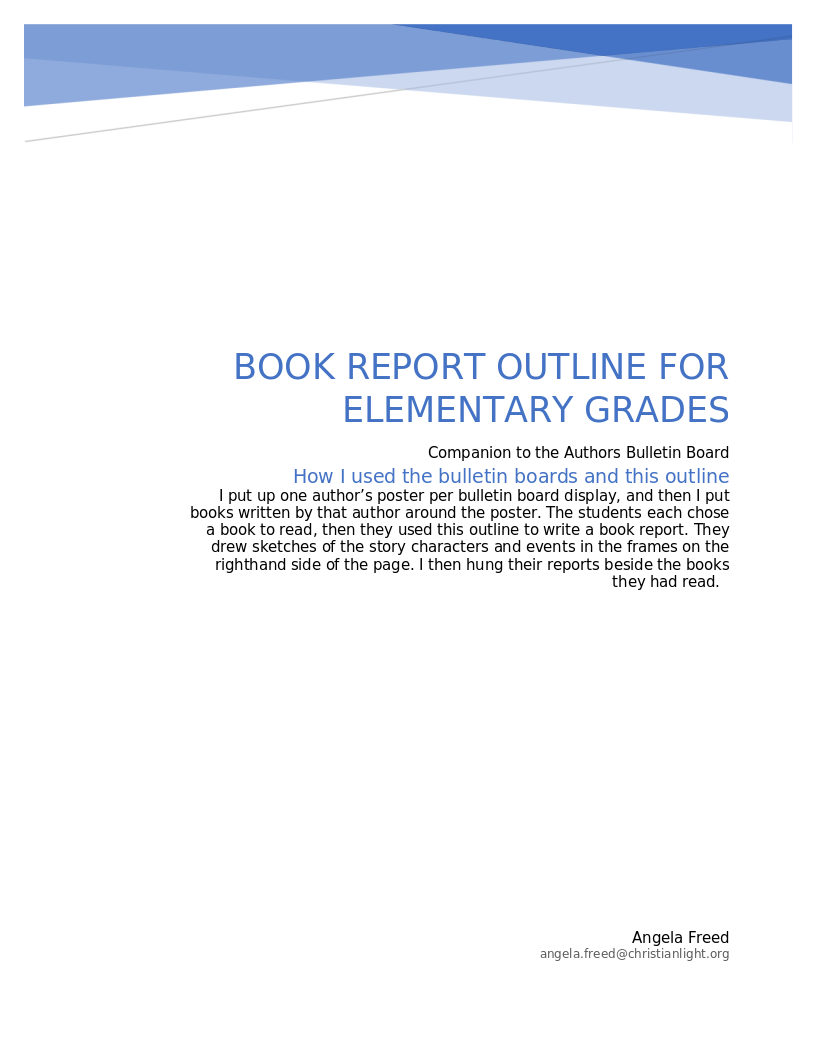
A book report outline and a collection of author posters featuring Hesba Stretton, Sydney Taylor, Dr. Paul White, Meindert de Jong, and Johanna Spyri.
From the contributor: "I put up one author’s poster per bulletin board display, and then I put books written by that author around the poster. The students each chose a book to read, then they used this outline to write a book report. They drew sketches of the story characters and events in the frames on the righthand side of the page. I then hung their reports beside the books they had read."
Habits to Sustain Long-term Career Teaching
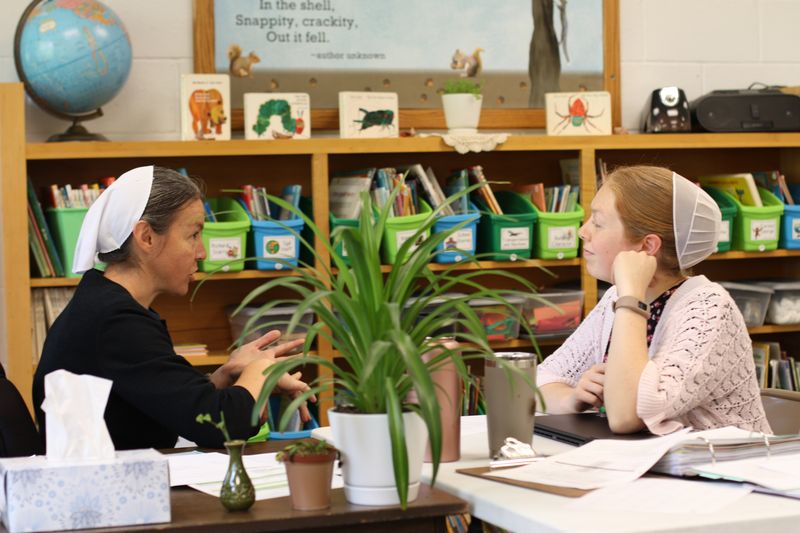
This year marks my fourteenth year teaching full-time in a parochial school classroom, and it hasn’t always been easy. But, because I love teaching and spending my time imparting knowledge to and guiding little humans, it has been well worth it. Here are a few habits that have helped our family stay in the teaching profession. Because I feel it’s an extremely worthwhile way to spend one’s time, I’ll share them with you here with the hopes that you, too, will consider teaching as a long-term commitment (if you haven’t already.)
- Go all-out. If we approach teaching as a chore or a short-term commitment and watch the clock throughout the day (and the calendar throughout the weeks and months), our focus becomes finishing the day, the week, or the month. But, if we practice carpe diem, (“seize the day”) our approach will be much different. Today, for instance, I regretted that I had forgotten an egg and vinegar for a science experiment. I wish we would have had ten more minutes to get every single math problem fixed up for a 100%, another fifteen minutes of music class, five more minutes on the tennis court, and another twenty minutes of art class. My students and I were having such a great time that by the end of the day the clock was already three minutes past dismissal time when I happened to look up and realize it. Go all-out! Dream of what you’d like your classroom to be like, and do what you can to make it happen. (And yes, some days I do glance at the clock.)
- Enjoy those holiday breaks and summers! Because I do go all-out during the school year, I cherish my days off. I need them to relax and recharge. That’s another great bonus of teaching: we get nice long holiday breaks and fabulous summers completely off.
- Find your stress points and reduce them. This year one of my stress points was packing up everything the last day of the week and putting it all away into a small closet. (We are currently renting a church’s fellowship hall.)The job was taking me a couple of hours and was definitely a stress point. After a few weeks of this, I got my students to help me in an orderly, assigned way, and it cut my time considerably. I also had too many papers to grade and no time to grade them except after school. I asked my helper to focus on grading papers, especially the math ones, as soon as she was done teaching her lessons. Another stress point gone! Work on these until you have minimized the most stressful spots, and keep doing it as the year goes on.
- Cut your budget wherever you can. I feel that it is well worth the trade-off in pay to do something that I truly love and enjoy doing, and my teacher husband feels the same way. While we wouldn’t call these “sacrifices,” some people looking on might. We have shared one car for most of our teaching years, and it is thirteen years old. We don’t take expensive vacations or eat out a lot. We have a fairly modest home that we fixed up ourselves, and we love it. We have been able to save money and contribute to a retirement account. We don’t feel deprived. Rather, we feel thankful that we have been able to spend our time doing something that we truly enjoy and have been able to provide well for our family while doing it. That’s what we would consider success–happiness and family together time–not fancy cars, expensive vacations, and other stuff that we really don’t need.
- Get a low-maintenance side hustle. We have chosen to teach a few weekends out of the year and a few weeks in the summer. We also teach private music lessons and do consulting. These are things that we love to do and don't stress us out. We still have plenty of time to relax. We have teacher friends who have chicken barns, do private tutoring, carpentry, make donuts, or have rental houses.
- Get your family, roommates, and friends on board. Whoever lives in the same house as you do, or whomever you choose to spend time with, should care enough about you personally to encourage and help you in your teaching endeavors. I’ve heard of roommates who made meals, family members who ran errands, and parents of teachers who substituted for their teacher-children. I’ve had students mow my lawn and feed my cats when we were out of town. Graciously let your needs be known, but don’t be needy.
- Find a teacher-friend or two to be confidants and/or mentors. It’s great to bounce your thoughts and ideas off someone else, or to call them for some advice or encouragement when you need it. Often you’ll find that you probably do the same for them. Look for someone with experience who inspires you. Experience is gold; inspiration is silver.
- Plan ahead. This is probably the single most important aspect that has helped me as a teacher and as a mother. After school, I get dinner ready and prepare the next night’s dinner. I also have a good calendar system with personal, family, church, and school events all on it. This not only helps me to plan ahead, but to look ahead daily, see what’s coming up, and make sure that I’m well prepared for it. It has saved me much worry and time.
Teaching is a fabulous profession! We are investing our time and energy into helping other people. With just a bit of vision, planning, and commitment, it is easily sustainable long-term.
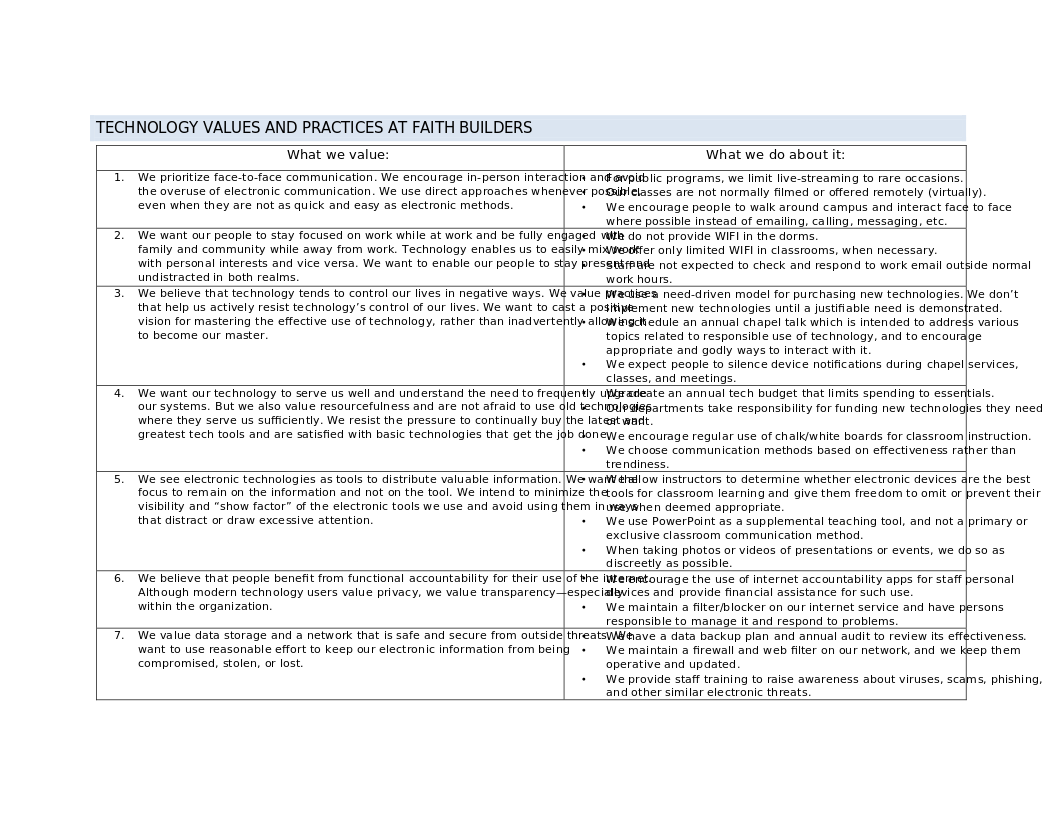
Values and Practices for the Use of Technology

Technology accelerates communication. But what does this do for your school?
Faith Builders developed a list of values for the use of technology along with accompanying action items. You may find a list like this inspiring as you develop your own practices.

Relational Practices for Task-Oriented Teachers
I find personality tests intriguing. Enneagram, Myers-Briggs, DISC, and other frameworks for explaining the way human beings operate have helped me to understand myself and other people in new ways. I had studied many of these in various seasons of my life, but one aspect of personality that I have found particularly helpful has only come to my attention in recent years: the difference between people-oriented and task-oriented individuals.
People-oriented people are very relational. They always have time to sit down and talk; the work can wait. They love people by taking time for them, talking with them, and offering a listening ear. Task-oriented people, on the other hand, are the diligent workers. They get the job done. They love people by doing things for them and by producing quality workmanship.
While both sides have strengths, the weakness of either extreme is obvious. Task-oriented people tend to emphasize work at the expense of relationships. People-oriented people fall into the ditch on the other side. They are so busy interacting with people that they neglect necessary work. Recognizing our own natural tendency to lean toward one side or the other can help us to work on becoming more balanced. Perhaps even more than some other professions, school teaching requires a delicate balance of both relational skills and efficient work skills.
As a very task-oriented person, I write this especially for other task-oriented teachers, because we need to be more intentional in taking time for relationships with our students. We are good at accomplishing tasks. We plan and execute great lessons and projects, we get those stacks of papers graded, and we sweep that messy floor. But sometimes in our zeal to do all the things and to give our students a quality education, we miss their hearts.
While “trying to be more relational” can seem like a nebulous goal, it is possible to take small practical steps in that direction. Here are a few things I have done:
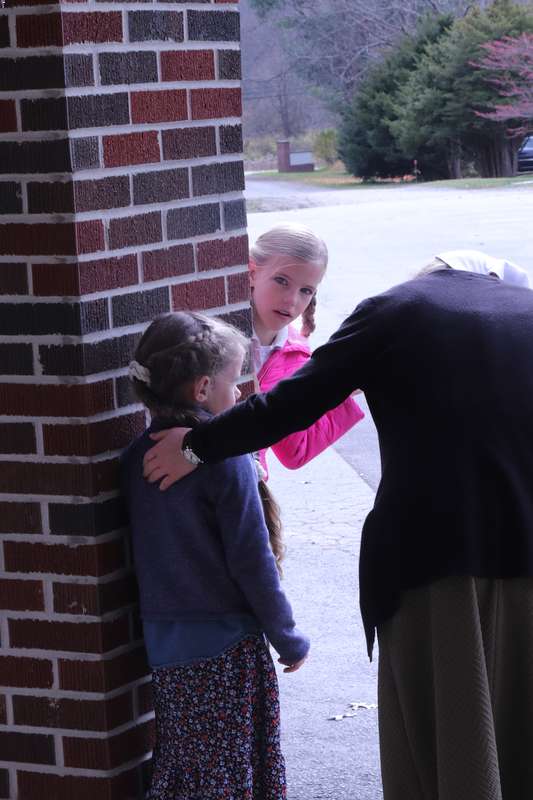
Greet your students at the door in the morning. This is something I wish I would have done earlier in my teaching career. It is meaningful to look each child in the eye and to greet them by name as they enter the classroom. They have your full attention. You are not at your desk doing last-minute grading or lesson preparation. Last year I received a note from one of my students from the previous year, and among other things she wrote, “I liked how you smiled and said ‘Good morning’ to me every day when I walked in the door.” This child is extremely relational, and it warmed my heart to know that I had connected with her in a way that she remembered and was able to articulate so clearly.Allow class time for students to tell their stories. It can feel like a waste of time to allow precious minutes for students to tell about their new puppies, their trip to visit cousins, or their latest inventions. But this can be a great time of connection with students. I’m learning to quiet the little voice in my head that says, “But we have so much to do!” and to let my students talk about the things that are important to them. We need to have limits for this, of course. But especially after a weekend or other break from school, I take five to ten minutes in the morning just to let students talk about the things they did or whatever is on their minds.Write notes to your students. This is a wonderful relational tool for us task-oriented people, because it is a job we can cross off a list. At the same time, it is a meaningful way to connect with students. I keep a handy stash of little cards in my desk for this purpose, and it takes only a minute or two to write a short note praising a student for something positive I noticed, or even just saying, “I love having you in my class. Have a great day!” Recently the mother of one of my students told me how much it meant to her daughter when she got a note from me. I was reminded that little things like this can have a big impact.Resist the urge to be constantly at work. At our school, we have an unstructured morning break and lunch break. Students are free to play in the gym or on the playground when they finish eating. Not all of us teachers need to be out there supervising, and technically I could use this time to gather supplies from the art closet, run to the office to make copies, review the next class period’s lesson plans, etc. To be honest, sometimes I do those things. But I am also learning to spend more time with my students and to refocus my brain from its natural task-oriented mindset.Be interested in the things that interest your students. I have no interest at all in football or hunting, but my students don’t have to know that. I can still smile and nod at their stories, ask questions, and encourage them to pursue their interests. I can learn the names of their pets and ask about them sometimes.By God’s grace, we can continually learn new habits of connection, even if we are not naturally people-oriented.
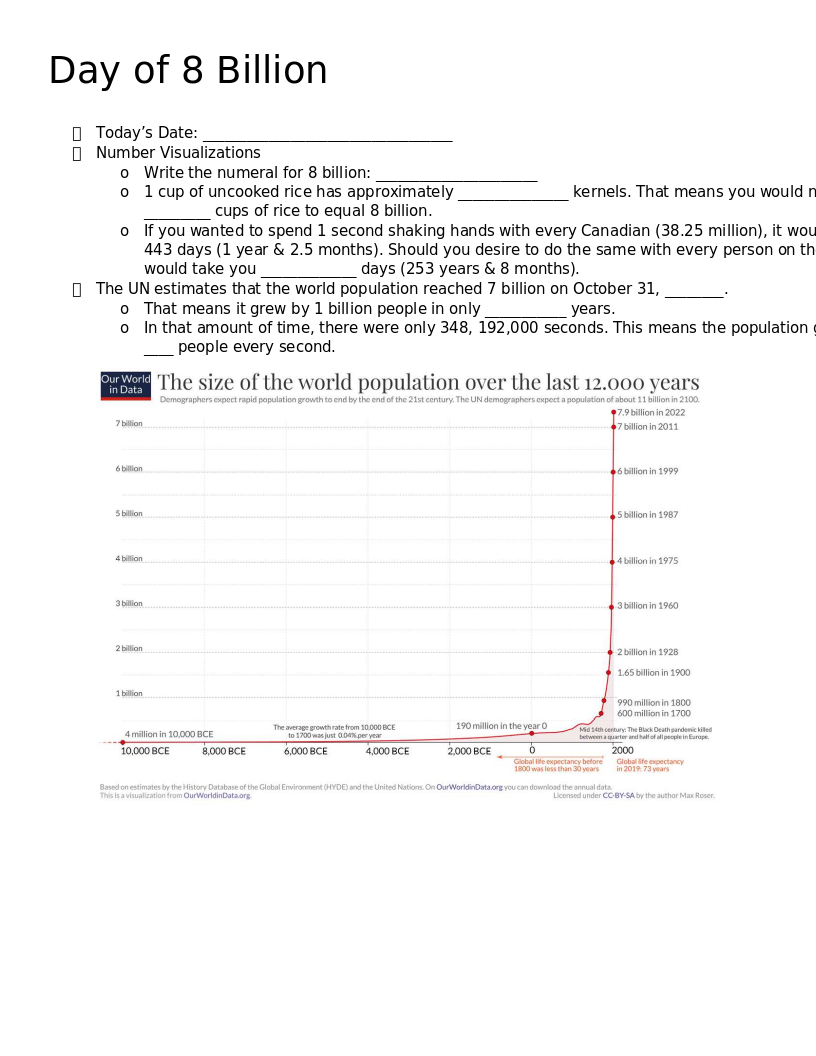
Day of 8 Billion
According to the UN, the global population reached a milestone 8 billion on November 15, 2022. This lesson plan and worksheet discusses world population and helps students visualize the magnitude of the number. The student worksheet includes major points, graphs, and calculation problems. The teacher guide includes answers, additional comments, graphs, and weblinks for further illustration and discussion.

Do the Write Thing, Part I: Why Writing Matters
The adage says, “The pen is mightier than the sword.” As conservative Anabaptists, we have traditionally avoided using the sword. But unfortunately, we have often avoided using the pen as well.
The following observations are very likely not a true representation of all Anabaptist schools and painting in broad strokes is sure to lead to unfair stereotypes at times. However, it seems to me that in many schools, writing is limited either to very functional uses, or to a brief, extra subject called Creative Writing that we squeeze into our schedules once a week. We give only a fraction of time to learning to write creative, original work compared to the time we spend on things like math, science, history, or the mechanics of grammar.
But these priorities of time matter, because where we choose to spend our time has an impact. When we spend so little time honing the craft of writing, we are not raising a generation of children who have the skills to impact their world by invigorating and inspiring their readers.
This is a shame, because as Christian schools, we should care about writing.
A Philosophy of Writing
“In the beginning, God created.” God is a creator. We know this from the first five words of the Bible. And within the first chapter, we are told that we as humans are made in His image. The fact that humans can create is a core aspect of what it means to be image-bearers. And arguably, writing is one of the closest ways we have of creating ex nihilo (out of nothing) as God does.
When we teach children how to write well, we give them a gift. It is the gift of imagination—of allowing their creativity to take flight instead of becoming mired in the world of facts, concrete ideas, and entertainment.
Teaching writing is the gift of articulation—of taking the seeds of thought developing in their minds and letting them come to fruition on paper.
Teaching writing is the gift of self-reflection—of grasping at the vapors of who they truly are inside and bringing them outside to be understood more fully.
Teaching writing is the gift of beauty—of using twenty-six letters to weave tapestries of delight.
When children have been given these gifts of imagination, articulation, self-reflection, and beauty, they have more tools to serve God and build His kingdom. This broken world needs Christian writers to rise up and speak a message of hope. Students from Christian schools ought to be graduating with the tools they need to be able to write well.
Further, communication—and therefore writing—is an act of worship. God is a communicator, and He gives us the ability to communicate with others. In fact, communication is part of the believer’s calling, and it is an essential part of sharing the gospel.
Engaging students in the process of writing is a core part of helping them learn to develop ideas and think well. Therefore, it is not an activity reserved for the few Christians who are “born writers.” When our students are better writers, they will be better communicators, whether written or verbal. Therefore, it is a worthwhile process for all believers and an important skill to teach our children.
Writing enables three important things for our students: processing, persuasion, and pleasure.
Processing
We all have problems. We all struggle with conflicting ideas, looming worries, and niggling doubts. Our students are no different. It’s complicated to be a child. It’s especially complicated to be a teenager.
Writing is a way of processing problems to come to conclusions. It’s a valuable skill our students need in order to make sense of life, both what’s going on around them and what’s going on inside of them.
Another reason writing is important is because writing about their thoughts helps our children learn how to develop their thoughts. This ability to think and think deeply cultivates emotional growth. We don’t just teach to our student’s heads; we teach to their hearts, too. Writing is a way to do that by giving them the ability to reflect on their thoughts and emotions.
Of course, this doesn’t happen easily or all at once. But over time, as they hone their writing skills, children will be able to develop their thoughts in helpful, healthy ways. They will be able to clarify those thoughts and sharpen them towards truth. That is a gift that we should be giving our students.
Processing can be an end in itself, and that is a valid use for writing. But writing can also be the means to persuasion—the ability to articulate truth in a compelling way.
Persuasion
As Christians, we are called to defend and proclaim truth. Part of the Christian school’s role in serving the church is to help shape children who are able to do that.
Writing is a powerful method of communication. It is so important that our children can articulate their beliefs, especially in a world that is continually throwing Christian values away. Equipping them with the skills they need to be able to write well is a vital step in that process.
The first thing writing does is force our students to wrestle with ideas themselves, which strengthens their own beliefs. But it also prepares them to share their beliefs with others. Our world desperately needs skilled writers to speak into the brokenness with a message of hope.
As Anabaptists we have much to offer, but often, we aren't extending hope in quality literature. In order for us as an Anabaptist people to become talented writers who can share life and light through our words, we need to spend significant time building writing skills in our children.
Now, as important as this purposeful writing is, I strongly believe that writing doesn't have to be functional to be valuable. We should also allow students to write just for the pure pleasure of it.
Pleasure
Do you remember what it was like to be a child, and your imagination was so alive it could take you anywhere? Perhaps your bike was a horse that galloped with thundering hooves or a race car that sped around corners with devilish speed. You could be a cowboy, a pioneer, and a major league baseball player all between lunch and supper.
Walt Disney once said, "Every child is born blessed with a vivid imagination. But just as a muscle grows flabby with disuse, so the bright imagination of a child pales in later years if he ceases to exercise it."
This is especially true in an age of technology when all the imagining is being done for children already. For example, it takes much less imagination to watch a movie than it does to read a book. In many homes, hours of screen time inside replaces time in imaginative play outside. It is difficult to objectively compare children today to children twenty years ago, but it seems that students with vibrant imaginations are becoming increasingly rare. The idea that technology may be robbing our children of their imaginations alarms me.
And of course, as teachers, we are considerably limited in how much control we have over our students’ technology usage. However, we can give them opportunities to exercise their imaginations at school. One of the best ways to do that is through writing.
Now, writing is not always fun. But writing should be fun sometimes. Students should have the opportunity to create new worlds that they wish existed, experience the delight of combining just the right words in just the right way, and revel in creativity and wonder and enjoyment. We need to add this type of writing to our students’ experience of writing paragraphs, essays, and other academic-style assignments.
As Anabaptists, we are a very practical people, and there are strengths to that. We like things to function well in tangible ways. But we forget that we can’t always measure the value of something simply by how useful it is. Sometimes, the purpose of writing can just be writing.
I want to clarify that there is definitely a place for structured writing—of teaching students how to craft specific formats like essays. But not all the writing we ask them to do should be formulaic, informational-style assignments.
Ruth Culham talks about formulaic writing assignments and points out, "If writing is thinking, this approach doesn't move students toward that goal." She also says, "I believe the person holding the pen is the one doing the learning.”
We need to teach our students how to hold the pen themselves, and at times that involves giving them freedom in what they write and how they write.
The Bottom Line
In short, writing is about shaping our student’s minds to think differently. Pam Allyn says, "Living a writing life is living with our eyes wide open." When we turn our children into strong writers, we are teaching them to see well and to speak well. And that is a gift that our students desperately need.
Smith, Dave. The Quotable Walt Disney. United States: Disney Book Group, 2015. Culham, Ruth. Teach Writing Well: How to Assess Writing, Invigorate Instruction, and Rethink Revision. Stenhouse Publishers, 2018. Pam Allyn. Your Child's Writing Life: How to Inspire Confidence, Creativity, and Skill at Every Age. Penguin, 2011.
Guiding Students Through the Process of Writing Research Papers
Research papers are probably the most daunting of all assignments for school students. Keeping that in mind, these steps are designed for younger students (grades seven and eight) or for high school students who are unfamiliar with the process of writing a research paper. Our goal is that students will be able to do this on their own after they are comfortable with the process.
First of all, timing can be almost everything. The first two semesters of the year aren’t a good time to begin research papers because it’s too early in the year. It’s better to wait until students have learned a little more. The last quarter isn’t a good time either as most of them have spring fever and will be looking out the window. But I have found that the third quarter, around January and February when it’s cold and dreary outside, is a good time to work on research papers.
Orientation for you
- January-February: Begin research papers in small steps.
- Provide 3-pronged folders with pockets and notebook paper. Each step of students’ work will be turned in inside this folder.
- Usually do one step per day in class together. You will be telling the students exactly what to do, then they will be working on their own with their specific topic. Your instruction takes up about half of the period, depending on that day’s task.
- Give students good examples for every step. Read them aloud. I usually choose a topic that no one in the class has chosen, or the one topic that my most struggling student has chosen to use as an example. This gives them all an example to follow, and really helps the struggling student.
- For most topics at this level, try to get them to think chronologically as this helps them organize their outlines. Any history topic can be done this way. I give most examples orally, because if I write them on the board, they usually copy what I write.
- Give students a grade on each little step. (Accountability!)
Instruction plan
Day 1: Choose a topicBreak: Gather encyclopedias, order library books, etc. Resume when each student has three to five sources. I order books from the library and pick them all up to put in my classroom.Day 2: Title and Outline Day Titles should be grand! Give them some super-amazing title examples. Don’t allow anything boring or mundane.Day 3: Bibliography Card Day Write a sample on the board. Walk them through the process. Be patient. This task is really hard for younger students.Day 4: Note-taking, Day One Again, write a sample on the board. Super important: Remind them to jot down phrases to prevent plagiarizing. I encourage my students to have three bullet point phrases per card—all on the same topic, of course. Our goal is to complete about ten notecards or more per dayDay 5: Note-taking, Day Two Day 6: Note-taking, Day Three (Add another day if students need more time or if more sources and notecards are required)Day 7: Introduction Writing Day Give great examples. Be a little dramatic. This will produce much better writing. Encourage students to write two introductions (begin with an amazing fact from their research, a true story, a question, a definition, a quote etc.) and then choose their favorite.Day 8: Note Card Organization Day Using their outlines as a guide (and encourage students to update their outlines if they have found different information than they had planned), make stacks of notecards based on the information they cover (Introduction, Roman numerals I, II, III, etc., Conclusion) Then have students organize each individual stack into the order they want to write it in. Use rubber bands to secure the packet of cards.Day 9: Begin Rough Drafts Day With their note cards in hand in the right order, encourage students to get as much done well as they can. “Focused and fast” is how I tell mine to approach their first draft. I also make sure that they have a cardstock copy of the “Transition Words” and “Different Ways to Begin Sentences” handouts on their desks.Day 10: Finish Rough Drafts Sometimes I let them do this in class, but usually I give students about 3-4 days to finish these up on their own.Day 11: Rough Drafts Due On a Thursday, on time! No excuses. (Don’t ruin your students’ weekends by making these due on a Monday or Tuesday.)Break: Take a week or two break to allow time for student to have a mental break and for you to diligently grade their papers.Grading research paper rough drafts
- Mark or circle anything wrong in colored ink. Use editing marks but do not correct them – just draw the students’ attention to the fact that something is wrong and expect them to fix it.
- Put a squiggly line under anything that is acceptable but sounds like a first grader wrote it. This could be a single word, or a phrase, or a sentence. Encourage students to rewrite these parts. Also write “awk.” on anything that sounds awkward and needs to be rewritten.
- Give two grades: a content grade and a mechanics grade. If they fix all the mechanics they could get a final grade as high as their content grade. If their content isn’t good, tell them what is wrong and how to fix it (add pages, rearrange, rewrite parts, etc.)
- I like to base their final grade largely on their rough draft grade, adding points where they’ve earned them. If they fixed all the mechanical errors, that grade goes up, and if they rewrite, reorganize, and fix whatever I had noted on their rough drafts, their content grade will go up. I usually average the two for their final grade.
This is a summary of a much longer in-depth description on guiding students through research paper preparation and writing, and editing. If you are interested, our guide “It’s Research Paper Time” is available by contacting us at littleflock7@gmail.com.

Quick and Easy Formative Assessment
Does Johnny deserve an A? Did Susie answer enough questions correctly? Can Janie read the proper amount of words from this list? Sometimes assessment is easy, if there is a definite right/wrong answer or if the answer key explicitly tells how to grade the question. But sometimes assessment is more difficult if there are several possible correct answers or if an essay is involved.
Assessment, or seeing how much the student has learned, can be either formative or summative. Summative assessment occurs at the end of a learning unit, while formative assessment focuses on identifying students' progress throughout a unit or grading period. Its purpose is to uncover students' ideas and knowledge before a final grade is issued, giving both the student and the teacher a chance to make changes in the learning process. Often with formative assessment a grade is not given, but the teacher receives needed feedback to create proper lesson plans.
Several practical formative assessments can greatly aid the teacher. One quick method for the elementary teacher to assess student mastery of a single lesson is to use “traffic lights.” The teacher issues each child three craft sticks or stop signs: one red, one yellow, and one green. The student holds up the appropriate stick when asked to do so to represent his current level of understanding. Red implies that the child completely lacks understanding of the concept. Yellow means that he has partial understanding, but would not be able to explain the concept to someone else. Green shows that he both understands the concept and could explain it to someone else.
This can also be modified for use with older students. Instead of using craft sticks, the teacher can give the middle-school student colored cards to hold up. Even that might seem childish to the high-schoolers, so for those grades, students can color-code their papers or sections of their papers: red underlining or highlighting for parts they completely don't understand, yellow for those sections they need help with, and green for the portions about which they are confident. This is especially helpful in editing writing assignments.
A second strategy of formative assessment is a teacher chart for noting observations about students throughout the year. The teacher creates a chart for the entire class, labeling columns with dates and rows with student names. Throughout the time period assigned to learning the particular objective, the teacher observes each student briefly for the same goal, such as participating in class discussion or reading fluently. Then the teacher briefly notes the student’s performance and can track their progress or lack thereof for that specific goal. The chart can be laminated and written on with erasable marker so it can be used again for a different goal.
A third formal assessment strategy is entrance slips used at beginning of class to ask the students a question from the day before, ask them preview questions of the current day's topic, or provide them with a chance to give feedback. Many teachers use exit slips at the end of class, but do this at the beginning allows the teacher instead to see what students remember the next day or where they still need help. These can be adapted to work for any class and grade level. Even young students could draw pictures to respond to a beginning-of-the-day question.
So whether Johnny deserves an A or Susie answered enough questions correctly or Janie can read enough words can sometimes be difficult to identify. But by using formative assessment throughout daily lessons, the teacher can more easily determine student progress.
- 261Page 58