
All Content
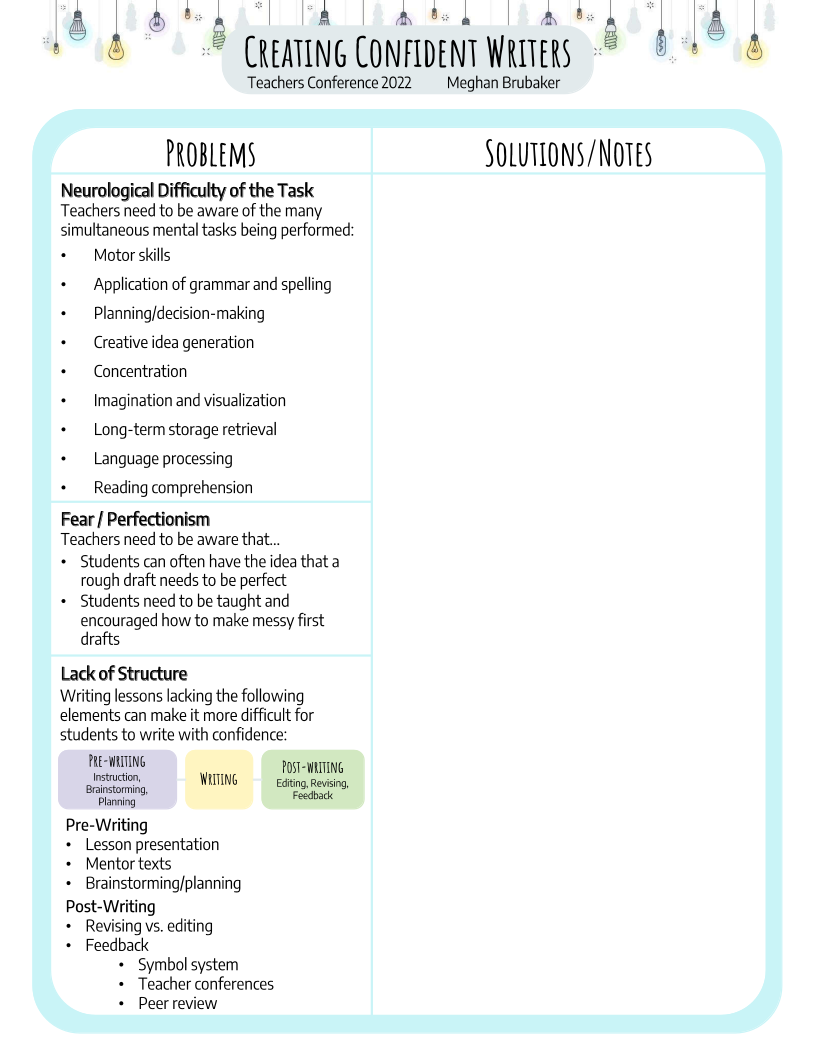
Does Spelling Count?


“Are you grading for spelling on this?” a middle-school-aged student asked about his essay. Of course I was grading for spelling—on this essay and on other assignments. But for some older students, there is an assumption that since spelling tends to be taught only in younger grades that they do not need to proofread (or that their computer’s spellcheck will find everything for them).
Although formal spelling classes tend to be directed toward primary students, older students can also benefit from directed spelling study. Some spelling class formats, especially for older students, are more implicit, with informal redirection when a word is misspelled on an assignment rather than concentrated efforts to teach spelling patterns.
But a recent study from Great Britain shows that the explicit study of spelling based on specific roots and their derivatives “shows a sustained effect on spelling” (Burton et al., 2021). A simple reminder to a student that a word is misspelled or even requiring the student to correct it does not bring about long-term improved spelling. Rather, when the students in this research study focused on groups of words based around a specific spelling rule, their spelling test grades improved both at the time of study and then later when they were re-tested on the same spelling groups.
So practically speaking, how does one teach spelling to older students? Traditional textbooks can be used, with lists for each week and regular tests. Some spelling programs focus on individual lists for students, based on their current level. (Beverly Adams-Gordon’s Spelling Power is one textbook often used to generate these types of ability-level lists.) For students in high school, by which point most formal spelling programs have stopped, a spelling notebook or stack of note cards on which students keep track of their own misspelled words and then practice and maybe even test from their own lists can be easily implemented.
No matter the student’s age, they should practice the words when studying spelling and not just rely on simple memorization for a test. Burton et al.’s study (2021) showed that playing games helped the students in the group that were explicitly studying the spelling patterns.
Hands-on activities can also increase student learning of new spelling words. Here are some fun and easy ways to practice spelling for students in middle grades—and most of these will also work with younger students.
- Use sidewalk chalk to write the spelling words outside.
- Use alphabet pieces from a game to spell the words being studied. Magnetic letters also work well on cookie sheets.
- Make a word search or crossword puzzle with the word list, and then trade with a partner and solve.
- Create the letters of the words with chenille stems.
- Create the letters of the words with play dough.
- Write the words on individual marker boards with different colored markers and in different styles of writing.
- Write the words in Morse code. (Students can find a Morse code list in an encyclopedia.)
- Create a code, write the words in the code, and then trade with a partner and solve.
- Sign the words to a partner in sign language. (Students can find a sign language alphabet in an encyclopedia.)
- Play hangman with a partner using spelling words.
- Make a box for each letter in the word, with the height of the word relative to the size of the letter (e.g. “b” is a tall box, while “e” is a short box). Make a list of the words, written in a different order. Trade with a partner and fill in the boxes using the words from the list.
- Cut individual letters out of a magazine or newspaper and glue them on a paper to create the spelling words.
- Write each word on a slip of paper. Cut the individual letters apart. Shuffle the letters, and then put them back in order.
- Get letter stamps and a stamp pad and have students stamp their words onto a paper.
- Write the words with a stick in the dirt outside.
- Write the words as stair steps, starting with writing only the first letter, then adding a letter on each line until the word is finished.
Bibliography
Burton, L., Nunes, T., & Evangelou, M. (2021). “Do children use logic to spell logician? Implicit
versus explicit teaching of morphological spelling rules.” The British Journal of Educational Psychology, 91(4), 1231-1248. https://doi.org/10.1111/bjep.12414.

Does Spelling Count?
Photo by Jakob on Unsplash
“Are you grading for spelling on this?” a middle-school-aged student asked about his essay. Of course I was grading for spelling—on this essay and on other assignments. But for some older students, there is an assumption that since spelling tends to be taught only in younger grades that they do not need to proofread (or that their computer’s spellcheck will find everything for them).
Although formal spelling classes tend to be directed toward primary students, older students can also benefit from directed spelling study. Some spelling class formats, especially for older students, are more implicit, with informal redirection when a word is misspelled on an assignment rather than concentrated efforts to teach spelling patterns.
But a recent study from Great Britain shows that the explicit study of spelling based on specific roots and their derivatives “shows a sustained effect on spelling” (Burton et al., 2021). A simple reminder to a student that a word is misspelled or even requiring the student to correct it does not bring about long-term improved spelling. Rather, when the students in this research study focused on groups of words based around a specific spelling rule, their spelling test grades improved both at the time of study and then later when they were re-tested on the same spelling groups.
So practically speaking, how does one teach spelling to older students? Traditional textbooks can be used, with lists for each week and regular tests. Some spelling programs focus on individual lists for students, based on their current level. (Beverly Adams-Gordon’s Spelling Power is one textbook often used to generate these types of ability-level lists.) For students in high school, by which point most formal spelling programs have stopped, a spelling notebook or stack of note cards on which students keep track of their own misspelled words and then practice and maybe even test from their own lists can be easily implemented.
Image by Lorenzo Cafaro from Pixabay
No matter the student’s age, they should practice the words when studying spelling and not just rely on simple memorization for a test. Burton et al.’s study (2021) showed that playing games helped the students in the group that were explicitly studying the spelling patterns.
Hands-on activities can also increase student learning of new spelling words. Here are some fun and easy ways to practice spelling for students in middle grades—and most of these will also work with younger students.
- Use sidewalk chalk to write the spelling words outside.
- Use alphabet pieces from a game to spell the words being studied. Magnetic letters also work well on cookie sheets.
- Make a word search or crossword puzzle with the word list, and then trade with a partner and solve.
- Create the letters of the words with chenille stems.
- Create the letters of the words with play dough.
- Write the words on individual marker boards with different colored markers and in different styles of writing.
- Write the words in Morse code. (Students can find a Morse code list in an encyclopedia.)
- Create a code, write the words in the code, and then trade with a partner and solve.
- Sign the words to a partner in sign language. (Students can find a sign language alphabet in an encyclopedia.)
- Play hangman with a partner using spelling words.
- Make a box for each letter in the word, with the height of the word relative to the size of the letter (e.g. “b” is a tall box, while “e” is a short box). Make a list of the words, written in a different order. Trade with a partner and fill in the boxes using the words from the list.
- Cut individual letters out of a magazine or newspaper and glue them on a paper to create the spelling words.
- Write each word on a slip of paper. Cut the individual letters apart. Shuffle the letters, and then put them back in order.
- Get letter stamps and a stamp pad and have students stamp their words onto a paper.
- Write the words with a stick in the dirt outside.
- Write the words as stair steps, starting with writing only the first letter, then adding a letter on each line until the word is finished.
Bibliography
Burton, L., Nunes, T., & Evangelou, M. (2021). “Do children use logic to spell logician? Implicit
versus explicit teaching of morphological spelling rules.” The British Journal of Educational Psychology, 91(4), 1231-1248. https://doi.org/10.1111/bjep.12414.

"I'll Just Google It"
We get our students asking us this question in multiple different ways: “But why do I need to memorize facts when I can look up facts on the Internet? No problem. We have Wikipedia. We have, well, Google, just in general. We have facts available to us all the time.”
The Question Behind the Question
As I've been doing, I’m planning today to talk about what is going on behind the scenes. What is the question behind the question or the assumption behind the question? But I'm going to do a little bit of an aside and attack the question directly for a little bit before we get into intellectual character.
So what's going on behind the scenes? What is the student possibly thinking when asking, why do I need to memorize facts?
Well, I would say two are really closely related to each other. The first is that education is about information.
I had a student who was planning to drop out of school and go to do online school, who told me, "Oh yeah, I'm going to do online school. I'll still be educated." Education is about facts.
The second thing, or sorry, education is about information and information—this is the second thing—information is about facts.
These are two things that students assume when they think that they don't need to learn the things we're trying to teach because of the availability of Google.
Cognitive science tells us that the more you know, the more you can learn, and also, the more you know, the better you can process new information. There is information required in the education process, and information does include a lot of facts. But that's not the only thing about education.
The third thing that students may be saying when they're trying not to learn something based on the fact that they can Google things is that they are saying, they're making this assumption that they can readily discern between facts and fiction when they read something online.
And I will hasten to say that I obviously can. I always know when I'm reading fake news and when I'm reading something true.
Or not. You will recognize that as the amount of information that's available to us gets bigger and bigger, it becomes harder and harder for us to process and to figure out what's true and what isn't true, or even more importantly, what's important and what's not important.
Defining Intellectual Humility
What's the intellectual character trait that we need to develop in our students if they are going through life thinking that they can always tell the difference between what's true and what's false?
I'm going to contend that that character trait is humility.
I'll start by saying that humility is not, in the words of C.S. Lewis, "pretty women trying to think they're ugly and clever men trying to think they're fools." It is not denying the good things about ourselves. Intellectual humility is not falsely declaring ourselves to be nothing. If that were the case, then Chesterton would be right when he says that kind of humility "would produce a race of men too mentally modest to believe in the multiplication table."
So that's not what I'm talking about when I say intellectual humility. It is not just denying the things we have to offer.
Rather, intellectual humility is recognizing our dependence on God, and it's also treating others better than ourselves.
Authentic humility is an attempt to see ourselves as we really are. And notice I say an attempt to see ourselves as we really are. We don't see ourselves very well. That's why we absolutely need to develop friendships in our lives with people who will tell us the truth. Faithful are the wounds of a friend because we don't see ourselves well.
We need to understand that we are made in God's image. As such, we have the ability to seek truth and to find truth.
But we also need to recognize that we're fallen. And as such, we are not perfect in our pursuit of truth. We have false motives. We have poor processing sometimes. All kinds of things go on in our pursuit of truth. We mess up. Humility recognizes that.
The Benefits of Humility
Why would I want to develop humility? What are the benefits? Again, there are many. I've chosen three.
The first is a growth of knowledge and insight. If I can rejoice when I'm proven wrong because I got to learn something, that's a benefit of a lack of humility.
You know how often it's been that we say something and somebody says, "No, you're wrong." And we go back and forth and at the end we're both mad and neither of us has changed our point of view, and somebody missed out on an opportunity. Because one of the two was wrong, don't know which one at this point, but that person missed an opportunity to put their mental model, make their mental model better, more like the world actually is.
Now we can all just in general recognize that we're wrong about something. Like, I know I'm wrong about something. I don't know what it is. So when you and I disagree about something, here's an opportunity for me to recognize, maybe, one of the places that I'm wrong. I might not be wrong here, but if we can talk about it, not in terms of a conflict, not in the case where one of us is vanquished and the other one is victorious, but rather that the two of us together are trying to figure out which one of us is wrong so that person can benefit by now being right.
Think about how different our interactions would be around all of the things that we fight about. Our world would be richer and larger— this is the second thing—our world is richer and larger than if we are intellectually proud.
Third benefit: Our influence is increased if we're humble.
I already mentioned the case of evangelism, but I'll tell a personal story for this one. I told you that I grew up, or when I was younger, I had the reputation of always being right and defending my point of view as long as it took till the other person gave up. In 2007, I got a job offer to teach in Colorado. It was a tiny community. I knew one person in the community, but I decided I would do it.
And before I left, I heard some bad things about this community. I heard there are a bunch of legalists there. And I was young and vigorous, and I said, "Okay, well, the way you change a legalistic community is you change their children." And so I'm going to go in, and I'm going to change this community by changing their children. You have enough experience to know how well this went.
So I got there, and I started teaching school, and one of the school board members was also a minister. He was my age. I was 23, I think, at the time. So he was young, and he really felt the responsibility of his task, of his role there as minister and as school board member.
And so I had this community pegged as a group of legalists, right?
So one day, this young minister got up, and he gave a sermon. And I was listening to this sermon, and I thought he said that you can't worship God unless you're wearing the right clothes. You can't worship God properly unless you're wearing the right clothes. So I took exception to this. I was wearing the right clothes, but I knew that you can worship God in whatever clothes you're wearing at the time.
And so after church, I walked up to him and we started arguing. And wouldn't you know, this is actually kind of embarrassing. It's really embarrassing for both of us. We stood there and we argued in the parking lot until at least 1:30, I think it was 2:00 in the afternoon, while his wife and children sat in the van.
I ran into somebody who was every bit as stubborn as I was. And he was my boss. Back and forth, we argued.
That summer, I went back home to Ohio, and I worked for my dad. I was driving a truck, hauling farm machinery, and I was driving. I had hours and hours to think. And at some point, somebody said to me, "You know, you can either be right or you can be happy."
And it clicked. I don't have to argue with this guy.
Kept processing, went back with a different attitude. I started seeing the community for who they were. These were people who actually love God. They were doing the best they could. They had people from all over the eastern United States who had problems with their churches that moved out there. How do you make a—how do you forge a community from 100 different places? It was smaller than that, but you know what I mean. How do you forge such a community? It's hard. And I recognized what they were doing in that second year.
My influence in that community was—I don't want to brag—but it was a lot better. When I left after that second year, that minister thanked me for what I had done in that community. Why? Because I had demonstrated humility.
Now, that is not the end of the story. I am still working on developing humility in myself. I still lose influence because of times when I am too proud to hear another person's point of view, and when I am too proud to recognize that I might be wrong.
But I go back to that story—that was a turning point in my life with that experience. And I have that man to thank. I'm so glad he was stubborn, even though I hated it at the time.
Developing Humility in Our Students
So how do we develop humility? Three practices in my classroom.
One is I try to model humility myself. I'm not perfect and would hesitate even to say that I'm good, but I'm at least trying.
I give my students an opportunity to study deeply.
And third, the third practice I use is that when a student brings something that they're really sure is a dumb idea, I try to ask for the other side of the story.
So one of my—it was actually a former student—sent me an article about how math education is racist because you're looking for the right answers, and that's racist. And I said, "Okay, what's the other side of the story? What's going on here?" And I actually looked it up and we had a good conversation about it.
If you ask for the other side of the story, if you ask for the student to need to defend the point of view that they think is dumb, perhaps that will help them understand a little bit of what it takes to be humble.
It feels like with this subject that I'm just skimming past it really fast. There's so much more.
But I have a vision for schools in which wisdom grows in our classrooms because our teachers are modeling intellectual humility and students are mimicking that model.
I have a vision for classrooms where we value truth over ego, where we recognize that our creation in— that we are created in God's image, that we are fallen, and that God is working to redeem us to Himself.
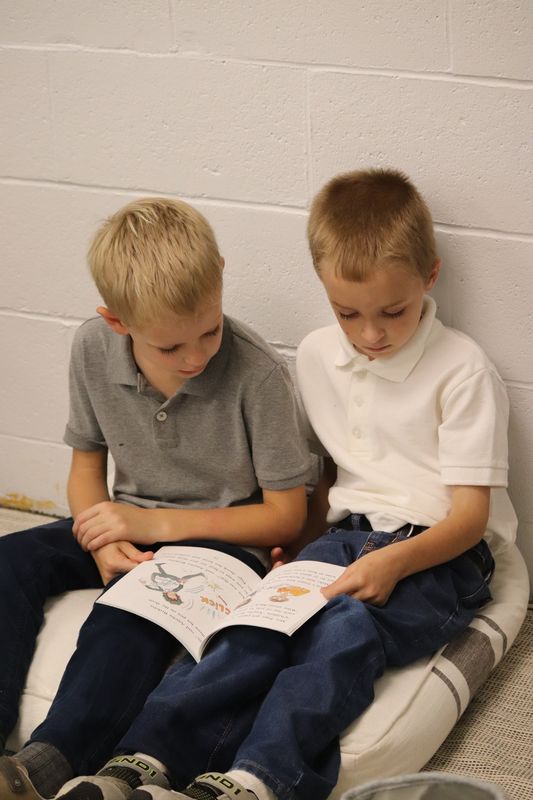
My Brother’s Keeper
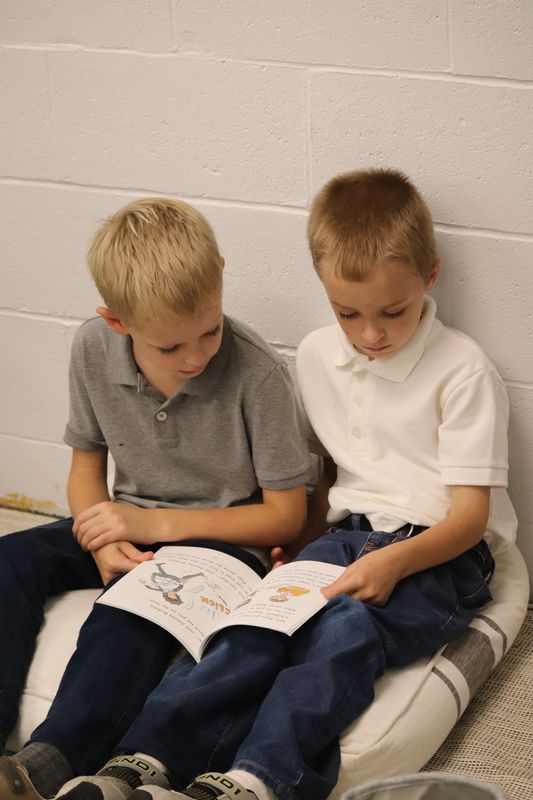
Crash! Oh, dear. Nelson’s box of 64 crayons just spilled again. Five children rush from their seats to help him pick up the crayons. This is in the middle of math class, so I would like for them to leave the clutter for a bit.
These children are very good at helping each other. A water bottle leaks and several hurry to get paper towels and try to dry it up. At the end of the day, someone holds up the leftover coats—whose coat is this? Today four people told me that Jeffrey left his water bottle at school.
Some helping is great, but some helping must be curtailed. Maria tells me that Joel is at Scott’s desk, telling him answers. I see Bryan actually writing answers on his neighbor’s paper. I remind them, “Take care of yourself!”
After listening to a sermon on being my brother’s keeper, I feel a bit convicted that I need to clarify to my students the times when they may help and when they should take care of themselves. A brother’s keeper does not just take care of him/herself. A brother’s keeper helps another to clean up, get their coat, etc. I want my students to be brother’s keepers. I want to be a brother’s keeper.
Sometimes I don’t know my role at school, and think, well, it’s none of my business. I’ll just let it go. Or maybe, I think, they don’t want my help. They don’t really care.
I need to get my focus off myself and think of others. This is hard for first graders, like the time when Michael was getting a long, long drink. I reminded him to think of others. He wiped his mouth and said, "Mostly I just think of myself.” Yes, I guess he probably does. And I guess I’m mostly thinking of myself when I decide not to help someone or feel hurt because my help is not needed.
I think of Romans 12:10 - In the ESV, it is “Love one another with brotherly affection. Outdo one another in showing honor.” As a brother’s keeper, I need to love with brotherly love, have kind affection for others, and honor others. I can let someone else have the award, promotion, honor, or recognition that I would have wanted.
I am impressed with the way my students are happy for a classmate. Chad cheered for Jon when Jon had many correct math facts, and burst out with, “You’re good at math!” Chad could have been jealous or annoyed, but he rejoiced with and cheered for Jon.
How can I help my students to “love one another with brotherly affection” and show honor to each other?
I thank them for helping others and remind those others to say “thank you.” I thank students for caring for others. We pray for each other and our requests. We make birthday cards for each other. I may quietly reward someone for their caring or helpfulness. I may ask a child to be a friend to a lonely child. When something is spilled, I often ask, “Who will be a good friend and help clean up?” We talk about what Jesus would do, and model this. I share scenarios to give ideas for behaviors for “brother’s keepers.” We can study Bible stories to learn about being good friends and helpers. We discuss and try out words the children may use. I may have to explicitly teach some of this. I point out examples of good helpers and brother’s keepers in the home, in classroom life, in stories, and in the Bible. We discuss how to be good winners and how to be good losers. We discuss and practice congratulating others.
One morning our chapel speaker talked about how we love God and love our neighbors as ourselves. He gave examples such as not laughing at a classmate who gives a silly answer. That day, one of the first-graders answered with an obviously wrong answer, and some children laughed. I reminded them of what Nelson said in chapel, so after that every answer, right or wrong, was greeted with “Good try!” and “That’s a nice try.”

Do the Write Thing, Part 2: Integrating Writing into All Subjects
 Photo by Ben Mullins on Unsplash
How much time do your students spend writing in an average week? And I don’t mean writing math equations or copying science terms or completing a penmanship paper. I mean real, original writing. How much time do your students spend actually wrestling with their thoughts and opinions and letting them flow out through their fingers?
If your classroom is anything like mine used to be, the answer is surprisingly little. Oh, I had that one forty-minute writing class every week, and there was that grammar chapter about writing paragraphs, and there were those weeks we spent writing a research paper. But partway through my teaching career, when I stopped to think about how many cumulative hours I spent teaching them stuff in a school year, I realized that the amount of time I spent teaching them how to write well was alarmingly small.
Perhaps your classroom is the same way, which leads me to another question. What would happen if we would spend as much time teaching writing as we did our core subjects? (I’m talking about several hours every single week). How would our graduates be different? Would they think differently? Would they act differently? Would they be more prepared or less prepared to go into the world and serve effectively in Christ’s kingdom?
As you can probably guess, my answer to these questions is instantaneous and unwavering. Yes. Spending more time and energy teaching our students to be good writers would change who they are in beneficial ways. If you question the validity of that last statement, I encourage you to first go read Part One of this series, “Why Writing Matters,” and see why I believe that writing is a key academic and character-building skill we should be developing in our students.
Now, of course, it’s all fine and good to say we need to spend more time writing. But that doesn’t remove the seemingly insurmountable problem before us—time. It’s probably already difficult for you to fit everything your students need to accomplish into your day. How are you supposed to fit more writing in, too?
First, I’d like to point out that we give time to things that matter. Every teacher knows the crunch of time, yet we manage to fit math class into the schedule every day. If we truly value writing, we will do what it takes to fit it into our classroom rhythms. However, sometimes that may take some creativity and flexibility.
One way to spend more time writing is to look for spaces of time you already have, but may not be using well. For example, often a test will take less time to complete than a normal lesson would. Make it a habit to have a writing assignment ready for your students to work on after they have finished their tests.
It’s a great idea to have a file of writing project ideas ready and pull them out in times when you have strange, random spaces in your day. This might be when a lesson unexpectedly takes ten minutes less than you thought it would. Or maybe one student is taking an unusually long time to finish an assignment, and the other students are getting restless. Having a writing assignment ready to pull out in these situations is a great way to use the bits of extra time you do have.
Another way to add more writing to your classroom is to look for places where you can methodically adjust something occasionally. Perhaps every quarter, you could skip one list of spelling and spend that week of spelling classes doing writing. At the end of the year, your students will have practiced only four fewer lists of spelling words. Will that be detrimental? I’d say no. And I’d also say that the writing experience they will have gained in those four weeks will be more beneficial in the long run than those four specific lists of spelling words will be.
Or maybe you could have a tradition in your classroom that when you finish a story for read-aloud, you’ll take the next day’s read-aloud period to do a bit of writing. It could be something related to the book you just read, like a book review or a summary of the story. Or it could simply be a random, fun writing assignment.
You could do the same thing the day after you finish a history unit or every time you complete a math chapter. Now, of course, if you have a very rigid scope and sequence and are required to complete every lesson in your book by the end of the year, this may not be a good fit for you. But if your school isn’t insistent on every lesson in the book being completed before the end of the year, this is a good way to minimally borrow some time from subjects we spend a lot of time on and reallocate it to teaching valuable writing skills.
All the ideas I’ve mentioned so far might seem small enough to be insignificant. However, something is better than nothing when it comes to giving our students opportunities to become proficient writers.
Perhaps the most natural and effective way to get your students writing more is to integrate writing into all subjects. Writing is wonderful for many reasons, but one of them is that it’s so versatile. You can even incorporate writing into math class! (I’ll tell you how below).
The beauty of having students write in every subject is that writing is an amazing way to assess how much they have learned about something. Writing about their learning forces students to really wrestle with the concepts they’ve learned, which often leads to deeper understanding. This benefits our students, because having them apply a concept in various contexts is an essential part of them mastering and retaining what we have taught them. Writing creates another avenue to apply what they have learned.
There are infinite possibilities of how to integrate writing into all subjects. As a teacher, you get to be creative in the ways you apply this. However, to get your mind rolling, I’ve created a list of examples of writing assignments you might give in various subjects. Of course, these likely will not be a perfect fit for your specific age level or content, but I hope that it can give you a practical starting point from which your own ideas can grow. I hope you’ll also see some ways that you could actually use writing in place of traditional worksheets or practice problems as a way to assess how much your students have learned.
Bible
- Write a story in which you put yourself into the Bible story you just learned. Choose a unique perspective to tell the story from.
- For example:
- Noah and the ark from the perspective of Noah’s wife
- The Christmas story from the perspective of the manger
- One of Jesus’s miracles from the perspective of the best friend of the sick person
- Write a personal response to what we learned today about honesty. What are three ways you can apply it to your life?
- Write about the concept learned in today’s Bible class as if you are explaining it to a small child. What questions would the child have? How would you answer those questions?
- For example:
History
- Write a journal entry from the perspective of Balboa on the day he first saw the Pacific Ocean.
- Write a letter from someone living in the Dust Bowl in the 1930s to their family member living in the East. Have them describe at least four of the hardships they were facing.
- Write two stories, one about a boy growing up in the city-state of Sparta and one about a boy growing up in the city-state of Athens. Be sure to contrast the various ways these boys’ growing up years would have been different than each other’s.
- Write a paragraph describing why we should not take sides in wars when we look at history. Give three reasons to support your opinions.
Science
- Take what you’re learning and make a creative writing prompt out of it. Require them to apply specific knowledge you’ve been teaching them. For example:
- When learning about invertebrates: create a new species of invertebrate. Give it a name, and mention what kingdom and phyla it is part of. Use the characteristics of different phyla we have learned about and describe what each characteristic looks like on your new creature.
- When learning about gravity: Write a story in which there is no gravity! In your story, you should include three specific ways you have learned that gravity affects life on earth.
- When learning about cell theory: Write what Robert Hooke’s journal entry might have looked like on the day when he observed cork cells through his microscope.
- When learning about immunity: Write about the body’s defense system when a pathogen invades as if it is an army fighting off an invader. You should use each of the following as a character in your story: B Cells, T Cells, Helper T Cells, Killer T Cells, and Memory Cells. Be sure to have each of these fulfilling a role similar to what they do in real life.
- Write a “how to” from the perspective of a scientist you have learned about. (For example, “How to Believe in a Heliocentric Model” by Galileo or “How to Organize the Periodic Table of the Elements” by Dmitri Mendeleev).
Math
- Write a process analysis about how to do a recently learned math concept. Use words like first, second, next, after that, etc. Make it very detailed and thorough. Someone reading it should be able to use your instructions to complete a problem and get the correct answer.
- Write new lyrics to the tune of a familiar song to help you remember how to do a certain math process.
- Choose a simple poem format, such as haiku, quatrain, joybell, or shaped poem. Write a poem in this format about a recently learned math concept.
Art
- Have a ready-made slideshow with famous works of art. Have them respond to a prompt about the picture, such as:
- What event do you think this picture is showing? Describe it in detail.
- What happening in the artist’s life might have inspired them to paint this picture?
- What emotions does this picture convey? Describe them using lots of similes and metaphors.
- Imagine you are an art critic who has been asked to write a review of this painting. Be honest and specific.
- Write about the creation of your latest art project from the perspective of the piece of paper.
Spelling/Vocab
- Write a story using all of your spelling words.
- Write a story where someone doesn’t understand what one of your vocab words means, and it gets them into a predicament.
- Choose the three trickiest words from your spelling list. Write step-by-step instructions of how to remember to spell them, including hints, tips, or acronyms.
Literature/Reading
- Write a parody of a poem you study. You could have students mimic the rhyme scheme, the number of words in each line, the topic, or even just delete parts of the poem and have them fill in the blanks with their own ideas.
- Stop reading a story several pages before the ending and have the students write a possible ending.
- Compare and contrast two characters. Include details about their physical features, personalities, and roles in the story.
- Did the story end the way you wanted it to? Write a persuasive paragraph saying why or why not.
Finding ways to incorporate more writing into your schedule doesn’t need to be an insurmountable task. There are lots of quick and easy ways to get your students writing just a little bit more. Every additional writing experience you can give them is worthwhile, even if it can’t happen very often. But of course, the more opportunities we can give our students to write, the more skilled they will become at this important, empowering, growth-producing task.
Writing can be so much more than a task reserved for the occasional writing class. By integrating writing into every subject you teach, you will help your students gain valuable writing skills while also having essential learning experiences along the way.
Read Part 1 of this series on writing here: Why Writing Matters

Administrator/Executive Director, Urban Mennonite Ministries
Are you interested in urban ministries?Has God called you to minister to children from urban areas?Would you enjoy working with Christian schools in urban settings?Would you enjoy working with multiple schools and their staff?Urban Mennonite Ministries is currently looking for an Administrator/Executive Director to lead our schools.For more information, please contact Ken Yoder:

A Christmas Countdown: A List of Christmas and Winter Picture Books to Share With Your Students
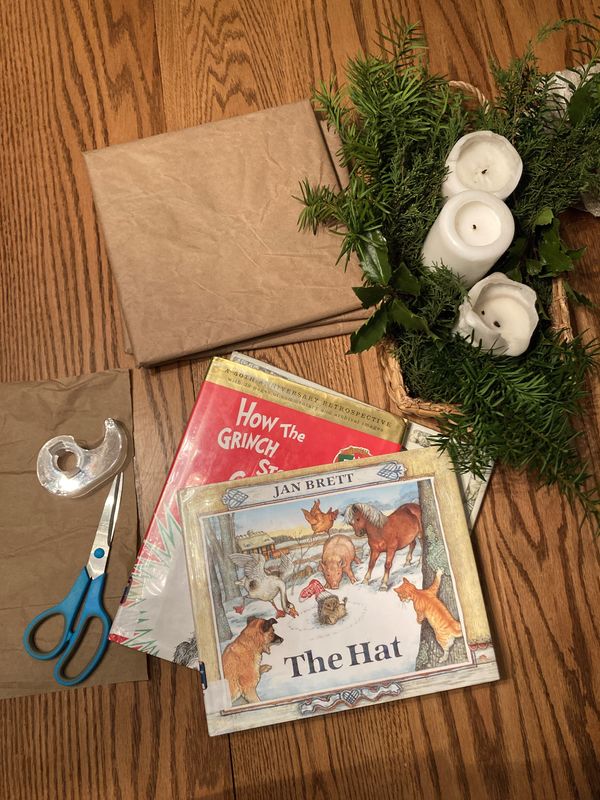
What is a better way to countdown to Christmas vacation as a teacher than with great picture books that focuses on the Christmas and winter season? You can find most of these books in your local public library system. Take the time to reserve several, wrap them with cheap wrapping paper or free brown packing paper, number them, set them up on your windowsill or other prominent location, and allow your students to open one a day.
Picture books focusing on Christmas traditions around the world
Because I live in a city that is 80% Hispanic, I am very intentional to cultivate as much Hispanic literature as possible so you will see this list heavily slanted toward Hispanic traditions.
- The Miracle on 133rd Street by Sonia Manzano
- Too Many Tamales by Gary Soto
- Christmas Tapestry by Patricia Polacco
Winter picture books focusing on the change in nature
There is nothing quite like a book with vibrant illustrations to point out to us what is happening in the outside world as we sit cozily indoors. Draw your students’ attention to nature with these quick reads.
- First Snow in the Woods: A Photographic Fantasy by Carl R. Sams and Jean Stoick
- Stranger in the Woods: A Photographic Fantasy by Carl R. Sams and Jean Stoick
- The Shortest Day by Susan Cooper
- Over and Under the Snow by Kate Messner
Historical: picture books focusing on Christmases in the past
Historical fiction is one of my favorite genres in adult literature, and I find I enjoy the same within a picture book. What better way to learn about World War II through a picture book about a little Jewish boy who had to escape to New York City right over Christmas time?
- Oskar and the Eight Blessings by Tanya and Richard Simon
- An Orange for Frankie by Patricia Polacco
Picture books with a shortened version of a classic folk story
If you have time to read the full versions of these classic stories to your students, then please choose those. But to save time, these picture books with shortened versions are perfect to enjoy in a five-minute reading session in your day.
- A Christmas Carol (Charles Dickens) illustrated by Brett Helquist
- The Little Match Girl (Hans Christian Anderson) illustrated by Rachel Isadora
- Papa Panov’s Special Day (Leo Tolstoy) adapted by Mig Holder
Picture books focusing on Christmas values and legends
The Christmas tree, Santa Claus, stringing of lights, poinsettias, the candy cane, hanging stockings, giving gifts—Christmas in North America is full of so many traditions and legends. And it is a challenge for parents, teachers, and students alike to actually stop and consider why we are doing what we are doing. Whether or not your students participate in these traditions, they will see it all around them over the next several weeks. I find that picture books are some of the best ways to open the conversations.
While these books may not be completely factual (I believe Saint Nicholas gave the nine coins when he was just a boy, long before he was actually bishop), they do help children to understand that the physical aspects of a North American Christmas come from historic traditions, legends, and beliefs.
- How the Grinch Stole Christmas! by Dr. Seuss
- The Biggest Little Boy by Poppy Harlow
- The Christmas Miracle of Jonathan Toomey by Susan Wojciechowski
- Saint Nicholas: The Real Story of the Christmas Legend by Julie Stiegemeyer
- The Legend of the Candy Cane by Lori Walburg
- The Legend of the Poinsettia by Tomie dePaola
- The Legend of the Christmas Stocking by James Griffin
Picture books focusing on Christ and the nativity
Most of our students grow up within Christian homes who make it a point to celebrate the real reason of Christmas—Jesus and His birth. They know the nativity story inside and out, but these picture books add a fictional twist to the story and may help them to think in a new way of the wonder of the coming of Christ.
- Who Is Coming to Our House? by Joseph Slate
- Silent Night by Lara Hawthorne
- The Little Drummer Boy by Ezra Jack Keats
- On the First Christmas Day by John M. Chilson
Is there a favorite Christmas picture book that you like to enjoy each season? Please add it to the comment section so we can enjoy the book, too!

Disorder or Discipline
Is my classroom disordered or disciplined? Children naturally crave structure and discipline, yet something keeps them testing the limits and pushing against the guidelines. My reaction to this will drastically effect the atmosphere of my classroom and ultimately will affect the destiny of each soul involved. Including my own.
- 261Page 55