
All Content
Shifting the Focus Away from Grades to Learning
Imagine a world where the energy of our students went into learning rather than just getting good grades. Our school policies and our teaching and grading classroom practices can help to keep the focus on learning or bring the focus back to learning if our students have become hyper-focused on grades. In this breakout, Sharon discusses what grades are not and what they should be, and who benefits from grades. She also evaluates classroom practices to determine whether they encourage a love of good grades or a love of learning. This workshop is practical for any classroom teacher from lower elementary to high school.
Practice and Review
How can you provide effective practice activities that enable your students to retain what you are teaching? Speaking from her thirty-five years of experience teaching first grade, Arlene addresses practice and review across the subjects, including reading, phonics, spelling, math, handwriting, Bible, and Bible memory. You will hear ideas you can implement in their classroom right away.
Integrating Songs into the Elementary Classroom
Why sing at times other than devotions or music class? Discover songs that can build enjoyment of singing and enhance other content areas. This eclectic song collection can be useful to general classroom teachers looking for a bit of action, reflection, or humor as well as music teachers seeking to build cross-curricular connections.
Educating Gifted Learners
Who are gifted students and how can we best engage them in learning? Explore the answers to these questions and discover how to incorporate effective teaching strategies that will challenge academically advanced students. From the perspective of a middle grades teacher with 11 years of experience and with specific training in gifted education.
Creating Confident Writers
Wouldn't it be lovely if you could assign a writing project to your students, and every pencil would instantly fly across the page with imaginative, well-crafted writing? Instead, the reality in most classrooms is writing where the creativity falls flat, the words meander aimlessly, or the terrifying blank page prevents anything from being written at all. This session addresses those issues by providing practical things teachers can do to help students write with confidence. Geared towards middle grade teachers, particularly in the realm of creative writing.

Education and Discipleship among Anabaptist Communities in Kenya
Well, thank you for being willing to join us here for this conversation. I'd like to give you an opportunity first to introduce yourself. Tell us who you are and what brings you here.
I am Amata Thomas. I am from the country that is called Kenya. I am presently in the United States, having been doing a tour presentation for the Open Hands.
I'm glad you're able to be here. Can you talk about the Anabaptist churches there in Kenya and what your role is in those churches?
Yeah, we are having the Anabaptist churches and in particular the ones that I belong to are under the Beachy Amish Mennonite Ministries. They were started way back in 1991 as a response to the need that was arising from the Lamp and Light courses. The Lamp and Light Bible study correspondence courses were being sent from the US to the other side, directly to the students. Then it was, "How do we reduce the distance? How do we reduce the time? How do we make it easier?" Many were already asking, "We are finding these teachings are valuable, but where are the churches that are teaching this?"
So the AMA was contacted by Lamp and Light, and AMA sent out two brothers with their families to the East African side. They arrived in 1991. They were carrying out the Lamp and Light work, and soon out of that, the first church was formed.
Initially, there were up to now three churches. And down the line today, we are having 17 churches across the country and potential areas for more outreach. These churches were started by and led by American missionaries. But presently, we have gone to the level of having 28 native pastors ordained and serving in the various churches.
At the moment, I belong to one of those churches. The church where I go to was the third one to have been started on the Kenyan side. Its name is Rabuor Christian Believers Fellowship. Right in there, I serve as a pastor, and I have also the calling of a bishop for the church where I am and also for another congregation.
That is more of who I am, who we are, and what I do.
Thank you. Most of our audience is made up of teachers and administrators in schools here in the United States. Can you tell us a little bit about how schools are run in Kenya? Are you able to have private schools? Is homeschooling allowed? Can you just tell us a bit about the structure of school there?
Thanks for that, yes. I can tell you a lot of the schools, probably one out of 40 schools, is what would be considered a private school in the Kenyan side. Massively, there are many public schools against private schools. Then for the private schools, we are having those that would be called Christian schools and a private category. And then we are having those that would be called private business schools. They are there for profit. They are not there for the Christian mission work. That's a big difference. So even out of the one out of 40 schools, again, there would be distinct category. If we had to line them up out of a big number, you will realize we may be moving to one out of a hundred private schools can be considered as a Christian school with Christian emphasis. We are having home schooling, but that number is so thin it might be up to maybe say 20,000 students, one is being homeschooled. That is a big number. Being schooled in a pool or an institution versus the thin number that is being schooled at home. There is again a difference when you're talking of private school, public school, and home school. Most of these all do rely on the government's controlled curriculum, which is developed by Kenya Institute of Curriculum Development. Our education system tends to emphasize on achievement through the exams. There is an examination body, and when you go through with the exams, they are the ones that certify you. The examination body is called Kenya National Examination Council. This content is having a secular component, which is a big disadvantage. There are a few homeschooling grounds and Christian schools that are using ACE, but that is the most that I've known. In our church, we have two schools, one big and slightly better. Another one just started. Unfortunately, we are still under the structure of the government-controlled curriculum because that is what people identify with, and as at the moment, that is what we are regulated to implement. We are trying all that we can to find some other means of implementing a Christ-centered curriculum. We would want all ideas. We would want people rallying around us and cheering us on as we navigate through the maze of making this come to be a reality. We know it's possible.
If I understand it correctly, you're allowed to have a private school, but the students in that private school have to pass the government exams. In order to pass those government exams, they have to have taken the government curriculum. Otherwise they won't pass.
That's it.
Okay.
That's what's there. Our desire is to try to present some of the Christian curriculum that we have access to our government's regulator. It can't be implemented unless it is certified by the government's regulatory body.
So just having students passing isn't enough. The curriculum itself has to be certified that a student who goes through that curriculum would pass. You're not allowed to try it first and prove.
You're not allowed to try it first and prove it. The government must be behind the scenes. I see. Maybe through another testing body or partisan body to have it certified that this can be done in our land. And the other hidden side is we're in a culture where people value employment. Self-employment is right there, yes, but the culture that thrives over there is many are going to school in order that they may find employment, not that they may work. That also determines a lot because most of the employers only identify with a government-certified curriculum. So if you don't get that certificate, you're unlikely to get a good job. That is the misfortune. On my side, I'm glad I normally say I'm a little keen on the papers. I'm more keen on the character.
Yeah. You said your church has two schools that your church is in charge of, or that students from your church go to those two schools?The two schools—it is our church that is in charge of those two schools. The two schools, one is having up to grade eight, and one is just starting at the preschool level. It is the church that manages these schools. And we are glad of the direction that the Lord is leading us through. We may desire quick results, but we know, for God, his timing is more crucial and important.
You said you desire to teach character more than just passing exams. Are there ways that your schools are working toward that, or are they too restricted to be able to do that?
At the school level, we are allowed to mold the students as we deem fit, while also competing at the same time with the time available to work on the content that needs to be delivered, and it is this content that will be examined. Need I say at this moment that the examination tends to be central. It is one exam that is set, and all students across all schools are sitting for that exam at the right time. It is tested at grade eight. That becomes a little competitive in terms of time and concentration on the character. But in our schools, our emphasis is on molding the entire person, not just the cognitive side of the person.
I've looked at those exams. They're no slouch. You have to work hard to pass those. Are there other ways that your church is trying to disciple young people? In American churches, oftentimes we see the school as an arm of the church. It sounds like you're doing that to some extent as well. Are there other ways, though, that you're working to disciple your young people?
Yes, directly through the church, through the programs that are available at the church level. Besides the school and in the schools are only in the settings of two churches that are in the proximity of those two schools.
So other 15 churches are left hanging and then the outreach grounds are also left hanging. But now in these two churches where the schools are available, I know we are concentrating on the character and discipling the students that are in those settings in terms of their character.
However, we as a church overall, for example, have a... We call it Christian Believers Youth Conference, where we draw the youth from our churches and call them out to a particular institution that is owned by the church. We call it Lamp and Light Center. Now, we call them out for a period of about 13 days in the year where we are able to have a time out with the youths who attend these to build their man to the glory of God. We are doing that.
The other forum wherein we are helping our youths are every three churches come together, and every one of these three churches send in the youths into one of the churches for a period of about four hours, where the youth on that day (once in a year again) they get opportunity to be taught on what to practice for a long time. The 17 churches are on two fronts.
The two fronts are Nakuru side, which is more to the east, and Kisumu side, which is more to the west. The two sides, again, have time for the youth to have another time out as youths themselves. When you think of those numbers, we have the common conference. Then we have a small zone opportunity.
Then we are having a large zone or an area activity besides the regular Sunday schools. Where there is a time slotted for the youth to be taught. So yes, we are doing it, but we're not doing it to the level that we would have desired.
Thoughts are, if we were able to interact with the public schools where our children go to and attend, there is a slot that is in those schools on Fridays. It's just like the chapel time in the American Christian schools. The chapel time, they have that time. And I know when we go in and ask for an opportunity to teach in some of these places, we can be allowed to go in and teach the larger mass rather than just the smaller number of our own. That is something that we are seeking to explore if we would be able to really do it.
Sounds like a good opportunity to spread the teaching beyond just your own, but also to let them hear your own teaching, let your students hear your teaching in the context of the school where they're mostly getting just secular education.
Exactly. And of recent, just out of, again, the ways of the Lord, this is coming from my own side, dedicating a portion of my home compound and my home time on Saturdays. If it were possible, that children from the neighborhood coming in, if it were possible to set up a playground, a playground where they think it's coming into play. But I was thinking if it can be like say one hour and in this one hour because I'm allowed to, (we don't have limitations in terms of reaching out even to the children of others). This Saturday time, the one hour, what if I used 30 minutes to teach them and they had 30 minutes to play, but I'm teaching them, building the inner man and building them in the word of God, then if you are responding, you get the opportunity to jump into the playground. I know the playground is not yet built, but that is something I'm trusting God for. He will provide in his own way. It's just a thought.
I saw, out of an exposure by the Lord, that there are children in our neighborhood. What can we do about these children in the neighborhood? That may be a platform, even to build children and raise them into the membership of the Church. If they don't come, still we would have reached out to them.
Sounds like another really good idea. You have lots of ideas.
I pray they can come to pass and that God is able to provide. Some of those things may be expensive to implement, but I'm glad the land, the land, the land that would be needed is already available. He has given me the land. If he gave the land, can he be defeated to provide a playground? I trust him. He has a way out. Yes.
So coming back to schools, I'm curious how you think American Christian schools ought to be more like Kenyan schools. What can we learn from you?
I am suspicious that the social fabric in the American schools is not as strongly knit as the social fabric on the Kenyan side. Children having what I'm together well under supervision, children being taught and allowed to relate with other children adequately under, well, supervision.
I see the Kenyan side giving the students more time with each other than the American side. You know, I've just observed the American side is likely more obsessed about timeliness, and it is timeliness even onto the negative side.
You can think of having been around the Mennonite churches and doing presentations in the Mennonite churches, and I am like it is five minutes to time; nobody has arrived.
Initially I was like, "Where these people, are they going to come then?"
I'm doing something at the front. My back is turned to the door, and in less than five minutes everyone, when I turn around, they're seated and they're waiting.
I'm like, "What happened?"
Then I'm like, "These American Mennonites, they never want to be late. They are so much in time. But again, they never want to be early.”
I wish there could be a correction on that. That there can be more time to visit. There can be more time to socialize, so that we teach our children other people also have value. And in that way, somehow prepare them for a ministry away from their homes when they're able to connect and relate with the other people.
I am glad the missionary children that come over onto the Kenyan side, they are able to learn to connect with the other children. And sometimes I suspect they're enjoying it when they hit the ground and have access to these other children. They're enjoying it. And that is how I even developed the idea of I saw children being interested more in our compound when missionary children came visiting.
I looked at a picture. Then I forgot my own children and the missionary children in the picture.
The Lord showed me, "Are you seeing this?"
I was like, "What are you showing me really?"
"Are you seeing the other children around? They are more than your children and the missionary's children. What are you doing about them?"
Allowing children to connect can even open the eyes of their parents, if you know what I mean. Can we allow relationships to thrive right from childhood? I think that's going to be a plus.
The other thing is, and I don't know how to say this, we are using the school uniform on our side.
The American side, I never know if this child is going to school or if this child is going to a Walmart. That difference is not there. If a child is lost, I may not be sure if this child was lost from school or this child was lost from [what are those?] Dollar-whatever. Dollar General! I'm not able to quickly position and be able to identify. School uniforms on our side, I know, provides an identity with the setting. That one, not necessarily a must, but it's something to think about. It's something that I see as a gap on this side, but I talk of the gap as a difference rather than a major thing.
I don't know the story about no school uniforms in the US. There must be some reasons. The Americans tend to be different, even in accent.
Yeah. I heard you saying a little more flexibility on time and maybe being willing to all look the same.
I think our reason for not using uniforms is that students like to be individuals, not so much part of the community.
I think that, or not... They don't want to be identified first by where they're going to school. They want to be identified first as an individual.
And you know the misfortune with that. Sometimes that can bring in competition, where I dress better than they dress. But when it is uniform, it's helping raise them from the feelings of unequal with the others. I think that's the thing that I see in that in our schools. If it was just allowed to be with home clothes, there would be some level of competition.
The disadvantage with that would be things like jealousy. We may begin to be cultivating jealousy without knowing we are cultivating jealousy. We may be cultivating pride without knowing we are cultivating pride. Yeah.
Well, thank you so much, Amata, for coming and talking with us about schools and church there in Kenya. It sounds like there are a lot of really exciting opportunities going on there. I pray that God will grant you success in the various ventures. I hope, too, that we can learn from what you're doing and get a vision for growing our schools as well. So thank you for coming and joining us.

Safety without Safetyism

Note: Understandings of and expectations for student safety will vary by community. Some of the activities and policies recommended in this post may not be advisable in your school setting.
In the last few decades, school safety has become a huge talking point—and with good reason. News of school shootings and other violence in schools no longer surprises us. In the school where I teach, we have taken various steps in recent years to make our school more secure, and school safety has been a subject of concern for some of the parents. Though I long for the freer, more innocent days of bygone years, I do see the prudence in various safety measures that would scarcely even have entered the minds of parents or teachers fifty years ago. At the same time, I believe it is vital to the well-being of our children that we avoid an obsession with safety on every front, and I believe it is possible to have our schools and communities become too safe.
In the book The Coddling of the American Mind*, authors Greg Lukianoff and Jonathan Haidt provide a thoughtful analysis of the way a hyper-focus on safety—both physical and emotional—has been detrimental to an entire generation of American young people. They have coined the term “safetyism” for what they describe as the cult of safety, which is “an obsession with eliminating threats (both real and imagined) to the point at which people become unwilling to make reasonable trade-offs demanded by other practical and moral concerns.”
Citing various studies, the authors describe how the rise in allergies in developed countries has happened because children are no longer exposed to a wide range of bacteria and pathogens, so their immune systems fail to develop properly. This same idea carries over into many other aspects of life: Trying too hard to keep children safe harms them in the long run. Strong immune systems are developed by exposure to germs. Healthy bones and muscles are strengthened by strain. Mental and emotional health develop through challenges.
For children to mature properly into confident adults, they need a healthy amount of risk and adversity**. Lukianoff and Haidt use the term “antifragile” to describe this. Fragile things must be handled with care. Resilient things do not break, but they are not necessarily improved by the wear. “Antifragility” is one step above resilience because things in this category are strengthened and enhanced by risks and stressors.
In the chapter “Wiser Kids,” the authors outline suggestions for raising children who are not only resilient but antifragile. Though not written from a Christian perspective, many of the ideas overlap with biblical truth and what might be called old-fashioned common sense. One section written especially for schools suggests more recess with less supervision. Also, the need to teach healthy debate and conflict resolution is emphasized as the antidote to emotional fragility.
How can we keep our children reasonably safe without creating a climate of safetyism? In practical terms, how should this play out in our schools?
In our small Christian schools, we do not face the extreme liability that teachers in public schools have. This is not to say that we should be reckless, of course. But we do need to handle carefully both the freedom and the responsibility that we possess. The knee-jerk reaction to an injury or some other breach of safety at school can be to establish more rules in an effort to keep the same thing from happening again. But I think we need to be cautious about this. As the authors of The Coddling of the American Mind tell us, the epitome of safetyism is this: “If we can keep one child from getting hurt, we should deprive all children of slightly risky play.” But what if most children will actually benefit from those risks?
In my school, we have a rather loosely supervised lunch period. The students are allowed to eat their lunches in a variety of places, and children in all grades freely roam the playground, hallways, and gym. We teachers mingle with them, of course, but we cannot be everywhere. An incident that occurred a few years ago led us to question this practice. Yet we concluded that the positive school culture fostered in part by this unstructured interaction among the students across grade levels was worth the possible risks it entails.
When I see my students climbing on top of the swing set or climbing the tall chain-link fence at the edge of the playground, I do not tell them to come down. Eight-year-olds are old enough to do that sort of thing. I also try to resist the temptation to micromanage my students, particularly during recess. I am not quick to intervene when I see a scuffle or argument, because children need to learn how to manage conflict on their own. We may talk about it later, back in the classroom. Good conflict resolution should be part of the everyday things we teach, and we can talk through scenarios and help students think about what they could do in a given situation. It is also important to teach children to know when they should get the help of an adult and when they should try to work things out on their own.
Children are precious, and we want them to be safe and secure in every way possible. But when we Christians bow to the idol of safetyism, we are ultimately trying to seize control that should be left in God’s hands. The greatest safety features our schools can have are prayer and trust in God’s protection.
*Though I have drawn heavily from the book for this post, my aim is not necessarily to provide an in-depth summary or book review. I am only highlighting the parts that are most relevant to us as schoolteachers.
**This refers, of course, to ordinary childhood adversity. The book authors acknowledge that there are limits to this. Major trauma, abuse, or neglect are a different story.
Photo by Jessica Tan on Unsplash.

Glow and Grow

Glow—something you are doing very well; encouragement to continue; area of excellence
Grow – something we need to work on; area for growth
I have a goal (not yet accomplished) to send home “Glow and Grow” reports with student report cards. I would like to use these accounts to share with parents an area where the child is doing very well and an area where the child can grow.
It would also be a good practice for the students to evaluate themselves, considering: “What am I doing well? What do I need to do better?” They could write or draw their thoughts and save them for later review. Perhaps we could do this each quarter and then check back on our progress. It would be good to acknowledge growth and recognize that progress. We should also observe the "Glow" to see if that continues and find new areas of “Glow and Grow.” The students would enjoy using glow sticks to celebrate our "glows".
The record sheet (see photo above for design/layout) could be used for my reports to parents and for the students to complete for their own evaluations. I should complete a “Glow and Grow” report for myself as the teacher when the students are doing their evaluations. Teachers who feel brave enough could have students complete the "Glow and Grow" for their teaching!
This “Glow and Grow” idea does not originate with me. I first heard it from my administrator, and we teachers used it with ourselves in staff meetings. This was a good exercise for us teachers to think of areas in which we were feeling successful and then areas where we need to grow.

Hands-On Science Tales: Watching Metamorphosis

The search began in mid-August. First, I scoured the fencerows and field edges for milkweed plants. The farmer had cleaned up and this year the plants were difficult to find in the regular places. The one good stand of milkweed plants was covered with a variety of milkweed aphids, milkweed bugs, and milkweed tussock moth caterpillars but no monarch caterpillars or eggs. Finally, a close scrutiny of the young milkweed growing at the edge of the alfalfa field yielded several eggs. These smaller-than-a-pinhead, white beads attached to the leaves hatched out into tiny ant-sized caterpillars and began chewing miniscule holes into the leaves, leaving black dots of frass behind.
A few days later an excited call from my niece sent me to collect the monarch caterpillars she had found. She and her brother also contributed three tiny swallowtail caterpillars they’d found on their mom’s parsley plants in the garden. Now our classroom insect zoo was alive and growing.
Over the next two weeks the caterpillars munched away on leaves and grew and grew and grew. As they grew, they molted several times. The swallowtail caterpillars changed their skin designs and color each time they shed their skin. The monarchs grew fatter and longer.
Then came the morning we found several monarch caterpillars hanging in a J from the top of their cage. We watched all day but by dismissal they were still caterpillars, though now quite dull in color and rather swollen and ugly looking. Hopefully by morning we would have a chrysalis or three.
Upon arrival the next day, the students found several green upside-down bells hanging from the cage ceiling. Later that day class time was interrupted by “Everybody come quick! Look at what is happening to this caterpillar!” One of the swallowtail caterpillars was shedding its skin for the last time. The students watched, enthralled as it wiggled and squirmed and pushed the splitting skin off. As the skin fell to the ground a green blobby worm was left hanging by a silken sling, attached at the foot end to a stick. A few minutes later it had fully changed into a gray-brown chrysalis.
Two weeks went by, but no butterflies emerged. The monarch chrysalises were turning darker, and we hoped we’d see a butterfly before Friday dismissal, but dismissal time came and no butterfly appeared. I placed the chrysalises outside so the butterflies could fly away, if they hatched over the weekend. Monday morning found one empty chrysalis and one butterfly hanging onto its chrysalis, waiting for the sun to warm its wings so it could fly off. There was also a newly hatched butterfly in the classroom.
As each child came in the door, exclamations ensued. By break time the butterflies were ready to release. But one special tradition yet remained. The first graders sat in a row on the grass and the butterfly was carefully passed from one hand to the next. Giggles and squeals erupted as the butterfly crawled from finger to finger and the feet tickled each hand. The butterfly was then transferred to a nearby bush to bask in the sun and eventually it fluttered off into the blue sky.
A few days later one of the chrysalides was a dark black upon my arrival. We kept a careful eye on it throughout the morning and reading class was again interrupted while we excitedly watched the chrysalis shell split and the butterfly popped out. “Ooh, that’s disgusting,” was more than one child’s opinion upon seeing the wrinkled, crumpled wings of a newly emerged butterfly. But only a few minutes later the beautiful monarch was stretching its wings, and its swollen body was normal size.
We have continued to be amazed by newly emerged butterflies though we’ve not witnessed the actual event since. We’ve had two swallowtails to release but most of them are the last generation of the season and will hibernate through the winter to emerge in the spring.
Little creatures and young students go together. Each year the caterpillars I supply for the classroom are soon supplemented with more jars and containers as the students go home and search for creatures of their own. While many of those often don’t survive due to lack of proper food and care, it sparks interest and wonder in the marvelous creations of God.
Photo by Bankim Desai on Unsplash.

Handwriting: A Window to Our Students' Brains

Handwriting gives us a view into a student’s brain. I have found that ninety-seven percent of the time I can view a student’s handwriting, and almost immediately make a very close estimation of their grade—and I’m usually correct. Viewing a student’s handwriting gives us teachers insight into several aspects of how students’ brains function and the process by which the information transfers from their brains, through their hands, and onto the paper. If the writing is fast and sloppy, the students usually haven’t taken much time to process their thoughts or to write carefully, and it shows visually as well as in their written content.
Carefulness or Carelessness?
I have consistently found that my “98s” (my term for those careful, hard-working students who almost always make A’s—not necessarily because they are brilliant, but because they are careful and tedious) have neat writing. I have also found that the students who make Cs and Ds almost always have sloppy writing.
There are several very helpful suggestions we teachers can glean from these observations.
First and second grade teachers: please emphasize handwriting. Teach it, preach it, encourage it, and demand it. If you cement into students’ brains the importance of writing slowly and carefully when they are young and very impressionable, all the teachers who will have your students in the future will thank you—and the students should as well, because you will be instilling a process that will serve them well the rest of their lives. If they approach writing, and thus their assignments and school in general, with a slow and careful approach, they tend to have more of an “achiever” mentality. It’s instilling an attitude of “I’m going to do this purposefully and carefully,” versus a fast and sloppy “I just want to get this done as fast as possible” attitude—which is the default course for many students.
I remember at the very beginning struggling with my own imperfect writing until my kindergarten or first grade teacher gently placed her hand over mine and showed me how to press down harder and to grasp the pencil more firmly, guiding my hand and helping me write the letters correctly. It worked, and from then on, I knew how it was supposed to feel. I still do this for my own students, and just recently one of our kindergarten students was struggling to write the letter “H.” His teacher who is left-handed wisely called me over to help him with this exact technique because I am right-handed like he is. (Note: This should be done very appropriately and carefully, with only hands touching.) If a student does write sloppily, erase it, and have them do it again. With my younger students, I will often have them tell me the answer for the first written word on the page, then I will write it on the blank for them, modeling neat, careful, slow writing. I will have them write the next word on their own, erasing any sloppiness, and encouraging them to stay in the lines before sending them back to their desks to finish the rest on their own. This way they have begun the page neatly—setting a precedent for that assignment—and will hopefully finish it that way. If needed, I do this daily all year long with my first graders to instill the process.
Teachers from third grade up: Make neat handwriting a priority. Remind your students often (I sometimes do this hourly) to slow down and write neatly. When students slow down with their physical writing, it also often helps them to process their thoughts in a more deliberate manner, causing their work to not only look neater, but to be of better quality because of the thought processes used.
How Do We Make It a Priority?
I have found a few ways that I believe have helped students in grades 3-12 to slow down and try to have neater writing.
- Model neat writing yourself. Whether it’s diagramming sentences or writing a math problem on the board, the grade you write on their papers, or anything that students see you write, make it neat and model good penmanship for them. Draw attention to it, too. Tell them, “See how neatly I’m writing? I expect you to write like this too.”
- Teach a short “review” lesson as the first academic assignment for the day every day. This helps them remember first thing in the morning that neat handwriting is a priority. I have done this in two ways.
- The first is to go through the alphabet A-Z with both the capital and lowercase letter, reviewing one letter each day. I have students write these in their journals as it only takes the space of a few lines. I have students put down their pens while I model writing the letter on the board slowly and carefully, emphasizing the “art” aspects of cursive writing. Then I will have students write three to five of that letter in their journals, and then I dictate a few short words that begin with that letter and have both capital and lower case letters (e.g., A - Adam, Aunt Amanda; B - Bob the Barber). The dictation adds a fun aspect and adds yet another skill: listening and writing, rather than the regular reading and then writing.
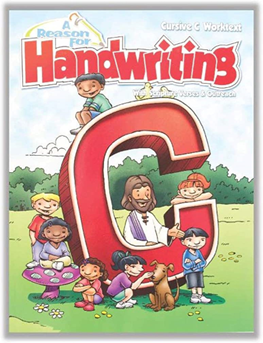
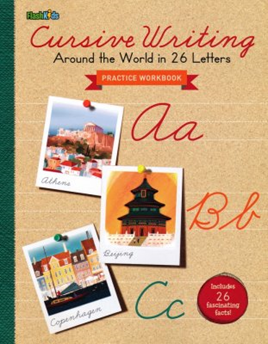
- The second method I have used is to have students complete one-half of a page from a handwriting curriculum. I choose ones that have fonts that are not too small or squished together, and ones that have assignments that are not too tedious. My favorites are listed below. I tear out the pages so that they lay flat, and always encourage students to have two to three sheets of scrap paper for “padding” underneath. I can always tell when my students have not used padding, because their writing appears extra wobbly. I always have a stack of scrap paper handy in my room, because once students get used to it, they ask for it often.
- Stress using the lines. That’s half the battle. If the letters touch the lines, using them as a guide, the students are thinking about what they are doing in a very tangible concrete way, and it really cleans up their writing. Touching the lines is also something easy to remember and achieve.
- Give verbal reminders every time students are beginning assignments and tests. I usually say something like, “Write neatly in cursive! It’s art. Make it smooth and spacious. Have mercy on my eyeballs.” Note: This is important in math as well when writing and lining up numbers—especially for algebra.
- Demand excellence. Especially on handwriting assignments, I circle any words which are too sloppy and make students rewrite them neatly. If I cannot read the words on other assignments, I just mark them wrong.
- Set your expectations high. I have found that if I remind and challenge students consistently, and give short review lessons daily, that the handwriting really does improve. It is an amazing thing to see the transformation.
- Praise them! If they’ve worked hard and improved their writing, tell them out loud or write a note on their papers letting them know that you’ve noticed. They will appreciate it and hopefully continue to try harder.
Other Handwriting Notes
Let students use their favorite pens or pencils. I allow my students to use whatever they prefer—pens, pencils, gel pens, colored markers—as long as the writing is neat, and the color is dark enough that I can read it. This adds to the “art” aspect of writing, I believe. Bic Cristal pens have been my favorites since I was in high school because they write smoothly and easily. Every year I give my students one of these pens to encourage them to find pens which they enjoy using. The only writing that I think can be allowed to be sloppy is when students have some great ideas and quickly jot down a fast little outline to get those thoughts onto the paper. But, as they write their essay, I expect legible, neat handwriting.
What About Computers?
Call me old school, but I’ve seen far too many instances of computers in the classroom being a distraction, a crutch, or a method for plagiarizing for me to believe that they need to be easily accessible for most real K-12th grade learning to take place. This is just my opinion, but I have seen greatly improved results when students use pen and paper for almost everything in school except for writing research paper rough drafts, which is about the only time I allow my students to use them during class. After a hand-written outline is written for other assignments, I don’t mind if students use computers to type their papers, but I very rarely allow laptops to be open on their desks while I’m teaching.
A Startling Perspective
In most of the schools in Germany, students after the third grade are required to use fountain pens—the kind you have to dip the tip in an inkwell or use ink cartridges—to write all of their assignments. Why? Because it makes them think more about what they are doing. The process of writing with these kinds of pens is much more conducive to students writing carefully and purposefully; and thus, results in better handwriting and thought processes. Even the kindergarteners usually learn to write using ballpoint pens, advancing to fountain pens around fourth grade when they are old enough to not make a mess with them. Some schools even have students complete writing booklets and award “fountain pen awards” when they have achieved a certain level of neatness in their writing.
If we as teachers emphasize neat handwriting, remind students about it, give them tangible ways to practice it, and expect them to fix any sloppy writing, we can indeed achieve a much higher standard of writing in our classrooms.
My favorite writing curricula:


The Necessity (and Fun) of Grammar, Part 1

Jana slides the rectangular word cards around on the floor, angling some and placing others in perpendicular positions. “I finished diagramming the sentence,” she said with satisfaction. Tim cuts his paper sentence in chunks with a clause in each section. Both are learning grammar skills that will transfer into their writing and reading.
When I first began teaching high school English twenty-eight years ago, much of the focus was on grammar. We taught parts of speech and sentence patterns, how to diagram sentences and identify clauses. But in the past few years, the trend has turned more to writing. Students are taught grammar, punctuation, and sentence mechanics only in the context of learning the writing process. As a result, I get students in my college classes who don’t know what an adjective is or don’t know how to write a complete sentence. Thus, I still see the necessity of teaching grammar in all English settings.
Dole, et. al (2021) interviewed 196 upper elementary and middle school teachers to see their views on teaching grammar. The strong majority said that although they thought students needed to know standard grammar to be able to communicate effectively, they did not like teaching grammar because it was “tedious.” Therefore, these teachers preferred to stick with product-based writing, where the students saw quick outcomes for their work. However, the study also mentioned that student writing performance was not better in the early 2000s than it was in the 1970s, so perhaps the recent trend minimizing the importance of grammar has not really improved writing.
And these arguments against grammar teaching can be true. Grammar can be tedious: there are so many unconscious grammar rules that even formulating a two-word sentence such as “He smiles” can take up to seven grammar applications.* It can also take time to see the application of grammar in the writing and communicating process, especially since many grammar skills are simply absorbed by the native speakers of a language.
But there are several strong, specific reasons to continue teaching grammar.
- Using correct grammar improves both verbal and written communication. Zhang (2009) said, “Communicative competence involves knowing how to use the grammar and vocabulary of the language to achieve communicative goals, and knowing how to do this in a socially appropriate way.” Certainly, teaching clear communication is a major goal in education: students need to be able to express their thoughts coherently to be successful adults. Relationships, occupations, sharing one’s beliefs–these all depend on clear communication. But if the speaker or writer uses incorrect grammar or punctuation, that communication is impeded, as shown by the difference in meaning between “twenty five-dollar bills” ($100) or “twenty-five dollar bills” ($25).
- Understanding the grammar of one’s first language is necessary in learning a second language (Dole 2021). In addition, Gülden (2021) found that “in terms of language teaching, individuals’ ability to master their native language and grammar rules directly affects foreign language acquisition processes.” In an increasingly global society, many people want to know a second or even third language; applying grammar understanding to the second greatly facilitates language acquisition. For the Christian, this grammar understanding is especially applicable for a missionary who needs to learn the language of the culture where he is living or works to translate the Bible into a different language.
- Identifying different aspects of a sentence’s grammar improves a student’s analytical and organizational skills. In diagramming a sentence, for example, the student has to break the sentence into subject and predicate first, and then determine the phrasing and modification of each word. In creating a sentence with a dependent clause, the student must organize the sentence in the proper order of subordination. Being able to analyze a sentence also transfers to analysis in other subject areas, such as a mathematical equation or scientific formula.
- Understanding sentence structure and syntax allows a writer to put words in the best order to construct sentences. Writers who can choose exactly the right word or turn the correct phrase construct memorable stories or articles. A wordsmith such as this needs to know the proper order of adjectives or the correct order of verb tenses in order to create a written masterpiece.
- Finally, various studies show that understanding grammar boosts a student’s reading comprehension ("The link between..." 2023). The student who doesn’t spend time deciphering a sentence’s syntax can more easily absorb the sentence’s content. As a reader’s eyes skim over the words, correct grammar improves the speed of comprehension. And when the reader sees how the author has constructed a sentence, she can transfer that construction to her own writing.
So let Jana diagram her sentences and allow Tim to cut sentences into clauses – even urge Lisa to finish the grammar worksheet. Understanding the grammar of a sentence is important for communicating, for learning foreign languages, and even for improving reading comprehension. (And grammar doesn’t have to be tedious – check out the next writing for ideas of making grammar fun.)
* substituting a pronoun for a noun, choosing the correct pronoun case, choosing the correct pronoun gender, choosing the correct pronoun number, identifying the correct noun/pronoun placement with the verb, choosing the correct verb tense, choosing the correct verb number
References
Dole, J. A., Nelson, E. T., Pahnke, A. L., & Rush, E. D. (2021). Upper elementary and middle school U.S. teachers’ views of grammar and its instruction. Reading Horizons: A Journal of Literacy and Language Arts, 60 (3). Retrieved from https://scholarworks.wmich.edu/reading_horizons/vol60/iss3/5
Gülden, B. (2021). Comparison of grammar curriculum learning outcomes and teachers' views in terms of the effect of L1 on L2 learning. Journal of Language and Linguistic Studies, 17(Special Issue 1), 205-221.
“The link between grammar skills and reading comprehension. Mometrix Test Preparation. 1 Feb. 2023. Retrieved from https://www.mometrix.com/academy/the-link-between-grammar-skills-and-reading-comprehension/#:~:text=Grammar%20refers%20to%20the%20structure,syntax%20assists%20with%20reading%20comprehension.
Zhang, J. (2009). Necessity of grammar teaching. International Educational Studies, 2(2), 184-187. Retrieved from https://files.eric.ed.gov/fulltext/EJ1065690.pdf.

Cultivating a Servant Heart
Teaching is not merely the dispensing of information; teachers fill a place of authority. How will you exercise your authority? Anthony describes common abuses of authority and reminds us that authority is a tool to serve students effectively. In order to inhabit this servanthood authority effectively, says Anthony, we must bring our own God-given talents--and weaknesses--to bear.

Rabbit Traps

I am teaching phonics, covering a lesson where I just need to give information in a lecture format. There isn’t a learning activity to go with this piece of the lesson. The children are sitting quietly, but do not appear to be interested. In fact, I am getting bored myself! It is time for a Rabbit Trap!
I might stop in the middle of my lecture (we can finish it later) and announce, “Stand up! Take two giant steps to the north. Jump five times. Point to something that has a blend in its name.” We can then discuss the blends in ‘step’, ‘jump’, and whatever they are pointing to. Now we can continue with the lesson—we have been revived.
Rabbit traps? What are rabbit traps? Rabbit traps are those activities or experiences that capture the attention of the students and engage them in learning (Dr. Jean, 2014). As Professor Wood Smethurst says, “If you want to catch a rabbit, you have to have a rabbit trap” (qtd. in Dr. Jean, 2014). We need a variety of rabbit traps to catch the variety of students. Different “rabbit traps” will attract different students.
So what can we use as rabbit traps? We can play learning games, such as "Around the World" or board races. We might play a quick game of "Simon Says." Songs with actions, motions, or movement are rabbit traps. We can sing songs for phonics or math. We could sing the days of the week. We might do rhymes or action poems. Five Little Monkeys Jumping on the Bed” is a good song for subtraction. “Hickory, Dickory Dock” is nice for telling time. Puppets, objects, props, and manipulatives are rabbit traps. A puppet can check the handwriting pages. Actual items such as starfish, shells, rocks, old coins, arrowheads, or a stuffed animal will capture attention. Use props, such as a colorful piece of cloth for Joseph’s coat, furry fabric for Esau’s skin, goldfish crackers and bagel chips for the five loaves and two fish, or Nilla Wafers for manna.
A mystery object (something the children must guess what it is) or an object hidden in a bag can be a rabbit trap. Interesting sounds (find online, or make your own) can grab the attention. Turning off the lights, whispering, or doing something unexpected, such as suddenly saying, “Stand up!” or asking for some quick exercises can be rabbit traps. Another rabbit trap is hiding surprise cards within the pack of flashcards. These may be cards with quick brain breaks, such as “You may get a drink”, “Shake hands with a neighbor,” or an unrelated item, as a reading word in the middle of the math flashcards.
Rabbit traps help the teacher, too. These traps keep me engaged and are fun to plan to surprise the students and help them stay motivated.
Real rabbits have been feasting on my dad’s green beans. It is annoying to find sections of the rows that are eaten nearly to the ground. It is difficult to trap a real rabbit: Why would they want to go after the bait in a live trap when they have a whole garden to enjoy? One must plan carefully what kind of bait to use in the live trap. Just so, it may be difficult to “trap” the attention of the students at times. We need to know our students well so we can use good rabbit traps. We can plan for those “rabbit traps” to snare their attention and keep them motivated and learning.
Source cited: https://drjeanandfriends.blogspot.com/2014/05/if-you-want-to-catch-rabbit.html
Photo by Gary Bendig on Unsplash.
How I Use a Token System for Classroom Management

When I first heard other teachers talking about using a token economy system in their classroom, I thought it sounded far too complicated. I was fine with simpler methods of management, and a token system just sounded like more work, which I certainly didn’t need. Over the years, however, I gave it more thought, and eventually I heard enough about the perks of this system that I decided to give it a try. I have used a token economy in my third-grade classroom for six years now, and the fact that I continue to use it shows that it has worked well for me.
Before I describe this system further, let me offer a few caveats. First of all, I don’t particularly like the word system. It is important to remember that your number one classroom management tool is a caring relationship with your students. No perfect system exists, and because you are working with human beings, every management technique has its flaws and exceptions. Systems have no power to change hearts. Also, please don’t hear me saying that I think this is the only way or even the best way of doing things. Different procedures work well for different people, and you need to find what works best for you.
With those cautions in mind, I will tell you how I use the token system in my classroom. I post a chart on the wall with the names of all my students and five smiley faces beside each name, one for each day of the school week. When a student breaks a basic classroom rule or procedure, such as talking without permission, I take down his or her smiley face for that day. A second offense on the same day brings some other consequence, but with most students this rarely happens.
At the end of each week, every student gets the same number of tokens as the number of smiley faces that are left beside their name. The tokens I give them are simply laminated squares with a printed picture that fits with our classroom theme. The students are responsible for keeping these in a safe place. They also have the occasional opportunity to earn additional tokens for doing good work, keeping a neat desk, etc. At the end of every month, we have Token Store, and the students are allowed to spend the tokens they have saved up to “buy” small rewards.
One of the things I like best about this system is that the tokens basically establish a classroom currency, which can be used in all sorts of ways. One way I use it is to have students pay “fines” for some things. This is nice for using as a relatively benign penalty, especially for those students who are extremely sensitive and would be devastated to lose a smiley face beside their name on the wall chart. For instance, if someone needs to go to the back of the room to get their homework from their backpack because they forgot to unpack it before school started, they need to pay a token as a fine. Simple forgetfulness can happen to anyone (it is not deliberate disobedience), so I hate to make a big deal of it. Paying a token is no big deal, and yet it is a great motivator to help students remember to unpack their backpacks before school next time.
Another way that I use tokens is to help raise awareness of being responsible for classroom tools and materials. I give my students some things at the beginning of the year (scissors, glue, etc.), and parents at our school are sent a shopping list of things their students should bring on the first day of school. I tell my students that they are responsible to take care of their tools and to keep from losing them. Of course, they always have the option of asking their parents to buy them new things, but if we are in the middle of class and a student does not have a necessary item (such as a pencil) because they lost or broke theirs, they need to pay tokens to buy a new one. As adults, we learn quickly that it hurts us economically if we are constantly losing or breaking our tools. Schoolchildren are not too young to start learning this principle.
I love that this system also helps students to practice some basic math skills: If I have twenty-five tokens saved up, do I have enough to buy these two items that each cost fifteen tokens at Token Store? Likewise, it can help them think through saving versus immediate gratification. Most of the things I have available for students to buy at Token Store cost less than a month’s worth of tokens, but I intentionally keep a few larger items that require them to save tokens for several months if they want to buy them.
My students always look forward to Token Store, and I enjoy the excitement and positive atmosphere it generates. Children can be enthralled by simple things, and I’m often somewhat amused at how much joy it brings them to go to the “store” and buy a fun eraser, a lollipop, or some sparkly stickers.
Is this system complicated? Perhaps in some ways it is, but it also simplifies some things. For me, the benefits outweigh any extra work or inconvenience that it causes.

- 261Page 46