
All Content


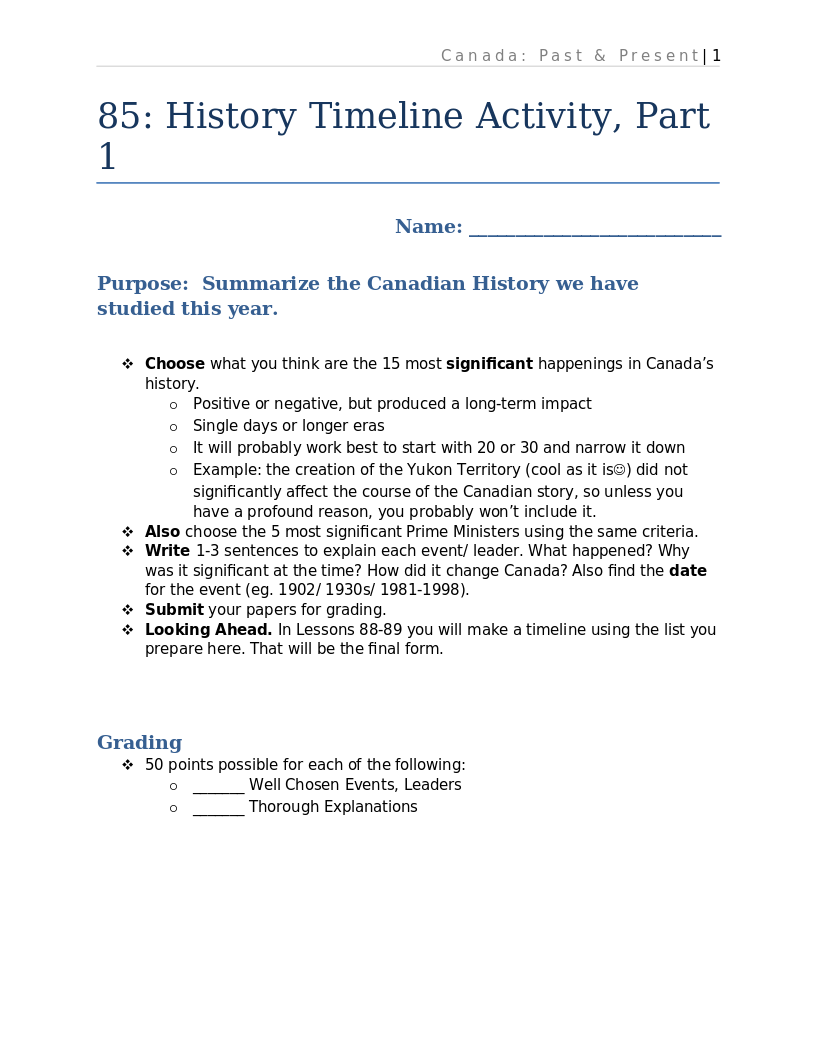
Canadian History Timeline - Part 1
This activity is the first assignment in a two-part timeline activity. In this assignment, students gather information to be used in the second part of this activity.Link to Part 2
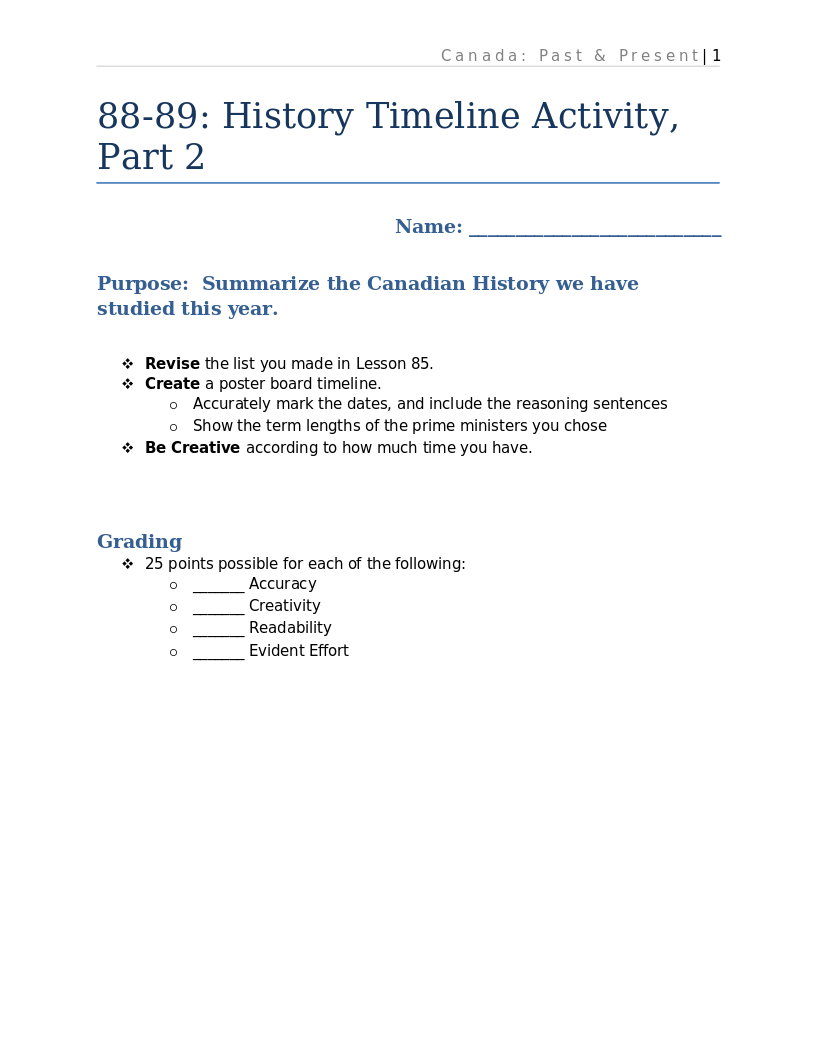
Canadian History Timeline - Part 2
This activity is the second assignment in a two-part timeline activity. In this assignment, students assemble the information they gathered in Part 1 and create a poster board timeline.Link to Part 1
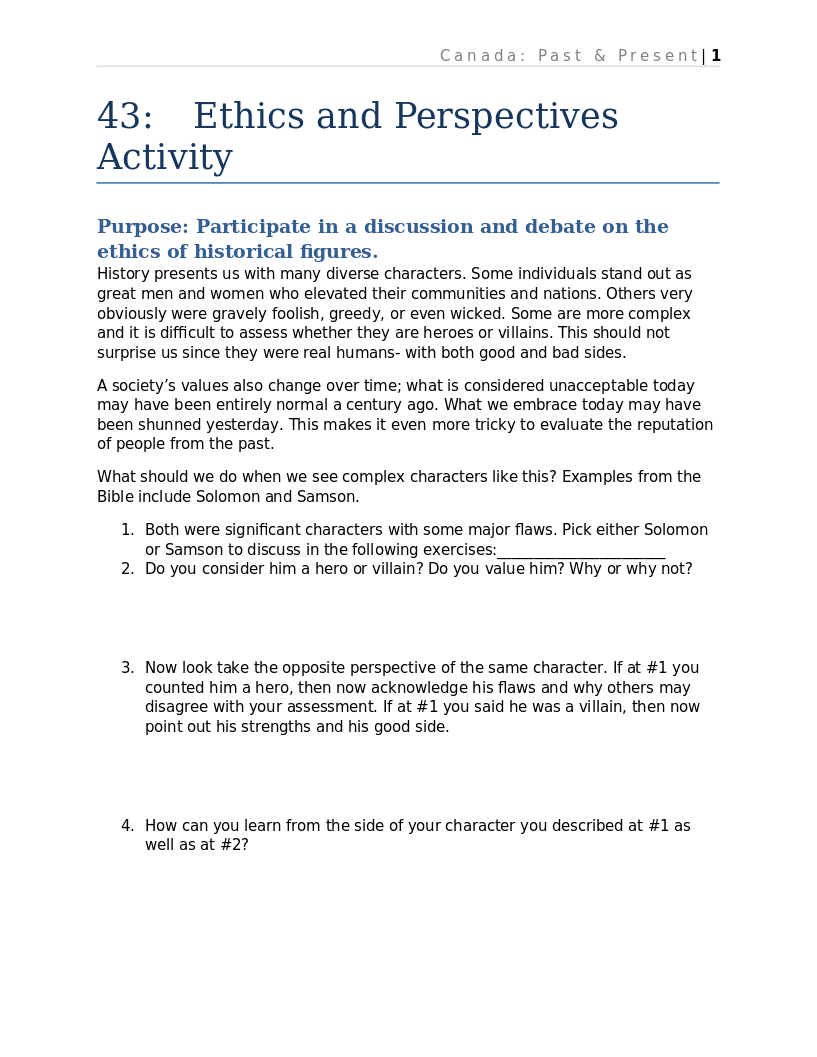
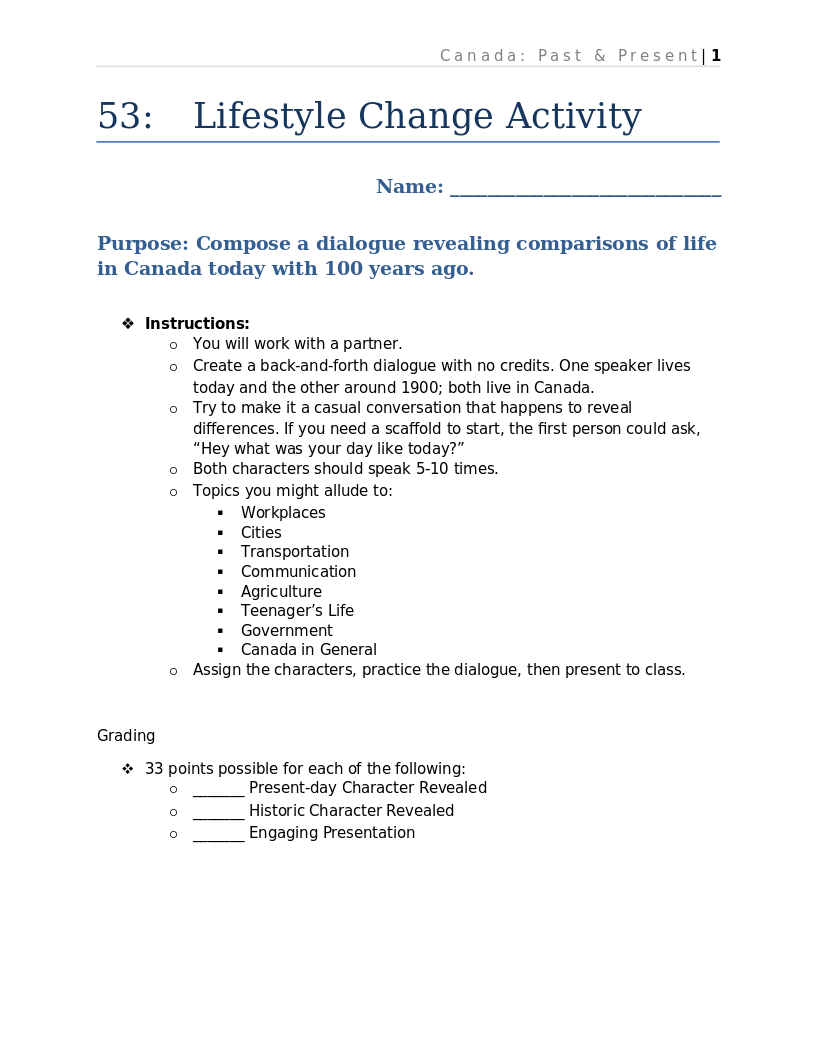
Lifestyle Comparison Dialogue Activity
Students will collaboratively engage in the "Lifestyle Change Activity," where they create a dialogue comparing life in Canada today with that of a century ago. Working with a partner, they craft a casual conversation between a contemporary individual and one living in 1900, covering topics such as workplaces, cities, transportation, communication, agriculture, teenager's life, government, and Canada in general.
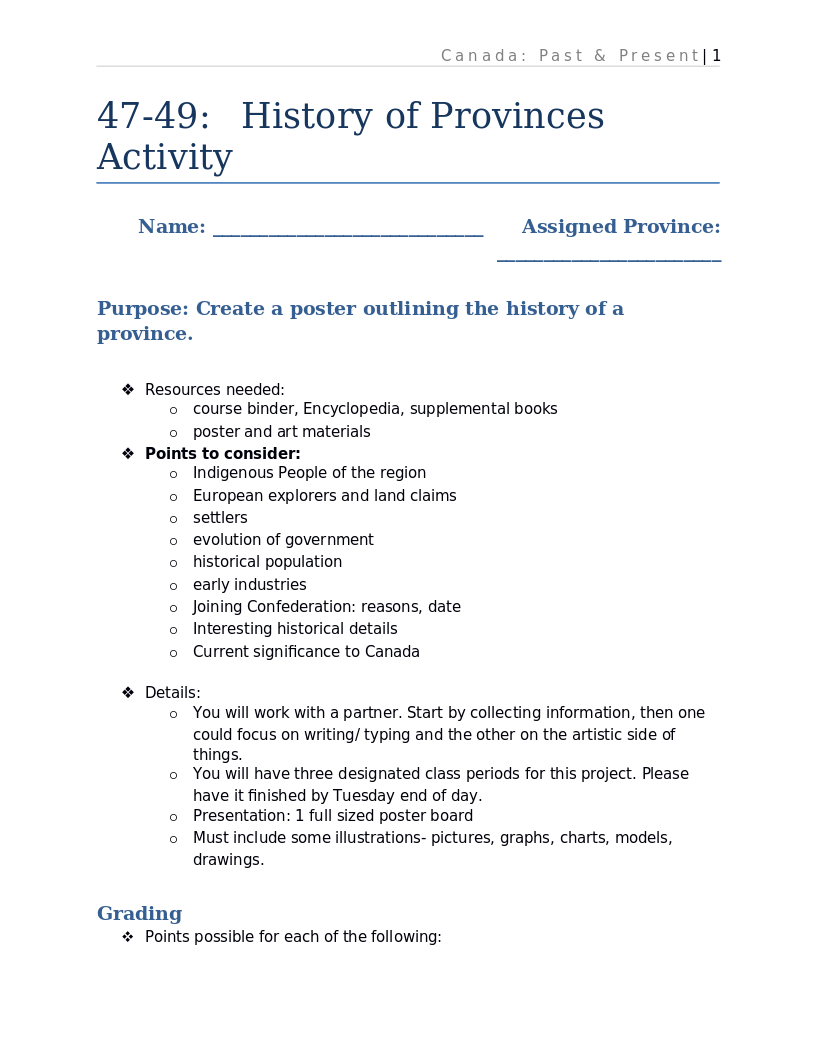
History of Provinces Activity
Students will collaborate to create a province history poster using resources like course binders, encyclopedias, and art materials. The assignment involves exploring aspects such as Indigenous people, European exploration, government evolution, historical population, and early industries. Working in pairs, they will have three class periods to complete the project, aiming for a finished full-sized poster board presentation that includes illustrations, graphs, charts, models, and drawings.

New Year Expectations

For those in the school setting, New Year’s seems to begin in August rather than January. Here we are, though, after a January New Year, and thinking of the fresh start we can have in the middle of our school year. Many of us have a break at this time, and returning to school after this break can give us a new beginning. Perhaps as teachers we are feeling tired, or lacking enthusiasm for those phonics lessons or grading papers. Students may be in the doldrums and need a restart. One of my first graders recently said, “I just want to color. That’s the only thing I want to do.” I can understand that! I am weary of the paperwork and trying to motivate students to do corrections, and I think coloring sounds pretty nice. (I did let him put his work aside and color for a while.)
This was stated by a teacher before the holiday break: “This day was rough. The class was totally out of control. Our behavior system isn’t working any more. We don’t know what to do.” We talked about some ideas for helping the class through the next few days in hopes that they would be able to have that new beginning in January after having a break.
As we think of our expectations for the New Year, we think of areas we want to improve and new ideas to try. In my life and teaching, I want to be consistent, following Jesus and modeling that for my students, and to be encouraging to others. I want to communicate with parents and students. I’ve recently been communicating more as we work through some behavior challenges. I realized that I also need to communicate positive items, so I’ve tried to send out encouragement to those parents who had previously heard from me about their child’s challenges.
I need to state my expectations (and school expectations) to my students. I’m reminded of a Sunday School class that I was teaching where I was getting frustrated with some of the students’ behaviors. One Sunday afternoon as I was reflecting on this, I realized that I had never told them my expectations. I was used to my school students knowing my expectation of not talking while I am, but my Sunday School students didn’t realize that expectation. The next Sunday, I told them specific expectations that I have and what I expected from them. Our class went much better after that.
I need to first think about my expectations, and then state those to the students. Sometimes I say, “I expect you to…” or “This is something our school expects….” I give these expectations as facts—these are not negotiable items. I might say it as “I want you to…” “You need to….”
One of our school’s core values is Academic Excellence. This is the core value that we are focusing on this year, and in the new year I want to work on it more with my class. As I think of academic excellence, I know I must model this. I need to help my students see what academic excellence looks like and what are the expectations for academic excellence. As I model academic excellence and communicate that expectation, I will do neat work as I expect my students to do. I will study lessons so I can teach with excellence. I will plan good lessons and engaging activities.
I have expectations for student behavior. I need to determine my behavior expectations and then communicate them clearly to the students. I must be consistent in following through on these expectations. I may need to model behaviors or guide students to correct behaviors. Sometimes we have practice sessions where we practice the correct behaviors. For example, I expect students to walk in line quietly and stay in the line. We are like a train with the cars hitched up, so we need to stay hitched up. We practice walking in the hallway and as I lead the line, I go in different directions, turning around or slanting across the hall to see if they can stay in line and “hitched up.”
There are expectations for homework, doing assignments, cleaning up, paying attention in class, relating to other students, and cooperating. We may have become complacent about our routines and procedures and some of those expectations. Heading into a new year, we can push that restart button, give clear expectations, and determine to follow through on the expectations. Happy New Year!
Photo by Moritz Knöringer on Unsplash
- 261Page 40