
All Content

Favorite Read-Alouds
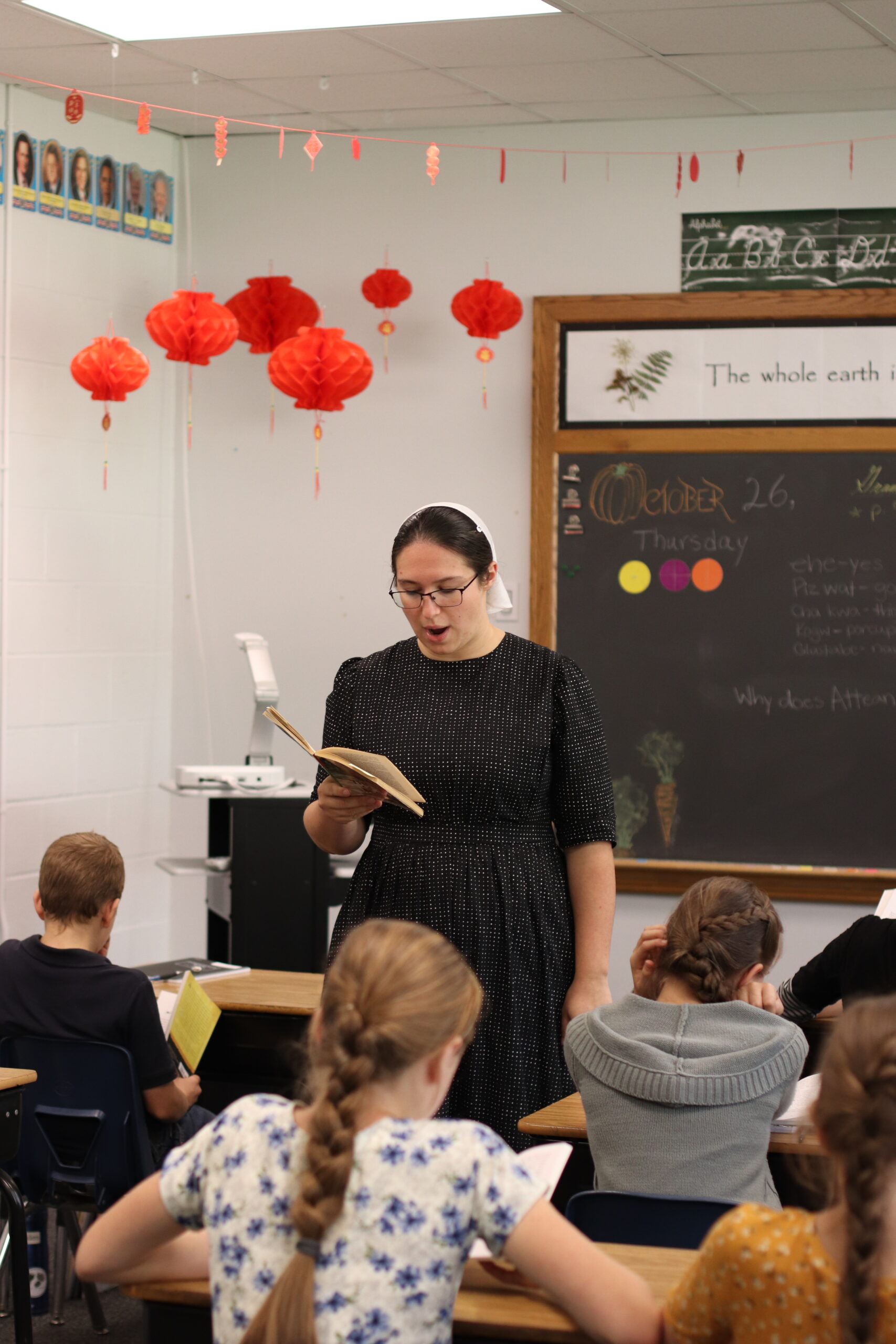
It’s no secret that story time is one of my favorite parts of the school day. Every afternoon, I read to my students from a storybook for at least twenty minutes. Nothing compares to the joy of sharing great stories with a group of eager listeners who stare at me wide-eyed and let the emotions conveyed in the story play across their faces as I read.
I have read many books aloud to my students over the years, and I always like to find new ones and to hear other teachers’ favorites. I also like to introduce my students to a wide variety of literature that includes various genres. Here are a few of my favorites that I have often read to my third graders over the years:
The Lion, the Witch, and the Wardrobe
I have probably read this book aloud more often than any other, and it never fails to enthrall my students. A captivating story line with just the right amount of action and suspense, an excellent blend of imagination and realism, and the wonderful Christian allegory it contains—these all combine to make a great book. I also love that it is part of a series. When we finish the book, I tell my students, “If you want to read more, you can check out the rest of the books at the school library.” Often, I see them following my suggestion.
This book is uproariously funny in a wholesome sort of way. While not distinctly Christian, it does carry great themes of honesty, hard work, and thoughtfulness for others. It also shows a beautiful relationship between a boy and his grandpa. I especially love its smooth readability. Not all good books are great for reading aloud, but this one flows so smoothly that it feels as though it was meant to be read aloud.
Mrs. Frisby and the Rats of NIMH
This fanciful story of talking mice and rats is absolutely charming and delightful. It is a tale of imagination, heroic selflessness, and helpful community.
I could put a number of Patricia St. John’s books on this list, but Treasures of the Snow is probably my favorite of hers. Somehow she manages to fill her books with distinctly Christian content without being stuffy or preachy about it. She weaves it all into an engaging story. Like many of her books, Treasures of the Snow gives a fascinating picture of a different country, culture, and era. It also emphasizes the power of forgiveness.
The Miraculous Journey of Edward Tulane
When a whole classroom full of children is breathless over the fate of a silly china rabbit, it must be that a book contains some ingenious writing. This is one of those stories that, while written for children, contains some deep nuggets of truth that only adults can really get.
This is the true story of Brother Andrew’s adventures while carrying Bibles into communist countries. The first time I read this book to my students, I was afraid that it would be above their level. But I felt like my boys needed a story of action and adventure that introduces a better role model than sports figures or detectives. I do edit heavily as I read, in order to make it age-appropriate, but my students love the story.

Family Tree History Project
From the contributor:
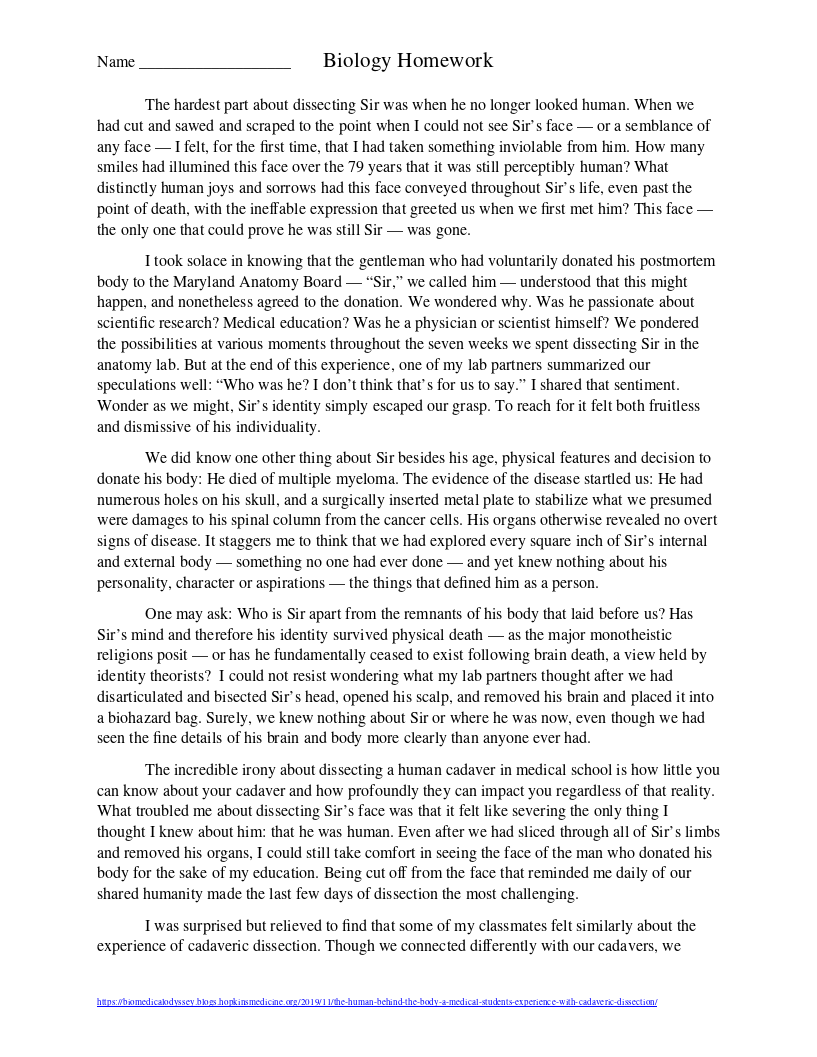
World History can get very boring and distant quickly, and I am always looking for ways to make it come alive for my students. This is a project that I gained ideas from and built upon from one of my projects in college. Ancestry.com allows you to create a free account and lets you build a family tree without needing to pay any fees. I believe some other ancestry websites do as well but I am not familiar with those programs.
My students were able to create a family tree quite easily and follow their ancestry back to the 16th and 17th century. Once they had their family tree created, I had them make observations about their ancestors and make historical connections to their family. In reflecting on the reports the students wrote, I would require "x" amount of historical connections. I had good feedback from students and parents about this project. I think some got their parents and grandparents involved, which is always wonderful. I had students say this helped bring history so much closer to home and make it less distant.
One downside is that you may have a student or two that do not have much information about their family, and their tree comes to a quick end. This can be frustrating because the other students are getting so excited about what they are discovering and they are not getting anywhere. I tailored that student's assignments and tried to help them grow their family tree as much as possible. The more information about a person, the better suggestions ancestry.com will give for the next person.
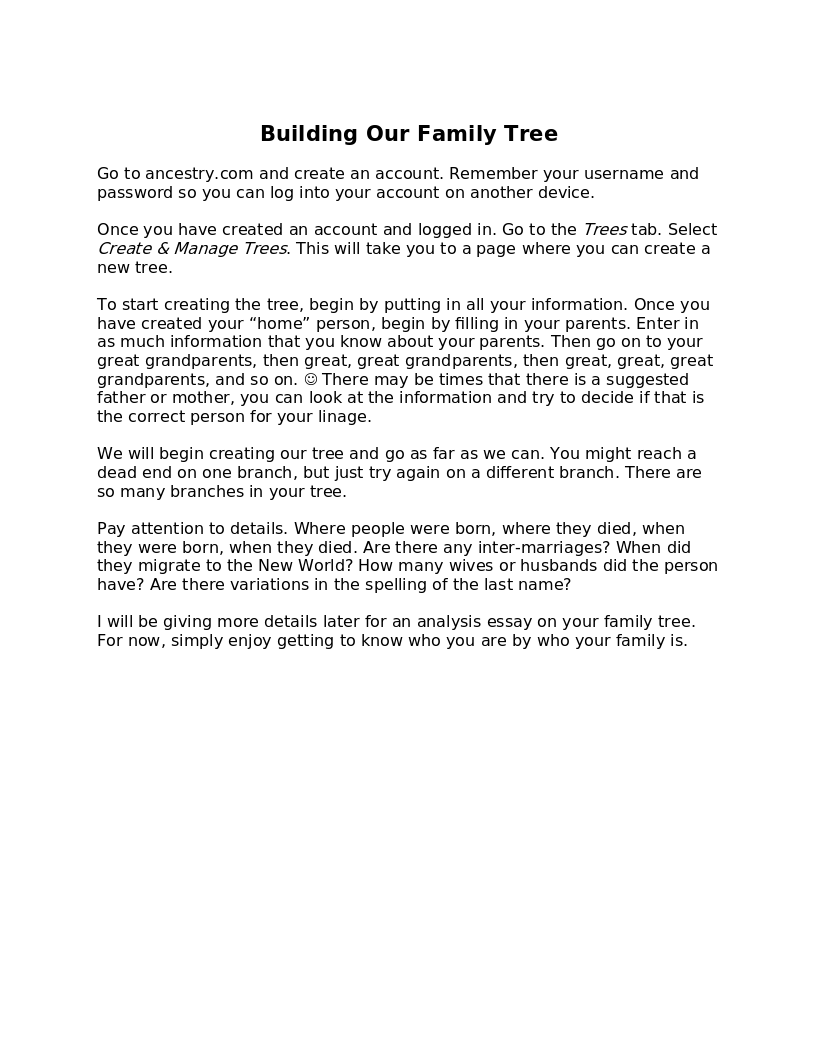
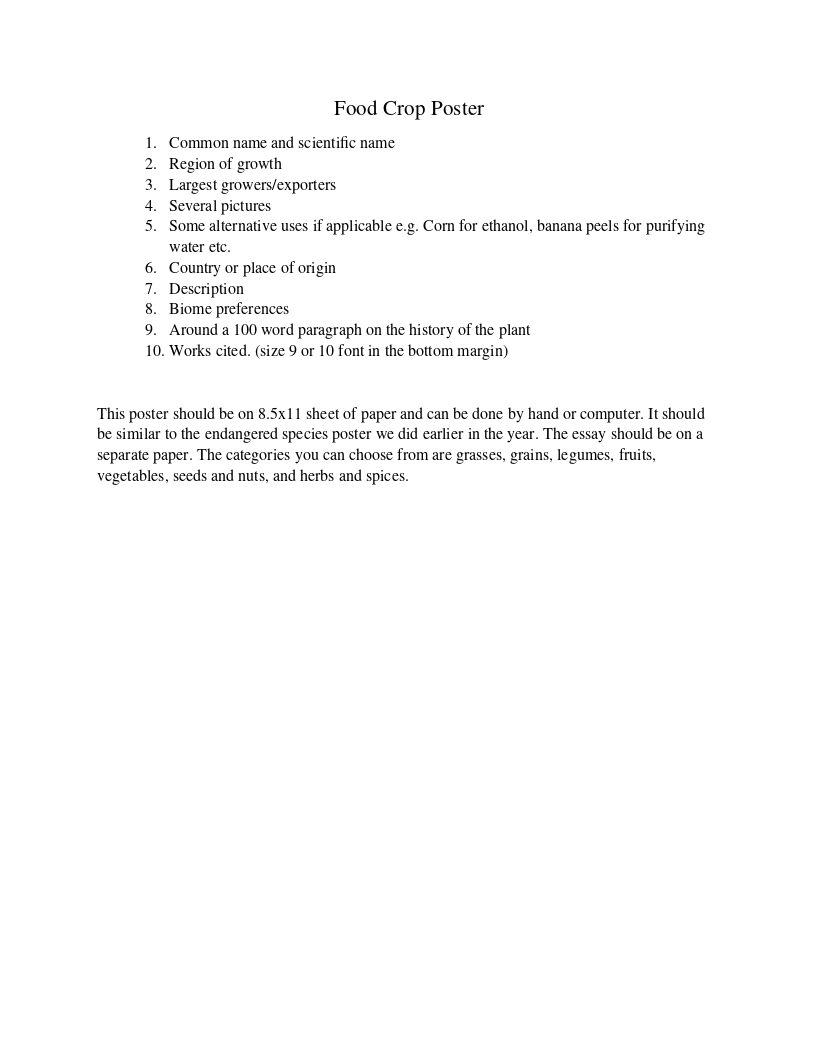
Below are instructions I used for my class. Feel free to edit the documents. Make them your own. Have fun with it.
I highly suggest making your own tree and using that as an example to get students excited!

Pedagogical Moments: Objects and Illustrations
Once, long ago and in a faraway place a group of men stood, continuing an argument that had consumed their thoughts. “Which would be counted the greatest in the kingdom of God?” These men approached the Great Teacher, for they were His followers, with their question.
The Great Teacher looked at His followers, then He looked at a group of children, playing nearby. Calling one of the little children over, He picked them up and said, “Unless you become like this little child, none of you shall be part of the kingdom of heaven.”
A good teacher knows the value of objects and illustrations in teaching. As the saying goes, “A picture is worth a thousand words.” An object, picture, or illustration provides a hook for the learner to latch on to. It provides a point of recall. It provides sensory detail to help one remember and understand. Objects and illustrations communicate where words may not.
In math
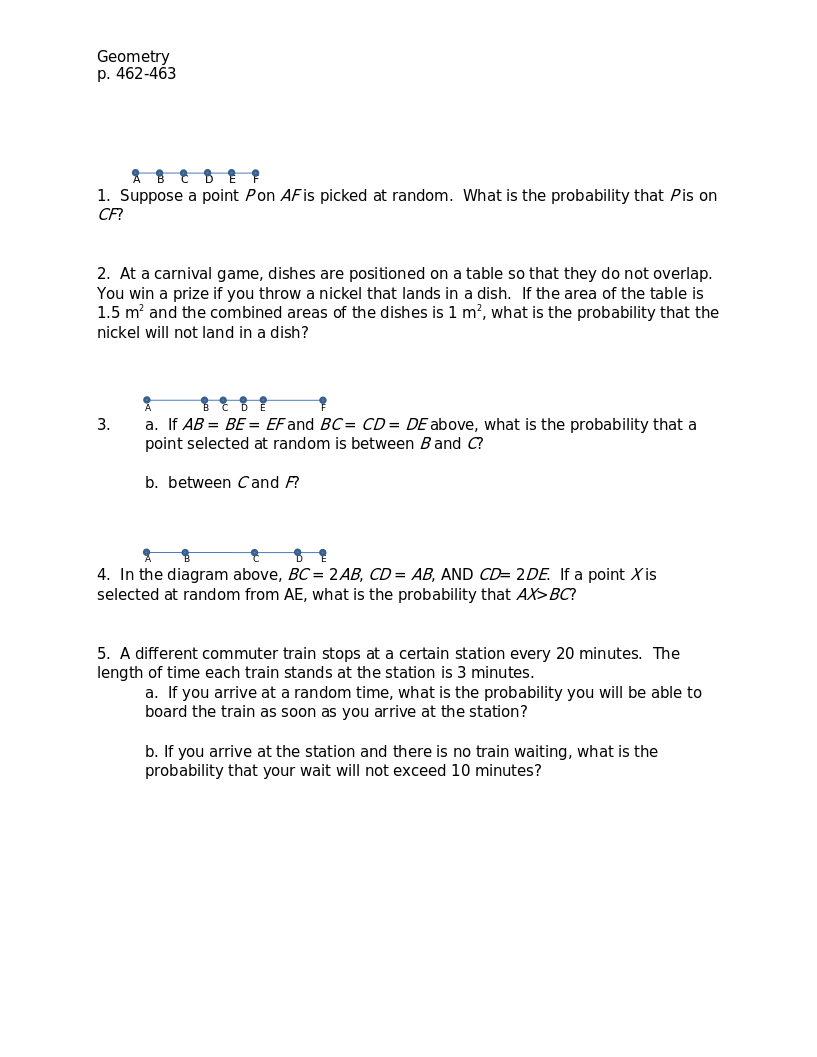
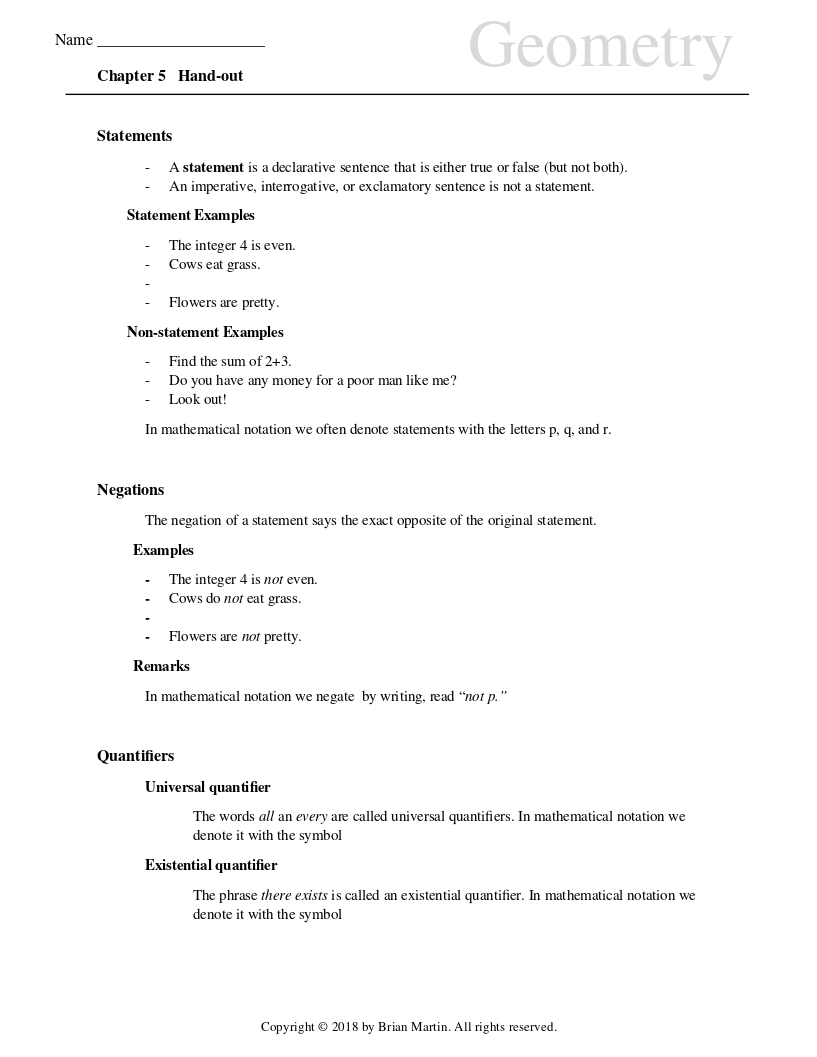
Use of manipulatives in math is vital in teaching young students math concepts. Use blocks or crayons or even fingers to learn to count, add, and subtract. Count real money and tell time on real clocks. Drawing out story problems, especially in some higher levels, is also helpful. Draw out Farmer Jones’s barn floor plan to see how much space he has for storage. Illustrate the route Bobby took as he went from point A to E to see how far he traveled. Quick sketches can make what’s foggy clearer.
Math usually deals with concrete details. Make use of concrete items to help students learn.
In science
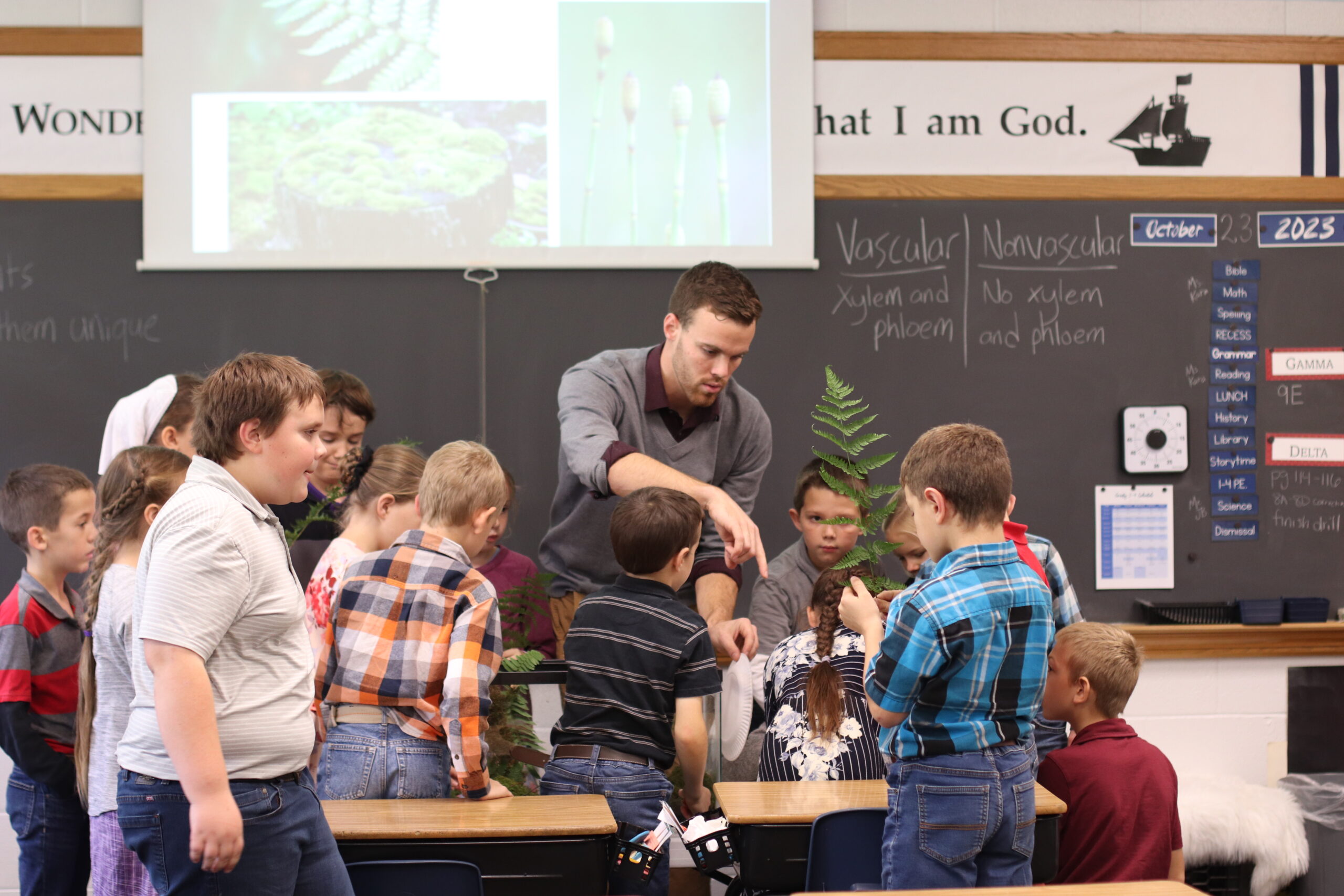
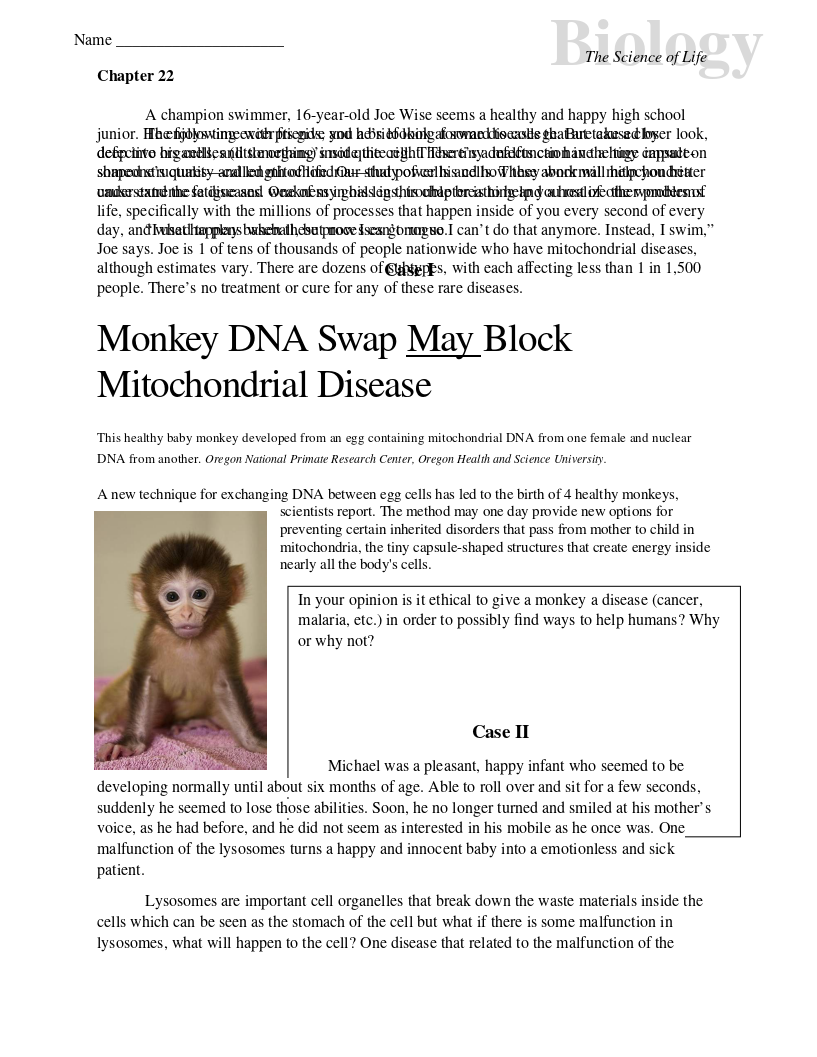
Science, when possible, is best taught through experience. Science experiments and demonstrations not only liven up a class but are valuable teaching and learning tools. Don’t skimp the hands on/concrete objects part of science. Observe the process of metamorphosis from egg to adult. Dissect a seed and a flower to find the various parts. Count the annual rings of a slice of tree trunk. Experiment with gravity and jet propulsion. Watch blood pump through a goldfish tail under a microscope. Test your own blood type. Handle samples of rocks and ores.
Illustrations and pictures are also helpful to understand science. Pictures from the Hubble or James Webb telescopes bring us an experience that we could never handle or observe on our own. Charts labeling the parts of a cell or details of various biomes help students remember the information.
In history
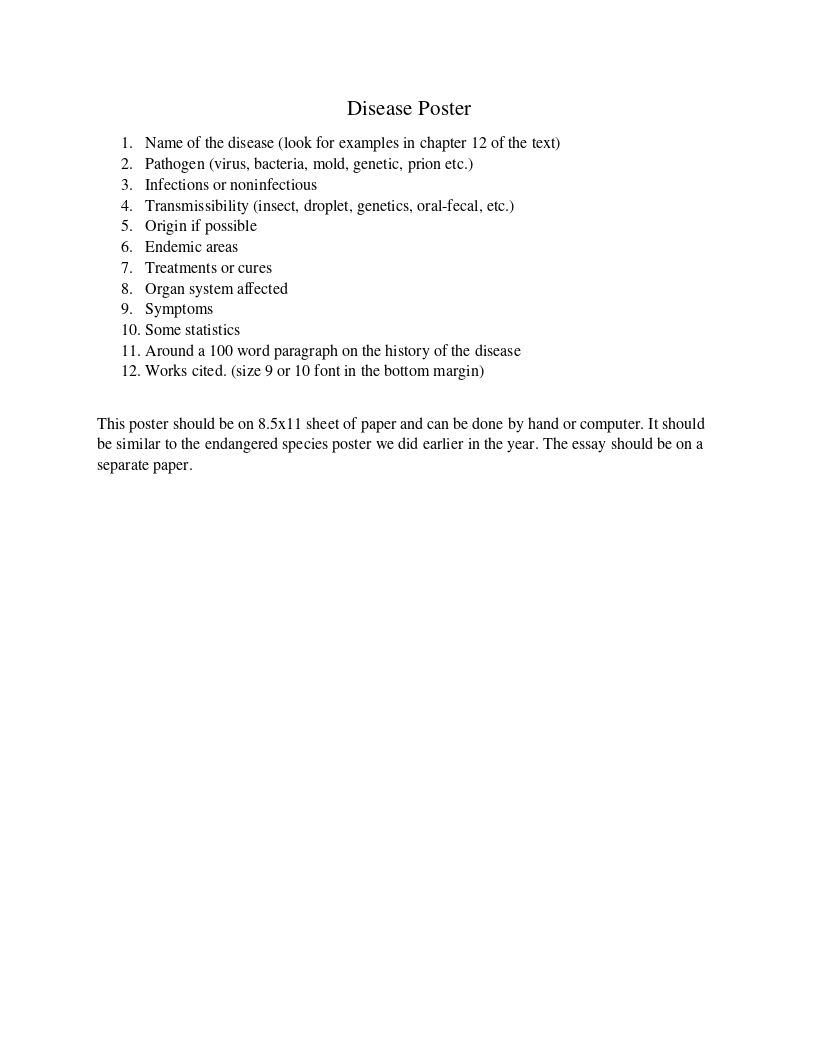
History books as well as science books are filled with pictures and illustrations that complement the text. Make good use of them. Discuss the content. Read the captions. Use them as teaching tools. Maps are often underused objects. Put them to use and give students a sense of place. I remember my upper grade teacher bringing a three-dimensional map of our county to school. We enjoyed seeing the big picture of the valleys, hills, lakes, mountains, and roads of where we lived.
Artifacts about historical happenings lend interest to the lessons you are teaching. Arrowheads found along the local river bottoms and Civil War cannon balls found in the walls of an old house that had been used as a hospital during the war help students realize that “real history” happened right where they live.
Geography becomes more relevant when ethnic foods are shared, currency is examined, and real photographs are discussed.
In vocabulary, reading, and literature
Use concrete objects to teach vocabulary words, or illustrations of objects if the actual object is not available. Vocabulary is best learned through experience and context when possible.
Objects can also be used to invite interest in a reading story. A new shiny dime and an old dull one spark participation with the story “Whose Dime Was Lost?” in first grade reading. Using either an object or an illustration is a good way to familiarize students with things they may not have experienced. A story about storks will not mean much if students don’t know what a stork is. A Dutch windmill is different than the farm windmill or wind turbine that our students are commonly familiar with.
In memory work
Create a quick sketch flow chart of memory passages. For younger students, Bible memory can be filled with vocabulary and ideas that are beyond their comprehension. Even the Lord’s Prayer can be a jangle of syllables, sounds, and “jelly bread”. A series of quick sketches done in sequence can aid their understanding and memory.
Photographs, quick sketches, illustrations, and concrete objects help hold the attention of students. They clarify thought by giving a student more sensory input than just text. Objects and illustrations are tools that a good teacher uses to their advantage.
- 261Page 39