
All Content

Watering Seeds

“You know, on school days you have the children more hours of the day than their parents do,” commented a grandma to me on Grandparent’s Day. I have thought about that, and it makes me feel very accountable. Another grandparent looked a little teary as he thanked me for all I do for his grandson (who is adopted and has some challenges).
I think of the great responsibility we have as teachers and school staff in working with our students and communicating Jesus to them. I was struck with these comments from Gerald Wolfe: Parents plant the seeds; the church waters the seeds—and looks for those whose parents are not planting the seeds.
I would say the Christian school also waters the seeds, and as we partner with parents and churches, we may be planting seeds, too.
Planting seeds…
- …for the child whose family is busy with their bike races on Sunday. Kyle told me his family can’t always go to church because they have to go to the races. This concerns me and makes me feel accountable to be planting seeds with him.
- …for the child whose parents don’t take her to church at all.
- …for the child whose parents are new believers and haven’t built that foundation yet.
- …for the children whose parents aren’t teaching them at home.
How can we plant and water seeds? This may happen in Bible class as we teach Bible stories and concepts and the lessons in them. We guide our students to studying the Bible on their own. We can give them scriptures to study and verses to hide in their hearts. We help to disciple students. Direct instruction in the Bible and Bible teaching can be sowing those seeds and watering them. We make application of biblical principles.
Teaching peace and nonresistance, love and forgiveness present areas where we can water seeds (or it may be planting those seeds). As an illustration, I think of the phonics lesson we had on the silent letter ‘d’ in ‘dge.’ The curriculum had a picture of children saying the ‘pledge’ to the flag. None of my first graders knew what that picture was, and I was glad they didn’t. This was a good teaching opportunity and a time to plant and water seeds. I told them what the picture was and said that while we are thankful for our country, we do not want to pledge to it. We only want to pledge to God. When I was grading the pages, I saw that one of the children had added some words to the picture—after the word ‘pledge’ he wrote “to God.” Another child wrote very boldly under the picture—“bad!” For these two children, the seeds that their parents had planted were being watered at school.
Bible memory is an area that can plant and water those seeds. In our school, grades 1–12 do the same passages and families are encouraged to practice at home. All of their children can practice together. I love this, as I hear of families practicing the verses at the supper table, in the car, or before school starts. If they are not a family who regularly attends church, even the parents can be learning the Bible passages this way.
We also plant and water seeds in our daily lives with our classes, as we model Christ and Christian living. We may plant and water seeds in our speech and as we encourage students.
One of our staff members (whom I’ll call Mary) shared some of her story in staff devotions. Mary attended our school as a child, and she received her Bible teaching and her beginning Christian foundations at school. She did not get this at home—there was no modeling or good examples at home. She related a story of a kindergarten experience when she was amazed at the story of Moses and the burning and exclaimed her wonder with very inappropriate words. She did not have the seeds planted at home and had no idea she was taking the Lord’s name in vain. She was crushed at the shocked look on her teacher’s face. The teacher later pulled her aside and gently explained to her about the language. This teacher was planting seeds! Mary went to our school through eighth grade and after that she did not have the Bible teaching, modeling, or examples again. Those early seeds that were planted and watered at EMS did grow, and Mary is now a believer and employed by our school!
I believe this is a charge to us: plant and water seeds, expecting growth. Pray for the growth and harvest, as you invest in your students. It is a joy to see students grow up and continue in the faith and do their own planting and watering.
Photo by Markus Spiske on Unsplash

Building Highly Effective Boards

In many of our schools, the school boards are chosen from the church members of the supporting church or churches for their school. One scenario that can quickly happen is that each of these individuals will have their ideas about what a school should look like and what they would like for their children. These ideas are largely based on the values that each member holds and what each determines to be the most important. Some people value a strong academic education in preparation for higher education. Other people value life skills that set up their children for work within the trades. Still others may be most concerned with helping their children navigate this world while maintaining Kingdom values. These values are not exclusive; most people likely hold a combination of these values. However, when a board member determines that their ideas must be preeminent in shaping the culture of a school, the groundwork has been laid for some very challenging situations and a potentially dysfunctional team.
Understanding how a team is built and meant to function is a very important foundation for any board member. There is great strength in a team that blends completely dichotomous ideas to form solutions that are collaborative and innovative.
The Foundation
Highly effective teams must begin with a solid foundation. The first layer of this foundation is the Lordship of Jesus Christ. In Psalm 127, the psalmist recognizes this very concept when he states: “Unless the Lord build the house, they labor in vain that build it.” God must be the center of our organization. Each person within that organization must recognize that this organization is not about themselves. It is God’s work, and as such, they must attempt to think about the working of the organization from that vantage point of decision-making that builds God’s kingdom. This takes a level of humility that is uncommon in our world, to be able to recognize that my ideas are preferences and may actually not be what is best for the organization.
This foundation has to be nurtured by the leader of the team. The board and the principal or administrator should work in unison to develop and implement the mission and the vision for the school. While this mission and vision will be determined by the founders, the leaders of the organization must be the primary champion of the mission and vision of the school. In order for this mission and vision to be passed down through generations of leaders, the vision and mission must be overcommunicated with examples of behaviors that support the mission. The leaders must champion the culture in themselves and set expectations for others. They do well to recognize behaviors in others that support this mission. When making decisions, the mission and vision should be discussed in relation to the decision that is being made.
Team Building
Team building is a popular idea in the professional world. It is vitally important to build teams that are highly effective so that the business or organization functions well. Maybe you think of things like retreats and team-building exercises when you think about team building. While these activities have the opportunity of helping us understand the team on which we work and the dynamics that make up the team, we cannot expect these kinds of activities alone to create a highly effective team. I would equate expecting these kinds of activities to transform our team to expecting a house built without a foundation to be an effective shelter. These kinds of activities are most effective with a strong team in place already.
The most important part of team building is not activities or retreats; the most important element is building a foundation of trust. This trust must first be grounded in the belief that each person on the team is primarily concerned with advancing the mission and vision of the organization. This team must also be grounded in the idea that they represent the interests of those that have appointed them to serve in a leadership role on the board.
Building Trust
Many times, we do not spend a lot of time really considering how trust is built or developed. The first thing that is required to build trust is that the leader must lead the way. The board and faculty will not experience trust if the leader is unwilling to initiate building trust. This trust is developed through the vulnerability of trusting first. In his book Trust First, Bruce Deel (2019) shares his experience in inner city Atlanta. He notes that when he was willing to be vulnerable first, only then did the team begin to be vulnerable and trusting. While openness and vulnerability build trust, leaders that rally support prior to meetings or hold exclusive meetings outside of meetings to discuss issues within the board or school destroy trust very rapidly. The divide-and-conquer mentality is not a leadership strategy; it is a manipulative method to control the narrative with our own ideas.
Trust is something that is quite fickle at times. It takes time to build trust and it can be torn down in an instant. The leader’s role is to build that trust within the team so that when decisions are made, the team walks forward together in harmony. A team built on trust will be able to weather differing ideas. Patrick Lencioni (2012) notes in his book, The Five Dysfunctions of a Team, that teams that are built on trust are going to have open dialogue as a team even when there are differing ideas. There is great strength in combining these ideas to find creative solutions for challenges within the school. However, in a low trust environment, these ideas become platforms and campaigns instead of ideas on which to collaborate. This leads to people not being willing to share their ideas and limiting the creative ingenuity of the board.
Not only will healthy teams built on trust have more dialogue and come to better conclusions, they will also walk in unity together when decisions are made by the team. This communication and dialogue is vital to a healthy team. When communication breaks down, there is no longer the ability to move forward in the decision-making process. The team will have respect for the decision-making process of the group and will not undermine the decision even if it wasn’t made in the way they may have preferred. A true team player never says “I told you so” when a decision doesn’t work as intended. These teams will also have the ability to provide constructive feedback to each other in the appropriate setting, building each other up to be better followers of God and better team members for the organization.
Practical Considerations
There are many ideas on how teams are supposed to work. There are many folks that spend their life work building and developing teams. There are many books published that share principles that are important to team cohesion. These are all good theoretically, but they must be carried out practically.
Many folks within our Anabaptist setting may have little exposure to working on boards or teams and thus have no real understanding of some of these principles. This, however, does not mean they are not a team player or would be handicapped on the board. It simply means that we must be cognizant of this fact and provide the resources necessary to learn the structure and methods of a board.
One of the first pieces that I think needs consideration is board recruitment. In our church schools, board members from the church body are often appointed through some format of nominations and voting. In parachurch or patron schools, there is likely an appointment or recruitment process followed. While the recruiting process will look different in each of these areas, it is important to consider who we choose to serve on these boards. While the person on the board does not have to be educated, have a history of teaching, or even enjoy teaching, they must appreciate the role of the Christian school. In a patron-run school, there should be extensive background work done to ensure that this is the right candidate for the role. In a church setting, it is wise to share with the congregations the role of the board and help them to understand the need for a team player.
Another important piece to team development is board education. Many times, we get thrown onto a board and expected to figure it out on the fly. There are many costly mistakes made with this method of onboarding a new board member. There should be a board curriculum developed by the board that outlines the mission and vision of the organization, the role of the board, and the role of each board member. Each board member should understand the difference between operations and governance when accepting the role on the board. While this may differ particularly in smaller schools, the board’s role is largely to provide governance and direction to the organization. The board must hire leaders to carry out the direction that the board determines as best supporting the mission and vision of the board. There should be specific education on how the board operates and comes to decisions. In this education, the new board members can be presented with info concerning how the team is set up and how they can best integrate into that team. I believe that board education is one of the most underutilized elements of non-profit board development. Websites such as Boardsource.com are great resources to find guidance on how to setup and operate a board.
A final, practical recommendation for board development and team cohesion is to over-communicate the mission and vision of the organization. This may sound silly, but it is amazing how quickly we can soon lose sight of the mission and vision of the school as things get busy and decisions need to be made. Some of the ways that this should be completed is by adding the mission and vision to each board agenda. This mission and vision should be read at the outset of each board meeting to focus the boards mind on that singular mission. When faced with particularly challenging decisions that may feel stalemated, it is important for the chairman to pull the conversation to the mission and vision and discuss the dilemma and the options from the light of how the solutions will impact the mission and vision. This helps to reset the discussion off of our personal ideas and back to what is best for the school.
Conclusion
I have been guilty of making a few jokes about all of the committees that we Anabaptists use to carry out the work of our churches and schools. The reality is that we use committees and boards extensively because they can be highly effective tools to organizational governance. That being said, a dysfunctional team can greatly reduce the efficacy of the board and, in fact, can damage the school dramatically. In order to develop teamwork and cohesive boards, we must have a strong board structure, provide the tools necessary for board members to understand the operations and impact of the board, develop trust, and maintain open lines of communication. Team building is also not stagnant, this is not a destination but is part of the pathway to our final destination. These highly effective school board teams, when functioning well, can have an extremely positive impact on our school age children in our churches and schools.
References:
Deel, B., & Grace, S. (2019). Trust first: A true story about the power of giving people second chances. Optimism Press.
Lencioni, P. (2012). The five dysfunctions of a team. Jossey-Bass.
Photo by S O C I A L . C U T on Unsplash

What Makes a Good Teacher?
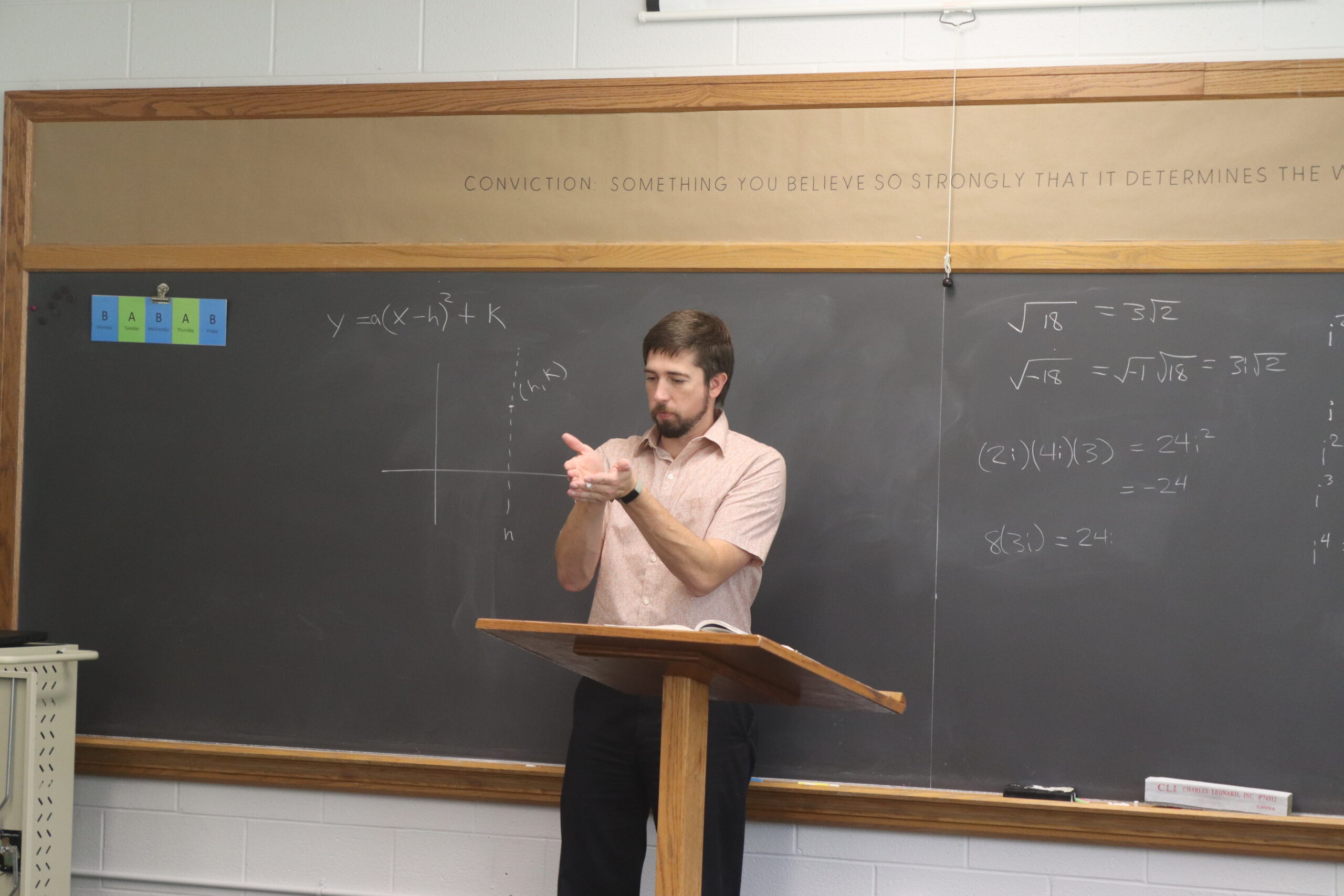
On a fairly recent choir tour, a few of my former students asked me a thought-provoking question: “What makes a good teacher?” Right away, I thought of the academic content.
- A good teacher should really know his or her content area inside and out. He should know it so well that he can explain anything from the text without having to look at a teacher’s guide or answer key. It’s also helpful to have knowledge of additional materials that might not be included in the text, but that you’ve learned from studying.
Then I thought of something else pretty obvious:
- A good teacher should also have a desire to teach—to impart knowledge to students—and the ability to make it palatable to them even if they might not think it’s that interesting. That’s harder still, but can be acquired.
And another pretty important aspect is this:
- Experience. This gives teachers the ability to handle student misbehavior, parent issues, and administrative directives with confidence. Second best is spending time watching experienced teachers teach, or hearing how they have handled various situations in the past.
Then, I asked my former students the same question: “What do you think makes a good teacher?”
They had two very insightful answers:
- Good teachers should really care for and enjoy being with their students (even if they have bad breath and dirty fingernails and stink a bit). The students know if you sincerely care about their grades and themselves personally, and this does make a difference. A huge difference.
- Good teachers tell stories that (usually) apply to or relate to the concepts being taught in class. These help students remember the concepts, as well as give them a “brain break” so that they can keep paying attention and don’t zone out, like mine were trying to do recently on the first day back to school after a long spring break.
So, I agree with both the teacher and the student answers, and would encourage us all to strive to acquire all five:
- Content knowledge
- Desire and ability to teach
- Experience
- Sincere concern for students
- Knowledge of and ability to tell stories that relate to content

It's Just Natural

There’s just something about spring. When the first daffodils expose their sunny faces or the blooming trees reveal the treasures they’ve been hoarding, it’s hard not to respond with some sort of emotion. Perhaps it’s wonder, delight, or awe. Maybe it’s simply relief at the completion of winter. And for our students, it’s often a marked unsettledness and apparent inability to sit still in a desk.
It can be easy to get frustrated by the spring fever that seems to infect our students on warm days. We have things to accomplish, after all. The end of the year is quickly approaching, and as teachers, it’s easy to only think in terms of how many lessons we have left to finish.
But spring is calling, and our students hear its voice. What if, instead of expecting them to ignore that call, we recognized it as a prime learning opportunity? What if we recognized it as the voice of creation begging us to revel in the beauty of the Creator?
There are many ways that nature studies can be packed with learning experiences. Here are just a few of the myriad of possibilities.
Close Observation Activity
Want an activity that strengthens your students’ observation skills, develops attention to detail, and builds grit? A close observation activity can do all of these things.
For this activity, students will need a notebook, pencil, and something to observe—a plant works well. Instruct your students to sit by their plant and write down everything they notice about it. Encourage them to use multiple senses as they list observations.
The challenging part of this activity is that they need to keep looking at the plant and writing observations for a set amount of time. For best results, make this time limit fairly lengthy. Needing to sit and stare at one plant for, say, fifteen minutes will force them to notice things they never would have otherwise. Obviously the age of your students will determine what length of time is reasonable. A rule of thumb might be to ask yourself, “What is the longest amount of time I can imagine my students staying focused on something like this?” and then adding a few minutes to that. Your goal here is to surprise your students with how much there is to notice in something as simple as a plant—if you take the time to look for it.
A variation of this activity is to have your students observe a square yard of grass instead. You can create blocks with toothpicks and string.
Nature Walk
A nature walk is just what it sounds like—walking in nature. Depending on the location of your school, you may need to transport your students to a woods or near a creek to make this most valuable. There are many ways to do a nature walk well, but here a few tips that may be helpful.
- Encourage quietness and stealthiness—while it is somewhat unlikely that any sizeable group of students will be able to sneak up on something wary, the posture of quietness and stealthiness encourages attentiveness and discourages fooling around. However, you do want to encourage students to share what they’ve noticed. So have a method to allow students to ask questions, like raising their hands or writing down notes in a notebook. Additionally, you could break the walk into several sections: the stealthy section in which nobody talks, the question section in which they may only ask questions, the observation section, and so on.
- Take the walk yourself before going with students. Make note of a few things that you want to specifically point out to your students. Doing some extra research can help show your students the next layer of interest that the natural world provides. It also gives you the chance to find particularly interesting destinations as climax points for the journey (a rabbit nest, a crawdad pool, a lightning-struck tree, etc.)
- Get an expert. Few things will boost the quality of a nature walk like finding someone in your area who really knows about the wilds of your area. Local conservation groups or naturalist groups can be a great resource and may offer supplies that can take the walk to the next level. There are a few phone apps that can help you engage questions beyond your knowledge (Merlin Bird App, Picture This, Picture Insect, etc).
- Emphasize water. Streams and small ponds hold so many secrets that most children haven't explored. A scoopful of water from a creek will often hold numerous fascinating creatures that are just big enough to be fun to watch.
Planting Activity
If you are lamenting the dearth of possibilities for nature observation in your schoolyard, don’t forget that planting your own nature is always an option. Perhaps there’s a small corner of the lawn that could be turned into a garden. Maybe you can create a simple DIY greenhouse (the internet is full of ideas). If neither of those are viable options, flowerpots and a sunny windowsill work fabulously, too.
Allow each student to plant one or two seeds. You’ll want to choose something with a relatively short germination period. Radishes, beans, melons, marigolds, zinnias, and poppies are all great options. Here are a few ideas of how you can help your students to interact with their plants:
- As much as possible, let them do the actual planting. You may instruct and demonstrate how to pack the soil, how deep to plant the seed, and how much water to give, but they should be the ones with the most dirt under their fingernails when the activity is over.
- Allow them to do research on natural fertilizers, such as coffee grounds, eggshells, etc. and bring items from home to fertilize their plants.
- Have them create a watering schedule for their plant and make them responsible for watering it during recess or before school.
- Every few days, have them observe their plant and record changes. They could measure it and record the data in a chart or draw a picture of the new growth.
NOWAR Observation
Some days are just so beautiful that it seems a shame to be inside, but it can be impractical to have classes outside. On days like that, a quick and simple ten-minute extra outdoor excursion can help everyone to scratch their outdoor itch.
Instruct your students to pick a spot outside to sit down and complete a NOWAR observation. NOWAR stands for the following:
- Notice and Observe—what do you notice?
- Wonder—what do you wonder about what you’re seeing?
- Answer—what are possible answers to your questions?
- Reflect—how does what you’re seeing make you feel/how is it meaningful?
(Note NOWAR observation form below that you can print and give your students.)
NOWAR observation form
Insect Capture and Observation
While insects may make some of your students—or maybe you—squeamish, there’s a lot to appreciate about them when you take time to truly see them. Give each student a clear plastic cup and a thin square of cardboard and have them go out in search of insects. Teach them how to gently catch insects:
- Wait until the insect is on a leaf or flower. When it becomes aware of danger, it will fly upwards. Put cup overtop. Put cardboard underneath.
- If it is crawling, try to have it crawl onto the cardboard. Then put cup overtop.
Have each student try to catch an insect, then bring it back to a common area. If you have an insect identification guide or access to the internet, have them use these tools to identify their insect. Also, have them draw it and observe its behaviour.
Nature Journaling
Two hundred years ago, nature journaling was a common hobby. Now, it’s a rare activity. Nature journaling can take on many forms (an internet search will provide you with different examples). At its core, though, nature journaling encourages students to observe and interact with the beauty of the natural world through drawing and recording what they see.
This might be big picture, like sitting on a hill and drawing the landscape you see around you; or more granular, like dedicating a whole journal page to a single piece of clover. With some specific guidance on what you expect from your students, nature journaling can even double up as an art project or writing assignment.
These ideas are really just scratching the surface of what’s possible. When it comes to nature studies, the sky is literally the limit. Giving your students opportunities to embrace their natural curiosity about the world around them is a good and worthwhile endeavor.
But further than that, giving our students opportunities to observe nature leads to them experiencing wonder. And wonder is a form of worship to our infinitely creative God.
Photo by Maksim Shutov on Unsplash

Teacher or Secretary needed at Shady Grove Christian School (Mifflinburg, PA)
Shady Grove Christian School is a small school with patrons from numerous conservative Mennonite and Beachy churches. We typically have between 65 and 85 students. For the 2024-2025 school year we are looking to hire a 1st grade teacher and a Secretary.

A Prayer for Our Students

Lord, we admit that sometimes we are terrified as we gaze into all those young faces gathered before us and see eternity written there.
This world is a frightening place, fraught with danger; and here we are, entrusted with the crucial task of equipping young minds and hearts to face those dangers with fortitude.
We are preparing these small ships to sail the great, wild ocean, and sometimes we wonder how these frail vessels can keep from capsizing in those tremendous waves.
Yet, as we confess our insufficiency for this task, we embrace your all-sufficiency. We may teach and guide, but You alone are able to change hearts.
You are the faithful, gentle Shepherd. Lead these young ones to the green pastures where they will find true sustenance.
Rescue them from their own selfishness. Make them miserable in every endeavor that would draw their hearts away from You. Relentlessly thwart all their efforts to find purpose apart from You.
Let them refuse to be satisfied with mediocrity. Stir in them a holy discontentment. Let them ask hard questions and be willing to search out the answers. Let them run after worthwhile pursuits with diligence and excellence.
Grant them grace to serve “the least of these.” Enable them with commitment to serve faithfully, not only in prominent, public spaces; but most of all in the quiet, hidden places where they receive no recognition.
The path before them may be dark and dangerous. Prepare them for all that lies ahead. Help them to be persistent in difficulty, patient in adversity, strong in temptation. Keep their feet on the narrow way, and let them always be quick to follow your footsteps.
Build in them a passion to be dedicated workers in Your kingdom. Let them find abundant joy in doing the creative work of showing your ways of love and peace to the world. May they rise up to be men and women who will effectively lead the next generation.
We pray that each one may be faithful to the end; and that together, one glad day, we may walk the streets of the New Jerusalem.
Amen.
Photo by Jonathan J. Castellon on Unsplash

Retrospective on the Year

As the end of the year approaches, many teachers look back on what went well and what they want to keep for next year, as well as which areas they need to improve upon.
I’m happy with my current schedule, and it took a lot of adjusting to get one that worked, especially with juggling four grades in one classroom.
I’m also happy with our current policy on fix-ups, how the students are relating to each other and their teachers, and school culture.
There are also a few things that I’d like to improve. I need to make sure that I’ve got all my copies made over the summer so that I’m not having to do that in the middle of the school year or on weekends. I’d also like to add some new physical education ideas to my list so that I can plan ahead a little better. I try to have thirty-six new art projects–one for every week of the year. I need to finish up that list as well.
While almost all of the curriculum for next year is already ordered, there are still a few loose ends such as handwriting that I’m looking for. I will get that done as soon as school is out.
I’m also collecting program songs that I’d like to do for both programs next year and making a list of possible field trip options. I’m putting all of these ideas on one master document that I can print out, put on a clipboard, and have handy all year. The extra planning done ahead of time really pays off the next school year.
And, I hope to get all of this done the first week after school is out so that I can enjoy the rest of my summer, although I am always collecting ideas and adding them to my list. If I work on these things while they are fresh on my mind at the end of the school year, I should be well prepared for the start of the next school term in August.
Photo by Michael Skok on Unsplash
Camp Read-A-Lot
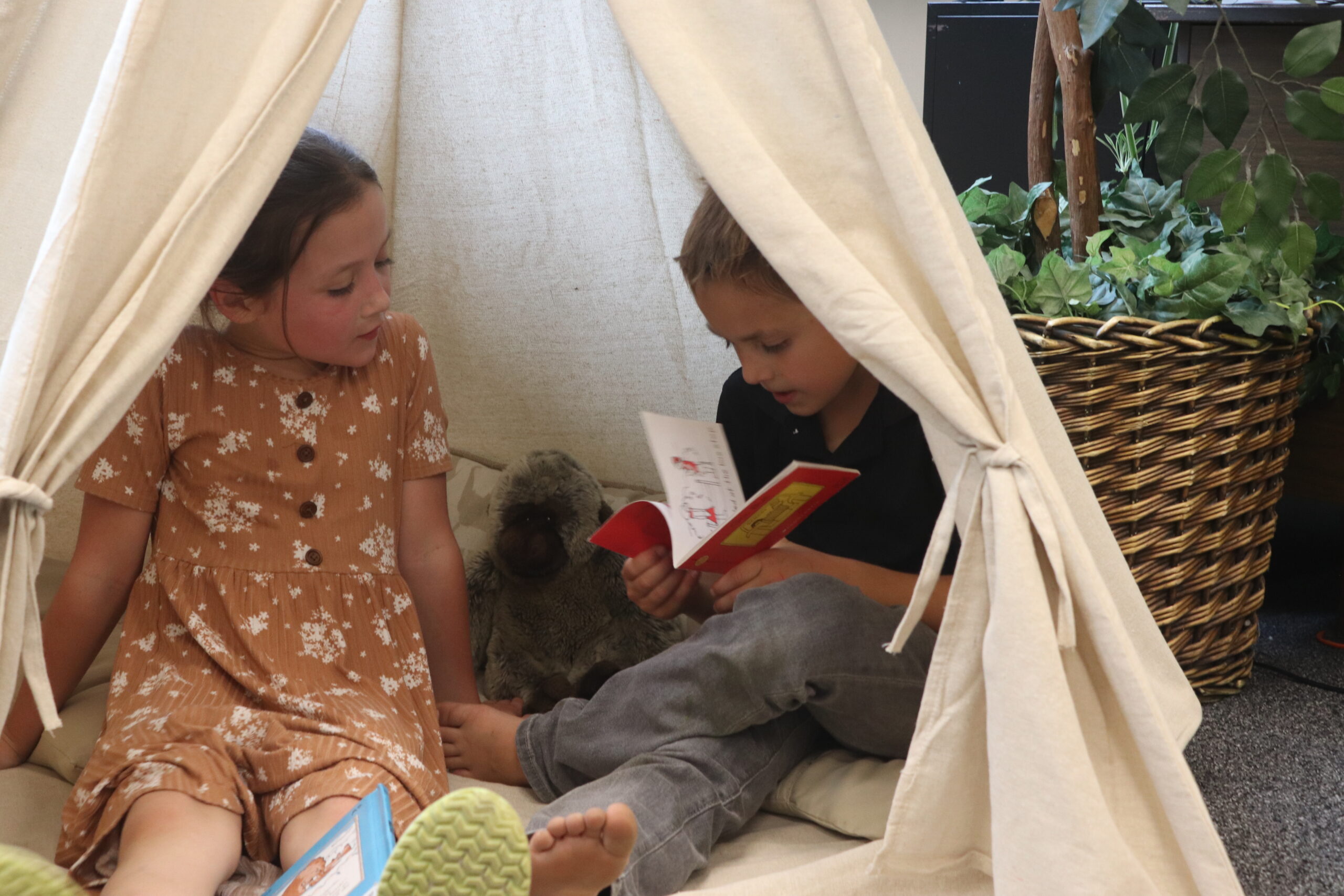
“Welcome to Camp Read-A-Lot!” Miss F and I greet our students as they enter the “camp.” We hand out name tags and direct the student campers to meet over here and we’ll give directions. We set up the camp in the gym before school started this morning, with camp chairs here, blankets spread on the floor there, and a campfire made of pool noodle logs and tissue paper flames in this area. We have stuffed animals placed strategically around the gym for the animals in the woods. This circle on the gym floor is our pond. There is a welcome sign and a sign of rules near the entrance (door). On this side we have placed coolers full of books for reading at Camp Read-A-Lot. In another space we have word search puzzles, coloring sheets, and crayons.
We teachers are the Camp Directors. The parent volunteers and teacher aides are Camp Counselors.
After we give some camp guidelines, such as, “Please Walk,” “Don’t feed the bears,” and “Enjoy reading,” the students select books from the coolers, and spread out through the camp to read, with some lying on blankets, and others relaxing in the chairs. After a while, the “sun” starts to set, so we dim the lights and students may read by flashlight, which they have brought. We’ve been playing background sounds of the woods.
The campers have a turn to go to the Camp Kitchen (my classroom) where they make s’mores. My aide directs the Camp Kitchen and helps small groups of the campers with their s’mores. We use red and white checked plates, napkins, and tablecloth (Dollar Tree) in the “kitchen.” To make the s’mores, the students place half of a graham cracker on a plate, add two or three squares of chocolate, and then place a large marshmallow on top. This is microwaved until the marshmallow puffs up (about 10 seconds) and then the remainder of the graham cracker is pressed on top. Campers bring their s’mores back to camp (gym) to eat them.
We also enjoy a teacher read-aloud at camp. Amelia Bedelia Goes Camping and Curious George Goes Camping are favored books for listening to at Camp Read-A-Lot. Camp Read-A-Lot is one of our favorite events and is fun to do near the end of the school year.
Teaching Vocabulary in High School

Abibliophobia. Apricate. Zeugma. What do these words mean? And if you don’t know, how can you figure them out? These are common teaching questions in any classroom, both content classes and foreign language classes.
In a study performed by Jiahua Mao in Asia, 50% of the students learning English improved their vocabulary through reading. Learning words in isolation, meaning that the words are not used in context but just taught to be memorized, was found to be the least effective manner of learning new vocabulary, although traditionally the most used (Mao 163). Yet this is what many teachers do: give a list of vocabulary words to their students, have the students memorize their definitions, and then repeat the definitions on a test.
Mao’s study then goes on to show that the most effective way to teach new vocabulary is to have students use the words in context. So what are some ways to do this?
Teach words in context:
1. Instead of simply writing down the definitions, students should write individual sentences for each vocabulary word–these sentences need to show the definition of the word in context.
2. Along with learning definitions, students should know synonyms for the words. The students can make synonym lists in their notebooks and go over them when they have a free moment.
3. One of the best ways to learn new definitions is by figuring them out from context when reading. Since students may need guidance, the teacher can model how to read around the unfamiliar word, looking for clues to its meaning.
Use visual aids:
4. Instead of making a word list with definitions, students can illustrate the new words.
5. Students can make flashcards with a picture on one side and the word on the other (this works well with learning a foreign language). The pictures can be hand-drawn or cut from magazines.
6. The teacher can hang posters around the classroom that display unfamiliar words along with the words used in context.
7. When students are reading and encounter a new word, they can draw a picture of the word’s meaning on a sticky note and place it over the word on the page.
8. When teaching a foreign language, the teacher can place labels identifying all the items in the classroom.
Use games (my favorite):
9. Memory: Probably the simplest vocabulary game is to print a set of cards, with each vocabulary word and and each definition on a separate card. Students then turn the cards face down and take turns turning over two cards at a time, looking for a pair. If the student finds a pair, he or she keeps the cards and takes another turn. The student with the most cards at the end wins. If the same vocabulary words are taught from year to year, the cards can be laminated and re-used.
10. Tic-tac-toe: A quick time-filler game, vocabulary tic-tac-toe is played by dividing the students into two groups. The teacher writes a tic-tac-toe shape on the whiteboard and fills in each box with a current vocabulary word. The teams then take turns using the vocabulary word in a sentence that shows its meaning (and the word must be pronounced correctly). If the team gets the sentence correct, they place an X/O on the spot where the word is. Regular tic-tac-toe rules apply.
11. Taboo: This classroom vocabulary game is similar to the board game Taboo. The teacher prepares cards for each new word, including the word at the top and then four words underneath that might be used in defining the vocabulary word. Students are divided into two teams; one at a time, the student describes the word to their team without using any of the four words in the list. Once the team guesses the word, the talking student goes on to the next word, continuing the turn for one minute. If the student uses one of the four words, he/she loses that point.
12. Chain: The teacher writes each new word’s definition on a card and then lays the cards out in a line. The word that matches the definition on the first card is written at the top of the second card; the word that matches the definition on the second card is written at the top of the third card, etc. The teacher then gives each student a card. The game starts with one student standing to the side of the room and reading his or her definition. The student who has the card with the matching word stands beside the first student. The second student reads his or her definition, and the student whose word matches that definition joins the line. This continues until all students are in the chain. The definition that the last student in the line holds should match the word on the first student’s card.
And the definitions of the words used at the beginning? Abibliophobia: the fear of running out of things to read. Apricate: to enjoy the sun. Zeugma: the use of one word with two other ideas, each which has a different meaning (e.g. The little boy stole my heart and my purse).
Work Cited
Mao, Jiahua. “Research on Current Situation and Countermeasures of English Vocabulary Teaching in Junior High School–A Case Study of Quiming Middle School of Guangzhou, Baiyun.” Language in India, Vol. 23, No. 6, June 2023, pp. 162-71. EBSCOhost, research.ebsco.com/linkprocessor/plink?id=5c2f1471-c4cd-3211-bc2e-58362b7450a1.
Photo by Sandy Millar on Unsplash

Board Structure
What defines a successful school? Gerald Miller looks at various school board organization structures and methods of conducting productive meetings such as Robert’s rules of order that provide an environment for success. The school board shoulders the responsibility of providing vision for the future of the school. Therefore, it is critical that the board operates efficiently and purposefully.
Teacher/Tutor for Hybrid Organization
Starr Mountain Academy is a new tutorial near Athens, TN. The founding group is from Wellspring Mennonite Church, but it is not formally connected. Students will be registered as home schooled and parents are responsible for grade reporting and any additional courses they may do at home. This may develop into a comprehensive school in the future. The tutor position is suited for a man or woman of various experience levels or vocational background. For 2024-2025, there will be a single classroom with students in grades 6 and up. (Currently 3 students for 6th grade, 1 for 7th, and 2 for 9th.) The tutorial will meet 4 ½ hours per day Monday-Thursday with student doing additional work at home. The tutor should plan for 6 hours of weekly prep work outside of that meeting time. The director of education will likely cover one or two classes to assist with spanning the grade range.
We are committed to a relational education in keeping with the example and insights of Charlotte Mason (draft document). The core curriculum will be The Alveary along with RightStart Mathematics. Training in pedagogical methods will be provided, as well as coaching throughout the year. While the teaching methods and curriculum require less preparation time and expertise from the tutor than do some methods, the tutor needs to be highly engaged and willing to learn new things. The teacher must be present with the students and approach all areas of the curriculum with joyful, attentive, diligent appreciation of God’s creation and what God has enabled humans to create.
This position has significant long-term potential. Other things equal, preference will be given to applicants with long-term interest. We plan to expand the grade range in future years creating opportunities for teaching different ages. There may also be opportunities to teach additional courses or help with administrative work.
Requirements
- Be a baptized believer and disciple of Jesus whose life and profession is in harmony with our theological statement. Function as a healthy authority figure in relation to adolescents and young teenagers.
- Maintain a diligent, appreciative approach to God and his creation, and uphold the value and importance of all parts of the curriculum.
Time commitments
- 22 hours a week for a 36-week school year August 2024- May 2025. 2 hours additional for parent conferences 3 times per year. Attendance at 5 evening events throughout the school year.
- Complete online Core Training and a 3-day immersion prior to school year.
Compensation
- Salary range: $11,000 to $18,000 based on relevant experience and skills (not limited to teaching experience). Additional pay may be available for preparatory work in the summer of 2024 (finalizing schedules, ordering supplies, etc.)
- Some assistance with finding a complementary part-time job may be available.
To discuss this opportunity contact:
Marlin Sommers, Director of Education marlin.sommers@gmail.com (423) 381-0837
David Miller, Chairman daval9002@gmail.com (423) 435-8639
Teacher Needed at Valley View Christian School
Valley View Christian School in Belleville, PA is searching out a grades 5-6 homeroom teacher for our 19 curious and engaged students. We are a congregationally owned and operated school that welcomes some families from other congregations. As an established, structured school with long term teachers and administration, we can offer teacher support and avenues for personal and professional growth. Interested persons may contact our board chair Duane Stoltzfus at 717.380.9448

Whoops! Now What?

mistake (məˈstāk) n. 1. an action, statement, or opinion that is incorrect, potentially causing unintended and possibly undesirable consequences 2. an inevitable and potentially valuable part of the teaching experience
Mistakes come in all shapes and sizes. Some occur in private without others ever knowing while other blunders may be fully public for all the world to see. At times, mistakes may amount to minor slip-ups with minimal consequences, yet others yield disastrous results with far-reaching, lasting repercussions. The reality is that, try as we might, we will err sooner or later. When it comes to teachers making mistakes in their classrooms, the challenge is to consider how we might pick up the pieces (figuratively or literally) and move on in a way that is best for us and the students.
Of all the potential sources of mistakes in my classroom, my gradebook has been one of the most consistent culprits. My school uses a web-based gradebook, which allows parents to review their child’s grades. I meticulously review my students’ grades with each new entry to ensure that everything is accurately maintained and updated regularly. Despite this attention to detail, I still discover miscalculations and errors. On a few occasions, I have even had a concerned parent reach out to ask about a suspicious grade—such as a student with a 1200% in math class. It is amazing what a misplaced zero can do for a child’s report card! Fixing this kind of error is usually straightforward and can even be a source of encouragement by knowing that parents are carefully monitoring their child’s academic progress.
I also remember a time when I taught a whole classroom of 2nd Graders how to write a lower-case cursive ‘j’ incorrectly. I realized the error that evening and fortunately had the opportunity to reteach the skill correctly the next day. However, as mentioned above, not all mistakes are as easily corrected. Others require much more grace to overcome and can bring a teacher far beyond the borders of their ‘comfort zone’.
A number of years ago, I had an experience at school where an error on my part resulted in a situation that was much less easily resolved than simply deleting a few mistyped digits. On that particular afternoon, my students were having a class in my room with another teacher while I worked on some other school-related tasks at my desk in the back of the room. There were a number of factors that coalesced that day into a perfect storm which crescendoed with me losing my temper. First of all, my students’ challenging behavior throughout the day leading up to that point had ‘pushed my buttons’, and I was feeling my patience had been pushed to its limits. Furthermore, I was in a period of my life as a young dad when I was not getting the sleep I needed to function well. As I worked at my desk, my students persisted in treating the other teacher with blatant disrespect, and I reacted in a manner that I thought was warranted at the time - I yelled. In fact, one might say I mustered my inner-drill sergeant to make sure (in no uncertain decibels) that each student in the room understood their behavior was unacceptable and that they had better get it under control, stat. Surely verbal intimidation would scare my wayward pupils into cheerful obedience!
However, the awkward silence that followed my sudden outburst was the first inclination that something was not quite right. It was not until the other teacher approached me after dismissal to debrief the situation that I became fully aware of the mistaken nature of my public display of anger. I thanked the teacher for speaking to me, and then I immediately put aside all wrathful responses from that time forward.
Please return to that last sentence and reread it with a hint of dry sarcasm as that is how it was meant to be interpreted.
I did thank the teacher for speaking with me, but inwardly the defensive thoughts were immediately activated. When standing face-to-face with such a publicly known error, it is easy to enter into a mindset that seeks to divert responsibility and to instead focus on all the things we did right. Following the situation described above, I wrestled for a number of weeks with thoughts such as:
- It was all the other teacher’s fault for not keeping the students’ behavior in line.
- I was just stressed and sleepy. Anyone would have done the same.
- The students needed some ‘tough love’. In fact, maybe they need more!
- I know that Teacher So-and-so used the same method, and everything worked out for her.
- I even tried to find verses of Scripture about righteous anger to hide my obvious mistake. That was quickly put to an end: So then, my beloved brethren, let every man be swift to hear, slow to speak, slow to wrath; for the wrath of man does not produce the righteousness of God. James 1:19-20 NKJV
If I could go back and give advice to myself, it might sound something like this - ‘Lay the excuses aside, and be open to what can be learned.’ Clearly there was a lesson to be learned from the mistake, but the temptation to participate in the unproductive cyclical thinking described above can be strong. Perhaps the field of teaching has brought a similar situation into your own life. If it has not, please be advised that it may be coming soon.
So how can we as teachers not only move on from our mistakes but also learn from them in ways that strengthen our practice and conform us more into the likeness of Christ? Consider some of the following tips:
- Some may argue that admitting mistakes gives the impression of weakness and incompetence, but becoming open about mistakes will likely boost the relationship you have with your students and others in the school community. In fact, studies have shown that a leader such as a teacher who is able to acknowledge when he has been wrong is usually perceived as a ‘warmer’ individual and more competent in their work, resulting in better student performance and increased school enjoyment (Dimitrova & Van Hooft, 2021). The inverse also appears to be true; it is actually through ignoring our mistakes that we appear incompetent.
- Haven’t made any mistakes recently while teaching? Probably not many of us would fall into this category, but it should be said that humility and the ability to learn are closely linked. Perhaps we are making more mistakes than we realize and could use some refinement in detecting our areas for growth. Unfortunately, we all deal with pride to some extent, and this can get in the way of both identifying and learning from our failures.
- Sometimes a lesson we have planned does not go as well as we hoped, and adjusting the plan would make it go more smoothly next time. Find a trusted mentor, perhaps a co-teacher, who would be willing to help you work through situations where you may have been mistaken in your teaching or approach. In turn, you can do the same for others. The benefits are threefold: 1.) talking about the issue will help you both to organize your thinking; 2.) the friend may be able to offer insight into how to best solve the problem; and 3.) you will have learned something new and valuable that can help you become a more effective teacher.
- Bring the learners (students) into the process. They surely make mistakes as well, and it can be a teachable moment to invite students into the problem-solving and correction process. For example, I am a relatively new song leader who occasionally makes mistakes when starting a congregational hymn. This can be very embarrassing. However, I have learned much through conversing with the more experienced, senior song leaders after a church service when they have made the same mistakes as me! One of my favorite teaching strategies is to replicate common student errors in my own work to see if the students can find and fix them with a purposeful explanation.
As a teacher, you have been bestowed with an excellent opportunity to learn a variety of content far beyond the studying you may find yourself doing to ‘brush up’ on some content before teaching. A career in teaching is a training ground for a teacher to build skills in leadership, relationships, organization, planning, conflict resolution, and so much more. However, the key to this opportunity typically is only available to those who are able to acknowledge and learn from their mistakes.
References
Dimitrova, N. G., & Van Hooft, E. A. J. (2021). In the eye of the beholder: Leader error orientation, employee perception of leader, and employee work-related outcomes. Academy of Management Discoveries, 7(4), 530-553.
Photo by George Becker: https://www.pexels.com/photo/1-1-3-text-on-black-chalkboard-374918/
Needing A Lead Teacher
Small school in Jamesport Missouri looking for a Lead Teacher for approximately 20 students ranging from kindergarten through 6th grade. Missionary school with local outreach. Have to assistant teachers from previous year that would be willing to teach kindergarten through second grade.... Open to all suggestions. Room and board provided along with generous salary.
5th & 6th Grade Teacher needed for 2024-25
We're looking for a teacher for our 5th and 6th grade class, currently estimated to be two 5th graders and five 6th graders. For curriculum in 5th and 6th, we use mostly (but not all) CLE.
The school is in its 2nd year and growing - currently expecting around 49 students for 2024-25 (K-12). The school was founded by Salem Mennonite Church (salemmennonite.church) but we also have students from other local churches.
Please reach out to Ken Miller (board chairman) for more information, including copies of our Faculty & Student Handbooks to learn more about us.
Or, you can start by filling out an application here: https://form.jotform.com/231857891291164
Teacher/Principal
Faith Christian School located in Catlett VA is hiring a teacher/principal for grades 6-12. (Approximately 8-10 students) Faith Christian School is a small Christian School supported and run by the congregation of Faith Christian Fellowship https://fcf-web.org/ . We are seeking an educator who is a faithful disciple of Jesus Christ and has a passion for educating youth. Additionally, this teacher will have the opportunity to act as principal of the school.
Responsibilities:
Provide a clear vision for learning for all students
Ensure a safe, secure and orderly learning environment
Cultivate strong relationships with co-teachers, board, and parents
Lead the classroom and assist the students with all their lessons.
Curriculum: FCS uses a hybrid of Individualized unit curriculum (CLE) and traditional classroom learning. Allowing the teacher to adapt to the current students needs and maximize the teachers strengths.
Compensation: $40,000-$55,000 based on experience.
Contact: Titus Helmuth 606-748-0130 or titehelmuth@gmail.com
Rewards that Inspire and Delight

In my classroom currently, we are working on filling the marble jar. Every time the students score one hundred percent on a test or on Bible Memory, they get to put a marble in the jar. When the marble jar is full, we will celebrate with a special reward that the whole class gets to enjoy. This is quite exciting for my third graders, and they are practicing their memory verses and studying for tests like never before. They love to watch that marble jar fill up as they anticipate the promised reward.
How much should we use rewards in our classrooms?
Years ago, I read an old-fashioned teacher training manual that basically said teachers should never try to motivate their students with extrinsic rewards. Instead, we should focus our students’ attention on intrinsic rewards. Extrinsic rewards are the outward kind that we give our students: prizes, treats, special activities, etc. that we use to reward students when they do good work or reach a goal, like the marble jar activity that I described. An intrinsic reward, on the other hand, has to do with the feelings of satisfaction, enjoyment, and accomplishment that students experience when they have done good work.
I do think we need to be careful in our use of extrinsic rewards, yet I beg to differ with the people who say we should never use them. After all, we adults expect to get a paycheck for the work we do, and that is, in a sense, an extrinsic reward. We generally experience distinct benefits from working hard and doing a good job. But I feel sorry for any person whose only reward from their job is a paycheck. The best kind of job is one where the work itself brings joy, satisfaction, and a sense of purpose.
So, as we consider the use of rewards in our classrooms, we should constantly be thinking of ways to stir up intrinsic motivation in our students. The outward rewards we choose ought to be a means to this end, and this is where it can be a little tricky. Celebrating a job well done is different from bribery, but it may be difficult to draw a clear line between the two. I believe the attitude of the teacher plays a large role in this. The way we talk about rewards can make a big difference in the way our students see them.
Do you emphasize good grades in your classroom? It is a good thing for students to be motivated to get good grades, and yet grades are a type of external motivator or “reward.” If the students’ only reason to learn is because they are afraid of bad grades, they are missing out on the true joy and purpose of learning. I think grades have often been over-emphasized, to the detriment of real learning. It can be so easy to say things like, “You need to know this because it’s going to be on the test.” Really? Instead, we should often be having conversations with our students about the purpose of learning and of developing a good work ethic.
But although we should be cautious about an over-emphasis on extrinsic rewards, I do believe that a healthy classroom is a joyful place where hard work and accomplishments are well-celebrated, and this can be done in many creative ways. Setting goals for our students and celebrating with them when the goals are achieved is a wonderful way to show them that we are always cheering for them and working for their best interests.
Obviously, in the marble jar activity that I described, I am drawing attention to good grades. Yet I remind my students that excellence in any worthwhile pursuit is a reward of its own. One thing I love about the marble jar reward is that it makes the students cheer each other on. It is a group effort, not a competition, so everyone rejoices when someone gets to put a marble in the jar. Though competitions can be a good motivator at times, I try to be careful with goals and rewards that struggling learners can never reach.
Rewards in the classroom should not be like dangling the carrot in front of the donkey in order to get him to move. Yet, if we use them in the right way, rewards can be a wonderful way to add joy, motivation, and delight to our classrooms.
Photo by Giorgio Trovato on Unsplash.

- 261Page 35