
All Content


A Word Fitly Spoken
Patrons, teachers, and board members all legitimately discuss school challenges with those beside them. Does your board adequately engage with patrons and teachers in these conversations? Does your board create the necessary discussion opportunities for you to provide effective leadership?

Teaching Methods Used in the New Testament

How many times in the New Testament is Jesus called “Rabbi,” or Teacher? Recently I was re-reading a textbook I had used thirty years ago in a college class on a Christian philosophy of education. One section stood out to me: how Christ and the early church leaders used different educational methods in teaching new converts. This is a summary of a section in that textbook chapter, showing the method used and giving an example of how this could be used in today’s classroom. (Oh, and Jesus was called “Rabbi” sixteen times!)
Analogy
I Corinthians 12 compares the church, or body of Christ, to a human body, telling how each part is necessary to function. This method could be used to compare the parts of speech to a family or math story problems to a family business.
Contrast
In Matthew 6:19-21, Jesus contrasts the storing of riches on earth with storing treasures in heaven, showing that heavenly treasures are far more valuable than any precious earthly item. Today’s teacher can use this method to contrast different ways of solving a problem.
Demonstration
Mark 6:41 shows Jesus praying before breaking bread and feeding the five thousand. This reminds his audience the importance of giving thanks for their blessings. Teachers demonstrate how to do things regularly, especially in practical science labs or on field trips.
Direct involvement
In Mark 6:7-12, Jesus sends the twelve apostles out to spread the Gospel. He gives them instructions on how to be involved in the lives of the people they encounter. Good educators always involve the students in the learning process, such as having them speak the foreign language they are studying.
Discipline, Reproof, Correction
II Timothy 3:16 says that God’s Word is useful for discipline, reproof, and correction. Teachers consistently discipline their students, applying God’s Word to situations with love and compassion.
Discovery
Mark 14:66-72 describes Peter’s denial of Christ. At the end of this passage, Peter remembers that Jesus had predicted his denial. Peter discovers that Jesus was right and he was wrong–and Peter weeps bitterly. This greatly influenced Peter’s later life and ministry. When today’s student can be led by a teacher to discovering a truth, the impact is longer-lasting than if the student is simply told the truth.
Example of the Teacher
In multiple places of the New Testament (II Timothy 1:13; II Timothy 3:10-14; John 13:4-16; II Timothy 1:5), the church leaders lead by example. Kienel states, “Providing a godly example in the classroom [is] perhaps the most important method used by the Christian teacher. ‘Who he is’ teaches much more than ‘what he says or does.’”
Individualized Instruction
John 3 gives a lengthy narrative of Jesus speaking one-on-one with Nicodemus, explaining to him the Gospel and new life. Whenever possible, today’s teacher can also work with individual students to meet their needs through individualized materials or discussion.
Lecture, formal teaching
Luke 6 recounts Jesus’ Sermon on the Plain. Matthew 5 through 7 gives Jesus’ Sermon on the Mount. Both of these are examples of presenting information or facts orally to the students. While this is not always the most effective way of teaching, there are times (especially with older students) when chunks of information can best be presented through a lecture.
Memorization
In II Timothy 3:15, Paul reminds Timothy that he had learned–likely memorized–many Scriptures when he was young. In the Christian school setting, students should certainly be memorizing Scripture, but math facts, poetry, and other facts are also effectively taught through memorization.
(Summarized from Chapter 5 of The Philosophy of Christian School Education, edited by Dr. Paul A. Kienel)
Photo by Aaron Burden on Unsplash

10 Ways to Encourage Creativity

Having students who are creative usually doesn’t just happen; but if they are encouraged to be creative and given the tools and resources to be creative, our classrooms can be seedbeds of creativity. Here are ten different ways to foster and encourage creativity in our classrooms:
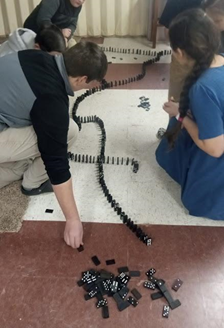
Give students supplies and ideas. These don't need to be for science or art necessarily; they can be just for something fun. My rule is that any activity should have educational value. This one, for example, involved planning, skill, and design.

Take students to new and interesting places for field trips.
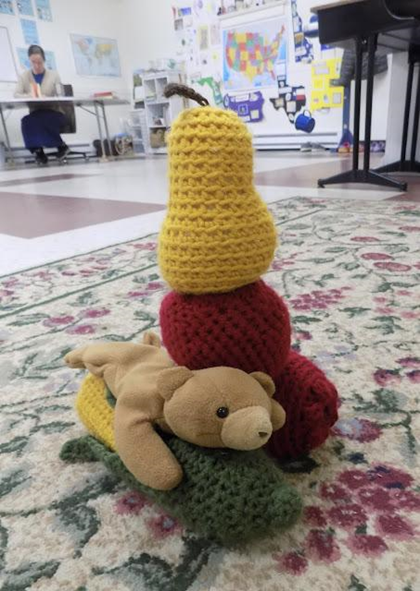
Have interesting and unusual items in your classroom. Notice and say something when they do something creative, like stacking them all in a tower.
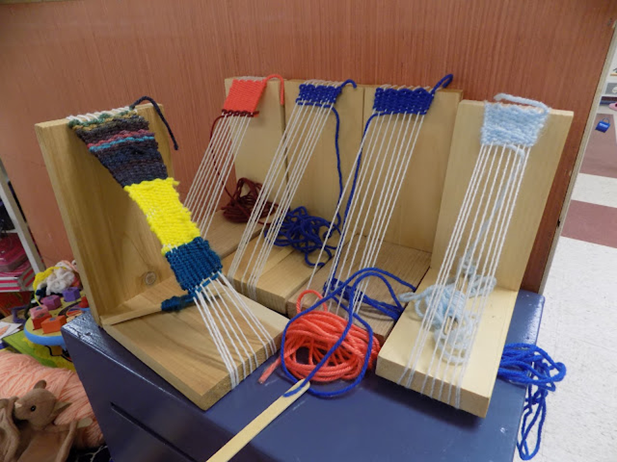
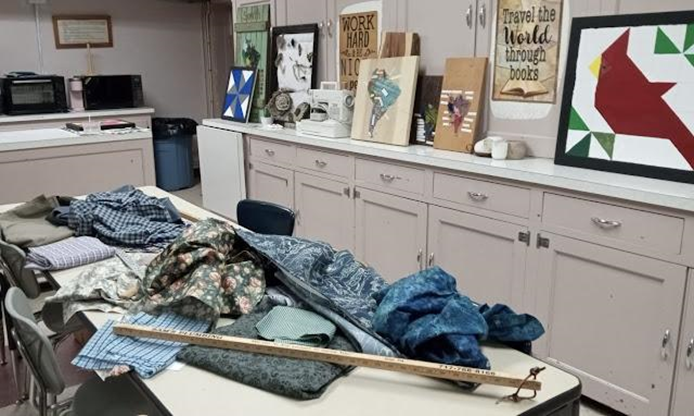
Provide lots of supplies in various sizes, shapes, colors, and textures for art projects. Bring them to school and encourage students to choose the ones they like, not what everyone else is choosing. Too often students pick the same ones and the results are too similar. Also, provide many options of designs and patterns for art or history projects.
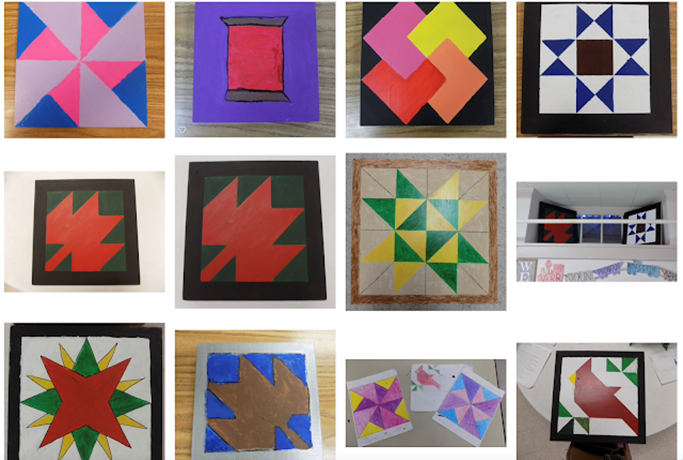
Display their finished projects around the classroom and leave them up awhile so that students will have a visual reminder of their creativity to enjoy.
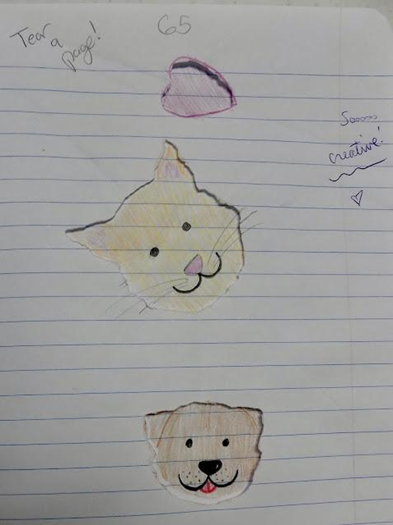
Write notes on your students' papers or in their journals, appreciating their creativity. This will let them know that you noticed it, and this will encourage them to keep doing it.
Okay, these next two aren’t exactly being creative, but if we do them, we will be encouraging our students to think outside the box, exposing them to new and different things, and training their minds to recognize creativity, beauty, and God’s diverse creation. These will help them be more creative.
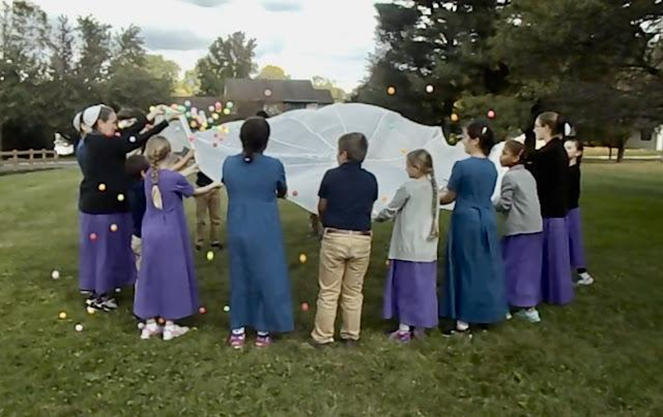
Introduce them to new games and edifying activities.

Find new and different foods, especially from other lands or cultures, and bring enough to school to share.
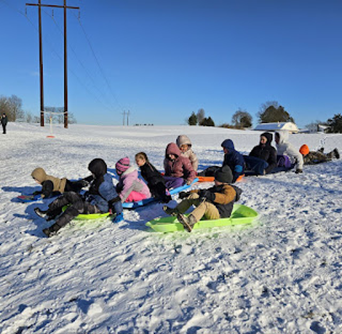
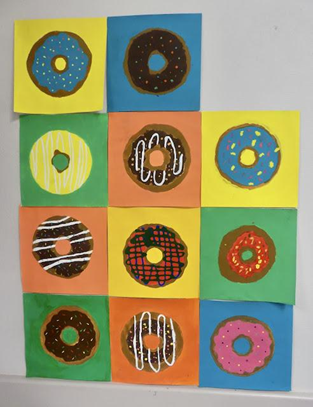
Try to think of different ways to do anything and encourage your students to do the same. "May we add a three-dimensional texture to our donuts?" "Can we make our own design?" "Let's make one long connected line of sleds as we go down the hill!" Yes, yes, yes!
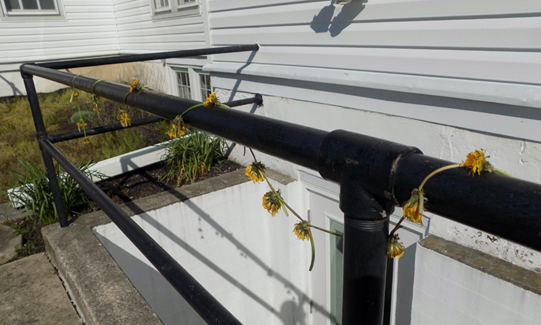
Be spontaneous. Make daisy chains on a sunny day during recess. Encourage a student to try to catch the bird feather that is floating down from the sky. It’s delightful to experience various activities; we don’t have to just play soccer every day.
Painting photo by Alice Dietrich on Unsplash


Teaching Techniques for Early Elementary Teachers
Now, some general teaching techniques and tips.
Inspire and Save with Thrift Stores
How many of you love thrift stores? [many in the audience raise their hands] I'm not surprised. How many of you despise thrift stores? [one hand is raised] Okay. Sorry.
I've got two main collections that I'm really proud of. More than that, but two big ones I want to talk about right now. The first one is my Beanie Baby collection. So, every grade one and two teacher should take advantage of the hyper on Beanie Babies fifteen or twenty years ago and everybody bought those little stuffed animals and they're going to be like the next major profit maker. Like you could buy all these collectibles and you'll be and then the market tanked, and everybody sent them to thrift stores. And now you can go along and buy them for like fifty cents.
So, what I have here in my hockey bag is my collection of Beanie Babies, and I'll start showing you here. [Brubacher transfers hundreds of Beanie Babies to the floor] It's been over a couple years I collected them. There's the last count, I think there were 241 of them, and they all are different. I mean, there's some of the same animals, but there's some different ones still, like, if there's different penguins, like, all penguins, but they look different. Almost done. (Even an American one, even though I'm Canadian. Here you go. And almost done. Few little ones left. There we go. So afterwards, you're welcome to take a look at these. I would love to share them, but they're special to me.
In general terms, the things I do with those is they're fun for the kids’ indoor recess, if you can't get out for recess for some reason. They build pet stores with them. They would fight over them. It was great. But more than fun, ... A story about a young girl who was in my class.
She was in grade two. She came from a very troubled home, and she was in my class. She had a really hard time trusting. It was obvious. As you can tell that this is walls were up until the day I brought in my collection of Beanie Babies. I was teaching at a different school at the time, so my collection wasn't permanent there, but I got my collection of Beanie Babies, took her to the class, and that day, that girl changed. Suddenly, she had [a Beanie Baby] to trust, and after that our relationship was so much stronger.
There's something about this thing for young children. They're amazing. They are therapeutic just holding them. There are little beads inside. They're amazing. So, for just a simple fact of creating an exciting environment... I have so many pets in my classroom, like real pets. I've got birds and the fish and the lizard and the chinchilla, and I'm hoping to get another critter this year. So, I have real pets too, which do the same thing, but children are going to love these wonderful things.
I also use them for some more educational purposes. We'll get into that later on. I use them for rewards too. I had a whole bunch of them, so I put up, maybe a hundred of them out to start with at the beginning of the year. And then if they earn a certain reward, we get a new beanie baby in the collection. "Oh, it's so exciting!" They each get a turn holding it, and then it goes in the collection, and then it motivates them for various things, which I'll talk about shortly.
The other thing I collected is children's books. I have about 2,000 children's books, and then I stopped teaching grade one and two. So, some other teachers got some books. Again, thrift stores. There are literally thousands and thousands of dollars’ worth of books there for a fraction of the price. And because they're cheap, because they paid fifty cents or a dollar for a book or got them free for that matter, I would encourage the kids to borrow them, take them home. Not wreck them on purpose, but if they get wrecked because your little sister scribbles in the book, well, too bad, but it wasn't a loss to me. Promoting a love for learning by just getting books out at their homes.
I did a number system where I had all my books and the titles and a number on my computer, and then I wrote the number inside each book because watching grade one and two students try to sign their books and on a piece of paper, like, they'd write the title and they got the author and the summary of the book and everything when it's supposed to be just signing out the title. It's a disaster. So instead, I had them numbered each book so they could write their name and the number of the book they're borrowing, and that way I could keep track of who borrowed what book.
I also like with these books, I like to have what's called literary class once a week. I still do it in grade five and six, which is kind of comical because they love it. It's a highlight of the week. What I do is I take a picture of whatever book I have whatever the picture book is, I take pictures of it and then I put it up on the projector and I read the story to the class. It can be little kids’ books, and these grade five and six students are sitting there just drinking it in, and they love it. So, grade one and two, same thing. Once a week. We talk about the book, do an activity with it or just enjoy the pleasure of reading a book together for no good reason other than reading is a great thing to do. And developing a passion and a love for reading.
Passion for books is amazing. The literary class period for me each week was kind of that turn things off and just relax. No pressure. You will not be tested on this. There's nothing, and children love that. Even adults do that matter, if you're honest.
Use Rewards Wisely in Your Teaching
he last number of years, I've changed my methods to try to encourage success for each child, whatever that looks like. I look back in the grade book and whenever I marked their test, and if they got a score equal or better than the previous test or quiz in that particular subject, then they get a sticker. So maybe one student got 70% and another got 100%, and they both get a sticker, and they love it. Small thing.
Stickers are really boring when you go to the dollar store and buy something like “Great Work!" Or like that kind of thing. It's like, "You're the Best!" "You're Amazing!" And like, you can't all be the best. So, what I do instead is I go to like dollar stores and thrift stores again and buy these activity books. Sometimes if you're lucky, you have stickers in the book, and then you rip out the stickers and throw the book in the garbage, or else let the kids scribble on if they want or whatever they want to do. And then I got this pack of very unique stickers. You never know what you're going to get sometimes, and the kids love it. It brings so much more life. It's little sparkles of joy in the day.
Entertain and Teach with Costumes
So when I taught the C H sound, the sound, I always try to bring something in for each sound like a little Beanie Baby or whatever it might be I try to bring in. So, the kids love it when the teacher does things random creations and things. So of course, you're going to love it if their teacher walks out of the room and comes back dressed as a chicken. (So, I haven't worn this thing in ages.)
So what I would do is get this white blanket and I would, wear this white blanket. I had these yellow rubber gloves on my feet like blum blum blum like little chicken feet, and I go walking in looking like a chicken, and it's not very comfortable. They loved it. And then, of course, they want to wear the chicken hat and all that good stuff. Just anything to try to get a bit of life and a bit of memorable experiences happening.
I've collected a number of costumes. [Brubacher digs through a mound of costumes.] I have (Oh, what's this?) A hot dog, a bottle of ketchup, mustard, hot sauce. (What's this?) I don't know what that is. Is that a hot pepper maybe? I haven't looked at these things in ages. A banana? (What's this?) Oh, the ketchup bottle. Bacon?! Everyone loves bacon. Hamburger. Taco. [You must] use your imagination sometimes. The soda cracker. That's random. Anyhow, the possibilities are endless for all ages, but grade one and two, whatever. What you can do with costumes, I will demonstrate later on. Hopefully we'll have some time for that. Something I like to do with one of my costumes. If you watch after Halloween, you miss some really good deals on costumes. I think some of these, like, 90% or 95% off because, like, the store was desperate to get rid of them. I don't blame them. But, anyhow, they're probably trying to get rid of them, so it's like a couple bucks versus like $30 or $40 dollars like they usually are. So, you can grab a bunch of cheap costumes. It's great fun.
Next point, I don't have much to say about.
Draw Attention with Visuals
I love the power of video in my class and that every school is going to be different. There are different standards for that. But a little educational two-minute video can bring that class to life so much. Show them pictures or videos of this, but anything will draw the student's attention in.
Tell Stories
I'll I'm not much of a storyteller, but my students forgive me and listen anyhow. And I'm like, "So have I told you the story about..." and their eyes light up, and then I tell them the story I told them three times before probably. They're like, "Oh yeah. We've heard that one already." But anyhow, they love stories, especially personal stories about your life.
Now I'm not a very private person as you may have guessed. Some people are, and that's fine. But if you're willing to share stories from your life, kids of all ages will love that, and it just draws them in amazingly well. And when you're telling a story, again, be alive. Be expressive. Make it come to life.
Catch and Keep Attention with Lesson Hooks
Now, if you're like me in teaching a multi grade classroom, it was not realistic to try to have an amazing lesson plan prepared every day with a perfect lesson hook every day for every class. No. I won't try to fool anyone because you're all experienced. You know I'm lying if I say you can. But it's fun to try to bring in whenever possible. Try to bring something in to wake the students up from their slumber.
And, like, if you say, [whining monotone] "Alright, class. Open your book to page eighty-seven. We're going to be learning about the moon today." They're going to be like, [disingenuous tone] "Alright. Excited."
No. They probably won't be. But if you start off with a simple question like, "Have you ever gone on a big road trip with your family? And then, of course, they're going to tell you half a million stories about their road trips, and you shut them down in a dignified way.
And then you're like, "Well, those are some really long trips. But did you realize that if you were able to drive your car up in the air to the moon, it would take 160 days of driving? No stops. No restroom breaks. No food breaks. No get out and stretch your leg breaks. Nothing. Just straight driving you and your family for a hundred and sixty days. That's like all of school. Never stopping for weekends or anything. That's crazy. Now open your books to page [whatever it is] and we're going to learn some more exciting stuff about the moon because that's how far it is to get to the moon. That's how long it would take for you to get there."
And suddenly your students are like, "Woah!" rather than falling asleep.
Learn from your Mistakes and Help Your Students Learn from Their Mistakes
I have a procedure, when I talk about grades one and two, for marking corrections. So, I'm going to try to lay it out here. It's very basic, but I'm afraid that I may make it confusing. So, let's say that we have, a student in their workbook, a basic math question. So, the students are perfect at math, and they put [Brubacher writes on the chalk board] "5," "5," and "5." And then that's the work for the day. [Brubacher writes on the chalk board] "
In the evening, I come along, and I mark it. So I go like no," and "no," and "no." So, three x's of course because they were all wrong, I think. Good. Yes, they are. So, there's three x's and then I give their work back the next day. Ideally, whenever possible I tried to mark the spot with them. Immediate feedback was the most effective way. If not able to do that, this is the technique that worked next best for me.
So, I would go through, and I'd hand their work back the next day they come in the morning before school. Often, they'd come and start on their corrections before the opening bell rang. Then they would come, and they would take a couple... "Oh, yeah. This one's 4 and this one is 7, and then they went off and played and forgot to do this one, of course.
So that evening when I finally get a chance to look at their corrections again, I come through and I say, "OK. This is good." So, I circle, saying it's correct. This one I can clearly see they tried. It's still not right, so I'm not going to do anything with that one. This one, they completely skipped.
Now, when I taught grade one two, what I cared about is not that they had the right answer, but that they at least tried it. So, what I do is if I set even one question in that subject that they did not even try to correct it, they totally skipped it or missed it, I would write their name on a piece of paper along with the subject that that mistake was in.
The next day when they came to school, they had this paper on their desk, and that meant that they had to do all their corrections in that subject and have me check them before they could do anything else that day (like, if they've done their work, before they could like, whatever free time activities they usually did)q. Before they could do any of that, they had to do all their corrections on that subject. It was not a punishment. It was a procedure. It was amazing to see with time how that made a difference, that they worked harder the first time and that they tried to make, like, get all the mistakes. Again, not a punishment. It wasn't like, "Oh, you awful person! I never make mistakes. And you..." No. We all miss things. Which is to help raise that awareness for doing care for the first time.
And then, if there were few enough students each day (had set the standard). Few enough subjects in the whole day, of all the students combined, that they at least tried the corrections, there would be rewarded the next day. For example, a new beanie baby or something. And they thought that was great. And I had way too many books to put in my library, so if they're lucky they get a [new] book and a Beanie Baby on the same day. And they thought that was amazing. So just a simple way to hold them accountable. I can explain that more. I'm kind of rushed for time, so if you want to learn more about that, I can explain that later.
Then once a week, what I do is I put on my ketchup costume wherever she it is. [Brubacher rummages for a ketchup costume]. I would put this thing on, and we had ketchup period. We would ketchup on our corrections. So, I would put on my ketchup costume, which I'll do for you now, and I would sit at my desk, and they would all do their corrections. And it kind of turned into a race. They had to try to get the corrections done as fast as possible. They had printed it on my desk. I would mark them, and I'd write down a paper every time they were finished. I'd cross off on a paper every subject they were done, and they'd turn to a race to see who could get their corrections caught up first.
To be honest, it sounds glamorous. I usually get frustrated and upset during the process because it was high energy, high maintenance, high... Like, we had half an hour to get this done, and the ketchup costume helped a little bit to calm everybody down. But when it's all set up done, I'd be like, "Ah. We're done. " And that feeling of all our corrections are caught up for the week. We have a clean slate going forward, and it was wonderful. You don't have to wear a ketchup bottle for that, but it does help.
Review Regularly
Obviously, this is not new to you, but I was curious, what are some favorite methods that you have for reviewing? Let's just talk together here a bit.
Audience member: For sight words, we have this little game where I would write each sight word on popsicle stick and have them in a little back bucket. And they would pull it out, read it, put it back. But there were two or three in there that said, "Oh, snap!" And if it said, "Oh, snap!" then you had to put all of yours back in. And so, you didn't want to pull that one, but the first person to get five popsicle sticks in their hand would win the game. And depending on if you pulled "Oh, snap!" too many times, the game could go on for a long time, and we would just, like, die laughing. Like, we had so much fun with that game.
That's a case of controlled educational fun. It's yeah... Great example! Anyone else?
Something I always like doing "Around the World." The classic game "Around the World." So those good old-fashioned ones, they might be as old as the hills for you, but these children are just little. They've never heard of these wonderful things before. So, some of these old classic games. One is called "Kick Out the King." (I forget what it's actually called. I think I had to renovate the name a little bit.) Like, they stand in the line with these flashcards and then if they get it right, they get to move up the line, and if they get wrong, they get bumped to the bottom and it's great fun. Just any of those things.
Take Control
Take control of the curriculum that is, not maybe other areas, but take control.
One thing always bothers me, and I'm speaking to a group of experienced teachers here, so I can say it without too much fear because I don't like teachers at my school, I don't like telling them this as much when it's their first or second year because but... The curriculum is your guide. The teacher's guide is your guide. It's not a master. So, when a teacher is just like by the book following everything like, "It said we got to do this. Now we have to do this."
For the sake of your students and your own sanity, if you're able to, be creative. Skip work. Add work. Skip or add quizzes, tests, and other activities, because if a student is learning, they have been successful. Even if you [tone of despair] "didn't quite get the whole lesson done," really, if they learned, they were successful.
But as a principal, I do encourage you to speak before you do anything too radical, with your leaders in your school and make sure that they're on board with that. But my pastor at my church, he said one time, a number of years ago, he told me, “The seven dying words of any organization is, 'we've never done it that way before.'" "The seven dying words of any organization is, 'we've never done it that way before.'"
And the same for students. How many times has the being not successful? How many times has the foundation being built poorly and weekly because "we've never done that way before. We can't try that in front of students. No. I'm not sure how that would work."
Maybe it's worth trying something new sometimes.

Why Should I Graduate from High School?
The following is an edited compilation of responses from Anabaptist school administrators to the frequently asked question of why students should graduate from high school.
Cultivating Kingdom vision
- It is true that many of the successful businessmen and farmers in our communities have no high school diploma, and it is possible, especially in our Mennonite communities, to be very successful without a diploma. However, is that all we are about in the Kingdom of God—making successful businessmen? Many people get called out of farming and business to serve in missions in some way, or even to be our pastors. Many countries are closed to missionaries, and the only way to get in is with some kind of tentmaking skill with a degree backing it up.
- The men and women our schools train for the Kingdom should be able to think well, articulate in defending the faith and sharing the Gospel (so how can you hate grammar?), proficient in many areas, highly skilled in managing time, able to get along with lots of different kinds of people, passionate about things that really matter, etc. Where are the conservative Mennonite apologists and theologians? Our lack in these areas inhibits our effectiveness in the public square. Do we not have something worthwhile sharing with the world?
- Financial success should not be the only measure of value. Sure you can be successful without a diploma. But what is your calling? If you or your parents don't know what your calling is, then it would be good to stay in high school, because high school is designed to prepare you for various callings, of many shapes and sizes.
Learning how to learn and think
- One of the most significant aspects of high school is learning how to learn. The main goals of high school are to teach students how to process information, to develop discernment, to solidify and deepen the strategies for learning they have learned in elementary school.
- Some of the best classes, especially elective choices, are in high school. This is your chance to argue about and wrestle well with non-resistance stories and other life questions like whether to baptize forwards, backwards, or from the top. The issue is, students often don't CARE at that age, but in 10 years they'll wish they knew more about church history. Perhaps that is where winter bible school comes in, or maybe that's about volleyball too. So it is the teacher's job to make them care, at least for that day, but hopefully longer. The point can be made that 10 years from now they'll be glad they did graduate (caveat: assuming good high school teachers).
- High school is different from grammar school. By eighth grade you may have learned everything you need to know if you are going to be a butcher (dividing sheep), a baker (counting rolls), or a candlestick maker (?). However, high school offers not just more content, but practice in learning how to learn—learning how to think and reason well, which translates to not being sucked into advertisements and Nazi propaganda. An alumnus told me recently when I asked whether he thought it was good he had Earth Science in high school or should we consider another science option that we should continue teaching Earth Science, not necessarily because he thinks he's "using it", but because he remembers learning how to learn was emphasized. It is totally valid for a student to say "I won't ever use this." I never try to win the argument that they will need to know the difference between monogenetic and polygenetic volcanoes in order to be successful in life. Rather, what will you use? Your brain, which you are using right now, and your heart, which you should exercise to be amazed at God's nuance in creation, and also the process of science itself, a pursuit of observing God's creation. Perhaps you'd rather look at polyps in the sea, but all are interesting because God put them there.
- All the subjects get more interesting the deeper you go. But yes, it is hard work. It's only for high schoolers! It's like the difference between volleyball or softball in 1st grade or 12th grade. You can't really spike or hit a homerun until you've grown and worked hard, and then the game has a whole new meaning! History helps you contemplate your identity and purpose at a time of rapid worldview development It's amazing what you can do with math, a symphony can be stored in a series of ones and zeroes! Science gets more amazing the deeper you go in molecular or cellular structure; DNA proves cold cases, healthcare has dramatically increased our lifespan. But our students need to hear, see, or be exposed to these realities and stories in an energetic way, including videos, field trips, job shadowing, research, visiting speakers, etc. just for starters. Maybe English is a stickler, so let's be honest, are we giving them good literature experiences?
Succeeding in today's economy
- Today's college is yesterday's high school and today's economy assumes a diploma for common jobs, including getting a job on our local township road crew to plow snow. Therefore, having no diploma is seen as being a "drop-out" which raises red flags for employers.
- Agriculture and trade industries are getting more sophisticated as equipment becomes increasingly computerized.
- The abundance of Anabaptist employers who will hire you without regard to your level of education skews our thinking. It is very difficult to get a job in a non-Anabaptist business without at least a high school diploma, which can limit opportunities for ministry. Students have no idea where God will take them in life; therefore, it is best to be prepared for anything.
- A diploma opens many doors of opportunities, opportunities students may not realize at the moment they may want or need. Some students have legitimate academic struggles and probably should not be pushed. But I am truly sad at the many bright ones that have a low view of academic endeavors.
- Good or bad habits and attitudes often transfer to the workplace. What employer wants to hire someone who says they hated school, didn't want to be there, showed up late, didn't complete their work, did as little as possible, but says they'll work hard someday? If you have a poor attitude about your required work now, you probably will be complaining about work in 10 years and have one of those stickers on your truck.
The problem of soft parenting
- Young people are typically not in a position to make a wise decision about this issue. Soft parenting shows itself in allowing the student to decide if they will complete high school or not. This is most unfortunate because young people lack sufficient perspective to wisely choose in this matter.
- Soft parenting is a teaching on which we need teaching. Our people need to understand the tendency to react to perceived insufficiencies in the previous generation. I say "perceived" because many times our perception is not totally correct. We often miss the strengths of the preceding generation. This teaching should come from our pulpits and from fathers who are honest/brave enough to talk to their congregations/children about parenting styles, including their own. Why should we let our children's understanding of proper parenting rely totally on observation? Tell and show them the right way with a healthy dose of humility.
- I would always recommend asking the parents nicely why they feel it's best to let the child make the decision. Yes, we do need constant teaching on parenting. This is a place to bring a non-threatening stranger in to speak at your parent-teacher meeting. One recent family interview in my office saw the child bouncing around wherever the child felt like going or doing. If parents are letting their pre-schoolers do whatever they feel like, it's too late to tell teenagers otherwise.
Caveats and concessions
- We should value but not overvalue education. Educators naturally believe that what they do is very important and easily take personal offense if students or parents don't value education as highly as they do. The decision should always and ultimately rest with the parents. If they choose not to have their child complete high school or to leave the decision to the child, it is the school's responsibility to respect their decision.
- I have had a handful in the last decade who had academic learning difficulties such that I (and they) felt it would be a waste of everyone's time and money (not to mention teacher frustration and poor school morale) for them to attempt sitting through Shakespeare and Algebra II. They also had dreams of welding and farming. Both went on to do so, but not without parent-teacher conferences.
- We need good high school teachers who know what they're talking about to engage the students and live deeply to model life. As one administrator put it on this forum, it's 20% the curriculum and 80% the teacher. If we don't have the staff, it's harder to argue they should stay, just because they should.
Teach 4th - 8th Grade In Beautiful Mesopotamia, OH - 2024-25
We have 1 fourth grader, 1 sixth grader, and 5 eighth graders that need a teacher this coming year. We are a small and friendly community in northeastern Ohio. We use primarily CLE curriculum.
Zion Christian School has been operating since 1965 and this year we have grades 1-11 with a total of 18 students. You would be the fourth teacher on the team. If you are at all interested in joining us, please call/text Steve Kaufman at (330) 647-1290 or Kenneth Petroski at (216) 502-5287 for an application.

Summer as Sabbath

The first page of the Bible begins with a dazzling narrative. The God of the universe takes the chaos and waste world and turns it into a place teeming with life—a place that is called good. But after completing this important work, God does something rather astonishing. He rests.
And not only did God rest, He also called His people to rest. This, of course, can include setting aside one day of the week as a day of rest. But it doesn’t need to end there. God urges His children (yes, even teachers) to make rest a way of life.
It is interesting that when God instituted a functional system of instructions for His people in the wilderness, He built rest into the fabric of their communal life. They were supposed to cease from their work on the seventh day. But beyond that, they were also supposed to set apart each seventh year, giving the land a rest by not planting crops. He promised that the harvest in the sixth year would be overflowing with abundance to carry them through the Sabbath year.
Further, every seven Sabbath years, there was supposed to be an even greater reset—the year of Jubilee. During this year, all purchased property was to be returned to the original owner. Hired workers were to be given freedom. It was a scrubbing clean of the slate.
And really, isn’t that what the summer months ought to be for teachers?
An extended break is woven into the fabric of how school functions. And usually, by the last weeks or days of school, every teacher remembers why it’s so needed. The students get tired, irritable, and restless. The teachers don’t always feel much better—though they may be better at hiding it.
There is a deep, bone-weariness that seems to be particular to those last days, and a deep soul-cleansing release that seems to only happen during the months of summer break.
Summer holidays look different for different teachers. Some find it easy to rest, reveling in slower days and more relaxed schedules. Some struggle with the open-ended, schedule-less days and flounder without the consistency of school routine. Some are unemployed, with abundant time to spend on hobbies and quality time with family or friends. Some take on a summer job, immersing themselves in a different sort of work for a few months.
Regardless of which of these camps you fall into, this is still true: God calls you to rest during the summer.
This will look different for every individual, but perhaps exploring some principles of Sabbath rest can create a foundation on which you can develop your own rhythms of rest during the summer months.
Sabbath is instituted as a regular rhythm for a reason.
Our Father, who created us and knows us better than we know ourselves, understands that we need rest. Teaching is a demanding work, and it depletes physically, mentally, and emotionally. In order to be able to keep pouring yourself out for your students in the long term, you need to have regular seasons of being filled.
God can meet you in your depletion when you come to Him with an openness and desire to be renewed. Your areas of need will be unique to you, but the following examples might help you recognize in what areas you need to be refreshed.
First of all, pay attention to the ways you feel especially weary. What was difficult about your school year?
- Maybe you had a large class and spent so many hours grading papers that you had no time to do things you love to do, and you need to absorb yourself in favorite hobbies.
- Maybe an especially needy student depleted you of emotional energy, and you need to make space for others to speak into your life and rebuild your relational stamina.
- Maybe you struggled to get excited about the content you were teaching for the seventeenth time, and you need to do a deep dive learning about a topic that intrinsically interests you.
- Maybe you found yourself generally grumpy and frustrated by student immaturity or institutional frustrations, and you need to spend time in nature to remind yourself that there is still beauty and goodness in the world.
Recognizing your areas of need is the first step in allowing the regular rhythm of summer rest to be most effective.
Sabbath is a reminder that God is God and we are not.
One of the reasons why God instituted Sabbath for His people was to enable them to regularly, habitually make themselves aware of their dependence on Him.
Teachers manage so much. Classroom procedures, discipline and management, lesson planning—all of these need to be in your control. In a way, a teacher becomes a little god in their classroom, tending and ruling over what has been entrusted to them.
But God is God, and we are not. A Sabbath summer can remind us of this truth.
Find ways to release control during the summer months, to slow down and relax your mind and body. Meditate on the ways that God controls the world, not you. Be intentional to cease from striving in the ways that you can. Your mind and body crave this renewed dependence on the One who is truly in control.
Sabbath is a time of release.
Surely all teachers have experienced the many ways that teaching is not a normal 9-5 job. That stack of grading that comes home in your bag, that student situation that keeps you up at night, that hurtful conversation with a parent that leaves you in tears—all of these things tempt us to wrap our entire identity in this all-encompassing work.
And while being a teacher is an important part of who you are, it is not all of who you are. Use the summer months as a way to pursue other things you love to do or devote time to activities that are very different from teaching.
It can be so easy to spend summers making bulletin boards or crafting unit plans—after all, there is always one more thing you could be doing to make the coming year easier. And there is a place for these things, (and if they genuinely fill you with joy and energy, then go for it!) However, it’s important to implement boundaries to create space for you to rest.
Just as God told the Israelites not to plant during the seventh year but to eat what grew naturally in the fields, God may be calling you to release the ways you could be striving to ensure your own provision and rest in His provision instead.
Sabbath is a time to revel in God’s abundance.
God’s gifts glimmer with infinite diversity. He is an abundant giver, but it really comes down to this: are you taking time to receive? Think of the things that make you feel alive—these are good gifts from Him. Find ways to revel in the things you love as a way to nourish your soul.
You might take a walk in the woods, craft something from wood, prepare a beautiful dinner, arrange a bouquet of flowers, read a favorite book, gaze at a sunset, sit by a lake with a fishing pole in hand, restore old furniture, take wildlife photography, or any of a myriad of other activities provided by an infinitely creative Giver.
Sabbath helps us become more human.
On day six of creation, before God rested, He created humans, with all their complexities. And when He did, He called them “very good.” Your humanness, with all its intricacies and quirks, is very good in the eyes of the one who made you.
Carrying the stress, busyness, and burden of the school year erodes a teacher’s humanness. The demands of the classrooms are weighty. It is all too easy to become trapped in fear, caught up in duties, and hounded by stress. The broken parts of being human keep us from the abundant life Jesus offers. That’s why Sabbath rest is so needed, to try to bring you back to the best version of yourself, the one who walks with God in the cool of the day.
As Walter Brueggemann says in his book Sabbath as Resistance, “We used to sing the hymn ‘Take Time to Be Holy.’ But perhaps we should be singing, ‘Take time to be human.’ Or finally, ‘Take time.’ Sabbath is taking time . . . time to be holy . . . time to be human.”
Take time this summer Sabbath to rest. Your kind heavenly Father not only gives you permission—He commands it.
Photo by Barry Zhou on Unsplash

Sweat the Small Stuff

Perhaps you have heard this phrase in conversation: 'Don’t sweat the small stuff.' This imperative first became popular in the 1960s as an adaptation of the older expression ‘don’t sweat it’ a statement intended to free someone of guilt or worry (Oxford English Dictionary, 2024). Therefore, by not sweating the small stuff, we make a point of not being bothered with the minutiae that fills our day-to-day experience.
While I would agree that it is not advisable (nor possible) for a teacher to attempt monitoring every small interaction or orchestrating every minute detail in her classroom, I would suggest that Don’t sweat the small stuff is not the best advice to live by as a teacher. What if the details we consider to be small are really the most impactful moments of the school day?
I began thinking about this topic recently after reading some research articles on the power of making daily incremental progress (Amabile & Kramer, 2011). According to these studies, it generally is not the most memorable or noteworthy events in a process that define it but rather the small, transient moments that culminate over time (Mochon et al., 2007; Weick, 1981). In short, it is not registering for and limping one’s way through a single marathon that will lead to a longer life of improved health; it is rather the accumulation of small deposits made in the form of daily exercise, eating wisely, and getting sufficient sleep. It is not an emotional altar call experience that defines one’s spiritual condition but rather a disciplined life defined by daily taking up one’s cross in humility. Likewise, it is not the exciting annual field trip or the occasional extravagant lesson that will have a lasting impact on students. Could it be that our students would be better served if we were to instead focus on doing the small things well?
So, what are some examples of small stuff that we as teachers should ‘sweat’? And is there a way to transform some of the big things we attempt in our teaching into practices that are more personal and impactful?
Individualized Feedback
There are indeed times when commending a whole class for a job well-done is the right thing to do. Completing an assignment well, persisting through the learning of a challenging concept, and exhibiting excellent behavior are all examples of times when a teacher should verbally affirm his class. However, in doing so we should not neglect the power in giving specific feedback to individual students.
I recently gave my students a short survey asking them to rate my teaching on a feedback form. I can tell that my students put some thought into all the responses, but the most challenging and insightful responses were from the several students who rated me at ‘not at all’ on "Praises Good Work and Effort." Ouch. At first, I thought that they must have been mistaken or that they perhaps did not understand the intent of the question. With some more thought, I realized that as a teacher, I do tend to focus primarily on praising the whole-group rather than taking the time to relate on an individual level.
It can feel much more efficient to just recognize everyone’s effort all at once! However, being more intentional about affirming specific students for their diligent work (especially those who do so infrequently) and celebrating the small victories can be a highly motivating experience for students. By engaging in this practice, we allow students to see that we care for them as individuals and not just as a collective group.
Everyday Interactions
I generally give my students a lengthy interest survey at the beginning of the year that is fun for them to complete and provides me with an extensive look into their interests, goals, and perceived strengths and weaknesses. This practice has been valuable in helping me to learn as much as possible about my students in a relatively short period of time. However, it can be tempting to rely mostly on the results of the survey rather than investing the time and effort into developing meaningful relationships through intentional daily interactions.
Greeting students with a smile at the door, asking questions about their day, eating lunch with them, showing interest in their hobbies, or playing with them at recess are all excellent ways to experience the benefits of sustained, incremental growth in the teacher-student connection. These interactions also build trust and positive rapport - additional ingredients for strong relationships and a strong classroom culture that facilitates learning.
Applications to Lesson Planning
I will introduce this one with a short anecdote. I am someone who generally enjoys novelty and trying new things. Several years ago, I read a book about an innovative way to approach lesson planning and unit design. I was completely smitten with the idea, so I began the monumental task of reviewing my entire collection of fifth grade lesson plans with the intention of revising everything before the start of the school year. Needless to say, I did not achieve my goal, but I did find a fast-track method for achieving ‘burn out’ status in record-breaking time. Would my teaching have been improved had I achieved my goal? It is quite possible; however, I likely would have been further along had I chosen a path of incremental daily progress.
A better strategy for improving lessons and the overall flow of the school day might be to choose a few areas of teaching practice to focus on rather than hoping to experience a radical transformation within a short window of time. For example, choosing to focus on streamlining class transitions, improving a specific classroom procedure, or finding strategies to give clearer instructions are all relatively small components of the school day where steady incremental progress would produce a large return over time.
Choosing to ‘not sweat the small stuff’ may have its place from time to time and in certain seasons of one’s career, but we as teachers must recognize the impact that seemingly insignificant details have in our classrooms. By strategically adjusting our focus from big to small, we can learn to leverage the power of the mundane details we may habitually overlook.
What ‘small stuff’ can you begin sweating today?
References
Amabile, T., & Kramer, S. (2011). The progress principle: Using small wins to ignite joy, engagement, and creativity at work. Harvard Business Review Press.
Mochon, D., Norton, M. I., & Ariely, D. (2008). Getting off the hedonic treadmill, one step at a time: The impact of regular religious practice and exercise on well-being. Journal of Economic Psychology, 29(5), 632-642. https://doi.org/10.1016/j.joep.2007.10.004
Oxford English Dictionary. (2024). Sweat. In Oxford English Dictionary. Retrieved April 27, 2024, from https://www.oed.com/dictionary/sweat_v?tab=meaning_and_use#19552652
Weick, K. (1984). Small wins: Redefining the scale of social problems. American Psychologist, 39(1), 40-49. https://doi.org/10.1037/0003-066X.39.1.40
Photo by Agê Barros on Unsplash
Teaching Position, 7&8 Grade, South Central Pennsylvania
We are seeking a teacher for this coming school year for 7th and 8th grade. There are approx. 15 students between the two grades.
Our goal is to provide a positive Anabaptist Christian school environment. We are also excited to be completing a new gymnasium. If you would like to discuss the details of the position, please call Scott at 717-821-2957.
Making Teaching an Art Form
So why do students not like school? Well, I think there's multiple reasons.
Some legitimately struggle in school, and that is valid. But how many times do students not like school because, well, they never had the opportunity to develop a love for school. They always had teachers who were too focused on getting things done. Teachers who did not savor each moment of learning with the child, with each of the children.
A child's education is the process of many people working together to build something beautiful. As an early elementary grade teacher, you are called to lay the foundation even though in the end it's often the most overlooked part of the project.
You get the privilege of starting the children. You see the first day of school. And it will be many years until you get to see the end result. So as a K-2 teacher, you do not get to see the end result, but how you teach as the artist can make the difference between a foundation like this or a foundation like this.
Reminders for Making Teaching an Art Form
Life is Allowed to be Boring
First of all, life is allowed to be boring. I think one thing I struggle with as a teacher (and maybe I'm alone in this, but I don't think so) is that I want to make every day exciting for my students, especially in grade one and two, like they're full of life and they just kind of feed me and I keep on feeding them, and we want to get more and more exciting and ... Is that really accurate?
Years ago, I had a session. I was supposed be speaking at another unrelated teacher’s event, and the title of the session they gave me was "Never a Dull Moment." Do you like that title? Is that true? Let's give you a bit of feedback on that. Is that accurate?
Audience Member: “It depends on what your definition of ‘dull’ is.”
Brubacher: Say more if you don't mind. She said, "It depends what your definition of dull is."
Audience Member: “In my classroom there’s always something happening whether or not it should be.”
Brubacher: "There's always something happening whether it should be or not," you're saying. Okay. Yeah.
Audience Member: “So there’s always activity, but not necessarily exciting.”
Brubacher: Always activity but not necessarily exciting. I like that. Yeah.
Share Joy as a Gentle Rain—Not a Fire Hose
One thing I need to remember is that in the classroom, we share joy as a gentle rain, not a fire hose. So kind of like we were talking about, in contrast to "never a dull moment." No. School shouldn't be boring, especially for young children. It should be exciting.
Well, I'll read the workshop description that they gave me. This is the description I was supposed to go off of. "Learning is exciting. School should be enjoyable for all. But many times, we cloud the students' enthusiasm with our leaden foot. Often, we resort to balloon days with hundreds of variations, but the excitement often dies when the last balloon is popped. How can teachers help students to make every day a remarkable learning day? And I think that clarifies the title a bit better, the title that I was given "Never a Dull Moment."
Balloon days, if you want to call them that. They're great. They're not wrong, but every day at school should be a fun day in the sense of, "We're with a friend. We're learning. We're engaged in a rich learning atmosphere. But not every day needs to be a balloon day where you pop balloons and have a great time. Instead of geysers of fun like boring, boring, boring, and then one day we have this big celebration, I always like, especially in the younger grades, I like to try to spread bubbles of joy throughout the whole day. I'll get into that a bit later on, some of the things I would do with that.
Try to choose beneficial extras to mix into the day. They don't have to be big things, especially with younger children, as you all know. Actually, the smaller the better. It's the most insignificant... That's one thing I miss about grade one and two, teaching those grades. They get excited with the most silly things. They're wonderful. They're amazing. And then they get a bit older, the y they still do. They try to hide it a bit more, and then they get too old and then they don't even bother trying to hide it anymore. They just admit they don't like it.
You are Running a Classroom—Not a Circus
Continuing on the same thought. Remember, you are running a classroom, not a circus. So whatever teaching techniques you choose to use, you are running a classroom, not a circus. Focusing too much on trying to make learning exciting and fun and a vibrant thing, and suddenly you will have yourself being a clown trying to entertain every day. And that is not a fun place to be, unless you want to be a clown, that'd be great. But I do not think most of you look like you would be into that career.
There is a Baptist pastor who would send his children to our school, interestingly enough. And I really admire him. He is a man of a lot of wisdom. And something he said about his church is that what you win them with is what you have to keep them with. Referring to pulling people to his church. He is real with people. If they come to visit his church, he lays out what they believe. He doesn't butter it up for them. So if that scares them away, then at least they know what they're getting themselves into. He said, "What you win them with is what you had to keep them with." And he said, "We're not a circus." And that's where that idea comes from for me. You are running a classroom, not a circus.
Structure Does Not Mean Stuffy
You're probably thinking I'm like all over the map here, disagreeing with myself, because maybe I am. (I'm preaching to the choir. I know I am.) Children need and want structure. But I'm a type of person, I like my routine. I like going to the same place everyday, the same workplace. I know what's going to happen, but I like some surprises once in a while. So to a degree, be unpredictable with your students. I try to think of an example of something like that. There's many times but I couldn't think of anything that great, so I won't bother boring you with stories. "The element of surprise," I like to call it. And then remember though, variety is not always best because sometimes when children feel unsettled, you know the results. You've all been there. And the teacher is always the authority figure no matter what activity you are doing, even if you can defend it to whoever as a valuable learning experience, you are still the authority. And if things get out of control, it's no longer a good learning experience. Laughter and fun are very important. Absolutely.
Be Alive
Last of all, be alive. I can't imagine a grade one and two teacher that looks bored all the time. Like if you're bored in the classroom, quit teaching or get a grade you like. If you're teaching grade one and two still after all these years, then there's this is for any age group, but different personalities are different. Absolutely. Don't fake it. Be yourself. I had a session yesterday where I stressed, "be yourself." And now I'm saying, yeah... Not making sense. Anyhow, but be alive. Authentic aliveness is attractive, and your students will feed off of that. No matter how mundane or boring the activity might seem, your enthusiasm can make the world of a difference in the classroom.
Teachers Needed for Antrim Mennonite School
Antrim Mennonite School in Freeport, OH is needing two teachers, one for 3&4 grades and one for 7&8 grades. We are a church/community school that has around 70 students in K-12. Expected enrollment for 3&4 grades is around 10 students and for 7&8 grades around 15 students. If interested in any of these positions please contact Titus Lapp at tjlapp5@gmail.com or 740-491-8297.
- 261Page 34