
All Content


Developing Meaningful Policies and Procedures

Having spent a significant part of my life employed in the healthcare industry, I have become accustomed to having a large collection of policies and procedures to guide the work of the business. Initially, I found policies to feel constricting. I recall as a brand-new nurse in the emergency department, my manager let me know that my brown leather shoes were not allowed as we were required to wear black, white, or navy blue. I thought the brown leather looked very nice against my mandatory navy-blue scrubs. My attire was professional, but it did not meet the policy.
The longer that I have worked in healthcare, the more I have come to recognize the value of properly developed policies and procedures—not to constrict people, but to set a standard and guide to the work that is being done.
Why have policies and procedures?
First, I am in no way giving or qualified to give legal advice. All ideas are meant to be pragmatic suggestions for policy writing. If there are legal questions or concerns, the school board should consult an attorney.
In the spring of 2020, I started to work for a national nursing home company. Two weeks after I started, the COVID pandemic shut down the country and all of healthcare. While I didn’t like or even agree with all of the policies, I found a great deal of freedom in not having to spend a significant amount of time wading through large amounts of information and opinions to determine what was credible and what was not. Further, I did not have to agonize how these policies would be messaged to the public and to the employees. These policies allowed me to spend my time concerning myself with day-to-day operations of the facility and ensuring the health and safety of the residents. Beyond that, if I followed the policies, I could not be held legally liable if there were adverse outcomes in the facility.
A year later we experienced our first outbreak within the facility. There was a lot of ease as we navigated setting up a COVID unit within the facility. The policies allowed us to serve our residents, patients from the hospital that needed rehab, and some residents of assisted livings in the area that did not have the resources to quarantine their residents. The work that went into the policies and procedures for infection prevention were very helpful. Because of these policies and procedures, the mortality rate within our facility was 80% lower than that of the national average in nursing facility outbreaks. This truly cemented my understanding of the importance of having policies that are meaningful.
There have been some who think that because we as Conservative Anabaptist are averse to using lawsuits to settle differences, there is not a need for policies to be written. It is my belief that this belief of nonresistance actually increases the need for policies within our schools. Beyond the potential legal benefit policies and procedures, there are three other benefits that I have noted as to why we should have clear written policies. While I do believe that policies and procedures are important, I believe that they should be meaningful and actionable. If the policy is not something that we want to have happen or it is not happening, we should discontinue that policy.
Clarity
One of the most important benefits of developing policies is that they promote clarity. There is something very freeing when it is clear to all involved what the expectations are and what the results will be if those expectations are or are not met. Clarity has a way of assisting with the relational aspects within organizations as well. When the expectations are clear, each person will understand their role and that they will not be able to manipulate the outcomes. While this will not fix strained relationships, it does assist in clarifying the situation and the path forward. Relationships are more likely to withstand disagreements when there is clarity. A lot of drama, rumors, and discission can be easily avoided by bringing clarity to situations.
Consistency
The second benefit of clear policies is that they create consistency within the school. With a clear set of policies, school administrators and principals have a consistent standard to follow when addressing various situations. Patrons of the school know that the way in which their child is being treated will be the same way that other children will be treated. This consistency assists with the reduction of nepotism and favoritism.
Consistency also gives the faculty the freedom to work through challenging situations without worrying about whether they were handling the situation in an equitable way. Recently, we had to make a difficult decision to suspend an employee and to investigate some findings. While this employee was a long tenured and generally respected individual, the policies assisted in working through the situation without anyone in or around the situation questioning the presence of favoritism. This consistency can help students and parents know what is going to happen in each situation. While there are always some variances in a situation, a policy is usually written broadly enough to cover many potential variances. This consistency stability to the board, faculty, students, and patrons alike.
Cohesion
Cohesion is a simple concept of binding together. Glue is an adhesive. It bonds to the materials to which It is applied to hold them together. While the chemical bonds that adhere two materials together are not visible, we see the results of those chemical reactions and we know that the bonds are present. While there is no algorithm to cohesion, there is no doubt when it is present due to the synergy that is created. In our schools and churches, we need cohesion. Cohesion happens in a safe environment that has clarity and consistency. When cohesion is present, organizations run with a greater level of synnergy, stability, and efficiency. This cohesion, while it must happen first at the board and administrative level, is quickly felt throughout the school and even in the church.
Limits of policies and procedures
Unfortunately, a good set of policies and procedures is not some magic pill that fixes all problems and challenges in our schools. It is also not the secret sauce to creating a perfectly positive environment that is free from conflict or challenges. There are always limits to even the best laid plans.
The first limit to policies and procedures is that they do not replace relationships, leadership, or organizational culture. If we try to rely on our policies to maintain relationships, we are sorely misguided. For policies and procedures to work well, they must have a foundation of strong relationships, leadership and school culture.
A second limit to policies and procedures is that they will not stand the test of time. Policies and procedures are living and breathing. For example, a policy about eight-track players is no longer relevant. However, a policy about cell phone use by students on school campus has become relevant. In the future, electronic policies will need to be further updated to reflect the ever-changing world of technology. Policies and procedures need to be evaluated routinely to ensure that they are relevant. Best practice suggests that policies be reviewed annually and signed off by the governing body or board of directors.
The final limit that we will highlight is that policies and procedures cannot address every specific scenario. There must be an ability to consider the substance of the policy and apply it beyond what is written. To write every detail becomes tedious and to only apply a policy to the examples listed becomes legalistic. Policies are conceptual and attempt to cover the overarching issues without digressing into the weeds of all the hypothetical situations a school may face. Policies are meant to guide and to create a bird’s-eye view of the school.
How to write policies and procedures
Each policy that we write must align itself with the central vision and mission of the school. If the policy does not support this aspect of the school, it should be retired. I believe that policies and procedures are very important. However, I also believe that they should be meaningful and sustainable. If the policy is not sustainable and we are not operating according to the policy, it is very important to retire the policy to ensure we are practicing what we say we are practicing. Out of date policies mitigate against clarity, consistency, and cohesion.
Writing a policy is not as difficult as it may sound. The first thing that we need to determine is what we are trying to accomplish by the action or procedure that we are going to set forth. For example, if we are implementing a policy and procedure for child safety, a school might start with a sentence such as:
“It is the policy of Local Mennonite School to maintain a safe environment for any person—student, faculty, or visitor—that is on the premises of this school”.
This is a very short statement. It defines exactly what we are trying to accomplish. A well-written policy is factual and to the point. It is not full of jargon, technical terms, or flowery narrative. This is the big picture idea that we promote.
Following this policy statement, we should include a list of definitions if there are terms that could be interpreted differently. This should include terms from any part of the policy or procedure. For example, one might want to define the term “safe environment” from the policy statement to ensure that each person knows what the school defines as a safe environment. This definition could be worded something like this:
“Safe Environment” refers to physical, emotional, mental, and spiritual safety for each person that enters the property and/or buildings of this school or participates in the activities of the school regardless of location.
While this too is a vague definition, it defines what areas of safety we concern ourselves with and what the environment is. The term safety is used because it is a broader term than abuse. While abuse certainly falls under the idea of safety, a lot of other potentially non-abusive behavior could also fall under this definition as well. There are other things that can cause an unsafe environment besides malicious actions. Young men doing donuts in the school parking lot after school may not be abusive, but it could be argued that they are not being safe. This policy makes it incumbent upon the school to ensure that the physical property and buildings as well as the events hosted by the school are safe for all that are present.
Following the definitions, we write the procedures that the school uses to provide for safety. While this is not all inclusive, an example of the procedure may look something like this:
- The school will ensure that each teacher is interviewed, has appropriate background checks and references. References should not be immediate family members.
- The school will ensure that all public areas are visible at all times. All doors must have an unblocked window with a full view of the classroom.
- There will always be a teacher on the playground while children are playing.
Conclusion
It is without a doubt that a policy is simply a foundation for operations of a school or business. The policy itself will in no way take the work out of leading a school. But we can be certain that a strong leadership team with a strong organizational culture and well-written and managed policies and procedures will operate with more clarity, consistency, and cohesion. These traits will assist in running a sustainable and stable school for many generations. The work that is required to set up policies and procedures will be well worth the effort that is expended to establish written policies and procedures.
Photo by Scott Graham on Unsplash

Creating Kingdom Citizens

What if I told you the most important thing you can teach your students is not in a textbook?
I believe this is true, though I hold learning in the highest regard. As a teacher, your job is to teach content, striving for academic excellence and robust learning. But that is not your only job.
As a Christian teacher, your job is also to help shape your students to be lovers of God and lovers of others. This can happen through the teaching of academic content, certainly. But you’re also spending up to 180 days with young souls who need to be pointed to Jesus. And you are in a unique position to point them there.
One way that a teacher can lead their students in following Jesus is by giving them opportunities to serve. This might come in in simple, organic ways as you have your eyes open to immediate needs around you.
Did the wind blow the dumpster open, scattering garbage all over the school yard? Take a few minutes as a class to collect the trash.
Did another class play outside in the rain and track mud all over the hallway? Get each of your students to grab a paper towel and clean one section of the hallway.
Do the younger students need help getting their mittens and boots on before going outside in the winter? Have your students help them.
But you can also give your students opportunities to serve beyond the random, momentary opportunities that will pop up. With a bit of planning and minimal preparation, you can create other ways for your students to be servants.
Here are a few ideas to get your imagination rolling.
Acts of Service
Look into your immediate community for needs that your students can fill. Maybe you can do yard work for the neighbours. Maybe you can go door-to-door or to a retirement home and sing Christmas carols. Maybe you can make artwork for your nursing home aide friend to pass out at her place of work.
Beyond encouraging your students to serve in their local community, you can also look for needs within your church or the churches of your students. Make cards for a shut-in, write thank-you notes to the pastors, or do yard work for the elderly.
On an even smaller scale, don’t neglect to look for regular opportunities around your own school. There may be a maintenance or cleaning task that needs to be performed regularly that is within your students’ abilities to perform. Volunteer to have your class take care of it.
Fundraiser
Another great way to serve is to help your students conduct a fundraiser, then give the money to a good cause. It is so healthy for our students to learn how to work hard for monetary gain, then use that money to help people who are needier than they are.
I’ve heard many stories of teachers who have found creative ways to raise money with their students, such as baking and selling Christmas cookies, selling chocolate bars or soda pop at a profit, making a hot lunch for the school body and charging per meal, or selling hot chocolate on a cold day.
Once you’ve accrued enough money, students especially enjoy getting to have a voice in where the funds go. You could offer a list of ideas and let them vote. Or you could find an organization that lets you purchase things like cows, pigs, chickens, etc. for needy families in underdeveloped countries. Students love hearing about the ways different animals could help to change someone’s life and choosing several to sponsor.
Encouraging Others
Some of my favourite memories from my years as a teacher were what I called “Encouragement Days.” (The title wasn’t all that original, I admit).
I taught sixth grade, so I started by talking to my students about how they are leaders among the elementary students. Then, we worked together to make little cards of encouragement for all the younger students.
I had a few templates for them to choose from, usually with a simple drawing and a punny saying. (For example, a cartoon donut saying, “Donut give up!” or a cute fish saying, “You’re o-fish-ally awesome!”) Each of my students was assigned the names of several students so that all of the children in the younger grades were divvied out. They made a card for each of their assigned students, writing the child’s name at the top and signing it, “Your Secret Encourager.”
This was the part that was especially fun. Children love to be in on a secret, and they love to be sneaky. We attached a small snack to the note, maybe a little baggie of goldfish crackers or a piece of candy. Then, I let my students leave the classroom one at a time to deliver their notes to the younger children’s cubbies. They would come back giggling and glowing, bursting with stories of how they “almost got caught” or had to duck to avoid being seen by someone.
We usually did this at the end of the day, and it was pure delight to watch my students’ faces gleam with barely-concealed satisfaction at the buzz that permeated the school at dismissal as the younger students reacted with shock and wonderment at the secretive packages.
The anonymous nature of this activity was intentional. Needing to be stealthy made the whole experience more memorable and fun, and I also wanted my students to learn something of what it means to do a kind act and not get recognized for it.
Secret Agents of Good
After the highly successful Encouragement Days, one year I decided to come up with another way to capitalize on my students’ delight in secrecy. That’s when I came up with “Secret Agents of Good.” I share this here not because I think you need to do this exact thing, but as one example of how you might use some creativity and out-of-the-box thinking to encourage your students in kind, servant-like behaviour.
I divided my students into two teams and allowed them to come up with a team name (of course, because that’s more fun). For the purposes of this explanation, though, I’ll simply refer to them as Team A and Team B.
In addition, I let each student come up with their own “Secret Agent” name. This was also fun and hilarious, as they ranged from things like “Sneaky Snake” to “Bob.”
Then, each week, I’d assign them a secret mission. These secret missions varied, but were ways they could practice being thoughtful, kind, unselfish, or diligent. They were things like holding doors open, saying please and thank you often, letting others go before them in line, making only encouraging comments while playing sports, double-checking their spelling lists before handing them in—basically areas that I wanted them to work in developing themselves as a person. I’d write that week’s secret mission on pieces of paper and distribute them.
All of Team A was given the same mission, and all of Team B was given the same mission. Their goal was to complete the action as many times as they could throughout the week, recording each instance in a little notebook I had given them. They would receive points for each time they successfully completed the mission. One week, for my own delight and pleasure, I gave both groups the mission of participating extra well during grammar class. I’ve never enjoyed teaching grammar more, and I dare say they had never learned grammar so well.
The other way we made it competitive and fun was that they could also receive points for correctly guessing the other team’s mission. This meant that they had to be sneaky when they were completing their own secret mission so that the other team wouldn’t easily figure it out. And of course, I pointed out to them that the best way to keep the other team from guessing their secret mission was to do lots of other kind and thoughtful things as a decoy.
They loved it. And I loved seeing them delight in doing good while also unconsciously making those actions a more habitual part of their lives.
Church and Community Needs
Don’t neglect letting your students offer suggestions for service. The more ownership they take of these acts of service, the more invested they will be.
Ask them to come up with ideas of how to serve. Perhaps they know someone with cancer, or someone who just experienced a house fire, or someone who just lost a loved one. Brainstorm together how you could bless that person in the unique need they are facing. Your students are creative in ways you as an adult might not be. Use that creativity to bless others in beautiful ways.
We live in a world that is increasingly individualistic and self-centered. As believers, we know that Jesus compels us to serve. But our sinful, selfish hearts get in the way. Our students may need help to think outside of themselves and their own little worlds. But when they are given opportunities to serve, they can start to experience the joy of becoming more like Jesus.

A Checklist for the Second Week of School

The first week of school is always a whirlwind of activity—a new schedule, new students, new books, and new teachers (sometimes). Once the dust has settled and we’ve made it through the first few days or weeks of school, it is wise for us to evaluate and make adjustments in several areas in order to better serve our students and ourselves.
Here are a few questions we can ask ourselves to consider in what ways we can make life easier for ourselves and our students.
- Does the schedule need to be adjusted? Do we need more time for math and less time for science?
- Which students need more accountability to get their work done? How can we positively encourage them to do that?
- Which students are confused? How can we help them adjust, especially if they are new?
- How can we as teachers encourage the older students (both in age and ones who have been in your school before and understand the culture) to be models and encouragers to the new and/or younger students?
- Are any students clearly in “over their heads” and possibly need tutoring or to be placed in a different grade, book, or reading level?
- Am I balancing my academics with the more enjoyable subjects like art, music, read aloud time, and physical activity? While we do want our students to work hard on their academics, school shouldn’t be all sitting at desks writing all day.
Besides asking ourselves these questions in the first weeks of the year, we would be wise to be continually monitoring these areas throughout the year. That way not one student will “slip through the cracks,” and everyone, including the teachers, will enjoy a positive and enjoyable school year.


Study Smarter and Harder
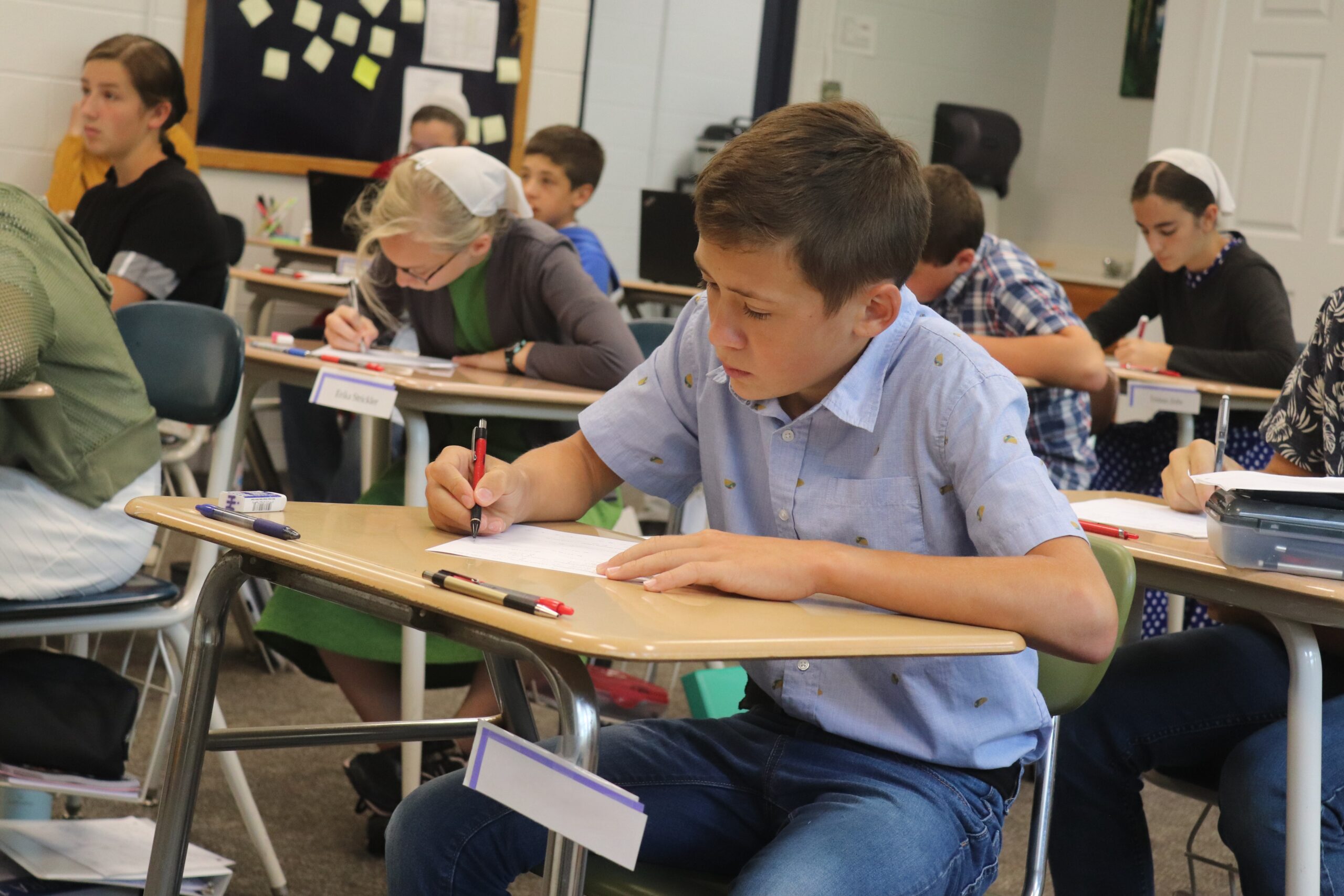
The school day is drawing to an end, and the students are busily grabbing their lunchboxes and any remaining items from their cubbies. As the call is given for students to exit, the last thing the teacher is heard to say is this: ‘And don’t forget to study for tomorrow’s test!’
Amidst the bustle of the moment, some of the students hear the reminder while the others rush for the door with whatever happened to be jammed into their backpacks before the signal was given to leave. Perhaps this scene sounds as familiar to you as it does to me. Many an afternoon before a test can a teacher be heard giving reminders to his students to spend time studying—but what does that actually mean?
I encourage you to take a few moments to imagine yourself having a conversation with one of your students sometime before the afternoon rush begins. You are interested in finding out more about their study habits, and you ask the following questions. How do you think the typical student would respond?
- Who taught you how to study?
- How do you decide what to study next?
- Do you ever come back to review the material after the class has ended?
- What study methods do you usually use?
- How do you know your preferred study methods work?
If you are like me, you may have a pretty good idea how a student might answer, but if you are unsure, some research has been done that may help shine a light on the study experiences of the average student (Karpicke et al., 2009; Kornell & Bjork, 2007):
- Only 20% of students used study strategies that had been taught to them by their teacher(s). In other words, 80% of surveyed students were told to study and then left to use trial-and-error to figure out what worked.
- 59% of students decided to study what is coming next or already overdue, and only 11% had a study plan scheduled ahead of time.
- 86% never returned to the learned content again after the test was finished.
- The number one study strategy identified by students was rereading their notes or textbook. 84% of the students used this strategy, and 55% of them indicated that this was their primary studying approach.
While this data is now over a decade old, I doubt the statistics have improved much in the ensuing years. The points above seem to indicate that our students’ attempts at studying without input from their teachers are leading them to something usually called cramming instead - a practice where one reviews material immediately before a test in hopes it will be remembered long enough to answer the questions correctly.
Doing well on an exam after staying up late the night before cramming is a possibility. In fact, favorable outcomes may come often enough to give us the illusion that the method actually works. The reality is that despite achieving a high score from time to time, the crammed information is likely to swiftly vanish from one’s memory long before the next assessment comes around.
But is there anything that we as teachers can do about this problem? How might our students’ learning be transformed if we would take the time to teach our students how to study effectively? I propose that introducing some small changes into our school days could both equip our students with the skills needed to do well on tests and provide them with strategies for independent study that will benefit them for a lifetime.
One thing to keep in mind is that ‘...memories are formed as the residue of thought’ (Willingham, 2009, p. 18). In other words, the more a student thinks about a particular concept or fact, the more likely he or she is to remember it later. We think about many things in a day’s time, but relatively little of it goes with us from one day to the next. It is only those things that we find important enough to continue thinking about that enters into our long-term memory.
Study strategies that tap into the brain’s readiness to remember the things we think about often tend to be the most effective strategies for students to use in studying:
- Low-stakes (or better yet—no-stakes) quizzes are one excellent way of having students practice retrieving information from their long-term memory. The purpose of these quizzes is to strengthen students’ ability to recall the information and not to assign a grade. Continuing to periodically quiz students on skills they have learned throughout the year will solidify the knowledge in their long-term memories for many years to come. These quizzes can take the form of the traditional paper-and-pencil method, but teachers should feel free to be creative in what this can look like. Remember—the purpose is to have students practice retrieving information and not for the teacher to take home more papers to grade. Using mini-whiteboards, response cards (one of my personal favorites), or informal exit tickets are all excellent strategies to consider.
- There may certainly be times when it is best for students to practice the same skill over and over again in their studying, but the time quickly comes when a mixture is better. For example, students required to correctly apply both the area and the perimeter formula of a rectangle correctly in the same study session will likewise strengthen their conceptual understanding of each as they think critically about which to use in the various problems. On the other hand, a student practicing either formula in mass may be able to get by through simply substituting variables without ever needing to think deeply about the concepts.
- Regardless of the method used, the goal is to strategically space the studying out so that the information is not altogether lost from memory but that students do need to work to remember the content. This is the ‘sweet spot’ that optimizes the storage of information in long-term memory. At first, this can seem counterintuitive when we realize that a little practice every day may not be the best. In fact, if students are struggling to retrieve information, it may actually be time to cut back on the frequency of studying to every other day (or less) so that their brains need to exercise a little harder to remember!
- It may go without saying, but study strategies that do not require a student to actively think about or retrieve information tend to be relatively ineffective. You may remember the statistic shared above where 84% of students reread their notes or the textbook to study. Not only is this strategy ineffective at requiring us to retrieve learned information, but students believing they are studying by doing so are likely to feel disillusioned after investing time rereading their notes with little or no effect on their test scores. Just imagine you poured significant time into ‘studying’ and afterwards felt like it was all in vain - would you be likely to do it again any time soon? My theory is that at least some of our students may go through our classes feeling this way.
The statistics shared above show that our students have much to gain from some simple instruction in study skills. Students studying Bible memory, math facts, spelling words, and any required classroom content from kindergarten through twelfth grade and beyond would greatly benefit from applying these simple strategies. How will you incorporate them into your classroom?
References:
Karpicke, J. D., Butler, A. C., & Roediger, H. L. (2009). Metacognitive strategies in student learning: Do students practise retrieval when they study on their own? Memory, 17(4), 471-479.
Kornell, N., & Bjork, R. A. (2007). The promise and perils of self-regulated study. Psychonomic Bulletin & Review, 14(2), 219-224.
Willingham, W. (2009). Ask the cognitive scientist: What will improve a student’s memory? American Educator, 32(4), 17-44. https://www.aft.org/ae/winter2008-2009/willingham
Tool Tips: Chalkboards and Whiteboards
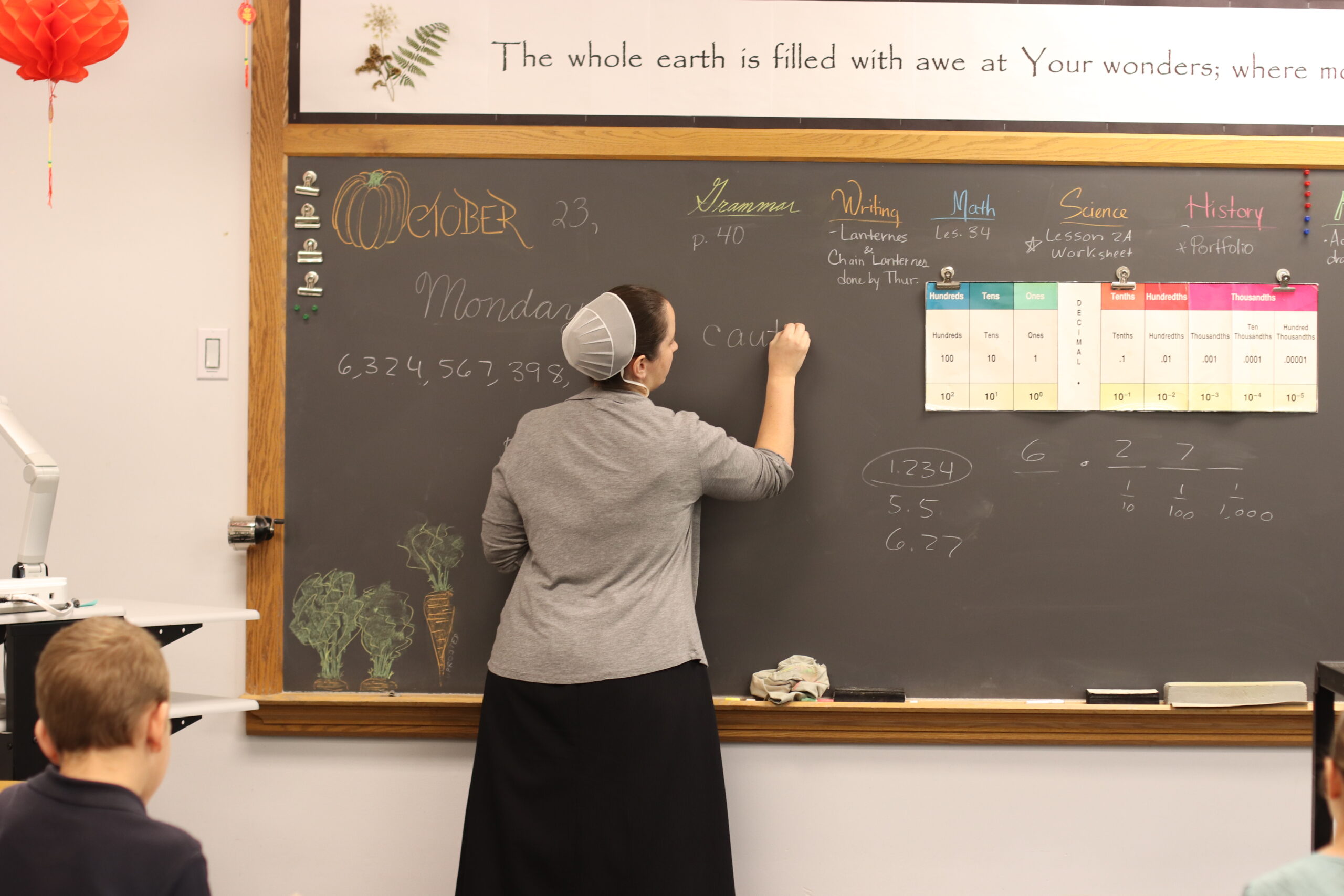
Our classroom chalkboards or whiteboards are amazing tools that we teachers can use to demonstrate and emphasize whatever concepts we are presenting to the students. Here are a few tips on how to use our boards more effectively.
- Keep them clean! At least once a week, erase everything (except perhaps a few assignments in the upper corners) and wipe them down with water and then a dry cloth. Dirt and smears distract from your teaching and clutter what you’re writing. (Hint: Many teachers have noticed that any kind of cleaner eventually takes the smooth shiny finish off whiteboards. Just use water!)
- Erase often. The more white space there is, the less distractions there are. Then students can focus on the task at hand.
- As much as possible, use neat handwriting. You are modeling for your students what you expect their writing on their written assignments to look like. Let them know what you expect by visually demonstrating this every time you write on your board.
- Use your board to post student assignments. It saves much time and repeating if we can just post the assignments on the board for the students to refer to as needed.
- After orally presenting the main point of your lesson, demonstrate on the board the concept you just taught, going through it slowly (it might be easy for you, but new and confusing to students), and explaining step by step as you mark on the board. This gives them both an oral and visual presentation. The process of watching a teacher demonstrate how to do something the right way, step by step, is invaluable.
- Pause between steps. This gives the students a chance to comprehend it at their own speed, (and students do comprehend at different speeds–go about the pace for your slowest student.) It also gives students a chance to think on their own about what step comes next.
- Once students have heard, read, and seen their teacher demonstrate how to perform a new concept, use your board to let them try it out, telling you which step to take next and how to do it. You can affirm or correct them as needed, and they get valuable guided practice.
- While most of these concepts apply to math, English, and spelling, we should use our boards for science and history as well. Students don’t process reading text or looking at pictures in books the same way that they process seeing a teacher draw or explain a concept on the board. Think of it like viewing a chalk drawing. It’s a bit mesmerizing to watch. If your students are using science sketchbooks, draw on the board whatever concept you are studying in science that day, demonstrating what you want them to draw in their sketchbooks. Be sure to label things, too.
- For social studies or history, our boards can be visual billboards of dates and persons. It doesn’t matter how bad your drawing is, students will appreciate the effort and enjoy seeing you put it on the board. It’s yet another way to remember a fact or concept. The board can also be used to illustrate cause and effect or chronological order.
- Our boards are also wonderful to use for art. The entire room can see from afar what their drawing or the art process is supposed to look like, and as you display step by step, each student can use your work on the board as a sample or springboard and proceed with their own individual project.
Our chalkboards or whiteboards are probably the most useful tool we have to use besides our voices and textbooks. Use them effectively, and your students’ comprehension will increase.

Where To Begin: Preparing the Classroom for the First Time

You said “yes” to the school board and are planning on teaching a roomful of students within a couple of weeks. You enter the bare classroom with its blank walls, empty bulletin boards, stacks of curriculum, and odds and ends that previous teachers have left behind. Where to begin? What should be done now to make it a smoother year overall?
Today’s post deals with the tangible and physical—the checklist that can be completed and checked off before the beginning of the school year to make your room an inviting environment by the first day of school and sets up your year for success.
Bulletin Boards and Wall Decor
Consider Classroom Theme or Color Palette: You can use a theme or color palette for a more cohesive look in your classroom. There is an abundance of theme ideas from favorite books such as Curious George, Dr. Seuss, Winnie the Pooh, Clifford, and Charlotte’s Web. Or you can consider environmental themes such as Under the Sea, Forest, Camping, Travel, and the Rainforest. Or perhaps you’d rather go with a certain color palette like Chevron, Retro Rainbow, Polka Dots, Neon, or Tropical. Keep the theme or colors in mind when choosing such items as a job/cleaning chart, birthday chart, daily schedule tags, desk/hooks/cubby labels, number lines, student folders, behavior systems, etc.
Sourcing: Making your own items can be time-consuming but also quite rewarding. Easier methods would include shopping on Amazon for a certain theme, downloading items from Teachers Pay Teachers, or borrowing from another teacher that used the same theme a previous year.
Functional over Cutesy: Keep in mind that while you want everything to have a cohesive look, functional and academic is preferable to cutesy and cluttered. Walls are valuable real estate within a classroom—take the time to consider how each chart and decor item on your wall will be used during the school year. Does the item add value to your classroom, or should it be replaced with something that will be used more or provide more academic value for your students?
Job/Cleaning Chart: Think through what classroom responsibilities you would like to delegate to your students and the way that you will rotate those responsibilities. You can find many ideas and free charts here.
Daily Schedule: A visual reminder of what is happening when is both helpful for you and your students. Consider adding magnetic strips to the back, using tacks, or finding some way to make it easily changeable from day to day as your schedule fluctuates throughout the week.
Academic Charts: timelines, number lines, alphabet strips:Depending on your grade level and curriculum, there are certain charts, strips, or timelines that may need to be put up within your room. The alphabet for those learning to read, a history timeline if you are teaching history, a number line for students learning to count, and certain phonetic charts for those still learning how the English language works. A number line around classroom for the number of the days of the school year (take one number off each day). In lower elementary classrooms, it is helpful to have every 10 or even 5 looking a bit different so that it is a helpful tool in teaching skip-counting (counting by 5’s and 10’s) or perhaps have the odd numbers bolder than the even to teach skip-counting by 2’s.
Behavior System: My favorite visual behavior system for the elementary classroom is the clip chart. But again, there are many other downloadable free visual behavior ideas as well.
Student Storage & Desks
Name Tags & Numbers for desks, cubbies, hooks, etc. There are so many free ones at Teachers Pay Teachers that you can print on cardstock, put through a laminator, and then attach to desk/cubby/hook areas using wide packing tape. Assign your students each their name and a number. Their number should go up on their name tag and then that number is used to label each of their personal supplies so it doesn’t get mixed up with other students (like their text books, ruler, scissors, pencils, etc.)
Small Number Lines for students still learning basic math concepts (K-3?). There are several free options here. It’s helpful to print them first on card stock, put them through laminator (because then you can save them for another year) and then tape onto the bottom of the top of the desk.
Small Alphabet Strips for each desk for students learning to write their letters correctly (K-3). It’s best to use the same script for the alphabet strip that they are taught to use in their handwriting curriculum. Again, if you put it first on card stock and then laminate and then use packing tape to tape onto desks, you can save them and reuse them for additional years.
Individual Supplies
Take Home Folder: One pocket inside labeled as “Keep At Home” and the other pocket labeled “Return to School.”
Student Supplies: Check what your school provides and what the students are expected to bring along. Your school may provide markers, crayons, scissors, glue, rulers (make sure they have centimeters and inches), and large erasers for your classrooms. You can choose whether you would like to have bins (a bin of crayons, a bin of glue, etc.) that everyone just shares or if you want to allow the students to label their supplies with their individual number such as their pencils, eraser, etc. Quite a few students will probably bring their own supplies on the first day of school so while you want to check to make sure there are enough supplies for your students, just wait to label them—if they bring their own pack of 36 crayons, don’t feel the need to give them a pack of 12 crayons provided by the school, etc. You can cut masking tape into little squares or use dot stickers for the students to put their number on and then attach to the item they are labelling on the first day of school.
Functional over Gimmicky. If they bring gimmicky items such as erasers that don’t erase well, rulers with only inches and not centimeters, or pencil sharpeners that create a mess all over your floor, or 100 pack markers that are just too enormous for to be contained well, don’t feel bad telling the child to take those items back home and give them a school-supplied item instead.
Classroom Supplies
“First Aid” Basket somewhere in classroom with Band-Aids, cough drops, tissues. The teacher has access to these items and can hand out as needed.
Basic Cleaning Supplies for wiping off desks, cleaning off blackboard or whiteboard, cleaning the bathroom connected to your classroom, etc.
Teacher’s Desk Items (that students can use IF given permission): tape dispenser, stapler, adult scissors, red pen, etc.
Blackboard, Whiteboard Items: markers, erasers, etc.
Curriculum Preparation
Number Student Books and make sure you have enough for each student.
Separate and File Papers for the Year—work pages, tests, quizzes, etc. This can be a big task, but have some friends or family over and make stacks per lesson/test/quiz and paper clip it together and then file away in a file folder within a filing cabinet. This will save you so much work and time and keep you organized throughout the year. There is always the chance that more students may be added to your class, so go ahead and sort all of the curriculum papers you have on hand.
Prepare 10-20 Center Bins for the first month of the year (through the end of September). These center bins are intended to be extra activities and review work for students to complete on their own. During Reading time or any other time when you are working with individual or small groups of students, it is helpful to have something on hand for the other students to do if they have already finished up their seat work. These centers could be a game/activity or a more structured academic center. To find downloadable centers go to Teachers Pay Teachers, search for centers, and sort by grade. Again, just remember that you may want to start them off with centers from the last grade they were in instead of the current grade to ensure that it is review material. Going into October and into each following month, it would be good to switch out the activities in the bins and replace them with centers that review concepts you learned so far in the year.
Plan Your First Day. Check with your principal or other faculty members to see if there are whole school events or other expectations for the first day.
Allot time for a visual talk-through of your wall decor/items: “This is where you will see the schedule for each day. And here we have a job chart with each of your names listed so that we can see what your responsibilities are for the day. This bulletin board will be holding some of your best papers throughout the week as you use neat penmanship and do correct work. Etc.”
Allot time for a brief introduction to the classes within a typical school day. In an early elementary classroom, it is helpful to move through the student books within the order of a typical classroom day: “First, let’s pull out your Bible that you will be using in Devotions. Now, let’s take out your Phonics book and do one page together today. After Phonics, we will always take a bathroom break so let’s go see where the bathrooms are located, etc.”
Allot time at break/recess to take photos. Your students are dressed up in the best for the first day of school, so now is the time to take those snapshots that you may want to include on your door or your classroom wall, a visitor’s book, or simply to compare with an end-of-the-year photo.
Many schools only have a half day on the first day so you may want to include a snack at some point in the day if your students are not expected to bring lunches on the first day. As much as possible, try to note on your plan for the day any expectations and classroom procedures that you want to address throughout the course of the morning. Are there small moments throughout your day when you can go over how you want your students to hand papers in, the expectations for walking in the hallway, how will they tell you they need a tissue or need to use the bathroom, how do you expect them to wash their hands after using the restroom, etc.?
This is not an all-inclusive list or even an exhaustive list. You may think of things that I have not addressed that are necessary for your classroom and I am sure I have things on this list that do not apply to every classroom. But hopefully this will get you started and leave you feeling not quite so lost as you start the year.
Happy organizing and preparing!
P.S. When you have completed your classroom setup and are ready to tackle some of the less tangible items for the year, check out “Help, Where Do I Begin” by Betty Yoder for a 25-page handout where Betty Yoder discusses discipline plans, schedules, recess planning, and more.
Photo by Terry Jaskiw on Unsplash

Advice For Young Teachers (A Satire)

When I was a new teacher, I was glad to hear the wisdom of seasoned teachers who could give me valuable guidance based on their years of experience in teaching. Having spent eighteen years in the classroom, I am now happy to offer advice to younger teachers. Here are some things you can do to make your school year fabulous:
- Don’t smile before Thanksgiving. Better yet, don’t smile until Christmas. In general, just don’t smile much at all, or the students won’t take you seriously.
- Post a list of at least ten classroom rules. Make the rules your primary focus, and never extend grace for any broken rules.
- Ignore your own health and well-being. Good teachers burn themselves out for their students.
- Work obsessively to please everyone. Your number one goal should be to keep everyone—your students, all the parents, your co-teachers, and the school administration—happy all the time.
- If you are a new teacher, you must do everything that the previous teacher did. Never mind if she loved messy science projects, and your strengths lean more toward English and History. You must do all those science projects, or you will be a terrible teacher.
- Bulletin boards and classroom décor are the most important thing. You cannot be a good teacher without utilizing all the latest ideas on Pinterest. It doesn’t matter if you haven’t even looked at the math book before the first day of school, as long as you have a great classroom theme.
- Having the perfect system and procedure for everything will guarantee your success. Children are similar to robots, you know. You program them right and they’ll do exactly what you want.
- Don’t follow the curriculum very much. It’s uncreative of you to use those ideas and lesson plans in the teacher’s manual. Good teachers come up with all their own ideas. After all, those curriculum writers probably didn’t do their research very well, and what do they know about education anyway?
- Make sure you walk through all the other teachers’ classrooms and carefully compare yourself with them. Be sure your room looks nicer than anyone else’s.
- Avoid asking other teachers for help or advice. You’ll be a big bother to them, plus you wouldn’t want to risk appearing ignorant and needy.
Just follow these simple steps, and you will be sure to have a successful school year!

An Open Letter to First-Year Teachers
Dear First-Year Teachers,
I don’t know if you realize this or not, but you have embarked on a wonderful, terrifying, incredible journey. You’ve raised your sails, and you’ve left the safety of the harbour—there’s no turning back now. The sea might be smooth as glass or it might hold murderous-looking waves, but either way, you’re the one who needs to guide this ship through.
But seriously, all sailing metaphors aside, things might feel tough for a while. That’s okay. That’s normal.
Like any new job, there is so much to learn until you start to feel like you know what you’re doing. And teaching is the kind of job that you can do for thirty years and still come up against situations that you aren’t quite sure how to handle. That’s the kind of job you’ve signed up for, in case you didn’t know. There aren’t always easy answers. Solutions might feel hard to come by. It will stretch you in ways you didn’t even know were possible.
Is that terrifying?
I don’t want to scare you, but I’m also not going to lie to you. Teaching is hard. But teaching is also wonderful. Have you seen it yet? Have you looked into the eyes of a student who is learning something new that tickles their interest or fuels their passion or, sometimes, lights a brand-new fire in their soul? Have you laughed together and played together and felt the wonderful belonging that a classroom can give? Have you noticed how beautifully unique each of your students is, every one displaying a different aspect of the Creator’s creativity? Have you felt your heart swell with love or pride or delight when you look at those precious souls?
Yes, teaching is a wonderful gift, and you are privileged enough to get to experience it.
Now for some practical advice.
Save everything you make. If you’re creating a worksheet or activity or lesson plan or visual aid—keep it for next year. You’ll be so amazed at how much easier the second year is if you can rely on having some of the work done for you already. It took me a ridiculously long time to learn this lesson in my early years of teaching, and I had so many moments of frustration due to files I had to remake because I hit the delete button instead of the save button.
Practical piece of advice number two: Don’t fall into the trap of trying to make your students like you. Now, don’t get me wrong, you should be likeable. You should be kind and caring and free to laugh and have fun. But that is very different than operating out of a place of fear and a need for approval.
If your main goal is to make your students like you, you’ll find yourself letting misbehaviours slide and looking the other way when you should be engaging. You’ll find yourself bending to their whims and desires, even though they don’t always know what’s best for themselves. You’ll find yourself doing whatever you can to make them happy, even when they want the wrong things. And the ironic thing is that if you do that, they won’t be truly happy, and you definitely won’t be.
Instead, focus on making learning robust, yet enjoyable. Have a clear standard of behaviour and actually call them to it (more on that in a bit). Care about them, and show that you care however you can. Ask them questions about their lives and genuinely listen to the answers. These are the things that will make your students enjoy you and help you to enjoy them.
I’d be remiss if I didn’t give any advice about classroom management. Take it from someone who learned many lessons about this the hard way—you need to be clear about your expectations, you need to be consistent in reinforcing them, and you need to actually follow through with consequences when necessary.
The first step in being clear with your expectations is you actually knowing what they are. It seems obvious, but it’s surprisingly easy to get yourself into situations where you realize you don’t even know what behaviour to enforce. Think through the areas in which you want your students to rise to a certain standard of behaviour. Ideally, write this standard of behaviour down. Then, communicate those expectations to your students. There should be no question in their minds what you are requiring from them.
Once you know you’ve clearly laid out your expectations of behaviour, you can also know that any student straying from that behaviour is choosing to do so. Now, of course, there’s always a grace period in which to assume they have just forgotten. But a day will come (and you’ll usually know, deep down, when it does) when forgetting is no longer a legitimate excuse and it’s time for there to be consequences for breaking the rules.
And when that happens, follow through. It’s not fun or easy, but if you don’t follow through with consequences for misbehaviour, you’re digging yourself a terrible hole. As much as possible, frame consequences in terms of their choices. You want to avoid a you-versus-them mentality from developing, and one of the best ways to do that is to make it clear to them that they are being punished because of their own choices, not because you’re a capricious monster.
For example, if a student breaks a rule and the ensuing consequence is needing to miss several minutes of the soccer game, you might say something like the following: “I’m really sorry that you chose to do x. I really wish that you could be playing soccer with the others, but since you did x, you can’t. I really hope I see you choosing better next time.”
It never feels good to need to punish a student, but remember that learning actions have consequences is a necessary life lesson.
Speaking of life lessons, there will be times when you get opportunities to teach them things that aren’t in any textbook or lesson plan. Take advantage of those moments. If there’s a gorgeous rainbow happening outside, it’s good and right to enjoy that moment together. It’s okay if the math page doesn’t quite get finished that day because of it. Sometimes you’ll have the chance to teach them about how to show empathy even when you don’t understand someone else or how their actions affect others or how to care for someone who’s hurting. Seize those moments—you’re not just teaching heads. Your students have hearts, too.
There are so many more things I could say to you. But instead, I’ll leave you with a wish. My wish for you is that you will experience the unparalleled joy of this job, that the good days will outweigh the bad ones, and that you will learn to depend on our Father in new ways through this school year.
He is with you. He will help you. If you lack wisdom, ask of God—He gives generously.
Peace be with you,
A Former Teacher
The Science of Forgetting
I once heard someone exclaim that their forgetter was getting better. Few would argue that our ability to remember and recall information decreases with age, but we seem to have a decent grasp on the art of forgetfulness from an early age. In fact, the ability to send information to the brain’s equivalent of a computer’s trash can or recycling bin appears to be an important part of the way God has designed our mortal minds to function. Even the forgiveness of God according to various passages of Scripture gives the blessed promise that ‘their sins and iniquities I will remember no more’. Yet despite this positive perspective, a student exclaiming ‘I forget!’ has likely caused many teachers to inwardly groan. We may even be tempted to think or say things like:
- Weren’t you listening when I explained it?
- But you knew how to do it this morning!
- We just learned this yesterday!
- We’ve reviewed this so many times!
These may all seem like perfectly valid (and perhaps familiar) responses, yet they do not align well with what educational psychologists understand about how our brains go about storing information for future use. While a universally agreed-upon description of how learned facts and skills are stored in one’s long-term memory is yet to be uncovered, teachers have much to gain by applying ‘the science of forgetting’ in their classrooms. Learning is a complex process, and things do not always go according to plan.
Weren’t you listening when I explained it?
Even the most attentive listening is not enough to guarantee the formation of long-lasting memories. Without further rehearsal or practice, the working memory (or short-term memory as it is sometimes called) only has a span ranging from 15-30 seconds before the information begins to fade away. Perhaps you have experienced this effect when trying to remember a phone number long enough to either dial the number or write it down on a notepad. Without the rehearsal, the numbers quickly begin to fade away as if they were a useless series of digits. Other research shows that information can be displaced from the working memory as more information comes in. To picture this, imagine a group of students trying to squeeze onto a single bench. Once the bench is full, someone sliding onto one end is going to push someone off the other side. As a result, people are far more likely to remember the last things someone said rather than a statement from either the beginning or middle (McLeod, 2015).
To enhance student learning from listening, teachers can require students to practice what are known as active listening strategies. Writing summaries, creating mind maps or other forms of notetaking, and incorporating engaging questions (from both teachers and students) are all strategies that encourage students to remember information from a lecture-based class.
But you knew how to do it this morning!
Research on how people learn shows that there is indeed a time component involved in memory, yet being able to recall something this morning (or yesterday, last week, in November, etc.) has little influence on whether we know and are able to recall it now. Memory is significantly impacted by how deeply students have processed information when it is learned. Classroom activities that require students to think more deeply about content will make it more likely that the information will be available later (Craik & Tulving, 1975).
Activities a teacher may consider promoting deeper processing of lesson content include connecting the new learning to students’ personal experiences and prior knowledge, looking for patterns or overarching themes, and considering the implications of the lesson (i.e. Why does it matter?). Bloom’s Revised Taxonomy (Forehand, 2005) can be a guide to understanding what learning activities will be more likely to result in students creating longer-lasting memories.
We just learned this yesterday!
Consolidation is the term given to the brain’s process of recording new learning into its vast system of neural pathways. In other words, learning involves biological changes in the brain, and this process takes time (McLeod, 2023). Furthermore, there are a variety of circumstances that can either shorten or lengthen the amount of time required for this process to complete. In some instances, learning can be encoded in the brain’s long-term memory in a matter of moments, but some research has indicated that some memories may require up to two years before they are fully embedded into the brain. Therefore, ‘learning something yesterday’ or even at any point within a present school year is still a relatively brief time horizon.
It is beneficial for teachers to keep in mind that learning is rarely a ‘once and done’ process. Episodic memories (autobiographical memories of life events) and flashbulb memories (e.g. remembering what one was doing when learning about events such as the 9/11 attacks, the JFK assassination, or the bombing of Pearl Harbor) are a few examples, but these generally do not align with the learning that takes place in classrooms. To assist with the encoding of memories, teachers can use a multimodal approach to learning that invites students to engage with content in a variety of formats and contexts. Contrary to popular thought about students requiring specific types of activities to match their learning style, research shows that everyone benefits from a varied approach (Willingham et al., 2015). Spacing learning activities associated with a specific skill or fact over an extended period of time rather than doing everything all at once is another way to boost memorization.
We’ve reviewed this so many times!
To help understand this one, consider an ordinary penny. You have probably seen tens of thousands of them in your lifetime - but do you really know what they look like? Without peeking, take a piece of paper and try to draw the ‘heads’ side of this coin complete with the right person’s profile facing the correct direction along with all the necessary words and numbers in their proper positions. If you can successfully complete this task, you are to be commended because very few people can do it. In fact, most adults are unable to even recognize a correctly drawn penny when presented with a collection of slightly altered fakes. While repetition may be beneficial in some contexts, it generally leads to short-lived memories with little understanding - and may even slow down content mastery (Tulving, 1966).
Rather than repetition, teachers can incorporate a variety of activities for students to engage with material in novel ways. Each new method will result in students creating different connections in their memory, which will encourage longer retention of the learning. For example, rehearsing math flash cards has its place in the classroom, but engaging with math facts in other ways can help many students ‘learn their facts’ faster and with greater automaticity. Activities like 24 Game and the additional activities from their classroom activities list are excellent ways for students to strengthen memory and conceptual knowledge of math facts.
In conclusion, an understanding of how people remember and forget information can invigorate our teaching. While it may be tempting to express frustration when students appear to have forgotten their past learning, it can be helpful to know that there are strategies that teachers can implement to boost long-term memorization. By helping our students to conquer many of the most common obstacles to remembering lesson content, we can create a classroom that will have a lasting impact on our students’ lives.
References
Craik, F. I., & Tulving, E. (1975). Depth of processing and the retention of words in episodic memory. Journal of Experimental Psychology, 104(3), 268-294. https://doi.org/10.1037/0096-3445.104.3.268
Forehand, M. (2005). Bloom’s taxonomy: Original and revised. In M. Orey (Ed.), Emerging Perspectives on Learning, Teaching, and Technology (pp. 41-47). The Global Text Project
McLeod, S. (2023). Theories of forgetting in psychology. Simply Psychology. https://www.simplypsychology.org/forgetting.html
Tulving, E. (1966). Subjective organization and effects of repetition in multi-trial free-recall learning. Journal of Verbal Learning and Verbal Behavior, 5(2), 193-197. https://doi.org/10.1016/S0022-5371(66)80016-6 Willingham, D. T., Hughes, E. M., & Dobolyi, D. G. (2015). The scientific status of learning styles theories. Teaching of Psychology, 42(3), 266-271. https://doi.org/10.1177/0098628315589505
Photo by dianne clifford on Unsplash

Common Goals or Common Methods?
Teachers, board members, and patrons usually agree on long-term goals for the school, but the methods to achieve those goals are sometimes as numerous as the participants. How can the realization that our goals are similar guide us in smoothing out the ‘how-to’ wrinkles? Can we leverage common vision to avoid being crippled by division?
A Survey of Curriculum
Catforms LLC has been tracking CAT scores for years, and correlating them with the curriculum publisher behind those students and scores. As an analyst of this third-party generated data, Allen can speak into questions like, “What curriculum consistently produces better results?” “Does the same publisher always score higher in every subject?” “How do Anabaptist publishers rank with those curriculums which are produced by larger, well-known companies?”
Documentation: Keeping Good School Records
What records does your school consistently keep? Do they present an accurate picture of what your school has been accomplishing? Medical forms, student files with enrollment and academic records, parental consent forms, teacher hire agreements… Is all this paperwork necessary?
Inspiring Respect by Personal Example
It’s easy to identify and call out disrespect in others—but what about ourselves? Do we treat our patrons with the respect they are due, even if they are not respectable? Do we conduct ourselves respectfully toward our teachers, no matter their flaws? If we see a lack of respect in our schools, boards must demonstrate the change we want to see.
- 261Page 33