
All Content

Nurturing a Healthy, Pro-Learning Classroom Culture
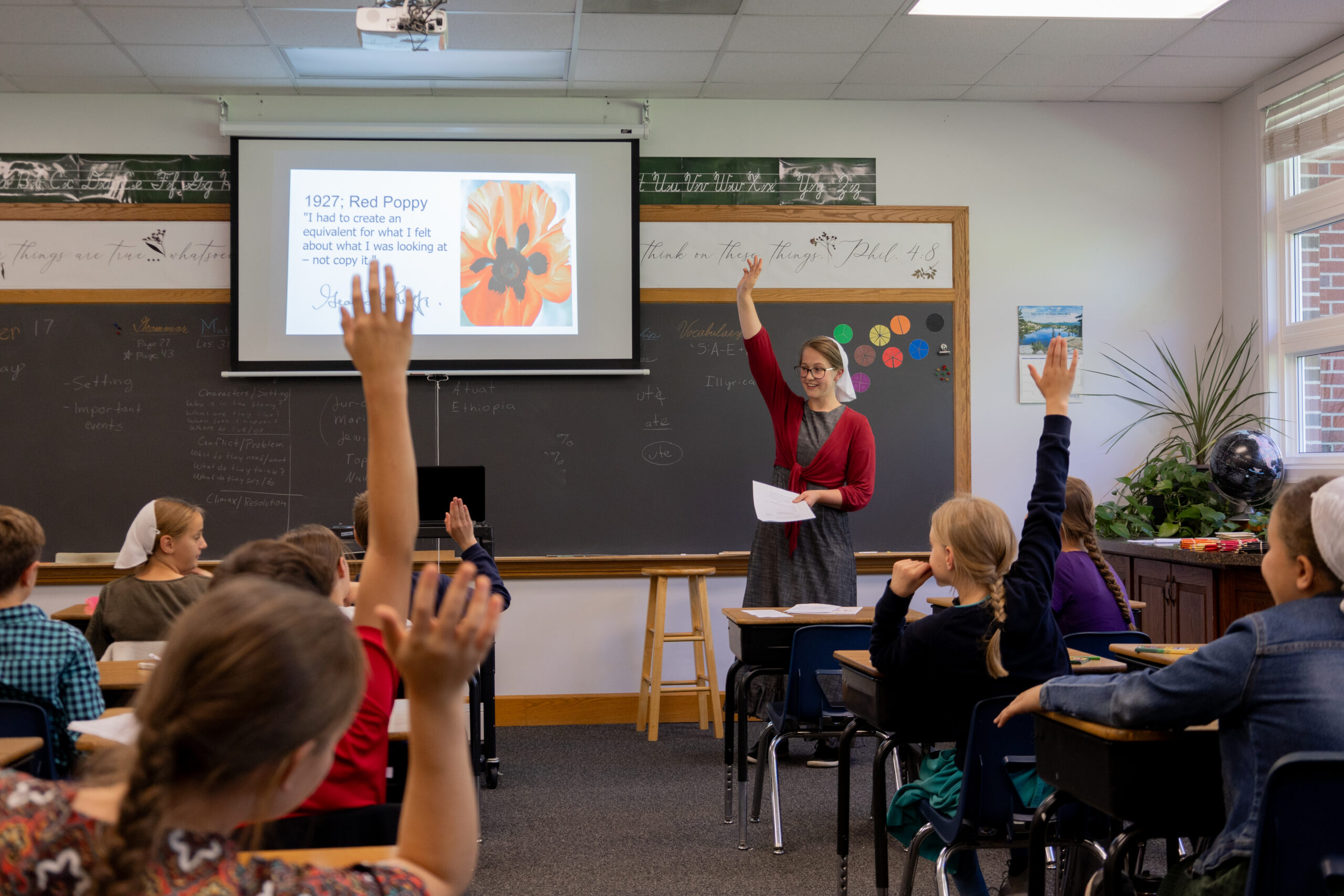
Classroom culture is created, nurtured, and maintained by the teacher. Your classroom is your realm, and you, as the teacher, are the king or queen of it. You have an incredible amount of influence over the happenings, attitudes, and outcomes of just about everything that happens in your classroom. Rule well.
First of all, classroom culture needs to be a safe one if any true learning is to take place. If students are worried that they will be mocked or laughed at, those feelings will take precedence over facts about atmospheric pressure or the religious beliefs of indigenous peoples. The teacher should make expectations clear from the beginning, and then carefully handle any deviance from those expectations.
For example, junior high girls are not allowed to giggle when the boys’ voices crack when they are reading aloud. The boys are not allowed to pull the chairs out from underneath someone before they sit down. It’s simply not allowed, and if it does happen, the offending student should be talked to (kindly but firmly—and privately), told why this is not acceptable, and admonished never to do it again. Always give reasons for your expectations.
Secondly, classroom culture should be one that leans positively toward learning. This can take place in two ways. The first is the most obvious: academically. The teacher has the influence and power to engage students in learning by modeling wonder and awe at a science experiment, sadness at the way the Native Americans were treated by the explorers, excitement when the twelve-step algebra problem is answered correctly, and elation when the students successfully diagram a compound-complex sentence.
Our sense of awe, wonder, and elation is contagious. If we as teachers are excited about the subject matter we are teaching, our students will be too. If we convey these feelings to them, they will begin to feel like these things are interesting and important after all. I’ve had a junior high boy write something like, “I’m motivated to do better because it matters to my teacher, and that makes me want to try harder.”
On the other hand, if we approach whatever we are teaching with a nonchalant attitude, or even worse, like it is boring or not that important, then we’ve missed an important opportunity to motivate and encourage our students.
After all, God created all these things—atmospheric pressure and indigenous peoples, as well as mathematics and language—and these should engage our minds and create a sense of awe in us as we teach them. Our approach should be that we have the privilege to learn about and study these topics, and to reveal the wonders of them to our students.
That means that we have gathered all of the supplies for the science experiments, researched and found some photos to share for history class, and prepared our math and English lessons ahead of time so that we don’t need to look at the teacher’s book to figure out how to get the right answers (although I do at times consult mine to make sure my answer is correct).
Third, learning isn’t just sitting at a desk reading, writing, or listening to a lecture. It’s also discussing Bible doctrines, telling stories from your life to illustrate a point, and singing together. It’s going on field trips, letting the kindergarteners play soccer with the eighth-grade boys, and sharing a birthday treat. It’s music and art and kindness and laughter and appreciation for each other’s gifts and talents. And it takes a teacher to lead out in these—to recognize them ourselves, to point them out to the other students, and to encourage them in our school and classrooms.
A teacher can explain why the kindergarteners get to play soccer with the big boys today—and to encourage everyone to have a good attitude about it as well. A teacher can encourage kindness and sharing. A teacher can pray with the student who just skinned his elbow, knowing that maybe the elbow doesn’t hurt that badly, but his father being in the hospital does.
As a father directs the home, the teacher should direct the classroom. Teachers have the ability and responsibility to explain: “We are going to do this; we are not going to do that, and here is the reason why.”
Explain. Encourage. Nurture. Preach it and teach it and don’t ever give up.

October 2024 Progress Report
Defining the Classroom Culture
In Gerald Miller's four-part series on classroom culture, he explores the foundational role of culture in Christian education, emphasizing its impact on teaching, learning, and spiritual formation.
In the first session "Defining the Classroom Culture", he introduces culture as the underlying framework of shared values, beliefs, and norms that influences how teachers and students think, feel, and act—distinct from the more changeable "climate" of attitudes and perceptions. He stresses understanding this "underground river" to create a context where learning thrives, using analogies like restaurant service and school routines to highlight how culture affects engagement and outcomes.
You may enjoy the other talks in this series for experienced teachers:
- Defining the Classroom Culture
- Evaluating the Classroom Culture
- Creating the Classroom Culture
- The Kingdom and the Classroom Culture
"Defining the Classroom Culture" was presented by Gerald Miller at Teachers Week 2015, on August 4-7, held at Faith Builders Educational Programs in Guys Mills, Pennsylvania.
Evaluating the Classroom Culture
In Gerald Miller's four-part series on classroom culture, he explores the foundational role of culture in Christian education, emphasizing its impact on teaching, learning, and spiritual formation.
In the second session “Evaluating the Classroom Culture” he focuses on evaluating and shaping classroom culture and climate. He emphasizes the importance of a positive classroom environment to enhance student focus, commitment, and motivation. Key points include identifying positive and negative aspects of classroom climate, understanding underlying cultural values, and recognizing the teacher's critical role in defining classroom culture through joy and rigor. He encourages teachers to reflect on their personal strengths and weaknesses and their impact on the classroom, with actionable steps to improve culture and avoid perfectionist pressures.
- Defining the Classroom Culture
- Evaluating the Classroom Culture
- Creating the Classroom Culture
- The Kingdom and the Classroom Culture
“Evaluating the Classroom Culture” was presented by Gerald Miller at Teachers Week 2015, on August 4-7, held at Faith Builders Educational Programs in Guys Mills, Pennsylvania.
Creating the Classroom Culture
In Gerald Miller's four-part series on classroom culture, he explores the foundational role of culture in Christian education, emphasizing its impact on teaching, learning, and spiritual formation.
The third session "Creating the Classroom Culture" shifts to action, urging teachers as leaders to proactively build culture through routines (for efficiency), rituals (infused with deeper meaning tied to values), and traditions (recurring events that build connection and anticipation). By reflecting on and developing these elements, educators can cultivate joy, rigor, and belonging, rather than merely managing or reacting to existing dynamics.
- Defining the Classroom Culture
- Evaluating the Classroom Culture
- Creating the Classroom Culture
- The Kingdom and the Classroom Culture
"Creating the Classroom Culture” was presented by Gerald Miller at Teachers Week 2015, on August 4-7, held at Faith Builders Educational Programs in Guys Mills, Pennsylvania.
Teaching to Win the Heart
Few things are more rewarding than teaching when you know you have the heart of your students. This first session will include some introductory stories and give an overview of the concepts that will be discussed in the next three sessions.
Linford Horst presented "Teaching to Win the Heart" as the first session of a four-part series for new teachers at Teachers Week 2023.
Creativity Wins a Listener
Children and young people easily give their hearts and attention to charming personalities. But few of us are natural charmers. For most of us, "charm" comes through hard, creative work.
Linford Horst presented "Creativity Wins a Listener" as the second session of a four-part series, Teaching to Win the Heart, for new teachers at Teachers Week 2023.
Compassion Wins a Learner
The day-to-day rigor of learning can be stressful. There are skills to practice. There are procedures to follow. It is the teacher's compassion that keeps the heart pumping through the stress.
Linford Horst presented "Compassion Wins a Learner" as the third session of a four-part series, Teaching to Win the Heart, for new teachers at Teachers Week 2023.
Character Wins a Follower
Throughout the course of a school term, hundreds of things will happen—some big, some small. For each thing, the teacher will have a response. Responses reveal character. Will our character convince students to follow?
Linford Horst presented "Character Wins a Follower" as the last session of a four-part series Teaching to Win the Heart for new teachers at Teachers Week 2023.
Teaching for Mastery
We want students to “get it” but how do I get it across to them? Each subject you teach has its best methods for review, communication, engagement, and practice. If a teacher prepares class understanding a few of these methods, he will find class time much more rewarding, efficient, and effective. This lecture is geared for beginning teachers of middle and upper grades.
Teaching for Mastery by Eldon Ruth was recorded at Teachers Week 2023.The Teacher's Inner Land
Who we are as teachers (emotionally, spiritually, & habitually) is perhaps the most impactful aspect of our job. Shaping a healthy inner landscape will sustain long term teaching, reduce stress, maintain healthy relationships, and help us complete tasks with success. When our “inside” is properly aligned, maintained, and fed, it gives us resilience for the many decisions and reactions we make each day. This class will explore the anatomy of a healthy teacher.
The Teacher's Inner Land by Eldon Ruth was recorded at Teachers Week 2023.
What Math is Important?
This session is designed for teachers who have been teaching and are wondering what sort of approach they need to take with the learners who struggle in their math class. Conrad covers perspectives on teaching math and how to approach your existing curriculum. He shares from the viewpoint of a public school teacher who has studied secondary math, special ed, and curriculum and instruction.
What Math is Important? by Conrad Shenk was recorded at Teachers Week 2023.
Why Teach Economics?
Economics is about more than money, business, and the stock market; it is fundamentally the study of choices. Since choices will always be at the center of our students’ lives, economics is a valuable addition to the course of study in grades 9–12.
Why Teach Economics? by Peter Goertzen was recorded at Teachers Week 2023.

2 teachers needed for the 2025-2026 School Year (5th-6th, 7th-8th, or 9th-11th classrooms)
Union Center Christian School UCCS is located in Nappanee, Indiana. We are a growing school in the middle of our 2nd year. We currently have 6 teachers (including a learning support teacher) and several helpers for our 55 K-10th grade students.
The school is operated by Salem Mennonite Church. It is open to the community as well as people from other churches. Our goal is to provide a good Christian education for our church families and the families in our community.
We are looking for 2 teachers to serve in 2 of the following classrooms: 5th-6th (12 students), 7th-8th (10 students), or 9th-11th (6 students).
For more information contact Ken Miller (board chairman) 574-847-1369 or fill out an application here: https://form.jotform.com/231857891291164

Teaching Methods Used in the New Testament (Part 2)
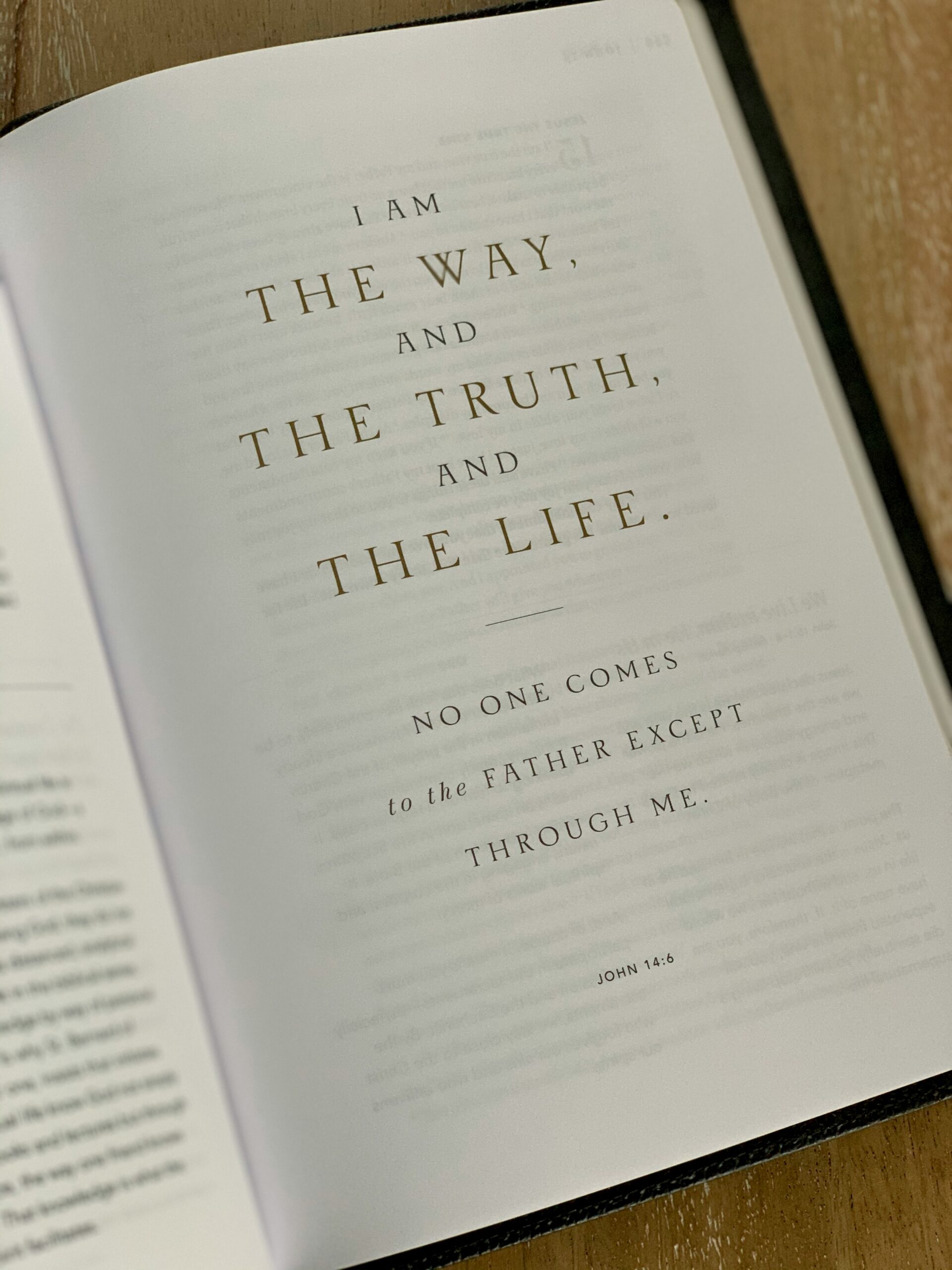
“Nathanael answered and saith unto him, Rabbi, thou art the Son of God; thou art the King of Israel.” (John 1:49)
“The same came to Jesus by night, and said unto him, Rabbi, we know that thou art a teacher come from God: for no man can do these miracles that thou doest, except God be with him.” (John 3:2)
As seen in these verses, Jesus was known as a Master Teacher, or Rabbi. A recent post explained how Jesus and certain Scriptures used different educational methods. The idea came from Chapter 5 of The Philosophy of Christian School Education, edited by Dr. Paul A. Kienel. This article finishes the summary of a section in that textbook chapter, showing the teaching method used and giving an example of how this could be used in today’s classroom.
Parable
Jesus’ teachings were full of parables, or stories with a moral (sometimes called “earthly stories with heavenly meanings”). Luke 12:16-21 tells of the rich man who built his barns bigger, and the expressed teaching point is to not lay up treasures for oneself. The Christian teacher can use Christ’s actual parables or stories from the teacher’s own personal experience or even from nature to explain a spiritual truth.
Practice
In Philippians 4:9, the Philippians are told to put into practice the things they had learned from Paul. “Practice” in this case means learning by doing. Students often learn best by physically doing activities whenever possible, whether working in partners to do a science lab or making a map for geography class.
Question/Answer
Jesus asked his disciples in Matthew 16:13-18 who people were saying he was. The disciples answered with various names. Jesus then asked who the disciples said he was, a question which Peter answered with a strong statement of faith. This method of question and answer is a powerful way of teaching because it makes the student think for himself, moving beyond simple memorization. Questions and answers are also often used for review and testing; the teacher needs to be sure to correct wrong answers respectfully.
Quoting Scripture
As in many other places in the New Testament, Jesus quotes Old Testament Scripture in Luke 7:27 to explain to His followers who John the Baptist was. The Christian teacher can use Bible verses to explain what the class is discussing or to emphasize Truth, especially in disciplining. Specific Bible verses can be used as examples as well, such as showing certain grammatical principles or themes from a short story the class read.
Reading
In Luke 4:16, Jesus read the Scriptures in the synagogue. In I Timothy 4:13, Paul tells Timothy to give attention to reading. Reading is a fundamental method of teaching. The teacher can read to students, the students read to the teacher or the class, the students can read on their own–all of these assist not only learning but also student enjoyment.
Repetition
In Matthew 16:21; 17:22-23; and 20:18-19, Jesus repeats the idea that he will be killed but will rise again on the third day. Philippians 4:4 repeats within the verse itself that a Christian should always rejoice. Repeating material in different ways aids greatly in student memorization. Whether the student repeats the material audibly or the teacher repeats to give students different contexts for class content, repetition is a powerful method of teaching and learning.
Review
Jesus reviews with His disciples in Luke 24:44 both the words He had spoken to them and the words of the Old Testament Scriptures. By going over these passages again, he re-examines and shows the importance of what he has taught them previously. Reviewing what has already been taught is a key part of learning since students need to refresh and strengthen concepts they have already learned.
Rhetorical Questions
In Luke 13:2-5, Jesus asks his disciples if two groups of people were sinners. Not expecting an answer from them, he answers his own question and continues teaching them about the need for repentance. Teachers can use rhetorical questions, or questions that don’t require an answer, for emphasis or to make a point, having the students think through the question/answer.
Visual Aids
Luke 13:19 gives a picture of mustard seed growing, representing the kingdom of God. In Matthew 22:19-21, Jesus uses a coin to represent the difference between what belongs to the government and what belongs to God. Both of these are examples of teaching with visual aids. In the current classroom, visual aids might range from samples to slides, models, experiments, posters, or simple objects. Whatever form, these concrete examples provide support and explanation for abstract teachings.
Photo by Tim Wildsmith on Unsplash
Using your Resources to Address Behavior Issues - Part 2
In this recording from Teachers Week 2023, attendees of the three-part workshop, Using your Resources to Address Behavior Issues, listed behavioral challenges they have faced or expect to face. Using these examples, they discussed resources available to help a newer teacher address these issues. The workshop was designed to build your support system in various ways because none of us can do everything.
This is the first part of at three-part workshop. Here are links to Part 1 and Part 3
Using your Resources to Address Behavior Issues - Part 3
In this recording from Teachers Week 2023, attendees of the three-part workshop, Using your Resources to Address Behavior Issues, listed behavioral challenges they have faced or expect to face. Using these examples, they discussed resources available to help a newer teacher address these issues. The workshop was designed to build your support system in various ways because none of us can do everything.
This is the first part of at three-part workshop. Here are links to Part 1 and Part 2
Using your Resources to Address Behavior Issues - Part 1
In this recording from Teachers Week 2023, attendees of the three-part workshop, Using your Resources to Address Behavior Issues, listed behavioral challenges they have faced or expect to face. Using these examples, they discussed resources available to help a newer teacher address these issues. The workshop was designed to build your support system in various ways because none of us can do everything.
This is the first part of at three-part workshop. Here are links to Part 2 and Part 3

Why Do I Need a Teacher's Guide?

The teacher’s guide occupies a space in your desk drawer or on your bookshelf, or at least, I hope you have a teacher’s guide available for your use. A teacher’s guide is a valuable tool—especially for less experienced teachers—but one that is often not used to its full potential. What makes a good guide so useful?
Daily lesson plans
A teacher’s guide consists mainly of the daily lesson plans that a teacher uses to teach each lesson. A good lesson plan will include the following.
- Objectives: These are the goals of the lesson. They guide the teacher in knowing what is important to teach and what the students should have learned by the end of the lesson. A list of objectives can serve as a checklist for lesson presentation.
- Preparation: This can be a list of materials needed for the lesson, board work that needs to be put up, or other things that teachers and students need to be successful with the lesson.
- Review: Students need review and drill. A good teacher’s guide will help you to know what the important areas of review are.
- New teaching: This section provides insight for teaching any new material. It may include exact words to be used during teaching or it may just give ideas for presenting the lesson.
- Extra ideas or activities: The teacher guide may include material that can be used to expand the lesson for interest or for the fast worker. These ideas can be used to spark ideas of your own.
- Student work pages with answers: It is a valuable teacher’s guide indeed, if the student material is also included. However, for some teachers, this is all the teacher’s guide is used for. There is much more in the book than just the answers. Make good use of all the material.
Introduction and appendices
Before you start teaching a course, read the introduction. Mid-way through the course, read the introduction again. The introduction will give you an overview of the course and its parts. Often there is vital information needed for teaching the course in the introduction.
- Scheduling: How often do you need to have the class to get through the course? How long should classes be?
- Grading scale: What grading system has the course been set up to use? Is every question worth the same amount of points? Is it recommended to take a score for every lesson or only certain ones? The introduction should give you some tips on score keeping for the course.
- How to use the guide: A good teacher guide will often arrange the material in practical ways. It may use symbols for certain parts of the material. Words a teacher should say may be bolded. Read the introduction to become familiar with how the guide is set up.
- General thoughts about teaching the course: The introduction will often lay out general procedures for structuring a class period. If it is an elementary math class, it may give ideas for fact mastery. If it is a reading class, it may give a guide to conducting oral reading.
- Rationale behind the course: A good introduction will give you an idea of why the curriculum publishers produced the course in this particular way. If a teacher understands the rationale, they may be able to teach the course more effectively.
Often teacher guides include appendices at the end of the book. A wise teacher will familiarize themselves with the appendices because they are there to be helpful.
- Index: A good teachers guide will include an index, making it handy to see where a certain objective is taught.
- Scope and sequence: This is a list of the skills taught in the course and the order in which they are taught.
- Extra material: Many teacher guides will have appendices included that expand the lessons. These can be in the form of extra practice materials. They could be ways of adding more to the lessons. There may be lists of resources or recommended books that further enrich the lesson. If a teacher needs more ideas, check the appendices.
- List of vital parts: A good teachers guide will include a list of the necessary items needed for the course. This could include any materials needed for teaching science, lists of all the math facts learned in the course, spelling words for the spelling tests, and more.
Don’t reinvent the wheel—but use it effectively
Someone, most often someone with teaching experience, has put thought and their experience into producing the teacher guide as a help to others, especially the less experienced. If you are a new teacher, the guide will provide structure and aid you in planning and teaching your classes. Teacher guides also expand ideas for those who wish to venture further. They save a lot of time and energy for the teacher.
A guide, though, is just a guide. It will lead you along the right path. But many times, a guide has much more in it than one teacher can make use of. A reading guide may have various ways to practice vocabulary words, build reading comprehension, read orally, enjoy poetry, add a craft to the story, etc. If a teacher uses every single idea in every single lesson, they will run out of time and energy. The ideas are there for aid. The teacher will need to decide which ones are most needed for their class and time frame.
When not to use the teacher's guide
Teachers guides are beneficial and needful and are written with those of less experience in mind. They give framework to the class. However one should not become so tied to the teacher guide that they miss what is happening in class. The guide may be set up for a lesson every day, but the guide does not know when Johnny is struggling to keep up or Susie doesn’t understand the new concept. The guide also does not see Timmy making funny faces at the back of the room or Nancy and Jane whispering behind their books. If the teacher has only eyes for the guidebook, they won’t notice either. And, if you teach long enough, you will no longer need the guidebook for many things. In fact, you may have written your own guidebook.
But every so often, I still go back and read the introductions in my guidebooks. I want to remind myself why I’m teaching this particular course.

Navigating Election Years in the Christian School Classroom

In my classroom, my students often wear their emotions on their sleeves. As a result, it’s usually easy to tell when they’re feeling excited about an upcoming field trip, anxious about an upcoming test, sleepy on a rainy afternoon, or restless on a sunny morning in Mid-May. After over ten years of teaching, I have grown accustomed to the ups and downs of this 180-day long emotional roller coaster we call a school year. However, one emotion that I have little experience with (thankfully) is fear.
It was a late autumn afternoon during a presidential election year in the United States, and a final electoral college map had just been published by a reputable source showing a clear victory for one of the candidates. Thinking that this would make an interesting opportunity to study current events, I shared the visual with my students. After a few moments of eerie silence, one of my students raised her hand and, with uncertainty in her voice, asked, “...but will everything be okay? Will things be different tomorrow?”
What began as a matter-of-fact announcement in my typical teacher volume and cadence ended with me feeling speechless. I had not anticipated such a response to what I thought would be just a simple update. At that moment, I realized that my students were carrying more preconceived notions and insecurities about elections than I had imagined. I paused for a few moments before proceeding, reflecting on how to best handle the tension in the room and praying for wisdom on how to best quiet the tempest raging in my students’ minds.
Up until that moment, I had wrongly assumed that my students, mostly representing Anabaptist homes, were relatively removed from our nation’s increasingly intense political climate and would not be affected much by this conversation. That clearly was not the case. Instead, I set my next lesson plan aside and took additional time to address their concerns and to offer what I believed to be an age-appropriate perspective from Scripture on the situation.
In hindsight, it is quite clear how my students, like many others in our communities, were affected by the nearly endless barrage of political ads, yard signs, bumper stickers, vulgarity waving proudly on flags, and careless comments heard elsewhere. After the incident, I discovered that just a few well-meaning students had been the source of the apocalyptic fears in the classroom regarding what would likely happen if the ‘wrong’ person won - likely echoing conversations they had overheard while out and about in the community.
As November 2024 rapidly approaches and another election looms on the horizon, I have been reflecting once again on how (and if…) to address this sensitive topic in my classroom. Without any political agenda of my own, my goal is to keep my students informed about current events while also pointing them to the One who holds ultimate authority—the One whose reign will never end.
As teachers in Christian schools, we are uniquely positioned to help shape the narrative in our classrooms this election season and to use this event as a backdrop for sharing the Good News of the Kingdom with our students. Below are some thoughts for fellow educators on how to speak about these matters in an age-appropriate, God-honoring way. Please note that these are meant to be ‘food for thought’ for teachers and not a step-by-step guide for sharing campaign and election news with your class. I encourage you to prayerfully consider how you can best speak to these issues in a way that sufficiently meets your students’ need to be informed without giving them unnecessary burdens to bear.
There is academic value in understanding the electoral process.
As those living in an earthly kingdom, there is benefit in being aware of its laws and institutions. While many Anabaptist communities avoid becoming entangled in the political process, I would suggest that there is inherent academic value in teaching our students about the complexities of the election process so that they can engage with their neighbors about matters important to our general society. This is an opportunity to provide a fact-based explanation of how our nation’s leaders are elected or appointed. If you are not living in the United States, you can still find some meaningful moments in the course of the school year to explore government processes relevant to you and your students.
Scripture provides many different lenses for viewing elections.
God’s Word is anything but silent on how He views the kingdoms of this world and His will for how we should interact with them as citizens of another Kingdom. The following is a small sample of verses that can be shared with your students during class devotions, Bible classes, or when discussing current events. This is an effective way to help our students maintain a proper perspective and to stop anxiety-inducing rumors in their tracks:
Psalm 118:8-9: It is better to trust in the Lord than to put confidence in man. It is better to trust in the Lord than to put confidence in princes.
Isaiah 9:6-7: …and the government shall be upon His shoulder. And His name will be called Wonderful, Counselor, Mighty God, Everlasting Father, Prince of Peace. Of the increase of His government and peace there will be no end…
Luke 1:32-33: He will be great, and will be called the Son of the Highest; and the Lord God will give Him the throne of His father David. And He will reign over the house of Jacob forever, and of His kingdom there will be no end.
Romans 13:1: …For there is no authority except from God, and the authorities that exist are appointed by God.
I Timothy 2:1-4: Therefore I exhort first of all that supplications, prayers, intercessions, and giving of thanks be made for all men, for kings and all who are in authority, that we may lead a quiet and peaceable life in all godliness and reverence. For this is good and acceptable in the sight of God our Savior, who desires all men to be saved and to come to the knowledge of the truth.
2 Corinthians 10:3-4: For though we walk in the flesh, we do not war according to the flesh. For the weapons of our warfare are not carnal but mighty in God for pulling down strongholds.
Many other passages of Scripture describe the glories of the Kingdom, Christ’s lordship, and guidance for our interaction with our earthly authorities. From beginning to end, the accounts of Scripture reveal a God whose Kingdom is not in the least affected by the results of this world’s elections. Furthermore, I Timothy 2 instructs us to pray for those in authority over us, which also has many potential applications for ways that we can be speaking to these issues productively.
There is neither Jew nor Greek…neither Republican nor Democrat?
God’s word makes it clear that He does not show partiality. His love is unconditional and extends beyond race (Jew nor Greek), socioeconomic status (slave nor free), or gender (male nor female). We have no reason to doubt that this great love is hindered by political affiliation and voter registration status. In today’s highly polarized world, showing kindness and understanding to someone who disagrees with or opposes us can be considered a radical example of Christ’s love. Demonstrating to our students what it looks like to love our neighbors regardless of which political yard signs grace their front yard is an important lesson for election season and beyond. As teachers, let’s model this for our students from day to day as we magnify Jesus as the King of Kings, the Lord of Lords…and the President of Presidents.
Photo by Louis Velazquez on Unsplash
- 261Page 31