
All Content

My Homework
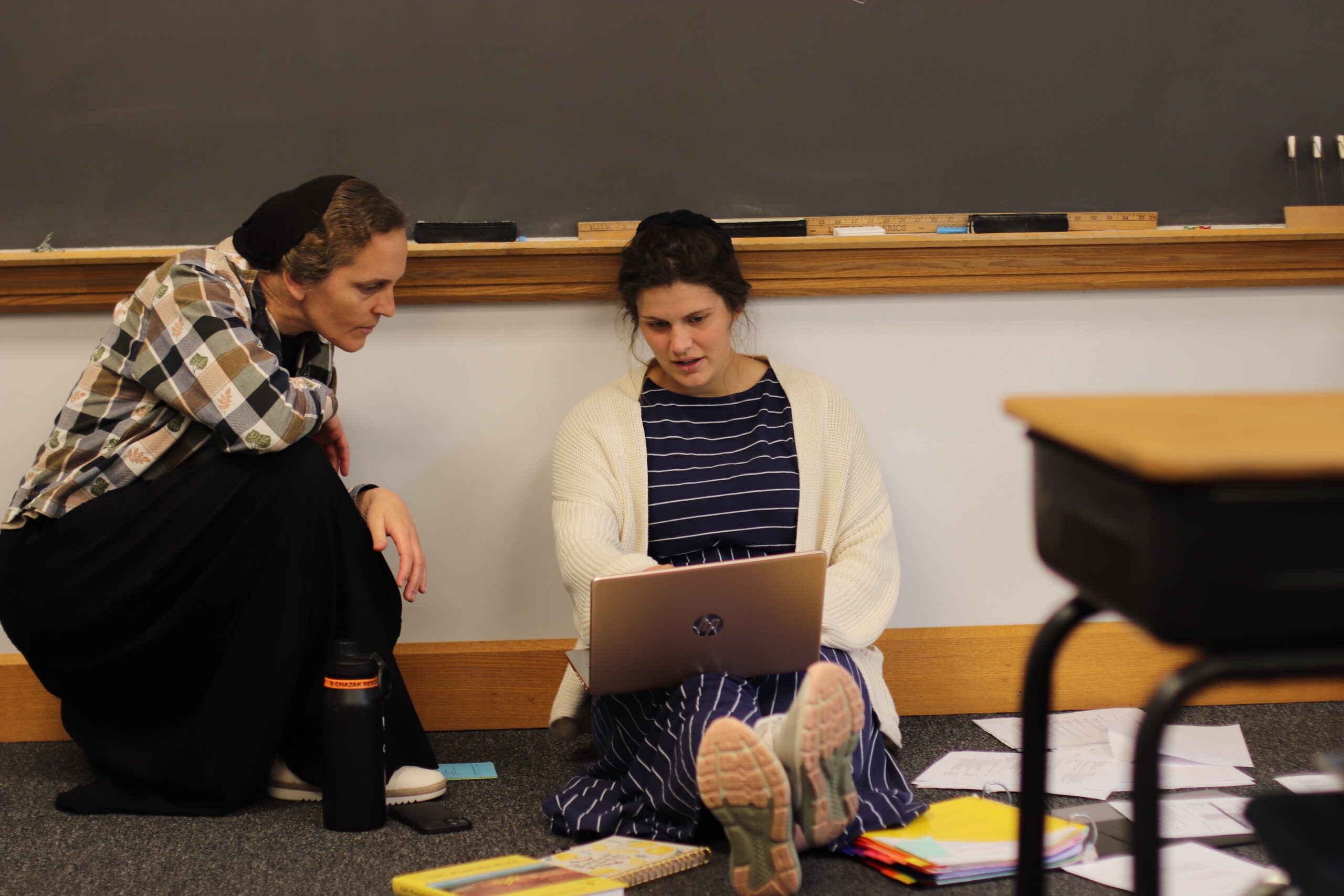
As we end the first part of the school year, I reflect on these weeks of school and think back to the beginning of the year and the progress made so far. I’m reflecting not just on student progress, but on teacher progress!
I realize some lessons this teacher has learned so far. Some of these lessons are new learning and some are reinforced from previous years. I see anew the need for me to be fully present when my students are at school. I need to be ready to go when they arrive so I can listen to them, watch over them, and guide them. If I am still getting ready when they arrive or are already present, it gives them an impression of unpreparedness. They may need to wait on me, and for some children, this will present the opportunity to find their own things to do, and that may not be what I want them to be doing!
I like to arrive early so I can be present. I try to have the classroom ready before I leave the night before, then in the morning I can do those early things like opening blinds, checking email, reading scripture, praying, relaxing a bit, and being ready for the day. I am not hurrying in at the last minute and then feeling flustered because I’m not ready. (Granted, I am not perfect at this, but it is something to strive for!)
Another lesson is to know my class and students. This is a topic from recent staff PD meetings and has been helpful to me in thinking of my first graders. I need to know my class—this is a young class. It is helpful for me to know and think about that; they need more guidance. They aren’t ready for some lessons yet. They may need more review. We should work more on phonics before they are ready to read. Some need to work on basic skills such as writing their names and how to hold a pencil correctly. I need to gently guide them on things they don’t know yet. I may need to give more directions and help them practice. As I think of knowing my class, I ponder how I can challenge one student who is older. I can let him go ahead. I may find more challenging books and activities for him or let him have some extra responsibilities.
Knowing each child’s place in their family can help me as I work with them. Which children are the oldest child? Which ones are the youngest?
How can I get to know my students? I can do interest interviews, ask parents for information, glean info from worksheets and class work, and chat with students. Lunchtime presents good opportunities for conversations and getting to know children. I give my students a worksheet that asks such questions as “What is your favorite food?” “What do you want to learn this year?” “What is your favorite class?” After we complete each question, I tell the class my answers and have them share with their classmates. I have another page of questions that my aide asks each child and records their answers. Some of these questions are, “What is your favorite song?” “Do you have any pets?” “How many people are in your family?”
After I have info from my students, I can incorporate this into lessons and in the class. Here is another lesson for me – using this information. I may use family names in math story problems. We can sing the favorite songs of the class. We could make a graph of pets or siblings.
I remember the lesson for the teacher of being consistent. Keep those boundaries. If I gave a procedure, I need to follow that consistently. If I need to change something, I must inform the class and go over the new way. I may need to “choose” some battles at the beginning of the year, though. It may be more important getting the class to Music than having a perfectly straight line. Let’s get “quiet” settled first, then we can work on walking in the hall and staying in line.
Oh yes, I am reminded of the lessons with classroom management. As I get to know my students and see how they interact, I realize I need to rearrange some desks. Jeremy will do better away from his cousin. Ethan needs to be in the front and at the end. Where shall I put Ryan’s desk? He is friendly and will chat with anyone!
I need to have grace for my students—remember they are just getting started. They will not be at the same place as the students I ended with last year. I need to have grace for myself.
One more important lesson for this teacher is to communicate with parents. They do want to know how their children are doing. They will support me, and we can work together. I always feel like I should take care of things myself, but someone reminded me that parents do want to know. After I finally emailed some parents, I saw the difference it made in the child’s behavior as she realized her parents and the school were working together. The parents thanked me for communicating with them.
Yes, at the beginning of the school year there are adjustments to be made and routines to establish. It does get better. The children do learn. Now we are in the second quarter (already!) and I can look back on these few weeks and see growth and progress. I am really enjoying my students and appreciate the fun times and their innocence and sincerity. As Darren prayed recently, “Dear God, thank you that we can come to school and that we can be alive.” Or Mandy who told me this morning, “When I’m at school, I feel like I’m at home!

The Grading Mountain
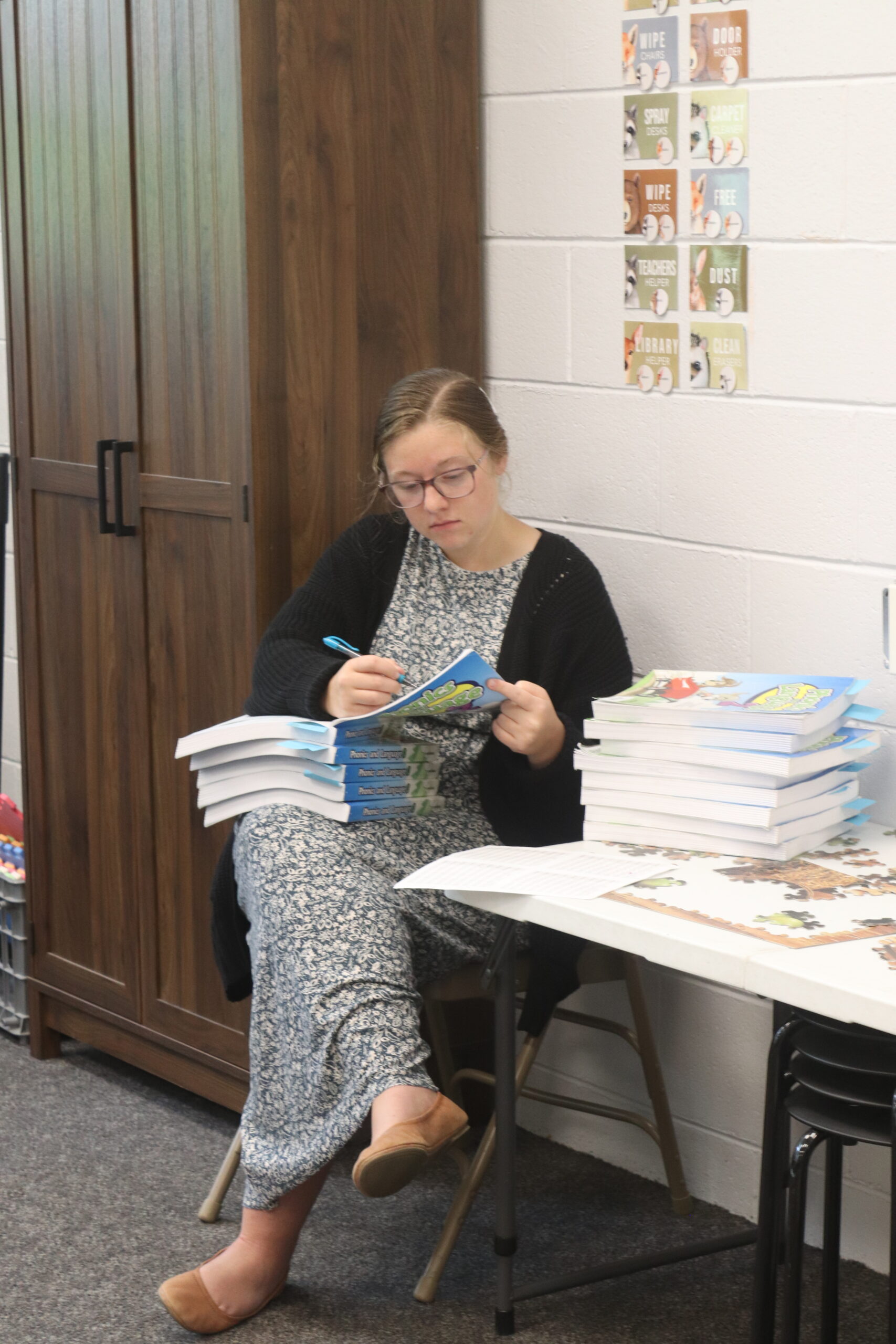
I love most things about my job as a teacher. I love interacting with my students and fellow staff members. I love planning and presenting lessons. I love the fulfillment that comes from doing meaningful work. But one part of my job that I find difficult to enjoy is the constant mountain of grading. It’s a little like the laundry pile; it is always there for you, and it is impossible to work ahead on it. Every year when school begins, I get this sinking feeling when I start to see the papers pile up, and I find myself swamped by grading.
So, I write this as much for myself as for anyone, as I ask questions like these: What is the value of grading? Is it really necessary? How do grades aid the learning process? Could I serve my students better by spending less time on grading, thus freeing my time for other worthwhile things? How much of students’ work should get a recorded grade that ends up on their report cards?
Recorded Grades
I remember when I first became a teacher and was somewhat dismayed to realize how little grades actually meant and how limited they were in showing true learning. I had worked hard as a student, and grades were always of utmost concern to me. Suddenly I saw grades from a different perspective. When I became a student again after teaching for a number of years, sometimes I had to laugh at myself when I realized that I was focusing more on grades than on actual learning. I had to retrain my brain to focus on what was more important than recorded grades.
Over my years as a teacher, I have shifted to recording fewer grades and have spent more time focusing on having students make corrections on their work. Tests and quizzes get recorded, but most other work does not. Also, I try to emphasize real learning instead of grades. My third graders have not yet been conditioned to be highly motivated by grades, and I try to keep it that way. I want them to be motivated to learn for the sake of learning itself, not for the sake of scores on a report card.
I do realize that grades mean more when students get into upper grades and high school. Still, when contemplating whether or not to assign a grade for certain assignments, I think all teachers should be considering this: Are students only motivated by the grade they will receive on a project? At one point does assigning a grade to something actually hinder the learning process? How can we motivate students by means other than grades?
Unrecorded Evaluations
Just because I am not assigning and recording grades for much of my students’ work does not mean that it is not important for them to get feedback on that work. When I write about the grading mountain, I am thinking primarily of the daily task of checking and evaluating students’ written work and marking incorrect answers. Part of the purpose of this is to evaluate our students’ progress and to adjust our teaching accordingly. Half the class got number five wrong on the math assignment? We had better review that concept and do more practice.
I will confess that this is a big reason why I find the task of grading undesirable. I would like to teach students who always follow instructions and who get things write on the first try. When I grade students’ work, I am forced to deal with all the results of misunderstandings and unfollowed directions. I must decide whether to make a student do an assignment over and how I should adjust my teaching the next day. This is part of my job, whether I like it or not.
In the morning when my students enter the classroom, they are responsible to look at the graded papers on their desks. If anything is marked with “Make Corrections,” they are supposed to work on it right away. I try to emphasize to them the importance of evaluating their own work and learning from their mistakes. Ideally, they would always do this. Realistically, of course, this does not always happen, but I can always keep nudging them in that direction.
Keeping It Manageable
We do need to find practical ways to keep grading manageable. Students do not need feedback on every single piece of work that they turn in. Sometimes it is just fine to check quickly through a stack of papers to see that students have completed the work, and then throw those papers away. We need to be careful not to let grading sabotage time that could be better spent otherwise. I do my best to avoid letting grading spill over into evenings and weekends, though I am not always successful at this. Sometimes in my classroom I have the students exchange books and check each other’s work as I read the answers. While I am cautious about doing too much of this with my young students, I think that sometimes hearing the answers read aloud and seeing their mistakes immediately can be a valuable learning experience for students.
A certain amount of grading is still inevitable in a conventional school. So how can we make it feel like less of a chore? In my school, we teachers gather at the front entrance to wave goodbye to our students at the end of the day. We often stay and chat for a while afterward. Sometimes we bring our grading with us and work at it together. Together we can bemoan our students’ failings and rejoice over their success. A few years ago, we started a tradition of going to a coffee shop after school once a month. We take our work with us and grade papers as we socialize and enjoy nice drinks. When I have a pile of grading to do on my own, sometimes doing little things like lighting a candle and turning on some music can make the job more palatable.
Grading may seem like a mountain, but we gain energy for the climb when we approach it with the attitude of loving and serving our students.

Building a Culture of Reading
Christopher Brode reflects on how teachers can build a culture of reading. He proposes that this feat starts with the teachers’ own example, but then he explores several practical tips such as dedicating time for silent reading, ensuring access to a variety of books, and incorporating reading into the school day as a valued activity.


Engaging Students with Fiction Trade Books
In this presentation, Christopher Brode discusses effective tools for incorporating trade books into the classroom to encourage reading among students. Christopher shares from his personal experiences with using trade books to enhance curriculum and highlights the positive impact on students' reading habits.

Cultivating Gratitude
Where I live in Southern Ontario, autumn comes with startling beauty every year. There’s the invigorating crispness of the cooler air. There’s the almost-impossibly blue skies, framed by the riotous reds and yellows of the trees. There’s the delightful crunch of leaves underfoot. There’s the sound of geese honking their way south for the winter.
And for me, this time of year always makes me reflect on themes of gratitude. I’m sure it’s due largely to the fact that Canadians celebrate Thanksgiving on the second Monday of October, so the changing of the seasons and the holiday that (at least theoretically) celebrates thankfulness coincide nicely. Another huge contributing factor to my gut-reaction sensations of gratitude at this time of year is the way I had so many teachers who encouraged us to practice gratitude while I was growing up.
This is something that teachers really ought to be doing all year, but what better time to intentionally focus on habits of gratitude than around Thanksgiving (whether you celebrate in October or November)?
In North American culture, students are increasingly growing up in a world where entitlement and selfishness reign supreme. A culture of incredible privilege is a blessing, but it is also rife with aspects of the Curse—greed, apathy, and ingratitude. These sinful attitudes are in direct opposition to the abundant life that Jesus offers.
In her book Choosing Gratitude, Nancy DeMoss Wolgemuth writes, “The consequences of an ungrateful spirit are not as readily seen as, say, those of a contagious disease. But they are no less deadly. Western civilization has fallen prey to an epidemic of ingratitude. Like a poisonous vapor, this subtle sin is polluting our lives, our homes, our churches, and our culture.” The way to combat this sinister soul-killer is through intentional gratitude. She goes on to say, “Gratitude is a lifestyle. A hard-fought, grace-infused, biblical lifestyle.”
But how do we cultivate that lifestyle in ourselves and our students? The first step is simply by becoming aware of how much we have to be grateful for. When we never pause to recognize the abundant gifts around us, we likely won’t view them as gifts. And we certainly won’t be drawn in worship to the Giver behind the gifts.
In our privileged lives, we so often take goodness for granted. Recognizing that we have been given so much should change our hearts, and make them bow in gratitude to our abundant Giver.
There are so many ways that you can do this with your students. Here are just a few practical ideas.
Raising Awareness
Sometimes the first step to being grateful is realizing the width and depth and breadth of what we have to be grateful for. One wonderful, child-friendly way of raising awareness of our privilege is Gary Miller’s books Life in a Global Village or This Side of the Global Wall. These books use world statistics in easy-to-grasp ways to reveal the poverty and need that the majority of the world faces.
Sometimes, the first step to cultivating gratitude is simply realizing how much we have to be grateful for.
Group Contributions
Another powerful way to mediate on how much we have to be grateful for is by having your students work together to create a long list of items they’re thankful for. There is something visceral and powerful about seeing dozens or even hundreds of words in one place and knowing that each of them represents a good gift from the Father.
You could work together to try to reach a certain number, or have a visual way of displaying each item. Students could write each item they think of on a strip of colorful paper, then the papers could be linked together to make a paper chain that gets draped around the classroom. Or, students could write items on colorful sticky notes, and the sticky notes could cover a wall, chalkboard, or bulletin board. Another variation is to put a large sheet of butcher paper on the wall and let them write all over it with markers.
The method of presentation is up to you; the important thing is giving your students a visual way to display their blessings.
Individual Contributions
Instead of a group project, you could also give your students a way in which to create their own personal collection of blessings. Maybe each student could decorate the outside of a glass jar, then fill the jar with strips of paper listing the things they’re thankful for. Maybe you could give each student a small pie pumpkin or gourd and let them write their items with Sharpie. Another option would be to give each student a small notebook and have them write several items in it each day. All of these activities would be most powerful if done daily for a length of time.
If students do an individual reflection like this, I think it would be beneficial to have them do some self-assessment afterwards. Have them reflect on how this activity impacted them. Did it make them go through their days with a different mindset? Was it difficult or easy to keep thinking of new things? How did it make their hearts feel?
Activities
Another way to have students reflect on their blessings is through activities that focus on gratitude.
For instance, you could send students outside on a scavenger hunt. Their prompts of things to find/record could be something like the following: something that makes you smile, something you like to play with, something that smells good, something that shows God’s creativity, etc.
Another activity to encourage creative thankfulness would be to have students see if they can come up with a word they are thankful for that starts with every letter of the alphabet. Students could then compare what they thought of with other’s lists.
An option for older students (though this could work for any grade level) is to write thank you notes. When my husband taught high school, he did something he called “Thank You Notevember.” On each morning for the month of November, he gave students a notecard and a prompt of who they should write a note of thanks to. Some examples of recipients included a teacher, a friend, a parent, someone who probably wouldn’t typically get a thank you note, a pastor, a mentor/hero, the person beside you, etc. Of course, students should then also make sure they actually deliver the thank you notes to the recipients.
Prayer
Prayers of thanks are another beautiful practice of gratitude that can be implemented in the classroom. Again, this could be done on an individual level or group level. A vivid memory for me from my years in the classroom is the time when I had students write all the things they could think of that they were grateful for on a piece of paper. I gave them several minutes to do so, then had them circle five that they especially liked.
We then bowed our heads and went around the room, and students listed the things they had chosen. I told them they could simply start their prayer with, “God, thank you for . . .” and then list their five things. It was a tender and powerful time that brought me to tears, hearing their precious voices listing their blessings, one after the other.
However you choose to help your students cultivate gratitude, know that you are participating in a beautiful and powerful work. Intentionally reminding ourselves to be grateful helps us to recognize that the gifts we have been given are so much deeper and fuller than we often stop to realize.
And we remind ourselves of what we so easily forget: God’s goodness is all around us. We can reach out and touch it, taste it, see it. And in those reminders, we allow ourselves to be shaped into more thankful and generous people.

Imaginative Stories as Curriculum
This breakout will cover the value of fictional stories in shaping the imagination. This will include specific examples from the book Around the World in Eighty Days, with practical ideas for implementation of this or similar fictional books in the classroom. Target audience: Middle school, or anyone wanting more imaginative vision.
Imaginative Stories as Curriculum by Jeremy Sauder was recorded at Teachers Week 2023.
Five Essential Elements of a Five-Star High School English Class
Writing. Vocabulary. Grammar. Literature. Speech. English teachers have more work to do and less time to do it than any other teacher in any other subject. Every day, we are expected to cover three to four of these areas in one short class period. In this session, we will discuss how to implement these concisely and effectively so that our students can understand them, retain them, and grow to be articulate communicators. Presented by a 3rd to 12th grade English teacher with fourteen years experience.
Five Essential Elements of a Five-Star High School English Class by Deana Swanson was recorded at Teachers Week 2023.Developing a Passion for Reading
For many students, reading is an exciting opportunity. For others, it is a drudgery. In this session we will discuss ways to develop a positive reading atmosphere in lower grade elementary classrooms. This session will be led by a teacher with eight years of experience teaching first and second grade as well as three years teaching fifth and sixth grade.
Developing a Passion for Reading by Myron Brubacher was recorded at Teachers Week 2023.Cultivating Classroom Culture
Teachers play an important role in creating a healthy classroom culture. New teachers will learn how to cultivate an atmosphere such as joy, rigger, and compassion in an elementary classroom.
Cultivating Classroom Culture by Darlene Zimmerman was recorded at Teachers Week 2023.Classroom Culture & Management
In this breakout, we will explore rhythms that help establish a classroom culture and facilitate the delightful work of managing a classroom. This breakout will be taught from the perspective of a 1st and 2nd grade teacher and could be applied to a single-grade classroom or multi-grade classroom. Although it is intended for teachers with 2-3 years of experience, new teachers could also benefit from this exploration.
Classroom Culture & Management by Lucinda Kauffman was recorded at Teachers Week 2023.Bolstering Retention in Science
So much content! So many terms! How will students remember everything? Science experiments take lots of time and preparation but engage students. Teaching the textbook is lackluster but covers content. Is there a best of both worlds? How can I ensure that students are engaged and retain the core material? Aimed at middle and upper grades, this class is taught by a teacher from a multi-grade setting.
Bolstering Retention in Science by Eldon Ruth was recorded at Teachers Week 2023.Responding to Inattention and Hyperactivity
Why might my student be inattentive or hyperactive? How can I create a classroom that meets his/her needs? Come prepared to brainstorm and discuss strategies to effectively respond to these challenges. Taught by a lower-elementary teacher of 20 students.
Responding to Inattention and Hyperactivity by Becky Bollinger was recorded at Teachers Week 2023.Principles for Principals
Geared to principals by a fellow principal, this breakout will focus on the importance of developing your vision in the realms of relating to parents, developing faculty, and discipling students. Come prepared for discussion.
Principles for Principals by Jeremy Sauder was recorded at Teachers Week 2023.Naughty Students, Naughty Parents, and Naughty Teachers!
I am somewhat of an expert on this subject, because I think I have been all of these at some point in my life. Relating to these sub-groups should be navigated with great care, grace, forgiveness and empathy. We plan to discuss reasons why these wonderful people may respond as they do, and how we can build and nourish productive relationships as we walk together. Plan to hear many true stories–funny ones and hard ones, as well as great successes and dismal failures. Presented by a K to 12th grade teacher with 18 years experience.
Naughty Students, Naughty Parents, and Naughty Teachers! by Jeff Swanson was recorded at Teachers Week 2023.Building Connections in the Classroom: Through Work and Play
Jonathan Miller presented "Building Connections in the Classroom: Through Work and Play" as the first session of a four-part series, during the general assembly at Teachers Week 2023.
Building Connections in the Classroom:
Building Connections in the Classroom: Through Subject Matter
Jonathan Miller presented "Building Connections in the Classroom: Through Subject Matter" as the second session of a four-part series, during the general assembly at Teachers Week 2023.
Building Connections in the Classroom:
Building Connections in the Classroom: Through Problems and Frustrations
Jonathan Miller presented "Building Connections in the Classroom: Through Problems and Frustrations" as the third session of a four-part series, during the general assembly at Teachers Week 2023.
Building Connections in the Classroom:
Building Connections in the Classroom: Through Shared Interests
Jonathan Miller presented "Building Connections in the Classroom: Through Shared Interests" as the last session of a four-part series, during the general assembly at Teachers Week 2023.
Building Connections in the Classroom:
- 261Page 30