
All Content

A Home for My Heart
The desire to belong is a universal human experience. However, teachers may struggle to always know where they belong due to the unique challenges of the job. Needing to make an annual decision about continuing to teach can be unsettling. And investing deeply in relationships with students, co-teachers, and parents, only to have those relationships change from year to year, can be draining.
Verlin speaks into these struggles and offers practical advice and wise encouragement. When teachers serve out of love, stay active in God’s kingdom, and seek wise counsel, they can find a home for their hearts.
“A Home for My Heart” was presented by Verlin Miller at Western Fellowship Teachers’ Institute in August of 2024 at Lighthouse Mennonite School in Halsey, Oregon.
Achievement Tests
Effective teaching, like mountain climbing, requires both a broad (macro) vision and attention to specific (micro) details. Jonathan offers that achievement tests can provide both of these perspectives for schools. In this session, he covers the following:
- What are achievement tests? Achievement tests are standardized, norms-based tests that measure student performance against a national sample.
- Why give achievement tests? Achievement tests measure mastery of grade-level skills, identify strengths and weaknesses for students and schools, promote academic accountability, and provide benchmarks for yearly progress.
- Which tests should be used? The California Achievement Test is the most common in Anabaptist schools and is reproduced by Christian Light Education.
- How should the tests be administered? Teachers should study the examiner’s manual and use services like Catforms Testing Service for efficient scoring. Tests should be given consistently in the school year for comparable results.
- How can the scores be understood? There are various ways to interpret the data, including percentiles, grade equivalents, and Achievement Development Scale Scores.
Achievement tests allow schools to assess and improve academic performance responsibly.
“Achievement Tests” was presented by Jonathan Erb at Western Fellowship Teachers’ Institute in August of 2024 at Lighthouse Mennonite School in Halsey, Oregon.
Culture: the Way to Understand and Respect (3 of 4)
Relating to other cultures can be difficult but also provide rich opportunities for growth and expanded horizons. Speaking out of ten years of experience from living in Poland, John addresses the following aspects of culture:
- Defining culture. What is culture, and how should a Christian interact with it?
- Approaching different cultures. Should a Christian adopt the culture around them?
- Valuing Anabaptist culture. How can a teacher model appreciation for Anabaptist culture as a framework and anchor?
- Evaluating traditions and family. What is the best way to allow cultural traditions to ground—but not define—a family?
- Balancing engagement and separation. What can be learned from how Jesus interacted with His culture?
Engaging thoughtfully with culture requires wisdom and humility.
“Culture: The Way to Understand and Respect” was presented by John Smucker at Western Fellowship Teachers’ Institute in August of 2024 at Lighthouse Mennonite School in Halsey, Oregon.
You may be interested in the companion talks to this keynote address, “Commitment: The Way to Begin and Endure,” “Communication: The Way to Know and Be Known,” and “Change: The Way to Strengthen and Mature.”
Book Introductions and Poetry
A teacher has the privilege—and sometimes daunting responsibility—of choosing poems and books to share with their students. Jonathan shares some of his favorite storybooks and poems suitable for classroom settings. For each work, he emphasizes the educational and inspirational value that can be found within.
Favorite Storybooks
- Young Prince Huburt by Sidney Baldwin
- Amos Fortune, Free Man by Elizabeth Yates
- Aaron Manning of the Sierras (Snowshoe Thompson)
- The Copper Kings of Montana by Marian T. Place
- Naya Nuki, the Girl Who Ran by Kenneth Thomasma
- The Youngest Rover by John H. Amory
- All the Glimmering Stars by Mark T. Sullivan
Favorite Poems
- “The Bells” by Edgar Allan Poe
- “Courage” by Edgar Albert Guest
- Excerpts from “The Ballad of the White Horse” by G.K. Chesterton
- “Course” by Obi Martin
- “The Crossroads” (Pathway Reader)
- “Twenty Froggies Went to School” by George Cooper
- “Thomas Writes a Composition” by Elsie Hill
“Book Introductions and Poetry” was presented by Jonathan Erb at Western Fellowship Teachers’ Institute in August of 2024 at Lighthouse Mennonite School in Halsey, Oregon.
Change: the Way to Strengthen and Mature (4 of 4)
Change can be difficult. But, as John points out, change is a way to foster growth, both personally and in the lives of students.
This session covers many aspects surrounding the theme of change, including Biblical insights, the dangers of change, the benefits of change, and guidance for times of transition.
When teachers navigate change with wisdom, rooted in God’s Word (but also cautiously evaluating its long term effects on students and faith communities) change can be a force for good in the classroom.
“Change: The Way to Strengthen and Mature” was presented by John Smucker at Western Fellowship Teachers’ Institute in August of 2024 at Lighthouse Mennonite School in Halsey, Oregon.
You may be interested in the companion talks to this keynote address, “Commitment: The Way to Begin and Endure,” “Communication: The Way to Know and Be Known,” and “Culture: The Way to Understand and Respect.”
Learning to Serve

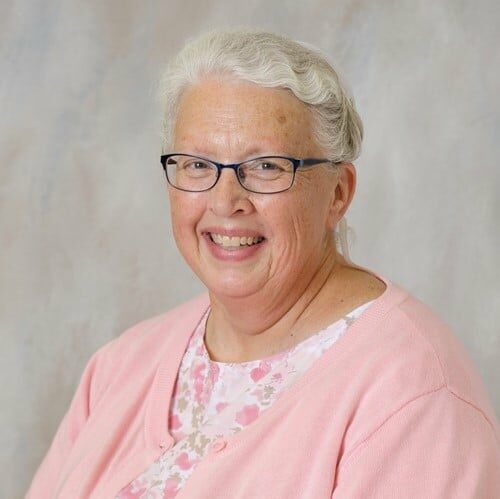
“I have an ouchy on my toe,” Savanna announced. As I gave Savanna a band-aid, I asked, “Can you put it on?” I am thinking to myself, “I can’t do feet.” I can help with a lot of things—teeth, noses, hair, but I just can’t help with toes.
Hmmm…Jesus did feet! Dirty feet, big feet. He didn’t tell the disciples they would need to wash their own feet.
I am thinking about service and how I can serve my students. I often tie shoes, and that is a way I can serve first-graders who often don’t know how to tie shoes. I fix hair, comfort children, pick up things, help them find missing items, and clean up messes. Really, these areas aren’t too challenging for me. Just a part of the job, something I regularly do. Maybe I should look for something more challenging that would cause me to LEARN to serve. Next time I could kindly put the band-aid on the toe. I can put aside my free time at recess to help Daryl with his remote-control car that isn’t working. I can give up my planning period to sit in the lobby and chat with the child who needs some extra attention.
Our school’s core value for the year is Service, as in our motto, “Learning to Serve.” We’ve been reminded of serving and how we can serve right here at school by picking up trash, wiping up spills, or cleaning up in the bathrooms. We will have a big day of service when we go into the community and pick up trash.
We try to clean up in the cafeteria at the end of lunch by wiping the tables and sweeping the floor. At the beginning of the year, I rewarded those who swept by giving them gummies. Sweeping is not a very fun job, especially when the class before you did not clean up very well so you are cleaning up for your class and theirs! After a while I decided that sweeping could be a way for my students to serve so I said they would take turns sweeping and then we wouldn’t have gummies. I want them to develop the idea of serving without always receiving a reward.
Some years I have bought supplies and had my students pack little “goodie bags” for the seniors to take on their senior trip. I did not purchase extra for my students; I wanted them to pack these bags and see the fun items that they would also like and then give the bags away as a means of service (gum, tissues, mints, hand sanitizer, candy).
Some years ago each class was to do a service project. Younger classes made cards for people: shut-ins, people in nursing homes, people who had lost a family member or friend. My class made a scrapbook and took it to the great-grandparents of a student and gave them the scrapbook and sang for them. We went Christmas caroling at a local nursing home and gave student-made cards to the residents. Some of the older grades did Christmas caroling at a nearby store and along the downtown street. Classes did service days by packing supplies at relief organizations while others assembled kits for relief groups. Students helped clean up in the neighborhood and for school families after storm damage. Students helped a family move. We collected supplies for a family who had a house fire. There are many areas where students can be involved in serving in the community. They can also serve right in the school. One teacher had his students write notes to someone who had influenced them. Several years later I still have notes I received that day.
I feel I am serving parents when I care for their children at school and when I take time to communicate with the parents as we work together to support their children. I can serve my colleagues as I offer to bring a class back from recess or share a book or some needed supplies. I see that a teacher is not feeling well so I bring their class to my room for a special story time to give that teacher a little rest.
Recently as we walked to the library, there was a chocolate chip laying on the floor. Everyone walked past it. Soon we came to a piece of trash. I stopped and asked, “If we are learning to serve, what should we do?” Several children responded, “Pick it up!” So two children picked these items up. Learning to serve…yes, this is the core value for the school, not just the students, but all of us who are involved in the school.

Serving as the School Treasurer
It has been moved, and seconded that “Nominations cease.” …Brother [Shane] has been chosen as the treasurer. Now what? Some of the aspects of a treasurer that we’ll be considering are being a man of integrity, working with the previous treasurer (and others) during the transition, working as part of the school board team, keeping the books, and other administrative responsibilities. Bring your questions and advice as we explore the responsibilities of the school treasurer.
Serving as the School Treasurer was presented by Shane Steckly at the Conservative Anabaptist Administration Institute (CSAI) on March 21, 2025.

Intentional Contributions of School Leaders' Wives
As school leaders’ wives, is our aim and goal to give of our time and resources for the united purpose and work of our Christian Schools? "And whatsoever ye do, do it heartily, as to the Lord, and not unto men." Col. 3:23. At home, school, and church, are we showing sympathy or apathy? Together, let us encourage each other to give our willing contribution and commitment to the work.
Intentional Contributions of School Leaders' Wives was presented by Verna Janzi at the Conservative Anabaptist Administration Institute (CSAI) on March 21, 2025.
What to Look for When Visiting
"What did you learn at school today?” Parents may ask their child this question, perhaps at the supper table, and listen with interest and discernment as the events of the day are shared. How would you answer this question if a school board member posed it to you after you visited school. What are the things to look for when visiting school? More importantly, do we know how to help improve our school because of our visit?
What to Look for When Visiting was presented by Elmer Wideman at the Conservative Anabaptist Administration Institute (CSAI) on March 21, 2025.
Shaping Minds Through Deliberate Reading Choices
Are you a student of the word of God? You are what you consume. Are you consuming the word, allowing it to change you and overflow into godly reading choices for you and your family? Join Albert as he shares his passion for the written and Living Word and offers practical suggestions of helpful reading material. When you as a parent are grounded in the word of God, love it, and have it in your heart, it will have a powerful influence over the books that you provide for your children in your home, school, and church.
Shaping Minds Through Deliberate Reading Choices was presented by Albert Brubacher at the Conservative Anabaptist Administration Institute (CSAI) on March 21, 2025.
Earning the Confidence of Parents
Do you possess wisdom, or does it possess you? James 3:17 says, "But the wisdom that is from above is first pure, then peaceable, gentle, and easy to be intreated, full of mercy and good fruits, without partiality, and without hypocrisy." God's wisdom is given as a parameter for our lives that overflows into faithful living and inspires the confidence of our brothers and sisters. Learn how you can allow God's wisdom to possess you and build confidence in relationships.
- Faithfulness that Earns Confidence
- Men of Honest Report
- Full of the Holy Spirit and Wisdom
- Bearing Fruits of God's Spirit
- Bringing every thought into captivity
- Live in Humility with Repentance
- Wisdom that Builds Confidence
- Pure
- Peaceable
- Gentle
- Easy to be Intreated
- Mercy
- Good Fruit
Avoiding Communication Gaps – Panel Discussion
Where do communication gaps in our school system start? Who is responsible for them and what are some signs they may be happening? How can communication be encouraged in times of tension and disagreements, and how can it be done without unnecessarily triggering defensiveness? All these and more will be addressed in this practical talk on how to build strong communication throughout your entire organization.
Panel Moderator – Cameron Gerber
Panelists
- Vernon Hoover
- Thomas Martin
- Carson Baer
Avoiding Communication Gaps was recorded at CSAI 2025
A Compelling Vision for Christian Schools
Why do we invest so much to have our own Christian Schools? Is the vision that inspired the pioneers of the private school known and fueling us today? Or has the vision changed? In any society, when the educational center of the young loses its vision and focus, that society begins to decay. Does your vision for the Christian school blend with your vision of a community of believers that are living in peace, prospering, and accomplishing God’s mandates on the earth?
A Compelling Vision for Christian Schools was presented by Carson Baer at the Conservative Anabaptist Administration Institute (CSAI) on March 21, 2025.
Restoring Student Respect
Respect cannot be forced - it is earned and modeled. Join in this talk to explore how a school board and teacher can work well with a disrespectful student and build a respectful environment for the entire school. Teachers have a huge responsibility in maintaining respect in their classroom and it can be done in many practical ways. Learn how appreciation, order, and apologizing can foster respect in your classroom today.
How to Maintain and Restore Respect
- Board Intervention
- Work with the Parents
- Loss of respect by the parents is detrimental for their children
- Work with the Teacher
- Coach the teacher to be the driver of change
- Give the Students a holiday/suspension
- Replace the teacher
- Work with the Parents
- Teacher Responsibility
- Show respect and appreciation
- Admit mistakes and apologize
- Take an interest in the students' life outside of the classroom
- Praise respectful behavior
- Be consistent and organized
- Be Punctual
- Be Prepared
- Practice consistent follow up
"Restoring Student Respect" was presented by Dwight Eby at the Conservative Anabaptist Administration Institute (CSAI) on March 21, 2025.
Graduating: Beyond Academics
Does the quality of the education of our graduates tell us if we are getting the work done or not? Is our goal academic excellence or strong character? Parents, how satisfied are you with the school going beyond academics in shaping your children’s perspectives? Schoolboards, does this enter the equation when deciding who to ask to teach the upper room? The true test of a school’s culture and vision is shown by the caliber of life of those who are graduating.
Graduating: Beyond Academics was presented by Cason Baer at the Conservative Anabaptist Administration Institute (CSAI) on March 21, 2025.
Resolving Staff Crises
A crisis is a point of life where something must change or there will be a catastrophe - our teachers face such crises. Are we as a school board prepared to help? There is no equation that perfectly fits for each unique situation. First of all we need to go to God's word. There we will find insight into how we can resolve conflict with love, respect, and much prayer to a God who desires to give wisdom to those who ask. Come on this journey as we explore how we can seek God together in meeting our staff members in the middle of their crises.
- Crises Definition
- Example from Sea
- Crises - Man overboard
- God - Ship of Refuge
- School Board - Ship Crew
- Real Life Teacher Crises
- Relational
- Patrons
- School Board
- Students
- Fellow Teachers
- Medical
- Governmental Intervention
- Example from Sea
- Crisis Resolution
- Ask of God
- Prayer
- Resect
- Love
- Meet the Struggling Staff on their level
- Acknowledge that there is a crisis
- Be There
Resolving Staff Crises was presented by Leon Weber at the Conservative Anabaptist Administration Institute (CSAI) on March 21, 2025.
Unifying Board Opinion
"A unified board," Kelvin shares, "emphasizes the importance of collaboration, trust, and respect among board members to effectively serve the school even when differences arise." As a school board member, you are called to be a man of understanding, to interact with humility, to be a team player, to graciously accept different opinions, and to be a peacemaker. Join Kelvin as he explores what open communication, constructive dialogue, and respectful disagreement can look like within a unified board.
Components of Unified Boards
- Practice Teamwork
- Know each other well.
- Hear what each person has to say.
- Listen to the quiet members.
- Listen with humility to all ideas.
- Show Trust and Respect
- Foster open communications and constructive dialogue.
- Hear all opinions.
- Respectfully Disagree
- Focus on the best interests of the school and all involved.
- Be men of understanding.
- Practice humility in sharing your own opinion.
- Move Forward
- Respect the outcome.
- Protect Community Perception
- Study Successful Examples of Unified Boards
Unifying Board Opinion was presented by Kelvin Plett at the Conservative Anabaptist Administration Institute (CSAI) on March 21, 2025.
- 261Page 27