
All Content
Beat the Clock, Beat the Class: Building Skills with Healthy Competition
Classroom
Multiplication dice drill
Diana
I was looking at some things that I miss from having a conventional classroom. Being at the board all the time and teaching can get tiring, but I miss that constant interaction with the students and also seeing the students' progress more on a daily basis firsthand. I get to see so much more, I feel like, if I interact with them every day at the board, and in class time, and things like that, but I do appreciate what I see in my students: the way they take responsibility for their own work and go ahead. It's a challenge for me to learn to know how to bless their efforts instead of discouraging them.
Classroom
Flashcard race
Marla
One of the things I do—I do like to do it with them one-on-one too—and that is just see how many cards they can get in one minute. I have stacks of cards, like here's multiplication—these are addition and subtraction—and so, I know how many are in a stack and so we just repeat the stack and see how many you can get. If they can get in the 40s in one minute, that's good. In the 50s is very good. And if they can get up to 60 in a minute, that's excellent.
Doing the one-on-one, that then removes... They're just trying to beat the timer. And so, they're not competing against other children and sometimes they do better. I came to realize some of them were not getting their math facts and so I started doing the one-on-ones and seeing how many they could get in a minute and they sped up just like that. I mean, the difference was pretty amazing. And so, I feel like these core years when they're learning their math facts, they need to be drilled over and over and I try to do it. I don't always have time, especially on days when I'm by myself like I am today. But anytime they've got free time, I just call them up here and we'll go through the flashcards. It's random, totally random, but I think it's core that flashcards—you just have to do them every day in order for them to get their facts.
Diana
Sometimes I have other plans for them, like they're not used to doing as much oral reading and flashcards and things like that. So I've learned if I can tell them, give them a heads up that they can plan that into their schedule. They're okay with it better than if I just all of a sudden announce we're going to have oral reading right now. And they just feel like "(gasp) I don't have time," because they feel so pressed because they are responsible for all their work, and getting it done, and they see what they need to get done.
And how does that work when they're not in the same place?Diana
Most of my students were at the same place. If they're not, I'm used to having several grades and we did a lot of things together either as a review or a prep for when they get to it. So that's what I do here as well. Like if they're a few lessons apart, I figure the reason we're doing oral reading is for comprehension and learning to read more smoothly, so they'll benefit from it, whether they've read the story before or not, or whether ... Like if we do the nine times today versus the eight times flashcards, they need the practice anyway.
How do you harness the power of healthy competition?Marla
Number one, the teacher's enthusiasm bleeds into the children. And so, first of all, you have to get them excited about it. And then, I don't know, I just kind of like to have fun with it. I've never really had too much trouble, I guess, with them getting ahead, I guess. And this year, yeah, they get into it and I just have to laugh because some will put their entire body into it sometimes. And then there's some that are so fast that by the time one sucks in their breath to say it, the other one has already spit it out.
Classroom
Flashcard race
Marla
Beating a time or beating your friend, one or the other, that's all it takes. And for little people, the rewards they get for whatever can be so small for them to be happy with.
Classroom
Handing out stickers
Marla
Yeah, just beating somebody is a reward.

Be a Table Knife
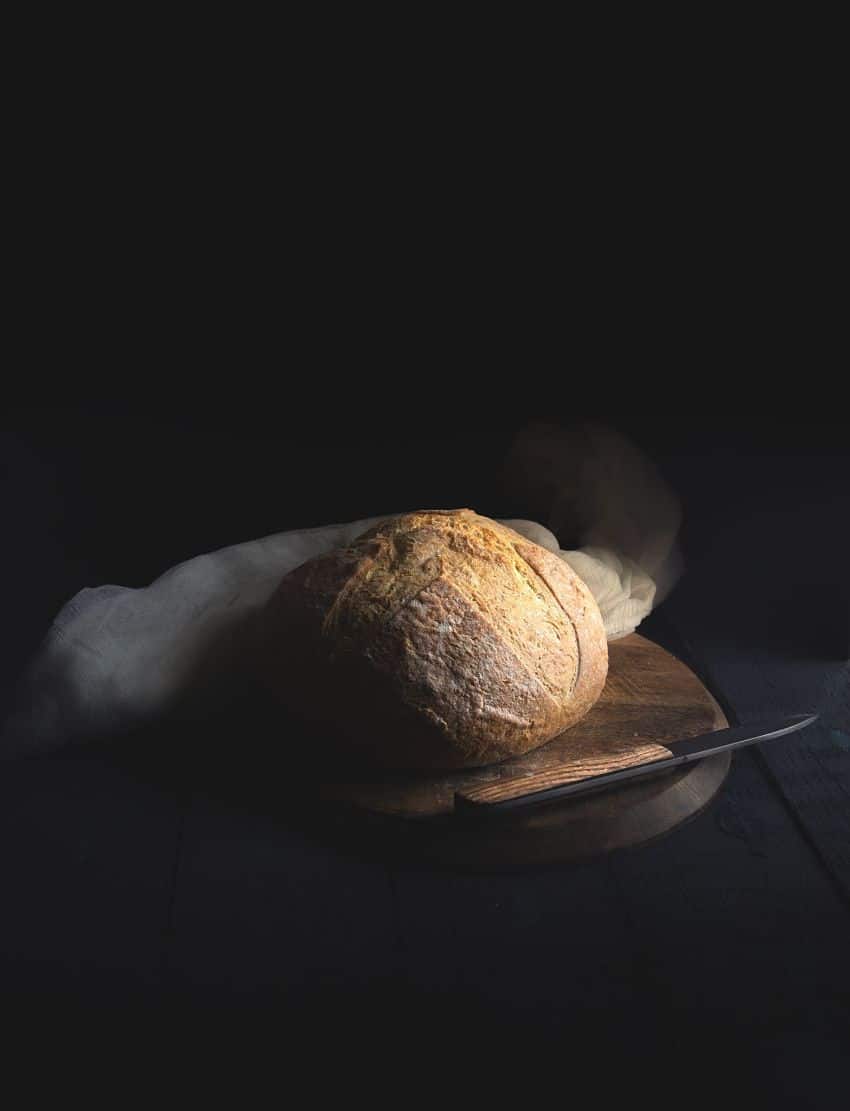
Ever hear a student complain that they’ll never use the algebra they’re struggling through? Or that diagrams in language arts have nothing to do with real life? The next time you hear statements like those, tell your students to be like a table knife.
A table knife? Yes. Consider its many purposes. You can use a table knife to cut meat, open packages, clean cracks, and eat peas (if a little honey is applied). It does a pretty decent job as makeshift screwdriver for Dad and makes a handy playdough-sculpting tool and sandbox shovel for the little ones.
A butter knife, on the other hand, is intended only to spread butter on bread, while the sole purpose of a master butter knife is to lift a pat of butter from the central butter dish and place it on the diner’s plate—no spreading allowed.
What limited lives the butter knife and master butter knife have in comparison to the hardy and multipurpose table knife! As people who want to make a difference in our world, we should gain knowledge and skill in many different areas.
Though you may not know a lot about a subject, if you know a little, there will almost certainly come a time when the little you know will be greater than what anyone else in your group knows. At times like these, your little knowledge will be invaluable for the success of the group’s effort as well as for your own personal success. As Erasmus said, “In the land of the blind, the one-eyed man is king.”
I am indebted to Dr. Michael Miller for sharing this object lesson in a recent inspirational talk at Sattler College. Your students, like me, may benefit from it.

Remember

Remember. Memory. Memorial. We have a memorial service to remember someone, and come away from it thinking of that person and their impact on us. Joshua built a pile of stones to remember how God had led the Israelites across the Jordan River. My students and I made a pile of paper stones to remember God’s faithfulness to us. My Sunday School students piled up stones as they related times that God had helped them.
As we approach the end of another school year, we remember. We’ve made many memories this year. Let’s reflect on the year and see.
Remember how you wrote at the beginning of the year? Look at the first page in your Handwriting book. See how you wrote your name? Now look at the page we just did. How has your writing changed? And remember your drawing? Look at this picture from the beginning of the year—the man has no arms, hair, or ears!
Do you remember when we did this page of 100 math facts in five minutes? No one finished it. Now when we did it, several of you finished it, and you all did more facts than you did that first time.
We’ve had a travel theme this year. Let’s travel back and remember.
In September, we had Bear Week, and did bear stories, bear games, bear projects, a bear picnic, and ate bear snacks. You brought your teddy bears to school. You wrote your first stories then, and some of you just wrote some random letters! Now you write pages of stories. Remember when we hibernated? You brought in blankets and made dens, and we had fun sitting in the dens, reading, or pretending to sleep.
In November, we wrote on the pumpkin, listing things we are thankful for. Your parents came in for our Thanksgiving Tea. Oh, yes, and November brought that snowy day when the buses weren’t allowed to leave to take you home! Remember, your parents had to come pick you up, and some of you were here until 4:00 PM! We had fun, didn’t we? Reading, having a snack, playing games together.
December brought the Christmas program, Christmas lunch, and studying what Christmas really means.
We had fun in the snow when we went out on the big piles by the parking lot, and when we had science lessons outside in the snow, and we measured how long it took the snow to melt. February was fun with the Valentine’s party and my birthday, and you were so generous to me, and thought I might get spoiled!
You wrote about Easter and what it really means and you were very thoughtful with that. You made me cry when Carter gave a perfect example of Jesus’ love for us. Brad needed to pay a ticket for not following the class rules, but didn’t have any tickets left. Carter came to me and said, “Here—I want to pay Brad’s ticket,” and gave me one of his own tickets. I told you that is just what Jesus did for us because we couldn’t pay for our sins, but it was like Jesus said, “Here, Father! I want to pay those tickets” and He died for us.
You are all reading, and some of you are reading chapter books. It is great to look around and see someone here on the stool reading, someone under my desk reading, people on their desks or under their desks, reading, students in the hall reading together. I hear Dale reading jokes to me from the milk cartons, and Ellen reading all the posters in the room. There’s Brielle reading to Sean as they walk up the steps to the bus.
There are so many things I could say about each of you. There are many things you are good at, and you have made progress in many areas. Samuel, you are great at fixing things. Loren, I appreciate your good cooperation. Marie, you have 100% in spelling for the whole year, and Dean, you have 100% in Math for the year!
Let’s remember our first-grade family, and the care you have shown each other and your teacher. Let’s remember these fun times and all the learning and growth you have made. God bless you, my class of 2018-19!
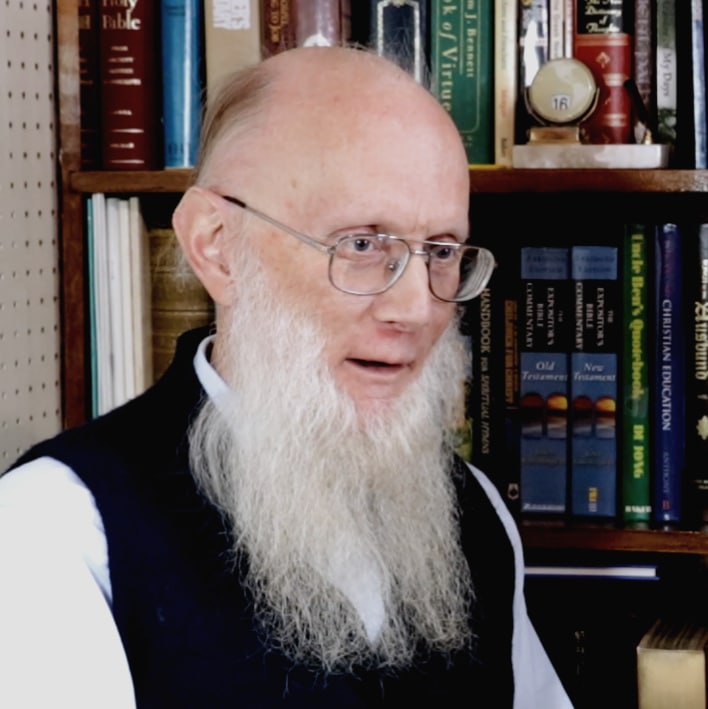
To Understand and Do: Teaching Literature for Life Change
Why teach literature?
For wisdom. The writer is one who has eyes that see what's in front of his face. The Proverb writer, I think it was said, I walk by the place where the hedge was overgrown and the weeds were coming up. This is my words. He looked and he saw and he took construction.
We need some understanding. Do we understand? The circumstances are the things that stand around us, the situation in which we are in. Do we understand that, understand the questions, the problems, the potentialities, the difficulties? Do we understand? And then are we able to discern the best course of action?
Not all wisdom is created equal. Wisdom is the principal thing. Therefore, get wisdom. With all that getting a good understanding. This is important that we know that. How do we go about doing this?
There is a way, the Scriptures tell us, that seems right. The characteristics of this worldly wisdom are that it's based on a natural desire, that is, an inborn desire for understanding and achievement and success. We want to have a successful life. And it pretty much depends upon our ability to reason. The definition of success in worldly wisdom would be whatever the seeker says success is.
Godly wisdom is—you're motivated by a healthy fear of the Lord. That moves you then to responsible action. And we do not depend upon human reason. However, we do use our God-given reason and our abilities to think coupled with a dependence upon His Spirit to guide us into truth and, I would say, as children also coupled with a respect and an openness to be taught by those who are teaching you.
There's a lot of talk about critical thinking today and it has its role, but I would like to caution us that critical thinking can become idolatry the same as any other thing that we focus on solely. When we use critical thinking, we do, in a sense, hold things at arm's length and we look at them and we evaluate them, "What is this? Where does it come from? What's it trying to accomplish?" We're very careful before we adopt it. Now, the risk is that it can put whatever we study beneath us putting our mind into the driver's seat. It depends quite a bit on the seeker as to what he gets from this. You can't assume that just because somebody reads something or studies something or hears something that he is going to gain godly wisdom from that. That's why it does make a big difference who the teacher is, who the person is who guides this person to his thinking.
Teaching literature involves helping the students to engage. When I would say "engage" here, it's to interact with a literary work in a way that influences how they live their lives from that day forward. I'm not saying that tongue-in-cheek. I actually mean that. When you read something, you read it and if it's worthwhile reading, you read it and it influences you in some way; your attitudes, your thinking, your understanding in some way.
Now, we may not remember having read it and that doesn't matter. I don’t remember every meal I've eaten. I can't tell you what I had for lunch on July 13th, 1987. But what I ate that day influenced my life. We can't name all the stories we've read, all the things we've read and say, "I read this then. Therefore, I think this now." People who truly read literature grow a little—grow a little!—with each piece they read. They may be enlightened, inspired, encouraged, or warned. They may gain knowledge, insight, or motivation.
Quality literature has both themes of substance along with excellence of form and expression.
Students see straight through some things. Some selections are so thin that the reader can tell you before they start. Dad’s going to go away and he's going to tell the boys to behave and the boys are going to do something they shouldn't do. When Dad gets home, the boys are going to be called on the carpet. It's just a question of, "What it is this time?" That kind of writing deals with real things of life, but it's not literary. Sometimes, actually, telling the reader what to think or how to think actually sometimes undermines the purpose. But effective stories show truth in action. If you have something with excellent form and expression but don't have substance, then it becomes this sounding brass that Paul talks about.
It's a rich privilege to be able to discuss with students the content here. Here's where you come together. We read in “The Village Blacksmith,”
His hair is crisp and black and long.His face is like the tan.
His brow is wet with honest sweat.
He earns whatever he canAnd looks the whole world in the face
For he owes not any man.”“His brow is wet with honest sweat." Is there such a thing as dishonest sweat?
"He looks the whole world in the face for he owes not any man." What does it mean to look someone in the face? For what reason might you not be able to look someone in the face? What might be a reason why your eyes might go down?
Toiling, rejoicing, sorrowing,Onward through life he goes.</span > Each morning sees some task begun. Something attempted, something done,
“Toiling, rejoicing, sorrowing.” If you had to pick three words, what three words would you pick to describe life?
That middle one there is a powerful one. These lines you can take with you to the bank and you can use them for the rest of your life. Think about it in the evening. When you put your head in the pillow: “Something attempted, something done.” Have you done that today? Have you attempted something? Have you done something?
When you discuss literary pieces, it gives you opportunity to deal with these things of substance that make life what it is. Also, it builds tremendous opportunities for discussion and to develop the skills in students to actually talk out loud about what they're thinking and to hear each other talk and to learn from each other.

Writing a Research Paper, Part 3: Citing Sources and Plagiarism
 Correctly citing sources is often one of the least-understood parts of writing a research paper. This article will investigate reasons for citing sources, examine some misconceptions about plagiarism, discuss the definition of plagiarism, and give some advice for helping your students write properly-cited research papers.
Reasons for Citing Sources
When a student’s research paper contains direct quotes, paraphrases, or summaries from multiple sources, the reader gains confidence the paper has been well-researched. When including information from outside sources, students should strengthen their paper by citing the source.
There are two main reasons to cite sources in a research paper. First and important, citing sources adds authority to a paper. The citations tell the reader that the writer has information that supports any statements or assertions they are making. Second, citing sources tells the reader that not all of the information in the paper is original with the writer. Correctly citing supporting sources is a critical part of writing a good research paper. If writers don't properly cite their sources, they commit plagiarism. This begs the question, what is plagiarism?
What is Plagiarism?
Broadly speaking, plagiarism is taking someone else’s words or ideas and passing them off as your own. Plagiarism is a form of cheating that is just as serious as copying answers off another student’s test. Plagiarism is taken so seriously in some schools and colleges that it can result in expulsion and a permanent mark on a student’s academic record.
There are several misconceptions about plagiarism. The two that I’ve heard most often have been:
- As long as you don’t copy a sentence word-for-word, you aren’t plagiarizing.
- If you didn’t mean to plagiarize, you aren’t plagiarizing.
Paraphrasing or summarizing information from a source without citing the source is still plagiarism. Even if the exact words were not copied, the sentence structure and information—the kernel ideas of the source—were copied. If students use any information from a source, they must cite it to give due credit to the source and to avoid plagiarism.
In the same way a police officer can rightfully give someone who didn’t know the speed limit a speeding ticket, so a student is still guilty of plagiarism, even if done accidentally. As the teacher, you are responsible to teach your students what plagiarism is and how to avoid it by correctly citing sources.
How to Keep from Plagiarizing
Now that you know what plagiarism is, how can students keep from plagiarizing accidentally?
- Don't procrastinate. Many students plagiarize because they run out of time. If your students begin and continue working on their papers well before the due date, plagiarizing won't be nearly as tempting.
- Take good notes. If students take detailed notes while researching, they will have all the information needed to properly cite their sources later. At minimum, their notes should include the source of the information and the page number of the source.
- Know when to cite. Students should learn the requirements of when and how to cite their sources. (This topic is addressed later.)
How to Cite Sources
There are three main types of citation information in a research paper: in-text citations, Works Cited, and Bibliography.
Types of Citations
In-text citations. An in-text citation is a small piece of information that indicates which source the information came from. An in-text citation should follow any quote, paraphrase, or summary that students use in their paper.In her book Reader, Come Home, Maryanne Wolf states, “In the first quarter of our century we daily conflate information with knowledge and knowledge with wisdom—with the resulting diminution of all three.” (Wolf, 192)
Works Cited The Works Cited contains information about every source that is cited in the text such as author, title, publisher, and publication date.Wolf, Maryanne. Reader, Come Home: The Reading Brain in a Digital World. New York, NY: Harper, an Imprint of Harper Collins Publishers, 2018.
Bibliography The Bibliography contains information about any sources used while researching for the paper, but that weren't cited in the text. A bibliography entry contains the same information included in a Works Cited entry.The in-text citations, Works Cited, and Bibliography may be formatted in various ways, depending on which style guide you use. A style guide, such as MLA (Modern Language Association) or Chicago Manual of Style, specifies what information should be included and how it should be formatted. Many English curricula use a certain style guide; check your curriculum to see which one they use. If they don't specify one, then either MLA or Chicago Manual of Style would work well.
Educate Your Students
Spend at least one class going over your style guide. Explain how to do in-text citations and how to enter different types of sources (books, periodicals, online sources) into the Works Cited and Bibliography. It is not possible to cover all the different citation situations in this article, so you will have to become familiar with your style guide of choice.
When to Cite Sources
Students often ask me whether they need to cite a source or not. It is a complex subject, but here are some basic guidelines for when students should cite a source and when they don't need to.
When to Cite
A student should cite a source if they quote, paraphrase, or summarize a section of a source. If they include a direct quote from a source, the quote should be placed inside quotation marks and be cited with an in-text citation after the quote. Paraphrases and summaries should be cited in a similar way. Factual information, data, and statistics that are not considered common knowledge should also be cited.
When Not to Cite
Students worried that they might accidentally plagiarize will sometimes over-correct and begin citing every single sentence or paragraph in their paper just to be safe. Students can reduce their number of citations by knowing which types of information they don’t need to cite.
These types of information don't need to be cited.
Historical information. If many different sources give the same information about a historical event, that information doesn’t need to be cited. For example, a student doesn't need to cite a historical fact such as who the American colonies fought in the Revolutionary War.Original information. Students do not need to cite their own ideas or findings.Conclusions. If information was cited earlier in a paper, it doesn't need to be cited again in a conclusion paragraph later in the paper.Common knowledge. Information that is considered common knowledge (knowledge that is found in numerous sources and is generally accepted) doesn't need to be cited. Common knowledge can include historical facts or observable phenomena about the world. Common knowledge isn't necessarily information everyone knows, merely well-known or well-established information. You can find more information about what is considered common knowledge at the following link: What is Common Knowledge?Tips and Tricks
It can be frustrating for students to have to pour over a confusing style guide to make sure they correctly formatted their citations. Thankfully, there are some digital tools that make this process easier.
One of the most useful tools I've found is the Citation Machine website. It allows a student to pick the correct style guide and enter some information about their source. Citation Machine then produces a citation that is ready to copy and paste into a word processor. Citations from Citation Machine will not always contain all the necessary information, so it should be used as a starting point.
If your students use Microsoft Word, they can use the citation tools built into Word. If you look under the References tab you will find some powerful tools that can make constructing in-text citations, Works Cited, and Bibliographies almost fool-proof. You can find tutorials on how to use Word on the Microsoft website at the following links: Create a bibliography, citations, and references, Insert footnotes and endnotes.
If your students are using online sources, there are Chrome browser extensions that can produce a properly-formatted citation from a web page. One of the best ones I’ve found is the MyBib Citation Generator. It will format the citation in the style of your choice, and even gives you the probable credibility of the source.
These digital tools are no substitute for a good style guide, but they can make citing sources a little less frustrating.
Conclusion
In summary:
- Educate your students on what and how serious plagiarism is .
- Give them tips on how to avoid accidentally plagiarizing.
- Pick a style guide and learn how to use it.
- Teach your students how to use the style guide and how to cite their sources using in-text citations, Works Cited, and Bibliographies.
If you follow each of these points, your students will have the information and tools necessary to properly cite their sources.
Helpful Sources
In an article that addresses plagiarism, I must point out that not all the information in this article was my own. I pulled from several different online and print sources. Below is a listing of some of the sources I used. These sources contain quite a bit of information that couldn't fit into this article; I suggest you look at some or all of these sources if you need more information about either plagiarism or citations.
Abeka Grammar and Composition HandbookThe Everyday Writer by Andrea LunsfordDavidson Library Guides: Citing SourcesPurdue Online Writing Lab: Research and Citation ResourcesColumbia College: MLA Citation GuideColumbia College: Plagiarism Tutorial

Poetry: Powerful Rhymed Poetry
Some professionals discount rhyme in poetry as cheap technique. Though rhyme alone does not deliver poetic quality, poetic language infused with winsome rhyme forms a stirring combination near the apex of language. Lets study and emulate that kind, for 'the song of the poethow much do we owe it!'
Art: Mastering Facial Expressions
Starting with fundamentals of facial anatomy, we will explore the movements of facial features that interact as a whole so we can better portray realistic emotional expressions. We will incorporate a hands-on approach using direct observation technique and in-class demonstration.
Articles: How to Write a Doctrinal Article, Part 1
How many readers avoid doctrinal articles because they are heavy and dry? Can we present deep truths with simple clarity? And in a way that connects with the reader? Are we guided by Gods Spirit or by our hobbyhorse? Are we personally searching the Scripture or simply regurgitating religious phrases?
Graphic Design: Choosing a Style to Fit Your Purpose
Understanding the purpose of your publication and how to connect it with the intended audience should be a primary factor in your design choices. Come explore what questions to ask and steps to follow to ensure that your design choices are suited for your audience.