
All Content

Countries around the World Theme Projects
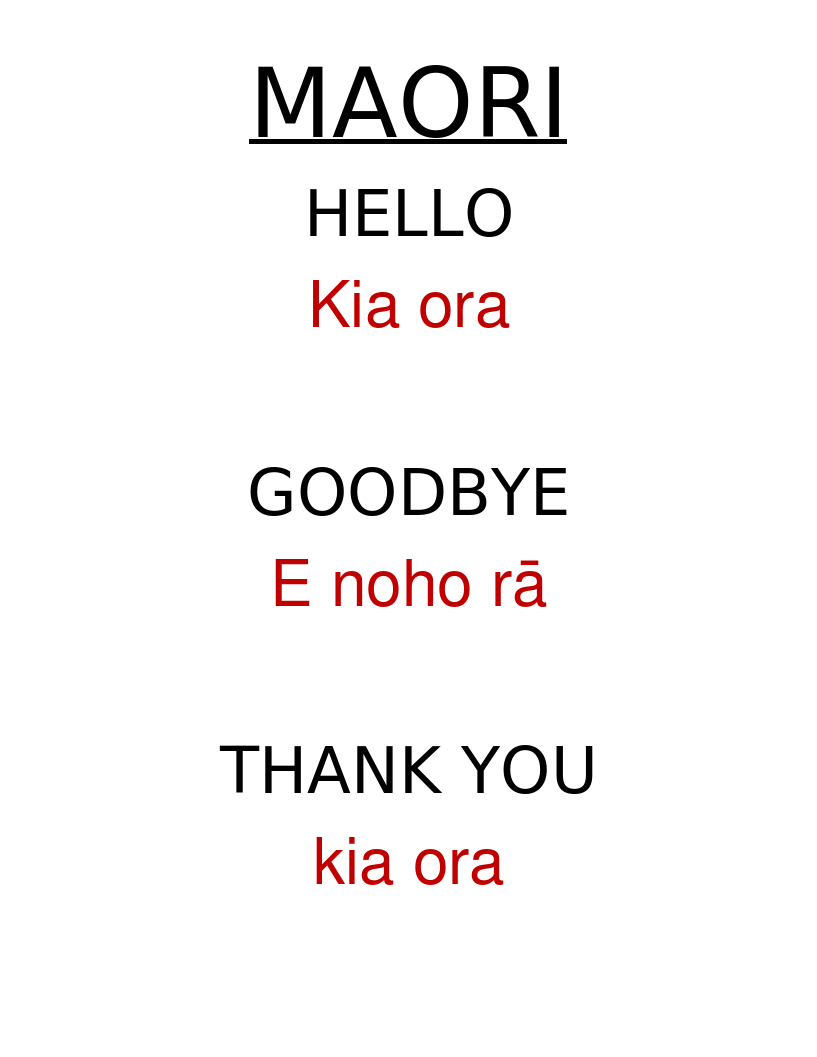
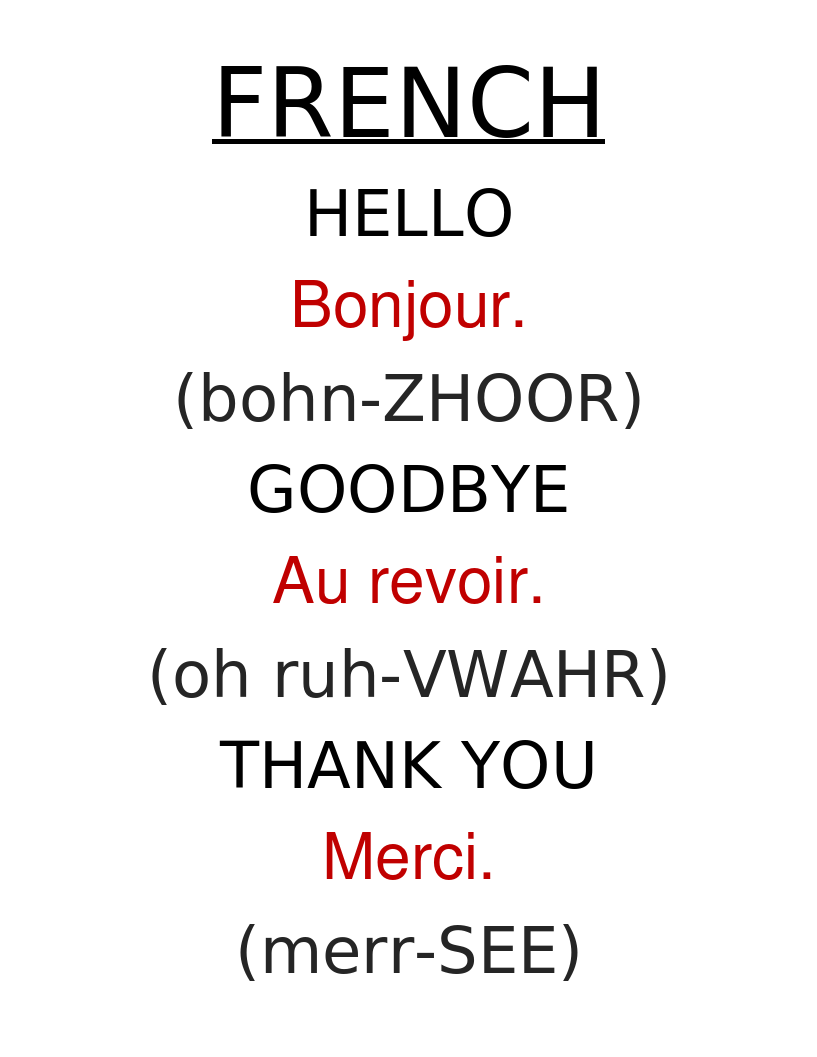
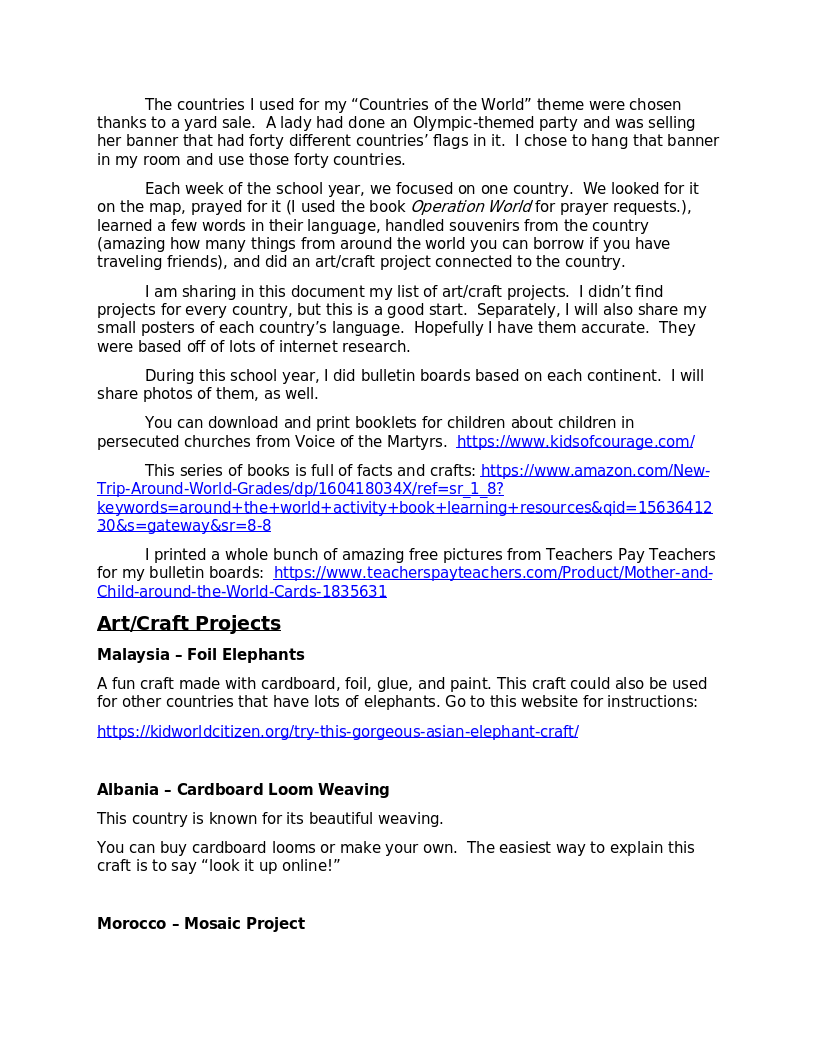
A document with 26 different craft projects, each for a specific country. These projects use basic craft and kitchen items. For most of the projects, you will need to follow a link to find the project. Miss Hess did one craft project per week with her fourth grade class. The beginning of the document tells about some other things she did to incorporate this "Countries of the World" theme in her classroom.

A Servant Education: The Method and the Call
This is Part II of a collective effort by seven administrators of conservative Anabaptist schools. This group of administrators believes that our schools are poised to aid our churches and homes in the call to be the hands and feet of Jesus in the world. They offer this essay in hopes of seeding ongoing discussions throughout our communities about how to best mobilize our current opportunities for God’s glory. Read Part I here.
The Method
Now we turn to the question of “How?” What are the methods of a servant education, the process of forming Christ-like servants? If giving oneself to God’s mission out of love for Him is to be the constant reference point for all of our decisions, then we periodically need to re-evaluate and reimagine each aspect of our schooling. We should think carefully about the structure, the classes, the procedures, the methods, the policies, and the activities of our schools, holding each of them up to the light of the great commandments. Do they honestly contribute to the goal or do they actually pull us in a different direction?
Schools that offer a servant education pay careful attention not only to what they teach—the content, but also to the atmosphere in which it is taught—the culture. Culture is the environment in which education happens; it is what students feel when they walk into their schools or classrooms. Schools and homeschools that offer a servant education make it their highest priority to foster a culture of love. This means hiring teachers who model a contagious love and commitment to Jesus and the church. Schools with a culture of love will be places where all students are accepted, places where prejudices of race, ethnicity, class, family, aptitude, and attractiveness are overcome with the love that God has for every human being. Respect for teachers and for fellow students, gratefulness, diligence, courtesy, responsibility are also qualities of a God-centered school culture of love.
A spirit of worship should also characterize the school’s culture and its activities. Singing, prayer, and Scripture reading foster habits of reverence, loyalty, and love for God and His ways and should be part of the daily rhythms of school life. Making connections between the subject matter of math, English, history, and science and God’s character and revelation is critical as well. If we are to effectively proclaim that God is at the center of all, we must never relegate our interaction with Him to a particular corner of the day or building.
We learn best by doing, so a servant education will provide opportunities for students to engage in regular acts of authentic service. Sweeping the classroom floors, sacrificing leisure time to polish an essay, hosting an event for the parents, caroling for neighbors, writing letters to believers in prison become opportunities to practice the grace of turning one’s primary focus away from oneself and toward others and to cultivate the habit of serving others. Service will be a key part of the school’s culture.
The relationship between the teacher and student is another critical component in the process of forming godly servants. This relationship is the soil in which godly education and formation take place—without the nutrients of trust, respect, decorum, and humility in the teacher’s interactions with the student, a servant education cannot take root. The life of the teacher is the moral and spiritual curriculum of the school. No other single factor in the school will have a greater impact on the student. For this reason, priority is placed on the role of the teacher in the Christian school. It is essential that the teacher model the spirit of Christ and continually grow in His likeness. Christian training will be anchored in the engaged presence of godly, wise, and skilled persons.
Textbooks, lectures, writing assignments, tests…these methods too are important. English, math, science, and history hold no less significance in the context of a servant education; in fact, they hold more. Students learn to read, write, speak, compute, experiment, not to build their own little kingdoms of financial security, comfort, and entertainment, but rather to give their lives in Christ-centered service to their churches, homes, workplaces, and communities. Mastering the traditional core of knowledge opens doors into many different fields of service. God calls some people to vocations that require college preparation. A servant education should be rigorous enough to prepare a student for those areas of service.
In addition to the traditional academic core, a servant education would make a special effort to develop knowledge and skills that are uniquely valuable for specific aspects of the church’s mission. Christ-centered business training is one example. Many graduates of our schools will be involved in business as either owners or employees. This class would help prepare a people with business skills (e.g., marketing, financial analysis, management) and a vision for doing business as service for the glory of God. A course in homemaking is another. Creating safe, vibrant, joy-filled, hospitable homes is one of the greatest opportunities for radical service in today’s world. A multi-year curriculum that paints this vision while cultivating essential skills is part of the investment needed to push back on influences that militate against healthy homes. A well-developed church history with a focus on the story of the Anabaptists would be a high school course of study that aims to anchor the identities and commitments of students in the story of God’s continuing work in the church. A servant education should also develop students’ capacity to spread the gospel cross-culturally. This may mean including “tent-making” skills in the curriculum, preparing people to serve abroad with less need for financial support from home. These skills might include computer programming, graphic design, and TESOL. Other classes would train students in skills needed for the advance of the gospel – foreign languages or basic medical skills.
Cultivating servants with the desires and capacities to put God’s mission at the center of their lives is countercultural and hard. Pursuing this dream means pushing back against the soul-sapping materialism and spiritual apathy of our culture and refusing to bow down to the gods of power and pleasure. A lukewarm commitment to these aims on the part of a few will not be enough. Raising an army of servants for God’s work will require entire communities of believers to come together, forge a common vision based on common values, and all share in the responsibility of training each generation.
The challenge of raising Christ-like servants in our day calls for parents to take their God-given responsibility seriously and band together in the context of the church, utilizing the resources and gifts of the brotherhood to educate their children in traditional schools, communities of homeschoolers, or some hybrid of the two. The church body should provide corporate direction and support for families, extending and enriching the resources of individual families with spaces, materials, experiences, and personnel. Godly education draws on the gifts and wisdom of all of those in the community, integrating people of a wide variety of ages and abilities into a young person’s formative experiences.
Effective preparation for participation in God’s mission requires the formation of the whole person. In addition to developing the appropriate knowledge and skills, an effective servant education nurtures the desires, character, values, and commitments of a student. A godly education seeks not simply to impart knowledge about servanthood; rather, it emphasizes being and becoming a servant.
Let us be clear: education cannot transform the heart of a person. God alone can do that. The best education in the world without the resurrection power of God is as useless as the world’s most powerful electric motor during a blackout. Students must experience the cleansing, renewing, and empowering fire of the Holy Spirit in order to become true servants. As parents and teachers, we are “co-laborers with Christ,” avenues of His grace in preparing students to become His co-laborers as well.
The Call
As a people, we are at a moment of opportunity. We have a wealth of resources. We can squander our “talents” on larger homes and more toys for our children. Or we can choose an infinitely wiser route, one that will make an eternal difference in the world: to invest in teaching and training our children to be a powerful force for servanthood in the years to come.
This moment is also one of peril. The cultural forces vying for our children’s allegiances and loves are great. No tepid response will effectively counter the allure of video games, the internet, movies, and the prevailing value system. We must act. Servant education is one way to make an extraordinary sacrificial investment in the character and capacity of our children.
In a world that sacrifices its youth on the altars of convenience and the happiness of parents, we as parents, as school patrons, as school board members, as church leaders, as teachers and administrators have the opportunity to push back hard and work toward:
• Communities dedicating some of their best people, greatest innovation, and focused intention toward developing youth to be compassionate, capable servants poised to do His will on earth as it is in heaven.
• Communities that generate an unyielding resistance to the trivial, the mind-numbing, and the merely amusing.
• Communities of God-loving, Jesus-following, vibrant, globally aware Christians equipped to participate in the creation mandate and the great commission.
In a time when many pursue wealth for selfish ends or play away their lives, young people yearn to make a difference. May our schools be vibrant, inspiring places that equip them to make this difference in fields, shops, kitchens, places of commerce, offices, and hospitals, in places close to home and in new cross-cultural settings. Filling myriad roles across the globe, they will be unified in their love and service of the King. May our school communities enable parents and assist churches to realize a common vision—the vision of a vibrant church serving her Lord and working for the day when the whole earth will be filled with the knowledge of His glory
(Ps. 72:19).
How can this be in our schools? Share your thoughts on servant education in the forums.
Sample Classroom Procedures
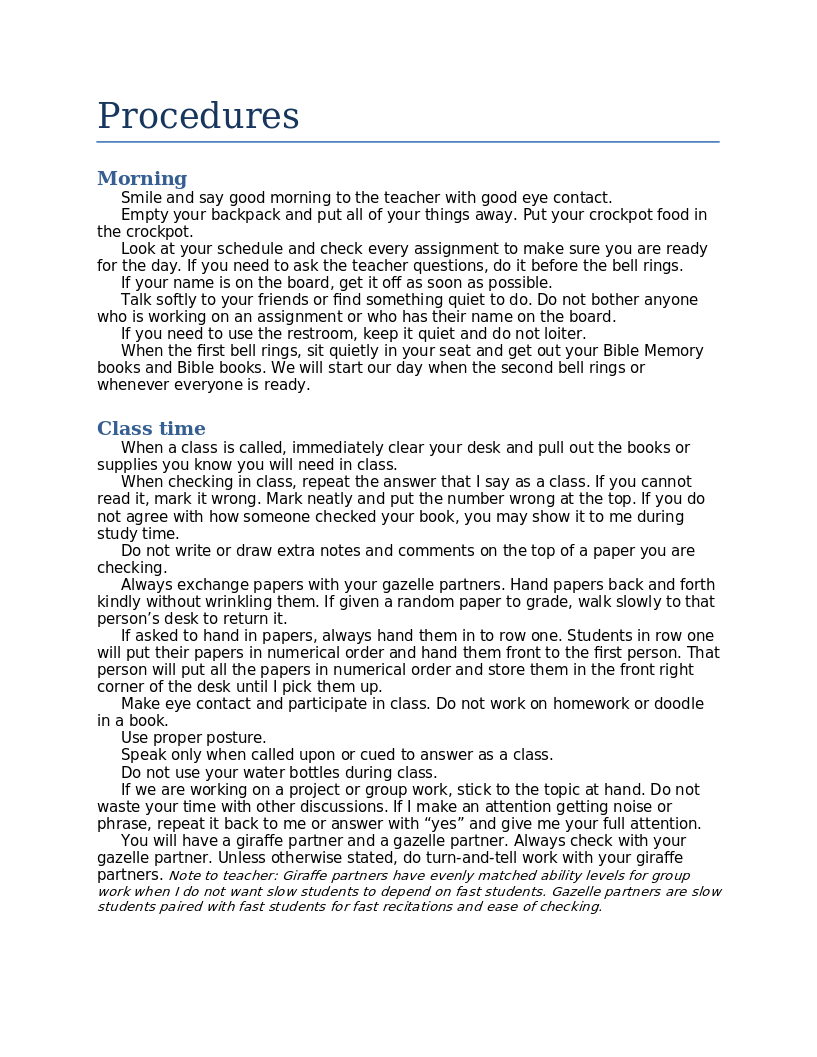
A sample of a 5th grade classroom teacher's procedures, including specific incentives for the year based on the classroom candy land theme. Use it for inspiration as you plan your own classroom ways.
See a picture of the Candy Land theme.

Finding Pieces of the Puzzle: Connecting Concepts for Grammar Mastery
So there’s this great analogy with teaching English that I've heard a number of places. Teaching English is a lot like a jigsaw puzzle, where you teach this concept and that concept. In each concept, you're giving the students a piece of the jigsaw puzzle. The active voice, passive voice, transitive, intransitive, linking: they can't necessarily tie it in because they don't have all the pieces yet. That's especially in younger grades. Now, as we get to older grades, they have more pieces, and one of the things that we need to be doing is helping them fit these pieces together. That way, by the time they're out, they hopefully have a full picture, the whole jigsaw puzzle put together or at least most of it.
Now the problem is, if you have pieces that don't fit in yet, it's going to be very easy to lose them. That's where the challenge comes, helping them to fit these pieces together before they get lost. What I try do as much as possible is fit the pieces in right away as much as I can. I start off with simply dividing between linking and action because that's something they've learned since third or fourth grade, are already very familiar with that concept and so, we can build off of that and split it down from there. Hopefully, they can make much more sense of it, tie it in, and they can already have that piece fit into the picture instead of just having a bunch more loose pieces.
In Class
We have verbs. Verbs are what or what? Two kinds of verbs. Yes. Action or being and being of course can be linking verbs. If it is an action verb though, it can be what or what? It can be transitive or intransitive.
A transitive verb passes the action on to something else. An intransitive verb doesn’t. It shows action that’s not passed on to anything else. Intransitive verbs can be either what or what? Yes? Active or passive.
Okay, so active voice passes it on to a direct object, which means it will have a direct object. Passive voice passes it back to the subject.
What is different about a passive voice? So, it always has a form of be as a helping verb. “The ball was kicked.” “The window was broken.” We always have a form of be before the verb whenever we have passive voice. And it, of course, passes it back to the subject. Let's look at a couple of example sentences.
So, for example: “I played the tuba.” What type of verb? Action or being? Action verb. Now is it transitive or intransitive? Transitive. Is it active or passive? Active. What receives the action? "Tuba" which is a… direct object. Good.
Another sentence. That one is pretty simple. “The tuba was played poorly.” What kind of verb? Action or being? Still action. Is it transitive or intransitive? It's transitive. What receives the action? The subject receives the action. “Tuba” was played. “Poorly” tells simply how it was played which makes it what, active or passive? Passive. We have the form of be here with the verb.
“The tuba played poorly.” It simply sounded bad. “The tuba played poorly.” So, same verb; is it action or being? Action. Transitive or intransitive? So it’s intransitive complete. We don’t have anything to finish the sentence. The other thing we're missing is this form of be, which means we no longer have our passive verb form. That means instead of being transitive, it is now simply intransitive complete.
“The tuba”—two more sentences yet—“The tuba sounded loud.” What kind of verb? Action or being. This one is being which makes it a linking verb. And what is "loud?" Predicate adjective, describes the subject.
And this one yet. “The tuba sounded loudly from the basement.” This might be a little tricky. What kind of verb? This one is action. Why isn’t it being? Okay, so what we have following the verb is “loudly,” which is an adverb, and “from the basement” is an adverb phrase. There’s no predicate adjective or predicate nominative. So “The tuba is sounding” is active—it’s doing the action. So it’s simply what, transitive or intransitive? Intransitive. Often this is where these get tricky where we have a bunch of phrases or adverbs after the verb. It’s easy to think that they’re adjectives or to pick out a noun, think of a predicate nominative… receiving the action. You have to watch out for this. But simply to walk through the steps can help whether you’re trying to pick out intransitive, active, passive, linking, et cetera. Identifying the verb, walking through those steps can help you figure out what it is supposed to be.
So that’s a whole bunch of different jigsaw pieces that if we can help tie them together and tie them in to what they already know, it can help it make more sense for the students.

A Servant Education: The Vision

This essay is a collective effort by seven administrators of conservative Anabaptist schools. This group of administrators believes that our schools are poised to aid our churches and homes in the call to be the hands and feet of Jesus in the world. They offer this essay in hopes of seeding ongoing discussions throughout our communities about how to best mobilize our current opportunities for God’s glory.
The Challenge
In ancient Greece, the mothers of Sparta would send their sons off to battle with this stern bit of counsel, “Return with this shield or on it.” The commitment of the Spartan society to military supremacy and heroism was such that every member of society learned to value victory above life itself. The Spartans raised their children in light of their goal to be the greatest warriors in the world. Children deemed unfit for a life of vigor were abandoned to die. The boys who were allowed to live entered a boot camp-like academy at the age of seven to toughen, strengthen, and train them in the skills of warfare. Fighting is what they learned to love. Their stories and their songs honored the men who had shown exceptional courage and strength on the battlefield. Military conquest was the air that they breathed and the bread that they ate. The Spartans’ single-minded dedication to their military brought vision, energy, and crystal-clear purpose to the way they raised each generation.
We, too, have a cause. As followers of Jesus, our purpose requires as much and even more sacrifice than that of the Spartans, but it is poles apart in its aim and method. Our cause is not war, slaughter, and destruction. Instead, it is a life of active love that shares the Good News, heals the brokenhearted, brings freedom to captives, and offers liberty to the oppressed. Our cause is abundant life, not death; healing, not killing. Our goal is love for God and neighbor fleshed out in humble servanthood.
Jesus gave the rationale for this life of service in the greatest of all commandments: “And you shall love the Lord your God with all your heart, with all your soul, with all your mind, and with all your strength.” He continues with the natural implication of loving God above all else: “You shall love your neighbor as yourself.” Modeled beautifully in the life of Jesus, the way of love inspires and empowers service. The north star of Christian teaching and training, the guiding light for all our decision-making and efforts in raising our children, is love for God and love for one’s neighbor.
The efforts that go into the training and preparation of young people in Anabaptist communities need the energy, vision, and clarity that comes from a deep-seated commitment to the cause of loving and serving God. Much effort has gone into developing a thoroughly Christian education in many of our communities, but the work is not finished. In order to maintain what has been accomplished and to build upon it, we must prayerfully continue to evaluate, to dream, and to plan. What would our schools look like if every component of education were dedicated to the task of preparing young people for a life of wholehearted love and service to God?
The task of training our children to love and serve God is often disconnected from the day-to-day operation of our schools. In spite of intentions to provide a Christian education, some of our schools and homeschools struggle to nurture students in invigorating and convincing ways. Too many students see school as an experience to endure until they can begin doing things that really matter. Some parents view school as another intrusive legal requirement and find serving on the staff or board a chore. Something is wrong when education, a key way that a people pass on their vision, values, and knowledge, is associated with apathy or burnout. Our schools and homeschools can and should be much more.
The Vision
We have a vision for a Christian education anchored in the greatest command and aligned with our values as Anabaptists. We envision education that:
- Inspires love for God, commitment to the church, obedience to the Scriptures, and compassion for the poor and needy of society.
- Is rigorous, preparing students for skillful service as mothers and fathers, farmers, healthcare workers, builders, researchers, and missionaries.
- Tells and retells the stories of faithful, godly servants, championing the qualities of humility, self-sacrifice, and love.
This would be a servant education, one that highlights our privilege to be servants of God who practice loving service to our neighbors. A servant education would call, inspire, and prepare young people to join God’s mission in the world.
Rooted in the mandate that God gave to humans at creation and in the great commission that Christ gave to the church at the end of His ministry, the mission that God calls his people to carry out on the earth today includes three prongs: 1) the building of the church, 2) the proclamation and demonstration of the gospel of Jesus to the world, and 3) the stewardship of God’s creation. Let’s consider what it means to prepare our young people for effective service in these three areas.
Building the church. The focal point of God’s mission on the earth is the church, the active presence of Christ in the world carrying forward Jesus’ work of “reconciling all things unto (Col. 1:20).” Therefore, a priority of a servant education is to prepare and equip young people for “the building up of the body of Christ (Eph. 4:12).” Our schooling should cultivate in our young people the values and skills needed to strengthen and bless the church, particularly the local congregation, the functional unit of Christ’s body, the place where His life and love are actually experienced.We should partner with homes in teaching students how to lead singing, study the Bible, prepare and give devotionals and topics, read Scripture orally, pray in public, teach Sunday school, and lead group discussions. We should train our students in the interpersonal skills vital to church life. School provides unique opportunities for showing children how to work together and cooperate with other members, how to listen to other perspectives and be willing to share their own, how to watch out for the weaker or quieter members of a group, how to engage in meaningful conversation with people of different ages or interests, how to disagree in a respectful way, how to lead and how to follow, and how to stick with a group and persevere when it would be easier to quit. These are essential skills for healthy church life. Ultimately, a servant education seeks to inspire and enable a generation of people to commit themselves to and serve the people in the church to which they belong, using the gifts God has given them to bring the church body to “the measure of the stature of the fullness of Christ (Eph. 4:13).”
Proclaiming and demonstrating the gospel to the world. The church cannot rest until it has succeeded in taking the gospel of Jesus to all people. A servant education will also equip students to share the gospel compellingly and joyfully with those who are enslaved to sin, to give of their time and resources to help those who are sick, hungry, discouraged, and displaced, and to share friendship and hospitality to those God brings into their path. Our lives and our curriculum must echo the message of the good Samaritan which is that loving one’s neighbor means caring for all people: the voiceless, the weak, the poor, the hungry, the widows, the children, the rich, and the educated. To do this, we must give our young people eyes to see past the typical cultural prejudices to the true value and the true needs of people.Stewardship of God’s creation. In addition to equipping students to carry out the church’s mission, a servant education paints a vivid picture of God’s intentions for human society on earth and equips students to contribute effectively to that component of God’s mission. In the very beginning, God instructed Adam and Eve: “Be fruitful, and multiply, and replenish the earth, and subdue it: and have dominion over the fish of the sea, and over the fowl of the air, and over every living thing that moveth upon the earth (Gen. 1:22).” Later we are told that God put humans in the garden to “dress and to keep it.” The mandate here is that humans, as God’s image-bearers, are to manage the earth and creatively develop its resources for the flourishing of human society and the glory of God. While sin has deeply marred the world, this is still God’s intention for His creation.Godly training prepares children with the attitudes, skills, and knowledge to enjoy and manage the created world in accordance with God’s will for it. To effectively fulfill this calling, young people need the knowledge and skills to grow food, build houses, design bridges, and care for the sick, along with a host of other tasks that are necessary for life to flourish. Our education should give our students a vision for the significance of their work. It is not just a way “to make money so that I can contribute to God’s work.” It is God’s work, and we were created to find pleasure and meaning in it. When done in a spirit of submission and service, planting cotton, preparing meals, and repairing computers are ways of responding to Jesus’ desire to see the Father’s will being “done on earth as it is in heaven (Matt. 6:10).”
This is the vision toward which our schools should work: the church of Jesus Christ filled with people from all nations, tribes, tongues, and social and economic groups; people who are conformed to His image, obedient to His Word, submitted to each other, stewarding His earth, caring for the needy, and faithful in spreading the good news around the world. Ultimately, a servant education puts God and His mission at the center, not “me.” Instead of asking, “What good is school going to do me?” students (and parents) should learn to ask “How will this enable me to help others?” A servant education is others-focused, not self-focused.
This sense of participating in something bigger than themselves invigorates students. They rally around the goal of preparing to be God’s hands and feet to serve a world in need. English, math, and science classes are no longer educational hurdles over which to leap. Instead, school is preparation with real purpose.
Next week: The Method and The Call
I'm a Music Teacher. Now What Do I Do?
There are many approaches to a music program in a Christian school, but one deciding factor is how much time is allotted to that subject. Another factor is if there will be a program or not. And as is usually the case, there is a spring program and a Christmas program. And those factors will really decide what you can accomplish in music class, and how deep you can get into the music.So, if the requirements are for a Christmas and spring program, then I think a teacher will work one way. And if it's just learning music without the need of a program, then the teacher has a little bit more latitude in what to work with. However, usually, we do have the programs. And so then you have the choice of whether to teach the songs all by rote, which is like the teacher singing and repeating, or you really get down into the mechanics of the music and work on the pitches and the rhythms.Or you can do a combination of both, and that is what I usually try to do. Students should learn some songs by rote, just like they should be able to tell what is in a picture even if they don't know how to spell every single word of each picture or each element of a picture that they see. However, we want a child to eventually be able to read the words instead of just relying on a picture to be able to tell what is being talked about.I have put in effort that the songs we use for programs are at a level that we can break them down into their basic elements, and fully understand the rhythm and the pitches. So last year, me and a group of friends composed all the music for the Christmas program using text in public domain, and a certain set of criteria. For example, grades one and two had only combinations of so, mi, and la with a few other dos and res, maybe. And as we got to the older grades, we began to use the entire pentatonic scale. And junior high was mostly diatonic with one piece even being in Dorian mode. So this allowed me to have a seamless connection with what I'm teaching here in class, and what they are learning for the programs.Here, I put in a lot of emphasis on sight-singing, because I believe that it is something very practical, and something that students will be able to use for the rest of their lives. I do that by breaking things down and adding in elements one layer at a time.So for example, if I give a new piece to students, then one of the things that I want to do first is to be able to understand and decipher the rhythm. So we'll start by just looking at the rhythm, all other elements aside, and we'll see if we can break it down into he ta's and ta-di's and sh for the rests and everything. I use the Takadimi rhythm method. So it's basically like solfege, for rhythm. And there's also the Kodaly method, which uses different syllables. But I found the Takadimi to work quite well.And so we'll look at a new song, and we'll just work through it just with the rhythm. And we'll try to do that for every song, unless I really think it's a simple song. But even then, I want to make sure that the students really can understand the rhythm, and chant it.I'll then move into singing pitches while removing the rhythm. So it's not going to sound like a song, but it's going to sound just like a collection of pitches, but in the proper order. And there I'll use hand-signs a lot, and I have to make sure that I don't fall into the temptation of singing it for them, because I want them to learn to sing the pitches. And if we come across a difficult interval, then we'll stop and we'll just work on that interval. Or if we come across several difficult pitches or difficult intervals, then we'll just isolate that and work just on those intervals.After we can comfortably chant the rhythm and sing the pitches without the rhythm, then we're ready with what I call step number three. And that is chanting the pitch names. Again, just adding one layer at a time, going nice and slow and increasing the difficulty by just a bit each time. So yes, step number three would be chanting the pitch names in rhythm.Step number four would be to sing the pitches and the rhythms together, and there we start having the picture of what the song is supposed to sound like. After that, I will sometimes remove the pitch names and just sing it on doo. And that, I believe, gets their mind working in a different way, which will get them ready to sing the actual lyrics of the song.And the final step is singing it as written. And once we're singing it that way, then I will focus on things like diction and other musical nuances. So, as we progress, I want us to make that switch from thinking about words to thinking about the sounds that they make.So I'm quite passionate about teaching music, because I believe that music is something eternal, and something that we would do well into putting our time and energy into. Music is one of the few things that all age groups in a community can do together, and there aren't that many of them. But music is one of them.Music is just so wonderful, because you're giving glory to God, and you're being blessed, you're being a blessing to others. And it is just something so incredible, that God has allowed us to use here on earth. It's like a little taste of heaven.And so I believe that we would do well as communities, as churches, as Christian schools, to not neglect putting in time, energy, and resources into the music program. Music is a vehicle for values, and it is ours to use or to lose, or sometimes to abuse. And so I just really encourage people that I come in contact with, that I have conversations with, that they not neglect this. That this is a very important part of developing the whole person, and how that person will fit into a family, a church, a community, and into society.

Creating a Culture of Gratitude

In the black of before-six one morning, I woke riveted by a thought.
I grew up in a culture of gratitude. At home, at church, at school, I always heard, “Thank you.” Thank you for what You’ve given us. Thank you for the abundance of clothes and food we have which so many people don’t. Thank you for parents who loved us and taught us about You. Thank you for the privilege of a Christian school and Christian teachers. Thank you that we can worship in freedom, when so many people are persecuted for their faith.
I remember one year near Thanksgiving time, my teachers had us children take turns telling what we were thankful for until the entire chalkboard—a chalkboard so big it took half a wall—was crammed full with words.
As a result of such teaching, I grew up feeling incredibly blessed. I thought I was one of the richest people alive, both physically and spiritually. That fairy dust lingers over me still. I find the courage to meet life and feel constantly beholden to others and obligated to give because I am one of the privileged ones.
I have. Therefore, I can conquer. Therefore, I can contribute.
It took impact with hard adult life—took my own jealousy and ambitions—to teach me that gratitude is an attitude, not a given. For my parents, my teachers, for all people, yes, we are blessed. But we are blessed if and when we notice it, not because we have more than anyone else who also notices.
The apostle Paul wrote that entire cultures lost the knowledge of God for the simple reason that they were not thankful. The essence of a belief in God is a belief that you have been given incredible gifts by a power larger than yourself—gifts like love, faith, courage, prayer, and enjoyment in living—and you want to say thank you.
Each of us, no matter our role in life, doubtless influences a child in some way. Whether as a teacher or parent or some other role, let’s give our charges this gift my mentors gave me: a way of looking at life that understands a small corner of its magnitude and says, “Thank you.”

Speed It Up—Carefully: Old and New Technology to Serve Your School
Technology. We think that it's our friend, but in reality, the thing about technology is, it accelerates. I was inspired by the book Good to Great when it talked about [how] technology is an accelerator to make you great, but it's also an accelerator to make you bad. If you have a bad thing going, it's going to make it worse. I love technology when it helps, but I hate it when it gets in the way.
The other thing about technology is that we as Anabaptists have been very good, I think in history at least, at being skeptical of it and making sure that we don't abuse it or overuse it, and so I think that's good and I think we need to continue doing that. Because if we don't know why we want our technology, it will definitely rule us and we don't want that to happen. And so we want to use our technology well.
Paper is tech. The one thing that I like about paper is it's a lot less distracting. We get our technology, our Bluetooth, our computers, our cell phones, everything distracting us and when we have paper it's not as distracting. For multiple reasons, there are times when less distraction is better. I also love, love, love binders and so I just have a whole row of binders. One of the reasons that I love them is because they give you some semi-organization without necessarily needing it to be perfectly organized.
So I have an archives binder, just love to fill it with anything that is floating around and I need to... I want at some but I don't know when I want it so I throw it in there. For that reason I developed a staff binder for our school, and in this binder I created sections for each teacher to have a one on classroom, schedules, weekly meetings, events, debriefing, orientation, our staff manual and our Other section.
For our weekly meetings, I just love to have our meetings all on paper. It helps us to stay on track and helps us stay prepared. When we used to do our meetings agendas on our computers, everyone brought a laptop to the meeting and we got distracted and we got not done as soon and we got on bunny trails and all the rest of that. A document that is required to have items on it before we come to the meeting—everything's printed. Everybody can follow along. They can write with a pen. Love that.
The other thing that I love paper for is a planner. This is the Full Focus Planner by Michael Hyatt and he would love if you would buy it. One thing that I think is excellent use of paper is planning. I've heard from Howard Hendricks that you should spend 15 minutes a day, a one hour a week, one day a month, and one week a year in planning and the time that I spend when I get 15 minutes a day to plan is really, really helpful. It just gives me such clarity. I feel like I accomplish a lot more in my day.
Another reason to use paper is journaling. It's a great way to be aware of how I act and react and what I'm thankful for. When I can do that just with a paper and pen, it's a great use of that technology. And then a notebook. It can be any type of notebook, but just something that I know, when I'm taking notes, where to go when I want to go refer to them again. It's great to have one notebook for meetings that don't have printed agendas. I have a place to go for that.
Now paper's not the only technology, and we're very aware of that. One thing that I was advised about is in order to use digital technology well, you have to know why you want it and what the goal of it is. For 24 years now that our school's been running, although I haven't been in our school all those 24 years, I have watched as we've improved on our procedures and our policies and different things. I feel that I'm blessed that we didn't go to digital technology right away. We're still using paper for our attendance. And I think that that's good for the purpose of helping us to learn what it is that we want technology, how we want technology to serve us.
Using Sycamore School Management is a great tool for us. There's 354 features on it and we don't plan to utilize them all right away. But because we've learned without it for so long how to run a school, we now can appreciate the features that they offer and we can utilize them well. The other thing I mentioned with Sycamore, and we're very excited to be using it, is the barcodes that they offer, namely for library management—that's an excellent service—but also attendance can be taken through barcodes. Inventory can be done through barcodes. A lot of amazing uses of barcodes. For about $20 we were able to get very simple and very useful piece of technology.
We've also used Google Drive for awhile and the reason that that is very helpful for us is collaboration. We can work on documents and share them among ourselves. And we are just in the process of migrating over to Synology. It is a local network. It has the speed of local network. The security of local network. And also has the option when you're not on the local network to access it anywhere in the world. And so we are very excited about moving to that direction because we already are aware of why we want it.
There are a few other technologies that I want to talk about and one of those, low tech once again, is a timer that you can hand turn. The psychology is that if you want to stay focused on a task, you turn that timer to the desired time and you can work diligently. They have said that an adult's attention span is between 20 to 35 minutes. I love to use this timer just to set it to time, work diligently for that 25, 35 minutes, and then go take a break. And that helps my productivity a lot.
So in review, the idea that technology is an accelerator and if you have something going bad, you'll make it worse a lot faster. If you have something going good, you can make it great with technology.
As our school has grown, so has our need for space. And so once we needed it, we moved some classrooms into our church building, and we also realized we need more office space. And so as I looked around for an office, I found this old closet that wasn't being used in one of our Sunday school rooms. And so I tried, decided to re-purpose it. I got an old sneeze guard that was laying around and I used it as my desktop, and I added two computer screens, threw in a little computer here, and the shelves that were already in the closet were great use for storage space. I love to be able to sit here and do my work. I just love utilizing a space that would otherwise be neglected and it serves me incredibly well.
And also I love the stress relief that it gives me at the end of the day when I get to lock all my work behind me.

Top 10 Lessons for the Teacher

I was returning workbooks to my students, and to save a few steps, I gently tossed some books onto desks. One of the children chided me, saying, “You really shouldn’t make a practice of that!”
You’re right, Ryan, I really shouldn’t toss the books. Lesson learned—the students watch the teacher very carefully, and pick up those words, gestures, and behaviors.
I enjoy “Top 10” lists, and decided to develop a list of “Top 10 Lessons the Teacher has Learned.” These lessons come from my 32 years of experience teaching first grade. If you would assess me on the lessons, we might find that I am still working on some of them!
- Your students are carefully watching and pick up on what you say and do. Be a good example for them!
- Be flexible. You can (and should) plan lessons carefully, but be aware that you may not be able to follow that plan. Someone may throw up, you may have an unexpected visitor, the students may not understand and you must reteach, or there may be a teachable moment that comes up in the middle of the lesson.
- Take advantage of those teachable moments. A student may ask a question that is unrelated to the lesson, but it concerns them and needs to be addressed. It may be a comment from a student, such as I heard during a Bible story, when Gail blurted, “Mean God!” I needed to deviate from the lesson and help Gail understand that God is not mean, but He is just.
- Changes usually work out fine. Be open to changes, and be willing to try new things or new procedures. Once we had a new administrator who wanted to change our recess and lunch schedules. At first, I felt reluctant to do that because our former schedules had worked okay. I did not say anything, though, and went along with the changes. In the end, I found that I liked the new way better!
- Set boundaries for the students and keep them. I remember how Bryan behaved at the beginning of the year. He kept pushing every rule and procedure and I wondered how the year was going to go. After a couple weeks, Bryan settled in and was very cooperative and a good student. I realized that he was testing all the boundaries. Once he found they did not change, he knew what to expect, and he could concentrate on learning. Be consistent. Children need to feel secure, and consistency will help them feel secure.
- Don’t listen to the advice of “Don’t smile until November!” Start the year with a smile, and keep smiling. Be firm and consistent, but be friendly and kind, too. Let the students know that you are glad they are in your class.
- Lay out a general idea of your plans for the year. Don’t make detailed lesson plans for the entire year, but at the beginning of the school year, think of your goals, what you want to accomplish, and main topics for each subject. I think of this simple but helpful, method of planning:
- Where are we going?
- How are we going to get there?
- How will we know we’ve arrived?
- Remember that each child is special and loved. Yes, some children are easier to love, but each one is special. Ask God for help to love those unlovely children, and look for areas to encourage each child. These children are precious to their parents and the parents are trusting you to teach and lead them well. Present difficult information to the parents in a way that does not cut down the child or the parenting skills. (If the child is not precious to his parents, be especially aware and help that child know that they are precious to God and to you.)
- Prayer is vital! I couldn’t teach without prayer. I pray each morning for the class, my teaching, and the school. Pray with the students. I start and end each school day with prayer. Pray with the child you’ve just corrected. Pray for students’ prayer requests. Sometimes my prayer is a very quick, “Help me!” when I don’t know how to handle a situation. David had a hard time adjusting to school at the beginning of the year, and cried nearly every day. One morning his mom called the office to see how David was doing. The secretary checked with me, so I asked David, “Are you doing okay?” His answer: “Of course! You prayed for me, didn’t you?”
- Keep in mind that teaching is a calling and a ministry, not something you do for the money. My students have asked me where I work, or if I have a job! This school is where I work, but I don’t feel like I’m going to work every day. This is my mission. Trust God to provide – He will! I still remember one of the early summers when one week I had just enough money for a loaf of bread and a birthday card for my grandma. God provided and I always made it through.
I do believe that God has placed each child in my classroom, at my school, and He has placed me there as the teacher. All 719 first-graders that I have taught are special and I enjoy seeing them throughout their school careers and then meeting up with many of them as adults (and teaching with some of my former students and teaching their children)!

Turn and Learn: Engaging Every Student with Turn and Tell
Rebecca: What was Raphaelle Peale known to do? Turn and tell. What is it? Say it together.
Students: Still life.
Rebecca: Yes.
One of my favorite teaching tools is using turn and tell in my classroom. It's a good review, and you can get it done quickly and a lot of students are involved.
You ask the question to the whole class, maybe 10 people out of 20 raise their hands, but only one's answering. And that leaves 19 people out of the story. So if you have turn and tell, you have at least 10 people talking, if not 20.
Basically you have two students, you have them paired up. And then you can do three students in a group if you wish, if you have odd number or such like. They know their partners, they know where they're going, and you say, "Turn and tell." And they're just right at it. You want them to be able to do it quickly and also quietly, because if they're not quiet, you're going to have a lot of hubbub in your classroom, and it'll just kind of wreck the culture you want to create.
It also gives students a way to formulate what they're learning. They have a chance to talk about what they're hearing, and they need to put it into their own words. And then on the other side of that, it helps students listen.
It also gives us a good way to get students to interact with each other, and do that in healthy ways with content and interacting with each other.
One way I use it a lot is to get the stronger students to help the weaker students. If you ask a question, cold call to one of your students that you want to pull in with what you're teaching, and they just don't know. You ask question after question, and they're, "Uh, uh..." Just quickly turn and tell, and the whole classroom starts to talk, the stronger student beside them is going to help that weaker student. You can still come back to that weaker student, and they can give your answer and they can be successful.
I tell them to discuss and they discuss it. They come back and they, hopefully, have a better answer than they were thinking of by themselves. I especially use that one when I ask a question and I'm getting blank stares from everyone. Well, I don't want to change my question, because I like my question, and so I get them to turn and tell, and they discuss, and sometimes they come up with a weak answer, but it's better than nothing.
I can usually stem off of that weak answer, turn another question to them, and then I ask that question and I don't need to use a turn and tell again, because there's hands going up this time.
So, some of the tools I use for turn and tell are motions, so turn and tell, I just quickly do a hand motion, they know they should do it. If they're not getting the motion, they don't see it, I just go, "Turn and tell, and quickly."
Rebecca: Who was are third artist? Turn and tell. I told a story about him, who was it? Meghan.
Megan: Albrecht Durer.
Rebecca: Albrecht Durer.
Another thing for calling them back, I will snap my hand and just hold it up here. They should be turning and looking as soon as they hear that. Another way I get students to come back for turn and tell is to go, "Tch, tch, tch."
Rebecca: Tch, tch. What was the original name of New York?
And when they're coming back, it's not acceptable to be looking down at their table or such like.
Some different ways I use the turn and tell is for discussion questions.
Rebecca: Take two minutes and brainstorm what you would like to do, okay? You may turn and talk with your people around you or such like, what you could do.
Another technique I use for turn and tell is to have them take turns talking. So the person nearest to the wall will talk first, and I tell them, "Person nearest to the wall, say the answer," and they're saying the answer. That way you don't have the same person in the group always talking, you have all those people on that side of the room talking. And then the next question, "Person nearest to the windows, say your answer," and they'll do their answer. That way you have everyone involved and not only the stronger students are talking all the time, you have weaker students talking too.
Rebecca: What was he known for? Caleb and Merlin, what was he known for?
Caleb and Merlin: The praying hands.
I do it because it's a good way to get students involved, like I said before, a very quick review and they can interact with the content in ways that they can't otherwise.

5th-6th Grade Teacher - Fall 2019
FALL 2019 - We are seeking a male or female teacher for ten 5th graders & six 6th graders. Familiarity with Abeka curriculum is an asset but not a requirement.Our school is K-12 with a projected 74 students next fall. We are thankful for a solid group of teachers returning, and they are eager to work with new team members. God bless you as you consider yourself or someone else for this opportunity. Contact Vernon Kuhns

Muscles Have Memory
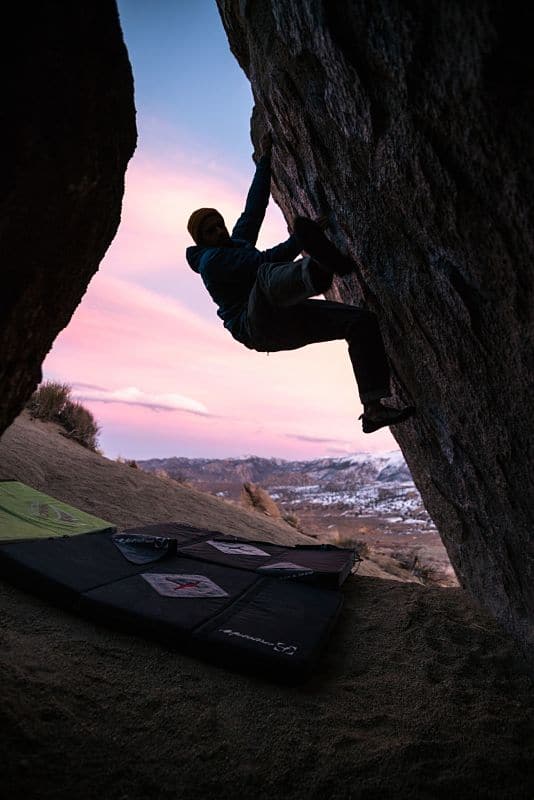
Alex Honnold is the first person to free-solo climb El Capitan, a 3,000-foot vertical cliff in Yosemite.
National Geographic describes his practice routine: “He is obsessive about his training, which includes hour-long sessions every other day hanging by his fingertips and doing one- and two-armed pullups on a specially-made apparatus that he bolted into the doorway of his van. He also spends hours perfecting, rehearsing, and memorizing exact sequences of hand and foot placements for every key pitch.”Alex has been climbing since he was ten, gradually taking on higher and more taxing climbs. At age 30, Alex thought El Capitan seemed “very scary” but he practiced for a year in order to climb it free-solo. (Free-solo means climbing alone with no ropes or safety gear.)
Probably none of us aspires to rock climbing, and we likely won’t encourage our children to try it. But in our pursuit of loving God supremely and our neighbor as ourselves, we should cultivate a lifestyle that habitually and intentionally incorporates discipline. We need automatic, habitual responses to the weights and vices around us. This requires often saying no when it would feel easier to say yes.
Children and adults who are accustomed to no live more productive, fulfilled, and vibrant lives than those who avoid denying themselves their whims. Anyone can act on a whim, but mastery requires repeating a million small decisions that eventually become automatic for the cause of one goal. Mastery means saying no to many little things while saying yes to one big thing.It’s easy to make a list of things to say no to:
- Junk food
- Screen time
- Sports that distract from study
- Sleeping until noon every day
- Spending more money than we make
Saying no (incorporating discipline and rigor) is important for flourishing. The human body thrives best when its muscles live with some level of resistance and challenge. Without daily exercise and testing, muscles become flabby and limp.
But discipline is costly, uncomfortable, and unpopular.
It seems that, except for extraordinary athletes like Alex Honnold, people in our society prioritize comfort and convenience over goals or principles. Christians are not exempt from the lure of pleasure and instant gratification. Some of us have imbibed the mentality that we deserve a good life and God wants us to be happy. Others of us have organized, systematic disciplines that we defend passionately, but we focus only on saying no, which becomes wearisome at best and disposable at worst.
Jesus’ greatest commandment does not address what we should avoid, but what we should love. God is far more for good than He is against evil. His people should be known for what they embrace rather than for what they decide against.It’s easy to hate the vices of the age. It’s easy to decry the evils of video games and smart phones and movies.
But what if technology isn’t the enemy? What if social media isn’t our teen’s greatest foe?
Our brains are maleable, and our use of technology changes our brains. But no change in our brain removes the power of our heart. What we love always drives us. We always replace lesser loves with our greatest love.
What damages teens most is not an app on a phone but a commitment to lesser loves. We must help each other to clarify the over-arching yes of our lives, the supreme love, the consuming desire that arranges everything else under it. What is the biggest, grandest yes to which we can invite our children?The rigor of discipline feels purposeful and beneficial when a big yes over-lays every small, bothersome, necessary no. Granted, a child doesn’t always understand why she shouldn’t go barefoot in the snow or eat the third cookie. And is any child ever thrilled to take the garbage out after supper?
A child needs to be accustomed to bowing to a command from outside himself so that he can regulate himself and commit to a yes when he’s older. A lifestyle that frequently says no strengthens the muscles of character that every Christian needs for Kingdom building. My wise, old choir director, Urie Sharp, told his choirs countless times: “Muscles have memory, and practice makes permanent.”
Alex Honnold’s brilliant solo climb is a case in point. He said, “The idea of setting out up a wall of that size with nothing but shoes and a chalk bag seemed impossible. Three thousand feet of climbing represents thousands of distinct hand and foot movements, which is a lot to remember… Once I found sequences that felt secure and repeatable, I had to memorize them. I had to make sure that they were so deeply ingrained within me that there was no possibility of error. I didn't want to be wondering if I was going the right way or using the best holds. I needed everything to feel automatic.”
While conventional climbers plan on three days to climb El Capitan, Alex ascended the wall in 3 hours and 56 minutes. “I was slightly tense, but felt really good.”
Vibrant, active people of all ages love to throw their energy into a project or idea bigger than themselves. It’s what we were created for—to join God in His immense, beautiful work of setting the world to rights.
Individuals and families can choose to say yes to:
- Prioritizing real-time relationships
- Creating things with our hands
- Making and sharing wholesome food
- Befriending an immigrant family
- Fostering and adopting, or supporting those who do
Each of those ideas might look like El Capitan looked to Alex Hommold before he started practicing: very scary. Small, minute ways to build muscles to reach those big goals can include these suggestions:
- Choose a check-out lane with a teller instead of self check-out
- Make a simple gift instead of buying one
- Try a new recipe instead of ordering in pizza
- Smile at a burka-clad lady and say “hi” to her children
- Give a gift card to a fostering family
Living a life of fruitfulness and vitality doesn’t happen by lounging around. Oswald Chambers offers these strong words to us: “Take yourself by the scruff of the neck and shake off your incarnate laziness.”
In my very ordinary life, I have to say no a million times for a million little reasons, and I usually don’t feel like it. Sometimes I have to say no when I’m walking past a pretty scarf at Salvation Army, or when I see a glazed sour cream donut at the grocery store. One no doesn’t work for me. Three times is the bare minimum. I have to mutter “Nope, nope, nope” to myself, and usually when I hear myself say it, I can obey my good sense.
Saying no is not about being an ascetic or earning God’s approval. Rigor and discipline is a way to challenge the muscles of character to keep them from being flabby and wasted. It is a way to remind me of what my bigger yes is.In addition to repeating the audible words, “Nope, nope, nope,” remembering my yes makes the wretched no easier to carry out. I choose to say yes to enjoying all the clothes already in my closet. I (sometimes) choose to say yes to feeling healthy with hummus and carrots without the sugar high of a donut.
What is your yes? We should be asking this question of each other around campfires this summer and at Sunday dinner conversations and in school meetings and on road trips. To verbalize an idea and have other people push around on it strengthens, invigorates, and motivates us to decisions and goals that earlier felt impossible.Alex had practiced his finger holds and leg thrusts until they felt automatic on El Capitan on June 3, 2017. He had said no to PopTarts and sleeping in, and yes to his breakfast habit of oats, flax, chia seeds, and blueberries and yes to his goal of doing what had earlier felt scary and impossible. At the top, over a half-mile straight up, Alex called it a glorious climb. He had enjoyed hearing the birds swooping around the cliff. “It was the climb I wanted, and it felt like mastery.”
A lifestyle of love and service—saying yes to loving God supremely—takes grit and effort and deliberate choices. Jesus said the Kingdom belongs to those who press into it. Fruitfulness, mastery, and glorious climbs don’t happen on the default setting. If we can develop strong muscles of discipline, we grow habits that enable God’s people to do what at first looks scary and impossible. In the heat of a crisis, in the demands of normal life, the conditioned, practiced muscles of character do their job and we enter more fully into God’s vast, beautiful design for us.Sources:
National Geographic: https://www.nationalgeographic.com/adventure/features/athletes/alex-honnold/most-dangerous-free-solo-climb-yosemite-national-park-el-capitan/
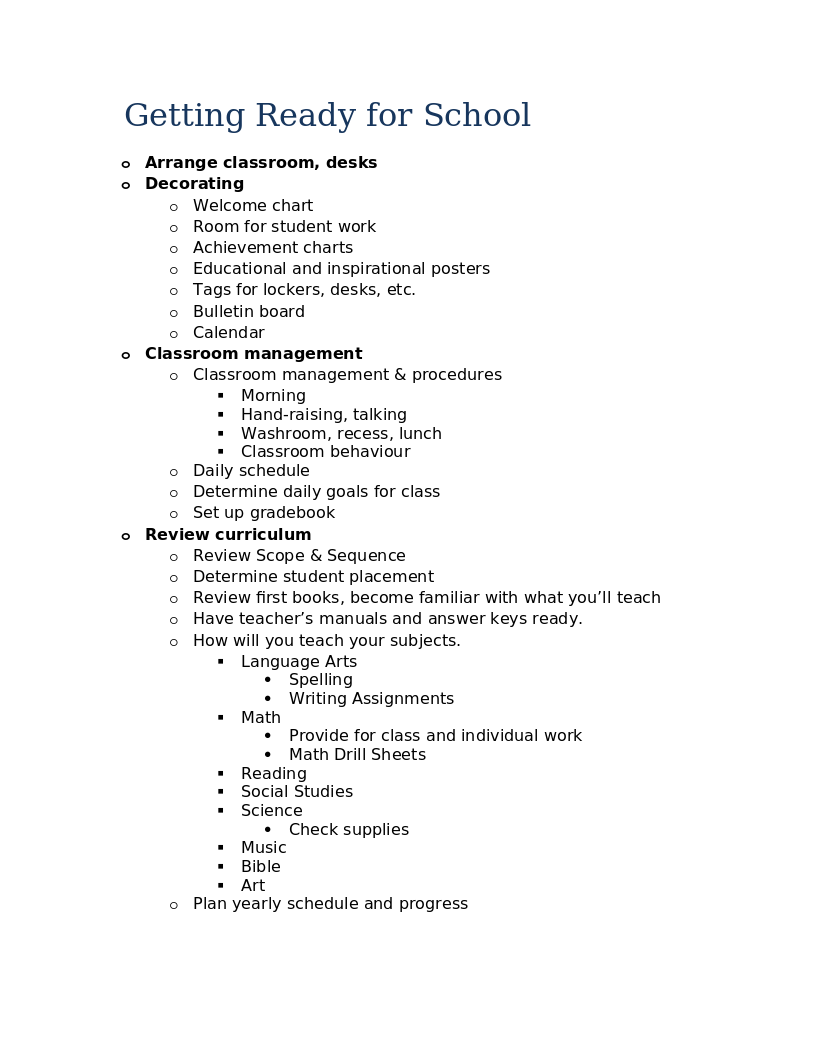
Getting Ready for School
Byron presents this list to teachers at their school to aid them in preparing for the coming year.
- Arrange classroom, desks
- Decorating
- Welcome chart
- Room for student work
- Achievement charts
- Educational and inspirational posters
- Tags for lockers, desks, etc.
- Bulletin board
- Calendar
- Classroom management
- Classroom management & procedures
- Morning
- Hand-raising, talking
- Washroom, recess, lunch
- Classroom behaviour
- Daily schedule
- Determine daily goals for class
- Set up gradebook
- Classroom management & procedures
- Review curriculum
- Review Scope & Sequence
- Determine student placement
- Review first books, become familiar with what you’ll teach
- Have teacher’s manuals and answer keys ready.
- How will you teach your subjects.
- Language Arts
- Spelling
- Writing Assignments
- Math
- Provide for class and individual work
- Math Drill Sheets
- Reading
- Social Studies
- Science
- Check supplies
- Music
- Bible
- Art
- Language Arts
- Plan yearly schedule and progress
- Resources
- Bring in library books
- Textbooks, LightUnits for students
- Maps and globes
- Reference books (dictionaries, thesaurus, concordance)
- Papers- scrap, lined, graph, drawing
- Miscellaneous
- Storytime
- Job Chart
- Devotions
- Memory Passage
- Make songbook
- Attendance chart
- Supplies
- Pens, papers, chalk, sharpener, paper clips, note cards, markers
- Student supplies- pencil, notebook, folder, pen, eraser
- Miscellaneous subject related supplies
- Art supplies
- Furniture (tennis balls on chairs)
- First day of school
- What will you do the first day
- Do you want to send a letter home
- Have first few lessons planned
- Cleanup
Teacher needed for small Mission Outreach School
We are needing a teacher for our small outreach school here in the beautiful mountains of Petersburg, WV. In the coming year our school students will all be from families in our community who desire a Christian education for their children. We are a small town with great needs so it is a great opportunity to reach into the hearts of families and children and share the love of Jesus! You can find some more information and see what we are doing by looking at our facebook page (click on Website above). If you have any interest, have any questions, or know someone that could be please give our principal a call today! Thank you! Robert Weaver 304-668-2081