All Content

Tutor
We are seeking a tutor. This individual is tasked with helping students in K-12thg grade succeed.We offer food, lodging, and a volunteer allowance. We can’t give you a big paycheck, but we give you a big mission: Helping to take Tidings of Peace to the World.About usTidings of Peace is a church and school centered in the city of York, Pennsylvania. Through 65+ years of church, and 24 years of schooling, Tidings of Peace has been able to serve many people in the name of Jesus.God has not stopped working through us!Tidings of Peace recently made a purchase for a new building. Click for more information. We thank you in advance for praying with us, and are happy to give any additional details.Want to know more?
If you love the art of teaching and have contagious spiritual vitality I’d love to talk.With Tidings of Peace,Austin Shenk
Taking Stock: A Classroom Shopping List

“Do you have paper bags?” “Can I have a plate?”
Yes, to both questions—I have all kinds of things in my closet and desk! Over the years of teaching, I’ve found a number of items that are important to stock in my classroom, and other items that are nice to have on hand. I’ll share a list of items that I think are helpful to keep in my classroom.
I have:
- Paper plates—small and large (useful for craft projects, for math; use for fractions, circles; sometimes for lunches or snacks
- Foil
- Plastic wrap
- Wax paper
- Disposable cups (for serving, for storage, pencil holders)
- Plastic bags—several kinds
- Sandwich size, both zip and fold (useful for keeping flashcards, small pieces for games, for students to keep in their desks for storage)
- Gallon size, zip (Put each child’s name on a bag and use to keep books for them to read.)
- Small bags, zip; found in craft stores (for little pieces, buttons that come off, teeth that fall out!)
- Plastic spoons (share at lunch time)
- Lunch bags of different colors (puppets, holding mystery objects, keeping collections, craft projects)
- Salt (for my lunch, and sometimes I share)
- Vaseline in a tube (I can squeeze a bit onto a student’s finger and they apply it to their lips when they have chapped lips and no chapstick. No mouth touches it this way.)
- Lotion
- Hand sanitizer (or Hanitizer, as my students say)
- Timers—I have 4 or 5 (used for testing, motivation; “Clean up before the timer rings.” “Be ready when the timer goes!” “See how much math you can do before the timer rings.”)
- Glue, glue stick
- Scotch tape
- Masking tape
- Duct tape
- Envelopes—a few of each: business size, letter size, larger gold envelopes
- Index cards—3”x5”, 4”x6”, both lined and unlined (for making flashcards, “show-me” cards, writing blends, alphabet letters, numbers, etc., to manipulate)
- Cough drops
- Tylenol
- Toothbrush and toothpaste (for use before parent/teacher conferences :-) )
- Straight pins
- Needles, thread
- Safety pins
- Pencils, pens, gel pens, highlighters, sharpies—many colors and sizes
- Paper clips, large and small
- Scissors, stapler, ruler, yardstick
- Rubber bands
- Post-it notes, other paper such as notepads, shaped pads, scratch paper
- Bookmarkers
- Verse cards, notes for inspiration (Look at these when you need some inspiration! Sometimes I stick a special verse, or encouraging note, down in my desk drawer so I will “find” it later and it encourages me again)
- Ink pad, stamps
- Stickers—smiley faces, grading, pictures (for reinforcement of learning, charts, grades, for prizes)
- Name tags (Use on field trips. When we learn titles and abbreviations, I give out name tags and the children choose a title for themselves and wear their name tag that day. I call on them by what the name tag says: “Yes, Mr. Weaver?” “What do you think, Dr. Zook?”)
- Pointers (for use at the board, with whole-class lessons)
- Small pointers (for individual use as children are reading—make it fun! We use thin popsicle sticks, colored sticks, shapes that are really made for sticking in cupcakes, some big toothpicks—I glued goggly eyes on some of them)
- Toothpicks—the big round ones are best
- Popsicle sticks of different sizes and colors
- Clothespins—clip (for holding pieces of sponges for painting; for making individual clipboards with a piece of cardboard)
- Orange peeler (I let my students use this—I don’t like to peel oranges, and they can do that themselves with the peeler!)
- Magnets and magnetic strips

Start with Simple: Tips to Make the First Year Less Stressful
Some things I've learned and read about, about lowering the stress level of being a first year teacher, are some of the things I want to talk about this morning. I listened to a podcast by Angela Watson and one of the things she said on there one time was, "Everyone knows that a first year teacher is not going to perform at the same level as a 30-year veteran." And I think a lot of times people think they need to operate on a veteran level and it can be pretty stressful.
One tip that I can think about here that I would want new teachers to think about is get the first-level product out. Whether it's a lesson plan or a worksheet, don't try to have the final version perfect the first time you get it out. Software developers, they push out a barely functioning product and then they're continually updating it. I think that's something that teachers should learn or could learn. Just to kind of lower that stress bar just a little bit. And so it kind of goes against some of our Mennonite work ethic of cutting the corners. But cutting the corners to be more successful is going to be okay as a teacher, especially when you're getting started and you're in it for the long haul.
Now you don't want those first products, those first worksheets, those first lessons or units that you push out and they're a little rough on the edges, you don't want to let them sit that way. The next year you want to tweak them or adjust them. Maybe even as you're doing them make some changes so that the next time you use them they're better. So we don't always like to cut the corners, but I think teachers should be thinking about [the fact that] it's okay to cut the corners a little bit.
When you go to cut the corners though, you want to think about the corners that affect the students the least. If I need to be away for a day or something like that, in some ways it feels like it's kind of cutting corners when you plan your substitute lessons so that anybody can do that. But that's the kind of a cutting corner thing I'm thinking about. Maybe I'll push a test off until I'm going to be away, so that that's a little lighter load. Or creating some kind of activity that's that self-guided.
Another thing to think about as a new teacher is that don't try to do it all yourself. Don't try to come up with all your lesson plans yourselves. You don't want to just use everybody else's stuff. But the textbook publishers, they have lesson plans, they have daily orders that you can follow, and the first round of teaching a class or the second time teaching a class, use those and then make them your own later on. There's a lot of resources out there that are available.
Another tip I think is start asking questions. Start reaching out to people early. Don't wait until you're really stuck and struggling because then it's maybe harder to ask questions. Even if it's kind of a simple question, you think, "Oh, I could probably figure this out on my own." Start building relationships with the other teachers in your school by asking questions early. It's always easier to start early than to start getting help when things are actually kind of bad or rough.
We have another thing that teachers that get really busy kind of forget about and that's lesson plans. I think that you can do lesson planning kind of at two different levels. [The first is] at a 40- or 50,000-foot overview where you're thinking about what the year is going to look like, what the quarter is going to look like. But then there's also importance in doing ground-level lesson planning. And it's probably something that when I first started teaching, I wasn't pushed into enough. Do lesson planning, plan out what you're going to do because if you get busy in the morning or something happens, you know you have your lesson plan. You can just look at it, a quick reminder of, "Oh, yeah, this is what I intend to do today and in this class." Even if it's the details of key points for your lecture, what you want to cover.
And you know what? That kind of planning is good, not just for teachers, but if you're involved in kids’ ministry or kids’ clubs or things like that, it's profitable there as well.
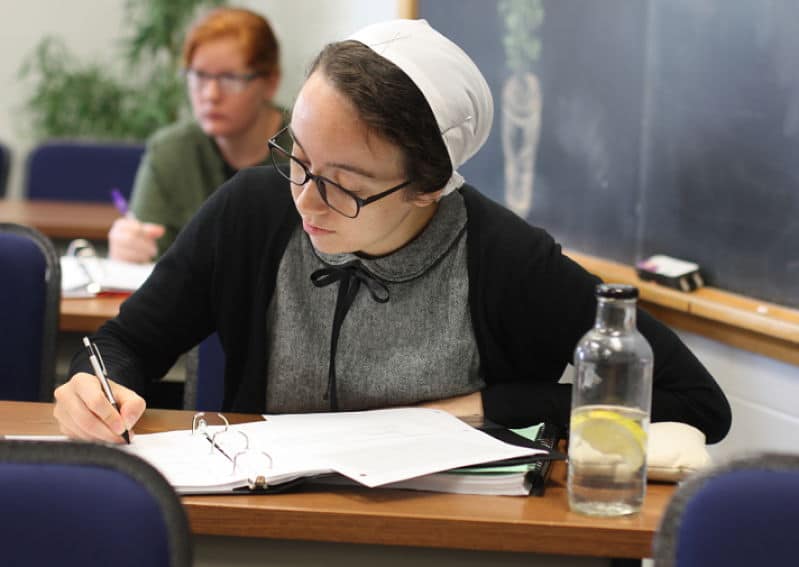
Developing Effective Study Skills
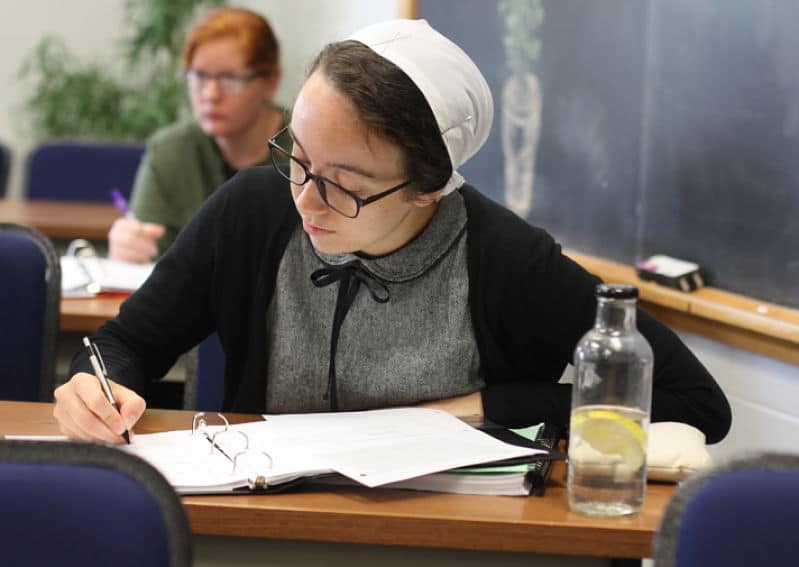
Many teachers assume high-school students already have good study skills. I mean, how hard can it be to read a textbook or take notes from a lecture? You would think that eight years of learning the three R’s would prepare students for high school, but I’ve learned that most students still need basic instruction on how to develop good study skills.
Over my years of teaching, I have had many students who said they couldn’t find an answer in their textbook or they couldn’t understand a story in literature. Many students fall into the bad habit of scanning the text for answers instead of actually reading it. This can sometimes work in the elementary grades, but the more advanced courses in high school require more from a student than simply scanning the page for answers.
Taking notes might seem like a simple activity, but many students don’t understand how to do that effectively. During lectures I noticed that many students were only writing down the words I wrote on the chalkboard. That may have been fine if that were all I wanted, but I knew that if students only copied text from the chalkboard, they probably weren’t really learning. Actively listening to a lecture and taking good notes forces students to engage with the material you are teaching.
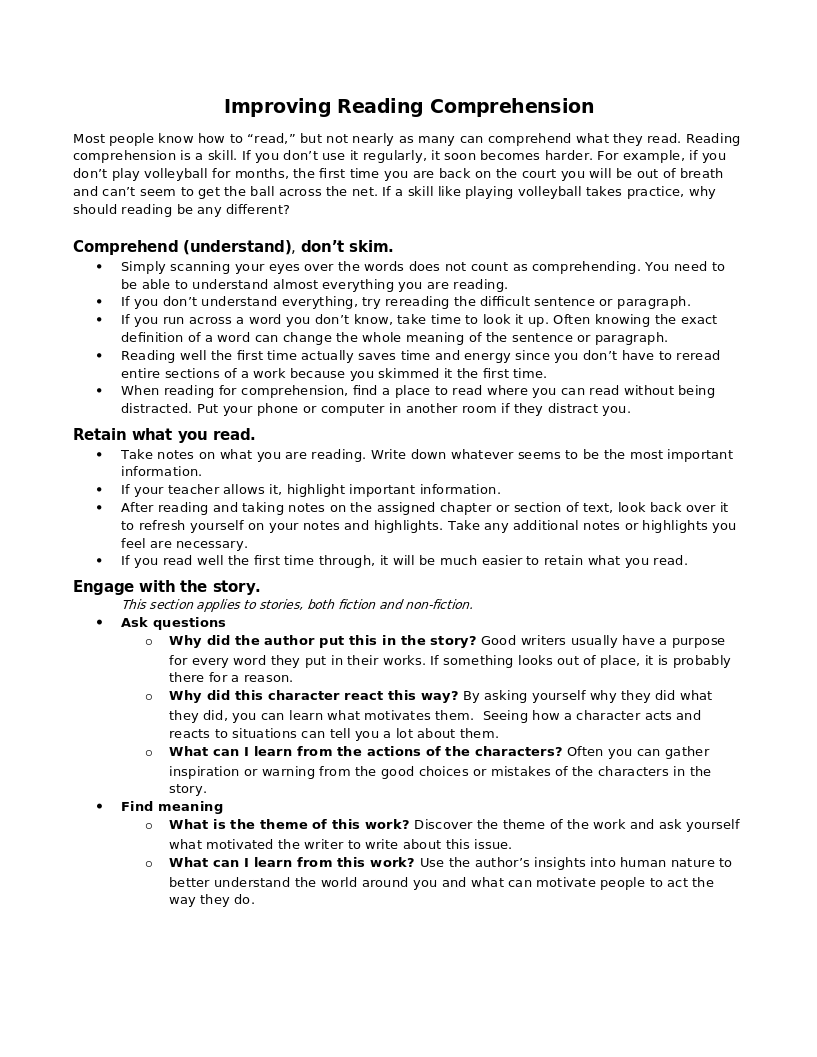
When I discovered that my students had poor reading comprehension and didn’t know how to take notes, I realized that I needed to hold study skills classes. Before the classes, I wrote two handouts that separately addressed the study skills of reading comprehension and taking notes. In class, I went over the handouts and explained simple techniques that students can use to improve their reading and note-taking skills. The best time to teach study skills is in the first part of the school year so students can put their new skills to use.
Learning is much more than just hunting for answers in a textbook or writing down every word on the chalkboard and then memorizing them for the test. To truly learn and do well in school, a student must understand what they are reading, listen to lectures, and take good notes.
The great thing about study skills is that they are even useful after school. Students equipped with good reading comprehension will find it easier and more enjoyable to read difficult texts such as detailed instruction manuals and some parts of the Bible. It seems that even Apostle Peter found some of Paul’s writings hard to understand (2 Peter 3:16). If even Peter acknowledged that Paul’s writings were difficult and that unlearned people “twist (them) ...to their own destruction,” we should certainly do our best to prepare students for a lifetime of Bible reading and study.
Download the Two Handouts
https://thedockforlearning.org/contributions/how-to-read-improving-reading-comprehension/
https://thedockforlearning.org/contributions/how-to-to-take-good-notes/
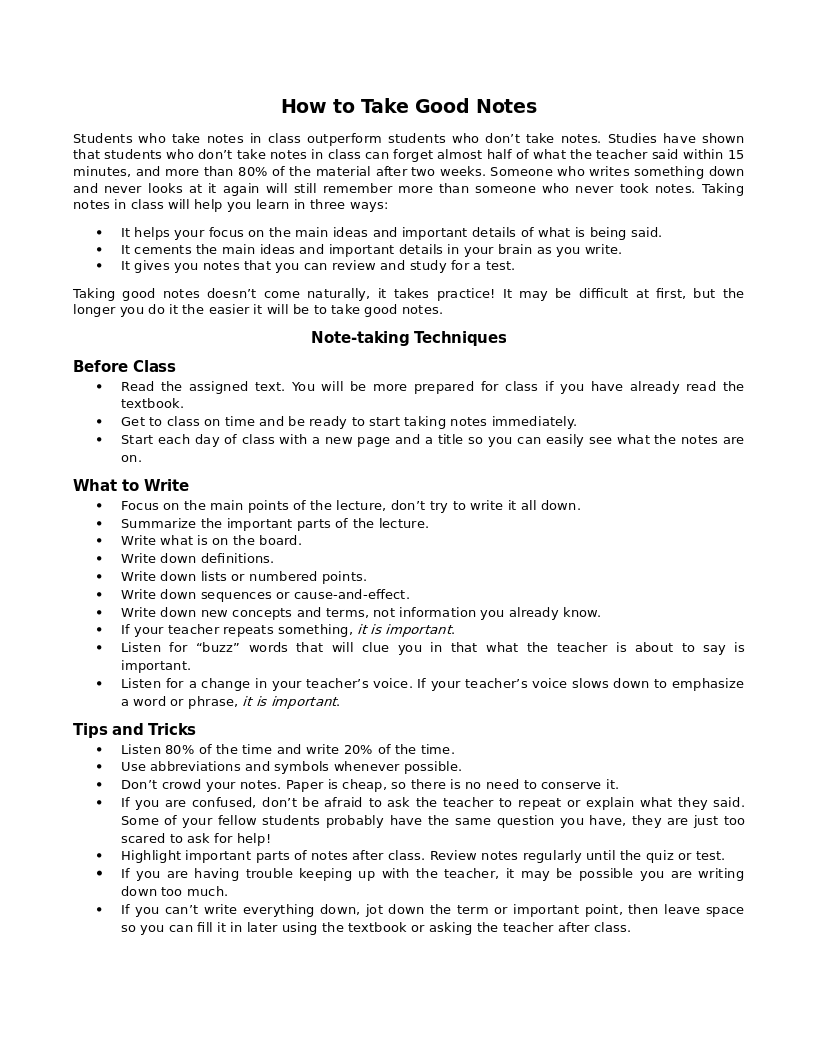
How to Take Good Notes
Students who take notes in class outperform students who don’t take notes. Studies have shown that students who don’t take notes in class can forget almost half of what the teacher said within 15 minutes. In this student handout, James explains how to take notes that boost comprehension and mastery. He provides a model for the Cornell Method of note taking.
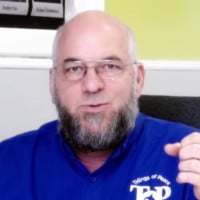
Spiderwebs and Hiking Sticks: How You Can Support a Visionary Leader
I've been teaching school for almost 30 years and (in) two different schools. I taught at Mount Hope for a couple of years and then we founded this school: Tidings of Peace Christian School here in York City.
I was thinking of the analogy that the first hiker gets the spiderwebs. Now that's from my time with the Appalachian Trail and on the Appalachian Trail, it seemed like those spiders were all hyperactive all night. They were making webs right where we hikers wanted to hike in the morning. Whoever was the first in our party—it was my three sons and I who were hiking together. And there were other hikers; sometimes they would go before us. We always liked to have other hikers go first because they got the spider webs. Sometimes if I was the first hiker, I’d just take my hiking stick and hold it in front of me just to get the spiderwebs. So many spiderwebs! And why so many spiderwebs first thing in the morning?
Well, it's sort of like starting ministries. The first pastor of the church and the first principal gets all the spiderwebs, all the problems, all the things that you have to iron out and straighten out. So, when we started our school, we had five students, real small. Now, we're up to 50 students, 24 years later. Thinking back of all the issues that we had to go through, all the policy we had to write, all the details, all the culture that had to be built and some of the mistakes we made in the very first years and how that all worked—it's sort of like the spider webs. And so many people would like to get on board after it's rolling, after things are going, after the spiderwebs are taken care of then we'll jump in and we'll help you out or we want to teach or we want to help with administration or whatever.
But there's this uniqueness for the visionary, the uniqueness for the first person there who—you have to think through. There are some who are visionary and some who are maintenance type: “Let's maintain what's already going, what's already rolling.” And the body of Christ, there are different ways. We all have our own giftedness and we can't say, “Well, because I'm not the eye, I'm not important. Because I'm not the ear, I'm not important.”
We have to encourage our visionaries. We have to help our visionaries along to start the new works and to encourage. because there are plenty of cities that don't have schools. There are plenty of unreached people that should have schools. But there is a uniqueness about that and some visionaries can get worn out because of all the resistance along the way and people saying, "No, this isn't going to work. No, this isn't going to work."
If you happen to serve with a visionary, you have to also understand that their visionary mindset is not the same managerial mindset that you want to have in some others. And so, we need each other, we need to help along the way, but there is a uniqueness when you are starting something.
The comment I made earlier about the hiking sticks when you're hiking along the trail. Some people don't use hiking sticks. Some people just hike the trail and just go and they get their own balance. Most hikers have a stick in each hand and it's there to help you balance, it's there to help you up the hill, it's there for spiderwebs.
Staff that's there as servants. How can I serve, how can I assist, how can I work? If we're going to be great in God's kingdom, learn to be servants of all. There are some staff over the years who just have this hyperactive service mode and that really helps versus, "Let’s see, is it three o'clock? Okay, see you tomorrow. I'm out of here." The least minimum, the least you can do.
I think of Faith Builders administrative team, like the conference for administrators. That's a good one to help bounce off questions. There's a conservative Anabaptist group for administrators, an email group. Anytime you have a question you can ask them and you can come up with—like just today we were looking at postage machines. Does anybody run a postage machine for the office? Well, you can ask the administrators. Anybody else have any idea, any pros or cons? And which service did you choose? Did you choose the cheapest or you choose one that was more expensive but more effective? That would be a way to help with getting rid of the spiderwebs.
A good school board that can support you and encourage you—As I think about a hiking stick academically, what will help clear the way? As a visionary, I had to come to a point where I recognized and realized I'll live three lifetimes without ever getting done all the brainstorms that come to my mind. But there are some people who roll their eyes when you come up with another idea, "Hey, we ought to do this." They go, "Oh, Brother. Here we go again, Clayton." There are others who say, “That's a sometimes idea. Sometimes you have some good ones and sometimes you don't. That's a sometimes idea.” But there are others who say, "Well, let's pray about it, at least let's think that through." There are some people who throw water on your ideas right away. "No, that's not—we never did it before. I don't know of anybody else who ever did it before and so therefore forget it." Where a good board, a good support team, a good administrative team can really help. And that's what the first thing come to my mind as far as an academic hiking stick would help clear those spiderwebs.
In some ways, the administrator has to help train the school board. There are a lot of people who come onto the school board without a clear vision of what a school board really is. What's the job of the school board?
And so, we had, a few years back, a chairman who had served on another school board before he came to our school. One of the things he implemented was an executive session. Where, prior to that, I was present for all the school board, the whole school board (meeting). Everything that was decided, I was there to help give my input. He implemented executive session where I'm dismissed. At first, I fought that really hard. I was like, "Wait, whoa. I mean, if you can't say it in front of my face why say it all?" right? They had my input for many other issues, but now it's their turn. "We're in charge, we're the board and we're going to talk about you, yes, and you're not going to be present." And it's important. It's like parents, right? There are times when parents have a family discussion and there are times where they talk about the children, just the two of them, and so that's important.
I think in many ways, part of the visionary, “Hey, let’s start a school. This is Clayton's idea,” right? It took a little while for the school board to get the idea that, "No, this is our school and we're in charge of the school and we're in charge of making sure that 50 years from now when Clayton is dead and gone, that this school is still going." A board that is really actively trying to learn more what it means to be a board instead of just “I’m a willing soul that’s willing to put in some time once a month,” that's very, very helpful. The board who reads books and reads books together and then talks about books together and attends seminars together, CASBI or whatever, wherever they go—very, very helpful to get a board who is more than just simply filling time and more than just, "I'm willing. Yes, I want to help this school," but to say, "I'm in charge of the school and it's going to rise or fall based on my participation." That's very helpful.
The spiderweb are there, right? You have to have to clear them.