All Content

Spiritual Disciplines: How Should We Do Them? Part 1
We all admire and appreciate the fruit of careful, rigorous training, whether in artisans, athletes, chefs, craftsmen, neurosurgeons, or preachers. We recognize, at least partially, the sacrificial dedication required to produce the behavior we appreciate. What happens when we apply our best sacrificial dedicationour most studied disciplineto spiritual growth? What does such training entail? What are its fruits? This third session focuses on how to do spiritual disciplines.
Spiritual Disciplines: What Are They?
We all admire and appreciate the fruit of careful, rigorous training, whether in artisans, athletes, chefs, craftsmen, neurosurgeons, or preachers. We recognize, at least partially, the sacrificial dedication required to produce the behavior we appreciate. What happens when we apply our best sacrificial dedication—our most studied discipline—to spiritual growth? What does such training entail? What are its fruits? This first session, in a series of four, is an introduction to the spiritual disci
Sketch of a Servant Teacher: Servant Teachers
Teaching, at its core, is built on service. This third session in the series is based on the question: How will you be serving? As in all positions of authority in the Kingdom of God, we are called to serve. Teachers are expected to expend themselves in service to their students.
Sketch of a Servant Teacher: Teachers of Passion
Teaching, at its core, is built on service. This fourth and final session in the series is based on the question: What keeps you serving? The disciples left their occupations because Jesus provided inspiration for their lives. We must teach with passion, rigor, and vitality that comes from understanding why we teach so we can provide inspiration and example to last a lifetime.
Spiritual Disciplines: How Should We Do Them? Part 2
We all admire and appreciate the fruit of careful, rigorous training, whether in artisans, athletes, chefs, craftsmen, neurosurgeons, or preachers. We recognize, at least partially, the sacrificial dedication required to produce the behavior we appreciate. What happens when we apply our best sacrificial dedicationour most studied disciplineto spiritual growth? What does such training entail? What are its fruits? This final session focuses on how to do spiritual disciplines.

Board, Principals, and Administrators: Who Does What?
The document below delineates distinctive responsibilities of boards and principals/administrators (some schools use one title; some the other) and then goes on to list a job description for the principal. The board can customize this description by coding each of the responsibilities.

Finding Their Place in the World: Teaching History with a Redemptive Perspective
I love to teach history because it is the one subject where we differ as Anabaptists from many other Christians and from the world.
It is the place where I get to teach my students about how to view what's happened in history.
History is really messy and really bad things have happened. We get to dive right in and talk about all that nasty ugliness and see how God is working to redeem this messed-up situation.
This year for our theme of American history, I decided to choose two books written by Anabaptists that cover American history quite well and to put it right into my theme for the school year and for my bulletin board. I’m having them read In God We Don't Trust by David Bercot and writing a book report about that. It's just been really exciting to watch my students who—most of them aren’t Anabaptists, some of them are even Christians—respond to that book. It's really exciting.
Then also, [they’re] reading A Change of Allegiance by Dean Taylor. One of our students actually chose to become a conscientious objector because of reading that book. It's just really, really encouraging to be able to teach them how to view this world and to teach about the two-kingdom theology, to talk about how American history isn't as pretty as American people want to think it is. There's some messed up parts about our history as well.
To also talk about the amazing power of forgiveness and the way that in the Nickel Mines School shooting that's changed the world. It's gone all over the world and God has gotten a lot of glory from that situation.
The other reason that I love to teach history is because I get to just share my own life, because my life is part of history, their lives are a part of history. We can look at what's happened in their own lives and talk about it. I just love to just dive in and help them have a brand new perspective about the world they're living in.




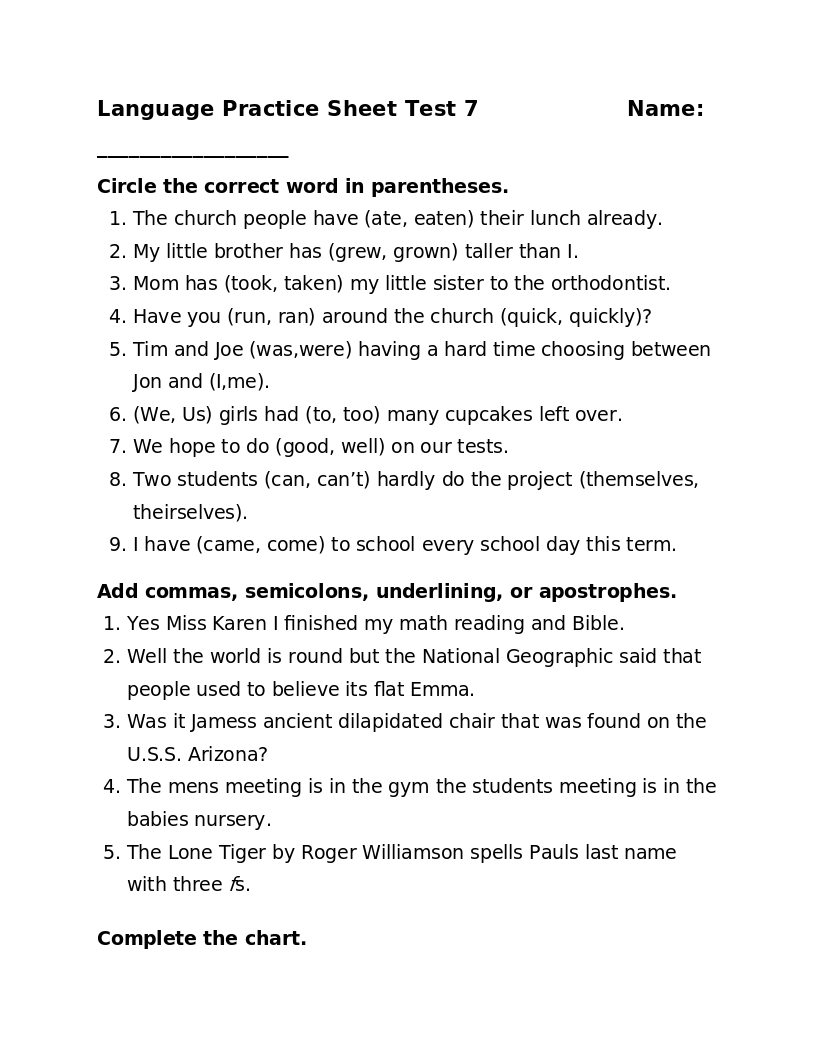


Grade 5 Language Practice Sheet Test 11
A practice paper for A Beka Language Grade 5, Test 11. Students add punctuation marks to sentences, write the correct possessive form of nouns, identify the type of sentence, identify parts of speech, find the correct verb tense, correct capitalization and other errors in sentences, and diagram sentences.