All Content

What We’d Like Our Teachers to Hear
 Image by James Baldwin via UnsplashOn a quest to hear from young people and understand our Christian schools’ strengths and weaknesses, I recently conducted a survey of youth in Mennonite high schools, asking them what they would say to their teachers confidentially if they could. I asked, “What would make your high school a better place? What do you enjoy, appreciate, or dread when you enter your school’s doors? What do you wish your teachers knew?”In response, I got a lot of groans (because another assignment? really?), a few thank you notes, and a stunning collection of honesty and insight. Eight schools from various states participated in the survey, with over 185 students submitting their anonymous responses to me.What struck me most was their agreement.They knew I was interviewing them in order to write this post. With their permission, I will share with you what they said.
Dear High School Teachers,
Thank you for giving us the opportunity to share our thoughts and feelings. We have a lot to say. Right at the onset, we need you to know...
We appreciate you. We get the feeling that there’s a ton of work in being a teacher, and we know we don’t make it easy. Thank you for investing so heavily in our lives, and not giving up.We love to connect: with our schoolwork, with each other, and with you. We love your stories. (Bunny trails are the best.) We want to know who you are. We love when you get personal and tell us about your life: what you care about, what you think, and what the world was like when you were a teen. You give us hope and inspiration.We want to know that you care about us—not just our performance and your lesson plan. But please don’t be our parent or counselor. We get squeamish when we feel emotional pressure to self-disclose, especially one-on-one or cross gender. (One-on-one is cool. Pressure is not cool.) We don’t like being analyzed and boxed in. But we love your praise, your time, your smiley faces and kind words on our papers. We love when you play recess with us, let us sign up to eat lunch with the principal, take time to get to know us individually, or invite us to hang out with you and each other outside of school hours. We can tell when you care. When you pray out loud for us, our world lights up.
We need chill time. It’s not because we’re lazy. It’s because to us, relationships are everything. Believe it or not, it’s pretty stressful being a high schooler. We juggle school, home life, personal obligations, youth group, church, and sometimes paid employment. We do an impressive job at all this, but we’re tired and stressed and pressured, and the place where we relax is in downtime with other people.We are massively social. A few extra minutes between classes helps a lot. Catching up on our day. Talking about what we really care about. Building friendships. Taking a breath.
As much as possible, can we keep the bulk of the learning at school? We wear more hats than just your students, and we like to spend time with our families. Give us quiet study halls to get most of our work done. Compare notes with other teachers on the homework assignments for the week, so it doesn’t all hit at once.
We love autonomy. We want to know you’re in charge, but within that framework, let us make as many choices as is reasonable. Usually, we act the way you treat us. Please see us as adults as often you can. It means a lot when you respect us as people, allow us our opinions, and let us make mistakes. We’re still growing and finding our way. We need your continual kindness, your endless patience, and most of all—a little bit of your trust.We don’t like peer pressure. Even when we create it. Cliques, labelling, judging, attitudes, exclusion, and bullying are incredibly hurtful to us. We don’t know how to break out of these systems. We feel like school is stacked for certain kids. It hurts to be less smart than others. Or less talkative. Or good-looking. Or popular. Or talented. Deep down, both sides want to cross those barriers. We’d like to see the fast learners and the slow being friends, cool and uncool labels done away with, guys and girls able to interact without drawing snide remarks, upper grades spending more time with lower, high school classes mixing up to learn from each other. We wish high school was kinder. In our dreams, we build a team where every player is connected and safe.Can you show us how this is done?
We crave interactive, hands on, engrossing, immersive learning. We don’t want to ask too much, but lecture does not cut it for us. We want to get messy. We want science experiments, hands-on learning, video clips, review games, mini field trips, study partners, artifacts, photographs, debate, visual demonstrations, Q&A, group projects, and a spark of fun. We love discussion times, especially about things that really matter. We don’t do that well with sitting at our desks memorizing facts. We have diverse learning styles, and we need variety. We want to be heavily involved in our own education.We like having fun. (Oops, we already said that.) Sure, we want to be treated with the respect of adults, but we’re still teens, and we need breaks. Please lighten it up sometimes. Let us laugh. Bring unexpected Tootsie Rolls to history class, or donuts to morning chapel. Sing with us, just for anyhow, or read a story aloud. Start a tradition. Pull a prank. Plan a game, a special day, a work project, some fresh air. Squeeze in an extra recess. Do something impromptu (besides a pop quiz). Pay attention to where we’re at developmentally. As a rule of thumb, we eleventh and twelfth graders are the ones hungry to engage our minds, make it count, make this matter. We ninth and tenth graders just want relational connection, spaces, joy.At the same time, we are eager to learn for real. We want you to keep order, and command our attention. We love when you are skilled with and invested in your subjects. (Yes, we can tell.) We don’t want to cram for a test and forget it all the next week. We want to know why you gave us the grade you did, and how we could do better next round. Sometimes you talk over our heads, apologizing for explaining something so basic because of course everyone gets this… but some of us don’t. We get scared, and we tuck our heads down when we should put our hands up. Slow down, gentle up, teach us. Don’t shoot us down when we’re off track. Please. Help. Us. Learn.
We want to diversify. By high school, we care about gaining the life skills that will help us later. We’d like to be offered electives in fields of interest that we don’t all share: advanced music, art, foreign language, Bible study, mechanics, woodworking, creative writing, blueprint reading, digital design, computer technology, applied science, individualized research. We’re trying to prepare for the rest of our lives—not just for college, but for the practical vocations we will pursue and the lives we’ll lead in the real world. Is this possible? Could it work?Speaking of diversity, please don’t play favorites. We students can sniff out partiality miles away. We notice if some of us can get away with more than others can—and none of us like it.
All of us are in transition and upheaval. Some are in great pain. Don’t assume we are fine just because we look like it. Whether or not you see it, some students in our school are afraid of you, some resent you, some are battling depression, some face silent bullying, and some have home lives not worth speaking of. Some of us are tired of trying and failing. Some have a lot to say, and nowhere to say it. Those who are quietest have a lot going on inside; those who are struggling academically may be working hardest; those who are labelled as ‘different’ are struggling most. We worry that you don’t know this, and we worry about each other.We’re not all okay.
Don’t be afraid to ask us how we’re doing. We appreciate prayer groups and split chapels, spaces where a small group of students can hopefully get honest with each other and a trusted mentor.
We are very sensitive to public attention. We care how we look. We don’t like being embarrassed. We remember awkward moments forever. Looking dumb is the worst—maybe second only to stumbling over unwritten rules that everyone else somehow knows about. We want to know that we’re safe here. As often as you can, please avoid singling us out: sharing our grades publicly, calling on us unexpectedly, making a joke of our mistakes, holding private-not-so-private talks, targeting one student as an example for good or bad, making us sing or display or explain ourselves too vulnerably, and stressing ultimate performance when we’re not all created equal.By the way, we all have strong feelings about music and sports. Some of us can’t get enough, and some had way too much by second grade already. So yeah, have fun figuring that out. But meanwhile, you might just make a note of it. We don’t like doing highly public things we’re not good at.
Thank you for listening to what we have to say. We’re grateful for the chance to learn with you. You have a lot of power in our lives. Encourage us—over and over and over—and we won’t forget you.Thanks for everything,
Your students
Though I collated and interpreted what students said, I did not add my personal ideas and suggestions. This is from them.Big thanks to the students of Faith Mennonite High School (PA), Plainview Christian School (OH), Faith Builders Christian School (PA), Legacy Christian School (OH), Pilgrim Christian School (KS), Anchor Christian School (PA), Zion Christian School (OH), and Valley View Christian School (PA) for their honest contributions and remarkable insights. I am grateful.—Shari Zook
Giving Our Students Strategies to Expand their Vocabulary

Photo by Ena Marinkovic from Pexels
Whether it is in a book that we read, news that we hear, a label that we read, or in a conversation with another, each one of us encounters words in our world that we are not familiar with.
What are your go-to strategies in deciding what the word means?
Can we break those strategies down and teach them to our students? This post is about taking those skills that have become automatic for most of us, and introducing them to our students so that they have tools to attack the new vocabulary that they come across in their textbooks, messages heard over the pulpit, or in day-to-day conversations. As teachers, our job is not only to teach them vocabulary but also to give them strategies on what to do with new vocabulary when they encounter it in the world outside of the classroom.
Knowing About Words: Morphological StructureBecause vocabulary is often learned implicitly as well as explicitly, students need to be made aware of how they can manage their own vocabulary growth. While memorizing a list of vocabulary words has some positive results, the greater results in vocabulary growth occur when students are taught about words. A study done by Carlo et al. (2004) on 5th graders had researchers giving students fewer vocabulary words each week and instead used that time to teach students how to use contexts to figure out word meanings and how to analyze morphological structure of the words to figure out the meanings. For example, if your students understand that the morpheme “geo-” refers to earth in geology and “-ology” refers to the study of a subject then that will give them a place to start when they encounter the words geographic, geography, and geothermal as well as biology, anthropology, and epistemology.
If you sense the need to incorporate studying about words in your classroom instead of simply studying a vocabulary list, I suggest you start with morpheme trees. Many students are visual and tactile learners and providing your students with this tool can give them the confidence they need to start attacking words on their own. Here is a step-by-step tutorial on drawing morpheme trees.
Using Context Clues: Pictures, Illustrations, Diagrams, and TextIn much of nonfiction texts, a reader can pay attention to the pictures and illustrations in order to make an educated guess on the meaning of a new word. As the student continues to read, encourage them to cross-check with themselves by asking “Do the pictures match what I think this word means?” As a teacher of younger students, you may need to model it for them by reading a picture book. When you come to a new vocabulary word, stop and tell the students that you are going to use the pictures to see if you can figure out what the word means. Allow them to hear you think out loud. When you have decided on a meaning, be sure audibly re-read the page and cross-check with yourself whether the word meaning you have chosen fits with the picture and the rest of the text.
If you are teaching older students, you may want to use a visual to give them a picture of what they are doing when they use other clues to infer meaning for a new word. Bring a backpack into the classroom that holds items such as a water bottle, sneakers, t-shirt with a team name or business logo, and a soccer ball or other sports item (preferably a sports item used by the team named on the t-shirt). As you open the backpack and pull out each item, ask them what clues they can derive from the items about the owner of the backpack. For example, the sneakers’ size and color may help you to identify the gender and approximate age of the owner. By the end of the discussion, you likely will have made many accurate inferences concerning the owner of the backpack. Similarly, by using the clues in the illustrations, diagrams, and text as they read, students can make educated guesses when they encounter a new word.
Expanding their Toolbox with Real-life ToolsUndoubtedly, many of us turn to other people or other tools (hello, Google) when we encounter a new term. By simply being honest concerning our own processes of learning and directing students to other word-learning tools, we can help our students to help themselves. Students need to know how word-learning tools such as dictionaries, thesauruses, and glossaries work in order to use them successfully. However, instead of giving students a list of words to look up, use the words that they come across in authentic texts. For example, when you encounter a new word during your class read-aloud, have a student(s) look it up. Rather than the stilted practice of looking up a list of words as an assignment, have the dictionary, thesaurus, and textbook glossaries within easy access in your classroom and exemplify going to the word-learning tools on a regular basis.
It is rare that a student who has not been highly successful in reading will go on to be a classroom teacher. Which means that most teachers have been successful readers from a young age. Which means that most of us read and expand our vocabulary as automatically as driving a vehicle. We no longer have to think to turn on our signal, slightly turn the wheel, check our mirrors, and merge into traffic. We hardly think about the processes.
The truly successful teacher is the teacher who can evaluate what he/she is doing and then be able to break it apart in teachable steps for another to implement.
Sources:Boushey, G., & Behne, A. (2019). The Cafe book: engaging all students in daily literacy assessment and instruction. Portsmouth, NH: Stenhouse Publishers.
Himmele Pérsida, Himmele, W., & Potter, K. (2014). Total literacy techniques: tools to help students analyze literature and informational texts. Alexandria, VA: ASCD.
Morphology Trees. (n.d.). Retrieved from https://notsoblackandwhiteenglish.weebly.com/morphology-trees.html

Teacher for Grades 5-9
Looking for a teacher of approx 20 students in grades 5 - 9 using Christian Light curriculum. Currently, all grades/students in this room are self paced. We would expect this teacher to be prepared to handle questions with regards to pre-algebra, algebra, science and literature and other middle & high school questions.Several conservative church groups in the area with the majority of patrons being members of the Mid-Atlantic Fellowship.Contact chairman Javin Martin at phone number provided below for more details.
Teacher for Grades 2-4
Looking for a teacher of approx 15 students in grades 2 - 4 using Christian Light curriculum. Currently, Grade 2 is mostly open classroom structure, Grade 3 is partial self paced/partial open classroom and Grade 4 is self paced.Several conservative church groups in the area with the majority of patrons being members of the Mid-Atlantic Fellowship.Contact chairman Javin Martin at phone number provided below for more details.
Learning How to Learn: How Kindergarten Prepares Students for First Grade
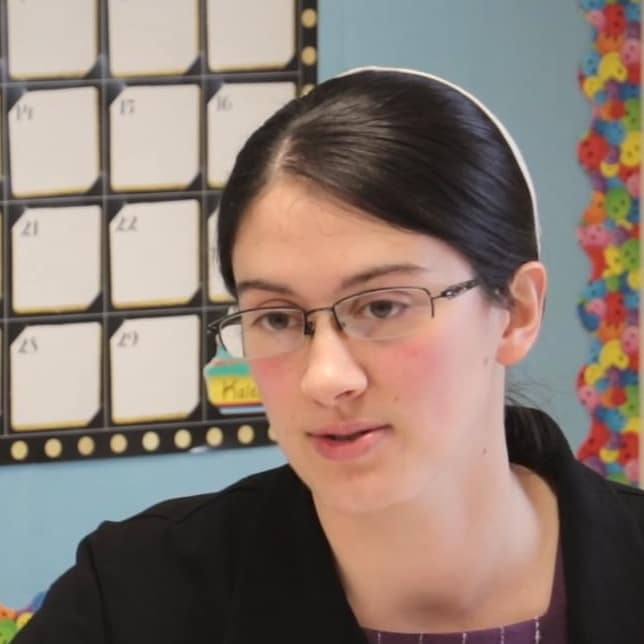
In first grade, they just learn so much. If they have to spend the first three weeks or month of first grade trying to figure out how to sit still and learn, it's not a waste of time, but it feels like you're spending a lot of time at the beginning of first grade just learning how to learn. And so, if you can do a lot of that in kindergarten, that helps tremendously.
In the curriculum for the kindergarten, they do, they learn all the sounds, all the letters and all the sounds, and it does teach them to sound out simple words, just short vowel sound words,mostly just three-letter words. So it kind of gives them a taste of it before they come to first grade, which I kind of like because I've heard moms say already that after kindergarten is done, they go home and they keep working on that. I would have a list of stuff that the parents could do with the children more.
Something that I ask the moms to try to work pretty hard on is a lot of their coordination stuff, using scissors, knowing how to run a glue stick, that's something that takes a lot of practice. I mean, some children come and they are just very naturally good at it, and some it takes a long time.
And a lot of kindergarteners come to kindergarten and they don't know, they can't even recognize letters. They might be able to say the A-B-Cs all the way through, but they can't recognize the letters, and I work really, really hard on that, making sure they can recognize letters and sounds.
Yeah, we do a lot of counting, and there's stuff in their books also to help with their coordination, doing dot maps and learning how to trace well, lots of cutting, coloring.
Kindergarten, be careful between the two color words "black" and "brown."
Things like left hand, right hand. I give them a card every morning and I tell them, "Hey, this card you want to keep as nice as possible." Then I kind of give them a list of things that we're going to work on, talking without raising their hand, jumping out of their seat when they're not supposed to, turning around or sitting backwards in their seat, whatever. And every time they do one of those things, then I give them a hole punch in the card. At the end of the day they're supposed to see how few hole punches they can have. If they get a hole punch in it, I usually write on the back of the card what they did or why they got it, and then they take it home and the parents can see. And if they don't get any hole punches, then they get to keep it, and keep it for the next day as well.
I always tell parents, if their child comes home with a hole punch or multiple hole punches, it is, I'm not at my wits end. It doesn't mean that they're being a brat or being terribly naughty. It's just they're learning how to act in school. And it works wonders.
I used to wait about a week into kindergarten to start it, and I finally, I give them the first day, and then usually on day two is when I start that, and it makes things much easier for me and for them. The first day, I'm a little bit more relaxed about it. They learn so fast; I mean, usually all it takes is for about one student to mess up and the others really perk up. Especially by the end of the first week or something, if they're going an entire day without getting any hole punches I'll give them a little reward or something for it. It's been pretty effective. There are high school students that I taught that still talk about their hole punches and they remember how many they got.
I do try to give them breaks. I realize that when they come to kindergarten they're used to roaming and bouncing around or whatever, and it is, it's hard on them. I try to get them out of their seats a couple of times between each break, whether it's just standing up and doing flashcards or coming over to the corner and quick reading them a story, or even just make them stand up for a couple, 20 seconds, and say okay, touch your toes 10 times, or practice right and left.
They come Monday, Tuesday, Thursday and Friday. Yeah, I like having a day off in the middle of the week to catch my breath and be with my other students, my first graders. It is a big adjustment for first grade. They're used to just pretty much having me all to themselves up until kindergarten comes. And it's good for them to have to work a little harder, and concentrate better on their own, and not have help as soon as they want it.
And I rely on my first graders a lot for helping the kindergarteners, because suddenly they realize they're the big people in the class, and they enjoy trying to teach them the ropes here at school.
What should parents do if their school doesn't offer kindergarten?
I would highly suggest going, if they want to do books, to use whatever curriculum (publisher the school uses in first grade), because usually it goes along, flows into Learning to Read or math, or whatever, which is why I like the CLE kindergarten so well. This uses the same setup, all the same pictures. Some of the pictures they have in their kindergarten books they'll see again in their Learning to Read and math, and it helps prepare them better than if you just use something else that's random.
I've often said that I think I get to see my children develop and mature in probably more ways than about any other classroom gets to. They come in here and they don't know anything. They have no idea what words are and how to connect letters with words and by the time they go to first grade they're reading books, and that's just so fun to me.

Character Evaluation for Students
 Image by Dylan Gillis on Unsplash
In this post, Arlene responds to a question from a reader:
"I am curious if you all or anyone in the Dock for Learning Community has ideas on how to do good character evaluation on report cards... I’m curious how other schools do this and would be open for any input as we evaluate our process. We want to make it as helpful and objective for our students and parents as possible."
Our report cards had a listing of character traits and we would evaluate them each quarter. I did not mark every line, but put + on the areas in which a student was doing very well and – on areas in need of improvement. There were three sections in this list: Work Habits, Social-Personal Growth, and Spiritual Growth. I was taught to balance pluses and minuses so if a child had two minuses, I would find areas to give two pluses. This would tend to be subjective, but I did consider each child separately and noted areas of strength and weakness to help give a whole picture of the child.
We switched to a school information system and all our grading is done within this system. We still had a place for the character grading and now it was “Attribute Evaluation.” We worked together to develop our list of attributes (see list at end). We entered grades for the attributes. These were not letter grades, but S (Satisfactory), S+ (Exceptional), S- (Needs Improvement), and I (Improving). I needed to enter a grade in every row with this system and would consider each child and try to put S+ and S- to help present a complete picture of the child. (We have stopped doing the attribute evaluation now, and a parent told me she missed that part of it. She thought it was helpful to know of this side of her child along with the academic grades.)
Some of the character grading is different for secondary students. Here are some ideas:
- Secondary teachers meet and review each student. Each teacher contributes suggetions for character grades for the students they teach. They use a list and put grades with it or they could write a evaluating paragraph for each student.
- Students evaluate their character, working from a checklist or rubric. Teachers add their input.
- Teachers hold a conference with students and go over their character grading together, gathering input and finding areas of strength and areas to work on.
- Using a rubric rather than a checklist might be helpful.
Attribute Grading
Work Habits- Uses time to good advantage
- Shows interest and enthusiasm
- Shows an inquiring mind
- Does neat work
- Does accurate work
- Thinks and works independently
- Is conscientious in completing classroom work
- Hands in homework on time
- Applies study skills
- Is organized
- Follows classroom procedures
- Gives prompt and cheerful obedience
- Is courteous and helpful
- Works and plays harmoniously
- Shows sufficient self-control
- Respects authority
- Accepts criticism/correction
- Takes responsibility
- Avoids distractions
- Puts forth effort
- Demonstrates positive attitude
- Is reverent toward God and the Word of God
- Shows Christian love and understanding
- Demonstrates spiritual leadership
- Is truthful